Updated July 5, 2026 · 8 min read
By Boise Bath — bathroom & shower remodeling in Boise & the Treasure Valley
The short answer
Frameless shower glass cost is driven by nine factors: enclosure style, glass thickness (3/8" vs. 1/2"), panel count and configuration, custom cuts for non-standard openings, low-iron glass, frosted or textured finishes, protective coatings, hardware finish, and installation complexity. Standard-size, 3/8" clear glass with basic hardware sits at the low end; custom cuts and coatings add the most.
Key takeaways
- Enclosure style sets the floor: framed is cheapest, frameless costs the most because the glass itself is the structure.
- Glass thickness matters — This Old House prices the 1/2" upgrade over 3/8" at $15–$58 per square foot.
- Custom-sized or out-of-square openings add cost because the glass has to be field-measured and cut to fit precisely.
- Coatings (water-spot-resistant, low-iron) and hardware finish are the two upgrades that most change day-to-day maintenance for the money spent.
- A fixed quote on your exact opening is the only reliable number — every factor here compounds with the others.
Why do frameless shower glass quotes vary so much?
Two frameless showers of roughly the same size can come back from bid with very different numbers, and it is rarely a sign that someone is overcharging. Frameless glass is priced by the square foot of glass, the thickness of that glass, how the panels are configured, whether the opening is standard or has to be custom-cut, and what coating and hardware go on top. Each of those is a real cost driver, not padding.
Below are the 9 factors that actually move the number, in roughly the order they show up on a quote — from the enclosure style you pick first down to the hardware finish you choose last. For a deeper look at framed vs. semi-frameless vs. frameless as styles, see our shower glass enclosure guide; this article stays focused on what drives the dollar figure.
The pattern behind all 9 factors
Anything that adds glass thickness, adds a custom cut, or adds a coating step adds cost — because each one is either more material, more precision labor, or an extra manufacturing process. Standard sizes, standard thickness, and clear glass sit at the low end for a reason.
Factors 1–3: the structure of the enclosure
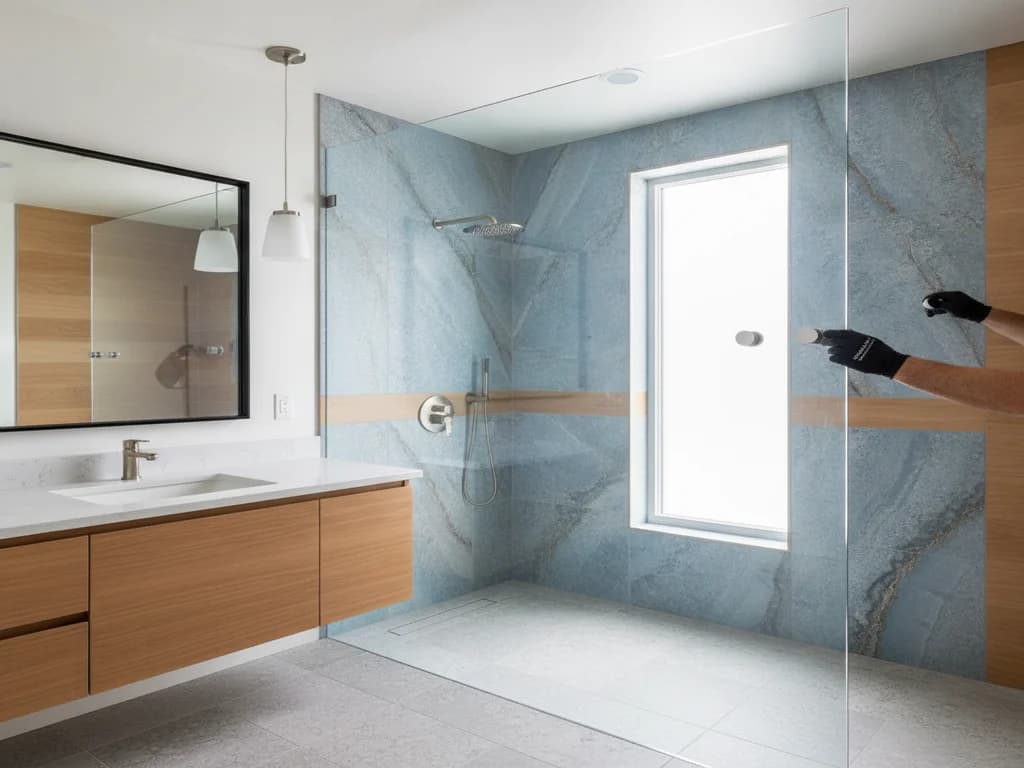
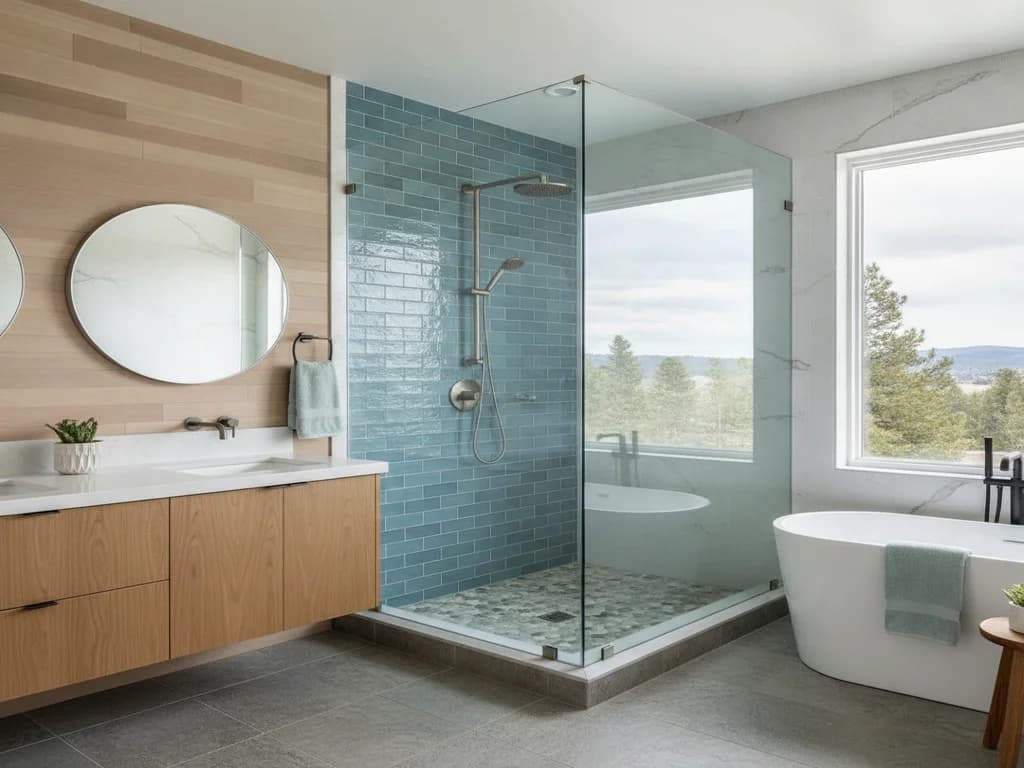
1. Enclosure style sets the floor. This Old House (2026) prices framed shower glass at $300–$1,200 in materials, semi-frameless at $800–$1,300, and frameless at $1,100–$5,000+. Frameless costs the most because there is no metal frame doing structural work — the glass itself has to be thick and strong enough to stand on its own, which is the root cause behind most of the factors below.
2. Glass thickness is the next lever. Frameless glass typically runs 3/8" or 1/2". Bob Vila notes 3/8" glass is sufficient for the majority of frameless installations and is easier to ship and install, while This Old House prices the step up to 1/2" glass at an added $15–$58 per square foot. Thicker glass is marginally more break-resistant, but it is heavier — which can also push up hardware and wall-blocking requirements.
3. Panel count and configuration change the total. A single fixed panel with one door costs the least; a double-door configuration runs $1,200–$2,200 in materials per This Old House, and a multi-panel neo-angle or corner enclosure adds even more glass and more seams to seal. More panels means more cut edges, more hardware points, and more labor to align and set — the framed cost adds up piece by piece.
Factor 4: custom cuts and non-standard openings
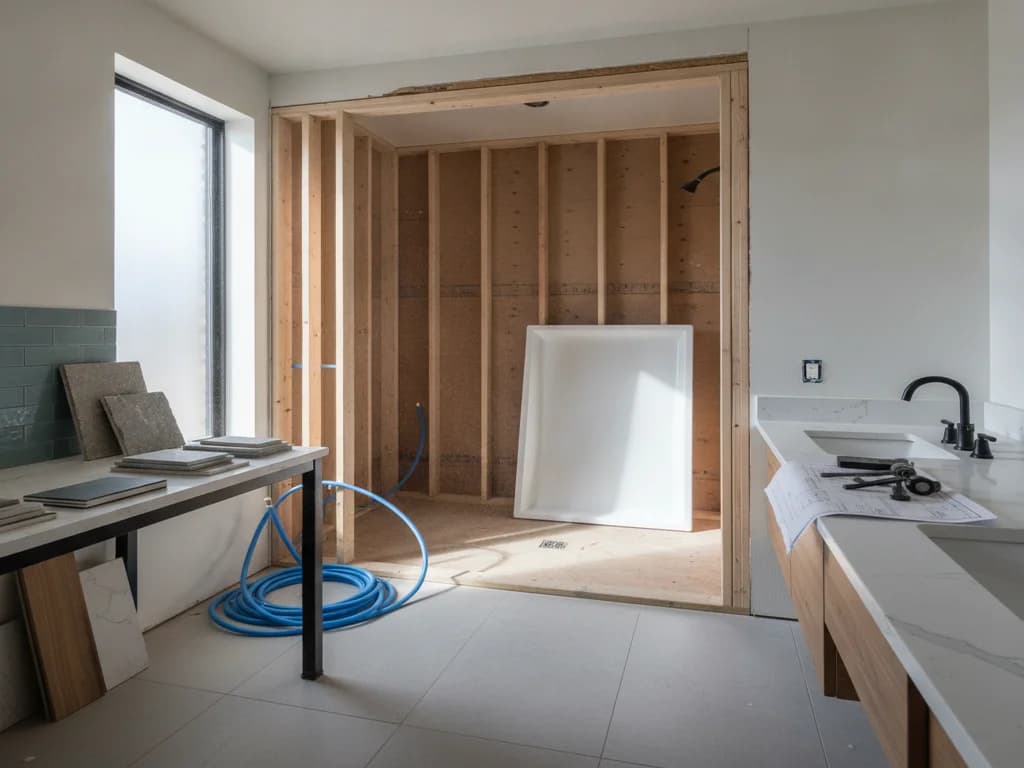
4. Custom cuts cost more than standard sizes — often significantly. Most frameless doors ship in standard widths (roughly 22–36 inches) and standard heights around 72 inches, per Bob Vila. When a shower opening does not match those dimensions — an out-of-plumb wall, an angled knee wall, a bench that the glass has to notch around, or a raked ceiling — the glass has to be field-measured and cut to fit precisely, which This Old House prices custom designs at $1,300–$2,500+ in materials alone, on top of added labor.
This is also why installers stress precise measurement before ordering: Bob Vila recommends measuring the top, middle, and bottom of the opening and checking with a level, because a small out-of-square condition in an older home is enough to push a "standard" shower into custom-cut territory.
Older Boise homes often trigger this factor
Settling, non-square walls, and non-standard tub or curb dimensions are common in older Treasure Valley homes and can quietly turn what looked like a standard-size shower quote into a custom-cut one. It is worth asking your installer to flag this during the in-home measure, not after glass has been ordered.
Factors 5–7: the glass itself
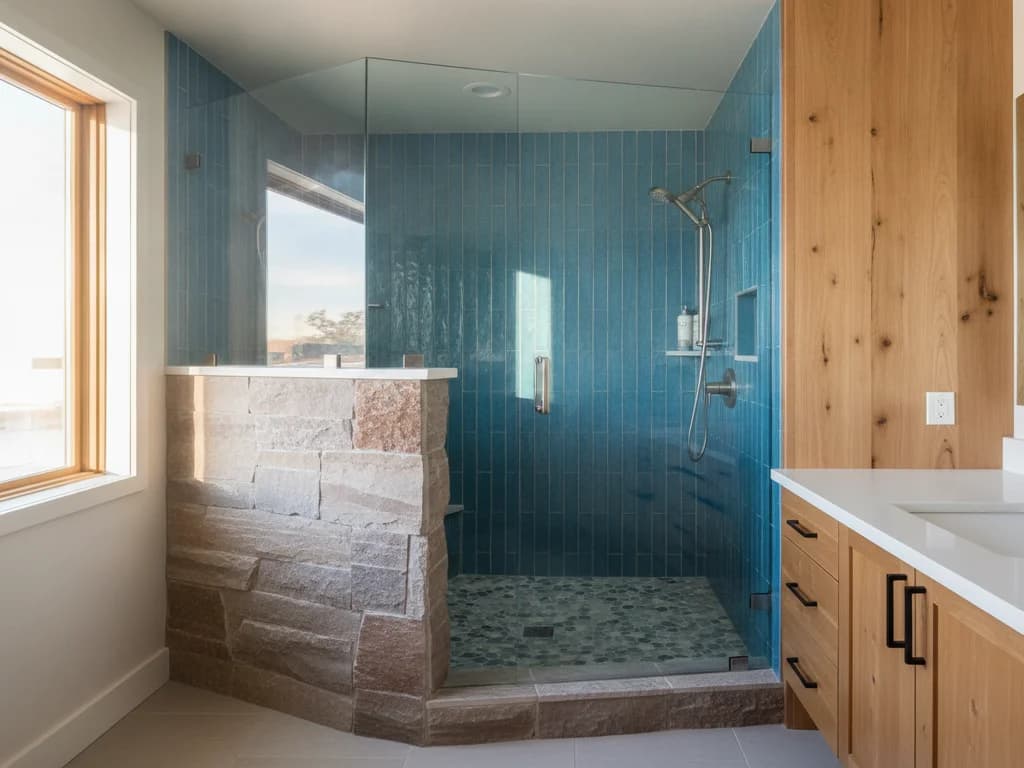
5. Low-iron ("ultra-clear") glass removes the faint green tint standard glass shows at its edges — most noticeable on thick frameless panels. This Old House prices this upgrade at $6–$15 per square foot extra. It is a look upgrade more than a durability one, but it is one of the more visible line items on a frameless quote because thicker glass makes the tint more obvious to begin with.
6. Frosted or patterned glass trades some clarity for privacy or texture, priced at $2–$11 per square foot per This Old House. It is one of the cheaper glass upgrades on this list and can also help hide water spots between cleanings.
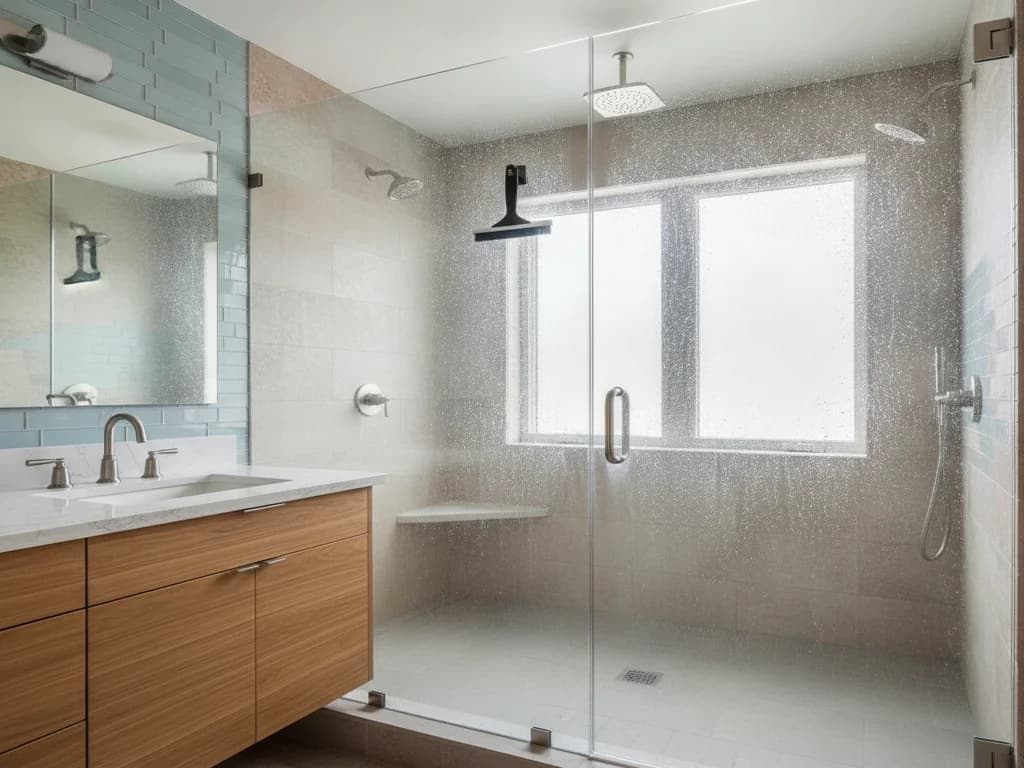
7. A protective coating is the upgrade with the best long-term payoff. This Old House prices a water-spot-resistant coating at $4–$20 per square foot. EnduroShield, one of the manufacturer brands behind these coatings, describes the treatment as an ultra-thin layer that repels water and mineral buildup — the company's TÜV Rheinland-certified testing shows performance beyond 10 years, backed by a 10-year limited warranty on new glass when professionally applied (5 years on existing glass, 3 years for DIY kits). In a moderately hard-water area like the Treasure Valley, this is one of the higher dollar-for-dollar upgrades on the list.
Factors 8–9: hardware and installation
8. Hardware finish and style add their own line item. This Old House prices a full hardware package at $75–$250, separate from the glass itself. CRL (C.R. Laurence), a manufacturer of shower-glass hardware, offers dozens of hinge, clamp, and handle systems in finishes from chrome to brushed nickel to matte black — chrome tends to sit at the lower end of the range, while brushed and matte finishes cost more but also hide hard-water spotting better day to day.
9. Installation complexity is the labor side of the equation. Bob Vila describes frameless-door installation as requiring more skill and typically two pairs of hands compared to a framed door, because the hinges, clamps, and wall blocking all have to be positioned to support the glass's full weight without a frame to help. A heavier 1/2" panel, a custom cut, or a multi-panel configuration all add time to that installation — which is why the same style of door can price differently depending on who is quoting the labor.
The 9 factors at a glance
If you are comparing two or more quotes, this is the fastest way to see where the numbers diverge. Every factor below is additive — a project can stack several of them at once, which is how a "simple" shower door ends up at the top of the frameless range instead of the bottom.
| Factor | Typical added cost | Source |
|---|---|---|
| Frameless vs. framed style | Base jumps from $300–$1,200 to $1,100–$5,000+ | This Old House |
| 1/2" glass vs. 3/8" | +$15–$58 per sq ft | This Old House |
| Double-door configuration | $1,200–$2,200 (vs. single panel) | This Old House |
| Custom cut / non-standard opening | $1,300–$2,500+ (custom design) | This Old House |
| Low-iron (ultra-clear) glass | +$6–$15 per sq ft | This Old House |
| Frosted or patterned glass | +$2–$11 per sq ft | This Old House |
| Water-spot-resistant coating | +$4–$20 per sq ft | This Old House |
| Hardware package | $75–$250 | This Old House |
Ranges are materials-focused per This Old House (2026); installation labor is additional and scales with thickness, panel count, and cut complexity.
How to keep frameless glass costs in check
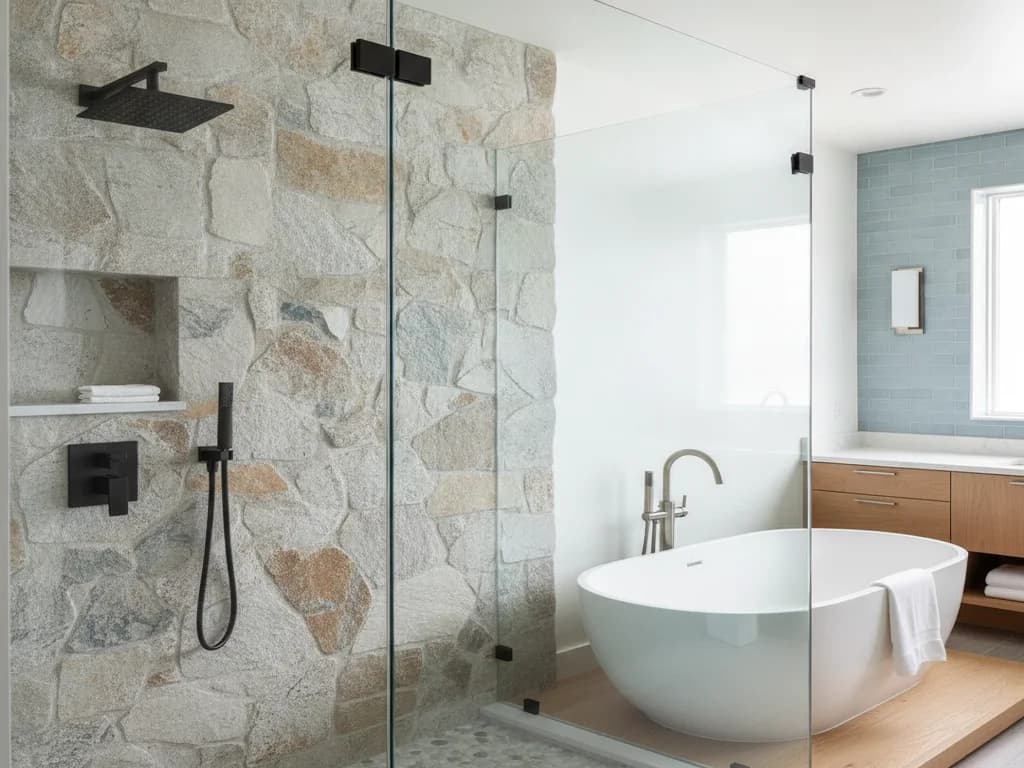
None of these nine factors is optional to consider — every frameless quote touches all of them, whether or not the estimate spells them out. The way to control cost is to be deliberate about which ones you spend on: standard sizing and 3/8" glass keep the base price down, and then you choose one or two upgrades — a coating, a hardware finish, low-iron glass — that matter most for your bathroom rather than adding all of them by default.
If your opening is a standard rectangle over a standard-size shower base, ask your installer directly whether you qualify for standard sizing before assuming you need a custom cut — it is the single biggest cost swing on this list. For the enclosure-style comparison itself, see our framed vs. semi-frameless vs. frameless guide, and when you are ready to spec glass for your own shower, see how we build walk-in showers or request a fixed, itemized quote.
Ready to plan your Boise bathroom?
Licensed & insured · 3-year workmanship warranty
Frequently asked questions
- What is the biggest factor in frameless shower glass cost?
- Enclosure style sets the floor — framed runs $300–$1,200 in materials versus $1,100–$5,000+ for frameless, per This Old House — but custom cuts for non-standard openings are often the single biggest swing on top of that floor, since a custom design runs $1,300–$2,500+ versus a standard-size door.
- Should I choose 3/8-inch or 1/2-inch shower glass?
- 3/8" glass is sufficient for the majority of frameless installations and is easier to ship and install, per Bob Vila. 1/2" glass is marginally more break-resistant and can look slightly more substantial, but This Old House prices the upgrade at $15–$58 per square foot, and the added weight can require reinforced hardware or wall blocking.
- Is a shower glass coating worth the extra cost?
- In a hard-water area, yes — it is one of the better dollar-for-dollar upgrades available. This Old House prices a water-spot-resistant coating at $4–$20 per square foot, and manufacturer EnduroShield's TÜV Rheinland-tested coatings are warrantied 3–10 years depending on how they are applied, cutting cleaning time noticeably over the life of the glass.
Sources
- This Old House — Shower Glass Door Installation Cost (2026)
- Bob Vila — Best Frameless Shower Doors
- EnduroShield — Protective Coating for Shower Glass (manufacturer)
- CRL (C.R. Laurence) — Shower Hardware (manufacturer)
Claims and figures are drawn from the sources above and provided for general guidance; your project may vary. Photography is illustrative of design concepts. For a fixed price on your specific bathroom, request a free estimate.