Updated July 16, 2026 · 7 min read
By Boise Bath — bathroom & shower remodeling in Boise & the Treasure Valley
The short answer
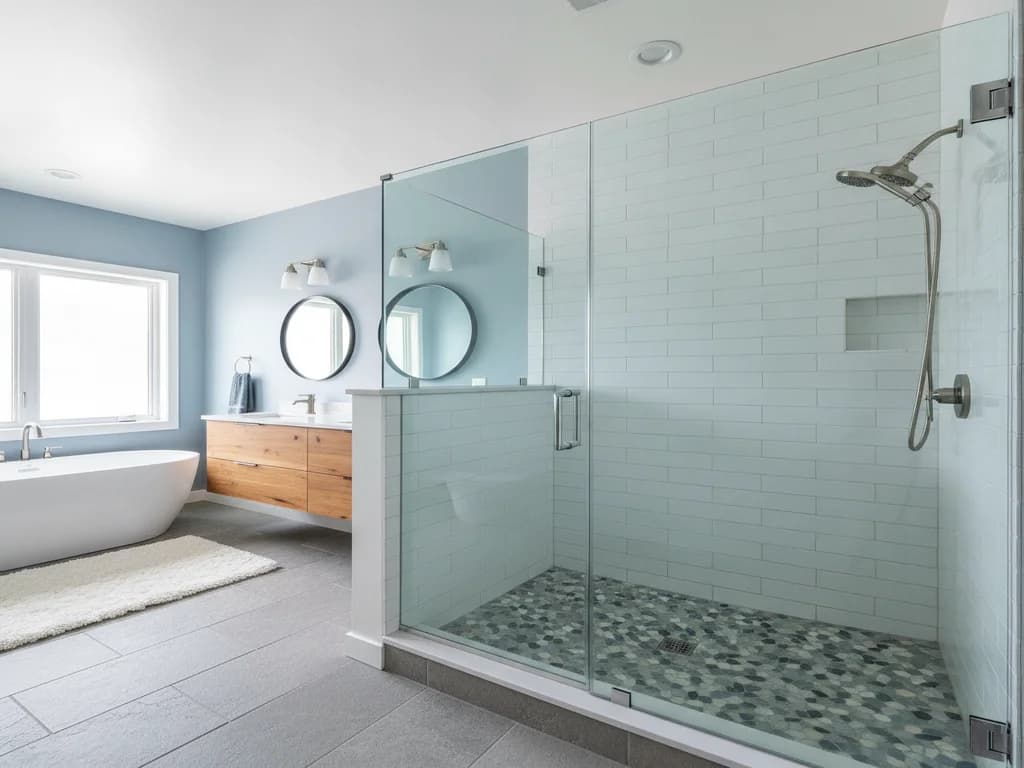
Usually, yes. Shower glass panels and doors are cut to order, so a glass shop can fabricate a replacement for a broken, scratched, or permanently hard-water-etched panel and hang it on existing hardware — provided the hinges, clamps, or channels are sound and still made. Framed enclosures are the exception: their glass and frame usually replace as a unit.
Key takeaways
- Every shower glass panel is a cut-to-order part — replacement glass can be fabricated to match any sound enclosure.
- Frameless hardware — hinges, clips, header bars — usually outlives the glass and can carry a new panel if it is in good condition.
- Framed sliding enclosures rarely justify glass-only replacement; the frame is most of the aging and the units price as one piece.
- Hard-water etching that cleaning cannot touch is permanent glass damage — a new panel with a protective coating restarts the clock.
- Tempered glass cannot be cut or trimmed after manufacture, so precise measurement of the existing opening is the whole job.
Why glass-only replacement usually works
Shower glass is not a sealed appliance — it is a fabricated panel held by hardware, and the two age on different clocks. Glass fails fast and visibly: a shattered tempered panel, a deep scratch, or hard-water etching that no cleaner touches. Hardware fails slowly: hinges loosen, rollers wear, finishes pit. When the glass goes first, which is common, the hardware can usually carry a new panel.
Because every enclosure panel is cut to order in the first place, a glass shop can template your existing opening and fabricate a match — same thickness, same edgework, same hole and notch pattern for the hinges or clamps. How those enclosures go together, glass types, and thickness trade-offs are covered in the shower glass enclosure guide.
The one absolute constraint: shower glass is tempered for safety, and tempered glass cannot be cut, drilled, or trimmed after manufacture. Every dimension and hole is decided before tempering, which is why precise measurement — usually by the fabricator, not from your tape measure — is the heart of the job.
When yes: the panel-swap scenarios
A broken or shattered panel is the clearest case. Tempered glass fails into pebbles, the hardware almost always survives, and a replacement panel restores the enclosure exactly. Spontaneous tempered-glass breakage is rare but documented — the U.S. Consumer Product Safety Commission has long tracked it — and it says nothing about the rest of your enclosure.
Permanent hard-water etching is the second big one, and a familiar story across the Treasure Valley: years of mineral-laden droplets, per the USGS water hardness picture for the region, slowly etch the glass surface until it stays cloudy even freshly scrubbed. That haze is physical damage, not residue. A new panel — ideally with a factory hydrophobic coating, weighed honestly in are shower glass coatings worth it — restarts the clock with easier upkeep.
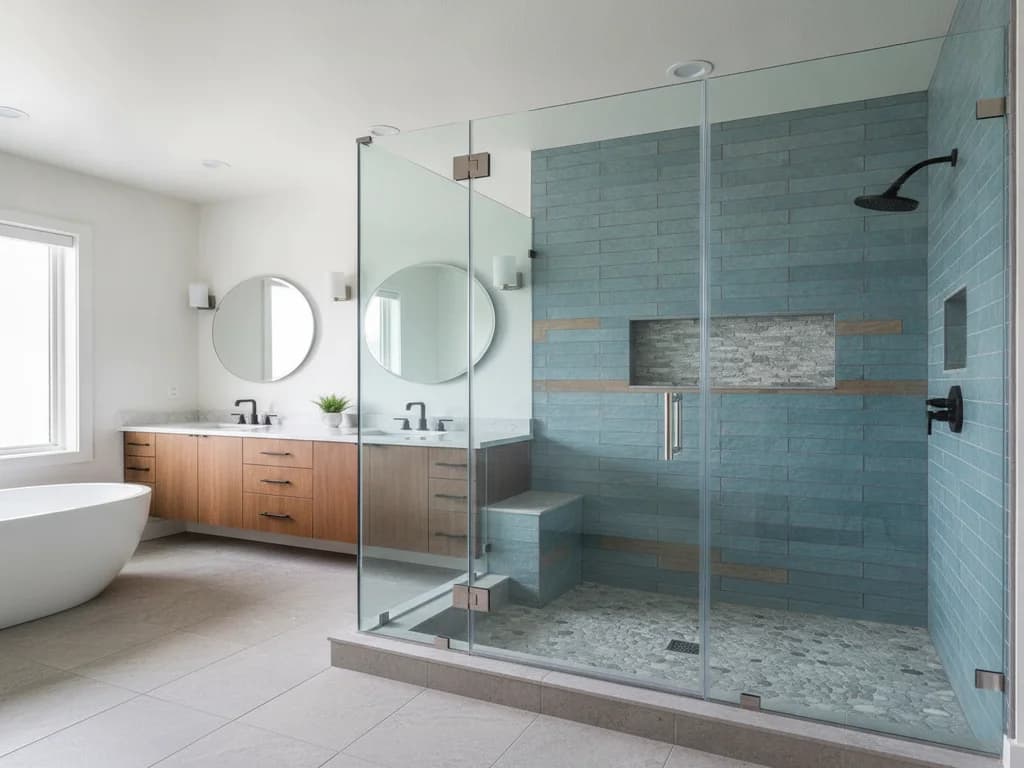
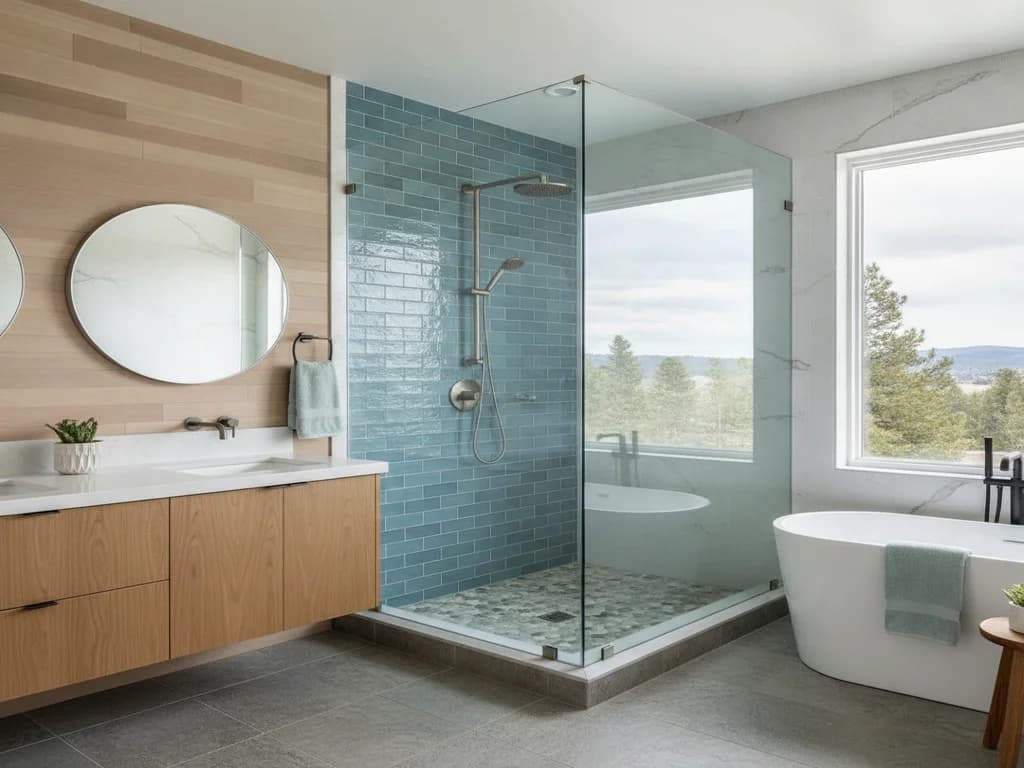
Single-panel damage on a multi-panel enclosure also swaps cleanly: one fixed panel of a two-panel frameless unit, the stationary panel beside a hinged door, or one slider of a bypass pair, provided its track is healthy.
And an upgrade counts as a yes, too. Swapping obscured 1990s pattern glass for low-iron clear panels in the same hardware is one of the cheapest ways to visually modernize a shower without touching tile.
| Enclosure type | Glass-only swap? | The deciding factor |
|---|---|---|
| Frameless hinged door | Usually yes | Hinge condition and whether the hinge line is still made |
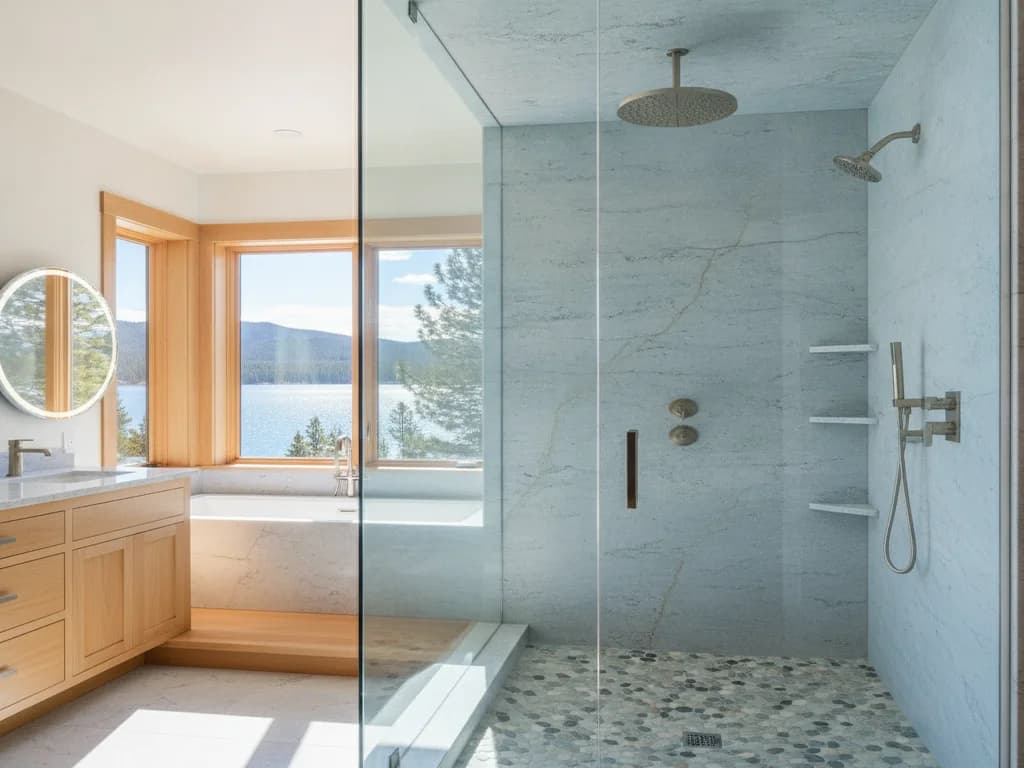
| Frameless fixed panel | Yes | Clamps and channels almost always reusable |
| Semi-frameless door | Often | Frame extrusions must be sound; glass must match channel width |
| Framed sliding (bypass) | Rarely worth it | Frame and rollers are most of the aging; units price as one piece |
| Glass blocks or obscure fixed lite | Different project | Mortared assemblies rebuild rather than swap |
When no: the cases where the whole unit should go
Framed sliding enclosures — the builder-grade bypass doors on countless 1990s and 2000s Treasure Valley tubs and showers — are the main no. The aluminum frame, track, and rollers do most of the aging: corroded tracks, pitted finish, wobbling rollers, mildew in the channels. Putting new glass into a tired frame replaces the one part that was fine. These units are engineered and priced as complete kits, and replacement is covered in replacing a shower door.
Discontinued or damaged hardware is the second no. If a hinge is cracked or its line is discontinued, mixing one new hinge with old ones creates alignment and finish mismatches on a door that needs precision to swing and seal. At that point a new door-and-hardware set — glass, hinges, handle, seals — is the honest quote.
The third no is when the glass is a symptom. A door that dropped out of alignment because wall anchors loosened in soft backing, or a fixed panel whose channel is pulling off a wall with water damage behind it, needs the wall problem solved first — the warning signs are in signs of bathroom water damage.
Never keep using a chipped tempered panel
A chip or crack at the edge of tempered glass concentrates stress in the one place tempered glass is vulnerable, and the failure mode is the entire panel bursting into pebbles without further warning. A chipped shower panel is a replace-now item, not a watch-it item.
The hardware-reuse question, honestly
Reusing hardware is where glass-only replacement wins or disappoints, so the assessment deserves honesty. Hinges and clamps are precision parts: they must clamp the new glass at exactly the right torque, at holes drilled to their pattern before tempering. Worn hinge barrels, stripped set screws, or pitted plating mean the new panel inherits old problems.
Finish is the other half. New glass makes surviving hardware look its age, and a finish that was fine beside hazy glass can read as shabby beside crystal-clear low-iron panels. Sometimes the right call is new hardware in the same holes — hinges and clamps in a fresh finish carrying the new glass, still far cheaper than a new enclosure.
Seals and sweeps always replace — the vinyl bottom sweep and side seals are consumables that harden and yellow, and they are trivial to include with new glass.
What a professional checks before ordering glass
A glass installer starts with the hardware: hinge play, clamp condition, whether the product line is identifiable and current. Then the openings — walls out of plumb, a curb out of level — because the original glass was cut to those imperfections and the new panel must be too. Then the anchoring: do the wall fastenings hit solid backing, and is there any softness or staining suggesting water got behind the tile.
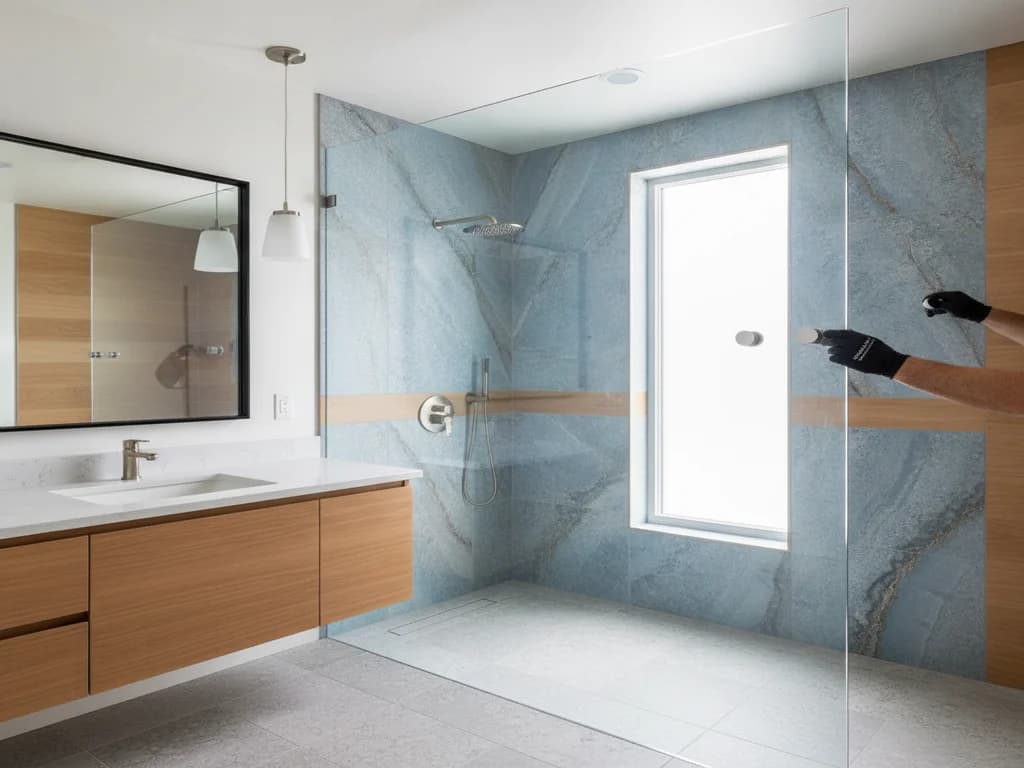
Measurement is the deliverable. Fabricators template to the millimeter because tempered panels cannot be adjusted after the fact; a mismeasured panel is a re-order, not a rework. Expect roughly one to two weeks of fabrication lead time for custom panels.
On price, glass-only replacement generally runs a clear step below full-enclosure replacement — national guides like HomeAdvisor put complete shower door replacement in the high hundreds to low thousands installed, with single-panel fabrication below that. Thickness, size, low-iron glass, and coatings move the number; the full picture is in shower glass cost factors.
The bigger-picture check before you order
New glass flatters everything around it — and exposes it. If the tile is dated, the pan is suspect, or the shower layout has always fought you, a beautiful new panel on a tired shower is money you may pay again at remodel time, since enclosure glass is templated to the finished tile and rarely transfers to a new layout.
If the rest of the shower is sound and you like it, glass-only replacement is one of the best value moves in the room: real transformation, no demolition, done in an afternoon once the panel arrives. If the shower is on borrowed time, fold the glass decision into the bigger one — a custom walk-in shower specifies the enclosure last, cut to the new tile, with the hardware and coating chosen once.
Ready to plan your Boise bathroom?
Licensed & insured · 3-year workmanship warranty
Frequently asked questions
- Can you replace shower door glass without replacing the frame?
- On frameless and many semi-frameless doors, yes — the glass is a cut-to-order panel and sound hinges or channels can carry a new one. On framed sliding enclosures it is rarely worth it: the frame, track, and rollers are most of what ages, and those units are priced and engineered as complete kits, so full replacement is usually the better spend.
- How much does it cost to replace one shower glass panel?
- A single fabricated panel installed generally lands below full-enclosure replacement, which national guides like HomeAdvisor put in the high hundreds to low thousands. Panel size, glass thickness, low-iron upgrades, and hydrophobic coatings move the number, and custom fabrication adds roughly one to two weeks of lead time before installation day.
- My shower glass is permanently cloudy — can it be restored instead of replaced?
- Once hard-water minerals have etched the surface — common with Treasure Valley water — the cloudiness is physical damage to the glass, not a deposit sitting on it. Polishing compounds can improve mild cases, but etched glass generally stays hazy. Replacement with a factory-coated panel is the durable fix, paired with a squeegee habit to slow the recurrence.
- Can you reuse shower door hinges with new glass?
- Yes, when they are in good condition and the line is still made — the new panel is drilled to their exact pattern before tempering. Worn barrels, stripped screws, or pitted finishes argue for new hardware in the same wall positions instead. Seals and sweeps should always be replaced with the glass; they are inexpensive consumables.
- Why did my shower glass shatter on its own?
- Tempered glass can fail spontaneously from a nickel-sulfide inclusion or from long-term stress at an edge chip or over-tightened hardware — a documented, if rare, behavior tracked by the CPSC. It fails into small pebbles rather than shards by design. The hardware almost always survives, and a replacement panel restores the enclosure without other changes.
- Is it worth putting new glass on an older shower?
- If the tile, pan, and layout are sound and you like the shower, absolutely — new glass is the highest-visibility, lowest-disruption update an enclosure can get. If a remodel is realistically within a couple of years, hold off: enclosure glass is templated to the existing tile and almost never transfers to a reconfigured shower.
Sources
- U.S. Consumer Product Safety Commission
- USGS Water Science School — Hardness of Water
- HomeAdvisor — True Cost Guide
- Kohler
Claims and figures are drawn from the sources above and provided for general guidance; your project may vary. Photography is illustrative of design concepts. For a fixed price on your specific bathroom, request a free estimate.