Updated July 16, 2026 · 6 min read
By Boise Bath — bathroom & shower remodeling in Boise & the Treasure Valley
The short answer
Yes — you can usually replace just the shower door. Glass doors mount to the curb and side walls independently of the pan and tile, so a swap doesn’t disturb the waterproofing. The requirements: a sound, level curb, walls close to plumb, and tempered safety glass sized to the opening. A cracked curb or failing tile changes the answer.
Key takeaways
- A shower door is a bolt-on component — it attaches to the curb and side walls, not to the pan or the waterproofing, so a door-only replacement is normal work.
- The curb is the gatekeeper: it must be sound, reasonably level, and wide enough to carry the new door’s track or clamps.
- Walls out of plumb by more than about a quarter inch push you from stock doors toward custom glass, because glass cannot be trimmed on site.
- Every shower door in the U.S. must be tempered safety glass — building codes and CPSC safety-glazing rules require it, so salvaged or repurposed panels are off the table.
- Frameless doors demand more from the opening than framed ones: flatter walls, solid blocking for hinges, and tighter measurements.
- If the pan leaks or the tile is failing, replace the door as part of that repair — not before it.
Why a door-only swap is usually fine
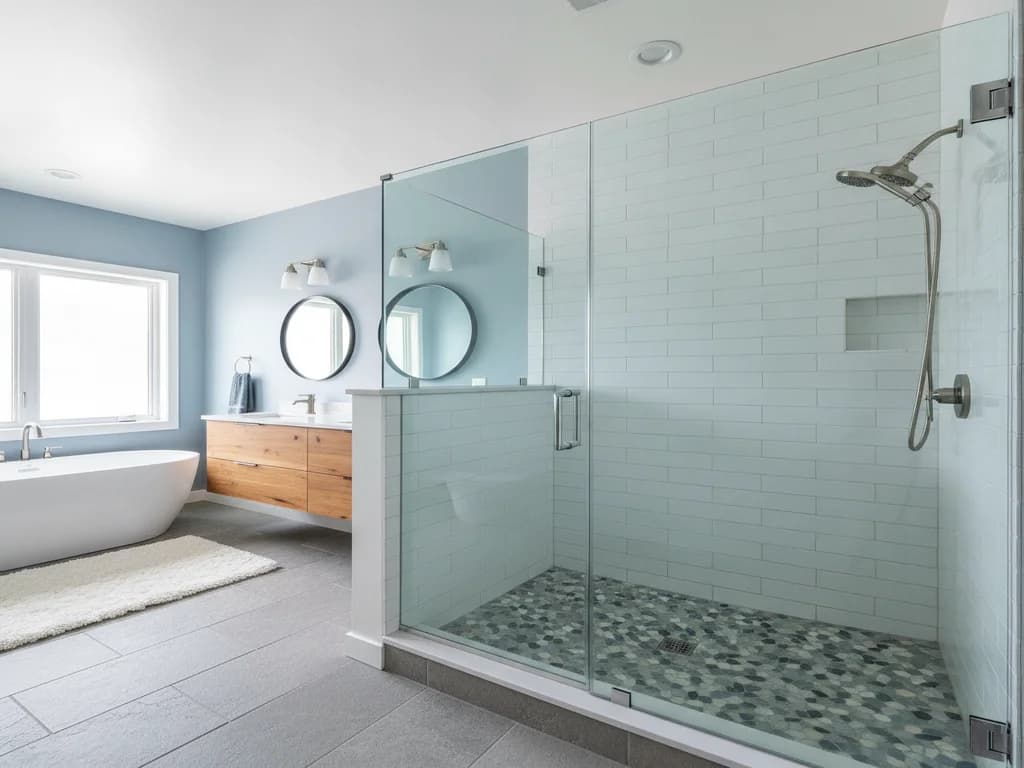
A shower door is the one major part of a shower that sits entirely outside the waterproofing. The pan, the wall tile, and the membrane behind it form the watertight box; the glass just manages splash. Hinges and channels anchor into the curb and the side walls with screws and silicone — nothing penetrates deep enough to touch the waterproofing layer when it’s done correctly.
That’s why replacing a door doesn’t trigger the domino effect that plagues other shower repairs. Pulling wall tile disturbs the membrane behind it; pulling a pan means rebuilding the floor. Pulling a door leaves a few screw holes and a silicone line, both of which the new installation covers or reseals.
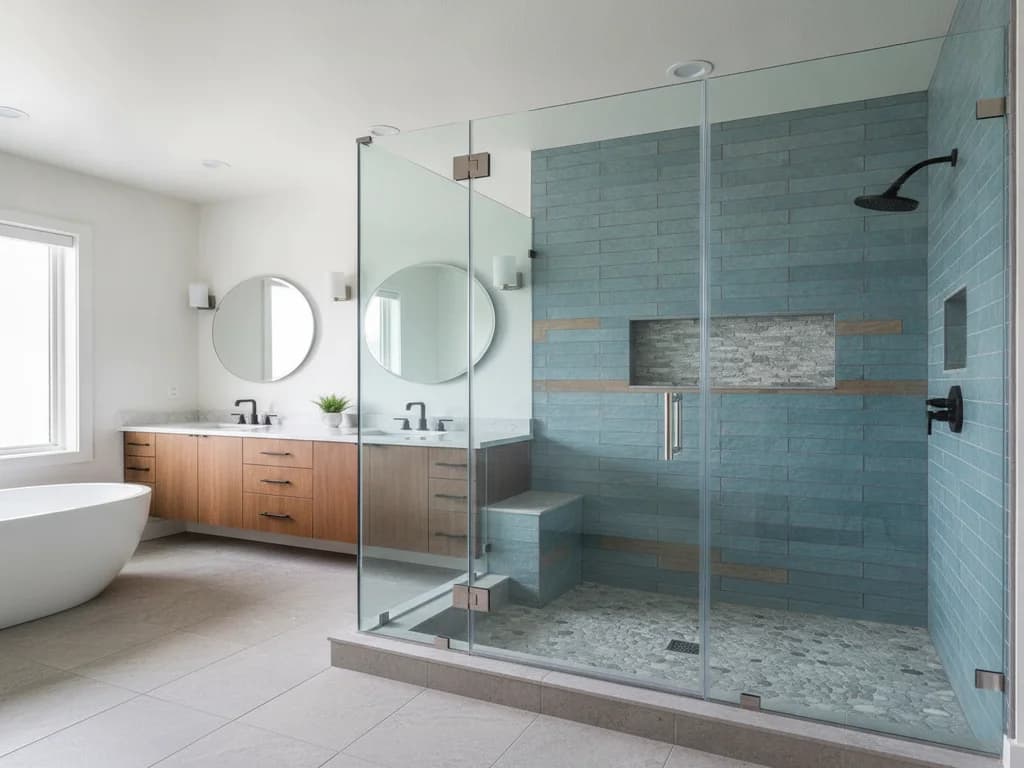
The practical result: if your shower works fine but the door is foggy, corroded, off its rollers, or just dated, a door-only replacement is a legitimate, contained project. What the new door can be — framed, semi-frameless, frameless, sliding, pivot — is its own decision, and our shower door types comparison walks through the trade-offs.
Check one: is the curb sound and level?
The curb carries the door. On a sliding door, the bottom track screws to it; on a hinged frameless door, the glass often rests directly on it with the full weight bearing through a thin gasket. A curb with problems becomes a door with problems.
What professionals look for: cracked or loose tile on top of the curb, soft or spongy spots that suggest water has gotten into the curb framing, and slope. A curb needs to be close to level along its length — a curb that dips noticeably will hold a sliding track out of alignment and let a hinged door swing on its own. Small deviations get absorbed by the installation; a failing curb does not, and rebuilding one is covered in replacing a shower curb.
One more detail that surprises homeowners: curb width. Older framed doors sit happily on a narrow curb, but some frameless hardware needs a flat bearing surface of a couple of inches. A very narrow or heavily sloped decorative curb can rule out specific door styles before measuring even starts.
A soft curb is a stop sign
If the curb flexes, sounds hollow, or shows cracked grout lines that keep coming back, water has likely reached the framing inside it. Mounting a new door on top seals your money to a failing structure — the curb repair comes first, and it sometimes reveals pan problems behind it.
Check two: how plumb are the walls?
Glass is the least forgiving material in the bathroom — it cannot be trimmed, planed, or caulked into shape on site. So the walls the door attaches to matter enormously.
Framed and semi-frameless doors include vertical channels with built-in adjustment, typically absorbing around a quarter to a half inch of out-of-plumb. Frameless doors have far less tolerance: the glass is cut square, and a wall that leans creates a visibly tapering gap that no gasket hides.
The fix for out-of-plumb walls isn’t rebuilding them — it’s custom-cut glass, where the fabricator tapers the panel to match the wall’s actual lean. That works well, but it moves you out of stock-door pricing. In Treasure Valley homes from the 1990s and 2000s, slightly out-of-plumb shower openings are common enough that a careful measure — pros check plumb at multiple heights with a level, not a glance — is the difference between a door that fits and a door that gets reordered.
Check three: does the opening match a standard size?
Stock shower doors come in set widths with a limited adjustment range — sliding bypass doors commonly cover openings around 44 to 60 inches, and hinged doors typically fit openings in the low-20s to mid-30s in inches, with each model adjusting an inch or so either way. Height is usually 72 to 76 inches.
If your opening lands inside a stock range and the walls are plumb, a door-only swap is at its cheapest and fastest. If the opening is oddly sized — a common outcome of past remodels — custom glass fills the gap at a higher price. National cost guides such as HomeAdvisor put installed shower door replacement roughly in the $300 to $1,400 range, with basic framed sliders at the bottom and custom frameless glass at or above the top.
Whatever the size, the glass itself is non-negotiable: U.S. building codes and CPSC safety-glazing rules require tempered safety glass in shower and tub enclosures. Every legitimate shower door sold is tempered, but this is why reusing a salvaged panel, an old mirror, or non-safety glass is never an option.
| Condition | Door-only swap? | Why |
|---|---|---|
| Curb solid, level, tile intact | Yes | The mounting surface is ready as-is |
| Walls within ~1/4" of plumb | Yes — stock door candidates | Standard channels absorb the deviation |
| Walls leaning more than ~1/4" | Yes — custom glass | Panels are cut tapered to match the wall |
| Curb cracked, soft, or hollow-sounding | No — repair first | The door’s foundation is failing |
| Pan leaks or floor tile failing | No — fix the shower first | A new door on a leaking shower wastes the spend |
| Planning a full shower redo within ~2 years | Wait | The door comes off during the remodel anyway |
When replacing just the door is the wrong call
The honest cases against a door-only swap are about what’s behind and beneath the glass. If the pan leaks, if floor or wall tile is cracking, or if grout lines stay dark no matter how they’re cleaned, the shower has a water problem that a new door sits on top of without solving. In those cases the door gets replaced as the last step of the real repair, and the full sequence is covered in replacing a shower door.
Timing is the other trap. A glass door is one of the most expensive single components in a shower — if a full remodel or a walk-in shower conversion is realistically one or two years out, buying custom glass now means paying to remove it later. Doors are sized to their exact opening; they very rarely transfer to a new layout.
And if the current setup is a curtain rather than a door, the project is a different one with its own considerations — replacing a shower curtain with a glass door covers what that upgrade involves.
What a professional measure catches that a tape measure misses
Glass shops and installers measure the opening at the top, middle, and bottom, check plumb on both walls, check the curb for level, and verify what’s inside the walls where hinges will land. Frameless hinge screws carry real load — they need solid blocking or careful anchoring, not just tile and drywall.
That measure is also where the door style gets reality-checked against the shower. Heavy frameless glass on a narrow curb, an outswing door that would hit the vanity, a slider on an opening too small for two panels to bypass usefully — these are cheap conversations before ordering and expensive ones after. Custom tempered glass cannot be recut once it’s made; a wrong measurement is a remake, which is why reputable installers own the measurement rather than working from homeowner numbers.
Ready to plan your Boise bathroom?
Licensed & insured · 3-year workmanship warranty
Frequently asked questions
- Can I put a new shower door on old tile?
- Yes, as long as the tile is sound where the door mounts — the curb top and the two vertical wall lines. New doors are drilled through existing tile with the right bits and anchored into the structure behind it. Cracked, loose, or hollow-sounding tile in those zones needs repair first, because anchors in failing tile work loose.
- How do I know if my walls are too out of plumb for a stock door?
- Hold a level vertically against each wall where the door will mount. Framed and semi-frameless doors typically absorb roughly a quarter to a half inch of lean through their adjustable channels; more than that means the gap will show or the door won’t seal. Beyond that range, custom-cut glass tapered to the wall is the standard fix.
- Does a new shower door have to be tempered glass?
- Yes, without exception. U.S. building codes and CPSC safety-glazing standards require tempered safety glass in shower and tub enclosures because it crumbles into small pieces rather than breaking into shards. Every door sold for shower use is tempered — the rule matters when someone is tempted to repurpose a salvaged panel or non-safety glass. Don’t.
- How much does it cost to replace just a shower door?
- National guides like HomeAdvisor put installed shower door replacement roughly between $300 and $1,400. Framed sliding doors in stock sizes sit at the low end; semi-frameless in the middle; custom frameless glass at or above the top, since the glass is fabricated to your exact opening. Out-of-plumb walls and odd sizes push any style toward custom pricing.
- Can I replace a sliding shower door with a hinged one?
- Usually, yes — the opening doesn’t care which style mounts to it. The checks are swing clearance (an outswing door needs floor space free of the vanity and toilet), curb width for the hinge-side bearing surface, and solid anchoring where hinges land. Removing the old slider leaves track screw holes in the curb, which the installer fills and seals.
- Should I replace the door if I might remodel the shower soon?
- Generally no. Glass doors are sized to their exact opening and rarely transfer to a new layout, so a door bought now usually gets discarded in a remodel one or two years later. If the current door still functions, put the money toward the remodel — the door is a standard line item in any full shower project.
Sources
- U.S. Consumer Product Safety Commission
- International Code Council (IRC/IBC)
- HomeAdvisor — True Cost Guide
- This Old House — Bathrooms
Claims and figures are drawn from the sources above and provided for general guidance; your project may vary. Photography is illustrative of design concepts. For a fixed price on your specific bathroom, request a free estimate.