Updated July 16, 2026 · 6 min read
By Boise Bath — bathroom & shower remodeling in Boise & the Treasure Valley
The short answer
Replacing a shower curb means demoing the curb to its core, inspecting where the rot came from, and rebuilding it as part of the shower’s waterproofing system — framed lumber wrapped in membrane, or a solid foam curb. Because the curb ties into the pan liner, a rotted curb often means pan work too. Many homeowners use the rebuild to go curbless instead.
Key takeaways
- The curb is not trim — it is a waterproofed dam tied into the shower pan, and it fails when water gets past the tile into its wooden core.
- A curb that feels soft, moves underfoot, or sheds grout at its base has water inside it; surface regrouting will not dry it out.
- Because the pan liner wraps up and over the curb, curb rot frequently means the pan connection has failed too — pros open it up before quoting a “curb-only” fix.
- Modern rebuilds favor solid foam curbs (Schluter, wedi and similar) that cannot rot, over bare lumber wrapped in membrane.
- If the shower is opening up anyway, converting to a curbless entry can cost little more than rebuilding the curb — and removes the failure point entirely.
What a shower curb actually does
The curb is the raised threshold that keeps shower water on the shower side. Under the tile, a traditional curb is two or three stacked 2x4s — a wooden dam — wrapped by the same pan liner that waterproofs the floor, then covered in mortar and tile.
That construction is the whole story of why curbs fail. Wood, a splash zone, and a skin of grout and tile that everyone steps on: the moment the surface opens up — cracked grout, a failed caulk joint, a loose tile on top — water reaches lumber that has nowhere to dry. In the 1990s and 2000s Treasure Valley housing stock, decades of daily showers have brought a lot of those curbs to the end of the line at once.
How do you know the curb has failed?
The early signs are on the surface: grout at the base of the curb that cracks and crumbles no matter how often it is repaired, caulk joints that keep splitting, or tiles on top of the curb that rock or sound hollow when tapped.
The later signs are structural. A curb with rot inside feels spongy when you press on it or step over it, and the tile on it may visibly shift. Discolored or swollen baseboard and flooring just outside the shower means water is escaping under the curb — at that point the wood inside is saturated.
Movement is the dividing line. Cosmetic grout cracks on an otherwise solid curb can be maintained; a curb that flexes has water in its core, and no surface repair reaches it.
Why a rotted curb is rarely just a curb
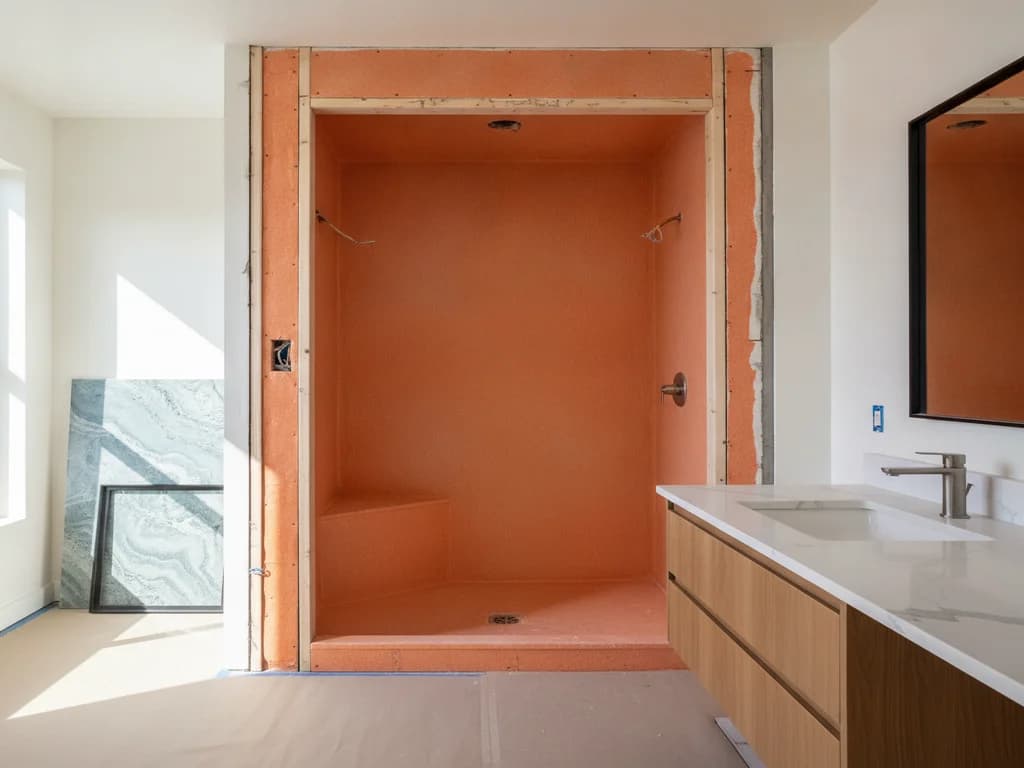
The curb and the pan are one waterproofing system, not neighbors. In a traditional build, the pan liner runs across the shower floor, up the inside face of the curb, and over its top — so by the time the curb’s core is wet, water has usually been traveling along that liner connection for a while.
That is why experienced contractors will not quote a curb rebuild sight unseen. Once the curb is opened, the question is where the water came from and how far it went: just the curb’s top surface, or down the liner into the pan assembly and the subfloor beneath it. Industry method standards from the Tile Council of North America treat the pan-and-curb as a continuous system for exactly this reason.
Get the pan inspected before approving a curb-only repair
A curb rebuilt on top of a compromised pan liner fails again — usually within a couple of years, and after the tile bill has been paid twice. Insist on photos of the opened curb and the liner condition before anyone closes it back up.
How a shower curb gets rebuilt right
Two constructions dominate today. The traditional method rebuilds the wooden core with new lumber, wraps it in new membrane tied into the pan, then covers it with metal lath, mortar, and tile — proven, but still wood in a wet zone, and entirely dependent on the membrane work.
The modern alternative is a solid foam curb — a dense, inherently waterproof block from systems like Schluter or wedi that bonds to the pan and gets tiled directly. There is no wood to rot, and the waterproofing is the curb itself rather than a wrapper around it. When a rebuild is on the table, foam is usually the honest recommendation.
Either way, the top of the curb should be sloped slightly toward the shower so standing water drains inward — a detail the original builder often skipped, and part of why the curb failed in the first place. Curb height itself has code minimums and practical maximums; our guide to curb height and shower dams covers those numbers so we will not repeat them here.
| Option | Core | Rot risk | Best for |
|---|---|---|---|
| Traditional lumber + membrane | Wood, wrapped in liner | Returns if membrane fails | Matching an existing mud-bed pan system |
| Solid foam curb | Waterproof foam | None — no wood to rot | Most rebuilds; pairs with tile-ready pan systems |
| Remove the curb entirely | None — floor is recessed and sloped | Eliminated | Full shower rebuilds where the structure allows curbless |
The other option: skip the curb entirely
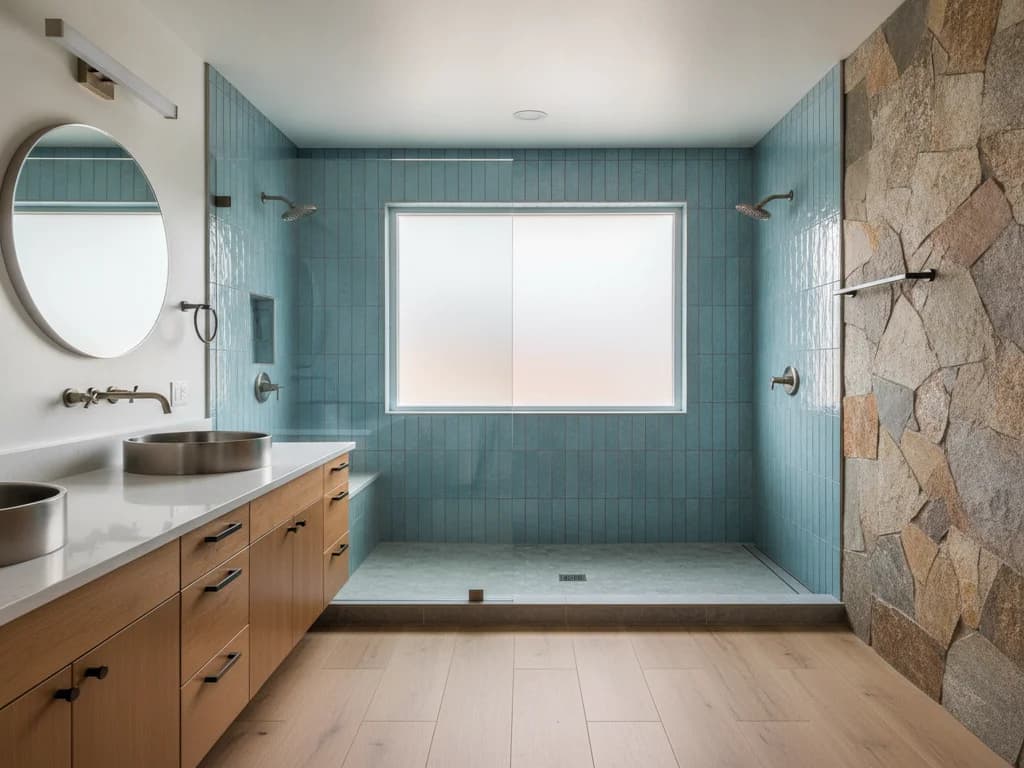
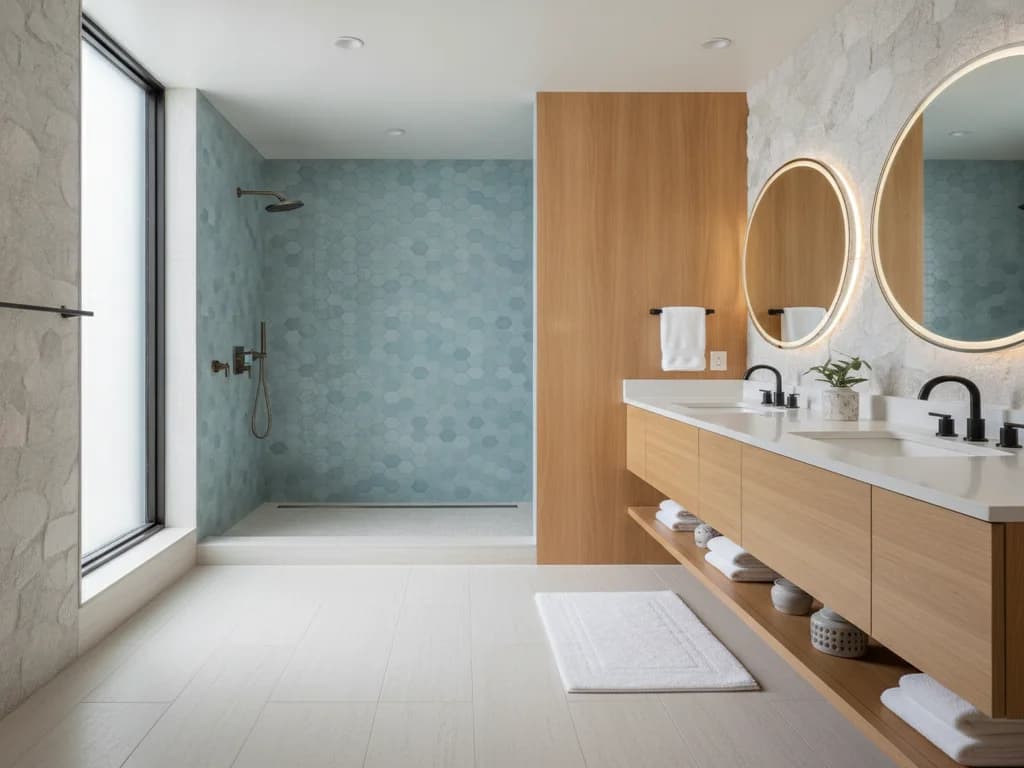
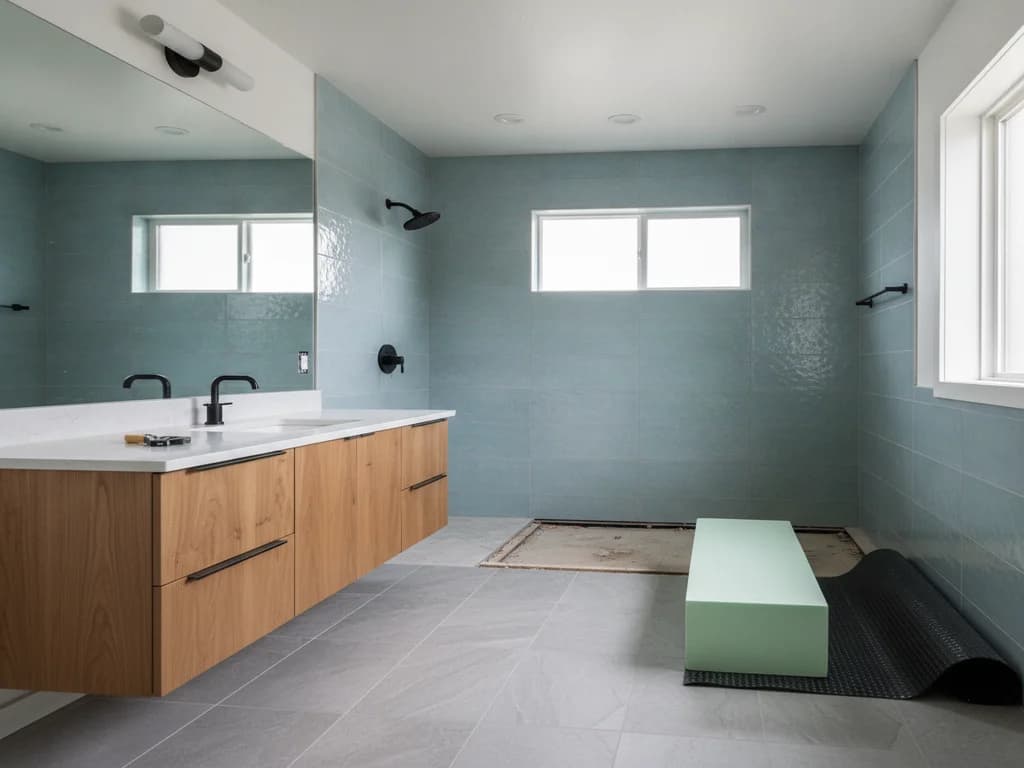
If the curb failure has already committed you to opening the shower floor, it is worth asking whether the curb should come back at all. A curbless conversion recesses or slopes the floor so the entry sits flush — no dam, no wooden core, no grout joint at the threshold to maintain, and a step-free entry that pays off for aging in place.
It is not free — curbless needs the right floor structure and a larger waterproofed field — but when the pan is being rebuilt anyway, much of the added cost is already sunk into the repair. That trade-off is exactly what the conversion guide walks through.
Cost and timeline
A curb rarely gets priced as a standalone line item, because the scope is set by what the demo reveals. If the liner and pan check out, a curb rebuild is a one-to-two-day repair measured in hundreds of dollars, not thousands. If the pan connection has failed — the more common finding — the project becomes a pan replacement, which national guides such as HomeAdvisor put roughly between $1,000 and $3,500 installed before tile variables.
Plumbing changes trigger a permit through the City of Boise Planning & Development Services or the neighboring Treasure Valley building offices; a curb-and-tile repair that leaves the drain untouched typically does not. A licensed contractor sorts that in the bid.
What the process looks like
- 1
Probe the curb and map the moisture
The contractor checks the curb for movement and softness, taps the tile for hollow spots, and looks outside the shower for escaped water — building a picture of how far the failure runs before demo starts.
- 2
Demo the curb to its core
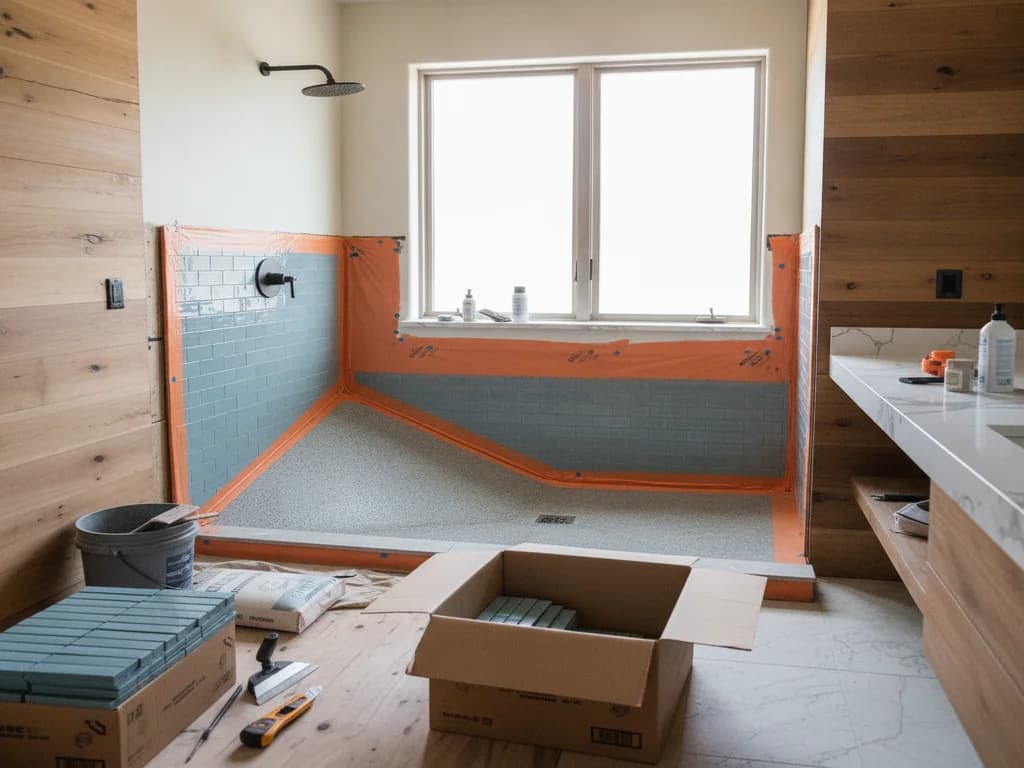
Tile, mortar, and lath come off the curb, exposing the lumber and the membrane wrap. Wet or rotted framing is removed completely rather than dried in place.
- 3
Open and inspect the pan connection
The liner’s run up the curb and the first section of the shower floor are inspected — this is the decision point between a curb rebuild and a pan replacement, documented with photos.
- 4
Rebuild the curb structure
A new solid foam curb is bonded to the pan, or new lumber is set and wrapped with membrane tied into the existing liner, with the top pitched slightly toward the drain.
- 5
Waterproof and tie into the system
Seams, corners, and the curb-to-pan and curb-to-wall joints are sealed as one continuous assembly per the system manufacturer’s spec, then water-tested.
- 6
Tile, seal, and finish
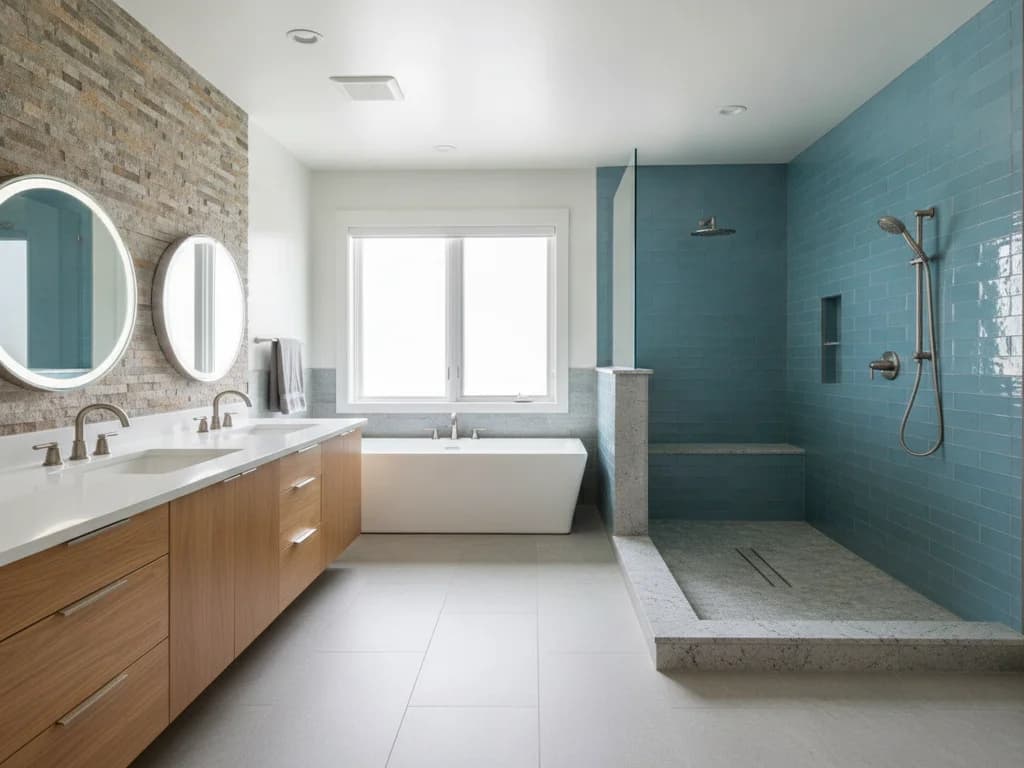
The curb is tiled or capped, movement joints get flexible sealant rather than grout, and the glass or door track is reset on the finished curb.
Ready to plan your Boise bathroom?
Licensed & insured · 3-year workmanship warranty
Frequently asked questions
- Can I just regrout a crumbling shower curb?
- Only if the curb underneath is still solid. Regrouting fixes the symptom on a curb that does not move, sound hollow, or feel soft. If any of those are present, water is already in the wooden core, and new grout seals the moisture in rather than out. Press firmly on the curb top and inside face — flex means rebuild, not regrout.
- How much does it cost to replace a shower curb?
- If the pan liner is intact, a curb rebuild is a small repair — typically a day or two of work in the hundreds of dollars. But curb rot usually traces back to the pan connection, and when the pan is involved the scope becomes a pan replacement, roughly $1,000–$3,500 installed per HomeAdvisor before tile variables. The demo, not the estimate, determines which project you have.
- What is the best material to rebuild a shower curb?
- A solid waterproof foam curb from a system like Schluter or wedi is the strongest answer for most rebuilds — there is no wood inside to rot, and the block itself is the waterproofing. Traditional lumber wrapped in membrane still works and matches older mud-bed systems, but it reintroduces the same failure mode that killed the original curb.
- Can a shower curb be removed to make the shower curbless?
- Often, yes — but it is a floor project, not a curb project. Curbless entries keep water in with a recessed, sloped floor instead of a dam, which means opening the pan and usually modifying the subfloor. If your curb has failed and the floor is being rebuilt anyway, it is the ideal moment to evaluate; our curbless conversion guide covers the feasibility questions.
- Why does the grout at the bottom of my shower curb keep cracking?
- That joint is a junction between two planes that move differently, and rigid grout there cracks by design — it should be a flexible sealant joint instead. Recurring cracks after proper caulking, though, suggest the curb itself is moving, which points to a wet or deteriorating core. A curb should be rock solid; movement is the red flag.
Sources
- Tile Council of North America (TCNA)
- Schluter Systems
- HomeAdvisor — True Cost Guide
- City of Boise — Planning & Development Services
Claims and figures are drawn from the sources above and provided for general guidance; your project may vary. Photography is illustrative of design concepts. For a fixed price on your specific bathroom, request a free estimate.