Updated September 9, 2026 · 8 min read
By Boise Bath — bathroom & shower remodeling in Boise & the Treasure Valley
The short answer
Beyond a heated floor, the features worth planning for are a towel warmer (hardwired for a remodel, plug-in for a retrofit), a heated shower bench, and a mirror defogger that wires into the existing lighting circuit. Each solves a different discomfort — cold towels, a cold seat, a fogged mirror — with its own installation trade-off.
Key takeaways
- A heated floor remains the anchor investment for winter comfort — our heated bathroom floor guide covers the electric-vs-hydronic decision in full; this post is the catalog of everything else you can add alongside it.
- Towel warmers split cleanly into two installation paths: WarmlyYours describes hardwired units as "connected directly to your home's electrical system for a clean, cord-free look," while plug-in units simply "mount and plug into any standard 3-prong outlet — no electrician needed."
- Bob Vila notes hardwired towel warmers "need to be integrated into the home's electrical system and therefore require a professional to install them," while plug-in models are "much simpler to install" and "the more popular choice to add to an already finished bathroom."
- WarmlyYours' TempZone line extends radiant heat past the floor into "shower floors and benches for spa-like comfort" — a real product category, not a stretch of the floor-heating concept.
- A mirror defogger installs invisibly: WarmlyYours' pad "hides invisibly" behind the mirror, connects "directly to existing bathroom lighting" with "no new switches, outlets, or rough-in electrical work," and clears a fogged mirror "within five minutes."
This is the features catalog, not the winter-strategy guide
Two other guides on this site cover related ground, and it is worth being clear about how this one is different. Our heated bathroom floor guide is a technical comparison of electric vs. hydronic radiant floor systems — cost, installation, and which one actually makes sense for a single bathroom. Our Idaho winter bathroom comfort post is a seasonal strategy guide — floors, lighting, ventilation, and frozen-pipe prevention, all aimed at surviving a Treasure Valley winter.
This post is neither of those. It is a straightforward buyer's catalog of the heated features themselves — towel warmers, heated shower benches, and mirror defoggers — with the actual installation trade-offs for each, whether or not you are planning around winter specifically. A heated floor is still the anchor feature and gets the most value for the money in a Boise bathroom; treat the rest of this as the shortlist of what else is worth planning for once that decision is made.
The floor still comes first
If you are choosing between a heated floor and any of the features below on a limited budget, the floor wins — it heats the whole room, not just one fixture. Everything in this post is what to add once the floor is already decided, not instead of it.
Towel warmers: hardwired vs. plug-in
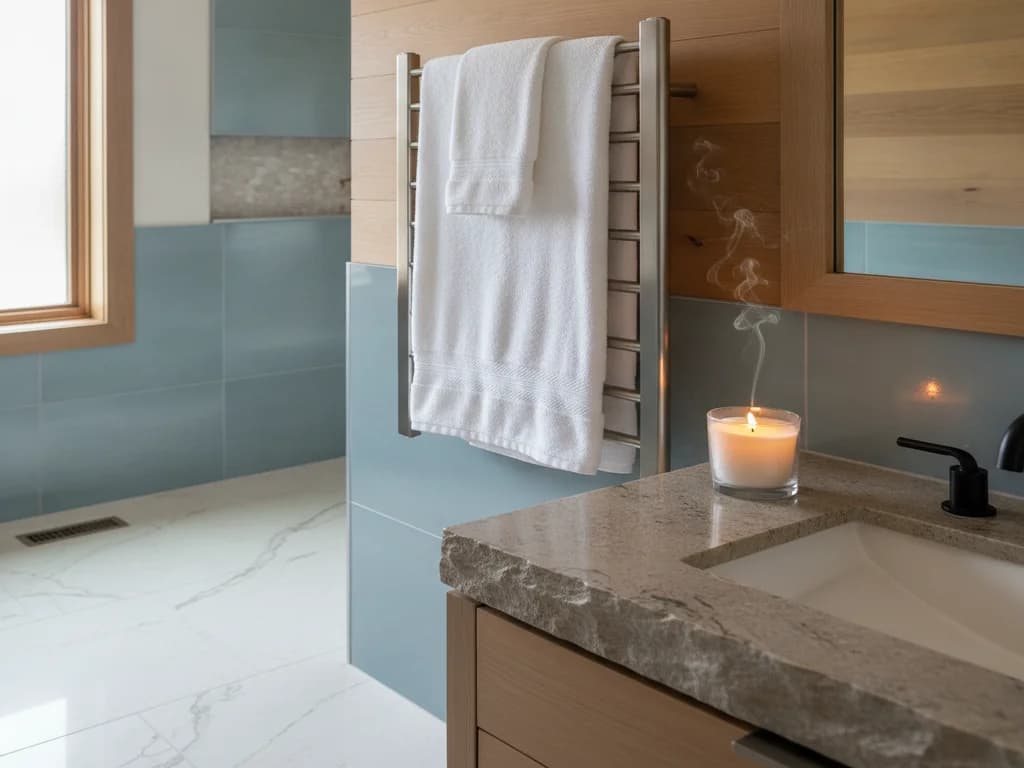
A towel warmer is one of the highest-payoff small additions to a bathroom, and the first real decision is how it gets power. WarmlyYours frames the split cleanly: a hardwired unit is "connected directly to your home's electrical system for a clean, cord-free look" and "requires professional electrician installation," making it "best for permanent installations and renovations." A plug-in unit, by contrast, is designed to "simply mount and plug into any standard 3-prong outlet — no electrician needed," which WarmlyYours positions as the "DIY-friendly" option, "ideal for renters and quick setups."
Bob Vila draws the same line from the buying side: hardwired towel warmers "need to be integrated into the home's electrical system and therefore require a professional to install them," while plug-in models are "much simpler to install" and "the more popular choice to add to an already finished bathroom." The practical rule follows directly: choose hardwired if you are already remodeling and the wall is open; choose plug-in if you are retrofitting a bathroom you have no plans to tear into.
Wattage is a secondary consideration worth knowing. Bob Vila notes towel warmer wattage ranges widely, "as low as 100 watts" up to "800 watts," and that higher-wattage units — "500 or more watts" — are worth a quick check with an electrician before installing, even on a unit marketed as plug-in. WarmlyYours cites more modest 60–150-watt ranges as typical for its towel-warmer line, with a running cost of roughly "15–25¢ per day."
| Type | Installation | Best for |
|---|---|---|
| Hardwired | Professional electrician; wired into the wall | A remodel already opening the walls; a clean, cord-free permanent install |
| Plug-in | Mounts and plugs into a standard outlet | A retrofit into a finished bathroom, a rental, or a quick add without rewiring |
Sources: WarmlyYours (towel warmers), Bob Vila (Best Towel Warmers). Higher-wattage units (500W+) are worth an electrician's check regardless of connection type.
Heated shower benches
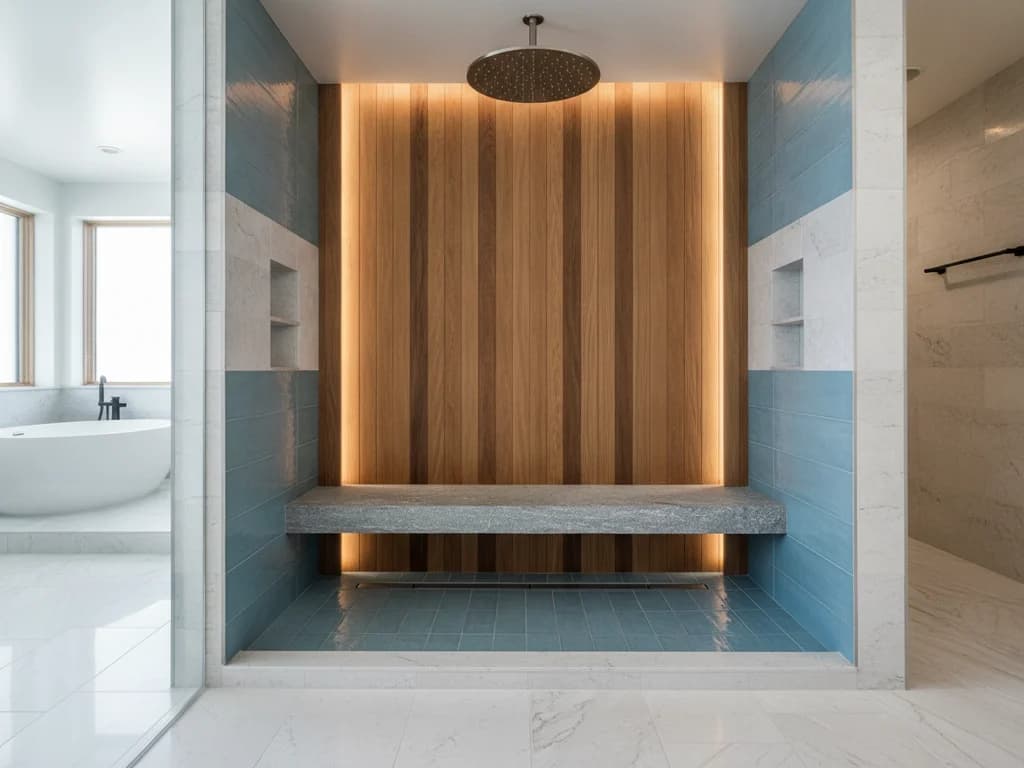
A heated bench is a less common but genuinely real product category, not a stretch of the floor-heating idea. WarmlyYours markets dedicated shower-specific radiant mats under its TempZone line, describing the offering directly as heating for "shower floors and benches for spa-like comfort," with a separate installation guide specifically for "Floor Heating for under Shower Floors & Shower Bench Seats." The concept is the same as a heated floor — a thin electric mat under the finished surface — extended to a built-in bench seat rather than stopping at the shower threshold.
The practical case for it is straightforward: a cold stone or tile bench is one of the few remaining cold surfaces left in an otherwise heated bathroom, and a built-in bench is exactly the kind of feature that is far easier to wire for heat during a remodel — while the substrate is open — than to retrofit later. If a heated shower bench is on the list, plan it alongside the floor heating decision rather than as an afterthought once the shower is already tiled.
Mirror defoggers
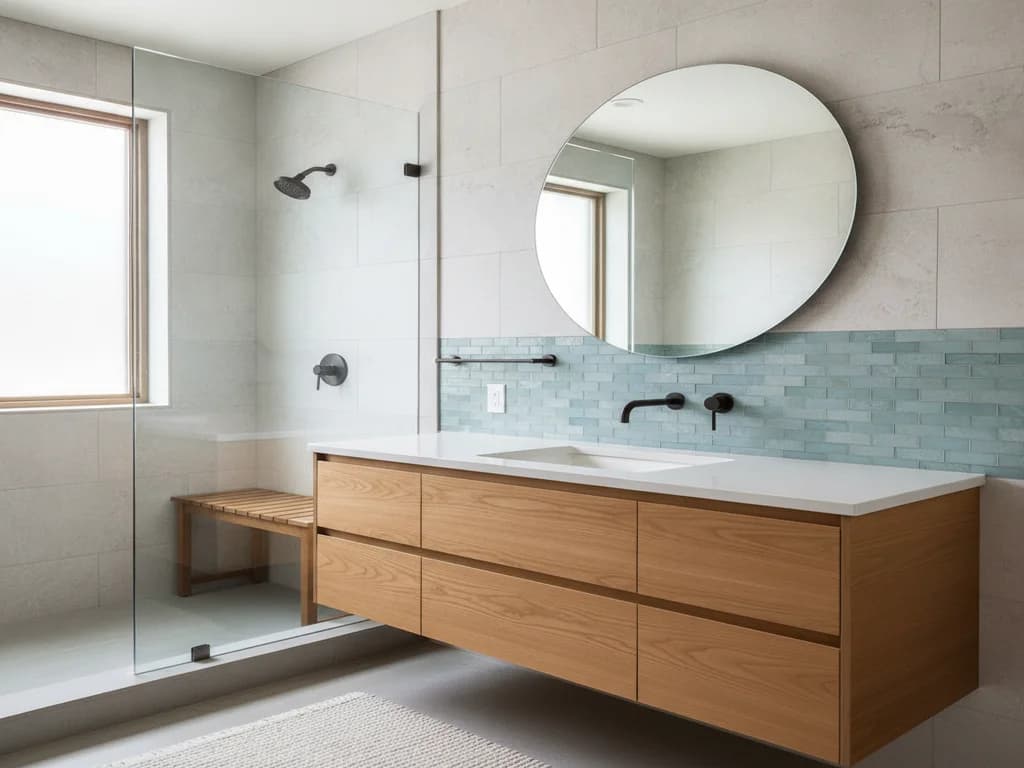
A fogged mirror after every shower is a small but constant annoyance, and the fix is one of the more invisible upgrades on this list. WarmlyYours' mirror defogger is a thin heating pad that "installs discreetly behind your wall-mounted mirror" and "gently warms the mirror's surface, eliminating fog and steam instantly" by maintaining "a steady 104°F to keep your mirror crystal clear" — most units clear a mirror "within five minutes of being turned on."
What makes it a low-disruption addition is the wiring: WarmlyYours notes the defogger connects "directly to existing bathroom lighting" with "no new switches, outlets, or rough-in electrical work" required, though professional installation by a licensed electrician is still recommended "to ensure the job is done correctly and up to code." Standard sizes run roughly $79–$119 depending on shape, with custom sizing available up to about 47 by 79 inches for a larger vanity mirror — worth specifying before the mirror itself is ordered, since it needs to fit behind the exact piece you choose.
The bottom line
A heated floor still does the most work per dollar in a Boise bathroom, but it is not an all-or-nothing decision — towel warmers, heated shower benches, and mirror defoggers each solve a specific, separate discomfort, and each has a clear installation path depending on whether you are remodeling or retrofitting. The one planning habit worth keeping: decide on all of these before the walls close up, because a hardwired towel warmer, a heated bench mat, and a mirror defogger's wiring are all far cheaper to run while the room is already open.
If you're planning a primary bathroom remodel and want these built in from the start, explore our master bathroom retreats — heated floors, benches, towel warmers, and defoggers are exactly the kind of comfort details that project is built around.
Ready to plan your Boise bathroom?
Licensed & insured · 3-year workmanship warranty
Frequently asked questions
- Hardwired or plug-in towel warmer — which is better?
- It depends on timing, not quality. WarmlyYours and Bob Vila both frame hardwired units as the choice when you are already remodeling and the wall is open — a professional electrician wires it in for a permanent, cord-free look. Plug-in units are the better call for retrofitting an already-finished bathroom, since they mount and plug into a standard outlet with no rewiring needed.
- Can you add a heated bench to an existing shower?
- It is possible but far more disruptive than doing it during a remodel, since heated shower benches — like WarmlyYours' TempZone mats designed for "shower floors and benches" — install as a thin electric mat under the finished surface. Adding one after the fact typically means removing the existing bench and its tile, so it is best planned alongside a shower renovation rather than as a standalone retrofit.
- Do mirror defoggers require an electrician?
- WarmlyYours notes the defogger pad connects "directly to existing bathroom lighting" and needs "no new switches, outlets, or rough-in electrical work," but professional installation by a licensed electrician is still recommended to ensure it is wired correctly and up to code — it is a low-disruption upgrade, not a fully DIY one.
Sources
- National Fire Protection Association — National Electrical Code (NEC)
- WarmlyYours — Towel Warmers (manufacturer)
- WarmlyYours — Mirror Defoggers (manufacturer)
- WarmlyYours — Floor Heating, incl. Shower Floors & Benches (manufacturer)
- This Old House — How To Install a Towel Warmer
- Bob Vila — The Best Towel Warmers, According to Our Hands-On Tests
- ESFI — Ground-Fault Circuit Interrupters (GFCI)
Claims and figures are drawn from the sources above and provided for general guidance; your project may vary. Photography is illustrative of design concepts. For a fixed price on your specific bathroom, request a free estimate.