Updated July 16, 2026 · 7 min read
By Boise Bath — bathroom & shower remodeling in Boise & the Treasure Valley
The short answer
When a heated bathroom floor stops working, the thermostat or floor sensor is the most common culprit and is a simple swap. If testing shows the heating cable itself has failed, a technician can sometimes locate and spot-repair the break; otherwise replacing the system means removing the finished floor above it.
Key takeaways
- Rule out the cheap fixes first: thermostats and floor sensors fail far more often than the embedded heating cable.
- Resistance and insulation testing tells a pro definitively whether the cable itself is damaged — no guesswork required.
- A located cable break can sometimes be spot-repaired by opening only a few tiles, but only when the fault can be pinpointed.
- Full cable or mat replacement means removing the finished floor — the heating element is embedded beneath the tile and cannot be fished out.
- If the floor is coming up anyway, that is the moment to upgrade the whole assembly: new membrane, new cable, new tile, one project.
Why did your heated floor stop working?
Electric radiant floor systems have three parts that can fail: the thermostat on the wall, the thin floor sensor embedded near the surface, and the heating cable or mat itself under the tile. The failure odds are not evenly distributed. Thermostats and sensors — the parts that see daily use and are easy to reach — account for the majority of dead floors. The cable, sealed under the tile with no moving parts, is engineered to outlive the flooring; manufacturers like Schluter warranty their heating cables for decades when installed per spec.
That ordering is good news, because the fixes scale with the diagnosis. A thermostat is an afternoon swap. A floor sensor is usually replaceable through the thermostat wall box, since most installers leave a spare or a conduit path. The cable is the one component whose replacement involves demolition — which is exactly why a proper diagnosis comes before any talk of tearing out tile.
One honest caveat: if your floor failed shortly after other work in the bathroom — a new toilet flange, a drilled vanity anchor, baseboard nailing — a punctured cable moves to the top of the suspect list. The cable does not randomly fail nearly as often as it gets hit.
How do pros diagnose a dead heated floor?
The process is electrical, methodical, and does not require opening the floor. First the thermostat: is it calling for heat, is it delivering voltage to the cable leads, does the display show a sensor error? Then the sensor: its resistance is measured and compared to the manufacturer’s chart for the current floor temperature.
Then the cable itself. A technician measures its resistance and compares it against the value on the installation card or the manufacturer’s spec — a reading far out of range or fully open means a break. An insulation-resistance (megohm) test between the conductors and the ground braid catches damage that ordinary resistance checks miss, like a nicked cable that still heats but trips the GFCI. Since these systems are GFCI-protected under National Electrical Code requirements, repeated GFCI trips are themselves a diagnostic clue, not a nuisance to bypass.
If the cable is confirmed broken, specialty tools take over: a fault locator (the same time-domain technology used to find breaks in buried utility lines) narrows the break’s position, and a thermal imaging camera can confirm it by showing exactly where the heat pattern stops.
Never bypass a tripping GFCI
A heated floor that repeatedly trips its GFCI is reporting current leaking somewhere it should not — often through a damaged cable jacket into a damp assembly. Bypassing the protection to “keep the floor working” defeats the exact safeguard the electrical code requires. Diagnose it instead.
Can a broken cable be repaired without removing the whole floor?
Sometimes, and it is worth pursuing when the conditions line up. If fault-locating pinpoints the break, a technician can remove the few tiles above it, expose the damaged section, install a manufacturer-approved splice kit, and retile the small area. Done well, it restores full function for a fraction of replacement cost.
The honest limits: it only works when the break can be precisely located, spare matching tile must exist (or you accept a visible patch), and a cable failing from widespread damage — corrosion from chronic moisture, multiple faults — is not a candidate. A spot repair on a floor with a failing subfloor or cracking tile is money spent postponing the real project.
What does full replacement actually involve?
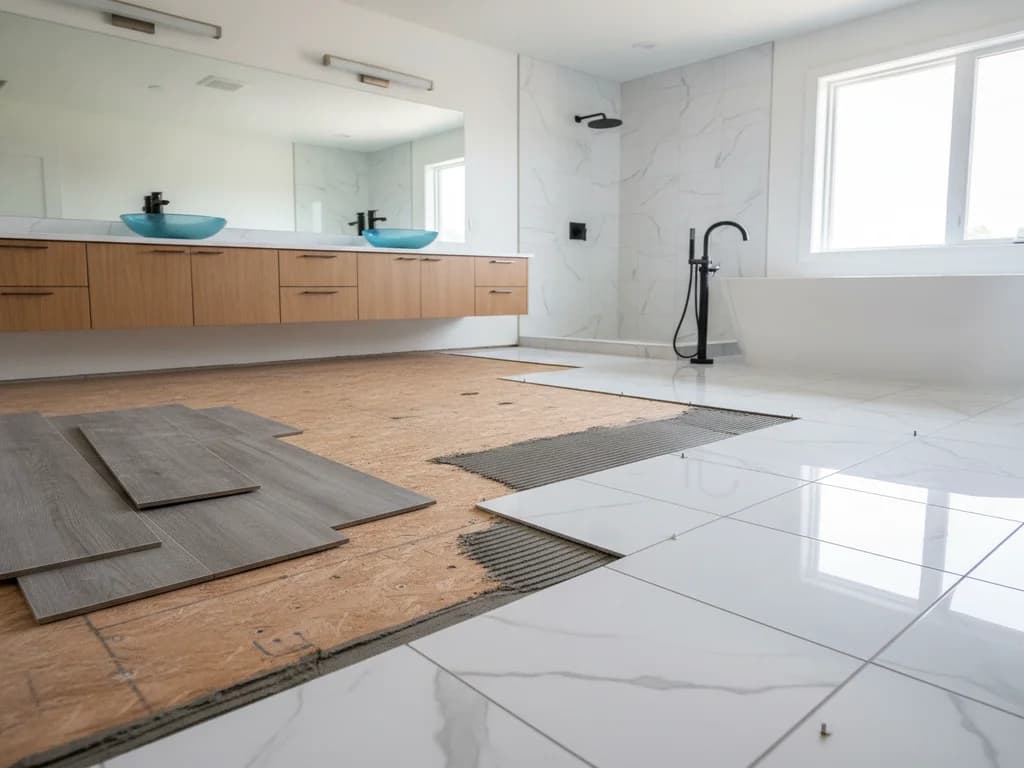
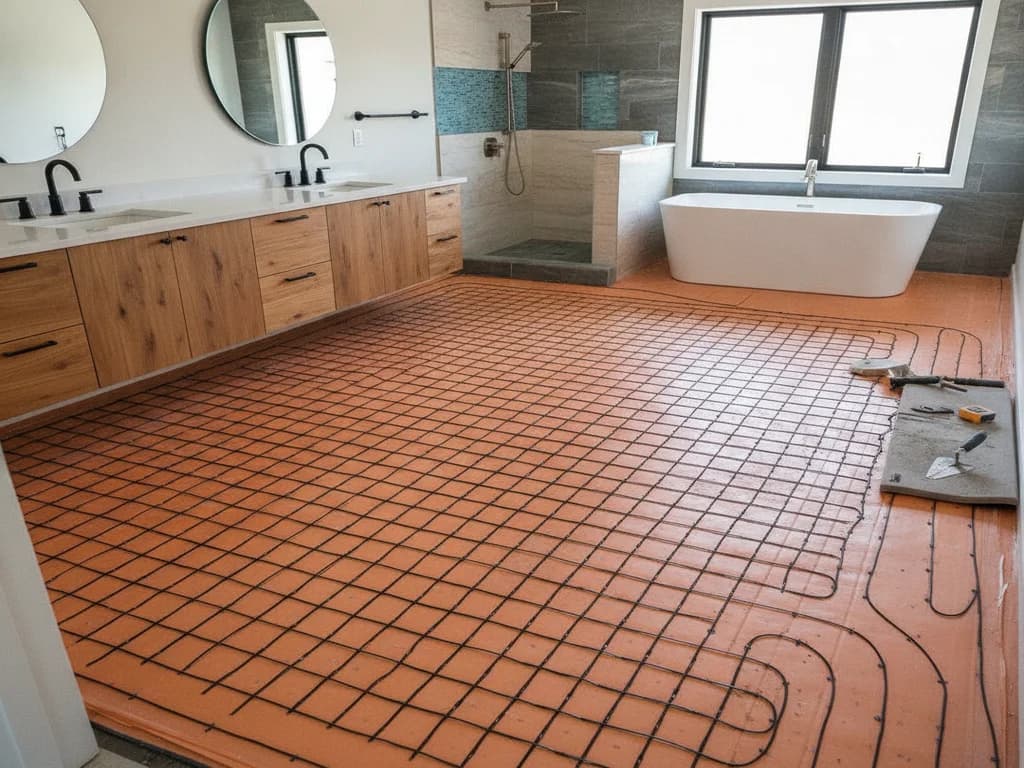
Here is the part nobody enjoys hearing: the heating cable is embedded in mortar or a membrane beneath your tile, and there is no way to pull it out and thread a new one in. Replacing the system means the finished floor comes up — demolition down to the substrate, a new membrane and cable, and a new floor on top.
Framed properly, that is not pure loss. Demolition exposes the substrate for inspection, the replacement system goes in with current-generation membranes and programmable thermostats, and you choose new flooring with fewer constraints — most tile and some other finishes work over radiant heat. The full flooring replacement decision and tile-specific considerations apply from this point exactly as they would without the heating layer.
If you are starting from scratch or adding heat to a bathroom that never had it, sizing, electrical load, and system selection are their own topic — our heated bathroom floor guide covers new-install planning in depth, so we will not repeat it here.
What does repair or replacement cost?
The spread is wide because the interventions are so different. A thermostat swap is a service-call-scale job. A located spot repair adds fault-finding labor plus small-area tile work. Full replacement is priced like a new heated floor installation stacked on top of a tile demolition and reinstall: per HomeAdvisor’s cost data, electric radiant floor heating itself typically runs roughly $8–$15 per square foot for materials and installation, with the new finished floor and demo on top of that.
For a typical Boise bathroom, that math is why diagnosis-first is not just good practice but good economics — you want certainty the cable is dead before paying tile-demolition money to reach it. And it is why replacement is most rational bundled into a broader floor or bathroom update; the Boise remodel cost guide shows how the pieces combine.
Is a heated floor worth replacing at all?
In this climate, most owners say yes without hesitation. Boise’s long heating season and cold winter mornings are exactly what radiant bathroom floors were made for, and homeowners who have lived with one rarely accept going back to cold tile — a comfort case we make in our Idaho winter bathroom comfort guide.
The alternative is legitimate too: if the system failed young, if the bathroom gets little use, or if the budget is better spent elsewhere in the room, decommissioning the dead cable (safely disconnecting it and leaving it entombed) and running the bathroom unheated costs nothing. The wrong answer is only the middle one — paying for a new floor over a dead system you wish you had replaced while it was open.
What the process looks like
- 1
Test before touching the floor
A technician verifies the thermostat is powering the circuit, checks the floor sensor’s resistance against spec, then measures the heating cable’s resistance and insulation values. This sequence definitively separates a $150 problem from a whole-floor problem.
- 2
Swap the cheap components first
If the thermostat or sensor is the fault, it is replaced and the system retested — most “dead” heated floors end here. Modern programmable and WiFi thermostats are a small upgrade in the same visit.
- 3
Locate the fault if the cable is confirmed dead
With a confirmed cable failure, a fault locator and thermal imaging narrow the break to a small area. This determines whether a spot repair is viable or whether the damage pattern calls for full replacement.
- 4
Open the floor — a few tiles or all of them
For a spot repair, only the tiles over the break come up and a manufacturer splice kit restores the circuit. For replacement, the finished floor and old heating layer are demolished to the substrate, which then gets inspected and corrected.
- 5
Install the new system with stage testing
A new uncoupling-and-heat membrane and cable go down per manufacturer spec, with resistance readings logged before, during, and after embedding — so any installation damage is caught while it is still cheap to fix, not after the tile is set.
- 6
Finish the floor and commission the controls
New flooring is installed over the heating layer, the sensor and GFCI-protected thermostat are wired and programmed, and the system is commissioned gradually per the manufacturer’s first-heat schedule. Final resistance readings are recorded on the warranty card.
Ready to plan your Boise bathroom?
Licensed & insured · 3-year workmanship warranty
Frequently asked questions
- Why is my heated bathroom floor not working?
- Start with the components you can see: thermostats and floor sensors fail far more often than the embedded cable. A blank or erroring thermostat, a tripped breaker or GFCI, or a sensor reading out of range explains most cold floors. Only after those are ruled out — by actual resistance testing, not guessing — does the cable become the suspect.
- Can you repair a heated floor without removing the tile?
- Thermostat and sensor problems, yes — no floor demolition involved. A broken heating cable sometimes qualifies for a spot repair: if fault-locating equipment pinpoints the break, a pro opens only the few tiles above it and splices in a repair kit. Full cable replacement, though, always means the finished floor comes up.
- How long do electric heated floors last?
- The embedded cable has no moving parts and, installed correctly, is generally expected to last as long as the flooring above it — manufacturers such as Schluter back their cables with multi-decade warranties. Thermostats and sensors are the shorter-lived parts. Premature cable failure usually traces to installation damage or a later screw or drill hit, not wear.
- How much does it cost to replace a heated floor system?
- It is effectively two projects: removing and rebuilding the finished floor, plus the heating system itself. Per HomeAdvisor cost data, electric radiant heat typically runs roughly $8–$15 per square foot installed, with tile demolition and the new floor priced on top. That combined bill is why confirming the cable is truly dead comes first.
- Should I replace a broken heated floor or just skip it?
- If the floor is being rebuilt anyway, replacing the heat is a modest add to a project already underway — and in Boise winters it is the feature owners miss most. Skipping it is reasonable for a rarely used bathroom or a tight budget; the dead cable is simply disconnected safely and left in place. Deciding after the new tile is down is the only bad option.
Sources
Claims and figures are drawn from the sources above and provided for general guidance; your project may vary. Photography is illustrative of design concepts. For a fixed price on your specific bathroom, request a free estimate.