Updated June 30, 2026 · 9 min read
By Boise Bath — bathroom & shower remodeling in Boise & the Treasure Valley
The short answer
Good bathroom ventilation means sizing the exhaust fan to roughly 1 CFM per square foot of floor, venting it through smooth, insulated duct to the outdoors (never the attic), and adding a humidity sensor or timer so it runs long enough after showers. This prevents mold, moisture damage, and poor air quality.
Key takeaways
- Size the fan by floor area — about 1 CFM per square foot for typical bathrooms, more for large or jetted-tub baths.
- Always vent to the outside through smooth, insulated duct; never terminate in the attic or soffit.
- A humidity-sensing fan or timer ensures the fan runs long enough to clear moisture.
- Quieter (low-sone) fans get used more, so they prevent more mold.
- Ventilation handles airflow; waterproofing the wet area is a separate system (linked).
Why does a bathroom need ventilation?
A shower dumps a remarkable amount of moisture into a small room in a few minutes. Without somewhere to go, that humidity condenses on walls, ceilings, mirrors, and inside the wall cavity — feeding mold, peeling paint, swelling trim, and degrading air quality over time. Ventilation’s job is to move that moist air out of the house before it causes damage.
This is the airflow half of moisture control. The other half — waterproofing the wet area so water never gets behind the tile in the first place — is a separate system covered in how the wet area itself is waterproofed. Here, the focus is fans, ducts, controls, and code: getting the moist air out, reliably, every time.
The two non-negotiables
Size the fan to the room, and vent it outside through insulated, smooth duct. Get those two right and you have solved most of what causes bathroom mold.
Do all bathrooms need an exhaust fan?
1. Codes often allow a bathroom to be ventilated by an operable window instead of a fan, but in practice a fan wins almost every time — nobody opens a window mid-shower on a cold Boise January morning. A mechanical fan removes moisture on demand, regardless of weather, and it is the reliable choice even when a window technically satisfies code.
How do you size a bathroom exhaust fan (CFM)?
2. The standard rule of thumb, echoed by ENERGY STAR and the Home Ventilating Institute (HVI), is roughly 1 CFM per square foot of floor area for a typical bathroom up to about 100 square feet. A 60-square-foot bath wants a fan around 60–80 CFM. Round up rather than down, and confirm the fan’s rating is HVI-certified so the number on the box reflects real airflow.
How do you size a fan for a large or jetted-tub bathroom?
3. For bathrooms larger than about 100 square feet, HVI recommends sizing by fixture instead: add CFM for each fixture — typically around 50 CFM per toilet, shower, or bathtub, and 100 CFM for a jetted tub — and total them. Large or multi-fixture baths often do better with two smaller fans or a single higher-capacity unit than one undersized fan struggling to keep up.
What sone rating should you look for?
4. A fan’s noise is measured in sones — lower is quieter. A fan rated around 1.0 sone or below is whisper-quiet; loud fans rated 3–4 sones tend to get switched off early or never used, which defeats the purpose. The quietest fan you will actually run is the one that prevents the most mold. ENERGY STAR-qualified fans are both efficient and generally quiet.
Where should the fan be placed?
5. Place the fan near the moisture source — close to the shower or tub — but not directly in the shower spray zone unless it is rated for that location. Mounting it between the shower and the door helps pull moist air across and out of the room. Avoid tucking it in a far corner where steam never reaches it.
Why must the fan vent outside, not into the attic?
6. Venting a bathroom fan into the attic, soffit, or wall cavity simply moves the moisture problem out of sight, where it condenses on framing and insulation and breeds mold and rot. The International Residential Code and International Mechanical Code (published by the ICC) require exhaust to terminate outdoors. Always run the duct fully to an exterior roof or wall cap — never let it dump into the attic.
What duct should you use — flex or rigid?
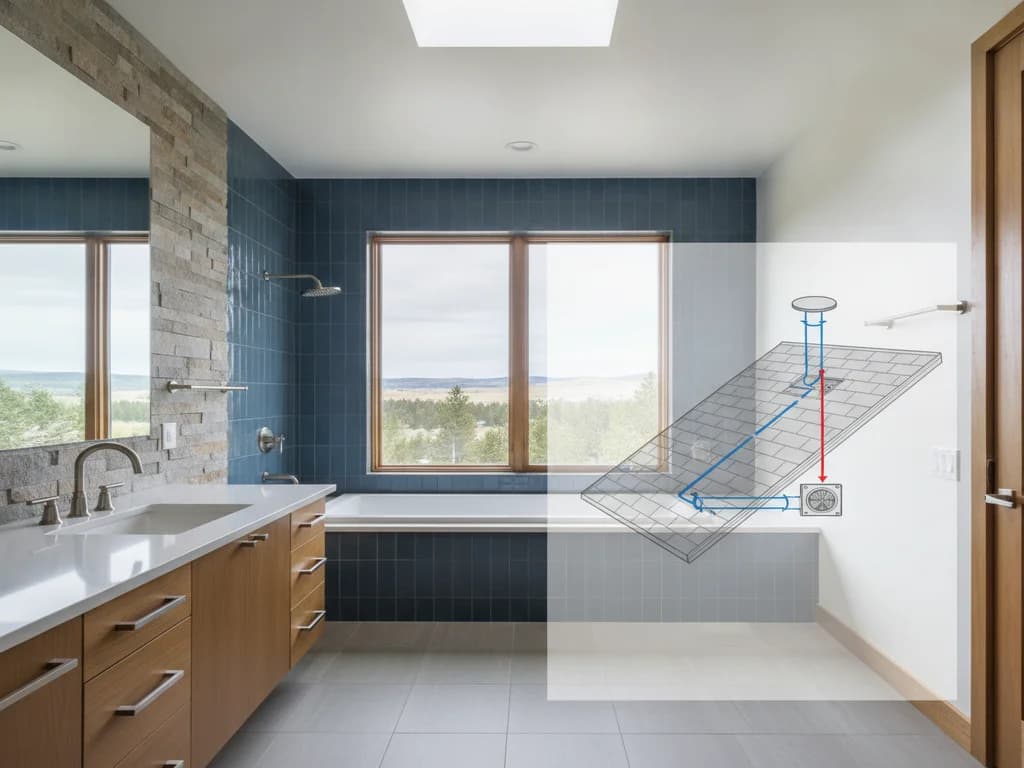
7. Smooth-wall rigid duct moves air far more efficiently than flexible, ribbed duct, which creates turbulence and drag. 8. Keep the run as short and straight as possible with minimal elbows; every bend and every extra foot reduces real-world airflow. If flexible duct must be used, pull it taut and avoid sags. Manufacturer install guides from Panasonic and Broan specify the duct diameter the fan needs — do not neck it down.
Should the duct be insulated in cold Boise winters?
9. Yes. In an unconditioned attic during a cold Boise winter, warm moist air hits a cold duct and condenses, dripping back toward the fan or pooling in the run. Insulated duct keeps the air warm enough to reach the exterior as vapor, not water. 10. Slope the duct slightly down toward the exterior termination so any condensate drains out, not back into the housing.
What’s the right exterior termination?
11. Terminate at a dedicated roof cap or wall cap fitted with a backdraft damper, which lets air out but blocks cold drafts, pests, and rain from coming back in. 12. Use a cap with a pest screen, but check it does not clog with lint over time. A proper, unobstructed termination is the difference between a fan that exhausts and one that just hums.
How long should the fan run after a shower?
13. Moist surfaces keep evaporating after you step out, so the fan should keep running. A common recommendation is to run it for about 20 minutes after a shower. 14. A simple countdown timer switch automates this so the fan is not left running all day or shut off too soon — an inexpensive upgrade that does a lot of the mold-prevention work.
Are humidity-sensing fans worth it?
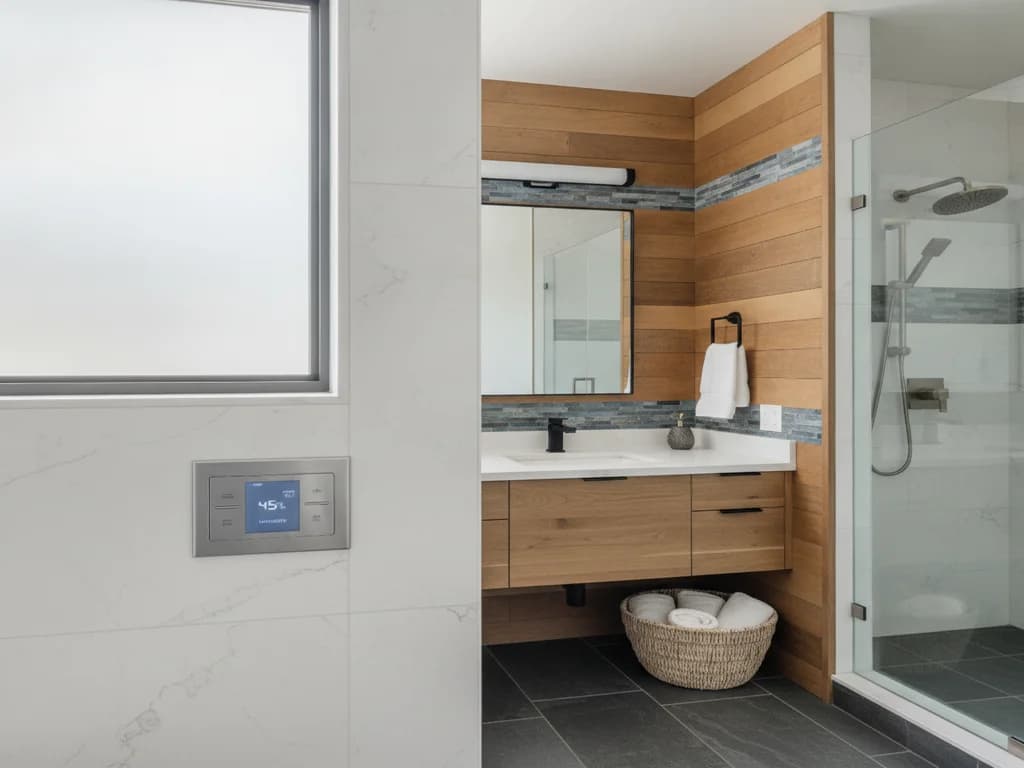
15. A humidity-sensing fan turns itself on when relative humidity spikes and off once the air clears, with no one having to remember the switch. In a busy household, or a bathroom prone to fogging, that automation reliably clears moisture and is well worth the modest premium. It is the closest thing to set-and-forget mold prevention.
How does make-up air (door undercut) affect performance?
16. A fan can only exhaust as much air as it can replace. If the bathroom door seals tightly to the floor, the fan starves and airflow drops. A roughly 3/4-inch undercut beneath the door (or a transfer grille) gives the fan the make-up air it needs to actually move the rated CFM. This overlooked detail is why some correctly sized fans underperform.
Are fan/light/heat combo units a good idea?
17. Combination fan/light or fan/light/heat units save ceiling space and are convenient, and they work well as long as the fan portion is properly sized and HVI-rated. Just do not let a combo unit’s light tempt you into undersizing the exhaust. For the lighting side of the room, see layered bathroom lighting ideas; the ventilation requirements here still apply to the fan component.
What does code require for bathroom ventilation?
At a homeowner level, the IRC/IMC require either an operable window or mechanical exhaust ventilation in a bathroom, with mechanical exhaust terminating outdoors and meeting minimum airflow. Local permitting runs through the City of Boise or Ada County, and a remodel that touches the fan, wiring, or duct may require a permit and inspection. Confirm current requirements with the local building department or a licensed contractor before you finalize a plan.
How do you maintain a bathroom fan?
18. A neglected fan loses airflow. Vacuum dust off the grille and motor a couple of times a year, confirm the exterior backdraft damper opens freely and is not painted or lint-clogged, and listen for bearing noise that signals an aging motor. Five minutes of maintenance keeps the rated CFM doing its job.
What are the signs your bathroom is under-ventilated?
Watch for persistent condensation on mirrors and walls long after a shower, musty smells, mildew spots at ceiling corners or along grout lines, peeling or blistering paint, and warping trim. Any of these means moisture is lingering — the fan is undersized, ducted wrong, vented to the attic, or simply not run long enough. Pairing the right fan with the most durable, moisture-resistant materials gives a bathroom the best defense.
What’s the simplest ventilation upgrade for an older Boise home?
Many of Boise’s older North End and Bench homes were built with poor ventilation — or none — and some have fans that dump straight into the attic. The highest-impact upgrade is usually a correctly sized, quiet, HVI-certified fan ducted with insulated smooth pipe to a proper exterior cap, paired with a humidity sensor or timer — what that installation typically runs is covered in its own cost guide. When that work is part of a full bathroom remodel done to code, it is done once and done right; when you are ready, request a free estimate.
Ready to plan your Boise bathroom?
Licensed & insured · 3-year workmanship warranty
Frequently asked questions
- How do I know what size exhaust fan my bathroom needs?
- For a typical bathroom up to about 100 square feet, use roughly 1 CFM per square foot of floor (a 60-square-foot bath wants around 60–80 CFM), per ENERGY STAR and HVI guidance. For larger baths, size by fixture instead — about 50 CFM per toilet, shower, or tub and 100 CFM for a jetted tub.
- Can a bathroom fan vent into the attic?
- No. Venting into the attic, soffit, or wall cavity dumps moisture where it condenses on framing and insulation, causing mold and rot. The IRC and IMC require exhaust to terminate outdoors at a roof or wall cap. Always run the duct fully to the exterior.
- How long should a bathroom fan run after a shower?
- About 20 minutes after a shower, because surfaces keep releasing moisture after you step out. A countdown timer switch automates this, and a humidity-sensing fan does it automatically — both ensure the fan runs long enough to clear humidity without being left on all day.
- Are humidity-sensing bathroom fans worth it?
- For most households, yes. A humidity-sensing fan switches on when humidity spikes and off once the air clears, with no one needing to remember the switch. In busy or fog-prone bathrooms it reliably prevents mold and is well worth the modest cost premium.
- Does code require a fan if my bathroom has a window?
- Codes often allow an operable window in place of a mechanical fan, but a fan is the more reliable choice since few people open a window mid-shower in winter. Requirements vary, so confirm current rules with the City of Boise or Ada County building department.
- Why does my bathroom still get moldy with a fan?
- Usually the fan is undersized, ducted with restrictive flex or long runs, vented into the attic instead of outside, not run long enough, or starved of make-up air by a tight door. Check sizing, duct routing, the exterior termination, run time, and a door undercut to fix it.
Sources
- ENERGY STAR — bathroom ventilation fan specifications & sizing
- Home Ventilating Institute (HVI) — fan sizing & certified airflow
- International Code Council (IRC/IMC) — mechanical ventilation & termination
- EPA — mold prevention & indoor humidity guidance
- City of Boise — building & mechanical permits
Claims and figures are drawn from the sources above and provided for general guidance; your project may vary. Photography is illustrative of design concepts. For a fixed price on your specific bathroom, request a free estimate.