Updated July 6, 2026 · 8 min read
By Boise Bath — bathroom & shower remodeling in Boise & the Treasure Valley
The short answer
Four fixes actually quiet a bathroom: a solid-core door (This Old House: an "immediate, noticeable difference"), insulation in the walls before drywall closes them, a fan rated 1.0 sones or less (HVI's own quiet-bathroom benchmark), and pipe insulation or tightened straps on lines that knock (Bob Vila). Skipping any one of the four leaves an obvious gap.
Key takeaways
- The Home Ventilating Institute sets the bar plainly: "For quiet bathroom ventilation the fan should be rated at 1.0 sones or less" — and gives a reference scale where "1.0 sones is the sound of a refrigerator" and "0.5 sones is the sound of rustling leaves."
- Manufacturer sone ratings back that up in practice: Panasonic's Whisper Choice DC fan is rated at "less than 0.4 sones at 80 CFM" and "1.1 sones at 110 CFM" — meaning the same fan can cross HVI's quiet threshold just by running on its higher speed.
- This Old House doesn't hedge on solid-core doors: "Upgrading to a solid-core door makes an immediate, noticeable difference in sound reduction," versus a hollow door where "this veneer is actually all you have between each side of the door... except for some strips of cardboard."
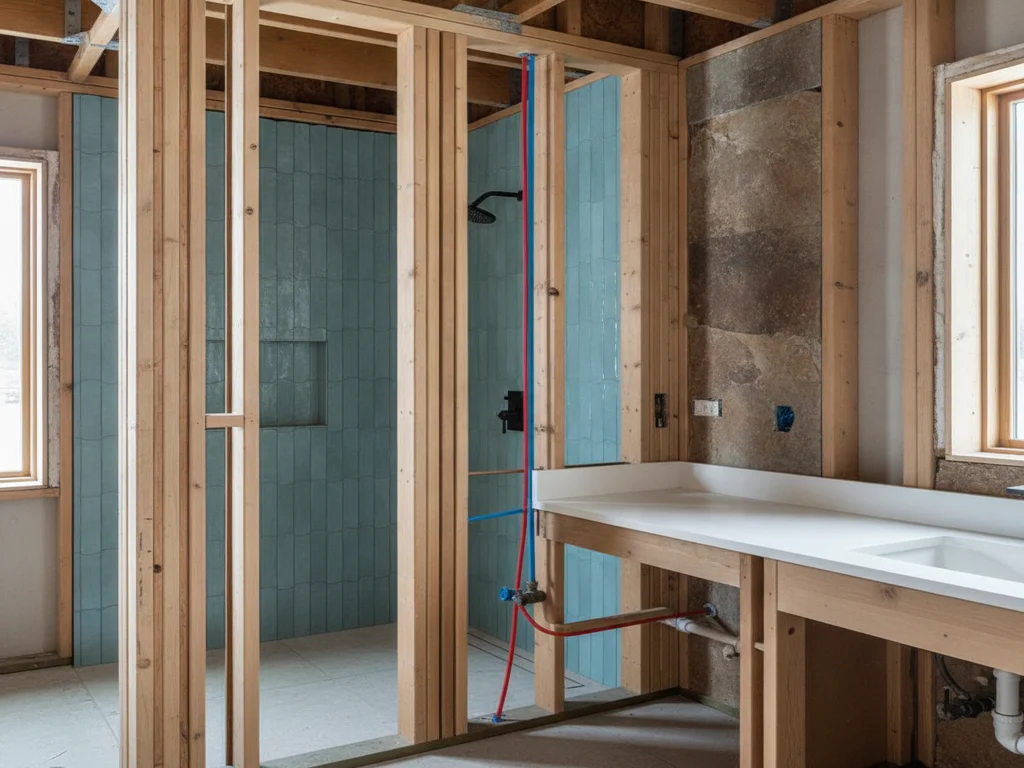
- Wall soundproofing has a real-world sequencing constraint: insulation and sound-decoupling measures like resilient channels or mass-loaded vinyl have to go in while the wall is open, per This Old House — not something added after drywall is hung.
- Bob Vila traces "banging pipes" to water hammer — "the sudden pressure to stop the flow of quick-moving water" — and notes the fix is often mechanical, not exotic: "pipe insulation... work[s] great for cushioning loose, banging pipes," and loose pipe straps are a common, cheap root cause.
Four separate noise problems, not one
"Soundproof the bathroom" isn't really one job — it's four unrelated ones that happen to live in the same room. Sound gets in or out through the door, through the walls, from the fan itself, and from the pipes running behind everything. A bathroom can fix three of the four and still sound loud, because the fourth one was never addressed. Working through each separately is the only way to actually land on quiet.
The one-line version
Solid-core door, insulated walls, a fan rated 1.0 sones or less, and pipes that are strapped and insulated — miss one and the room still sounds like the others weren't done.
The door: where hollow-core actually fails
This Old House is unambiguous about what upgrading the door alone accomplishes: "Upgrading to a solid-core door makes an immediate, noticeable difference in sound reduction." The reason a standard interior door lets so much through is structural, not incidental — describing a typical hollow-core door, the same source notes "this veneer is actually all you have between each side of the door, except for some strips of cardboard or some other filler to hold the veneers together." A solid-core door replaces that air gap with a core of compressed wood fiber and resins, giving sound something to actually push through instead of straight past.
The door slab is only half the job, though. This Old House's soundproofing guidance also covers the gaps around a closed door: "You can stop a lot of noise simply by weatherstripping doors and windows," sealing the same gaps that let cold air through in winter. A solid-core door with an unsealed gap underneath still leaks plenty of sound — the two fixes go together, not one instead of the other. For the swing-vs-pocket question this raises in a tight layout, our pocket door vs. swing door comparison covers how each style handles weatherstripping and seal quality differently.
The wall: insulation has to go in before drywall does
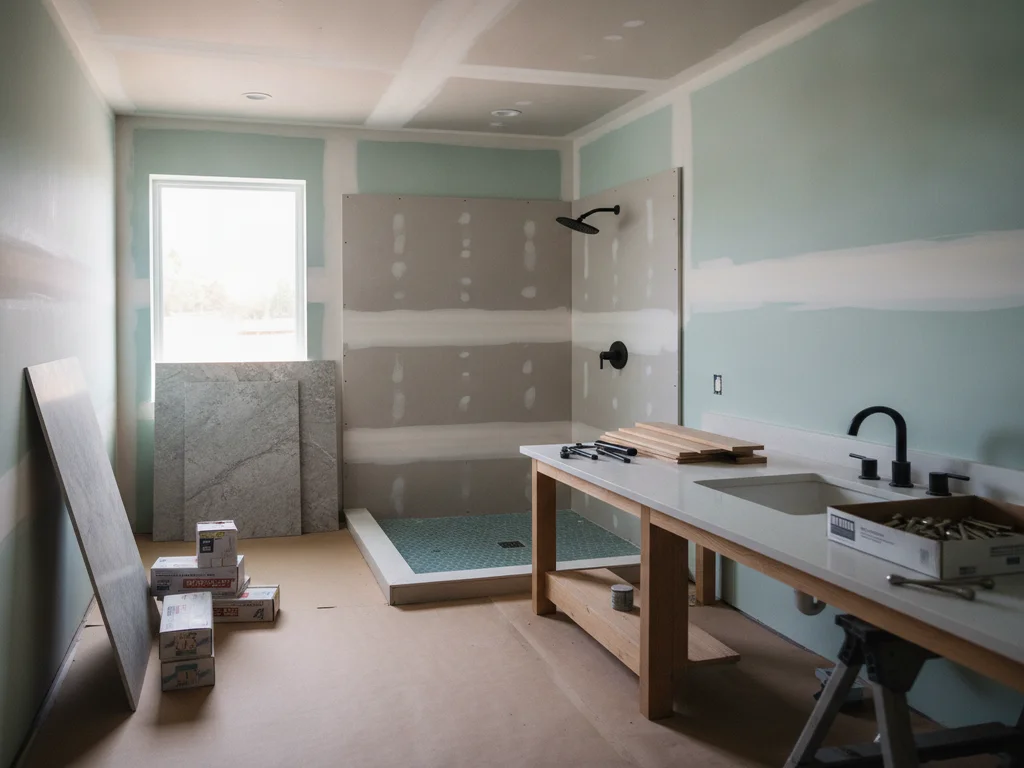
Walls are the fix with the least flexibility on timing — the work has to happen while the studs are still open, before drywall closes the cavity. This Old House's room-soundproofing guidance describes the standard approach for a wall that's already finished: applying "mass-loaded vinyl... directly onto the wall studs" as "a more permanent solution," or "decoupl[ing] the drywall from the framing using soundproofing clips and channels" to break the direct physical path sound travels through. Both of those techniques are dramatically easier — and cheaper — to do during a remodel, while the wall is open anyway, than as a standalone retrofit through existing drywall.
That's the practical case for treating soundproofing as a remodel-sequencing question rather than an add-on: if a bathroom wall is already opened up for plumbing or electrical work, adding insulation batts and, budget permitting, a sound-decoupling layer costs relatively little extra at that stage. Waiting until after the wall is finished means tearing it back open just to add what could have gone in the first time.
The fan: sones, not just CFM, is what you're shopping for
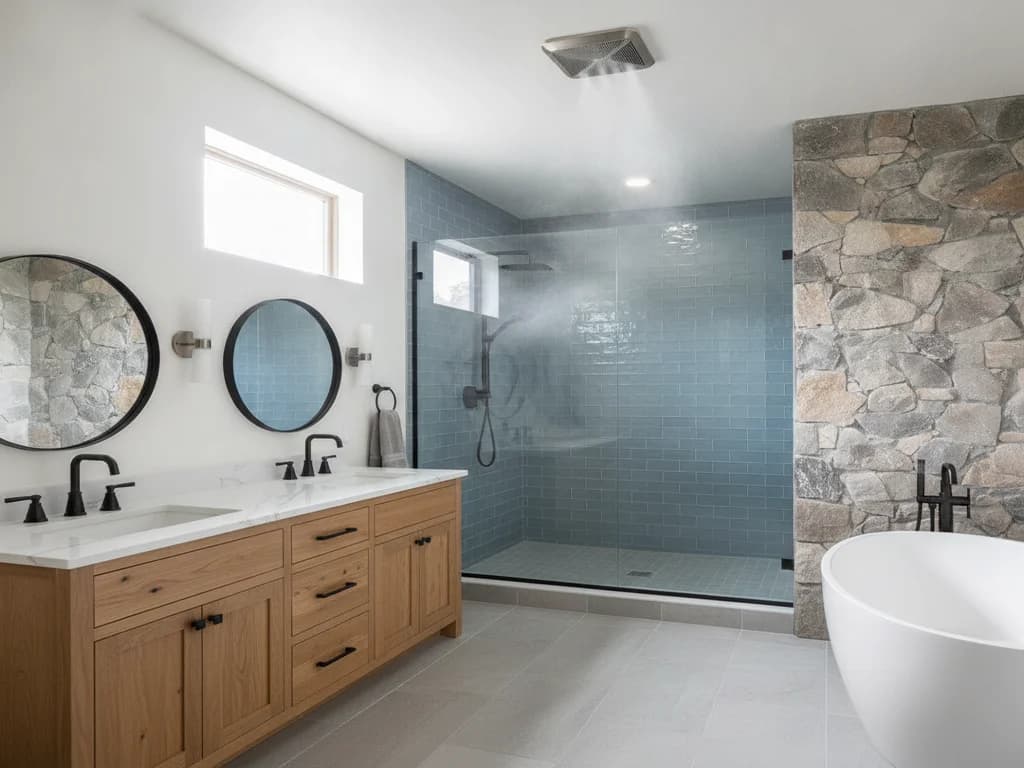
CFM (cubic feet per minute) measures how much air a fan moves, and it's the number most homeowners shop by — but it says nothing about how loud the fan sounds doing it. The number that matters for noise is sones, and the Home Ventilating Institute (HVI), the industry's certification body, sets a clear bar: "For quiet bathroom ventilation the fan should be rated at 1.0 sones or less." HVI's comparison scale makes that concrete: "4.0 sones is the sound of standard television operation; 3.0 sones is typical office noise; 1.0 sones is the sound of a refrigerator; and 0.5 sones is the sound of rustling leaves." A fan rated above that 1.0-sone line is audible well beyond the bathroom door in a way a refrigerator-quiet one isn't.
Manufacturer specs show how much this varies within a single product line. Panasonic's Whisper Choice DC fan is rated at "less than 0.4 sones at 80 CFM" and "1.1 sones at 110 CFM" — the exact same fan crosses HVI's quiet threshold depending only on which speed setting it's run at. That's worth knowing before buying on CFM alone: two fans rated for identical airflow can differ by several multiples in perceived loudness, and the sone number — not the CFM number — is what a homeowner standing in the next room actually notices.
| Sone rating | Comparable sound |
|---|---|
| 4.0 sones | Standard television operation |
| 3.0 sones | Typical office noise |
| 1.0 sones | A refrigerator (HVI's quiet-fan benchmark) |
| 0.5 sones | Rustling leaves |
Per the Home Ventilating Institute; Panasonic's Whisper Choice DC fan is rated under 0.4 sones at 80 CFM and 1.1 sones at 110 CFM.
The pipes: usually a mechanical fix, not an exotic one
Knocking or banging pipes are almost always water hammer, and Bob Vila's explanation of the cause is straightforward: it's "the sudden pressure to stop the flow of quick-moving water" when "the shut-off valve on a high-pressure water line suddenly closes." The fix doesn't require replacing plumbing. Bob Vila points to two common, inexpensive causes and cures: loose pipe straps — "if the straps aren't tight enough — or if a few straps are missing — the pipes can knock around and create noise" — and simply insulating the line, since "pipe insulation is designed to fit around water supply lines to keep them from freezing. But they also work great for cushioning loose, banging pipes." Water hammer arrestors — sealed air-filled cylinders that absorb the pressure spike when a valve shuts — are the more purpose-built fix where straps and insulation alone don't fully solve it.
Like wall insulation, this is far easier to address while a wall is open during a remodel than after the fact — strapping and insulating a supply line takes minutes when it's exposed, and involves cutting into a finished wall when it isn't.
The bottom line
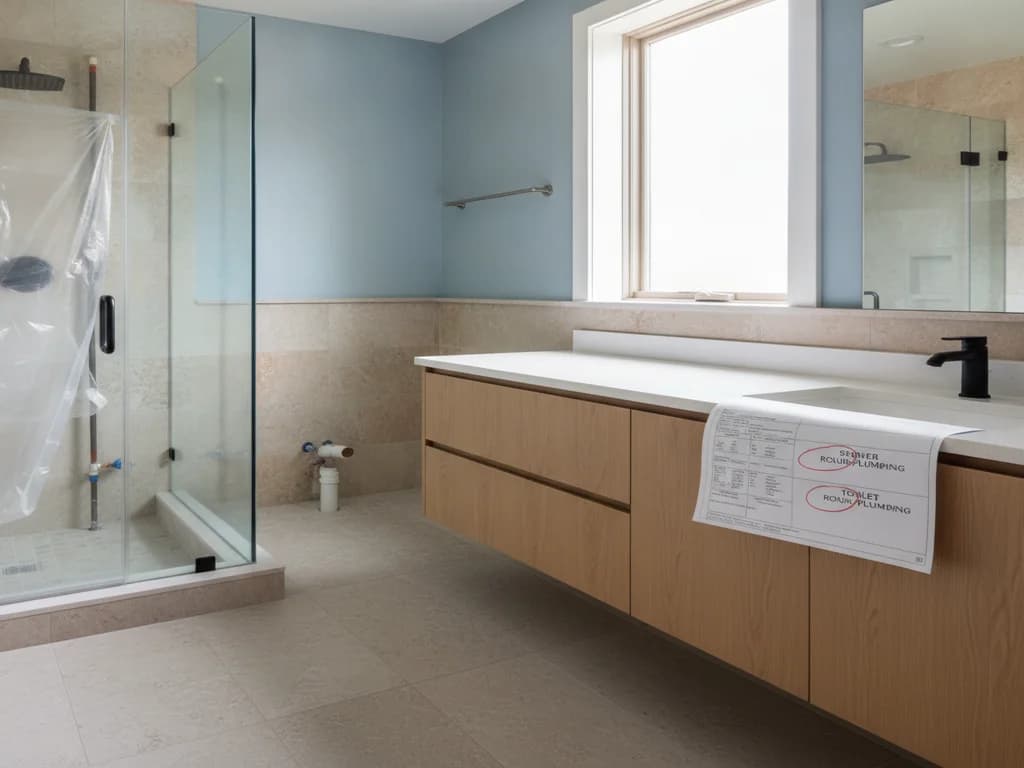
None of these four fixes is expensive or exotic on its own — a solid-core door, batt insulation in an open wall, a fan chosen by its sone rating instead of just its CFM, and pipe straps or wrap on an exposed supply line. What makes a bathroom actually quiet is doing all four together, ideally during a remodel when the walls and door are already part of the scope rather than a separate project layered on afterward.
If you're planning a full bathroom remodel and want soundproofing built into the scope from the start — not bolted on after drywall goes up — that's exactly the kind of sequencing decision worth flagging before demo begins.
Ready to plan your Boise bathroom?
Licensed & insured · 3-year workmanship warranty
Frequently asked questions
- What sone rating is quiet enough for a bathroom fan?
- The Home Ventilating Institute's benchmark is 1.0 sones or less: "For quiet bathroom ventilation the fan should be rated at 1.0 sones or less." For reference, HVI notes "1.0 sones is the sound of a refrigerator." Some fans, like Panasonic's Whisper Choice DC, rate under 0.4 sones on their lower speed setting.
- Does a solid-core door really make a noticeable difference?
- Yes — This Old House states plainly that "upgrading to a solid-core door makes an immediate, noticeable difference in sound reduction," since a typical hollow-core door has little more than "some strips of cardboard" between its two veneer faces. Sealing the gaps around the door with weatherstripping is a necessary second step, not a substitute.
- How do you stop bathroom pipes from banging?
- Most banging is water hammer — per Bob Vila, "the sudden pressure to stop the flow of quick-moving water" when a valve closes. Common fixes include tightening or adding pipe straps (loose straps let pipes "knock around and create noise") and wrapping lines in pipe insulation, which "work[s] great for cushioning loose, banging pipes."
Sources
- Home Ventilating Institute — Bathroom Exhaust Fans
- Panasonic — Whisper Choice DC Fan, 80/110 CFM (manufacturer)
- This Old House — DIY Ways To Soundproof a Door
- This Old House — A Guide to Soundproofing a Room from Floor to Ceiling
- Bob Vila — Water Hammer: What It Is and How To Fix It
- DOE Building America Solution Center — Bathroom Exhaust Fans
Claims and figures are drawn from the sources above and provided for general guidance; your project may vary. Photography is illustrative of design concepts. For a fixed price on your specific bathroom, request a free estimate.