Updated July 16, 2026 · 8 min read
By Boise Bath — bathroom & shower remodeling in Boise & the Treasure Valley
The short answer
Galvanized steel supply pipe was standard in homes built before the 1960s, including much of Boise’s North End, East End, and Bench. It corrodes from the inside, so decades-old pipe delivers falling water pressure, rust-tinted water, and eventual leaks. A bathroom remodel — when walls are already open — is the most economical time to replace it.
Key takeaways
- Galvanized steel was the standard water-supply pipe before copper took over, so pre-1960s Boise homes — North End and East End Craftsmans, early Bench ranches — frequently still have it.
- The zinc coating that protects galvanized pipe erodes from the inside; corrosion then narrows the pipe with rust and scale, which is why the damage stays invisible until symptoms appear.
- Classic symptoms: weak water pressure that worsens over years, pressure drops when a second fixture runs, rust-tinted water after sitting, and orange staining at fixtures.
- A magnet and a scratch test on an exposed pipe near the water heater or in the crawl space identify galvanized in seconds.
- Replacing accessible galvanized runs during a bathroom remodel — while walls are open anyway — avoids paying for demolition twice when the pipe eventually fails behind new tile.
Which Boise homes have galvanized plumbing?
Galvanized steel — steel pipe dipped in zinc to slow rust — was the dominant residential water-supply material in American homes for the first half of the twentieth century, before copper displaced it through the 1950s and 60s. Publications like This Old House and the Journal of Light Construction treat pre-1960s construction as the galvanized era, and Boise’s older neighborhoods fit the pattern.
That maps directly onto the city: North End and East End Craftsman bungalows from the early 1900s, wartime and immediate post-war houses, and the earliest Bench ranches were all built in the galvanized years. Later Bench and suburban homes from the 60s onward were increasingly plumbed in copper.
Original pipe is not guaranteed — many older Boise homes have been partially or fully repiped over the decades. Just as often, though, a previous remodel replaced only the runs that were convenient, leaving original galvanized in the crawl space, in exterior walls, or feeding the one bathroom that never got touched. Knowing what your house actually has is worth ten minutes of checking.
How do you tell if your pipes are galvanized?
Find an exposed supply pipe — near the water heater, under a sink, or in the crawl space or basement — and check three things:
- Color and surface: galvanized pipe is dull gray to silver, often flaking or crusted at the threaded joints; copper is unmistakably penny-colored; PEX is flexible plastic in white, red, or blue.
- The magnet test: a magnet sticks firmly to galvanized steel; it will not stick to copper or PEX.
- The scratch test: scratch the pipe with a screwdriver — galvanized shows silver-gray metal under the surface, while copper shows bright copper.
How galvanized pipe fails: corrosion from the inside out
The zinc coating that gives galvanized pipe its name is a sacrificial layer — it corrodes so the steel underneath does not. The problem is that the coating erodes over decades of water flow, and once the interior zinc is gone, the steel beneath rusts. Rust and mineral scale then build inward, narrowing the pipe’s effective diameter year after year.
This is why galvanized failure is sneaky: the pipe looks fine from the outside long after the inside has closed down to a fraction of its original bore. A pipe that started life with a three-quarter-inch opening can end up passing water through a pencil-width channel of rust. Trade references commonly put galvanized service life around 40 to 60 years — and any Boise home built before 1960 with original pipe is decades past that window.
The endgame comes in two forms. Either the corrosion eats through a pipe wall or a threaded joint and leaks — often inside a wall or ceiling where the damage compounds quietly — or the accumulated restriction makes the plumbing functionally unusable long before it ruptures.
What are the symptoms in your bathroom?
Bathrooms show galvanized decline first, because showers are where flow and pressure are felt most. The signature is weak water pressure that has worsened gradually over years — not a sudden drop, but a shower that everyone agrees “has never been great.” A related tell: pressure that collapses when a second fixture runs, because the narrowed pipe cannot supply two outlets at once. Our article on low water pressure in the shower walks through separating pipe-supply problems from fixture-level ones.
Discoloration is the second signature. Water that runs rust-tinted for a few seconds after sitting overnight — especially from the hot side or at the fixtures farthest from the meter — is picking up corrosion on its way through the pipe. Over time that iron leaves orange staining at drains and waterlines; our guide to rust stains in tubs and sinks covers reading those stain patterns.
The third sign is history: a house that has already had one or two pinhole leaks or joint failures repaired. Galvanized fails systemically, not randomly — one corroded-through section means the rest of the original pipe is the same age and on the same trajectory.
Repair the section or repipe the house?
Spot repairs on galvanized are a losing game. Replacing one failed section leaves the rest of the corroded system in place, and cutting into brittle, rusted threads to make the splice often stresses the adjacent pipe. Each repair buys time on one joint while the whole network keeps aging.
Full or staged repiping replaces the galvanized runs with modern material — copper or PEX — and it is the answer trade publications consistently point toward once galvanized starts failing. The genuinely useful question is not whether the pipe will need replacement, but when and how to sequence it so you pay for wall demolition once instead of twice.
That is what makes remodel timing the whole ballgame. Opening walls solely to repipe is a significant project on its own; repiping through walls a bathroom remodel has already opened adds the pipe work while the demolition is free. Tiling a new shower over sixty-year-old galvanized, by contrast, places brand-new finishes directly in the path of the system’s next failure.
Never tile over failing galvanized
The most expensive version of this story is a beautiful new shower fed by original galvanized pipe that fails two years later — because the fix now requires demolishing new tile. If a remodel opens the walls, have the exposed supply runs evaluated before anything closes up.
Copper or PEX for the replacement?
Both are proven. Copper is the traditional standard — rigid, long-lived, and familiar to every inspector. PEX, the flexible plastic tubing that now dominates repipes, costs less in material and labor, snakes through existing walls with far less demolition, and tolerates freezing better — a real consideration for pipes in the crawl spaces and exterior walls of older Boise homes during cold snaps.
For a repipe threaded through a finished house, PEX’s flexibility is a large practical advantage: fewer wall openings, fewer fittings buried in cavities, faster installation. Many projects mix the two — copper stub-outs at fixtures for rigidity, PEX for the long runs. Your plumber’s recommendation will depend on the house’s layout and access.
| Factor | Copper | PEX |
|---|---|---|
| Cost | Higher material and labor | Lower material and labor |
| Installation in finished walls | Rigid — more wall openings | Flexible — snakes through cavities |
| Freeze tolerance | Can split when frozen | More forgiving of freezing |
| Track record | Many decades | Decades, now the repipe standard |
What repiping looks like during a bathroom remodel
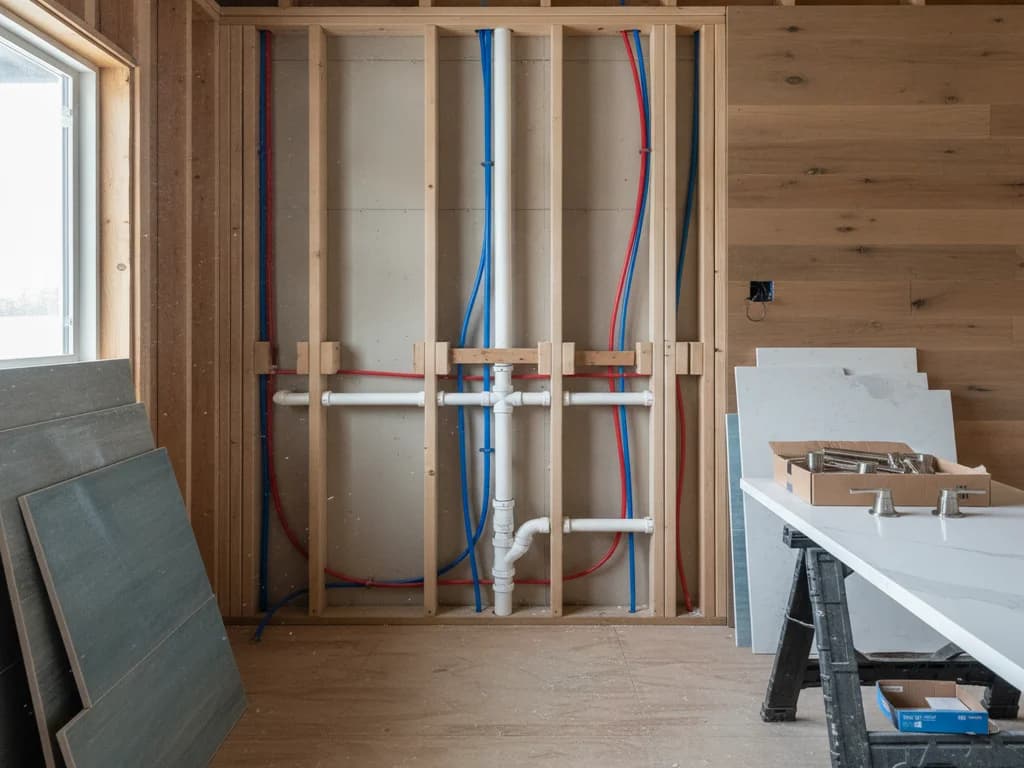
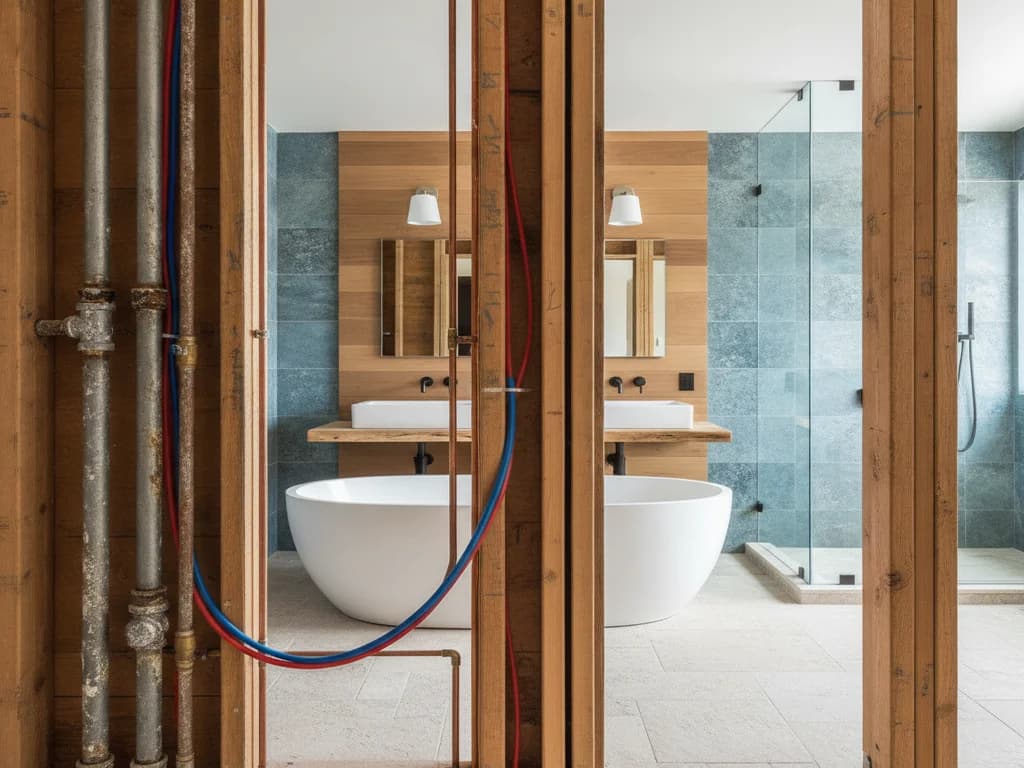
In a remodel context, the repipe folds into work already happening. Demolition exposes the supply runs serving the bathroom; a licensed plumber replaces the galvanized back to a sensible transition point — ideally to the main or to already-modern pipe, so no corroded sections remain upstream feeding rust into new lines. New shutoff valves and fixture connections go in with the new pipe, and everything is pressure-tested and inspected before the walls close.
The full scope of what that involves — and how drains and vents figure in alongside supply lines — is covered in our guide to replacing bathroom plumbing. In Idaho, this is licensed-trade work: plumbing must be performed by a licensed plumber under permit, which is exactly what you want for pipe that will be sealed behind tile for the next several decades.
One honest caveat about scope: replacing only the bathroom’s runs while original galvanized remains elsewhere improves that bathroom but does not end the house’s pipe story. Many owners stage it — bathroom runs during the remodel, remaining runs as a planned follow-up — which is a sound strategy as long as it is a plan and not a hope.
Ready to plan your Boise bathroom?
Licensed & insured · 3-year workmanship warranty
Frequently asked questions
- How do I know if my Boise home has galvanized pipes?
- Check an exposed supply pipe near the water heater, under a sink, or in the crawl space. Galvanized is dull gray, threaded at the joints, and magnetic — a magnet sticks firmly to it but not to copper or PEX. A scratch shows silver-gray metal. Homes built before about 1960 with no documented repipe are the likeliest candidates.
- How long does galvanized plumbing last?
- Trade references commonly cite roughly 40 to 60 years of service life. The zinc coating erodes from the inside first, after which the steel rusts and the pipe narrows with scale. Since galvanized largely stopped being installed by the 1960s, any original galvanized in a Boise home today is well past that range and living on borrowed time.
- Is galvanized pipe why my shower pressure is so weak?
- Quite possibly. Corrosion narrows galvanized pipe from the inside, so pressure declines gradually over years and drops sharply when a second fixture runs. If cleaning the showerhead and checking the valve do not help — and especially if the house is pre-1960s — restricted supply pipe is a prime suspect worth having a plumber evaluate.
- Should I replace galvanized pipes during my bathroom remodel?
- If the remodel opens walls that contain galvanized supply lines, replacing them then is usually the right call. The demolition is already paid for, a licensed plumber can transition to copper or PEX before the walls close, and you avoid the worst-case scenario: tearing out brand-new tile when sixty-year-old pipe fails behind it.
- Is water from galvanized pipes safe to drink?
- The visible issue is iron rust, which affects taste and staining more than safety. The genuine concern is that older galvanized pipe can accumulate lead in its corrosion layers if the system ever included lead components upstream. If your home has original galvanized and water quality worries you, a lab water test answers the question for your specific house.
- Do I have to repipe the whole house at once?
- No. Many owners stage it — replacing the runs a bathroom remodel exposes first, then the remaining galvanized as a planned follow-up project. The key is transitioning at a sensible point so corroded pipe upstream is not feeding rust into new lines, and treating the rest as a schedule rather than an indefinite deferral.
Sources
Claims and figures are drawn from the sources above and provided for general guidance; your project may vary. Photography is illustrative of design concepts. For a fixed price on your specific bathroom, request a free estimate.