
Updated September 12, 2026 · 8 min read
By Boise Bath — bathroom & shower remodeling in Boise & the Treasure Valley
The short answer
Well water in the Treasure Valley can carry dissolved iron, manganese, and hardness minerals that city treatment would reduce. In the bathroom, that means orange and brown-black staining, scale on glass and fixtures, and grout that discolors faster. Durable finishes, quality glass coatings, and treating the water at the source keep a remodel looking new.
Key takeaways
- Private well water skips municipal treatment, so whatever the aquifer carries — iron, manganese, hardness minerals — arrives at your fixtures unfiltered.
- Iron leaves orange-rust staining; manganese leaves brown-to-black deposits; hardness leaves white scale — each marks surfaces differently and responds to different cleaners.
- Per the USGS, water with 121–180 mg/L of hardness (as calcium carbonate) is classified as hard and above 180 mg/L as very hard, and groundwater picks up those minerals as it moves through soil and rock.
- Material choices matter on wells: solid-surface and porcelain outlast finishes that etch or stain, darker matte fixture finishes hide spotting, and epoxy-based grout resists mineral discoloration.
- No surface-level cleaning outruns untreated supply water — a water test and source treatment protect a bathroom remodel better than any cleaner.
Why well water treats a bathroom differently than city water
If your home sits on acreage outside a city water district — common around Kuna, Star, the Eagle foothills, and rural Ada and Canyon counties — your bathroom runs on whatever your well delivers. There is no municipal treatment plant adjusting the chemistry before it reaches your shower valve. The minerals dissolved in the aquifer arrive at your fixtures exactly as the ground supplied them.
Groundwater picks up minerals as it moves through soil and rock, which is why the USGS Water Science School notes that water systems drawing on groundwater watch hardness closely. A Treasure Valley well can deliver some combination of hardness minerals (calcium and magnesium), dissolved iron, and manganese — and each one leaves a distinct signature in a bathroom.
None of this makes well water bad water. It makes it untreated water, and a bathroom is where untreated water writes its diary: on the shower glass, around the drains, in the toilet bowl, and through the grout. Knowing which mineral is leaving which mark is the first step to managing it.
Iron and manganese: where the orange and black stains come from
Dissolved iron is the classic well-water tell. It arrives invisible, then oxidizes wherever water sits and evaporates, depositing orange-to-rust staining along the water’s path — the drain, the faucet drip line, the toilet bowl waterline. If every fixture in the house shows the same orange tint, the iron is in your supply, not in any one fixture. Our article on rust stains in tubs and sinks covers reading those patterns and removing the stains safely.
Manganese is iron’s quieter companion in many wells, and it stains differently: brown to black deposits, often showing up as dark flecks or a gray-black film in the toilet tank, around aerators, and in the dishwasher. Even small concentrations mark surfaces over months of daily water use.
Both minerals also feed a third problem: they lodge in anything porous. Unsealed grout, stone, and worn fixture finishes absorb mineral-laden water and hold the color, which is why stains on a well property tend to return faster and release less completely than the same stains on city water.
Hardness on a well: scale on glass, fixtures, and grout
Hardness — dissolved calcium and magnesium — is measured in milligrams per liter, and the USGS classifies water above 121 mg/L as hard and above 180 mg/L as very hard. Because groundwater dissolves these minerals as it moves through soil and rock, a well can land in those upper ranges, which is why a water test comes before choosing treatment.
In the bathroom, hardness shows up as white, chalky scale: spots on shower glass that etch in if left, crust around faucet aerators and showerhead nozzles, and a gradual film on tile. On a well that also carries iron, the deposits layer — white scale shot through with orange — which confuses cleaning because the two minerals respond to different chemistry.
City-water homeowners deal with a version of this too, and our guide to hard water and your Boise bathroom covers the municipal-supply side. The well-specific difference is degree and control: your concentrations can be higher, they are yours alone to manage, and no utility is moderating them for you.
What untreated well water does to a bathroom over time
The cumulative effects are worth taking seriously, because they shorten the life of exactly the finishes a remodel spends money on:
- Shower glass — mineral spotting etches into un-coated glass over time, leaving permanent cloudiness that no cleaner reverses.
- Fixture finishes — chrome shows every spot; scale buildup around valve trim and inside showerheads restricts spray patterns and drips.
- Grout and stone — porous, unsealed surfaces absorb iron- and manganese-laden water and discolor from within; natural stone can etch under aggressive cleaning aimed at the stains.
- Water heaters and valves — scale accumulates inside tanks and mixing valves, shortening service life and degrading performance where you cannot see it.
- Toilets and tubs — waterline rings and drain-path staining return quickly after cleaning when the supply itself carries the minerals.
Which materials and fixtures cope best with well water?
If you are remodeling a bathroom on a well, the material list is your first line of defense. Some finishes shrug off mineral-heavy water; others fight it daily and lose.
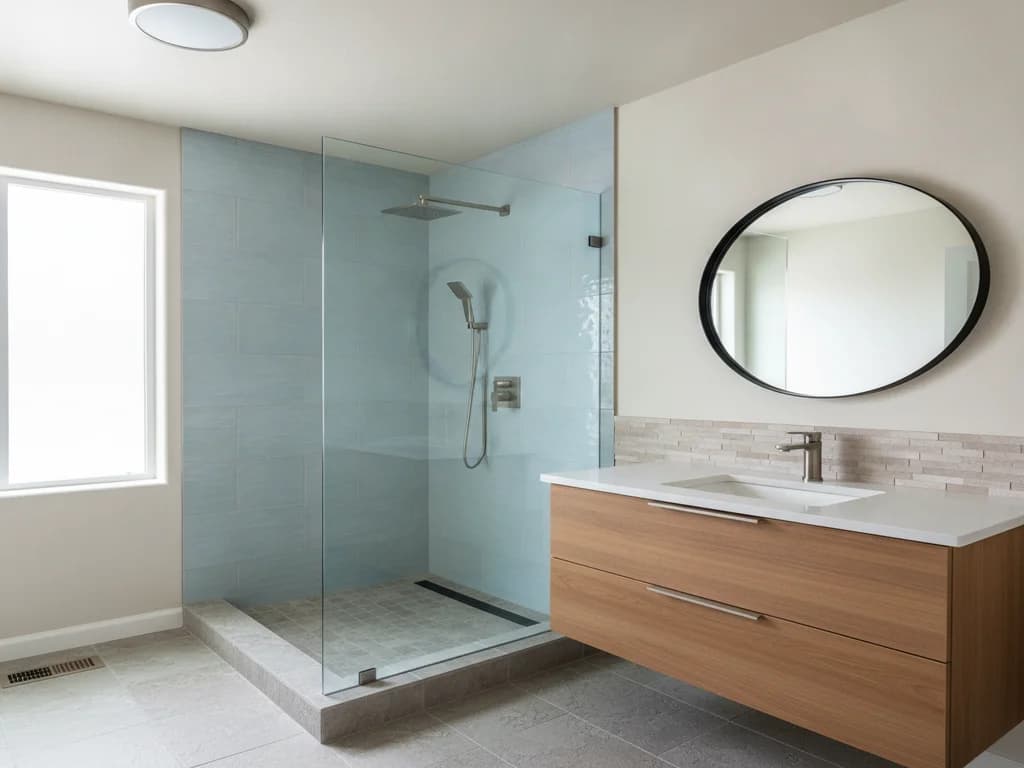
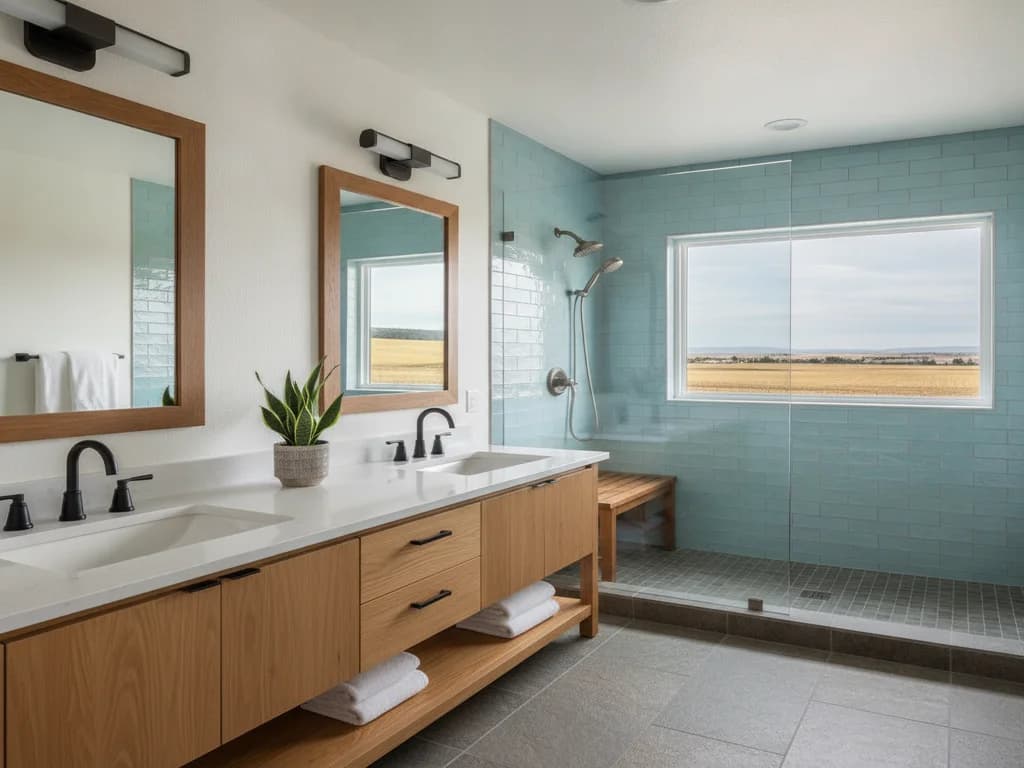
For wet-area surfaces, porcelain tile and quality solid-surface panels are the workhorses — dense, non-porous, and indifferent to iron. Natural stone is the opposite: porous and etch-prone, it is a high-maintenance choice on iron-heavy water and needs disciplined sealing if you use it at all.
For grout, epoxy-based or urethane grout resists mineral penetration far better than standard cementitious grout, which stains from within on well water. For glass, factory hydrophobic coatings plus a daily squeegee habit prevent most etching. For fixtures, brushed and matte finishes in nickel, bronze, or black hide spotting that polished chrome broadcasts — and showerheads with flexible silicone nozzles let you rub scale off rather than soak it. Our roundup of shower heads for hard water goes deeper on that last category.
| Surface | Holds up well | Struggles on well water |
|---|---|---|
| Shower walls | Porcelain tile, solid-surface panels | Natural stone (porous, etch-prone) |
| Grout | Epoxy or urethane grout | Standard cement grout, unsealed |
| Glass | Coated glass + squeegee habit | Uncoated glass left to air-dry |
| Fixtures | Brushed/matte nickel, bronze, black; silicone-nozzle heads | Polished chrome (shows every spot) |
Treat the water at the source, not just the surfaces
Here is the honest hierarchy: no cleaner, coating, or material choice outruns untreated supply water. They buy time and reduce maintenance, but if the well delivers significant iron, manganese, or hardness, the long-term answer sits at the wellhead, not in the shower.
The first step is a proper water test — an inexpensive lab analysis tells you exactly which minerals you are dealing with and at what concentrations, which determines the right equipment. Iron and manganese typically call for dedicated filtration; hardness calls for a softener; many well properties end up with a combination sized to the water’s actual chemistry.
The payoff for a bathroom is dramatic. Treated water means glass that stays clear, grout that stays its installed color, fixtures that stop growing scale, and a remodel that still looks new years in. If you are planning a renovation on a rural property, source treatment belongs in the same conversation — our guide to acreage bathroom remodeling in the Treasure Valley covers how wells, septic systems, and remodel planning fit together.
Test before you remodel
A lab water test costs little and settles the question of what your well actually carries. Do it before finalizing a remodel’s material list — the results should drive your grout, glass, stone, and fixture decisions, and whether treatment equipment belongs in the project budget.
Planning a bathroom remodel on a well property
Sequence matters. If treatment equipment is part of the plan, install it before or alongside the remodel — running mineral-heavy water through brand-new fixtures for a year while you get around to the softener undoes the point of both investments.
Tell your remodeler the property is on a well at the first conversation. It should shape the material recommendations, the fixture selections, and the plumbing details — and a contractor familiar with rural Treasure Valley properties will ask about your water before you raise it. It is also a fair vetting question in reverse: a remodeler with no opinion on wells and water chemistry may not know this corner of the valley well.
And keep expectations calibrated: even with treatment, a well property rewards low-maintenance choices. Dense surfaces, epoxy grout, coated glass, and forgiving fixture finishes mean the bathroom asks less of you every week — which, on acreage where everything else already asks plenty, is worth designing for.
Ready to plan your Boise bathroom?
Licensed & insured · 3-year workmanship warranty
Frequently asked questions
- Why does my well water stain the bathroom orange?
- Orange staining is dissolved iron in the well water oxidizing where water sits and evaporates — drains, faucet drip lines, and toilet waterlines. It arrives invisible and develops color on contact with air. Staining at every fixture in the house means the iron is in the supply, and filtration at the source is the lasting fix rather than repeated scrubbing.
- What causes black or brown stains in a bathroom on well water?
- Usually manganese, a mineral that often accompanies iron in groundwater. It deposits as brown-to-black film or dark flecks — commonly in toilet tanks, around aerators, and on fixtures. Even small concentrations mark surfaces over months of use. A lab water test confirms it, and dedicated filtration at the wellhead addresses it.
- Is well water harder than city water in the Treasure Valley?
- Not necessarily. Several Treasure Valley city systems draw on groundwater wells too — Kuna, Nampa and Eagle all do — so the bigger difference is testing: a city publishes its results each year, while a private well’s hardness is known only once you test it. The USGS notes that water moving through soil and rock dissolves calcium and magnesium, which is why systems drawing on groundwater watch hardness closely. Private wells also skip any municipal treatment, so a water test tells you your actual hardness rather than a regional guess.
- What grout is best for a bathroom on well water?
- Epoxy-based or urethane grout. Standard cementitious grout is porous, so iron- and manganese-laden water penetrates and discolors it from within — and no amount of surface scrubbing reverses that. Epoxy grout is dense and non-porous, resisting both mineral staining and the moisture absorption that feeds it. It costs more installed but pays for itself on well properties.
- Should I install a water softener before remodeling my bathroom?
- Ideally, yes — before or alongside the remodel. Start with a lab water test so treatment matches your actual chemistry: softening for hardness, dedicated filtration for iron and manganese. Installing new glass, fixtures, and grout and then running untreated water through them for a year shortens the life of exactly what you just paid for.
- Can hard well water permanently damage shower glass?
- Yes. Mineral deposits left on glass etch into the surface over time, creating cloudiness that cleaners cannot remove because the damage is in the glass, not on it. Prevention works: factory hydrophobic coatings, a daily squeegee habit, and treating hardness at the source. Once glass is deeply etched, replacement is usually the only real fix.
Sources
- USGS Water Science School — Hardness of Water
- Natural Stone Institute
- Tile Council of North America (TCNA)
Claims and figures are drawn from the sources above and provided for general guidance; your project may vary. Photography is illustrative of design concepts. For a fixed price on your specific bathroom, request a free estimate.