Updated July 16, 2026 · 7 min read
By Boise Bath — bathroom & shower remodeling in Boise & the Treasure Valley
The short answer
Seal cement grout and porous natural stone; never seal epoxy grout or porcelain tile — they are non-absorbent and sealer just sits on top as a film. Use a penetrating sealer, reseal shower grout and calcite stone roughly annually, and let the water-drop test decide: if a drop darkens the surface within a few minutes, it is time.
Key takeaways
- The whole framework fits one rule: sealer belongs on absorbent surfaces only — cement grout and porous stone yes, epoxy grout and porcelain never.
- The water-drop test settles every "does this need sealing?" question in about five minutes, for free.
- Penetrating sealers are the right default for bathrooms; topical sealers add shine but flake and peel in wet areas.
- Sealing is stain protection with an expiration date — roughly annually in showers — not a permanent upgrade or a waterproofing layer.
- Sealer does not waterproof a shower and does not stop marble from etching; it only slows staining.
- Grout that is cracking, crumbling, or discolored from failure needs repair before sealing — sealer locks in whatever state the surface is in.
What sealing actually does (and does not do)
A penetrating sealer soaks into an absorbent surface — cement grout, marble, travertine — and lines its pores so liquids absorb slowly instead of instantly. That is the entire mechanism. A coffee spill or a season of shower grime that would soak into bare grout in seconds instead sits on the surface long enough for normal cleaning to remove it.
It is equally important to know what sealing does not do, because the marketing implies more. Sealer does not waterproof anything — shower waterproofing is a membrane behind the tile, and tile assemblies are designed to get wet, as the Tile Council of North America's specifications spell out. Sealer does not stop marble or travertine from etching, since acid attacks the stone itself rather than soaking in. And it does not strengthen or repair grout: cracked or crumbling joints need regrouting first, because sealer preserves whatever condition it is applied over.
Think of it as a sacrificial stain barrier with an expiration date. Applied to the right surfaces on the right cadence, it is the cheapest maintenance win in a bathroom. Applied to the wrong surfaces, it is at best wasted and at worst a hazy film you have to strip.
Which grout needs sealing — and which never does
Cement grout — what most bathrooms have — is essentially rigid mortar: porous, absorbent, and stain-hungry from the day it cures. It needs sealing. Manufacturers like Custom Building Products specify a cure period first, typically a few days to a few weeks depending on the product, and then a penetrating sealer becomes the difference between grout that stays its color and grout that maps every traffic path and soap film onto itself.
Epoxy grout is the opposite case, and this is where homeowners waste the most money: epoxy never needs sealing. It is a cured resin, non-porous by nature — sealer cannot penetrate it and simply dries on the surface as a smeary film. If your bathroom was built with epoxy grout, cross grout off your sealing list permanently. Not sure which you have? Drop water on a joint: cement grout darkens, epoxy does not. The full chemistry trade-off lives in our epoxy vs. cement grout guide.
One nuance for cement grout: sealing changes the maintenance math but not the maintenance. Sealed grout still needs the routine cleaning covered in our tile and grout care guide — the sealer just makes that cleaning actually work.
Which stone needs sealing: absorption, not species
Stone sealing questions usually get asked by species — "does granite need sealing?" — but the honest answer is always the same: it depends on absorption, and absorption varies within species. A dense polished granite may barely absorb water; a porous honed travertine drinks it. The Natural Stone Institute's care guidance points the same direction: test the actual stone rather than trusting the label.
As starting points: marble and travertine in wet areas are almost always porous enough to want sealing, and roughly annually at that. Slate and granite range from moderately porous to nearly sealed-by-nature; many go two to three years between coats, and some dense granites hardly benefit at all. Porcelain and ceramic tile never need sealing — like epoxy grout, they are too dense to absorb sealer in the first place.
Remember the limit from earlier: on calcite stones like marble and travertine, sealer only defends against stains, not etching. The etching problem — and the daily routine that manages it — is covered in our companion guide to natural stone care in bathrooms.
The water-drop test: five minutes, settles everything
Every question in this article funnels into one test. Place a few drops of water on the clean, dry surface — grout joint or stone face — and watch.
- Water beads and sits on the surface for several minutes: the surface is sealed (or non-absorbent by nature). No action needed — retest in six to twelve months.
- Water slowly darkens the surface over a few minutes: absorption is returning. Sealing soon is worthwhile, and it is the ideal time — protection lapses gradually, not overnight.
- Water darkens the surface almost immediately: the surface is unprotected. Clean, dry, and seal now; every day at this stage is a staining opportunity.
- Test multiple spots: high-traffic floor joints and shower walls lose sealer faster than dry corners, and one reading does not represent the room.
Test before you buy anything
Run the water-drop test before purchasing sealer. Plenty of bathrooms "due" for sealing still bead water everywhere — and epoxy grout and porcelain tile will never absorb the drop no matter how long you wait. Five minutes of watching water saves both the money and the film of unnecessary sealer.
Choosing a sealer: penetrating vs. topical
For bathrooms, the default is a penetrating (impregnating) sealer — usually a solvent- or water-based product that soaks in, protects invisibly, and leaves the surface looking and feeling unchanged. It cannot peel because there is no film, and it lets moisture vapor escape the assembly, which matters in a room this wet.
Topical sealers — coatings that form a gloss or "enhanced" wet-look film on the surface — photograph well and fail predictably in bathrooms. In constant moisture they cloud, flake, and peel, and removing a failed topical coat is a stripping job nobody enjoys. The reasonable exception is a color-enhancing penetrating sealer on stone you deliberately want to deepen, but the enhancement is a look choice, not extra protection.
Within penetrating sealers, buy for the surface: products labeled for grout and natural stone, from established manufacturers whose cure and coverage specs you can actually follow. Premium fluoropolymer-based sealers genuinely last longer than entry-level silicones — in a shower you reseal either way, just less often with the better product.
How often to reseal: cadence by surface
Cadence follows exposure. Water, cleaning chemistry, and traffic all erode sealer, so the same product lapses at different rates around one bathroom. These are working baselines — the water-drop test overrides all of them.
| Surface | Typical cadence | Notes |
|---|---|---|
| Cement grout — shower walls/floor | Roughly annually | Wettest exposure; lapses fastest |
| Cement grout — bathroom floor | Every 1–2 years | Traffic paths lapse first; test there |
| Marble / travertine (wet areas) | Roughly annually | Stain protection only — never stops etching |
| Slate / granite | Every 1–3 years | Dense stones may barely absorb; test first |
| Epoxy grout | Never | Non-porous — sealer just films on top |
| Porcelain / ceramic tile | Never | Only the cement grout between tiles needs it |
Baselines drawn from Natural Stone Institute and grout-manufacturer care guidance; your water-drop test result is the real schedule.
When sealing is the wrong answer
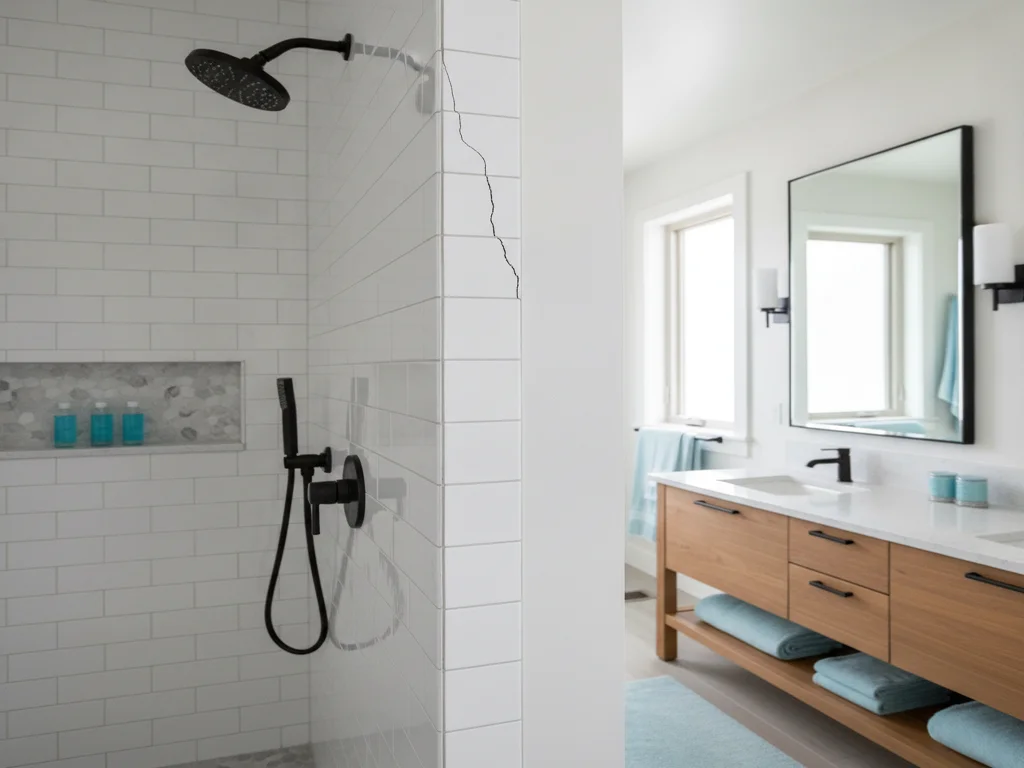
Sealer preserves the current state of a surface — which means some bathrooms need repair before they need protection. Cracked or crumbling grout signals movement or a failing installation underneath; sealing over it accomplishes nothing, and our guide to why grout keeps cracking covers what the cracking actually means. Grout that is deeply stained rather than merely dingy is better recolored or regrouted first, since sealer locks the stains in.
Watch for the bigger signal, too. If you are resealing more and more often, grout keeps failing in the same spots, or stone fills and joints will not stay put, the maintenance treadmill is usually telling you the assembly underneath is aging out. At that point the honest move is an assessment, not another coat of sealer — a fifteen-year-old shower with recurring joint failure is often a waterproofing question wearing a cosmetic disguise.
Sealing itself is one of the few bathroom jobs a careful homeowner can genuinely do — no plumbing, no electrical, no waterproofing involved. But diagnosing why a surface will not hold up is a different job, and it is the one worth handing to a professional.
What the process looks like
- 1
Inventory what actually needs sealing
Walk the bathroom and sort surfaces: cement grout and natural stone are candidates; epoxy grout, porcelain, and ceramic tile are permanent skips. If you inherited the bathroom and are unsure of the grout type, the water-drop test on a joint answers it.
- 2
Run the water-drop test on every candidate
Drops on clean, dry surfaces in several spots — shower wall joints, floor traffic paths, stone faces. Beading means protected; darkening within a few minutes means seal. Test results, not the calendar, set the schedule.
- 3
Clean and repair before sealing anything
Sealer locks in whatever it covers. Deep-clean grout and stone, let stains and repairs get resolved first — regrout failing joints, refill popped travertine fills — and then allow the surface to dry completely, typically 24 hours or more.
- 4
Choose a penetrating sealer rated for the surface
A quality penetrating/impregnating sealer labeled for grout and natural stone is the bathroom default. Skip topical gloss coatings in wet areas — they cloud and peel. Follow the manufacturer's coverage and cure specs exactly; more product is not more protection.
- 5
Apply thin, then remove every trace of excess
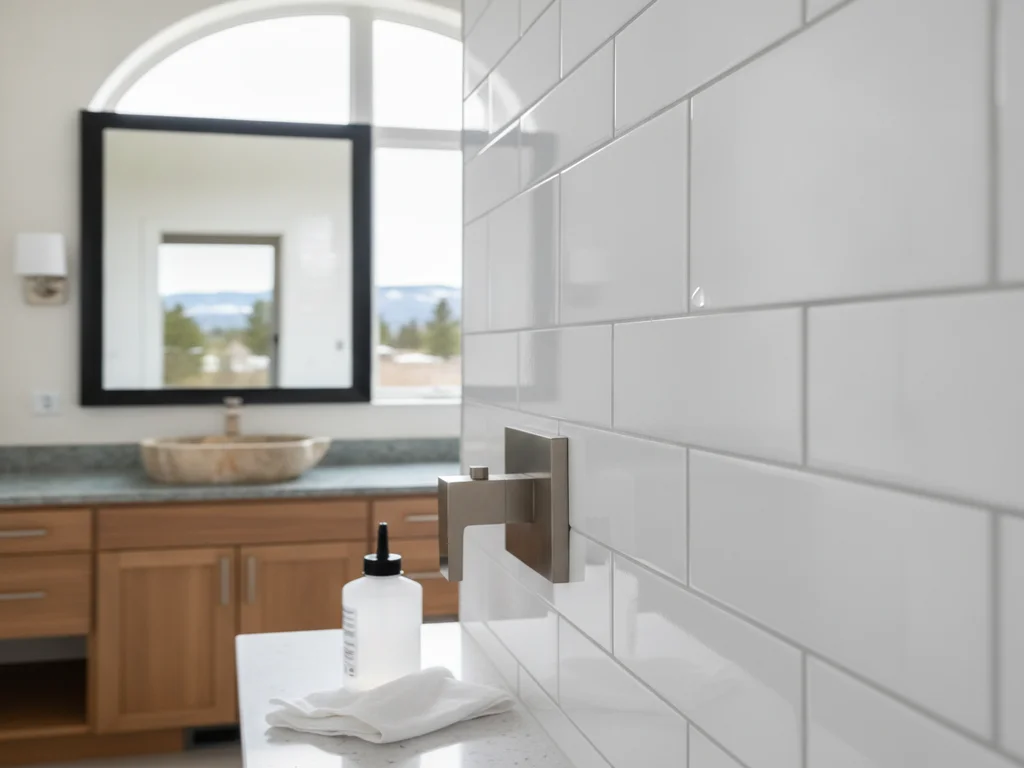
Sealer is applied to the surface, given its dwell time to absorb, and then all residue is buffed off before it dries — excess left on tile or dense stone cures into the haze people mistake for a bad product. Ventilate well and keep the room dry through the cure window.
- 6
Retest annually and reseal on evidence
Put a recurring reminder on the calendar for the water-drop test, not for sealing itself. Reseal the surfaces that fail the test, skip the ones that pass, and note anywhere that fails unusually fast — that pattern is diagnostic, not just maintenance.
Ready to plan your Boise bathroom?
Licensed & insured · 3-year workmanship warranty
Frequently asked questions
- Does grout really need to be sealed?
- Cement grout does — it is porous and absorbs stains from day one, and a penetrating sealer is the difference between grout that cleans up and grout that permanently maps traffic and soap film. Epoxy grout never needs sealing; it is non-porous resin and sealer just films on the surface. A water drop tells you which you have: cement darkens, epoxy does not.
- How often should shower grout be sealed?
- Roughly once a year is the working baseline for cement grout in a shower — the wettest, hardest-worn exposure in the house. But let the water-drop test decide rather than the calendar: if drops still bead on the joints, the sealer is working; if they darken the grout within a few minutes, it is time. Floor grout outside the shower often stretches to two years.
- Can you waterproof a shower by sealing the grout?
- No. Grout sealer slows staining; it is not a waterproofing layer, and tile assemblies are designed to get wet regardless. A shower's actual waterproofing is a membrane behind or beneath the tile, installed during construction. If a shower is leaking, sealing grout will not fix it — that symptom needs a professional look at the assembly, not a coat of sealer.
- What happens if you seal epoxy grout or porcelain tile?
- Nothing good. Both are too dense to absorb sealer, so the product dries on the surface as a hazy, smeary film that then has to be stripped off. This is the most common sealing mistake — money spent making a maintenance-free surface worse. Sealer belongs only on absorbent surfaces: cement grout and porous natural stone.
- Should stone be sealed before or after grouting?
- Porous stone is typically sealed both times: once before grouting so pigmented grout cannot lodge in the stone's pores during installation, and again after the grout cures to protect the finished assembly. That first pass is an installation step your tile setter handles; the recurring after-care is the annual-ish cadence this guide covers.
- Why does my grout stain even though I sealed it?
- Usually one of three reasons: the sealer has lapsed (shower grout can lose protection in about a year), the excess was not buffed off and the joint never absorbed enough product, or the staining is actually biological growth on the surface rather than absorbed material. Retest with a water drop — if the joint darkens, reseal; if it beads, the fix is cleaning routine, not more sealer.
Sources
Claims and figures are drawn from the sources above and provided for general guidance; your project may vary. Photography is illustrative of design concepts. For a fixed price on your specific bathroom, request a free estimate.