Updated July 16, 2026 · 7 min read
By Boise Bath — bathroom & shower remodeling in Boise & the Treasure Valley
The short answer
Historic-district review in Boise concerns itself with what is visible from outside — exterior alterations, windows, additions — not your bathroom’s interior finishes. Most bathroom remodels in the North End or other districts proceed under ordinary building permits. Review typically enters the picture only when the project changes a window, cuts a new exterior vent, or otherwise alters the visible exterior.
Key takeaways
- Historic-district design review focuses on exterior changes visible from the public way; interior bathroom work — tile, fixtures, layout — is generally outside its scope.
- Standard building, plumbing, and electrical permits still apply in historic districts exactly as they do elsewhere in Boise.
- A bathroom remodel most often touches historic review through its edges: replacing or altering a window, cutting a new exhaust-fan vent through a visible wall or roof, or expanding the footprint.
- Confirm specifics with City of Boise Planning & Development Services before cutting anything into the exterior — requirements depend on your district and your project.
- The best historic-home bathrooms modernize systems (plumbing, wiring, waterproofing, ventilation) while keeping period-sympathetic finishes.
Does historic-district status restrict your bathroom remodel?
Far less than most owners fear. Boise’s historic districts — the North End, East End, Warm Springs Avenue, Harrison Boulevard, Hays Street, and South Eighth Street among them — exist to preserve the streetscape: the facades, rooflines, porches, and rhythm of the neighborhoods as seen from the public way. Historic design review is aimed at exterior alterations.
Your bathroom is an interior room. The tile you choose, the tub you keep or replace, the vanity, the layout — none of that is what district review was created to evaluate. In general, interior remodeling in a Boise historic district proceeds the way it would anywhere else in the city: under standard building, plumbing, and electrical permits.
The nuance — and the reason this article exists — is that bathroom remodels have edges that touch the exterior. Windows, vents, and additions are where an interior project can cross into review territory, and knowing that boundary in advance keeps a straightforward remodel from stalling mid-project. For specifics on your address and district, City of Boise Planning & Development Services is the authority.
What does historic review actually look at?
Design review in a historic district is fundamentally about changes visible from outside the house. Think exterior materials, window and door openings, rooflines, additions, and anything that alters how the building presents to the street. Projects in that territory typically require approval — commonly through a certificate of appropriateness process — before the associated building permit proceeds.
What that means in practice: repainting your bathroom, retiling the shower, replacing the tub, moving interior walls, and updating fixtures live outside that conversation. The city’s interest in those items is the same as anywhere in Boise — that plumbing, electrical, and structural work be permitted and inspected properly.
The review process itself varies with the scale of the change, and Boise PDS distinguishes minor from major alterations. Rather than guess at categories, the reliable move is a short conversation with PDS staff early in planning — describe exactly what the project touches on the exterior, and they will tell you what process applies. It is a phone call that costs nothing and prevents the expensive kind of surprise.
When does a bathroom remodel trigger review? Windows, vents, and additions
Three edges of a bathroom project most commonly reach the exterior:
- Windows — replacing a deteriorated bathroom window, changing its size for privacy, or converting it to glass block alters a visible opening. In a historic district, window changes on visible elevations are classic review territory; plan on the approval conversation before ordering anything.
- Exhaust-fan venting — many older bathrooms never had a fan, and adding one means ducting to the outdoors. A new vent termination through a street-visible wall or roof plane is an exterior alteration; routing it to a discreet elevation or through existing penetrations often simplifies the question.
- Footprint changes — bumping out a wall or capturing porch space for a larger bathroom is an addition, and additions get the fullest review. If your remodel grows the house, expect the historic process alongside the building permit.
Check before you cut
The costly mistake is cutting a new window opening or vent hood into a visible exterior wall first and asking questions second. In a historic district, confirm the approval path with Boise Planning & Development Services before any exterior penetration — retrofitting an unapproved alteration is far more expensive than a planning conversation.
What can you freely do inside a historic-district bathroom?
Almost everything a bathroom remodel usually involves. Gut the room to the studs, replace the tub with a walk-in shower, relocate fixtures, install heated floors, update the vanity and lighting — interior scope is yours to design, subject to the same permits and inspections as any Boise remodel.
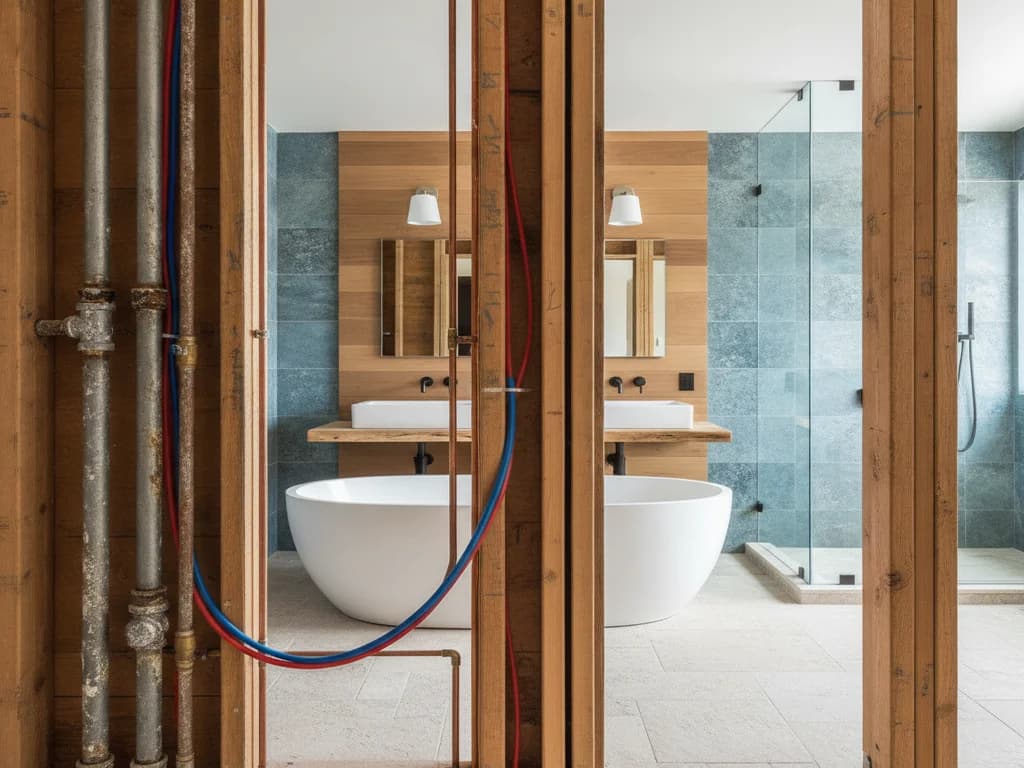
That includes the hidden systems, which is where older homes need the most help anyway. Homes in these districts commonly hide galvanized supply lines, cast iron drains, knob-and-tube era wiring, and showers built before modern waterproofing existed. A remodel with the walls open is the cheapest moment those systems will ever have — our article on galvanized plumbing in older Boise homes explains why the pipes deserve attention while the tile is off.
One planning note: because many historic-district bathrooms rely on a window for ventilation, adding a proper exhaust fan is one of the highest-value upgrades in these houses. If the exterior-vent question complicates things, there are interior routing strategies worth discussing — our guide to ventilating a windowless bathroom covers how fans and duct runs can work when the obvious wall is off the table.
How do you design a bathroom that suits a historic Boise home?
Review or no review, the bathrooms that age best in these neighborhoods respect the house. A gut-modern bathroom dropped into a 1910 Craftsman reads as a transplant; a period-sympathetic one reads as if the house always deserved it — and it photographs and resells accordingly.
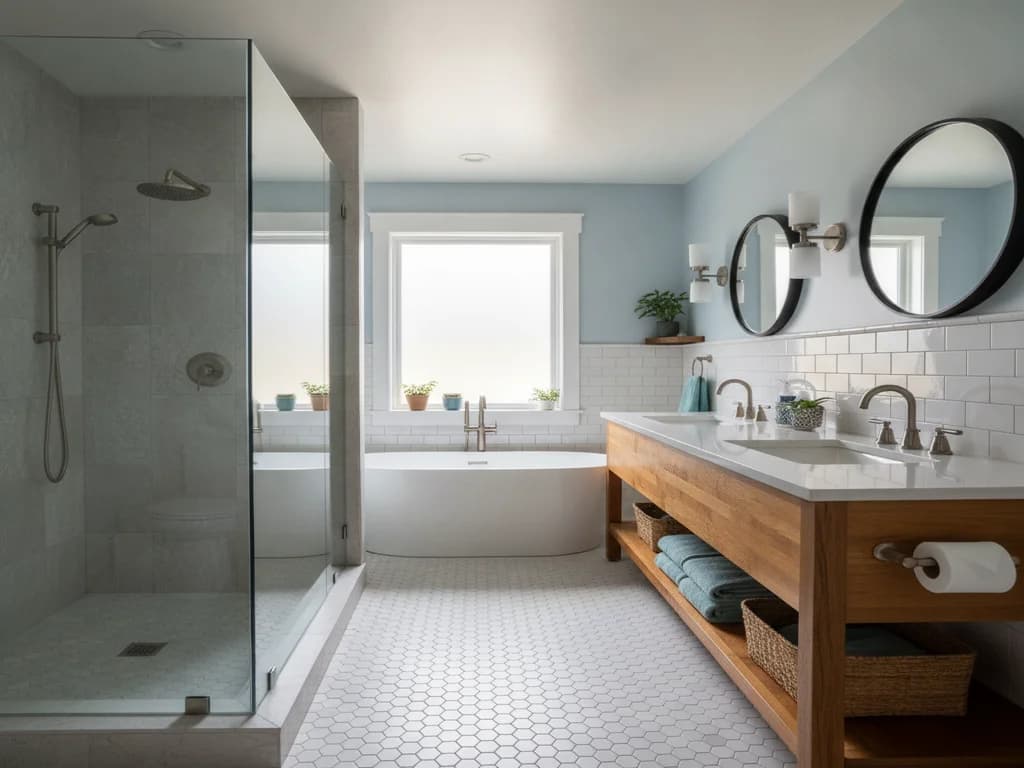
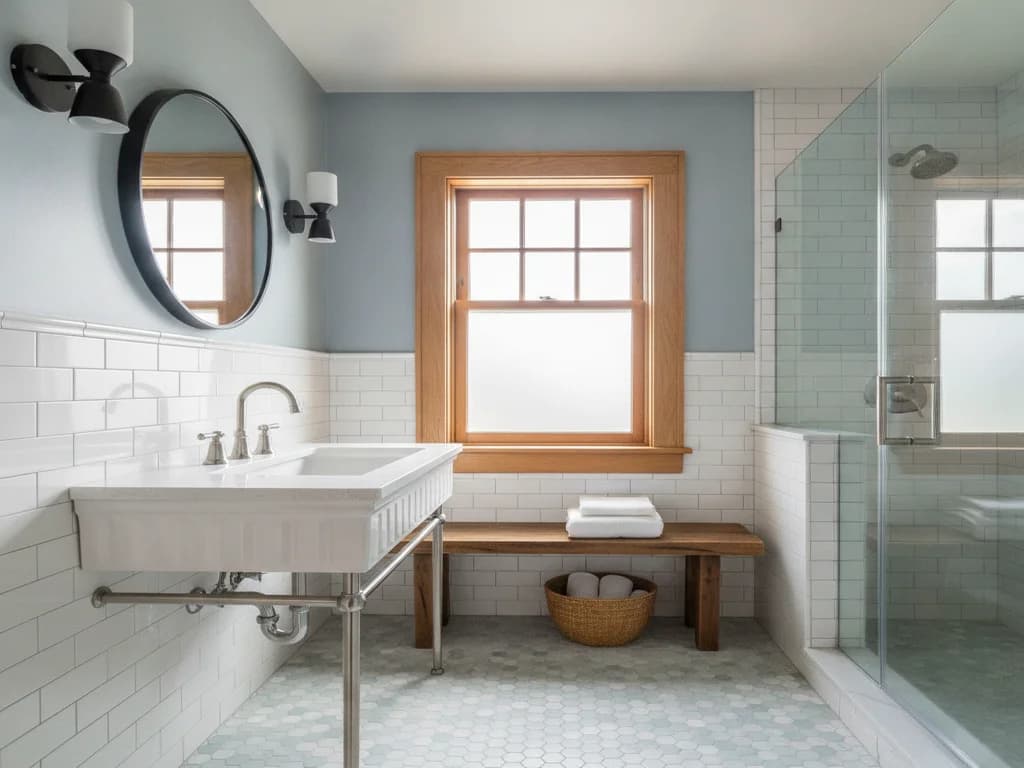
The design vocabulary is well established: subway tile and hexagon mosaic floors for Craftsman-era homes, console or furniture-style vanities, cross-handle faucets and period finishes over modern pressure-balanced valves, and trim profiles that match the rest of the house. Our full guide to remodeling older Boise homes walks through the era-by-era palette, and for Bench-era houses, mid-century bathroom modernization covers the post-war version of the same philosophy.
The craft principle underneath both: preserve the character you can see, modernize everything you cannot. Vintage look, modern valve. Period tile pattern, current waterproofing behind it. Original window, new fan handling the moisture the window never really did.
What does the process look like, start to finish?
For a typical interior-only bathroom remodel in a historic district, the sequence is ordinary: design, permits for the plumbing and electrical scope, construction, inspections. The district changes nothing about that path. Our overview of Boise bathroom remodel permits covers what triggers permits citywide.
If the project touches a window, a visible vent, or the footprint, add one early step: contact Boise Planning & Development Services, describe the exterior change, and get the review path confirmed before finalizing design. Sometimes the answer is simpler than feared — like-for-like repairs and changes on non-visible elevations often carry a lighter process — but the answer belongs to PDS, not to guesswork.
A contractor experienced with North End and East End houses earns their fee here twice: once by scoping the hidden-systems work these homes reliably need, and again by knowing which project edges need a conversation with the city before demolition day. Ask directly about historic-district experience when you interview — it is a fair test of how well a remodeler knows Boise’s older housing stock.
Ready to plan your Boise bathroom?
Licensed & insured · 3-year workmanship warranty
Frequently asked questions
- Do I need historic approval to remodel a bathroom in Boise’s North End?
- Usually not for interior work. Historic-district review in Boise concerns exterior alterations visible from the public way, so tile, fixtures, tubs, and interior layout changes proceed under ordinary building permits. Review enters the picture if the project alters a window, cuts a new exterior vent on a visible elevation, or expands the footprint. Confirm specifics with Boise Planning & Development Services.
- Can I replace a bathroom window in a historic district?
- Often yes, but window changes on visible elevations are exactly what historic review covers, so the approval conversation comes first. Like-for-like repair is generally the simplest path; changing size, material, or configuration draws more scrutiny. Contact Boise Planning & Development Services with your address and the proposed change before ordering a window.
- Can I add a bathroom exhaust fan in a historic Boise home?
- Yes, and you generally should — many of these bathrooms rely on a window that stays shut all winter. The consideration is the vent termination: a new penetration through a street-visible wall or roof may need historic review, while routing to a discreet elevation often simplifies approval. Plan the duct path with your contractor before finalizing the fan.
- Does historic-district status change what permits my remodel needs?
- No — it adds a layer rather than replacing one. Plumbing, electrical, and structural work in a bathroom remodel needs standard City of Boise permits and inspections in any neighborhood. Historic review is a separate, additional process that applies only when the project alters the visible exterior. Interior-only remodels typically involve just the standard permits.
- Do historic districts control my interior design choices?
- No. The city does not review your tile pattern, vanity, or paint color — interior finishes are outside historic review’s scope. Designing period-sympathetically is a choice, not a mandate, though it is usually the right one: bathrooms that honor a Craftsman or mid-century home’s character tend to look better, age better, and support resale value in these neighborhoods.
Sources
Claims and figures are drawn from the sources above and provided for general guidance; your project may vary. Photography is illustrative of design concepts. For a fixed price on your specific bathroom, request a free estimate.