Updated July 6, 2026 · 9 min read
By Boise Bath — bathroom & shower remodeling in Boise & the Treasure Valley
The short answer
Bathroom remodeling looks different across Boise's 8 neighborhoods because the housing stock differs so much: North End and East End homes are early-1900s originals, the Bench is mid-century ranch, Southeast Boise and West Boise mix eras, Harris Ranch and Northwest Boise's foothill edge are newer construction, and Downtown means condos. Each neighborhood has its own remodeling profile below.
Key takeaways
- Boise's 8 neighborhoods span everything from 1878-platted North End bungalows to 2000s-onward Harris Ranch construction — housing era drives what a remodel typically involves.
- Older, historic neighborhoods (North End, East End) tend toward full resets of original, undersized bathrooms; the mid-century Bench is a classic tub-to-shower conversion story.
- Southeast Boise, West Boise, and Northwest Boise are genuine mixes — a split between dated originals and builder-grade finishes on newer builds.
- Harris Ranch is Boise's newest neighborhood and its remodels are mostly about elevation, not repair — bringing builder-grade baths up to the level of the rest of the home.
- Downtown remodels are a different discipline entirely: space-efficient design for condos and lofts, not square footage.
Why does a Boise bathroom remodel look different by neighborhood?
Boise is not one housing stock — it is a patchwork of them, laid down decade by decade from the 1870s to today. A 13th Street bungalow, a Bench-era ranch, and a Harris Ranch primary suite were all built to completely different standards, for completely different households, and each one asks something different of a remodel. Knowing which one describes your house is the fastest way to know what your project will actually involve.
This guide walks through all 8 of Boise's neighborhood pages, one at a time, with a short summary of the housing stock and the remodeling pattern that tends to follow from it. Each links out to its full neighborhood page for more detail. If you would rather browse remodeling by the wider Treasure Valley city (Meridian, Eagle, Nampa, and beyond), see our full service-area coverage for Boise.
How to use this guide
Find your neighborhood below, then follow its link for the full page — landmarks, housing detail, and what a remodel here tends to involve, house by house.
1. The North End
Boise's most beloved historic neighborhood is a designated historic district of early-1900s Craftsman bungalows, Victorians, and Tudor cottages, many still standing on their original footprints near Camel's Back Park and the walkable Hyde Park district along 13th Street. These homes carry real period character, but most were built when a single small bathroom served the entire household.
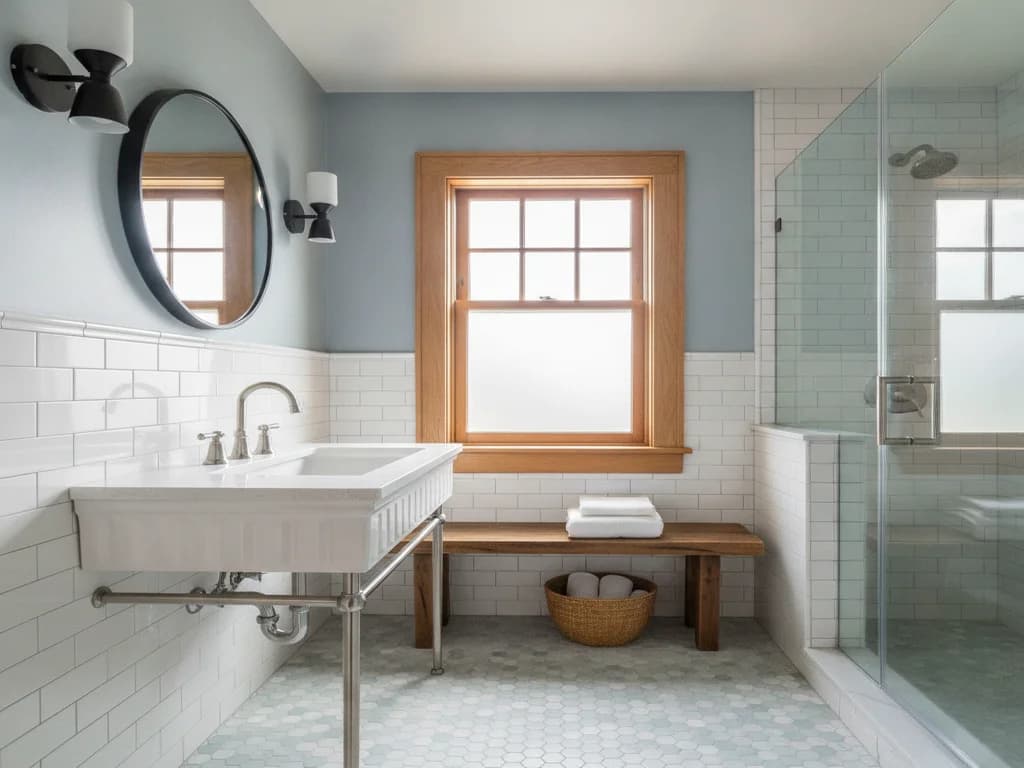
A North End bathroom remodel is usually about respecting that period detail on the surface while quietly modernizing what is behind it — cast-iron tubs, plaster walls, dated tile, and waterproofing that has long since aged out all tend to need attention at once. See the full North End guide for more.
2. East End & Warm Springs
East of downtown, the East End and Warm Springs Avenue corridor is a historic, upscale stretch framed by the foothills, Table Rock, and the Boise River — home to grand Warm Springs mansions (some among the first in the nation heated geothermally) alongside mid-century and newer homes climbing toward the foothills. Lot sizes here are generous, and many homes have already been partially updated.
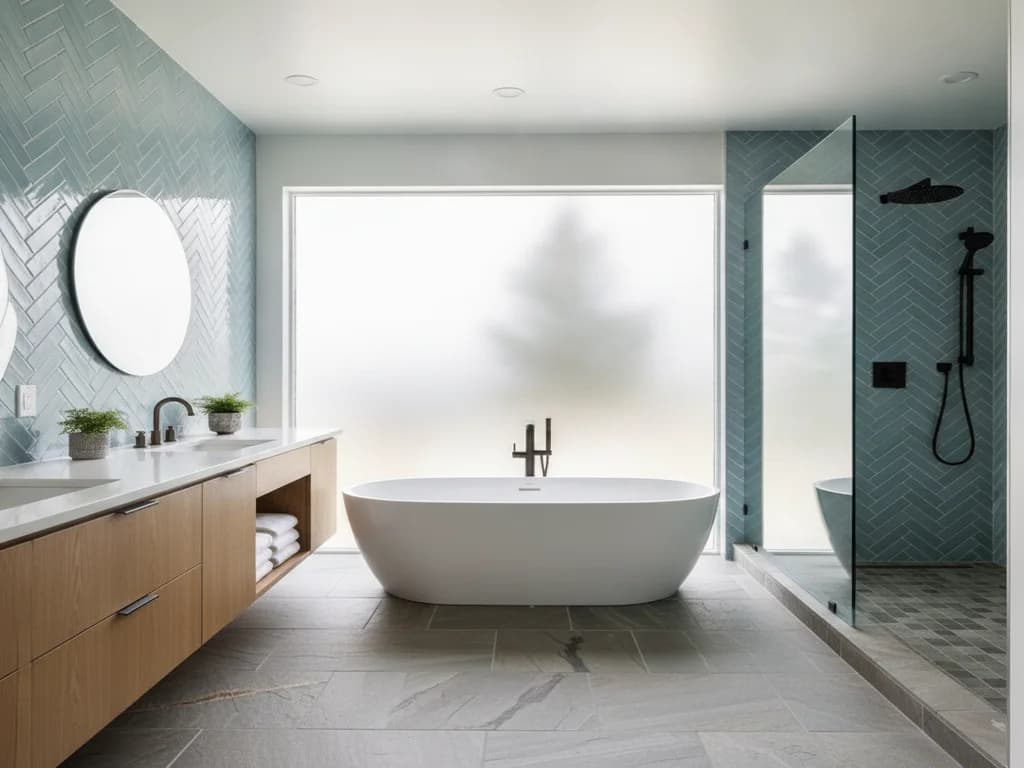
The typical East End project is a true primary-suite retreat that matches the standard of the rest of the home: larger curbless showers, natural stone, and freestanding tubs. Period homes still need careful waterproofing and layout work first; foothill-adjacent homes more often want a straightforward spa-grade upgrade. See the full East End guide for more.
3. The Boise Bench
The elevated terrace just south of downtown — Depot Bench, Vista, Morris Hill, and the neighborhoods around them — is defined by solid, single-story mid-century ranch homes built largely from the 1940s through the 1960s. Most still carry their original bathrooms: colored tile, compact layouts, and a tub-shower combo that has not changed since it was installed.
Bench remodels are a classic mid-century reset — converting a dated tub-shower combo into a clean walk-in shower, opening up a cramped layout, and swapping decades-old tile for durable, low-maintenance materials. The single-story bones make these projects genuinely straightforward. See the full Boise Bench guide for more.
4. Southeast Boise
Anchored by Boise State University and running out toward the Boise River, Bown Crossing, and the edge of Barber Valley, Southeast Boise mixes established 1970s–90s homes with newer riverside development — which means its bathrooms are a genuine split between dated originals and builder-grade finishes.
That split drives two common project types here: full resets of aging 1970s–80s bathrooms, and finish-level upgrades that bring newer builder-grade showers and vanities up to the standard of the rest of the home. Proximity to the river also makes proper waterproofing especially worth getting right. See the full Southeast Boise guide for more.
5. Harris Ranch & Barber Valley
At the east edge of the city where the Boise River meets the foothills, Harris Ranch and the wider Barber Valley are among Boise's newest neighborhoods, built largely from the 2000s onward with a deliberate mountain-modern, craftsman character. Homes here are move-in ready — but their bathrooms are often builder-grade relative to the quality of the rest of the house.
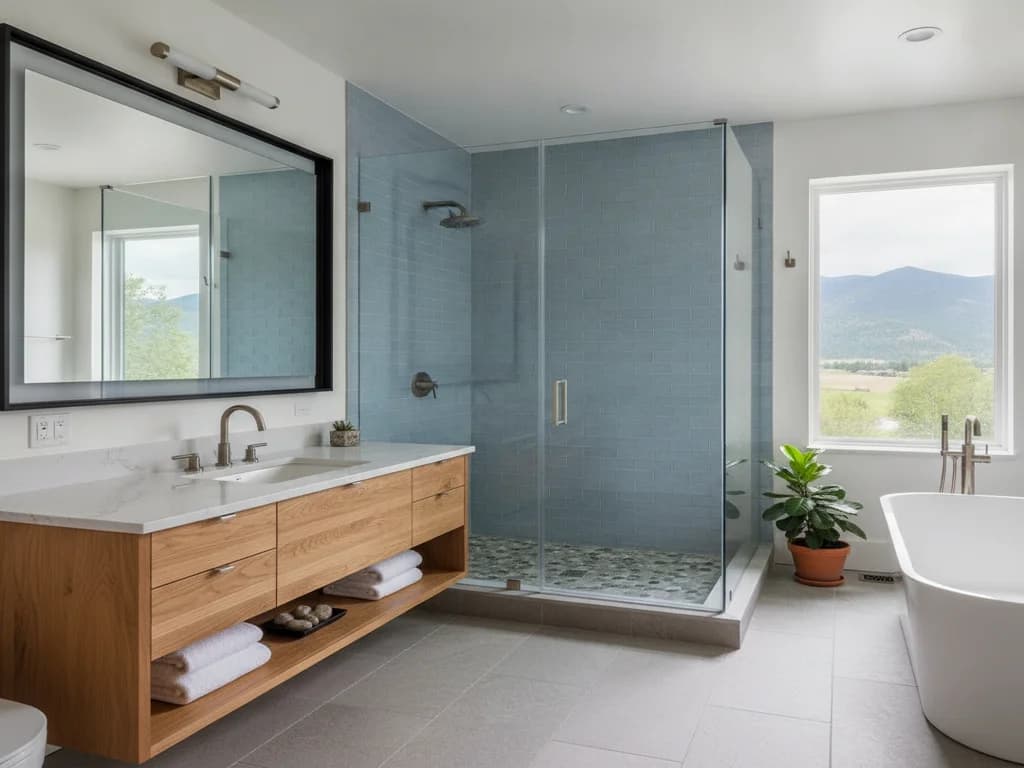
The request in Harris Ranch is rarely about fixing something broken and almost always about elevation: turning a standard primary bath into a spa-like retreat with a large curbless shower, custom tile, and natural stone that matches the home's architecture and the foothill setting outside. See the full Harris Ranch guide for more.
6. West Boise
The busy suburban west side of the city is built out around the Towne Square area, Cole and Ustick, schools, and shopping — dominated by subdivisions from the 1980s through the 2000s. Most West Boise homes have builder-grade bathrooms that are sound but generic: the standard fiberglass surrounds and basic vanities of their era.
West Boise projects are the bread-and-butter upgrade: replacing a one-piece fiberglass tub-shower with a tiled walk-in shower, swapping dated vanities and lighting, and adding the custom finishes that make a builder home feel personal. Sound bones, a big visual payoff. See the full West Boise guide for more.
7. Northwest Boise & Collister
This leafy, foothill-adjacent stretch around Collister, Pierce Park, and Hill Road blends established mid-century and 1970s–80s homes with newer construction climbing toward the foothills — a varied housing stock with an equally varied set of bathrooms, from original to lightly updated.
Older Northwest homes often need a genuine reset of aging tile and waterproofing, while homes closer to the foothill edge lean toward larger, view-aware primary suites. Both benefit from durable, low-maintenance materials suited to the valley's dry climate and hard water. See the full Northwest Boise guide for more.
8. Downtown Boise
The walkable urban core — BoDo, the Basque Block, and the Grove — mixes historic buildings with new condos and lofts. Downtown living means bathrooms that range from compact condo layouts to character-rich older units, often shaped by building-specific plumbing constraints rather than a house's own floor plan.
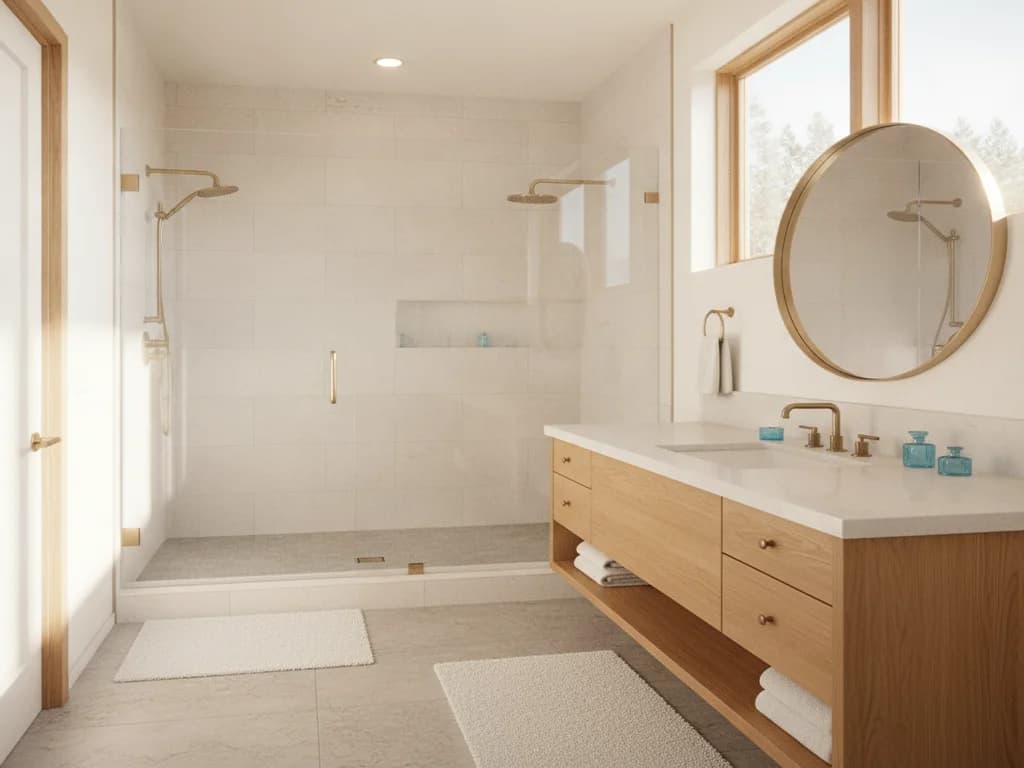
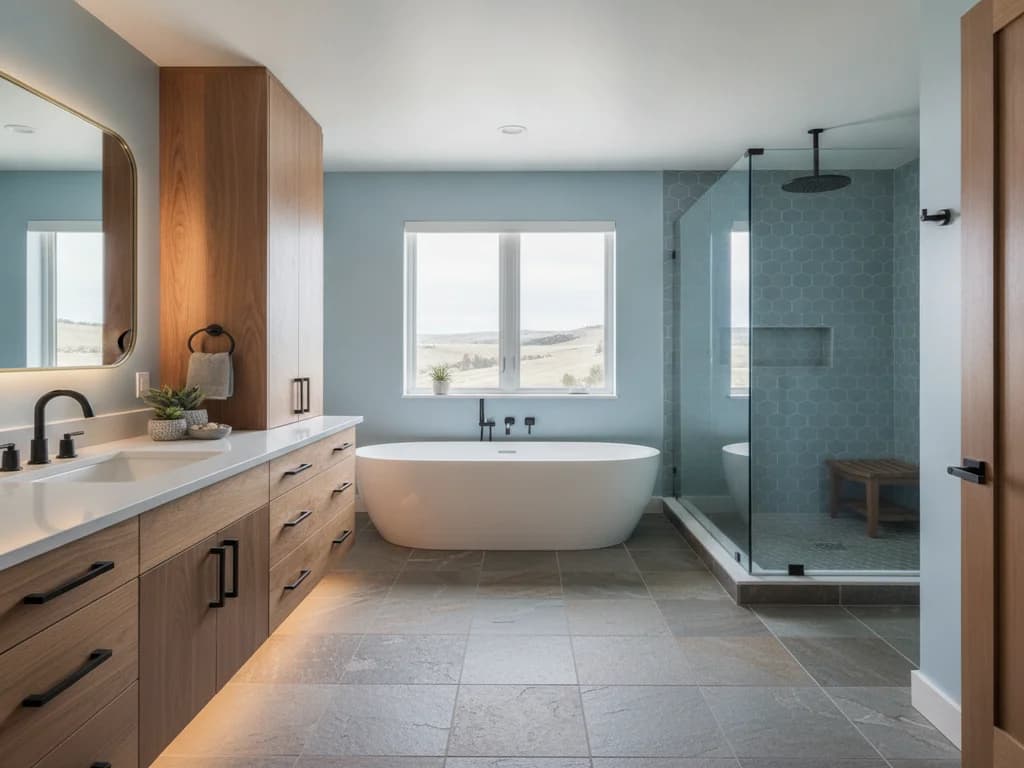
Downtown remodels are a different discipline: making every square foot count with space-efficient walk-in showers, floating vanities, and large-format tile to visually open a small room, all coordinated around condo or HOA requirements. Precision matters more than square footage here. See the full Downtown Boise guide for more.
| Neighborhood | Housing era | Typical remodel |
|---|---|---|
| North End | Early 1900s Craftsman & Victorian | Full reset behind period-correct finishes |
| East End | Historic mansions to newer foothill homes | Primary-suite retreat, curbless showers, stone |
| Boise Bench | Mid-century (1940s–60s) ranch | Tub-to-shower conversion, layout opening |
| Southeast Boise | 1970s–90s plus newer riverside | Full reset or builder-grade finish upgrade |
| Harris Ranch | 2000s onward, master-planned | Elevation upgrade, curbless showers, stone |
| West Boise | 1980s–2000s subdivisions | Tub-to-shower, vanity and lighting swap |
| Northwest Boise | Mixed mid-century to newer | Reset of aging tile, or view-aware primary suite |
| Downtown Boise | Historic buildings, condos, lofts | Space-efficient, code/HOA-aware design |
Summarized from each neighborhood's own page; see the linked guide for full detail.
Which neighborhood pattern fits your home?
Most Boise homes fall clearly into one of these eight profiles, but plenty sit at the edges — an original Bench ranch that got a 1990s addition, or a Southeast Boise home built in the gap between eras. If your house does not fit neatly into one category, the honest answer is usually "some of both": treat the original portions like their era, and the newer portions like theirs.
For the city-wide view of remodeling in Boise — cost ranges, permitting, and general planning — see our Boise service-area page. And whichever neighborhood you are in, a free estimate is the fastest way to find out what your specific house actually needs.
Ready to plan your Boise bathroom?
Licensed & insured · 3-year workmanship warranty
Frequently asked questions
- Do all Boise neighborhoods need the same kind of bathroom remodel?
- No. Boise's neighborhoods span housing built from the 1870s to the 2020s, and the era drives the project. Historic North End and East End homes typically need a full reset behind period-correct finishes; the mid-century Boise Bench is a classic tub-to-shower conversion story; and newer Harris Ranch homes are usually about elevating already-move-in-ready bathrooms rather than repairing anything.
- Which Boise neighborhood has the oldest housing stock?
- The North End, a designated historic district with early-1900s Craftsman bungalows, Victorians, and Tudor cottages — many still on their original footprints near Hyde Park and Camel's Back Park. The East End also carries historic housing, including Warm Springs Avenue mansions, alongside newer foothill-adjacent construction.
- What is the newest Boise neighborhood, and how does that affect remodeling?
- Harris Ranch and the wider Barber Valley, built largely from the 2000s onward. Because these homes are already move-in ready, remodels here are rarely about fixing something broken — they are almost always about elevating a builder-grade primary bath to match the quality of the rest of the house.
Sources
Claims and figures are drawn from the sources above and provided for general guidance; your project may vary. Photography is illustrative of design concepts. For a fixed price on your specific bathroom, request a free estimate.