Updated July 17, 2026 · 8 min read
By Boise Bath — bathroom & shower remodeling in Boise & the Treasure Valley
The short answer
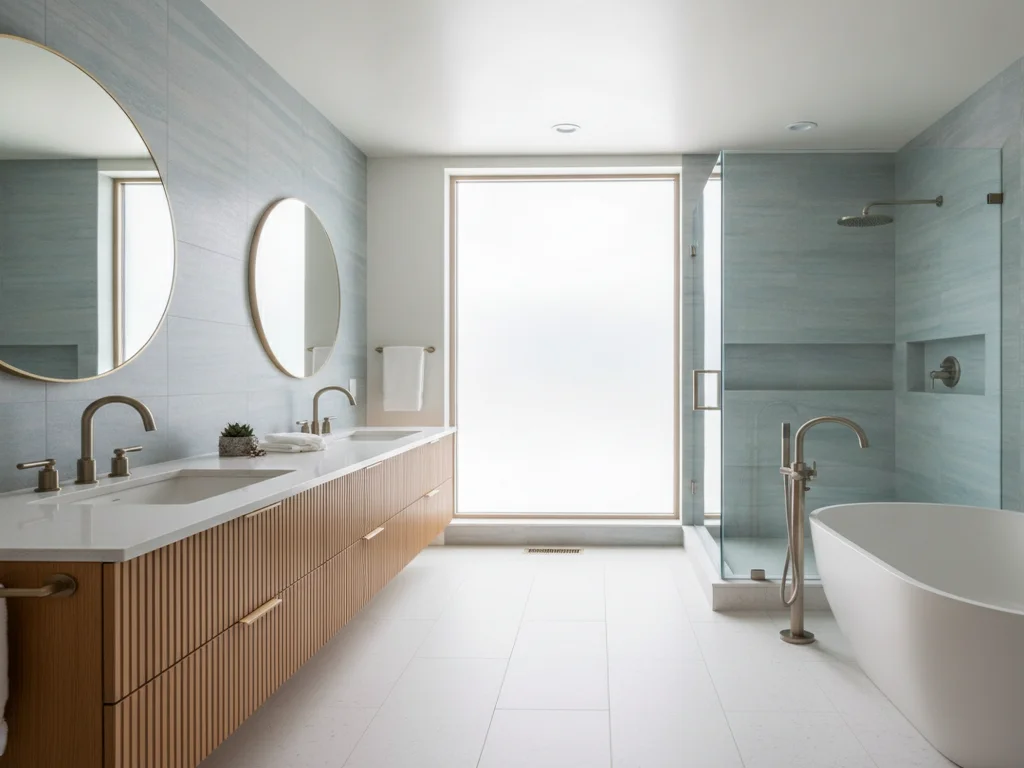
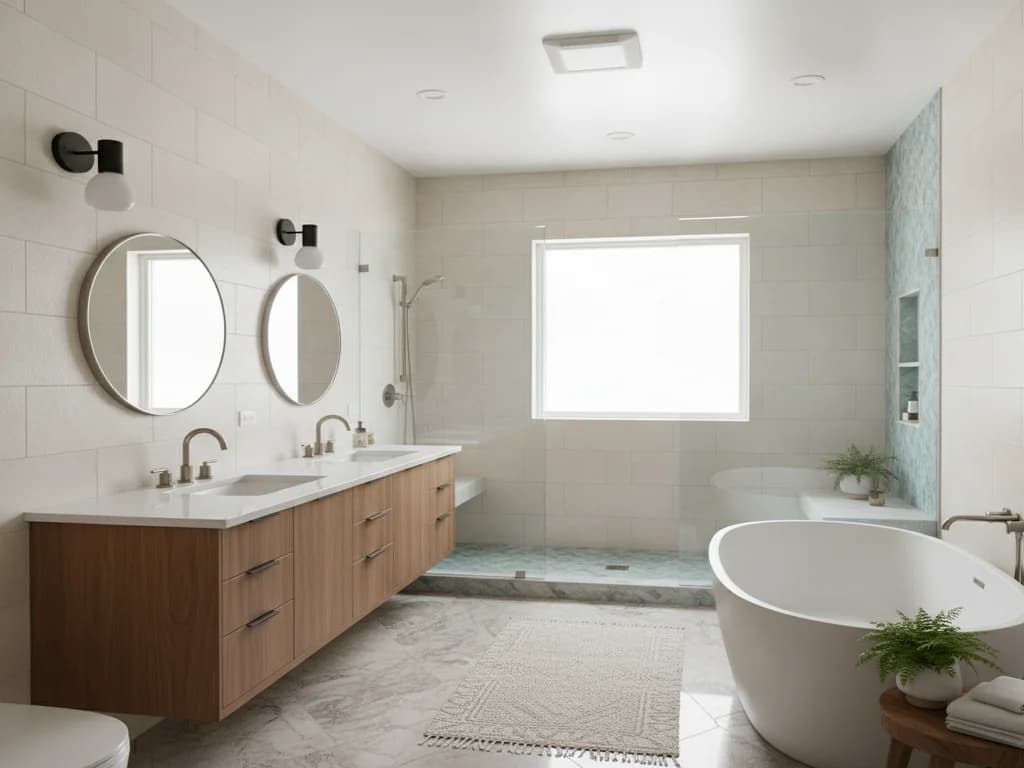
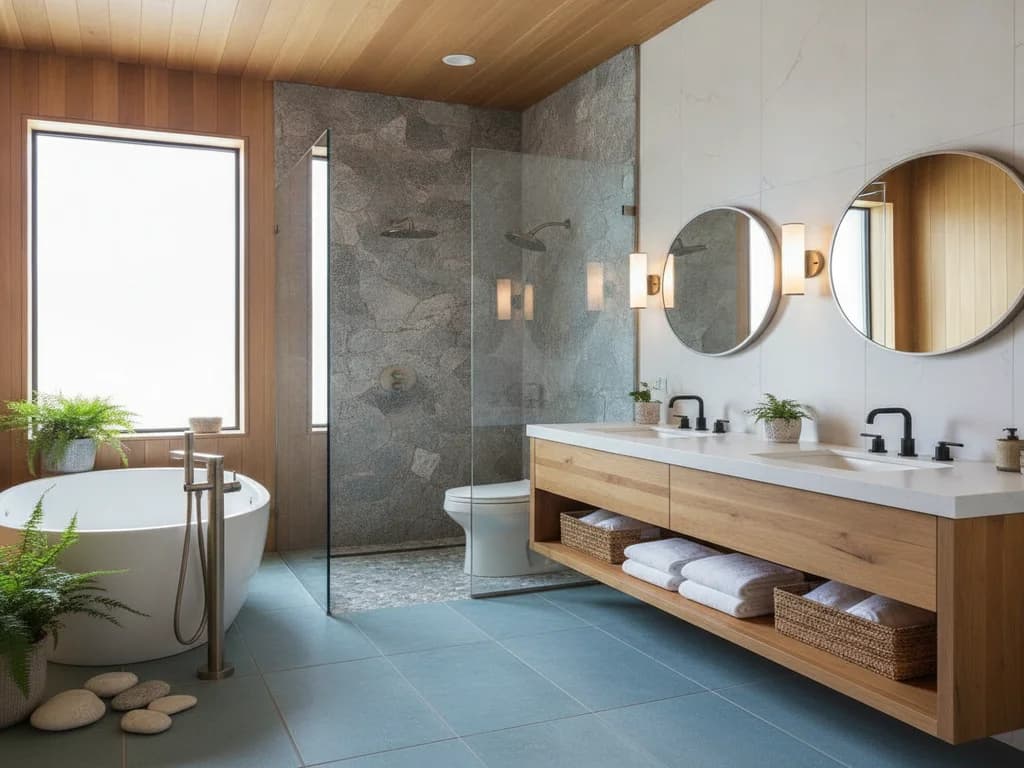
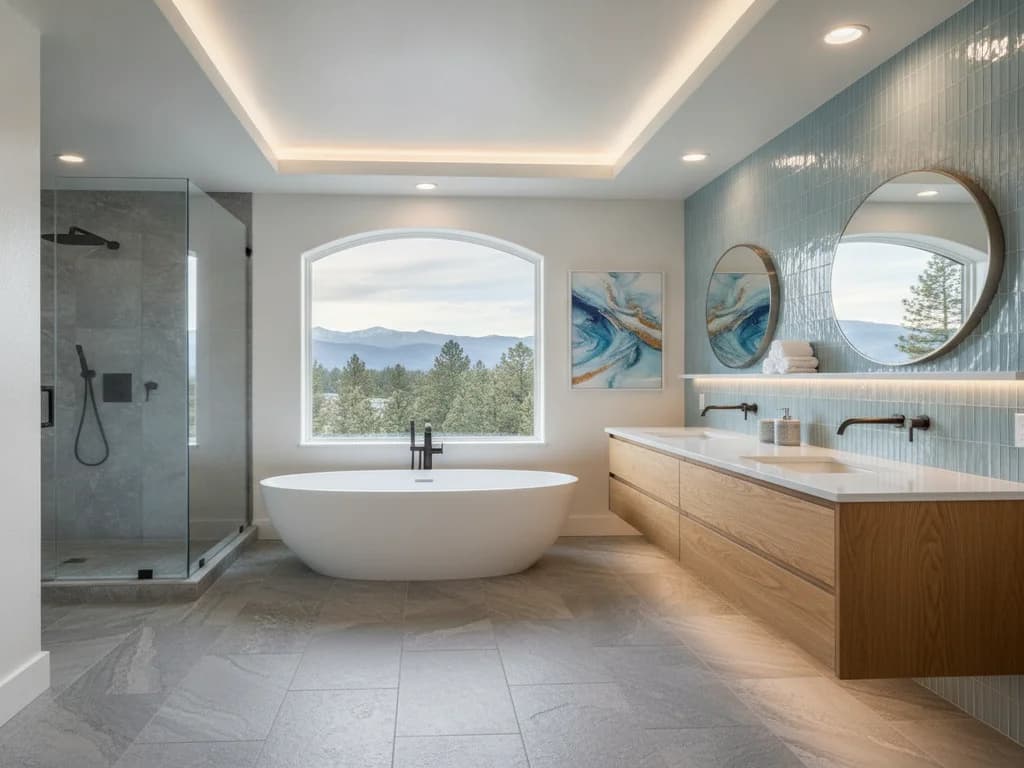
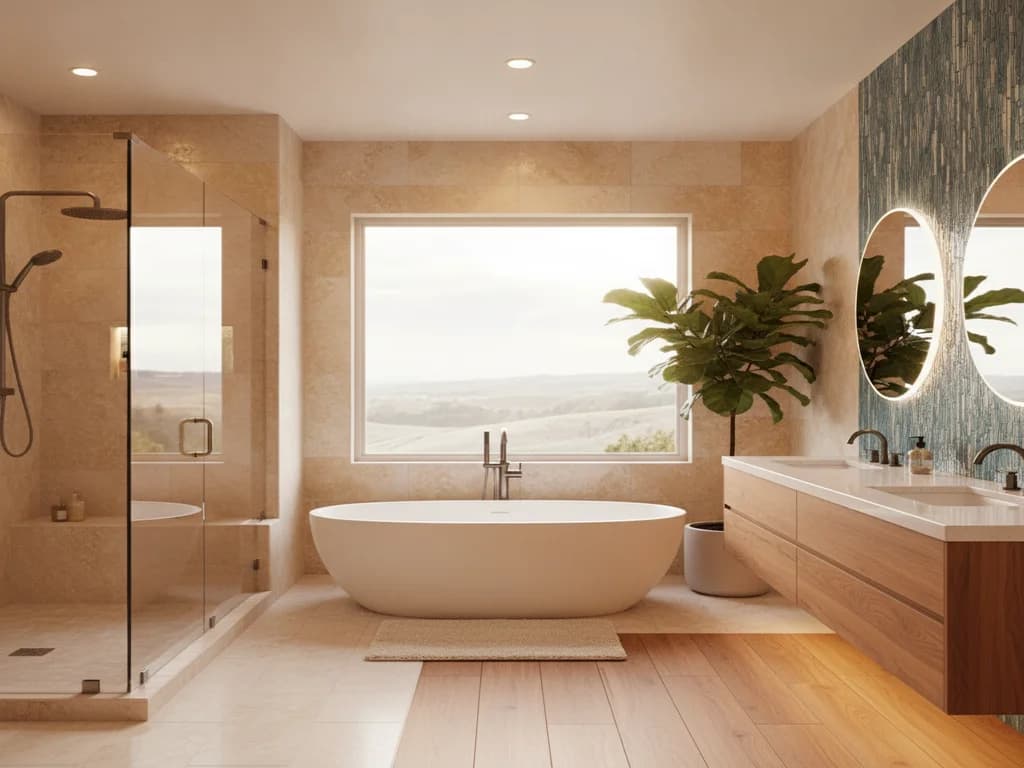
Transitional bathroom design blends traditional warmth with modern clean lines — the middle ground between ornate classic and stark contemporary. It is defined by shaker-style vanities, matte black or brushed metal fixtures, neutral palettes, and materials like subway tile and natural stone. The result reads current and calm without committing to a single era, which is why it dates slowly and appeals broadly.
Key takeaways
- Transitional design is a deliberate blend of traditional comfort and modern simplicity — not a specific era, but the balance between two.
- The signature vanity is shaker-style: recessed-panel doors that read classic, in a clean profile that reads modern.
- Neutral palettes (white, greige, warm gray, soft black) and mixed textures do the heavy lifting, not bold color or ornament.
- Fixtures lean matte black, brushed nickel, or brushed gold — simple shapes over ornate traditional or industrial contemporary hardware.
- Subway tile, natural stone, and warm wood tones are the material core, kept restrained rather than busy.
- Because it avoids trend-of-the-moment extremes, transitional style dates more slowly than either strict modern or heavy farmhouse.
What transitional bathroom design actually means
Transitional is the design world’s middle path: it takes the warmth, symmetry, and comfort of traditional design and strips away the ornament, then borrows the clean lines and simplicity of modern design and softens its coldness. The result is a bathroom that feels settled and inviting but current — neither a period recreation nor a stark gallery box. When surveys of designers and homeowners name the most-requested style year after year, transitional is usually at or near the top, precisely because it offends no one and pleases most.
The reason it works is restraint. Traditional bathrooms can tip into fussy; modern ones can tip into sterile. Transitional design holds the tension between them, keeping just enough detail to feel warm and just enough simplicity to feel fresh. Think of it as classic bones with a modern haircut.
It is also the style least likely to look dated in ten years, which is a practical argument as much as an aesthetic one. If longevity is your priority, it pairs naturally with the thinking in timeless bathroom trends; if you want to know where transitional sits against what is peaking right now, that is the domain of bathroom design trends.
The defining elements
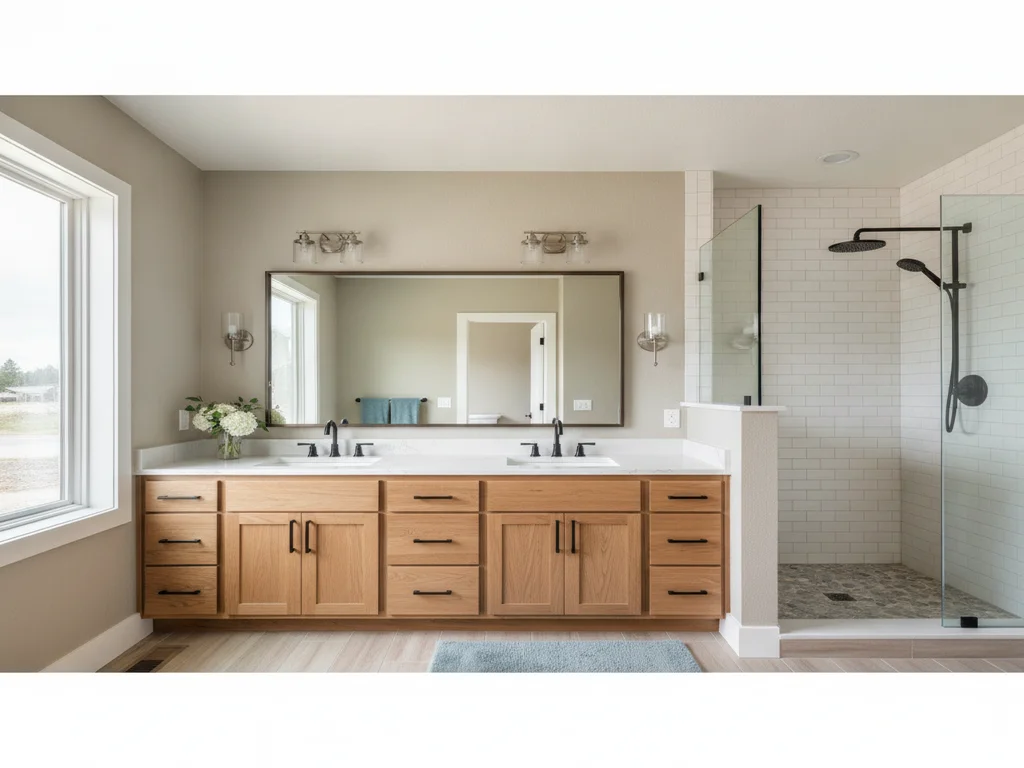
A handful of choices carry the transitional look, and getting these right matters more than any single accessory. The vanity is the anchor: a shaker-style cabinet — flat recessed-panel doors with a simple square frame — is the transitional signature, because the panel reads traditional while the clean edges read modern. Painted white, greige, or a soft navy, topped with a quartz or honed stone counter, it sets the whole room’s tone.
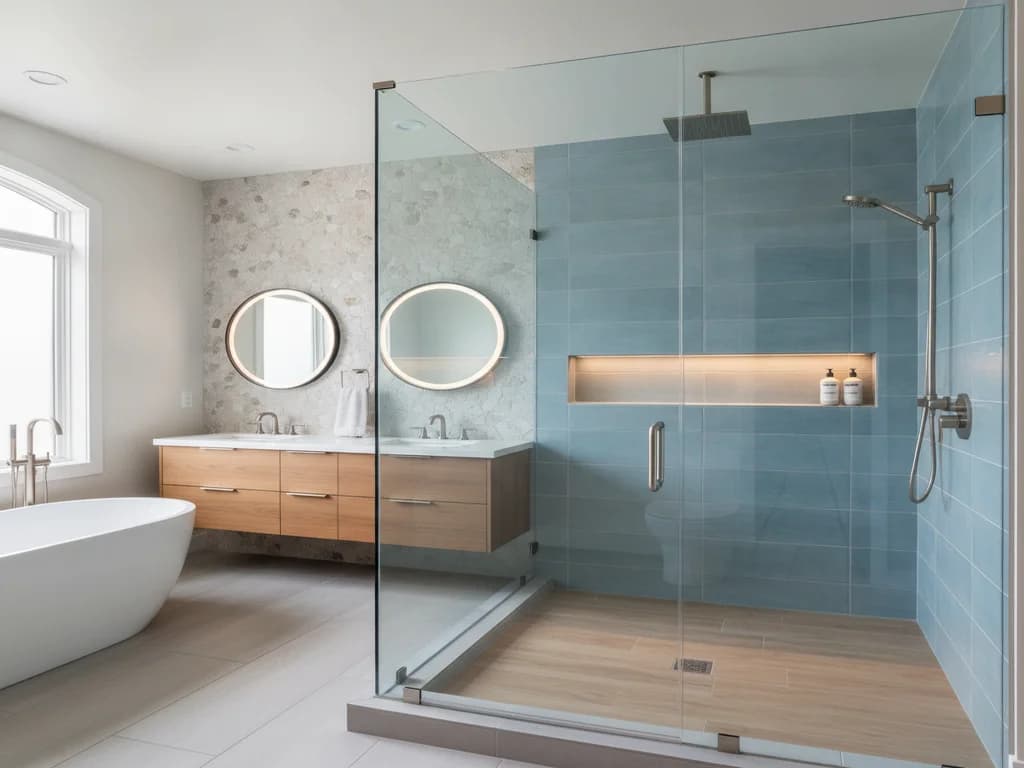
Fixtures and hardware stay simple in shape and quiet in finish: matte black, brushed nickel, or brushed (not polished) gold, in shapes that are neither ornate nor industrial. The palette is neutral and layered — whites, warm grays, greige, soft blacks — with interest coming from texture and material contrast rather than color. Subway tile (often in a running or vertical-stack layout), natural stone floors, and warm wood tones are the material core.
The through-line is edited warmth. One or two natural materials, one metal finish carried consistently, a framed mirror instead of a frameless one, a freestanding or shaker vanity instead of a floating slab. Transitional design is what you get when every element is a half-step calmer than its traditional or modern extreme.
- Vanity: shaker-style recessed-panel doors, painted neutral, with a stone or quartz top.
- Fixtures: matte black, brushed nickel, or brushed gold in simple, unfussy shapes.
- Palette: layered neutrals — white, greige, warm gray, soft black — over bold color.
- Tile: white subway on walls, natural stone or stone-look porcelain underfoot.
- Mirror & lighting: framed mirror, simple sconces; warmth over sparkle.
- One accent, not many: a wood vanity, a stone niche, or a black window — not all at once.
How transitional differs from modern and farmhouse
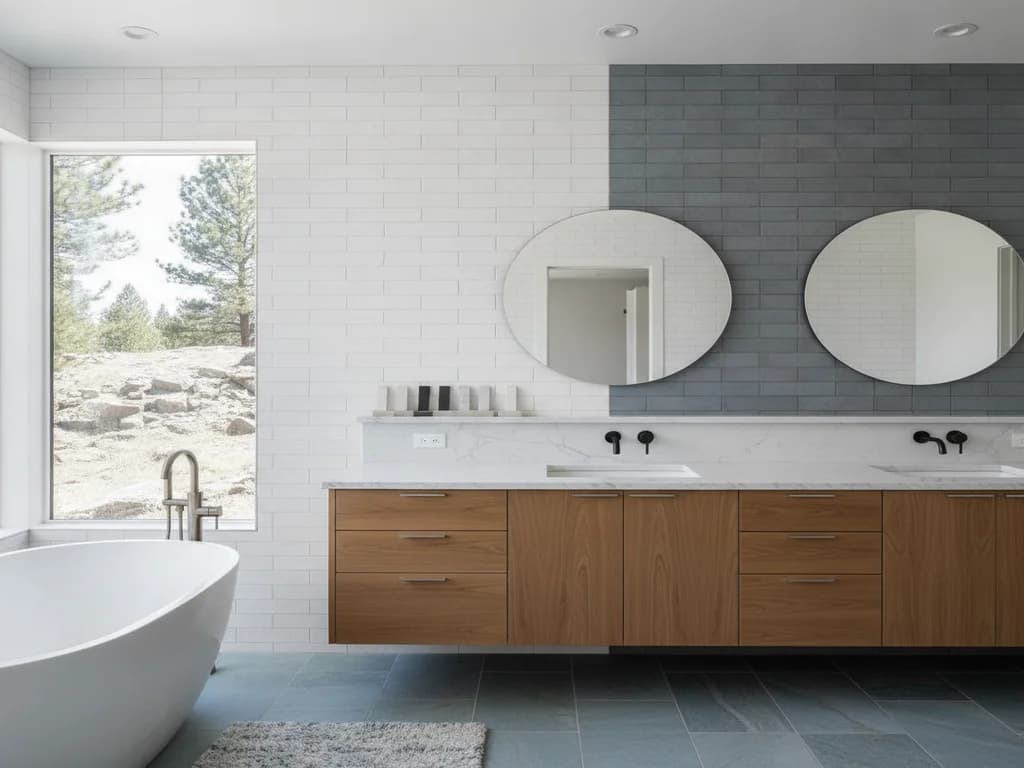
The fastest way to understand transitional is to place it beside its neighbors. Modern (or contemporary) bathrooms push toward minimalism: floating vanities, frameless glass, monochrome palettes, flat-slab doors, and as little visible detail as possible. Farmhouse pushes the other way, toward rustic warmth: shiplap, apron sinks, distressed wood, black-and-white contrast, and vintage-inspired fixtures. Traditional sits further still, with raised-panel cabinetry, ornate hardware, and decorative moldings.
Transitional borrows the shaker vanity from tradition but sheds the ornament, borrows the clean lines from modern but adds back warmth and a framed mirror, and shares farmhouse’s love of natural materials without the rustic distressing. The table below lines up the same decisions across styles so the differences are concrete.
| Element | Transitional | Modern | Farmhouse |
|---|---|---|---|
| Vanity | Shaker recessed-panel | Flat-slab, floating | Distressed wood / apron |
| Palette | Layered neutrals | Monochrome, high-contrast | White + black, warm wood |
| Fixtures | Matte black / brushed | Chrome or matte, minimal | Bronze, vintage-style |
| Tile | Subway + natural stone | Large-format, seamless | Penny tile, patterned floor |
| Detail level | Edited warmth | Stripped back | Rustic, layered |
| Dates | Slowly | Moderately | Trend-sensitive |
Style boundaries are guidance, not rules — most real bathrooms mix elements, and transitional is defined by doing exactly that on purpose.
Getting the balance right
The one way to miss with transitional design is to lose the balance — to drift so far toward traditional that it becomes fussy, or so far toward modern that it becomes cold. The safeguard is to consciously pair: for every classic element, add a modern one. A shaker vanity (traditional) gets matte black hardware and a rectangular vessel-adjacent sink (modern). White subway tile (classic) gets a clean vertical stack and dark grout (contemporary). A framed mirror (traditional) hangs under a simple linear sconce (modern).
Keep the metal finishes disciplined — one primary finish carried through the faucet, hardware, and lighting, with at most one secondary accent — because mixed-metal chaos is the most common way a transitional room slides into looking unplanned. Let materials, not color, provide the interest: the contrast of warm wood against cool stone, matte against gloss, does more than a bold paint choice.
Because the palette is neutral and the shapes are simple, transitional design is forgiving to live with and easy to refresh — swap textiles, art, and a mirror and the room updates without a remodel. That adaptability is a big part of why it stays popular across primary suites, guest baths, and powder rooms alike.
Why transitional suits most homes
Transitional design earns its popularity partly because it fits almost any house. It sits comfortably in a 1990s Treasure Valley two-story, a newer build, or an older home, because it does not demand a specific architectural period to make sense. That flexibility makes it the safe-but-not-boring default when a household cannot agree on modern versus traditional — it gives each side what they want.
It is also strong for resale. A neutral, well-balanced transitional bathroom photographs well and appeals to the widest pool of buyers, none of whom have to share your taste in a bold statement. For a room you will use daily for a decade and eventually sell, that broad appeal is worth as much as the aesthetics.
None of this means transitional has to be safe to the point of bland. The style leaves room for one confident move — a dramatic stone slab, a black steel shower frame, a rich vanity color — as long as the rest of the room stays quiet enough to let it speak. That is the whole discipline: warmth and cleanliness in balance, with a single note allowed to sing.
Ready to plan your Boise bathroom?
Licensed & insured · 3-year workmanship warranty
Frequently asked questions
- What is transitional bathroom design?
- Transitional bathroom design is a deliberate blend of traditional warmth and modern clean lines — the middle ground between ornate classic and stark contemporary. It is defined by shaker-style vanities, neutral palettes, simple matte or brushed fixtures, and natural materials like subway tile and stone. The look reads current and calm without committing to a single design era.
- What is the difference between transitional and modern bathrooms?
- Modern bathrooms push toward minimalism — floating flat-slab vanities, monochrome palettes, frameless glass, and as little visible detail as possible. Transitional keeps the clean lines but adds back warmth: a shaker vanity, a framed mirror, layered neutral tones, and natural materials. In short, transitional is modern with traditional comfort re-introduced, so it feels inviting rather than sparse.
- What kind of vanity is transitional?
- The classic transitional vanity is shaker-style — flat, recessed-panel doors set in a simple square frame — usually painted a neutral like white, greige, or soft navy and topped with quartz or honed stone. The recessed panel reads traditional while the clean, unornamented profile reads modern, which is exactly the balance transitional design is after.
- What colors work in a transitional bathroom?
- Layered neutrals carry the style: white, greige, warm gray, and soft black, with interest coming from texture and material contrast rather than bold color. Warm wood tones and natural stone add depth. If you want a single accent — a navy vanity, a black window frame, a richly veined stone — keep the rest of the palette quiet so it reads intentional.
- Is transitional bathroom design timeless?
- It is one of the slowest styles to date, because it avoids the trend-of-the-moment extremes of both strict modern and heavy farmhouse. Its neutral palette and simple shapes are easy to refresh with textiles and accessories rather than a remodel. That said, no style is permanent — pairing transitional choices with the durable-material thinking in a timeless-trends guide is how you make it last longest.
Sources
Claims and figures are drawn from the sources above and provided for general guidance; your project may vary. Photography is illustrative of design concepts. For a fixed price on your specific bathroom, request a free estimate.