Updated September 9, 2026 · 8 min read
By Boise Bath — bathroom & shower remodeling in Boise & the Treasure Valley
The short answer
A bathroom remodel typically triggers GFCI protection on every receptacle, a dedicated 20-amp circuit for the bathroom outlets, separate circuits for a heated floor or steam unit, and new vent fan wiring. Bob Vila and Fixr price GFCI work at $130–$400 per outlet and a dedicated circuit at $250–$900, with panel upgrades running $1,300–$3,000 when capacity runs short.
Key takeaways
- Bob Vila (2026) prices a GFCI outlet at $130–$300 installed on average ($210), with new-wiring GFCI work running $200–$400 per outlet, per Fixr.
- Modern code requires a dedicated 20-amp circuit serving only the bathroom receptacle(s) — Fixr prices adding one at $250–$900.
- A heated floor or steam unit typically needs its own circuit sized to the equipment, separate from the receptacle circuit, on top of the GFCI protection that already applies to the room.
- A vent fan added where none existed runs $250–$900 installed per Fixr, largely because it requires new wiring and duct routing, not just the fixture.
- Idaho has adopted the 2023 National Electrical Code (effective April 2025, per the Idaho Electrical Board), and all electrical permits must be purchased before work starts — a $65 per-inspection fee applies to existing dwellings.
Why does a bathroom remodel almost always touch electrical?
Most homeowners call a contractor about tile, a vanity, or a shower — not wiring. But a bathroom is one of the few rooms in the house where code treats every receptacle as a safety-critical item, and a remodel that opens the walls or adds features almost always crosses one of those code lines, whether or not "rewire the bathroom" was ever on the original wish list.
Below is what actually gets triggered — GFCI protection, dedicated circuits, vent fan wiring, and (less often) panel capacity — with real cost ranges for each, plus what Idaho's adopted electrical code says about permits.
The pattern behind bathroom electrical cost
None of this is about upgrading electrical for its own sake. It is about the fact that a wet room with fixed plumbing, moisture, and (often) new heated or steam features has stricter code requirements than almost any other room — and a remodel is when those requirements get enforced.
1. GFCI protection on every bathroom receptacle
Ground-fault circuit interrupter (GFCI) protection is not optional in a bathroom — the Electrical Safety Foundation International (ESFI) notes the National Electrical Code has steadily expanded GFCI requirements since 1971 and currently requires GFCI protection in "all kitchens, bathrooms, garages, basements, crawlspaces, and outdoors." If your existing bathroom outlet predates that protection, or if a remodel adds an outlet, GFCI coverage has to be part of the job.
Bob Vila (2026) prices a GFCI outlet at $130–$300 installed, with a national average around $210; simple replacement of an existing GFCI can run as little as $100. Fixr's figures track closely: standard outlet installation runs $120–$200, while a GFCI outlet that requires new wiring runs $200–$400. Material for the outlet itself is a small piece of that — $7–$25 per Bob Vila — the bulk of the cost is licensed electrician labor, which Bob Vila prices at $50–$100 per hour with a typical minimum service call of $100–$200.
2. A dedicated circuit for the bathroom receptacles
Beyond GFCI protection, modern electrical code requires the bathroom's receptacle outlets to run on their own dedicated 20-amp circuit, with no other outlets sharing that circuit. This is a common trigger in older homes, where a bathroom outlet may have historically shared a circuit with a hallway light or an adjacent bedroom. Fixr (2026) prices adding a dedicated circuit — breaker, wiring, and outlet — at $250–$900, depending on how far the wire has to run and how accessible the panel is.
This is also where the biggest cost swings show up. If the new circuit's wire run is short and the panel has open breaker space nearby, it is a straightforward job. If it has to be fished through finished walls on a different floor, Bob Vila's broader rewiring figures apply instead — opening walls to run new wire prices at $3,500–$8,000, which is a different scale of project than a single dedicated circuit.
3. Separate circuits for a heated floor or steam shower
Adding a heated tile floor or a steam shower generator is one of the more common upgrade requests in a bathroom remodel, and both typically need their own dedicated circuit sized to the equipment's amperage draw — separate from the circuit serving the bathroom's standard receptacles. GFCI protection still applies to this circuit as well, since it is powering equipment in the same wet, code-covered room.
The circuit itself is usually a smaller add-on relative to the heated floor or steam system's own installed cost, but it is not optional, and it is worth confirming with your electrician (and your remodeler) at the planning stage rather than discovering it once the floor or steam unit has already been ordered. See our heated bathroom floor guide for how electric radiant systems are typically wired and what they cost installed.
Ask this before you order a heated floor or steam unit
Confirm with your electrician whether the room's existing panel has an open breaker slot and enough spare capacity for the new circuit before the heated floor or steam generator is ordered — it is far cheaper to plan for a dedicated circuit up front than to discover a panel-capacity problem mid-remodel.
4. Vent fan wiring
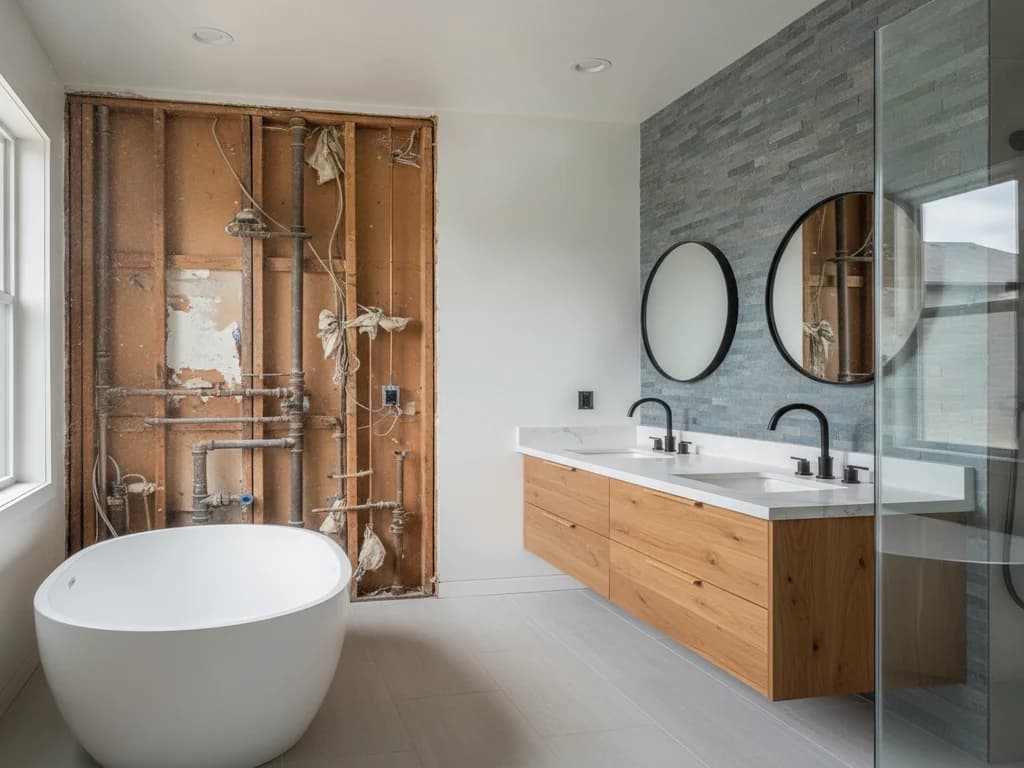
A bathroom exhaust fan needs its own electrical circuit in addition to the ductwork that carries moist air outdoors, and installing one where none previously existed is a meaningfully bigger job than swapping an existing fan. Fixr (2026) prices a new bathroom fan installation — including wiring and duct routing through the wall or ceiling — at $250–$900 (average $400), versus $150–$500 (average $200) to replace an existing fan on wiring and ducting that is already in place.
The gap between those two numbers is almost entirely electrical and duct-routing labor, not the fan itself, which is why "just add a vent fan" during a remodel is rarely a small add-on if the room did not already have one.
5. Panel capacity
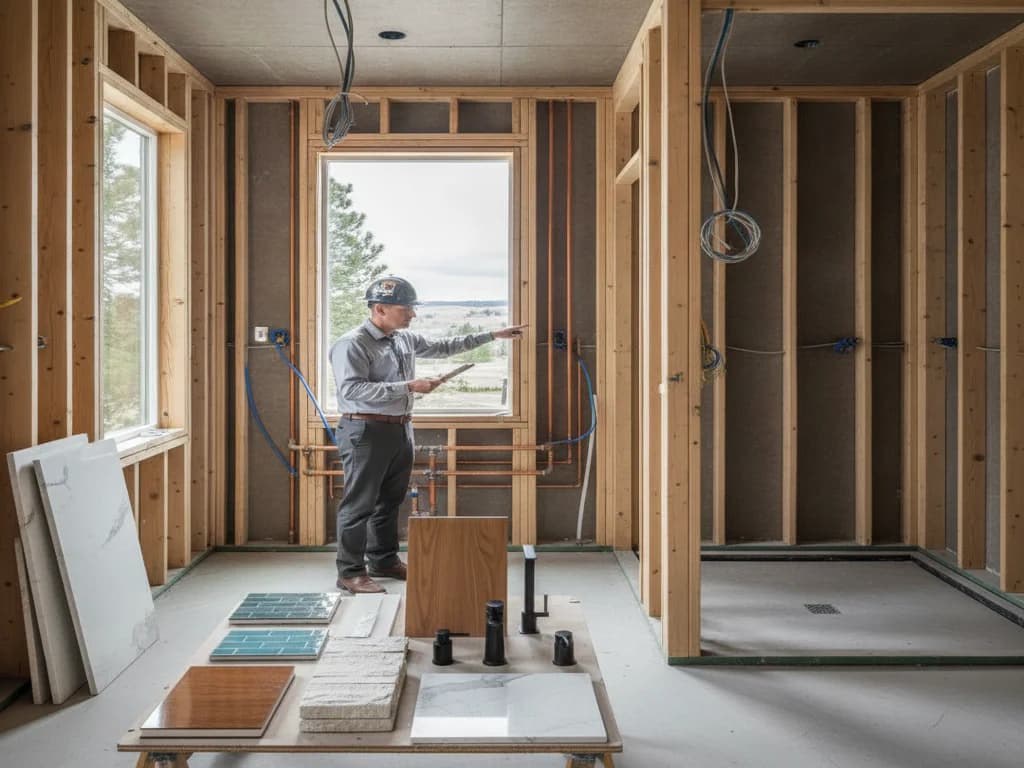
Panel capacity is the least common trigger on this list, but it is the most expensive when it applies. Most single-bathroom remodels do not require a panel upgrade — the existing panel usually has enough spare breaker slots and amperage for a dedicated circuit or two. But a remodel that adds several new circuits at once (heated floor, steam unit, upgraded lighting, a larger vent fan) on an older or already-full panel can tip into panel-upgrade territory.
Bob Vila prices a full service panel replacement at $1,300–$3,000. This is worth flagging early with your electrician if your home has an older panel or if you are stacking several electrical upgrades into one remodel — it changes the scope of the project meaningfully if it applies.
The 5 triggers at a glance
Not every bathroom remodel hits every item below — most touch one or two. This table is a planning reference for what each typically costs when it does apply.
| Electrical trigger | Typical cost | Source |
|---|---|---|
| GFCI outlet (existing wiring) | $130–$300 ($210 avg) | Bob Vila |
| GFCI outlet (new wiring) | $200–$400 | Fixr |
| New dedicated 20-amp circuit | $250–$900 | Fixr |
| Opening walls to run new wire | $3,500–$8,000 | Bob Vila |
| New vent fan (wiring + ducting) | $250–$900 ($400 avg) | Fixr |
| Replace existing vent fan | $150–$500 ($200 avg) | Fixr |
| Full panel replacement | $1,300–$3,000 | Bob Vila |
Ranges reflect national 2026 data from Bob Vila and Fixr. Actual cost depends on wire-run distance, panel condition, and local electrician labor rates.
What Idaho code requires — and how to budget for it
Idaho has adopted the 2023 edition of the National Electrical Code, with amendments effective April 4, 2025, per the Idaho Electrical Board's administrative rules (IDAPA 24.39.10). Those same rules require that "all electrical permits shall be purchased before work is commenced," and set a $65 per-inspection fee for existing-dwelling electrical permits — a modest cost relative to the electrical work itself, but a real one to include in a remodel budget.
The most reliable way to budget for bathroom electrical work is to have your electrician (or remodeler) assess your existing panel, wiring age, and planned features — heated floor, steam, upgraded lighting — before finalizing the scope, rather than treating electrical as an afterthought once tile and fixtures are already selected. Our bathroom remodel hidden costs guide covers the other surprises that tend to surface once walls are open, electrical included.
Scope matters for permitting, too. A like-for-like fixture swap — replacing an existing GFCI outlet with an identical one, for example — is treated differently under most jurisdictions than adding a new outlet, running new circuit wiring, or relocating a switch, all of which typically require a permit and inspection. This is worth clarifying with your contractor before work starts rather than assuming a small electrical change falls outside permit scope, since an unpermitted change discovered later (at resale, for instance) can become its own headache.
Ready to plan your Boise bathroom?
Licensed & insured · 3-year workmanship warranty
Frequently asked questions
- Does every bathroom remodel require electrical work?
- Most do, at least to some degree. Even a cosmetic remodel that touches an outlet, adds a light fixture, or adds a vent fan typically has to bring that item up to current GFCI and circuit requirements. Full rewiring is uncommon unless the home's existing wiring or panel is outdated or undersized for what the remodel is adding.
- How much does it cost to add a dedicated circuit in a bathroom?
- Fixr (2026) prices a new dedicated 20-amp circuit — breaker, wiring, and outlet — at $250–$900, depending on how far the wire has to run and how accessible the electrical panel is. If the wire has to be fished through finished walls on a different level, cost climbs toward Bob Vila's broader rewiring range of $3,500–$8,000 for opening walls to run new wire.
- Do heated floors and steam showers need their own electrical circuit?
- Yes, typically. Both draw enough power that they are usually wired on their own dedicated circuit, separate from the bathroom's standard receptacle circuit, and GFCI protection applies to that circuit as well since it serves equipment in a wet, code-covered room. Confirm panel capacity with your electrician before ordering either system.
Sources
- National Fire Protection Association — National Electrical Code (NEC)
- Bob Vila — GFCI Outlet Cost (2026)
- Fixr — Cost to Install an Electrical Outlet (2026)
- Fixr — Cost to Install a Bathroom Exhaust Fan (2026)
- ESFI — Ground Fault Circuit Interrupters (GFCI) (institute)
- Idaho Electrical Board — IDAPA 24.39.10 Rules (Idaho Code adoption, permits & fees)
Claims and figures are drawn from the sources above and provided for general guidance; your project may vary. Photography is illustrative of design concepts. For a fixed price on your specific bathroom, request a free estimate.