Updated July 6, 2026 · 9 min read
By Boise Bath — bathroom & shower remodeling in Boise & the Treasure Valley
The short answer
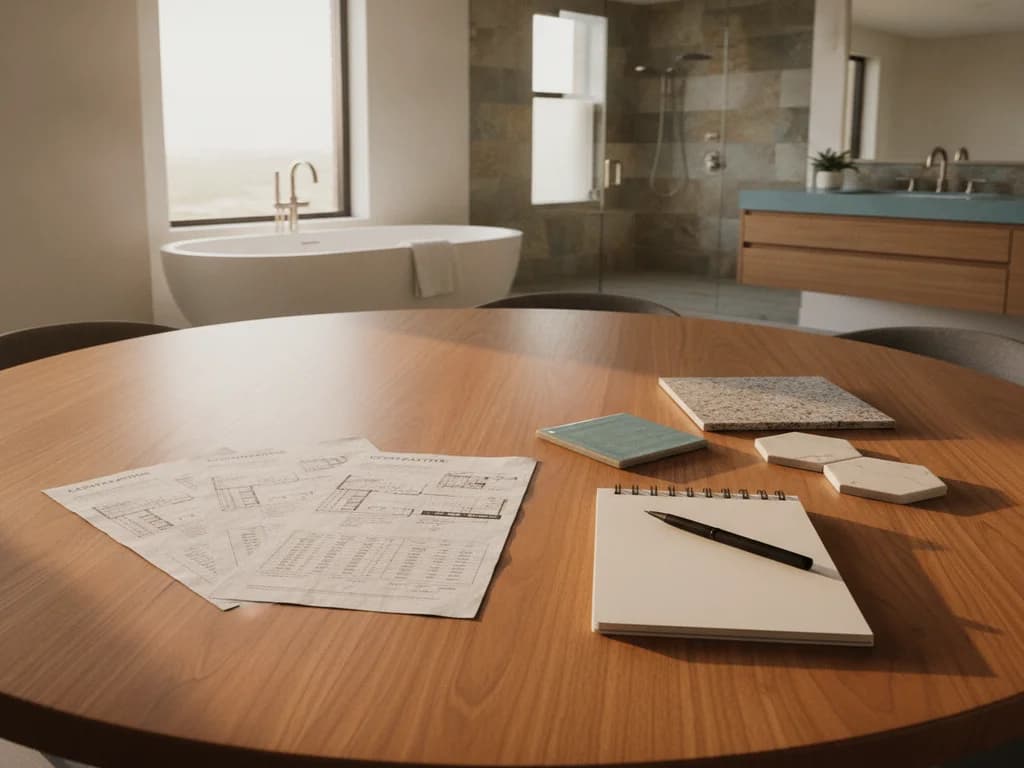
There is no single best season to remodel a bathroom. It is interior work, so weather never blocks the job the way it stalls a roof or deck. Timing still matters for scheduling: contractors book up faster in spring and summer, and holidays can create gaps. Start when your plan is locked, not when the calendar says so.
Key takeaways
- Bathroom remodels are interior work, so — unlike roofing, siding, or a deck — the season doesn’t decide whether the work can happen.
- Timing matters for scheduling, not the build: This Old House reports more than 80% of homeowners plan to remodel in spring and summer, which makes winter the easier season to get onto a good crew’s calendar.
- Custom tile, vanities, and shower glass carry lead times that ignore the calendar — ordering early beats picking a “good” month.
- A remodel that straddles Thanksgiving or the December holidays can stall on subcontractor time off and supplier shipping slowdowns — worth planning around if you have only one bathroom.
- Cold, dry winter air changes how thinset and grout cure, but that is a factor your contractor manages with heat and adjusted cure times — not a reason to avoid a winter remodel.
The honest answer: a bathroom remodel is season-agnostic
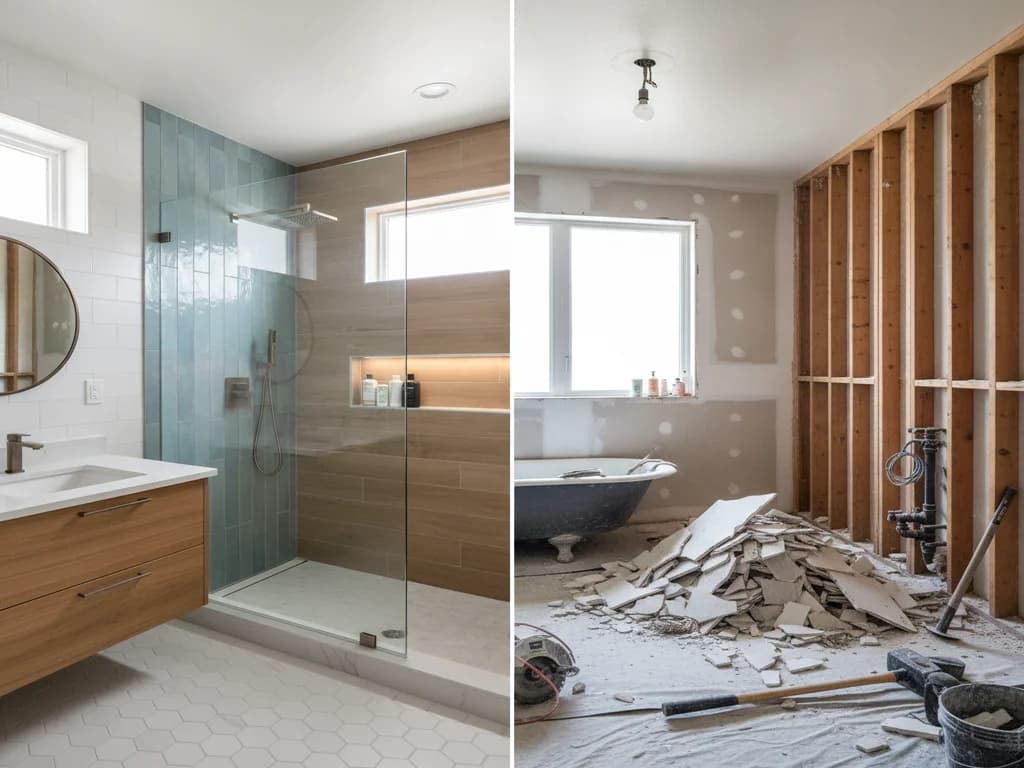
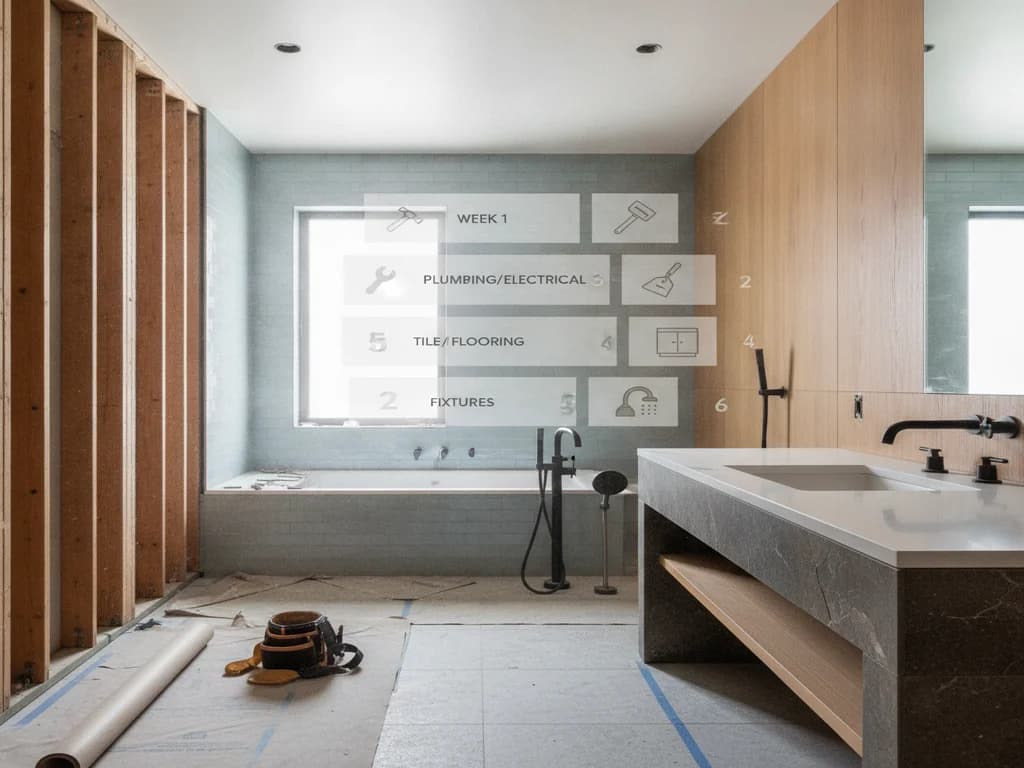
Search “best season to remodel a bathroom” and you’ll find plenty of pages implying there’s a magic month when the work goes smoother. The honest answer is less dramatic: a bathroom remodel is almost entirely interior work, so the season doesn’t decide whether the job can happen. Demo, plumbing, tile, and fixtures all take place inside a conditioned room. Rain, heat, and snow may affect your commute to the tile showroom, but they don’t stop a crew from setting a shower pan in your house.
That’s the key difference between a bathroom and an exterior project. Roofing, siding, and deck builds are genuinely weather-gated — This Old House notes that outdoor work stalls when temperatures drop below freezing and the ground is too hard to dig, which is why those projects cluster in the warmer months. A bathroom carries none of that constraint. So instead of chasing a “best season,” it’s more useful to look at the handful of factors that actually make timing worth thinking about: when contractors are easiest to book, how long your materials take to arrive, how the holidays fall, and one cold-weather wrinkle specific to tile.
Interior vs. exterior work
Exterior remodels (roofing, siding, decks) are weather-gated — the season can literally stop the work. A bathroom is interior, so the calendar affects scheduling and logistics, not whether the job can proceed at all.
So why does timing matter at all?
If weather doesn’t block the work, why not just start whenever? Because four real, non-magical factors still ride on the calendar, and each one is worth a moment of planning:
- Contractor scheduling — demand isn’t perfectly flat across the year, so how fast you can get a good crew depends partly on the season.
- Material lead times — custom tile, vanities, and shower glass take as long as they take regardless of the month, so ordering early matters more than starting in a particular season.
- Holidays — a project that straddles Thanksgiving or the December holidays can hit gaps from subcontractor time off and supplier slowdowns.
- Winter tile curing — cold, dry indoor air changes how mortar and grout cure, which your contractor plans around rather than avoids.
Contractor scheduling: the real seasonal pattern
This is the factor that comes closest to a genuine “best season,” and it works in the opposite direction from what most people assume. This Old House’s home renovation reporting found that more than 80% of homeowners plan to remodel in the spring and summer, with winter ranking as the least popular time to renovate. That doesn’t mean summer is worse — it means the same crews are in highest demand during those months, when interior and exterior project requests compete for the same calendars.
The practical takeaway: scheduling can get tighter during the months homeowners traditionally associate with home projects, and looser in the off-season. This Old House specifically recommends scheduling work during the quieter window between January and early March, when you’re more likely to get onto a good crew’s calendar quickly rather than being stuck with whoever happens to be free on your timeline. For an interior job like a bathroom — which doesn’t need warm weather — the off-season is arguably the least contested time to book, not a compromise. If you’re weighing this against how much of your household the project ties up, our guide to how long a bathroom remodel actually takes breaks the duration down by scope.
Material lead times don’t watch the calendar
Here’s the factor people underestimate most: the single biggest driver of when your bathroom is finished usually isn’t the season you start in — it’s how early you ordered the long-lead items. Custom tile, a made-to-order vanity, a stone slab, and custom shower glass all carry lead times that have nothing to do with whether it’s April or November. Order them late and you compress the schedule no matter how “ideal” your start month looked on paper.
That’s why the smart move is decoupling timing from season entirely: lock your selections and place special orders early, so materials are arriving as the crew needs them rather than dictating a stop-and-wait gap in the middle of your project. Starting a remodel in a supposedly “good” month with tile that’s six weeks out will finish later than starting in a “bad” month with everything already staged.
Holidays: the one stretch of calendar worth planning around
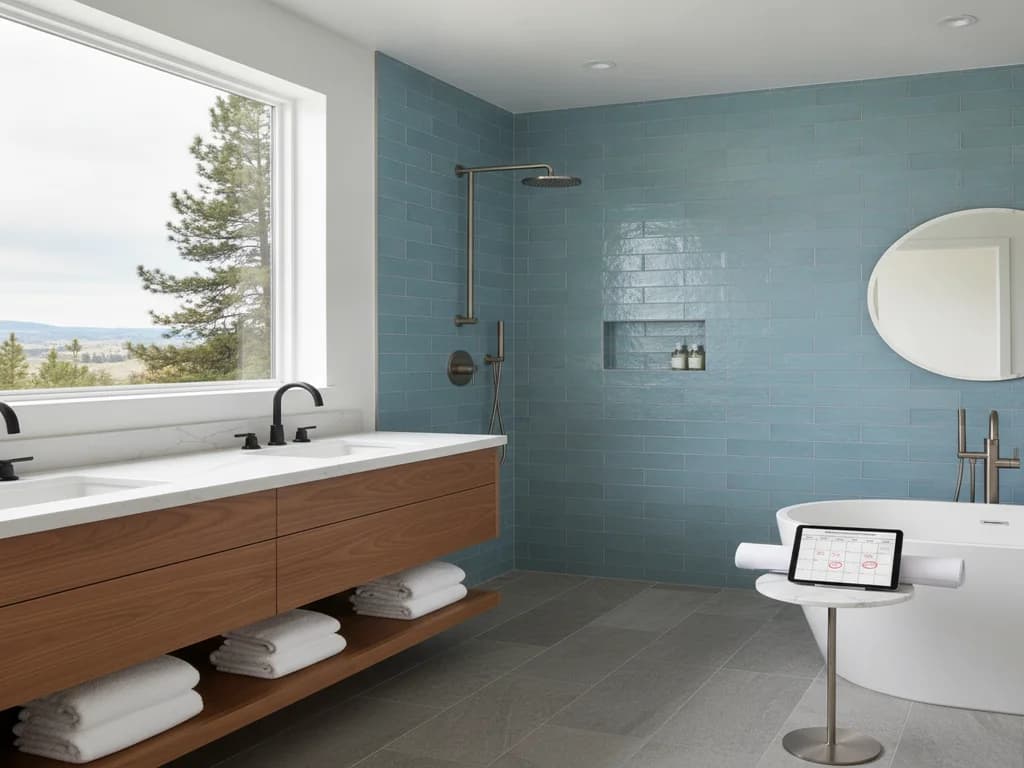
If any part of the year genuinely warrants caution, it’s the late-November through December holiday stretch — and even then it’s about logistics, not weather. A remodel that straddles Thanksgiving and the December holidays can hit schedule gaps that aren’t anyone’s fault: subcontractors take time off, suppliers and freight carriers run on reduced or slower shipping calendars, and inspection offices keep holiday hours. None of that stops a well-planned project, but it can insert dead days into a timeline you were counting on.
This matters most if your household has only one bathroom. A few idle days over a holiday week are an annoyance in a two-bathroom home and a real problem in a one-bathroom one — see remodeling your only bathroom for how to plan around that, and what living through a bathroom remodel is actually like for the day-to-day reality. If your timeline would run through the holidays, the fix is usually to start early enough to finish before them, or late enough to begin after — a conversation to have with your contractor up front, not a reason to wait for spring.
The Treasure Valley winter wrinkle: tile curing in cold, dry air
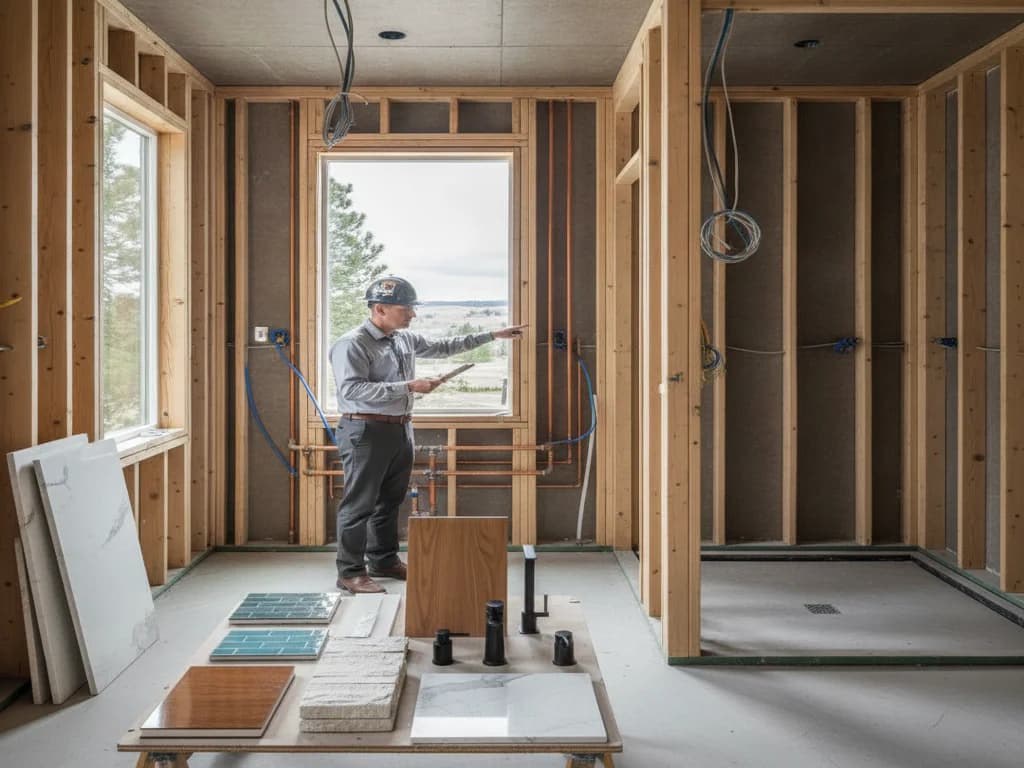
There is one legitimately season-specific consideration for a winter remodel in the Boise area, and it’s a technical one your contractor manages rather than something you need to avoid. Cold, dry indoor winter air changes how cement-based materials cure. Tile-setting manufacturers publish minimum installation and curing temperatures for exactly this reason: Custom Building Products’ guidance calls for maintaining conditions at or above roughly 50°F for thin-set mortar and grout, and Laticrete notes that for every 18°F below 70°F, portland-cement and epoxy materials can take about twice as long to cure. Cold enough conditions don’t just slow curing — they can permanently weaken mortar and grout if the material is allowed to approach freezing before it sets.
In practice, this almost never becomes your problem, because it’s a standard part of doing interior tile work in a Treasure Valley winter. A good contractor keeps the space heated to the manufacturer’s minimum during installation and curing, and simply builds slightly longer cure times into the schedule when conditions call for it. So winter isn’t worse for a bathroom remodel — it just adds one line item to how the crew manages the tile phase, the same way summer adds nothing and takes nothing away.
A contractor’s job, not a homeowner’s worry
Cold-weather tile curing is handled with temporary heat and adjusted cure times — a routine part of interior winter work. It’s a reason to ask your contractor how they manage it, not a reason to postpone until spring.
So when should you actually start?
Put the pieces together and the answer is straightforward: start when your plan is locked and your materials are ordered — not when the calendar hits a particular season. Because the work is interior, no month is off-limits. The off-season (roughly January through early March) tends to offer the easiest access to good crews, the holidays are the one stretch worth planning around, and long-lead materials should be ordered early no matter what the season is doing.
That makes “best season” the wrong question. The better one is “when will my plan and my materials be ready?” — because that, far more than the weather, decides how your remodel actually goes. This is a different question from how long the project runs once it begins; if that’s what you’re really after, how long a bathroom remodel takes by scope is the guide for the duration side of the equation.
| Factor | Season-dependent? | What actually matters |
|---|---|---|
| The work itself | No — it’s interior | A conditioned room; weather never blocks it |
| Contractor availability | Somewhat | Off-season (Jan–early March) is easiest to book |
| Material lead times | No | Order custom tile, vanity, and glass early |
| Holidays | Yes | Start before or after the Nov–Dec stretch |
| Winter tile curing | Yes | Your contractor heats the space and adjusts cure times |
Seasonal effects are about scheduling and logistics — not whether a bathroom remodel can be done.
Start when you’re ready, not when the calendar says
A bathroom remodel doesn’t wait for spring. Because it’s interior work, the season affects how easily you book a crew, how the holidays fall, and how the tile phase is managed in cold weather — but never whether the job can be done. The homeowners who get the smoothest projects are the ones who lock their plan and order their materials early, then start whenever those are ready.
When your plan is set and you want a realistic schedule for a Treasure Valley bathroom, request a free estimate — any time of year.
Ready to plan your Boise bathroom?
Licensed & insured · 3-year workmanship warranty
Frequently asked questions
- Is there really a best season to remodel a bathroom?
- Not in a weather sense. A bathroom remodel is interior work, so it can be done in any season. The off-season — roughly January through early March — tends to be the easiest time to book a good contractor, since This Old House reports most homeowners plan to remodel in spring and summer. But the season never decides whether the work can happen.
- Is it a bad idea to remodel a bathroom in winter?
- No. Winter is often the easiest time to get on a contractor’s schedule, and the work is indoors. The one winter-specific factor is that cold, dry air slows how tile mortar and grout cure — Custom Building Products and Laticrete publish minimum temperatures for this — but your contractor manages it with temporary heat and adjusted cure times. It’s a consideration, not a drawback.
- Should I plan a bathroom remodel around the holidays?
- If your timeline would run through late November and December, yes. Subcontractor time off, slower supplier shipping, and holiday inspection hours can insert gaps into the schedule. This matters most with a single-bathroom household. The usual fix is to start early enough to finish before the holidays or late enough to begin after — a scheduling conversation, not a reason to wait for spring.
Sources
- This Old House — Home Renovation Trends and Tips
- Custom Building Products — Extreme Weather Grouting (TB78)
- LATICRETE — Cold Weather Tiling and Grouting (TDS 175)
- Tile Council of North America — Handbook for Ceramic, Glass & Stone Tile Installation
Claims and figures are drawn from the sources above and provided for general guidance; your project may vary. Photography is illustrative of design concepts. For a fixed price on your specific bathroom, request a free estimate.