Updated July 16, 2026 · 6 min read
By Boise Bath — bathroom & shower remodeling in Boise & the Treasure Valley
The short answer
Professional regrouting typically costs roughly $10–$25 per square foot, per HomeAdvisor, with most whole-project totals landing between about $250 and $1,000 for a standard shower and roughly $170–$2,500 across all bathroom regrouting jobs, per Angi. Grout type, tile size, and how much old grout must be removed drive where you land in the range.
Key takeaways
- Regrouting runs roughly $10–$25 per square foot professionally, per HomeAdvisor — labor is most of it, because removing old grout is slow, careful work.
- A standard tub-shower surround regrout typically totals in the hundreds, not thousands; whole-bathroom jobs span roughly $170–$2,500 per Angi.
- Epoxy grout raises the price meaningfully — several times the material cost of cement grout, per HomeAdvisor — but resists stains and never needs sealing.
- Small tile with many grout lines costs more to regrout per square foot than large-format tile with few.
- Regrouting only pays when the tile and the waterproofing behind it are sound — regrouting over a failing substrate is money burned.
- Fresh grout plus new caulk is the highest-impact sub-$1,000 facelift an aging tiled bathroom can get.
What does regrouting cost?
Regrouting — removing the top layer of old grout and packing fresh grout into the joints — is priced by area, and the labor of removal dominates the bill. HomeAdvisor puts professional regrouting at roughly $10–$25 per square foot; Angi's cost data shows whole-project totals ranging from roughly $170 for a small patch to about $2,500 for a large bathroom, with typical projects landing well inside those extremes.
For the most common job — regrouting a standard tub-shower surround of 50 to 80 square feet — those per-square-foot figures translate to a total in the hundreds, not thousands. That is the appeal: for a fraction of retiling cost, a dingy 1990s shower comes back looking close to new.
The numbers above are national published ranges, not quotes. Every bathroom differs in tile size, grout condition, and access — which is why the ranges are wide and why a firm local price requires eyes on the tile.
Regrouting cost at a glance
Published ranges from national cost guides, organized by scope:
| Scope | Typical range | Source |
|---|---|---|
| Per square foot, professional | roughly $10–$25 | HomeAdvisor |
| All regrouting projects (full span) | roughly $170–$2,500 | Angi |
| Standard tub-shower surround (50–80 sq ft) | roughly $500–$2,000 | Derived from HomeAdvisor per-sq-ft range |
| Small bathroom floor (35–50 sq ft) | roughly $350–$1,250 | Derived from HomeAdvisor per-sq-ft range |
| Epoxy grout upgrade | adds materially to any row above | HomeAdvisor |
National published ranges as of 2026 — actual pricing depends on grout type, tile size, joint condition, and local labor. Boise Bath quotes fixed prices after an in-person look.
What moves the number up or down
Two identical-looking showers can land at opposite ends of the range. These are the variables that decide where yours falls:
- Grout type: standard cement grout is the budget baseline; epoxy grout costs several times as much in material, per HomeAdvisor, and is slower to work — but it resists stains and hard-water buildup and never needs sealing. The full tradeoff is in our epoxy vs. cement grout comparison.
- Tile size and joint count: mosaic and small-format tile can double or triple the linear feet of grout per square foot of wall versus large-format tile, and removal time scales with joint length.
- Depth of removal needed: refreshing sound grout means grinding out the top layer; grout that is cracked through or contaminated with mold needs full-depth removal, which takes longer and costs more.
- Condition and access: overhead work in shower ceilings and niches, tight tub decks, and delicate older tile that chips easily all slow the job down.
- Caulk scope: a proper regrout includes cutting out and replacing the caulk at changes of plane — tub-to-tile, corners, floor joints. It is often bundled, but confirm it is in the bid.
- Minimum charges: regrouting is skilled, slow work, so small patch jobs often price near a contractor's service minimum rather than by the square foot.
Regrout or retile? The threshold that decides it
The regrouting price only makes sense if regrouting is the right treatment — and that depends entirely on what is behind the grout. Fresh grout on sound tile over intact waterproofing is a genuine renewal. Fresh grout over loose tile, spongy walls, or a failed pan is a cosmetic bandage on a structural problem, and the money is wasted the day the underlying failure surfaces.
The tells that separate the two cases — hollow-sounding tile, recurring cracks in the same joints, movement underfoot, stains that come back — deserve a careful look before any money is spent. We walk through the full decision in should I regrout or retile, and it is the page to read before booking either job.
The short version: if grout is failing everywhere at once, or the same lines keep cracking after repair, the grout is usually the messenger, not the problem.
Grout is not waterproofing
Cement grout is porous — the waterproofing in a shower is the membrane behind the tile, not the grout in front of it. That is why regrouting cannot fix a leaking shower, and why recurring grout failure in the same spot usually signals movement or moisture behind the wall. Diagnose before you regrout.
What a professional regrout involves
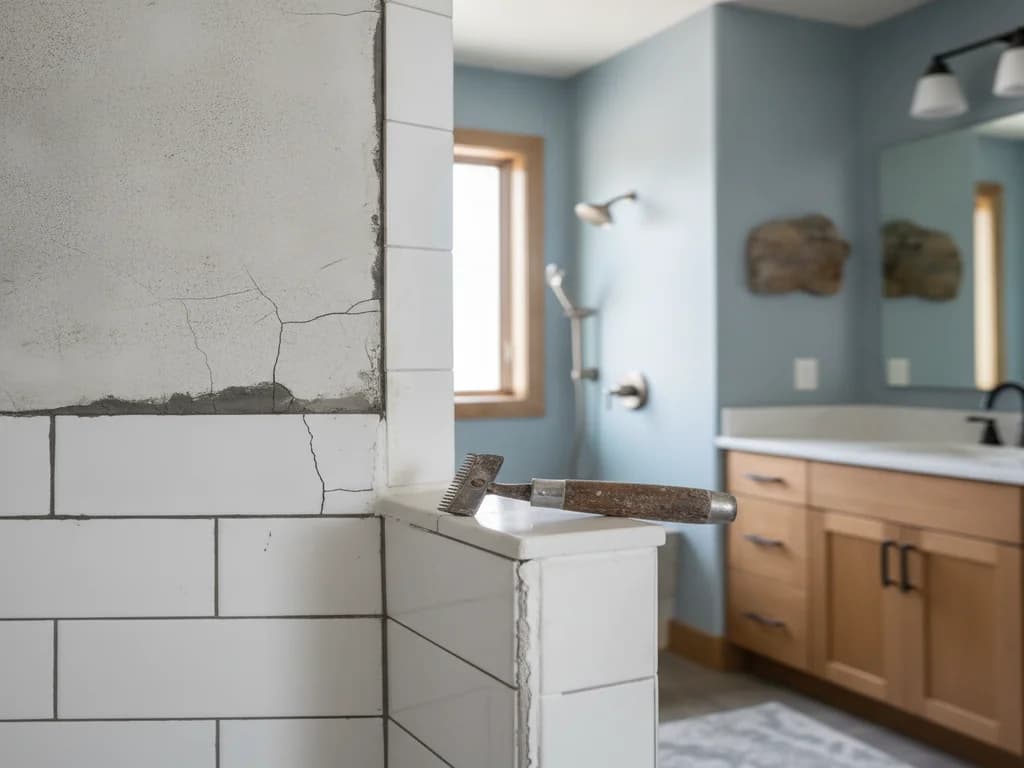
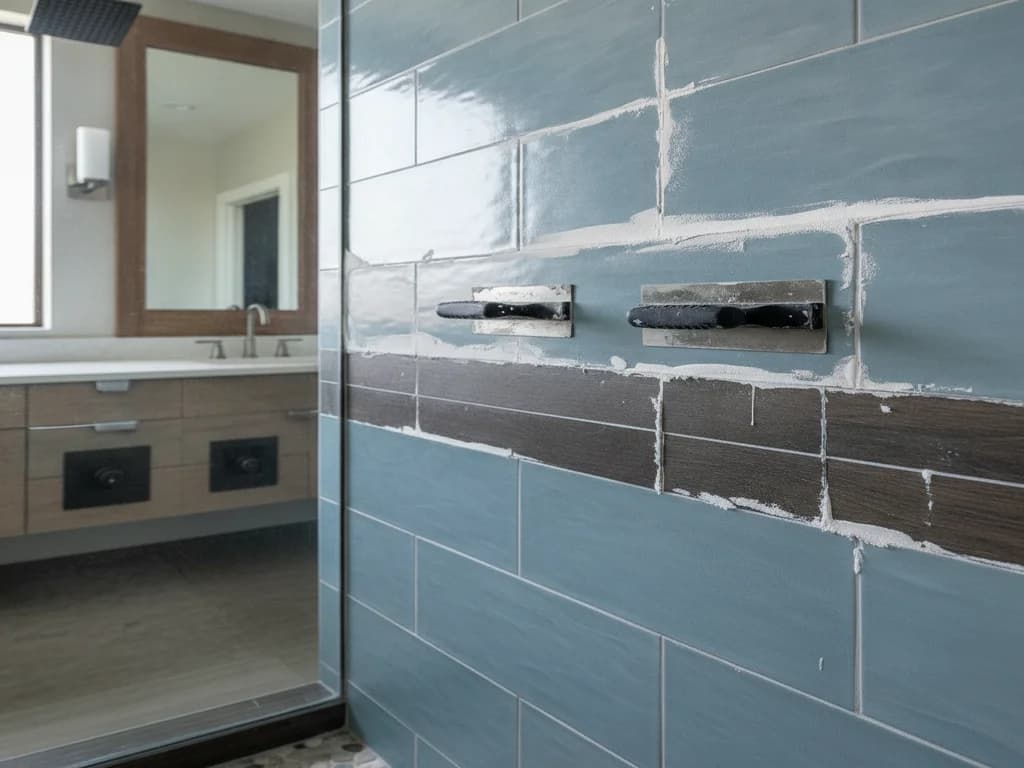
Knowing the process explains the price. A professional regrout means protecting the tub and fixtures, mechanically removing old grout to sufficient depth with oscillating or grinding tools — the slow, careful part, since one slip chips a tile — then cleaning the joints, packing new grout, tooling it, and replacing every caulk joint at the changes of plane. Cement grout jobs finish with a sealer once cured.
The step-by-step, including how long it takes and when the shower can be used again, lives in our replacing bathroom grout guide. The practical takeaway for pricing: nearly all the cost is skilled labor, which is why regrouting quotes vary more between contractors than material-heavy jobs do.
It is also why the cheapest bid deserves scrutiny. "Regrouting" done by smearing new grout over old — without removal — fails within months, because new grout cannot bond in a skim coat. Ask any bidder to describe their removal step; the answer tells you what you are buying.
When regrouting is the wrong place for the money
Regrouting is a maintenance play: it buys years of life and a visual reset for a tiled surface that is fundamentally healthy. It is the wrong spend when the shower is 25 years old with original waterproofing, when tile is cracked or hollow, when the layout itself is the daily frustration — or when you are already planning a remodel within a couple of years, in which case the regrout money simply gets demolished.
In those cases, the honest comparison is against replacement: a new surround or full tile shower rebuild resets the waterproofing clock entirely, and costs for that path are covered in our shower replacement cost and shower waterproofing cost guides.
National ranges get you oriented, but they cannot see your grout. Boise Bath quotes fixed prices — we look at the tile, the joints, and what is behind them, then put a firm number in writing through a free estimate, so the regrout-or-retile decision gets made on real information instead of a published average.
Ready to plan your Boise bathroom?
Licensed & insured · 3-year workmanship warranty
Frequently asked questions
- How much does it cost to regrout a shower?
- Professional regrouting runs roughly $10–$25 per square foot, per HomeAdvisor, so a standard 50-to-80-square-foot tub-shower surround typically totals in the hundreds to low thousands. Angi's published range across all regrouting projects is roughly $170–$2,500. Grout type, tile size, and how much old grout must be removed set where a specific shower lands.
- Why is regrouting so expensive for such a small amount of material?
- Because the grout is nearly free and the labor is not. Old grout has to be mechanically ground out of every joint without chipping the surrounding tile — slow, skilled work that scales with the linear feet of joints. Small-format tile multiplies joint length, which is why a mosaic wall costs more to regrout than the same area in large tile.
- Is epoxy grout worth the extra cost when regrouting?
- Often, yes — especially in showers with hard water, which describes most of the Treasure Valley. Epoxy grout costs several times as much as cement grout in material, per HomeAdvisor, and is slower to install, but it resists stains and mineral buildup and never needs sealing. Over a decade of avoided scrubbing and resealing, many homeowners consider it the better buy.
- Can regrouting fix a leaking shower?
- No. Grout is porous and is not the waterproofing layer — the membrane behind the tile is. Regrouting can slow surface water intrusion and improve appearance, but if a shower is leaking into the wall or the room below, the failure is behind the tile and regrouting only hides the evidence. Diagnose the leak before spending on cosmetic work.
- How long does regrouting last?
- Done properly — old grout fully removed, joints cleaned, quality grout packed and sealed — a regrout on sound tile commonly lasts 10–15 years or more. Done as a skim coat over old grout, it can fail within months. Longevity depends less on the grout brand than on removal depth and on whether the substrate behind the tile is actually stable.
- Is it cheaper to regrout or retile?
- Regrouting is far cheaper — typically hundreds versus thousands — but they are not interchangeable. Regrouting renews the surface of a healthy tile installation; retiling replaces the installation and its waterproofing. If tile is loose, cracked, or over failed waterproofing, regrouting is money spent on a surface that still has to come down. Our regrout-or-retile guide covers how to tell which job you have.
Sources
Claims and figures are drawn from the sources above and provided for general guidance; your project may vary. Photography is illustrative of design concepts. For a fixed price on your specific bathroom, request a free estimate.