Updated July 5, 2026 · 9 min read
By Boise Bath — bathroom & shower remodeling in Boise & the Treasure Valley
The short answer
The best steam shower ideas start with a fully sealed, sloped-ceiling enclosure in a shape that suits the room — corner, walk-in, or curved — finished in non-porous tile or acrylic. Layer in a well-placed generator, a proportioned bench, wet-rated controls, and one or two wellness touches like chromatherapy or aromatherapy for a genuine daily spa experience.
Key takeaways
- A steam shower is a standard enclosure built vapor-tight and sloped, not a separate fixture — most ideas below apply to any walk-in shower footprint.
- Non-porous materials — porcelain tile, acrylic, glass block — perform better long-term than porous natural stone, which needs regular resealing.
- The generator can sit up to several feet away in a closet or vanity cabinet, so it never has to compete with the shower design itself.
- A proportioned bench, wet-rated controls, and layered wellness features (light, sound, aroma) turn a steam shower from a fixture into a routine.
- Fixr's 2026 trend survey has steam showers named a top wellness feature by 44% of design professionals — this is a mainstream upgrade, not a niche one.
What makes a steam shower feel like a real spa?
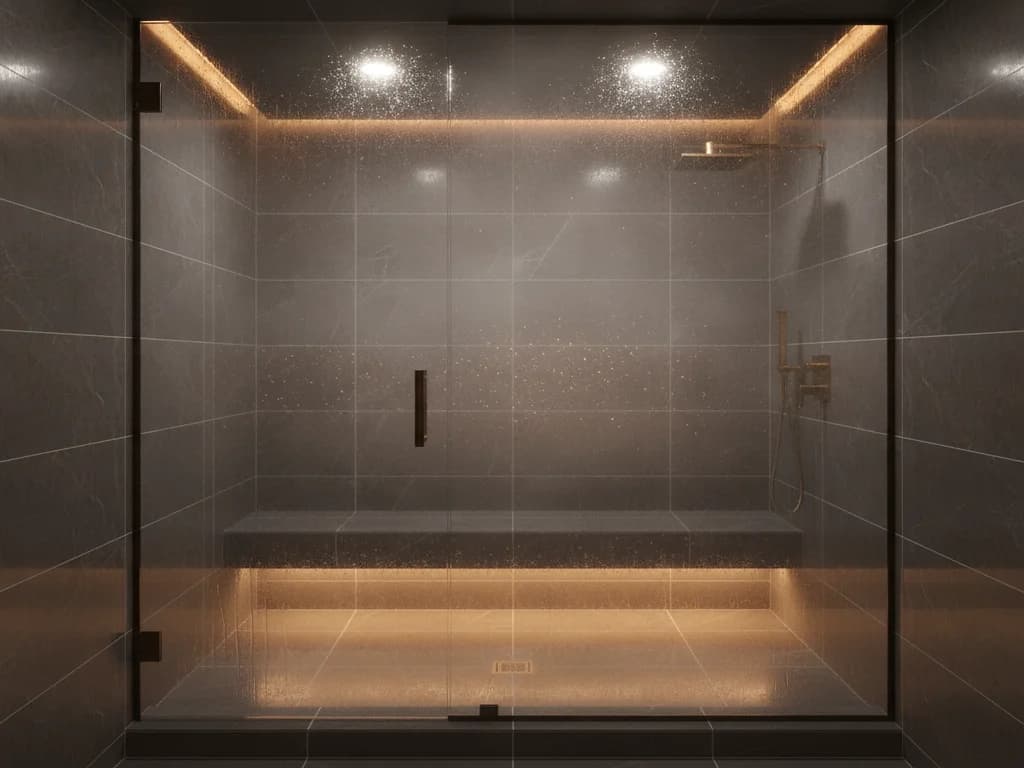
A steam shower is not a separate fixture bolted onto your bathroom — it is a standard shower enclosure built to hold moist heat: fully sealed, insulated, and sloped so condensation runs off rather than dripping on you. Because it starts from a shower you would likely build anyway, most of the ideas below are really about doing a great walk-in or curbless shower well, then layering the steam system on top.
Mr. Steam's planning guidance frames the requirements simply: the enclosure must be sealed, insulated, and fully enclosed, with a water line to the generator, a steam line from the generator to the shower, and a drain line. Get those bones right and the design choices below are what separate a functional steam shower from a genuinely spa-like one.
How to use this list
Start with enclosure shape and material, add the generator and bench, then layer in one or two wellness features. A steam shower earns its keep through daily use, not through how many features it has.
What enclosure shape works best for a steam shower?
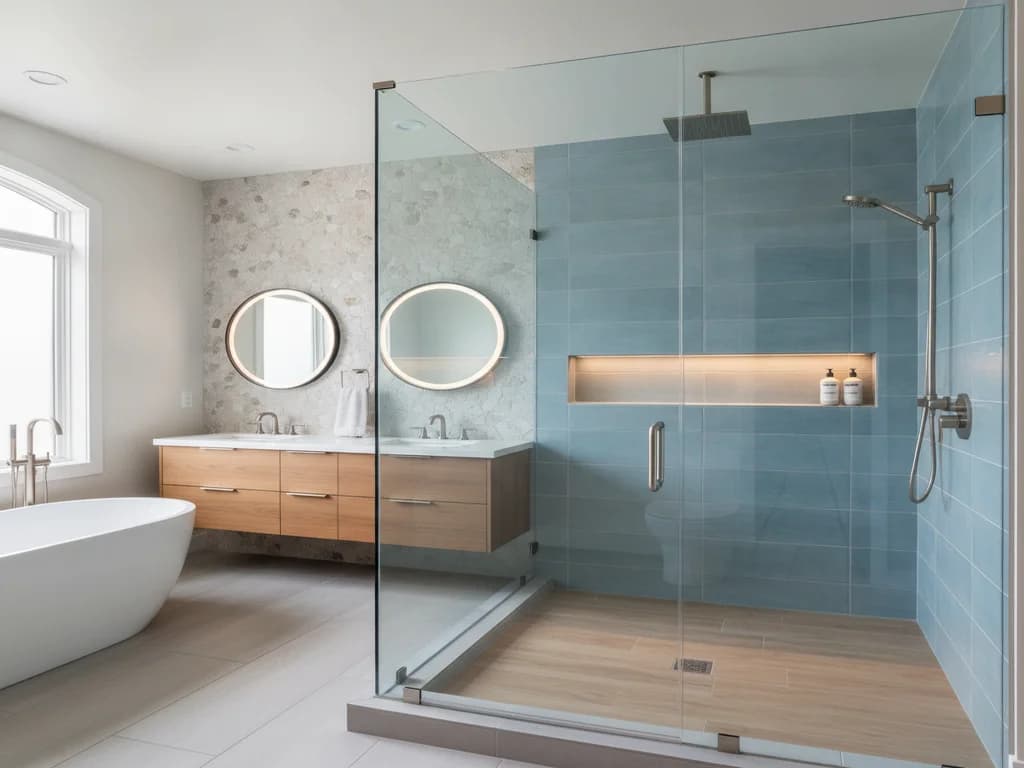
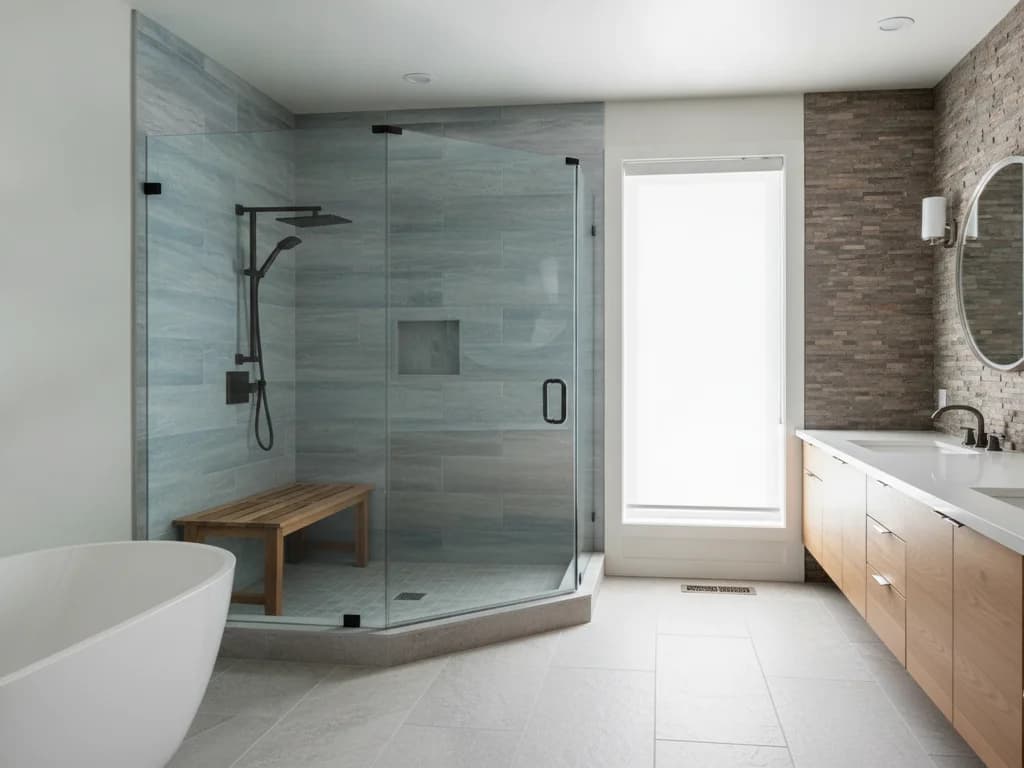
1. Corner enclosures are the most space-efficient shape and the most common steam retrofit into an existing bathroom footprint, per Bob Vila's rundown of steam shower configurations. 2. Walk-in and doorless layouts trade a small amount of steam efficiency for the open, curbless feel covered in our walk-in shower ideas — workable for steam as long as the entry is a single long wall or return panel rather than a wide-open threshold. 3. Curved and neo-angle enclosures soften a small bathroom's corners and are a common shape in prefab steam units.
Whatever shape you choose, the enclosure has to seal completely — that rules out a lot of the barrier-free openness of a true wet room unless the whole room is built and vented for steam.
| Shape | Space efficiency | Steam retention | Feels best in |
|---|---|---|---|
| Corner | Highest | Excellent (compact volume) | Standard-size bathrooms |
| Walk-in / doorless | Moderate | Good with a return panel | Larger, open bathrooms |
| Curved / neo-angle | High | Good | Small or awkward footprints |
Which materials hold up best inside a steam shower?
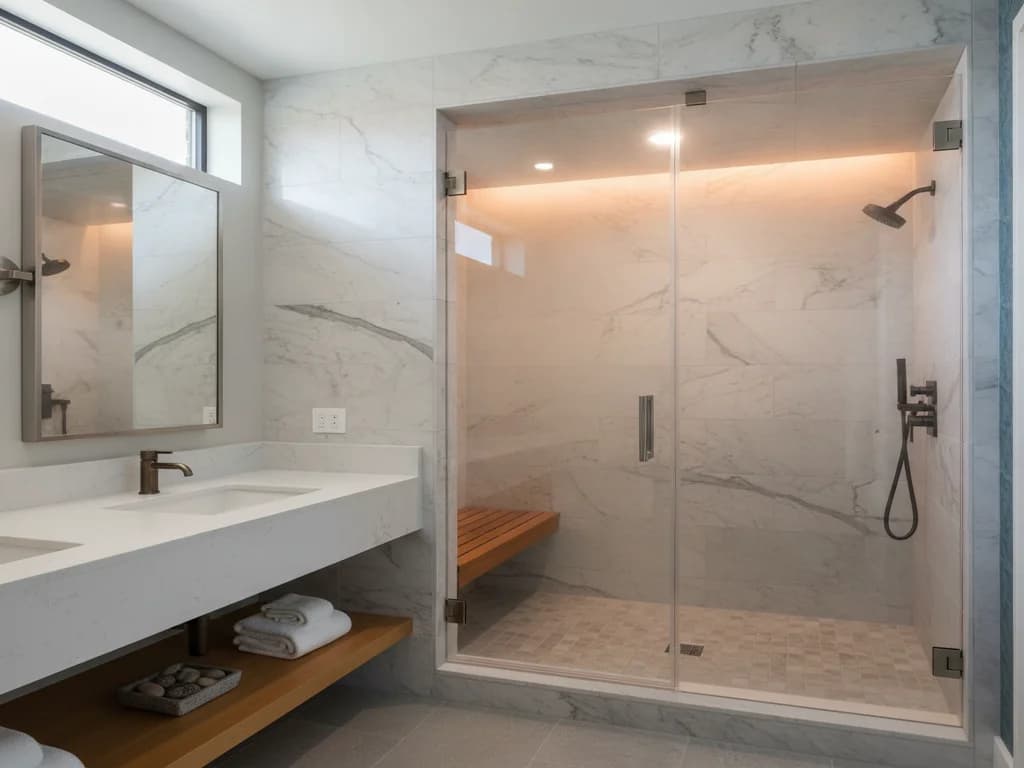
4. Porcelain or ceramic tile is the safe, non-porous default — This Old House recommends larger tiles specifically because they collect less condensation in the grout lines. 5. Natural stone (marble, travertine) reads luxurious but is porous; This Old House notes stone surfaces need an impregnating sealer reapplied roughly every two years to keep performing in a steam environment. 6. Acrylic, fiberglass, and solid-surface panels are common in prefab units, per Bob Vila, and trade a little bit of custom character for a fully sealed, low-maintenance surface.
Mr. Steam's planning guidance adds that any material works if the assembly behind it is sealed and insulated — but larger-format tile and non-porous panels are simply more forgiving to live with day to day, especially with the Treasure Valley's moderately hard water.
Where should the steam generator go?
7. Remote generator placement is one of the most useful things people get wrong about steam showers — the generator, described by Mr. Steam as roughly the size of a briefcase, does not have to live inside or next to the shower. Mr. Steam allows it to be installed in a nearby closet, vanity cabinet, or basement with 12 inches of clearance, while This Old House gives a rule-of-thumb distance of about 25 feet from the shower stall for reliable steam delivery. Either way, the generator can disappear entirely from the design, leaving the shower itself uncluttered.
The system also needs 208v or 240v electrical service, a water supply line, a steam line to the shower, and a drain — all reasons to loop in a licensed contractor experienced with steam installations during planning, not after the tile is set.
What controls and comfort features complete a steam shower?
8. A wet-rated control panel mounted inside the shower, away from the direct steam stream, is the command center — Mr. Steam notes it typically manages temperature, session duration, and often lighting, music, and aromatherapy from one place. 9. Chromatherapy and integrated audio turn a functional steam cycle into a genuine wind-down ritual; both This Old House and Bob Vila list mood lighting and Bluetooth audio among the most requested add-ons. 10. A handheld shower paired with a fixed or rainfall head keeps the space fully functional as a normal shower between steam sessions.
Bob Vila also flags smaller finishing touches worth planning for early: built-in shelving for oils or a loofah, an anti-fog mirror if you shave inside the enclosure, and an automatic flush cycle that rinses the generator system after each use.
Is a built-in bench worth the space?
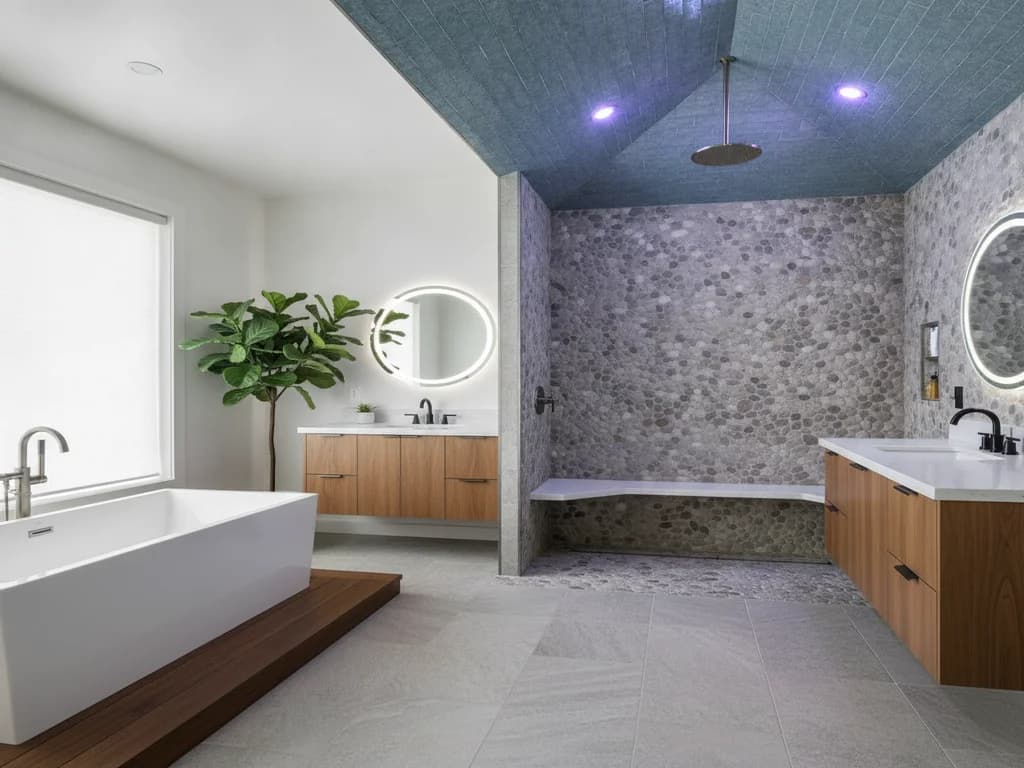
11. A built-in bench is close to a requirement rather than an optional extra — a steam session is meant to be sat through, not stood through. A well-proportioned bench sits at roughly seat height with enough depth to sit comfortably, and a floating or corner design keeps the floor open for cleaning between uses, the same logic covered in our walk-in shower ideas for regular showers. Teak and other water-resistant hardwoods are a common bench material because they stay comfortable to sit on even at steam temperatures.
How do you keep a steam shower properly sealed and ventilated?
12. A sloped, tiled ceiling is a non-negotiable design detail — This Old House and Mr. Steam both call for a slope steep enough that condensation runs to a wall rather than collecting overhead and dripping down on you mid-session. Behind the finish surface, a full vapor barrier (sheeting plus a waterproof membrane over backer board), a tightly sealed door with no meaningful gaps, and vapor-sealed light fixtures keep moisture from migrating into the surrounding walls. This Old House also notes the steam itself is engineered to stay safely under about 118°F, so the enclosure needs to hold heat and moisture, not extreme temperature.
Can a steam shower work inside a curbless wet room?
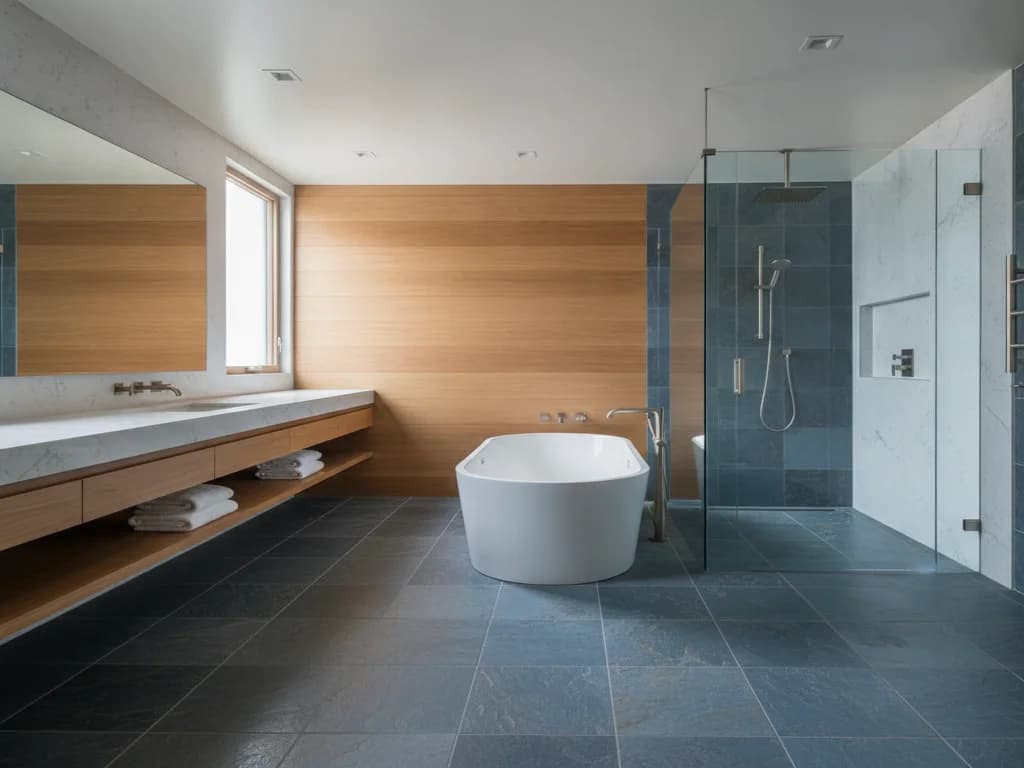
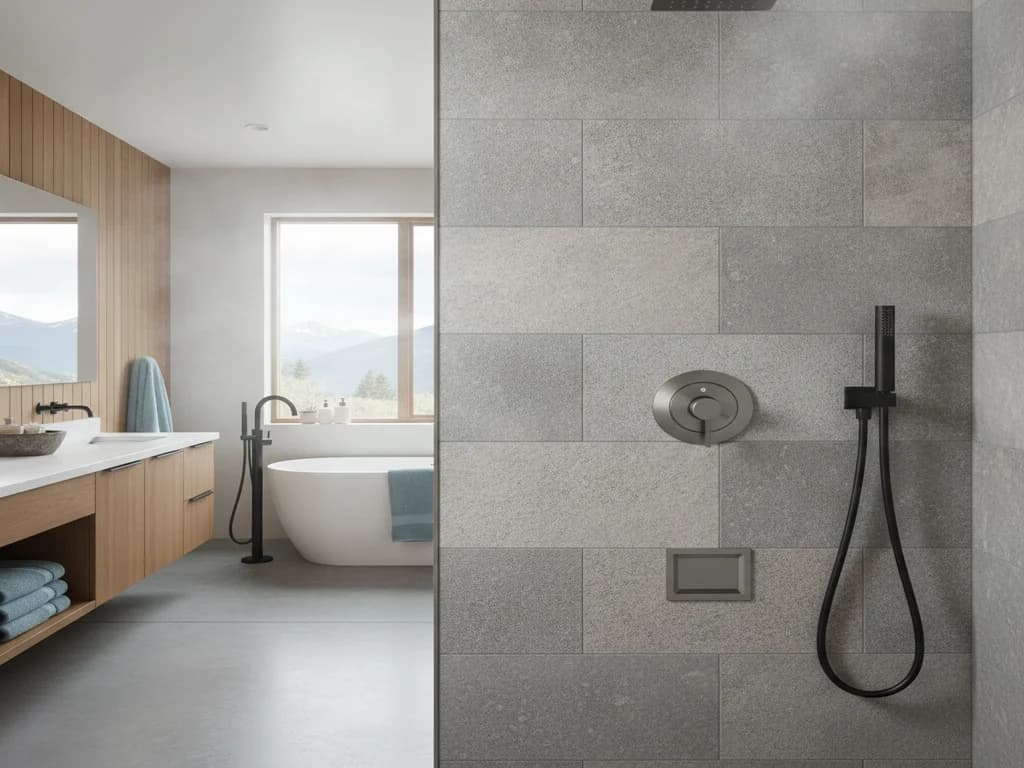
Yes, with one adjustment: a wet room's appeal is an open, barrier-free layout, while a steam shower needs a sealed volume to hold heat and vapor. The two combine well when the steam enclosure is its own fully glassed-in zone within a larger wet room rather than a doorless opening — you get the spa-like open feel of a wet room around a shower that still seals completely for steam sessions. A custom steam shower installation built around your specific footprint is the most reliable way to get both right at once, since the waterproofing and sealing details differ from a standard shower build.
What is the most low-maintenance way to build one?
13. Large-format porcelain tile minimizes grout lines and the mildew that collects in them. 14. Glass block or a single fixed glass panel at the entry keeps the enclosure sealed without adding a hinge or track to maintain. Avoiding unsealed natural stone, or committing to This Old House's roughly every-two-years resealing schedule if you do choose it, is the difference between a steam shower that still looks new in five years and one that shows every session.
Are steam showers still trending, and do they add resale value?
15. A steam shower as a wellness feature, not a novelty: Fixr's 2026 design trend survey has 44% of professionals naming steam showers a top wellness feature, alongside heated floors (54%) and smart shower systems (43%) — this places steam firmly in the mainstream of current bathroom design rather than a fringe upgrade. Bob Vila also reports that homes with a steam shower can sell for meaningfully more than comparable homes without one, citing — though without underlying market data — figures as high as roughly 30% in some markets; take the specific number lightly, but the direction is a reminder that a well-built steam shower is as much a home-value decision as a comfort one. For the investment math specific to Boise, see what a steam shower costs to add here.
How do these ideas come together?
Compact and efficient: corner enclosure + porcelain tile + remote generator in a nearby closet + floating teak bench.
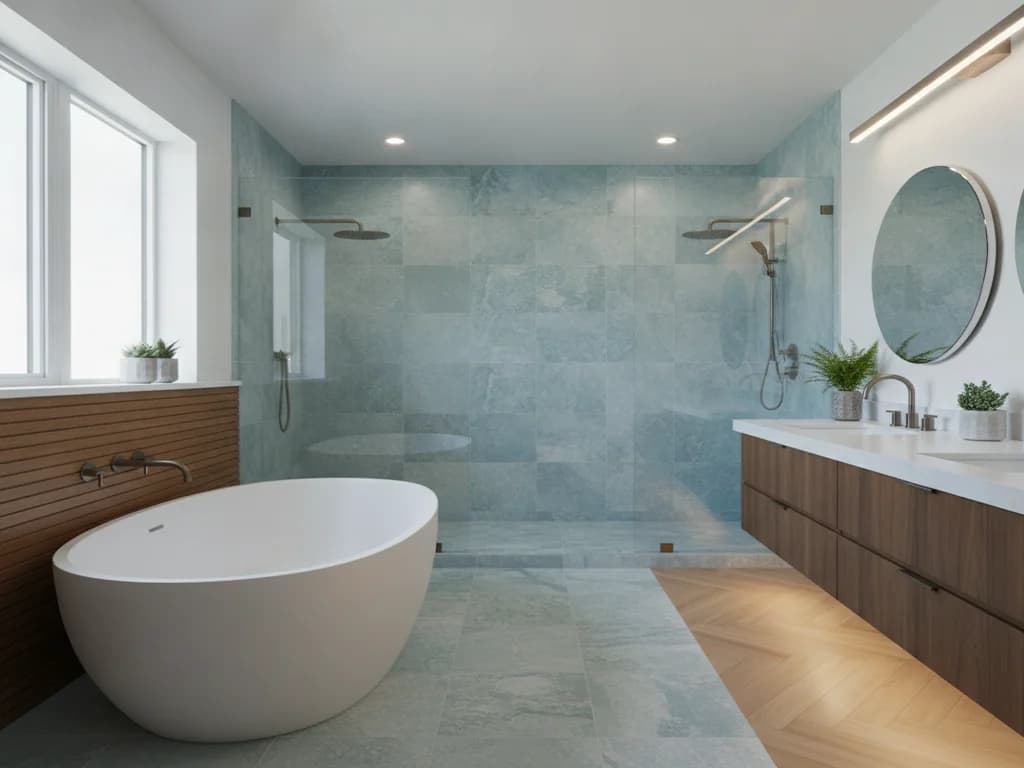
Open and spa-like: walk-in layout with a return glass panel + large-format stone-look porcelain + chromatherapy lighting + rainfall and handheld combo.
Full wellness retreat: curved enclosure + natural stone (properly resealed) + integrated audio and aromatherapy + bench + wet room surround.
Any of these directions can be built around your bathroom's real footprint with a steam shower installation, or browse the Boise Bath gallery to see how the pieces look assembled.
Ready to plan your Boise bathroom?
Licensed & insured · 3-year workmanship warranty
Frequently asked questions
- Do I need a separate room for a steam shower, or can it fit in my existing shower footprint?
- A steam shower is a standard shower enclosure built vapor-tight and sloped, so most of the time it fits your existing footprint rather than needing extra square footage. The generator, which Mr. Steam describes as roughly briefcase-sized, is typically installed remotely in a nearby closet or cabinet, not inside the shower itself.
- What is the best material for a steam shower?
- Non-porous materials perform best long-term. Porcelain or ceramic tile, especially in larger formats, collects less condensation in the grout, per This Old House. Natural stone looks luxurious but is porous and needs an impregnating sealer reapplied roughly every two years to hold up in steam.
- How far away can the steam generator be installed?
- Mr. Steam's planning guidance allows installation in a nearby closet, cabinet, or basement with about 12 inches of clearance, while This Old House gives a rule-of-thumb distance of roughly 25 feet from the shower stall for reliable steam delivery. Either way, the generator does not need to be visible in the shower design.
Sources
- MrSteam — Plan Your Project (steam shower design & planning guide)
- This Old House — All About Steam Showers: How They Work, Cost and Installation
- Bob Vila — How Much Does a Steam Shower Cost to Install?
- Fixr — Bathroom Design Trends Report 2026
- TCNA — Handbook for Ceramic, Glass & Stone Tile Installation
Claims and figures are drawn from the sources above and provided for general guidance; your project may vary. Photography is illustrative of design concepts. For a fixed price on your specific bathroom, request a free estimate.