Updated July 6, 2026 · 8 min read
By Boise Bath — bathroom & shower remodeling in Boise & the Treasure Valley
The short answer
Bathroom-rated paint holds up well on dry and low-splash walls — general walls and ceilings — with a satin or semi-gloss sheen and mildew-resistant formula. Tile earns its cost on true wet walls: tub surrounds and shower surfaces, where even epoxy paint is "more likely to prematurely fade, peel, or blister," per Bob Vila.
Key takeaways
- Bob Vila draws the line clearly: paint "will last the longest on tiled bathroom surfaces that receive low to moderate exposure to moisture — think bathroom floors (outside the immediate vicinity of the tub), walls, and backsplashes."
- The same guide is direct about where paint falls short: "tiled countertops, tub surrounds, or shower surfaces, while paintable, aren't as practical surfaces for this treatment in the long-term because the paint is more likely to prematurely fade, peel, or blister with regular exposure to water."
- This Old House recommends "satin or semi-gloss finishes" for bathroom walls because they "repel water and hold up well to frequent cleaning" — sheen, not just formula, is part of what makes a paint bathroom-appropriate.
- Sherwin-Williams' Duration Home line is built around "moisture resistant technology offering quick return to service (as little as two hours) & durability in moist environments like bathrooms," with anti-microbial agents that "inhibit the growth of mold and mildew."
- Benjamin Moore's Aura Bath & Spa is positioned as "our premium, matte finish bathroom paint offering unparalleled beauty in high humidity environments" — bathroom-rated paint is a real, purpose-built product category, not just any interior paint with a fan running nearby.
Two different questions, not one decision
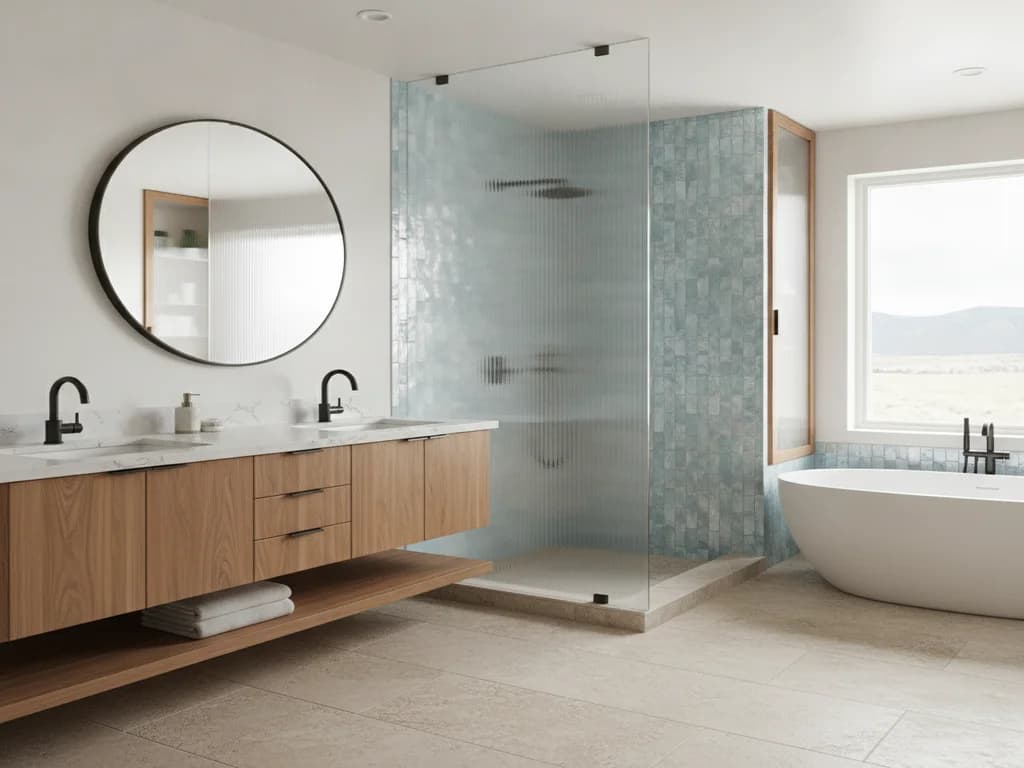
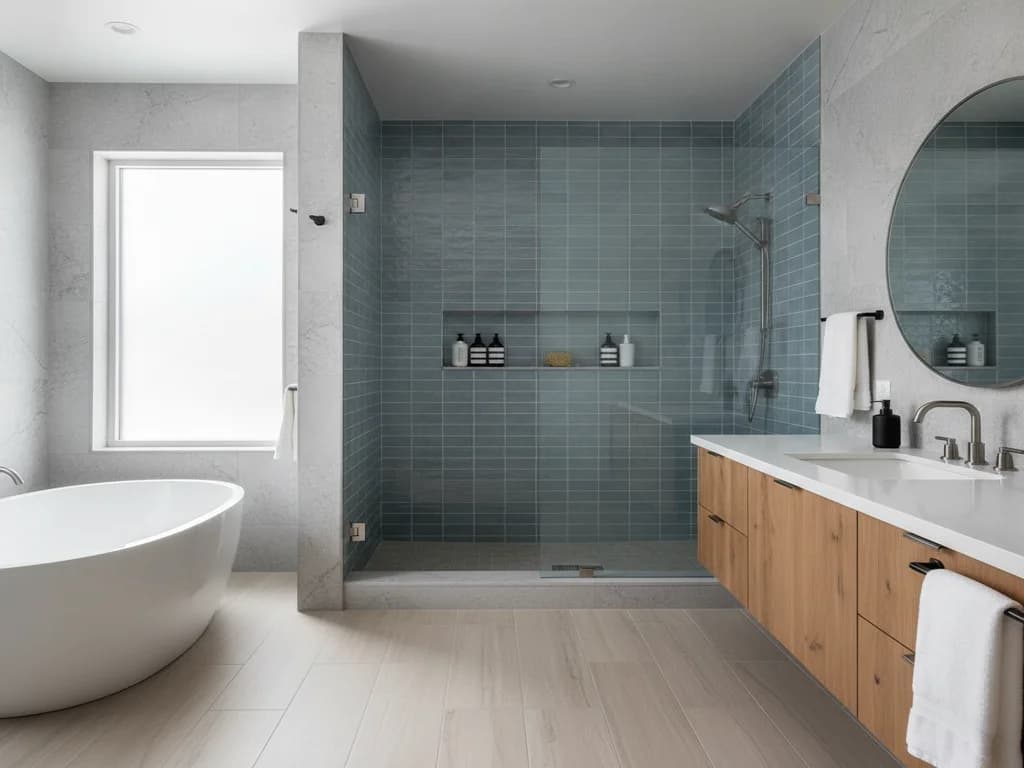
"Paint or tile" sounds like a single choice, but a bathroom actually has two kinds of wall in it: dry or low-splash walls (the wall behind the toilet, the ceiling, most of the vanity wall) and true wet walls (the tub surround, the shower enclosure, anywhere water hits directly and often). Paint and tile are not really competing options on the same wall — they are the right and wrong tool depending on which of those two categories a given wall falls into.
Getting this boundary right is mostly a durability question, backed by real cost and performance data — not a style preference.
The one-line version
Paint the dry walls, tile the wet ones. The gray area — a splash zone that's wet sometimes but not constantly — is where the real judgment call lives, and it usually still favors tile if the budget allows it.
What makes a paint "bathroom-rated" in the first place
Not every interior paint is built for a bathroom, even a dry-wall one. Sherwin-Williams' Duration Home line is formulated specifically around this: it offers "moisture resistant technology offering quick return to service (as little as two hours) & durability in moist environments like bathrooms," with anti-microbial agents that "inhibit the growth of mold and mildew on the paint surface." Benjamin Moore's Aura Bath & Spa line makes the same case from a different angle, positioned as "our premium, matte finish bathroom paint offering unparalleled beauty in high humidity environments" with a mildew-resistant coating built in.
Sheen matters as much as formula. This Old House's guidance is specific: "satin or semi-gloss finishes work best because they repel water and hold up well to frequent cleaning," though it notes "eggshell is a perfect finish for bathroom walls" too — "easy to clean and able to repel moisture." Bob Vila adds a practical trade-off between the two: "glossy paints don't prevent mold, but they're easier to clean and maintain than paint with flat and eggshell finishes," while "homeowners who don't like the sheen of glossy paints can opt for satin instead."
Ventilation still does real work even with a bathroom-rated paint on the wall. This Old House recommends running the exhaust fan for "at least 25–30 minutes" after a shower to actively pull moisture out of the room — the paint resists mildew, but it isn't a substitute for clearing the humidity that causes it.
Where paint holds up — and where it starts to fail
Bob Vila's guide to painting bathroom tile draws the practical line clearly: a paint job "will last the longest on tiled bathroom surfaces that receive low to moderate exposure to moisture — think bathroom floors (outside the immediate vicinity of the tub), walls, and backsplashes." That is the dry-wall category — surfaces that get humidity and the occasional splash, but not standing water or direct spray.
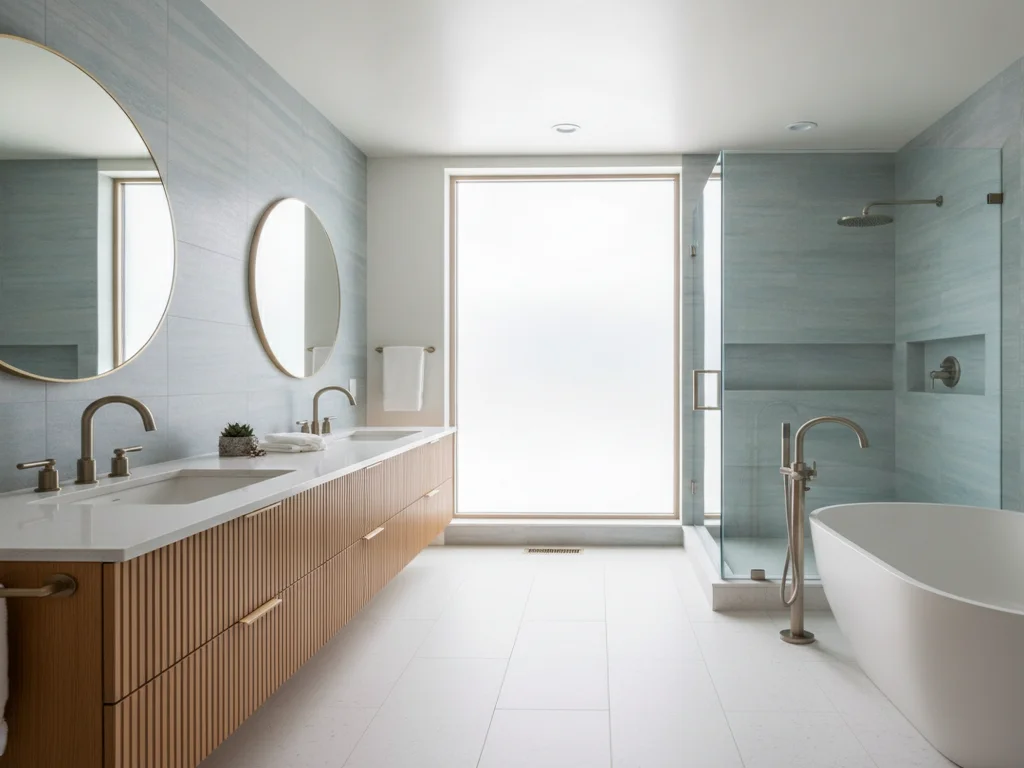
The same guide is just as clear about where paint stops being practical: "tiled countertops, tub surrounds, or shower surfaces, while paintable, aren't as practical surfaces for this treatment in the long-term because the paint is more likely to prematurely fade, peel, or blister with regular exposure to water." That is the wet-wall category, and it is where tile's durability actually earns its higher upfront cost — a painted tub surround is a maintenance problem waiting to show up, not a one-time decision.
The cost logic behind the boundary
Bob Vila's figures give a concrete sense of what each option costs to apply: standard latex paint runs "$10 to $30 per gallon," while a more water-resistant epoxy paint — the option sometimes used as a splash-zone compromise — runs "$20 to $35 per gallon." Epoxy paint narrows the gap in durability, but it is still paint, on tile, in a spot Bob Vila's own guidance says isn't practical for it long-term. Tile, once installed correctly with proper waterproofing behind it, doesn't carry that same multi-year repaint or peel risk in the first place — our shower tile cost factors guide breaks down what actually drives that installed cost, which is the real comparison once a wet wall is in play.
The practical logic: paint is cheap to apply and cheap to redo, which is fine for a dry wall you might repaint in five years anyway for a color change. Tile costs more upfront specifically because it isn't meant to be redone on that same schedule — on a true wet wall, that upfront cost is buying decades rather than a couple of humid seasons before it needs attention again.
| Wall type | Recommended | Why |
|---|---|---|
| Ceiling, general walls | Bathroom-rated paint (satin/semi-gloss) | Low moisture exposure; mildew-resistant formula plus ventilation is enough |
| Vanity wall, backsplash | Paint, or a tile accent for style | Bob Vila lists backsplashes among the "low to moderate" moisture surfaces paint handles well |
| Tub surround | Tile | Direct, repeated water exposure — paint here "prematurely fades, peels, or blisters," per Bob Vila |
| Shower walls | Tile | Constant wet exposure; not a surface either latex or epoxy paint is built to hold up on long-term |
When a tiled accent wall makes sense outside the shower
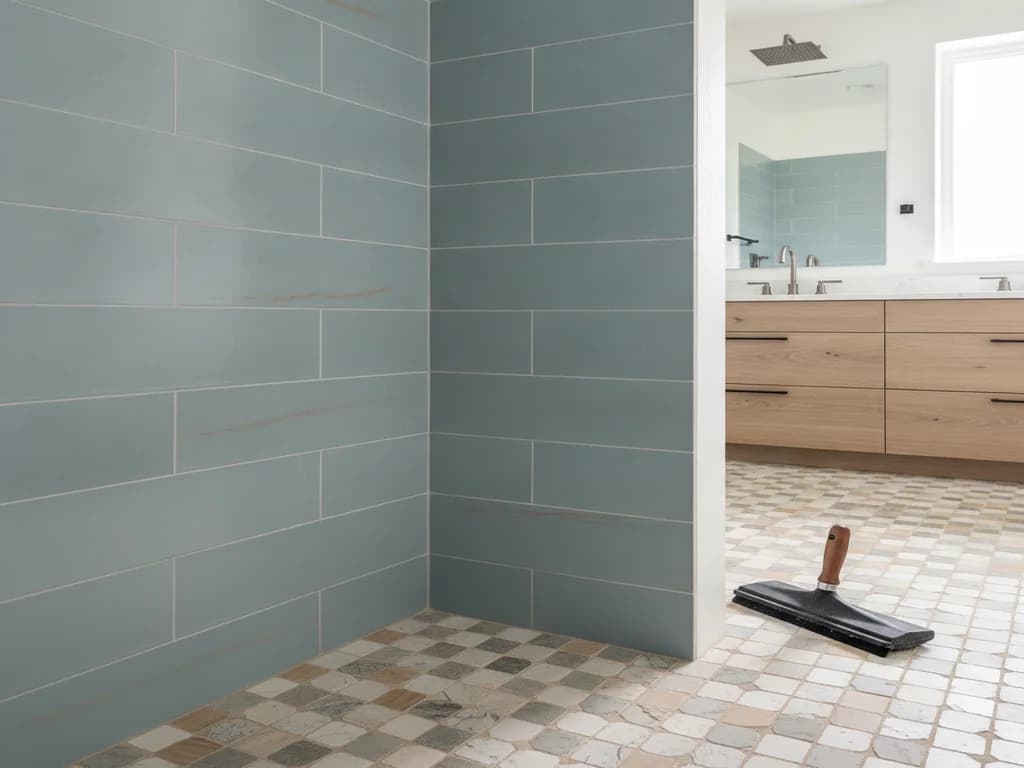
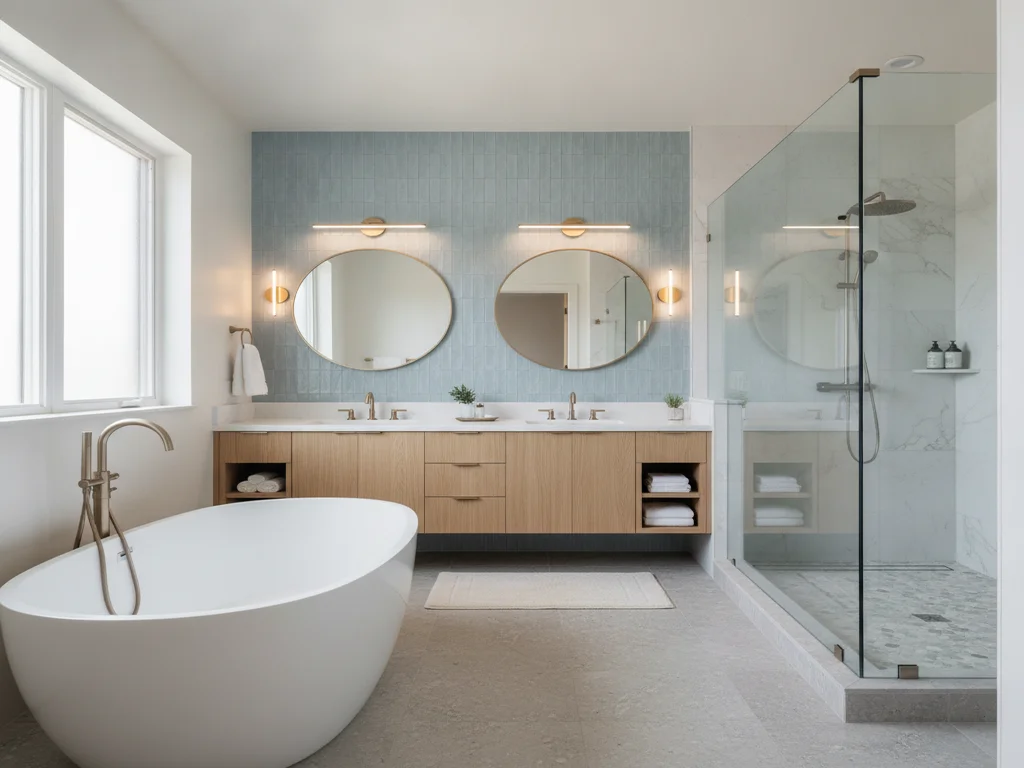
Tile isn't only a wet-zone material — it also shows up as a design choice on dry walls, usually behind a vanity mirror or as a full accent wall, where paint would work just as well from a durability standpoint. That's a style decision rather than a moisture one: it adds texture, pattern, or color depth that flat paint can't match, at the cost of a permanent (and pricier) finish compared to a color that can be changed with a roller. Our bathroom wall treatment ideas roundup covers this kind of dry-wall tile use alongside wainscoting and other non-tile options; our bathroom color combinations guide covers how to pair a painted wall with a tiled wet wall so the two read as one intentional palette rather than two unrelated decisions.
The bottom line
The paint-vs-tile decision isn't really about which material looks better — it's about matching the material to how wet that specific wall actually gets. Dry and low-splash walls do fine with a bathroom-rated paint in the right sheen, with real ventilation behind it. True wet walls — tub surrounds, shower surfaces — are where tile's higher upfront cost buys durability paint simply can't match long-term, epoxy included.
If you're weighing this wall by wall for a full remodel, explore our full bathroom remodeling services — getting the paint-vs-tile boundary right on day one avoids a repaint or a regret a few humid seasons later.
Ready to plan your Boise bathroom?
Licensed & insured · 3-year workmanship warranty
Frequently asked questions
- Can you paint bathroom walls instead of tiling them?
- Yes, on dry or low-splash walls. Bob Vila notes paint "will last the longest on tiled bathroom surfaces that receive low to moderate exposure to moisture — think bathroom floors (outside the immediate vicinity of the tub), walls, and backsplashes." Tub surrounds and shower surfaces are a different story — the same guide calls painting those "not as practical... in the long-term."
- What kind of paint should you use in a bathroom?
- A bathroom-rated, moisture- and mildew-resistant paint in a satin or semi-gloss sheen. This Old House recommends satin or semi-gloss because they "repel water and hold up well to frequent cleaning." Sherwin-Williams' Duration Home and Benjamin Moore's Aura Bath & Spa are both formulated specifically for high-humidity rooms like bathrooms.
- Is it worth tiling the whole shower or just painting around it?
- Tile the shower itself — paint, even the more water-resistant epoxy type at "$20 to $35 per gallon" per Bob Vila, is still more likely to "prematurely fade, peel, or blister" under constant water exposure than tile is. Paint is the right call for the surrounding dry walls, not the wet shower surfaces themselves.
Sources
- Bob Vila — Painting Bathroom Tile? 6 Things to Know First
- This Old House — Choose the Right Type of Paint for Your Bathroom
- Bob Vila — Solved! How to Choose the Best Paint for Bathrooms
- Sherwin-Williams — Duration Home Interior Acrylic Latex (manufacturer)
- Benjamin Moore — Aura Bath & Spa Interior Paint (manufacturer)
- EPA — A Brief Guide to Mold, Moisture and Your Home
- TCNA — Handbook for Ceramic, Glass & Stone Tile Installation
Claims and figures are drawn from the sources above and provided for general guidance; your project may vary. Photography is illustrative of design concepts. For a fixed price on your specific bathroom, request a free estimate.