Updated July 6, 2026 · 9 min read
By Boise Bath — bathroom & shower remodeling in Boise & the Treasure Valley
The short answer
The best bathroom wall treatments balance texture with moisture control: tile wainscoting protects the lower third to half of a wall outright, board-and-batten and picture-frame molding need moisture-resistant materials and careful sealing, and a limewash or plaster look works best above the splash zone — or as a waterproof plaster system built specifically for wet rooms.
Key takeaways
- Height guidance varies by source: Today's Homeowner used 36 inches of tile wainscoting on a standard 8-foot ceiling, while Bob Vila suggests roughly 40 inches — about 4 inches above a standard vanity backsplash, or up to the bottom of a medicine cabinet — and up to 8 inches above a freestanding tub's lip where it doubles as a backsplash.
- Material matters more than style: This Old House's wainscoting contractor is blunt that standard MDF "doesn't like to get wet. If it does, it will swell" — PVC, moisture-resistant MDF, or carefully sealed solid wood are the safer calls for a bathroom.
- Board-and-batten is a style of wainscoting — vertical battens over wide panels, reminiscent of Craftsman and Shaker design — not a separate waterproofing system, so the same wet-MDF caveat applies unless it's built in PVC or sealed solid wood.
- Picture-frame molding — trim built directly into rectangular "frames" on painted drywall — is, per Bob Vila, "a cheap and affordable way to jazz up any room," but it's flat, painted trim with no inherent moisture protection, so it belongs on drier walls than tile wainscoting does.
- Traditional limewash isn't formulated for bathroom humidity the way purpose-made bath paints are; for a true wet-area plaster look, This Old House points to Tadelakt, a limestone plaster "finished with beeswax to repel water."
What actually decides whether a bathroom wall treatment works?
Wainscoting, board-and-batten, molding, and limewash all started as ways to protect the lower part of a wall long before they were design statements — Bob Vila's wainscoting guidance traces the whole category back to "a means of preventing moisture damage and even bolstering insulation." In a bathroom, that original purpose still matters more than the style choice sitting on top of it.
The ideas below are grouped around that split: which treatments are inherently moisture-resistant, which need the right material to survive a bathroom, and which belong on a dry wall away from direct spray. It's worth deciding this before falling in love with a specific look in a photo, since the same visual style can be built two very different ways depending on whether the wall behind it ever gets wet.
How to use this list
Decide first whether the wall you're treating gets direct splash (near a tub, vanity, or shower) or stays mostly dry (a powder room, a hallway-facing wall). That answer narrows the list faster than any style preference will.
Quick comparison
This table summarizes where each treatment lands on moisture tolerance and best use.
| Treatment | Moisture caveat | Best for |
|---|---|---|
| Tile wainscoting | Fully moisture-resistant when tiled to a proper height (Today's Homeowner) | Splash zones near a vanity, tub, or shower-adjacent wall |
| Board-and-batten (wood) | MDF swells if it gets wet — use PVC or sealed solid wood (This Old House) | Dry zones and powder rooms, above the splash line |
| Picture-frame molding | Same wood/MDF caveat as board-and-batten; painted trim has no inherent waterproofing | Accent walls away from water; a lower-cost, lower-complexity look |
| Limewash / plaster-look | Traditional limewash isn't built for humidity; use a true wet-plaster system for wet zones | Dry powder rooms (limewash) or fully waterproofed wet-room walls (Tadelakt-style plaster) |
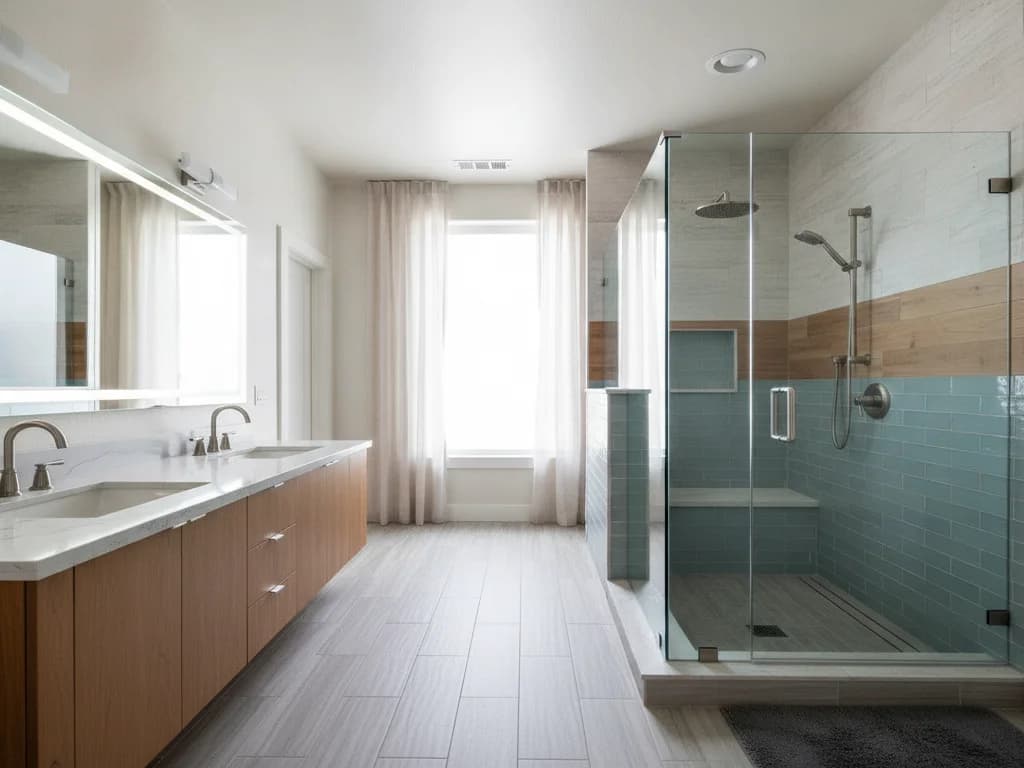
| Partial (half) tile wall | Moisture-resistant up to the tile line; the wall above still needs bath-rated paint | Splash zones behind vanities and tubs, transitional wood-or-paint-above look |
How high should a wall treatment actually go?
1. Match the height to what the wall is protecting. Today's Homeowner's tile wainscoting project used a height of 36 inches on a standard 8-foot ceiling. Bob Vila's broader wainscoting guidance lands close by but ties the number to the fixture next to it: "homeowners might choose to extend wainscoting 40 inches from the floor — that's 4 inches...above a countertop — or until it reaches the bottom of a medicine cabinet." Where wainscoting runs behind a freestanding tub, Bob Vila notes it "might rise to 8 inches above the tub's lip" to work as a backsplash. 2. In an older or more traditional home, keep it modest — Bob Vila's wainscoting contractor puts it at "anything between 36 and 42 inches," adding "we wouldn't want to go too high like you might do in a modern home."
Best for: use the vanity backsplash or tub lip as your reference point rather than picking a height in isolation — it keeps the proportions reading as intentional rather than arbitrary.
Wainscoting and board-and-batten: what material actually survives a bathroom?
3. Solid wood or PVC, not standard MDF, in any wall that gets wet. This Old House's wainscoting contractor is direct about the risk: "I want to use wood because MDF doesn't like to get wet. If it does, it will swell." Where MDF is used for the panels, pair it with a moisture-resistant wood like poplar at the baseboard specifically, since "the baseboard sits closest to the floor where water is most likely to collect." 4. PVC wainscoting or beadboard sidesteps the swelling risk entirely and needs far less long-term maintenance, at the cost of the warmer look solid wood gives a traditional bathroom. 5. Board-and-batten — vertical battens over wider panels, a look Bob Vila ties to Craftsman and Shaker design, sometimes running "up to 6 feet or higher" with a wide plate rail at the top — is a style of wainscoting, not a separate material system, so the same wet-MDF caveat applies to it directly.
Best for: PVC or sealed solid wood with a moisture-resistant baseboard in any wainscoting or board-and-batten application within splash range of a tub or shower; standard MDF only on genuinely dry walls, such as a powder room with no bathing fixture.
Picture-frame molding: the lower-complexity alternative
6. Picture-frame molding builds rectangular trim panels directly onto painted drywall rather than a full stile-and-rail wainscoting system, and Bob Vila frames it plainly as "a cheap and affordable way to jazz up any room" — a genuinely accessible upgrade for a DIYer or a lower-budget accent wall. It carries the same wood-in-a-wet-room caveat as any painted millwork, though: it's flat trim on drywall, not a waterproofed surface, so it belongs on walls that don't take direct spray. 7. Combining panel molding on the lower half of a wall with wallpaper above is a related option worth considering in a powder room specifically, where humidity is lower than in a full bath with a shower.
Best for: a powder room or a dry accent wall where the goal is architectural interest on a budget, not moisture protection near a bathing fixture.
Limewash and plaster-look walls: where the look works, and where it doesn't
8. Limewash on a dry bathroom wall gives a soft, matte, handmade texture that standard paint doesn't replicate — but it's worth being honest that it isn't formulated for a humid room the way purpose-made bath paint is; that paint is "specially formulated" to "survive the humid environment and resist peeling and prevent the growth of mold and mildew" in a way traditional limewash isn't. 9. For a true plaster look inside a genuinely wet area — a shower or a full wet room — This Old House points architects toward Tadelakt instead: "a limestone plaster that has a handmade feel," finished "with beeswax to repel water," built specifically to hold up where limewash wouldn't.
Best for: limewash on a dry powder-room or hallway-facing wall for texture alone; a purpose-built wet-plaster system like Tadelakt — installed by someone experienced with it — anywhere the wall will see direct, regular water contact.
Partial (half) tile walls: the classic moisture-smart split
10. A partial or half-tiled wall is the most direct descendant of wainscoting's original purpose: tile the lower portion where splash and standing water are most likely, then finish above it with paint, wood, or wallpaper where moisture exposure drops off. Today's Homeowner's take on tile wainscoting is straightforward about why this still works: "porcelain resists moisture, stains, and scratches better than drywall or paint," and its "hard, nonporous surface makes it easy to wipe down and keep clean." A stone or tile chair-rail trim piece at the top of the tiled section is the detail that keeps the transition looking finished rather than like tile that simply ran out. 11. Two different tile formats above and below the chair rail — a larger format below, a smaller mosaic or listello band right at the rail — adds a second layer of visual interest without introducing a second material to waterproof.
Best for: any bathroom wall behind a vanity, beside a tub, or adjacent to a shower where you want a designed transition rather than tile running floor-to-ceiling or stopping at an arbitrary height.
How does your wall treatment fit into the rest of the room?
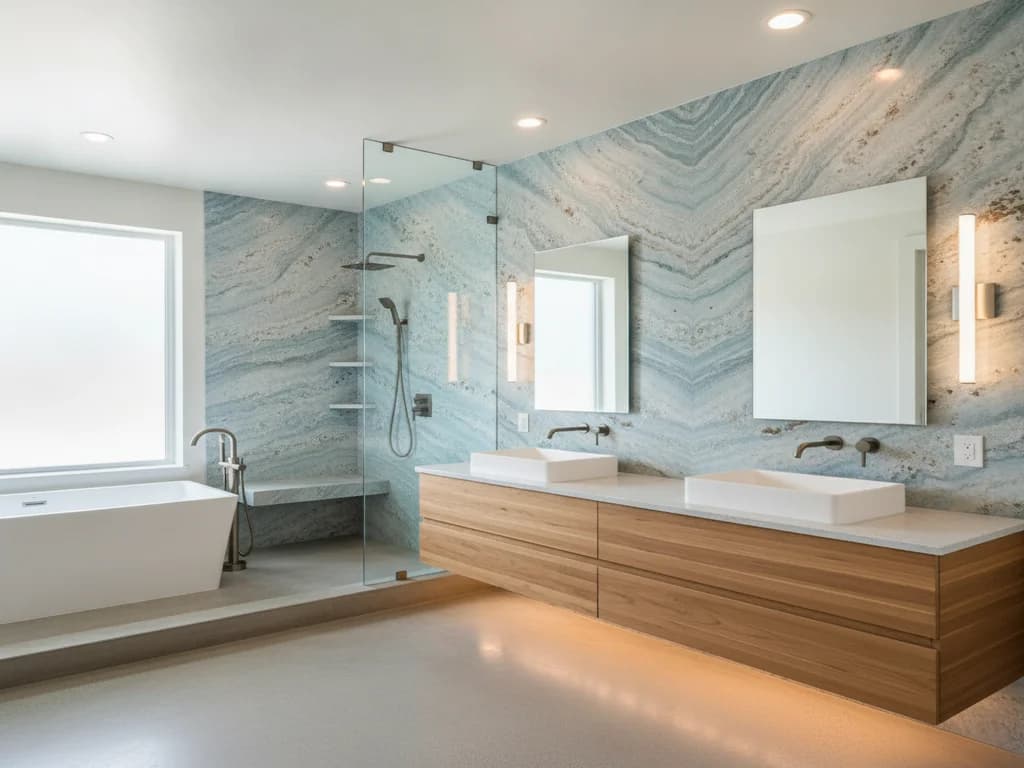
A wall treatment rarely stands alone — it interacts directly with your color palette and, if tile is involved, your tile pattern. If you haven't settled on a palette yet, see our bathroom color combinations for pairings that work with wood tones, painted trim, and tile alike. And if tile is part of your wall treatment, our bathroom tile pattern ideas roundup covers layout options — from a simple stacked grid to herringbone — that a wainscot-height tile line needs to align with cleanly.
How do these ideas come together?
Traditional and protected: tile wainscoting at 36–40 inches with a stone chair rail, painted drywall above.
Warm and textural: sealed solid-wood board-and-batten on a dry powder-room wall, no bathing fixture nearby.
Budget-conscious accent: picture-frame molding on a dry wall, painted a single color for a quiet architectural upgrade.
Spa-level statement: a Tadelakt-style waterproof plaster wall inside a fully tiled wet room or walk-in shower.
A full bathroom remodel is where your wall treatment, tile line, and color palette get planned together instead of chosen one at a time.
Ready to plan your Boise bathroom?
Licensed & insured · 3-year workmanship warranty
Frequently asked questions
- How high should wainscoting go in a bathroom?
- Today's Homeowner used 36 inches of tile wainscoting on a standard 8-foot ceiling, while Bob Vila's broader guidance suggests roughly 40 inches — about 4 inches above a standard vanity backsplash, or up to the bottom of a medicine cabinet — and up to 8 inches above a freestanding tub's lip where the wainscoting doubles as a tub backsplash.
- Is board-and-batten safe to use in a bathroom?
- It can be, but the material matters more than the style. This Old House's wainscoting guidance is direct that standard MDF "doesn't like to get wet. If it does, it will swell," so board-and-batten in a bathroom should use PVC, a moisture-resistant MDF rated for damp areas, or carefully sealed solid wood, with a moisture-resistant wood like poplar at the baseboard where standing water collects.
- Can you limewash a bathroom wall?
- You can, but it's best kept to dry areas away from direct water — traditional limewash isn't formulated to resist the humidity and mold growth that purpose-made bathroom paints are designed for. For a true plaster look in a wet area like a shower or wet room, This Old House points to Tadelakt, a limestone plaster finished with beeswax specifically to repel water.
Sources
- This Old House — How to Perfectly Wainscot a Bathroom in Just a Few Steps
- Bob Vila — The Right Wainscoting Height for Every Scenario, Solved!
- Today's Homeowner — Bath Tile Wainscoting
- This Old House — How to Design a Bathroom Wet Room
- Bob Vila — 9 Ways to Dress Up a Room with Molding
- EPA — A Brief Guide to Mold, Moisture and Your Home
Claims and figures are drawn from the sources above and provided for general guidance; your project may vary. Photography is illustrative of design concepts. For a fixed price on your specific bathroom, request a free estimate.