Updated July 16, 2026 · 7 min read
By Boise Bath — bathroom & shower remodeling in Boise & the Treasure Valley
The short answer
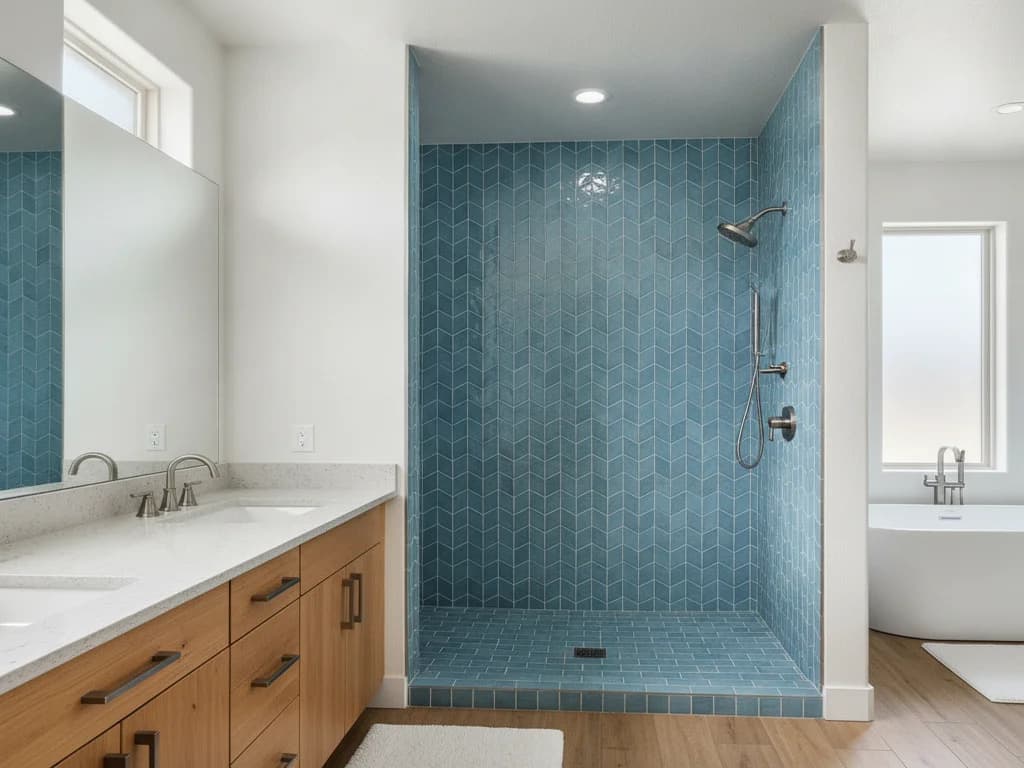
Inside the shower, tile to the ceiling: the drywall strip above a stopped-short surround takes daily steam and is the first place paint peels and mold starts. Outside the wet area, a 36–48 inch wainscot is the smarter spend — full-height tile beyond the shower is a style upgrade, not a moisture requirement.
Key takeaways
- The shower is the decision that matters: tiling to the ceiling eliminates the steam-soaked drywall strip that stopped-short surrounds leave exposed.
- Ceiling-height tile makes bathrooms read taller and more custom — stopping tile at a random height above the shower head is the look that dates a remodel.
- Outside the shower, tile height is a design and budget choice, not a waterproofing one — paint over moisture-resistant drywall handles ambient humidity when the exhaust fan does its job.
- A 36–48 inch wainscot protects the real splash zones (beside the vanity and toilet) at a fraction of full-height cost.
- The cost difference is roughly proportional to area: tiling to a ceiling adds real material and labor, and tiling the whole room multiplies it.
- Ventilation, not tile height, is the actual moisture-control system — no tile height compensates for a weak or unused exhaust fan.
The verdict: ceiling height in the shower, half height (or paint) everywhere else
This question is really two questions wearing one coat. Inside the shower enclosure, tile height is a moisture question with a design bonus, and the answer is to go to the ceiling. Outside the shower — the vanity wall, behind the toilet, the rest of the room — it flips: tile height is a design question with a modest splash-protection bonus, and a half-height wainscot or well-chosen paint is usually the smarter allocation of budget.
The reason to be precise about this: tile is one of the most expensive finishes per square foot in the house, and wall tile area adds up fast. Choosing where tile stops is one of the biggest cost levers in a bathroom remodel that nobody talks about — and one of the most visible style signatures once the room is done.
Below is the comparison on all three axes — moisture, design, and cost — then the scenario list for your specific bathroom. If you are still weighing tile against the alternatives entirely, the bathroom wall treatment ideas roundup covers the full menu from paint to panels.
Tile to ceiling vs. half wall: the side-by-side
The comparison changes depending on whether the wall is inside or outside the shower, so the table calls that out explicitly.
| Factor | Tile to ceiling | Half wall / stopped short |
|---|---|---|
| Moisture (inside shower) | No exposed drywall in the steam zone; the whole wall is cleanable | Strip above the tile takes daily steam — the classic spot for peeling paint and mold |
| Moisture (outside shower) | No functional advantage if ventilation is adequate | Wainscot covers actual splash zones; paint above handles ambient humidity fine |
| Design effect | Taller-reading room, custom feel, uninterrupted vertical lines | Classic wainscot look; adds a horizontal line that can lower the perceived ceiling |
| Maintenance | Wipeable surface everywhere steam reaches | Painted zones need repainting on a cycle, sooner in poorly vented baths |
| Cost | Highest — tile area often grows 30–50% vs. a stopped surround | Lowest — tile only where it works hardest |
| Resale reading | Reads as a full remodel | Reads classic done well; reads builder-grade done at a random height |
| Best fit | Shower enclosures; feature walls; small baths that need height | Vanity and toilet walls; traditional styles; budget-focused remodels |
Area-growth estimate is geometric (wall height beyond a typical 72–80" surround), not a market statistic — your layout sets the real number.
Inside the shower: why the ceiling is worth it
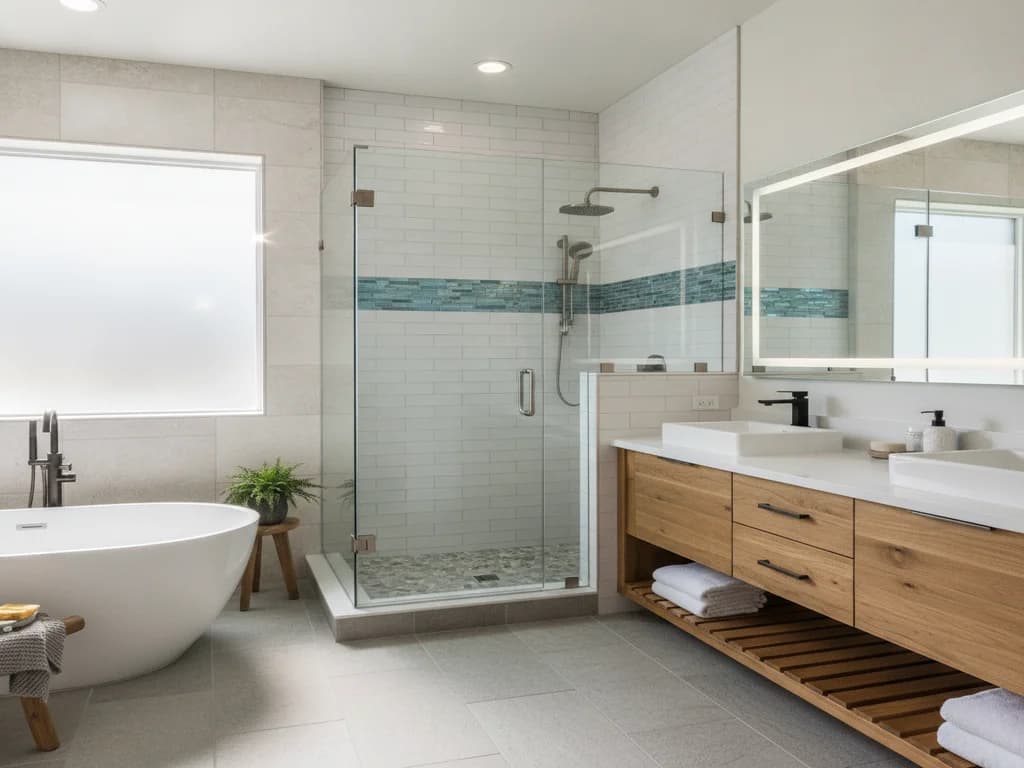
Picture the classic builder-grade shower: tile or a surround stops around 72 to 80 inches, and above it, a strip of painted drywall rides between the tile and the ceiling. That strip lives in the worst microclimate in the house — hot steam rising off the shower head hits it daily, condenses, and soaks in. It is reliably the first place in a bathroom where paint bubbles, seams telegraph, and mold freckles appear. The EPA's mold guidance reduces to one sentence — control the moisture and you control the mold — and that strip is where bathroom moisture wins.
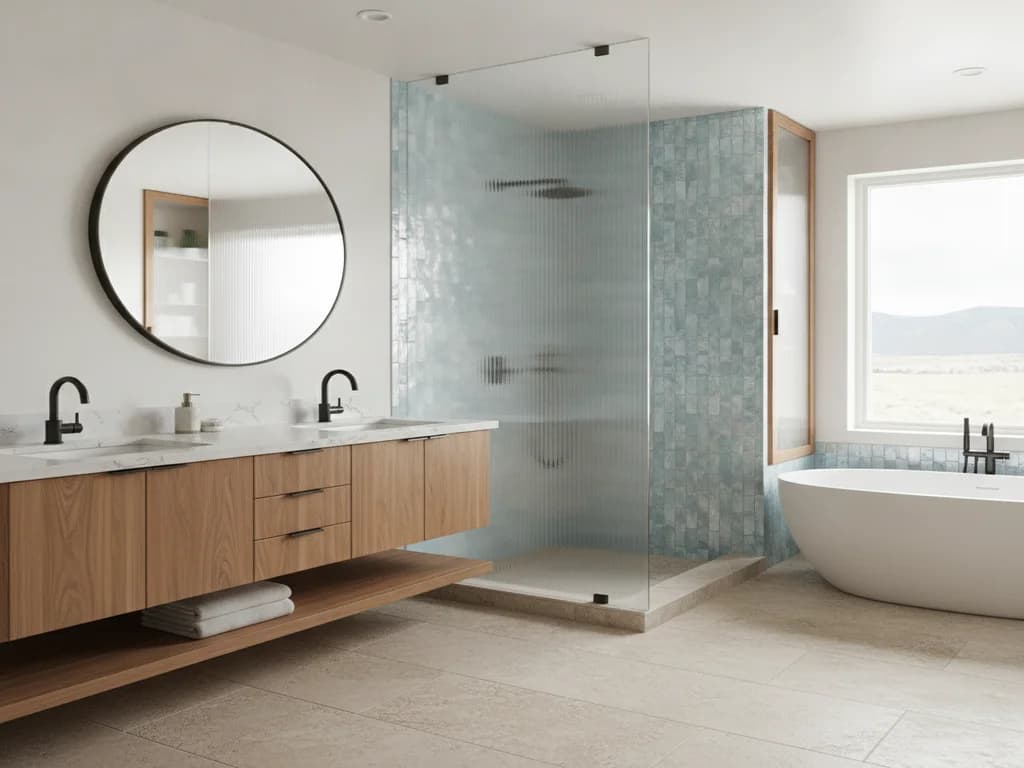
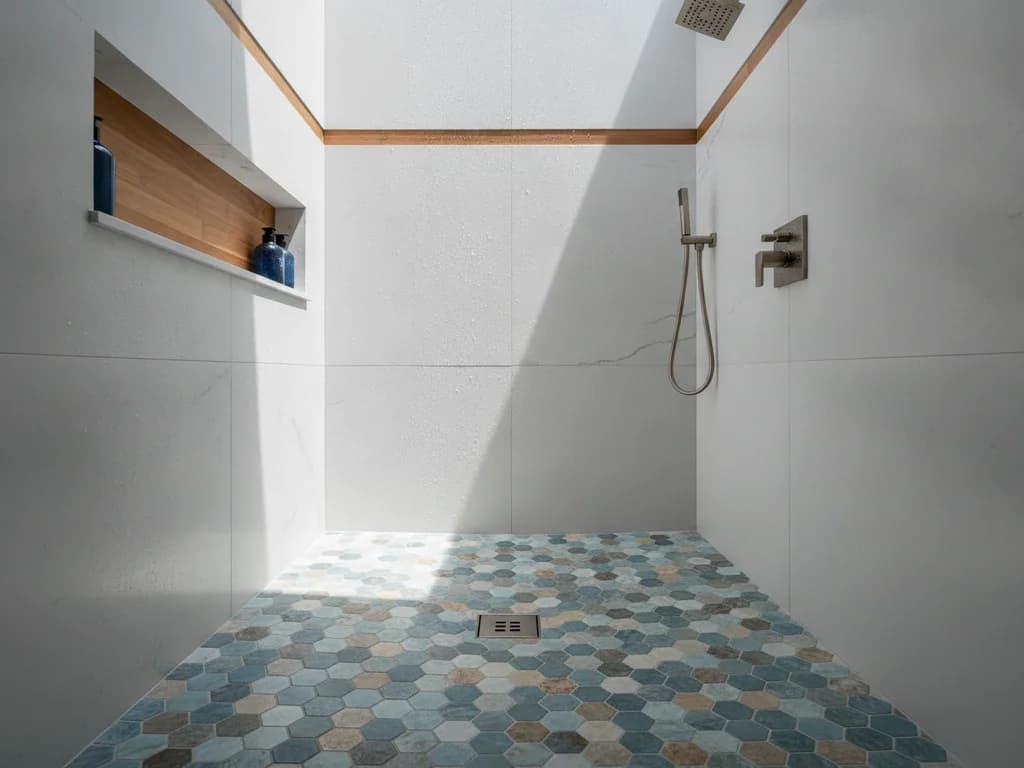
Taking tile to the ceiling removes the vulnerable material from the steam zone entirely. Every surface the steam touches becomes glazed, wipeable, and repaint-free. It also happens to be the more current look: the stopped-short surround with its painted headband is one of the details that most quickly dates a 90s or early-2000s Treasure Valley bathroom, while a floor-to-ceiling tiled enclosure reads as a considered remodel.
There is a real design dividend, too. Uninterrupted vertical tile draws the eye up and makes standard 8-foot bathrooms feel taller — an effect you can amplify with vertically stacked layouts, which we cover in bathroom tile pattern ideas. In a steam-heavy household, or an actual steam shower, ceiling-height tile stops being a recommendation and becomes a requirement — including the ceiling plane itself in a true steam enclosure.
Tile height is not a substitute for ventilation
A fully tiled shower still pumps steam into the room, and the room's drywall, mirror, and window trim take it from there. The exhaust fan — sized to the room and actually run during and after showers, per Home Ventilating Institute guidance — is the moisture-control system. Tile to the ceiling protects the enclosure; the fan protects the bathroom. Budget for both before either.
Outside the shower: where half height earns its keep
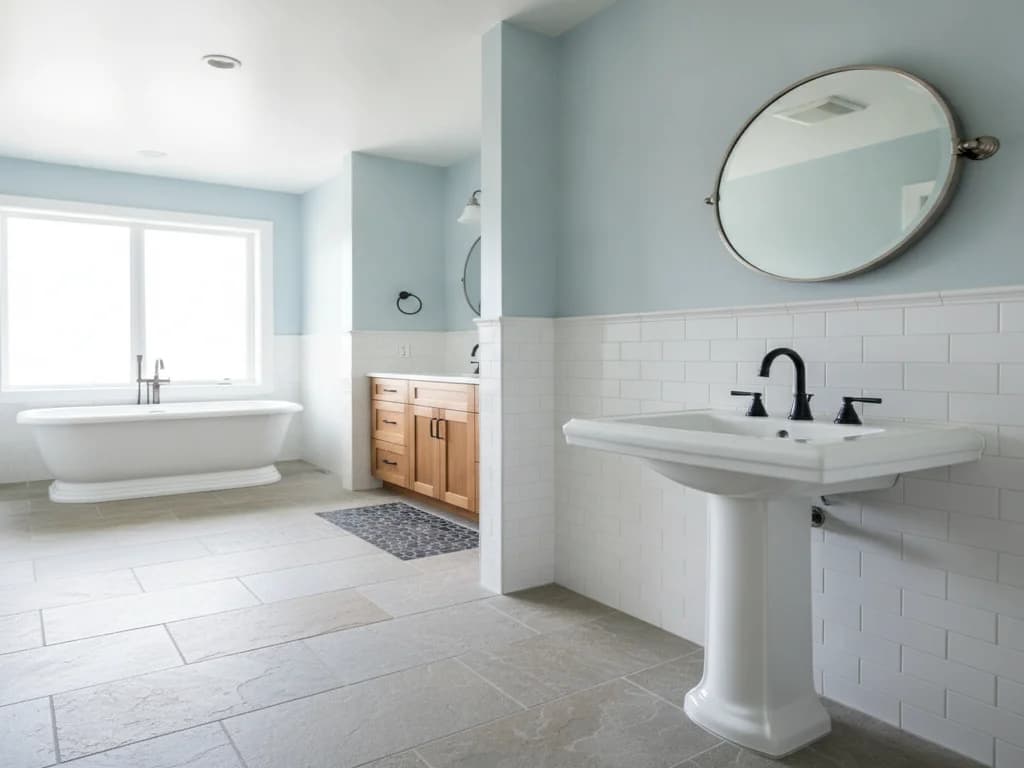
Beyond the glass or curtain, the moisture story changes completely. The vanity wall and toilet surround do not face steam at point-blank range — they face splashes, toothpaste, cleaning products, and the scuffs of daily life. That exposure is exactly what a classic wainscot handles: tile from the floor to roughly 36 to 48 inches, capped with a trim piece or a metal edge profile, with paint above.
A half wall of tile puts the durable, scrubbable surface precisely where hands, hips, and mop water actually reach, for a fraction of the material and labor of tiling to the ceiling. It is also a load-bearing style move — subway to a chair-rail height with a pencil trim reads traditional; a large-format slab wainscot reads contemporary. The height should land with intent: aligned to the vanity backsplash, a window sill, or a consistent datum around the room. Tile stopped at a height that relates to nothing is what makes an otherwise good bathroom feel unfinished.
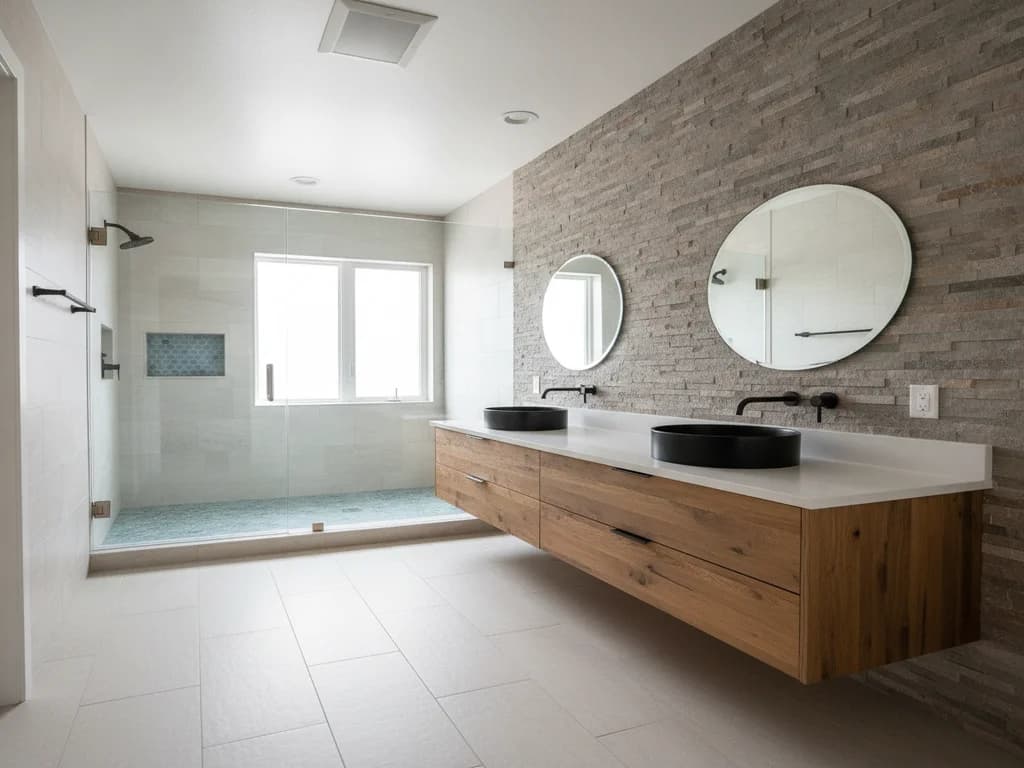
Full-height tile outside the shower is a legitimate luxury choice — a feature wall behind a freestanding tub, or a fully tiled powder room, can be spectacular. Just be clear-eyed that you are buying it for the look. With moisture-resistant drywall, quality bathroom paint, and a working fan, painted walls above a wainscot last fine; what fails early in Boise-area bathrooms is almost always ventilation habits, not wall finish selection.
The cost math: what each height actually adds
Wall tile is priced by area, so the heights convert directly to money. Take a common 3-wall alcove shower about 5 feet wide and 3 feet deep: tiled to 80 inches, the walls run roughly 70–75 square feet; carried to a 9-foot ceiling, closer to 95–100. That is on the order of 30 percent more tile, thinset, and setting labor — real money, but concentrated in the room's highest-value zone. National cost guides such as HomeAdvisor and Angi put professionally installed wall tile in a wide band — commonly cited around $7 to $25+ per square foot installed depending on tile and complexity — so the ceiling upgrade on a typical alcove lands in the hundreds, not thousands.
Tiling the rest of the room is a different multiplier. A full bathroom's remaining walls can add 150–250+ square feet, which at those same rates turns a finish decision into a four-figure line item. This is why the designer default — ceiling height in the shower, wainscot or paint elsewhere — is not just an aesthetic convention; it is the allocation that buys the most durability and drama per dollar. The deeper mechanics of what moves tile bids are in bathroom tile installation cost factors.
One more lever: tile size interacts with height. Large-format tile climbs a tall wall with fewer grout lines and faster coverage, which softens the labor premium of going up — part of why the ceiling-height look and the large format vs. small tile trend arrived together.
Design effects: what each height does to the room
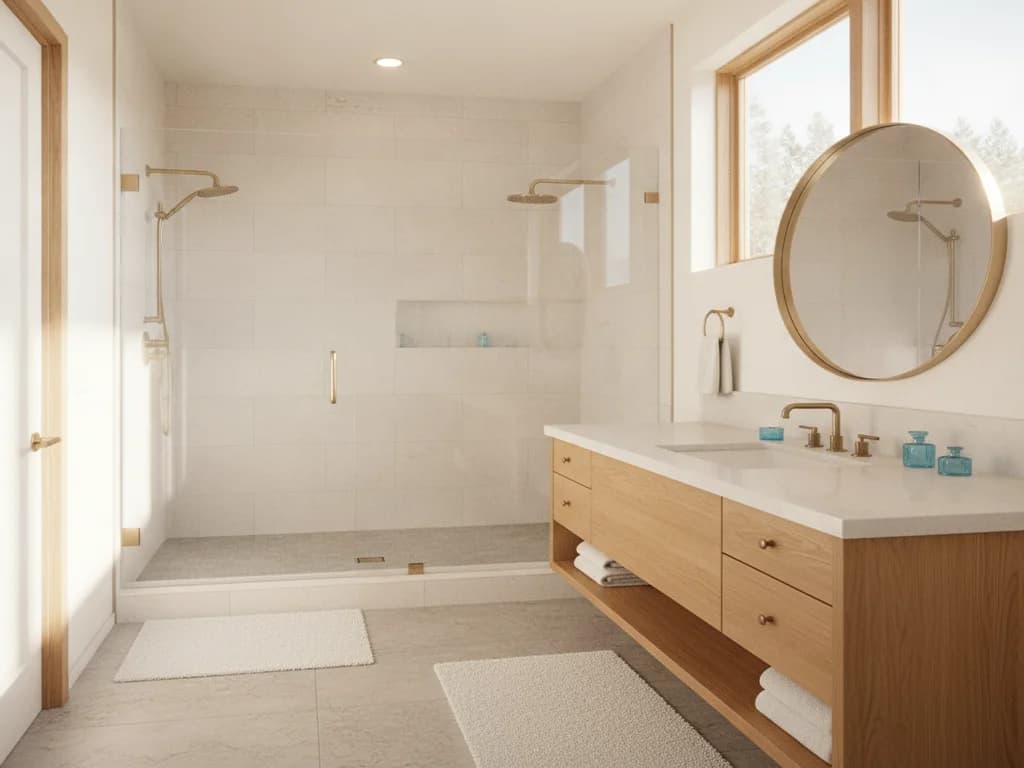
Ceiling-height tile is fundamentally a verticality play. Removing the horizontal stop line lets the eye run floor to ceiling, which makes the room read taller and the shower read as architecture rather than fixture. It suits contemporary and spa-styled bathrooms, small bathrooms that need every trick, and any room where the shower is the visual centerpiece.
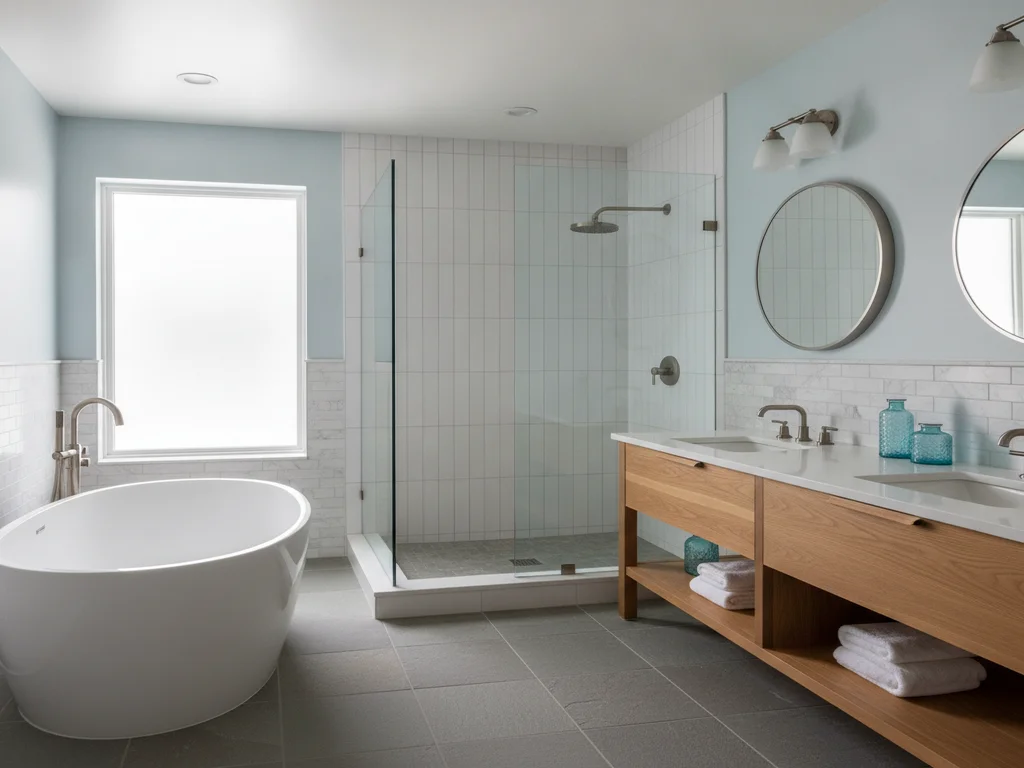
The half wall is a horizontality play with deep roots — wainscoting has organized bathroom walls for a century, and it remains the natural partner for traditional, craftsman, and cottage styles. The horizontal cap line lowers the room's visual center of gravity, which reads cozy in a large bathroom and can read squat in a small one with low ceilings. Paint above the wainscot also buys something tile cannot: cheap reinvention. A repaint refreshes the room for a weekend's cost, while floor-to-ceiling tile is a commitment measured in decades.
If the wall above an existing wainscot is the part that bothers you — dated tile, damaged surface, or a height that relates to nothing — replacement is a scoped, doable project; replacing bathroom wall tile walks through what that involves and when it makes sense to fold into a larger remodel.
Which should you choose?
Room by room, here is where each height wins:
- Shower or tub-shower enclosure: tile to the ceiling — the moisture case and the design case agree, and the incremental cost is modest for the zone it upgrades.
- Steam shower: ceiling height is mandatory, ceiling plane included — a painted surface inside a steam enclosure is a failure waiting on a schedule.
- Vanity and toilet walls, classic or budget-minded remodel: 36–48 inch wainscot with a deliberate cap height — durable where it counts, paint flexibility above.
- Small bathroom with standard ceilings: ceiling-height tile in the wet zone and restraint elsewhere — vertical lines help; a heavy horizontal wainscot line can shrink the room.
- Freestanding tub feature wall or design-forward powder room: full-height tile as a chosen luxury — priced knowingly as a style upgrade, not justified as moisture protection.
- Bathroom with a moisture history (peeling paint, musty corners): fix ventilation first, then decide heights — tile carried higher treats the symptom on one wall while the fan treats the cause everywhere.
Ready to plan your Boise bathroom?
Licensed & insured · 3-year workmanship warranty
Frequently asked questions
- Should shower tile go all the way to the ceiling?
- In almost every remodel, yes. Stopping tile short leaves a strip of painted drywall in the direct path of rising steam — the most failure-prone surface in the bathroom for peeling and mold. Carrying tile to the ceiling makes the whole steam zone glazed and wipeable, looks more current, and typically adds on the order of 30 percent more wall area to a standard alcove, a modest premium for the zone it protects.
- How high should half-wall tile be in a bathroom?
- The classic wainscot band runs 36 to 48 inches — high enough to cover splash zones beside the vanity and toilet, low enough to keep proportions comfortable. The stronger rule is that the height should relate to something: the vanity backsplash, a window sill, or a consistent line carried around the room. A tile line that aligns with nothing is what makes a bathroom feel unresolved.
- Does tiling to the ceiling prevent mold?
- It removes the most vulnerable surface — steam-soaked drywall above a stopped-short surround — from the enclosure, which eliminates the most common mold site. But the EPA's core guidance is that mold control is moisture control, and room-wide moisture is the exhaust fan's job. Tile to the ceiling plus a properly sized fan, run during and after showers, is the combination that actually keeps a bathroom mold-free.
- How much more does floor-to-ceiling tile cost?
- Roughly proportional to the added area. Extending a standard alcove shower from 80 inches to a 9-foot ceiling adds around 25–30 square feet; at commonly cited installed wall-tile rates of roughly $7–$25+ per square foot (per HomeAdvisor and Angi), that is typically hundreds of dollars. Tiling the rest of the room's walls is the bigger jump — 150+ additional square feet can add thousands.
- Is half-wall tile outdated?
- No — but the random stop line is. A wainscot at a deliberate height with a proper cap or edge trim is a classic that suits traditional and transitional bathrooms as well as it ever did. What reads dated is tile that stops at an arbitrary height above a shower or partway up a wall with no trim and no datum — a hallmark of builder-grade baths from the 90s and 2000s.
- Do you need to tile the ceiling of a shower?
- For a standard shower, no — ceiling-height walls with a painted, moisture-rated ceiling above is the norm and holds up well with decent ventilation. Two exceptions: steam showers, where an enclosed, sloped, fully tiled or paneled ceiling is required because the space is deliberately filled with vapor, and rain-head enclosures with very low ceilings, where direct spray reaches the ceiling plane.
Sources
- Tile Council of North America (TCNA)
- EPA — Mold
- Home Ventilating Institute (HVI)
- HomeAdvisor — True Cost Guide
- Angi — Cost Guides
Claims and figures are drawn from the sources above and provided for general guidance; your project may vary. Photography is illustrative of design concepts. For a fixed price on your specific bathroom, request a free estimate.