Updated July 16, 2026 · 7 min read
By Boise Bath — bathroom & shower remodeling in Boise & the Treasure Valley
The short answer
Grout-free wall panels are the lowest-maintenance shower material — large solid-surface or laminate sheets with two or three sealed seams and no grout to scrub. Quartz slab walls follow close behind, epoxy grout makes tile a realistic low-effort option, and coated low-iron glass with a daily squeegee keeps the enclosure honest.
Key takeaways
- Shower maintenance is concentrated in two places — grout lines and glass — so the materials that eliminate or protect those win the ranking.
- Grout-free wall panels (solid-surface and modern laminate systems) are the lowest-effort walls available: a wipe-down surface with only a few sealed seams.
- Quartz slab walls deliver near-zero maintenance with a premium stone look — nonporous, no sealing, seams measured in single digits.
- If you want tile, epoxy grout changes the equation: it does not need sealing and resists the staining and hard-water absorption that make cement grout a chore.
- Glass is the maintenance you keep no matter what: a coating plus a 30-second squeegee habit does more than any cleaner.
- This ranking is about cleaning effort — for how these same materials compare on toughness and lifespan, see the durability roundup.
The short answer: eliminate grout, protect glass
Almost all shower cleaning time goes to two surfaces: grout lines and glass. Grout is porous, sits in a wet room, and collects soap scum and mineral deposits; glass shows every drop that dries on it. Rank materials by how they handle those two problems and the list writes itself — which is what this article does, from least maintenance to most.
One scope note: this is a cleaning-effort ranking, not a toughness ranking. Several of these materials also score well on lifespan and damage resistance, but that comparison has its own home — the most durable bathroom materials roundup — and the two rankings do not always agree. A material can be tough and tedious, or delicate and effortless.
The other context that matters here is water. Treasure Valley water is hard, and hard water turns every surface decision into a maintenance decision — the full local picture is in hard water and your Boise bathroom. Everything below assumes mineral-heavy water, because that is what these showers live in.
Rank 1: grout-free wall panels
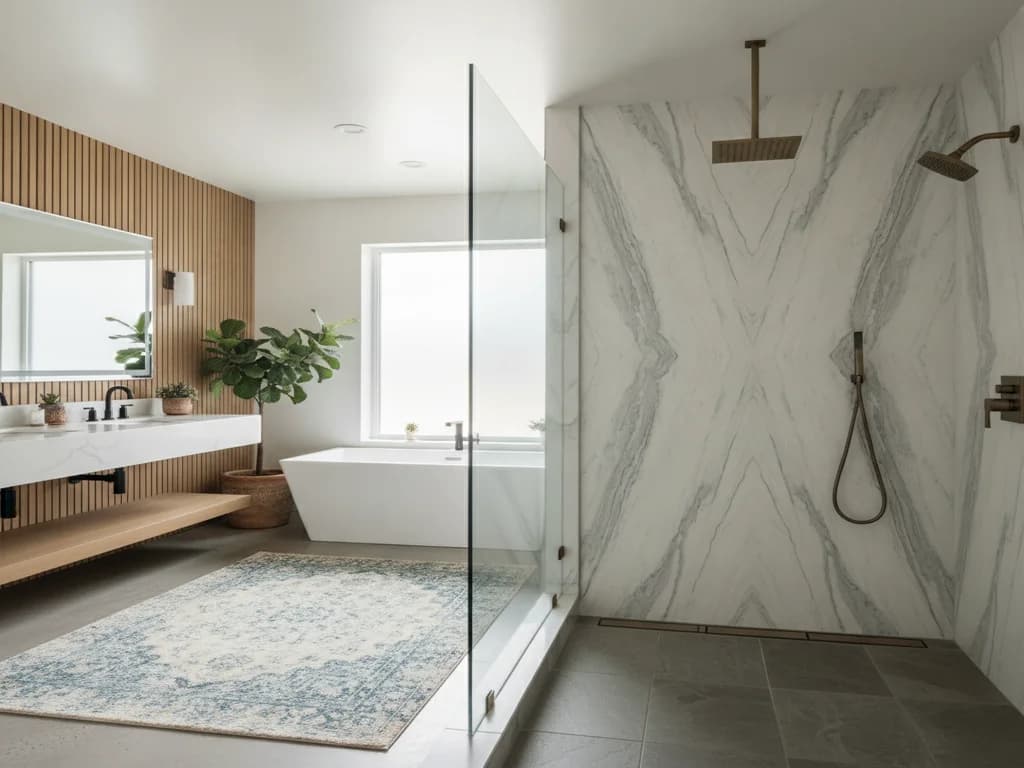
The lowest-maintenance shower wall is the one with almost nothing to maintain: large-format panels — solid-surface sheets, modern laminate systems, or PVC composites — that cover each wall in one or two pieces. A typical three-wall surround has two or three sealed seams, total. No grout exists, so no grout care exists. Cleaning is a soft cloth and a mild cleaner, done.
The category has moved a long way from the flimsy fiberglass surrounds it gets confused with. Current panel systems include realistic stone-look and marble-look faces, and the material-by-material breakdown — solid surface vs. laminate vs. acrylic, and how each is installed — lives in the shower wall panel systems guide.
The honest caveats: seams and corners rely on quality sealant work, panels limit you to the patterns manufacturers print, and a deep gouge in a laminate panel is not repairable the way solid surface is. But on pure cleaning effort, nothing on this list beats a wall that wipes down like a countertop.
Rank 2: quartz slab walls
Quartz slabs bring the panel logic upmarket: engineered stone walls installed in full sheets, nonporous, never sealed, with seams you can count on one hand. Maintenance is functionally identical to a quartz countertop — wipe it down, and hard-water film comes off without soaking into anything, because there is nothing porous to soak into.
What separates quartz from rank 1 is not effort but stakes. The material costs several times what panel systems do, the slabs are heavy, and installation is genuinely specialized — templating, seam placement, and support all have to be right. The full cost-and-logistics picture is in quartz shower walls vs. tile.
If the budget reaches it, quartz is the rare material that wins the luxury conversation and the Saturday-morning-cleaning conversation at the same time.
Rank 3: tile with epoxy grout
Tile itself was never the maintenance problem — glazed porcelain is nonporous and wipes clean. The problem is the hundreds of linear feet of cement grout around it: porous, absorbent, and the surface that turns dingy and demands resealing. Swap the grout and tile changes rank.
Epoxy grout is that swap. It is nonporous, never needs sealing, and shrugs off the staining and mineral absorption that define cement grout’s life in a shower, which is why manufacturers like LATICRETE position it as the wet-area workhorse. The lines still exist and still collect surface film in hard water, but cleaning them becomes wiping a sealed surface instead of scrubbing an absorbent one. The full comparison — including the higher material cost and fussier installation — is in epoxy vs. cement grout.
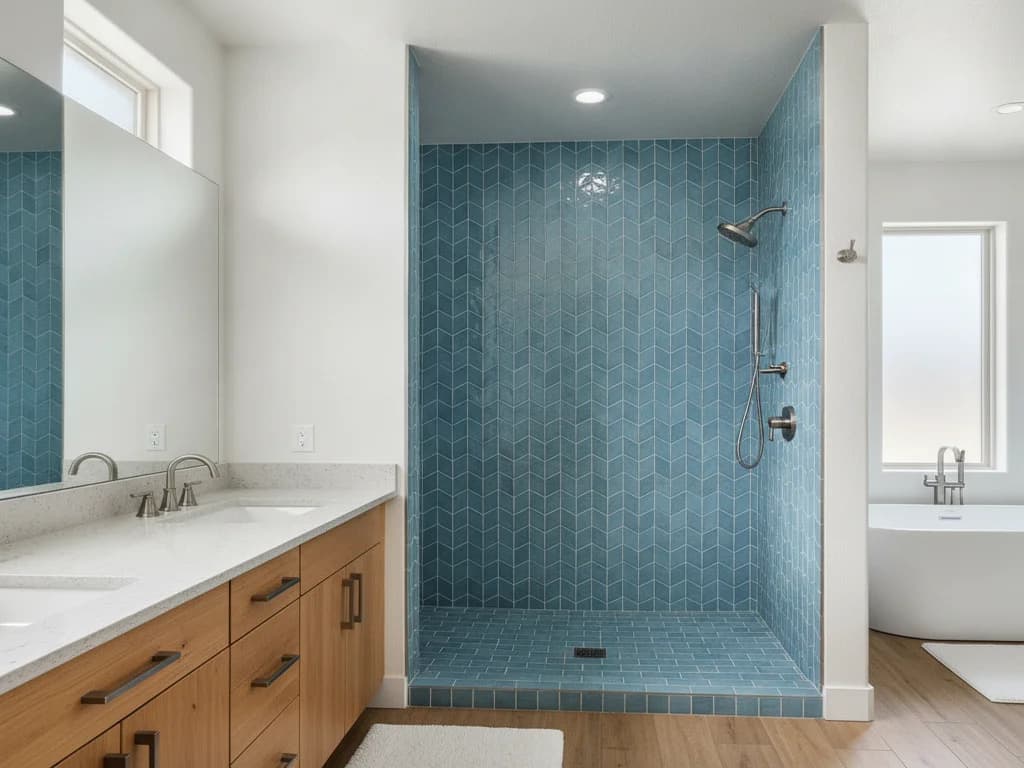
Two design choices push tile further up the ranking: large-format tile, which cuts grout footage dramatically, and mid-tone grout colors, which hide the film between cleanings. If you inherit a shower with cement grout, the tile and grout care guide covers the sealing-and-cleaning routine that keeps it respectable.
The glass you keep either way
Whatever the walls are, the enclosure glass stays on your cleaning roster — in hard-water country it is usually the surface that looks bad first. Mineral spotting etches into bare glass over time, and once etched, no cleaner brings it back.
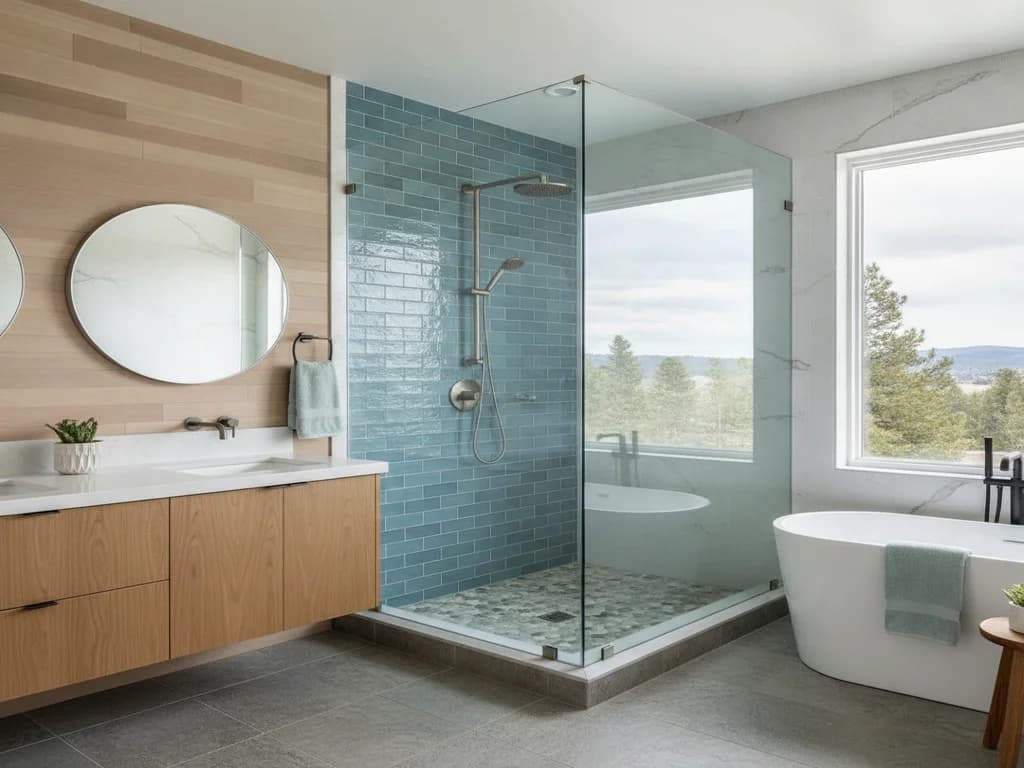
Two moves keep glass low-maintenance. First, a hydrophobic coating — factory-applied or aftermarket — that makes water sheet off instead of drying into spots; whether they earn their cost is covered honestly in shower glass coatings: worth it?. Second, the unglamorous winner: a squeegee hung in the shower and thirty seconds of use after the last shower of the day. No product outperforms that habit.
Configuration matters too — fixed panels and simple frameless doors have less hardware and fewer tracks to clean than framed sliders, a point that overlaps with choosing doors for small bathrooms.
No material survives dried-on hard water forever
Every surface in this ranking — panels, quartz, epoxy grout, coated glass — still shows mineral film if water routinely dries on it. Low-maintenance materials shrink the routine; they do not eliminate it. The floor under all of them is ventilation, an occasional wipe-down, and dealing with the water itself if spotting rules your life — that conversation is in the hard-water guide.
The ranking in one table
Cleaning effort, weakness, and the routine each material actually asks for:
| Rank | Material | Routine it demands | Weak point |
|---|---|---|---|
| 1 | Grout-free wall panels (solid surface / laminate) | Wipe-down with mild cleaner; inspect seams yearly | Sealant at seams and corners; limited patterns |
| 2 | Quartz slab walls | Wipe-down; nothing to seal, ever | Price and specialized installation |
| 3 | Porcelain tile + epoxy grout | Wipe tile; light clean of grout lines — no sealing | Grout lines still collect surface film in hard water |
| 4 | Porcelain tile + sealed cement grout | Regular scrubbing; reseal grout periodically | Grout porosity — the classic shower chore |
| — | Coated low-iron glass (any enclosure) | Daily 30-second squeegee; reapply coating as needed | Mineral etching wherever the habit lapses |
Ranking reflects routine cleaning effort in hard-water conditions, not durability — for toughness and lifespan comparisons, see the most durable bathroom materials roundup.
What to skip if maintenance is the priority
Natural stone leads the skip list. Marble, travertine, and slate are porous, sealing-dependent, and chemically sensitive — many common bathroom cleaners etch them — and hard water is their worst-case environment. Beautiful, but the opposite of this article’s brief.
Also skip: small-format tile anywhere you have a choice (mosaic sheets multiply grout footage — accept them on the shower floor, where grip requires them, and stop there), bright white cement grout in hard-water territory, textured or heavily profiled tile faces that trap film, and framed multi-track door hardware that collects deposits in places no brush reaches.
None of these are defects — they are maintenance commitments. The point of this ranking is that you can now make that commitment on purpose or decline it on purpose.
Matching the pick to your priorities
The ranking, applied:
- Absolute minimum cleaning, sensible budget: solid-surface or laminate wall panels, fixed-panel glass, squeegee on a hook.
- Minimum cleaning, premium look: quartz slab walls with coated low-iron frameless glass.
- You want tile and low effort: large-format porcelain, epoxy grout, mid-tone grout color.
- Keeping an existing tiled shower: reseal the cement grout on schedule and follow the tile-and-grout care routine — maintenance discipline substitutes for material choice.
- Spotting on glass is your main complaint: coating plus squeegee habit first; if minerals still win, the fix is the water, not the glass.
- Weighing these same materials on toughness instead: cross-check the durability roundup — the two rankings overlap but do not match.
Ready to plan your Boise bathroom?
Licensed & insured · 3-year workmanship warranty
Frequently asked questions
- What is the easiest shower material to keep clean?
- Grout-free wall panels — solid-surface or modern laminate systems installed as full sheets. A three-wall surround carries only two or three sealed seams and zero grout, so cleaning is a wipe-down with mild cleaner. Quartz slab walls match that effort with a more premium look at a much higher price. Both eliminate the surface that consumes most shower-cleaning time: porous cement grout.
- Are grout-free showers worth it?
- If low maintenance is a top-three priority, yes. Panel systems remove grout care entirely and modern faces look far better than the fiberglass surrounds they get mistaken for. The trade-offs are real but narrow: pattern selection is limited to what manufacturers make, and seams depend on quality sealant work. For many homeowners, trading grout scrubbing for a yearly seam inspection is an easy call.
- Does epoxy grout really reduce shower maintenance?
- Meaningfully. Epoxy grout is nonporous, so it never needs sealing and does not absorb the stains and minerals that make cement grout progressively harder to keep clean. Hard-water film still settles on the surface, but it wipes off rather than soaking in. The costs are higher material price and a less forgiving installation — a trade most people happily make in a shower they plan to keep.
- How do I keep shower glass clean with hard water?
- Two layers: a hydrophobic coating so water sheets off instead of drying into mineral spots, and a squeegee used for thirty seconds after the day’s last shower. The habit matters more than any product — dried minerals eventually etch bare glass permanently. If spotting persists despite both, the underlying issue is the water’s hardness itself, which is a treatment conversation rather than a cleaning one.
- Is tile or a shower panel system easier to maintain?
- Panels, and it is not close — no grout means the biggest maintenance surface in a tiled shower simply does not exist. Tile narrows the gap substantially with large formats and epoxy grout, and tile keeps advantages panels lack: unlimited design range and spot-repairability. If you love tile, build it the low-maintenance way; if you love your weekends, panels win.
Sources
- USGS Water Science School — Hardness of Water
- LATICRETE
- Tile Council of North America (TCNA)
- This Old House — Bathrooms
Claims and figures are drawn from the sources above and provided for general guidance; your project may vary. Photography is illustrative of design concepts. For a fixed price on your specific bathroom, request a free estimate.