Updated July 16, 2026 · 7 min read
By Boise Bath — bathroom & shower remodeling in Boise & the Treasure Valley
The short answer
Yes — and the scope depends entirely on the mount. A wall-mount rain head threads onto your existing shower arm in an afternoon, no plumbing opened. A true ceiling-mounted rain head requires new supply pipe run from the valve up the wall and across the ceiling — opened walls, patching, and often tile work.
Key takeaways
- A wall-arm rain head is a fixture swap: unthread the old head, install an angled or extended arm if needed, done — no walls opened.
- A ceiling-mounted rain head is a plumbing project: new supply pipe runs from the valve up the wall and across the ceiling to a drop ell, which means opened and repaired surfaces.
- All shower heads sold in the U.S. are capped at 2.5 gallons per minute by federal standard — a rain head does not use more water per minute, it spreads the same flow across a wider face.
- Adding a rain head alongside your existing head — rather than replacing it — requires a diverter or a new valve, which changes the project category.
- Larger rain heads at low flow can feel gentle rather than drenching; head diameter, flow rating, and your home's water pressure need to be matched honestly.
- The ceiling-mount project is dramatically cheaper during a shower remodel than as a standalone retrofit — the wall is already open.
The short answer: yes — but know which project you are buying
Rain shower head upgrades come in exactly two sizes, and they share almost nothing but the fixture. The first is a swap: a wall-mount rain head goes onto the shower arm you already have, possibly with a longer or angled arm to push it higher and further from the wall. No plumbing is opened, no tile is touched.
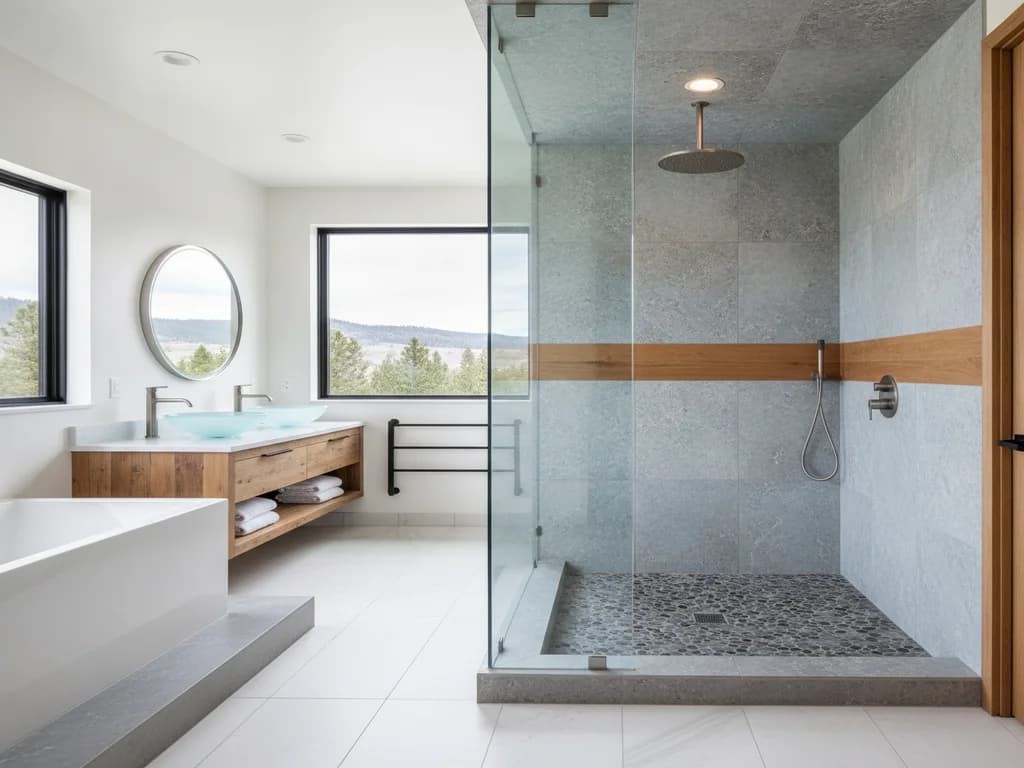
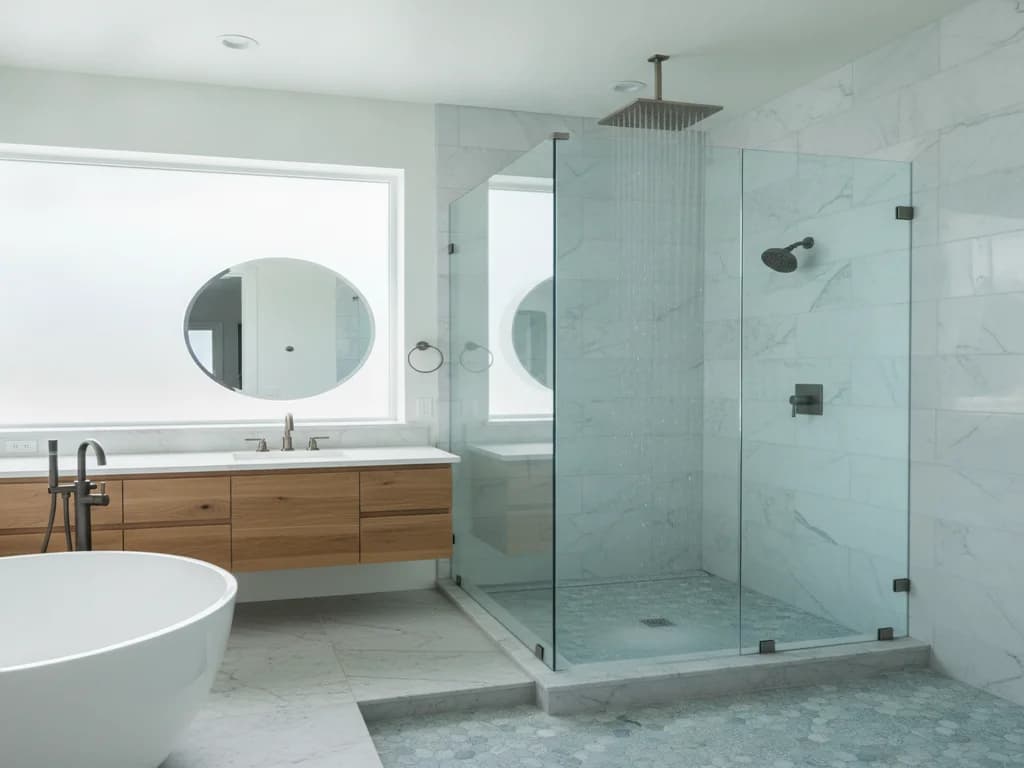
The second is the one in the hotel photos: a wide head mounted flat in the ceiling, water falling straight down. That head needs a water supply directly above it — pipe that does not exist in your ceiling today — which makes it a plumbing and wall-repair project, not a fixture purchase.
Both are legitimate upgrades. The mistake is pricing one and expecting the other. Where rain heads fit among handhelds, body sprays, and multi-function heads is covered in our shower head types comparison; this article is about what installing one actually involves.
The afternoon version: a rain head on the existing arm
Your current shower head threads onto a standard half-inch arm, and so does a wall-mount rain head — the connection is universal. Many 8-to-10-inch rain heads are designed for exactly this retrofit, and the swap itself is minutes of work.
The upgrade that usually rides along is the arm. Stock arms angle downward and sit low; a rain head wants to sit high and level so water falls vertically. An extended, angled, or S-style arm raises the head and pushes it out toward the center of the stall — still a no-demolition change, threaded into the same fitting behind the wall. This swap, along with matching trim, is the scope covered in replacing shower fixtures and trim.
Two honest limits. Height: on an 8-foot ceiling with a standard arm location, a tall person may stand closer to the head than the rainfall effect wants — the experience improves with distance. And geometry: an arm-mounted head still originates at the wall, so the water column sits toward one side of the stall rather than centered over you.
The real thing: a ceiling-mounted rain head
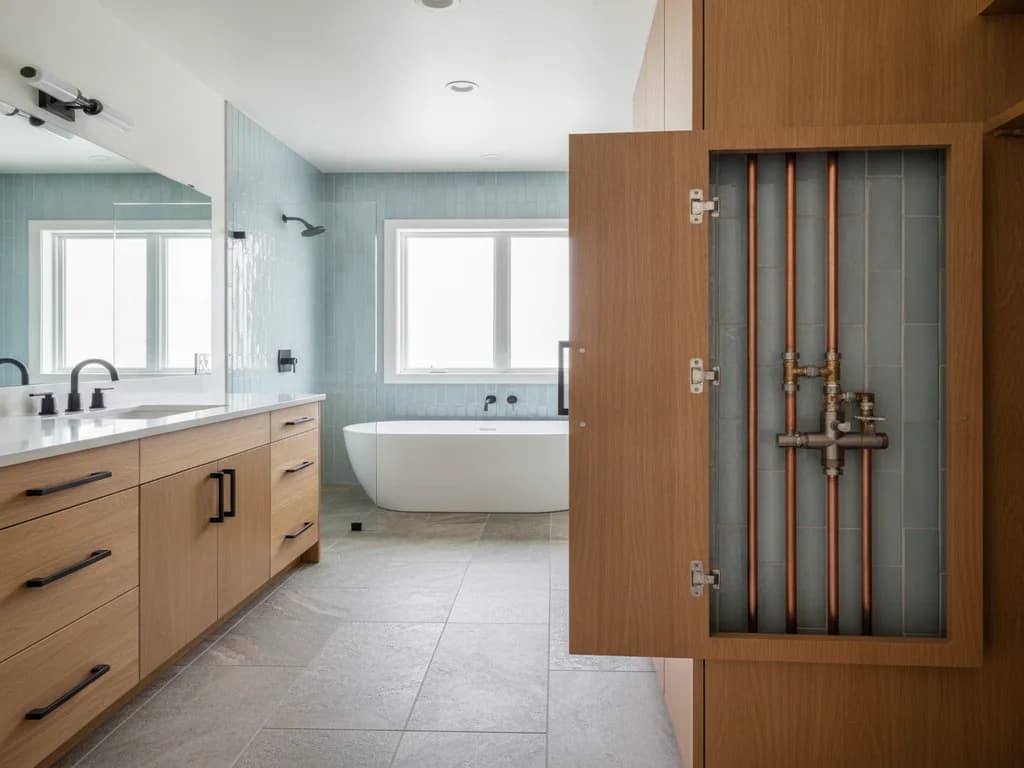
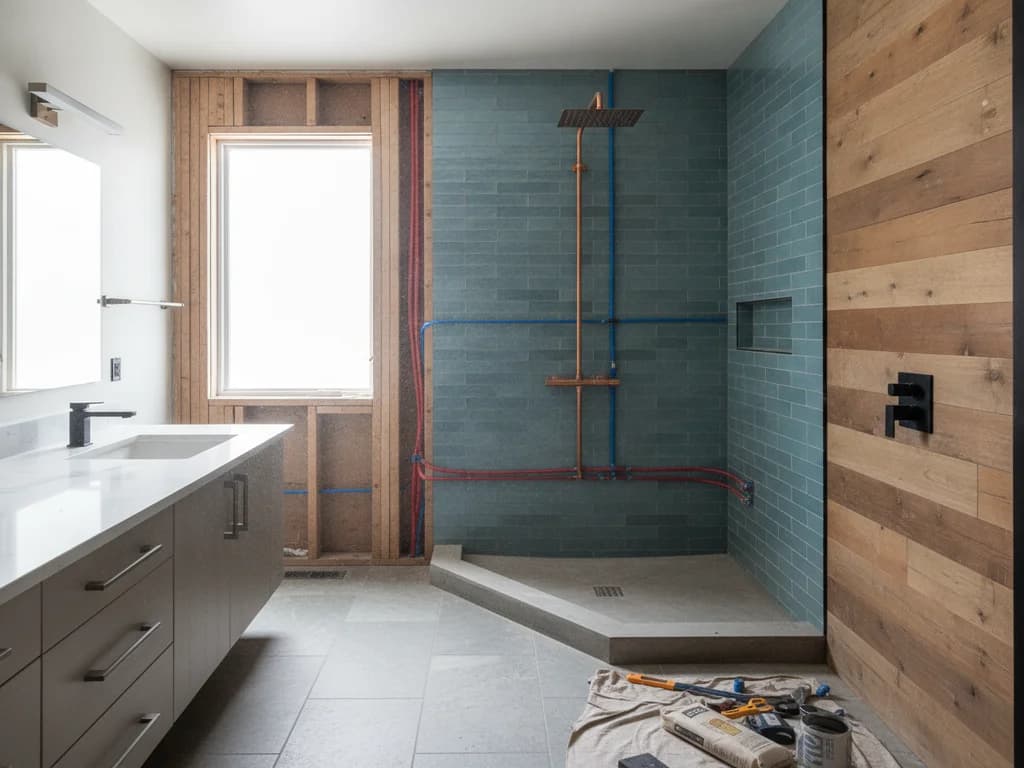
A ceiling mount needs supply pipe routed from the shower valve up the wet wall, across the ceiling joists, and down to a drop ell — the threaded fitting the head hangs from — anchored solidly above the stall's center. None of that pipe exists in your house today.
Access decides the pain level. With an unfinished attic above the bathroom, a plumber can run the ceiling leg from up top and the wall damage stays limited to the valve area. Under a second floor, the run happens from below: the shower ceiling gets opened and repaired, and if the wet wall is tiled, tile comes off and goes back on. This is why the ceiling mount is routinely folded into a full shower remodel — the surfaces are already open, and the marginal cost collapses.
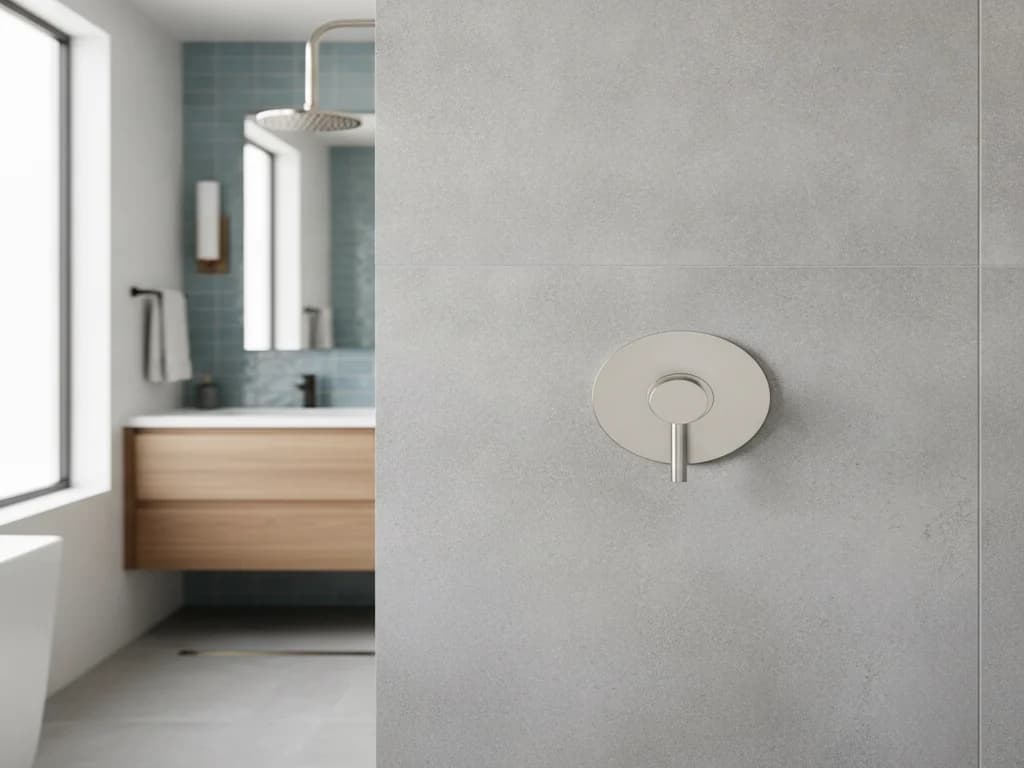
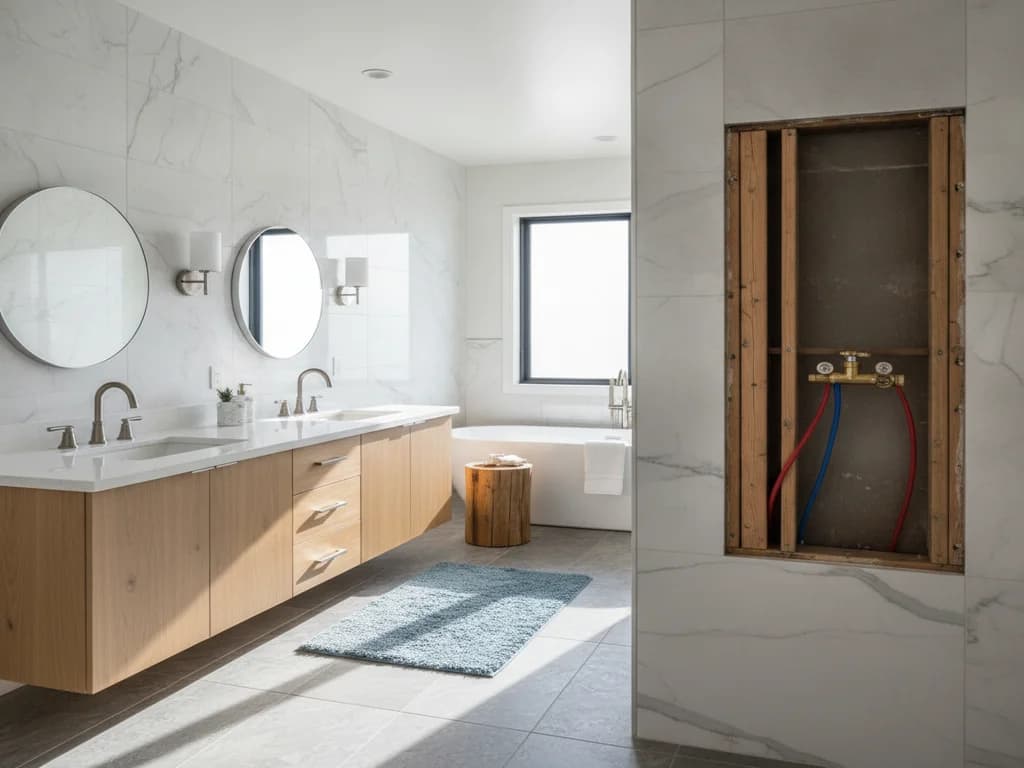
The valve conversation happens at the same time. If the rain head is joining your existing head rather than replacing it, the system needs a diverter or a multi-outlet valve to switch between them — real valve work behind the wall. What that involves, including when it can be done without demolition, is covered in replacing a shower valve and can you replace a shower valve without removing tile.
Wall-arm vs. ceiling mount, side by side
Here is the honest comparison. Fixture prices for rain heads commonly run from around $100 into the several-hundreds for large or premium heads, per HomeAdvisor's cost guides — the installation path is what separates the budgets.
| Factor | Wall-arm rain head | Ceiling-mounted rain head |
|---|---|---|
| Plumbing opened | None — threads onto existing arm | New supply from valve, up wall, across ceiling |
| Wall/ceiling repair | None | Ceiling patch and often tile work, unless attic access exists |
| Water column position | Offset toward the wall | Centered over the stall |
| Typical head size | 8–10 in. | 10–16 in. or larger |
| Timeline | An afternoon | 1–3 days standalone; incidental during a remodel |
| Best moment to do it | Anytime | During a shower remodel, while walls are open |
Fixture pricing per HomeAdvisor cost guides; installation scope varies with attic access and wall finishes.
Flow, pressure, and why some rain heads disappoint
Every shower head sold in the U.S. is capped at 2.5 gallons per minute by federal standard, and EPA WaterSense-labeled heads use 2.0 gpm or less. A rain head does not get more water than your old head — it spreads the same flow across a face several times wider. That is the physics behind the most common complaint: a big rain head on low household pressure feels like drizzle, not rainfall.
The honest matching rules: bigger faces want more flow, so a 12-inch head on a 1.75-gpm eco rating will underwhelm; check your home's working pressure before buying large; and read the head's flow rating rather than assuming. Manufacturers like Kohler publish flow specifications for every head — use them.
This is also why many remodels pair a rain head with a handheld on a diverter rather than going rain-only. Rainfall is a soak, not a rinse — the handheld does the directed-pressure work the rain head gives up. The pairing requires the valve work described above, which is another argument for deciding fixture count before the walls close.
Buy the valve decision before the head
The most expensive rain-head mistake is sequencing: installing a swap-in head today, then deciding six months later you want the handheld too — which means opening the wall for a diverter valve you could have specified the first time. Decide how many outlets the shower will ever have, then buy the valve for that number, even if some outlets come later.
The hot water question nobody asks until January
Rain showers change behavior: people stand under them longer. Same flow rate, more minutes — and in a Boise winter, when the incoming water is coldest and the heater works hardest, a 40-gallon tank can run out mid-soak.
This matters most for multi-outlet setups. A rain head plus handheld running together doubles the draw, and a shower designed around lingering needs the tank — or tankless unit — sized for it. Water heater sizing for luxury showers runs the actual math; the short version is that the fixture upgrade and the hot-water supply should be one conversation, not two surprises.
When to skip it — or wait
Skip the standalone ceiling mount if your shower is otherwise due for a remodel within a few years. Paying for ceiling repair and tile work twice is the worst-value path in this article — the ceiling mount costs a fraction as much when the enclosure is already open, so fold it into the bigger project.
Skip large rain heads entirely if your water pressure is marginal and unfixable, or if the household's shower style is quick functional rinses — a quality standard or handheld head serves that pattern better. And in a rental or a near-term sale, the wall-arm version delivers most of the look for a fraction of the cost.
The wall-arm swap, by contrast, has almost no bad time. It is reversible, affordable, and if you later remodel, the head moves to the new shower.
What a pro checks before quoting the ceiling version
First, what is above the bathroom: attic access makes the ceiling run clean; a second floor above means the work happens through the shower ceiling, and the quote prices the repair honestly. Second, the valve: whether the existing one can serve two outlets or a new multi-outlet valve joins the scope.
Third, structure and layout: where the joists run relative to the stall center, where the drop ell can anchor solidly, and whether the head lands where the bather actually stands. Fourth, water pressure and heater capacity, so the finished shower performs the way the showroom promised.
If you are weighing the swap against the real thing — or planning a remodel where the ceiling mount finally makes sense — a free estimate puts specific numbers on your shower's actual geometry.
Ready to plan your Boise bathroom?
Licensed & insured · 3-year workmanship warranty
Frequently asked questions
- Can I install a rain shower head without changing any plumbing?
- Yes — as long as it is a wall-mount head. Rain heads with standard half-inch connections thread onto your existing shower arm, and an extended or angled replacement arm can raise the head and push it toward the stall center, still without opening anything. Only a true ceiling-mounted head requires new supply plumbing behind the wall and above the ceiling.
- How much does it cost to install a ceiling rain shower head?
- The heads themselves commonly run from around $100 into the several-hundreds per HomeAdvisor's guides, but the standalone ceiling install is the real number: new supply piping, possible valve work, and ceiling or tile repair typically push the project well past the fixture price. Done during a shower remodel, the same head adds only modest incremental plumbing cost — which is why most pros recommend that timing.
- Do rain shower heads have less water pressure?
- They deliver the same flow — federally capped at 2.5 gallons per minute — spread across a much larger face, so each opening streams more softly. That is the intended rainfall feel, but on homes with weak pressure or on very large heads with low-flow ratings, it can read as drizzle. Match head diameter to your actual pressure and check the flow rating before buying big.
- Can I keep my regular shower head and add a rain head?
- Yes, and it is the most popular configuration — rain head for soaking, handheld or fixed head for rinsing. But two outlets need a way to switch: a diverter or a multi-outlet valve, which means real work behind the wall. If your walls are opening for any reason, that is the moment to install the valve for every outlet you will ever want.
- Does a rain shower head use more water?
- Not per minute — every head sold in the U.S. is capped at 2.5 gpm, and EPA WaterSense-labeled models use 2.0 gpm or less. The honest caveat is behavioral: rain showers invite longer showers, and running a rain head and handheld simultaneously doubles the draw. If your household lingers, the water heater sizing matters more than the head choice.
- What size rain shower head should I get?
- For wall-arm mounting, 8 to 10 inches is the sweet spot — large enough for the rainfall effect, light enough for the arm, and matched to typical household flow. Ceiling mounts commonly run 10 to 16 inches, sized to the stall and centered over the bather. Bigger faces need strong pressure to perform; an oversized head on weak flow is the classic disappointment.
Sources
Claims and figures are drawn from the sources above and provided for general guidance; your project may vary. Photography is illustrative of design concepts. For a fixed price on your specific bathroom, request a free estimate.