Updated August 28, 2026 · 7 min read
By Boise Bath — bathroom & shower remodeling in Boise & the Treasure Valley
The short answer
Hard water leaves dissolved minerals behind as droplets evaporate. Early deposits sit on the surface and clean off. Left in place, they bond and can etch the glass itself, at which point cleaning will not restore clarity. A squeegee after each use and a factory-applied protective coating are the effective preventions.
Key takeaways
- Hard water carries dissolved calcium and magnesium; the USGS classifies water hardness by the concentration of those minerals.
- Much of the Treasure Valley has hard water, which is why shower glass spotting is a routine complaint here.
- Spots form when droplets evaporate and leave their mineral content behind on the surface.
- Fresh deposits are surface residue and clean off readily; old deposits bond to the glass and can etch it.
- Etched glass is physically altered — no cleaner restores it, because the damage is in the surface rather than on it.
- A squeegee used after every shower is the single most effective prevention and takes about fifteen seconds.
- Factory-applied protective coatings make glass easier to keep clear but are not permanent and are not a substitute for wiping.
- Abrasive pads and harsh scouring can scratch glass permanently — a worse outcome than the spotting.
What is actually on the glass
Hard water contains dissolved minerals, principally calcium and magnesium. The USGS classifies water hardness by the concentration of those minerals, and much of the Treasure Valley falls on the hard side of that scale — which is the reason shower glass spotting is such a persistent local complaint.
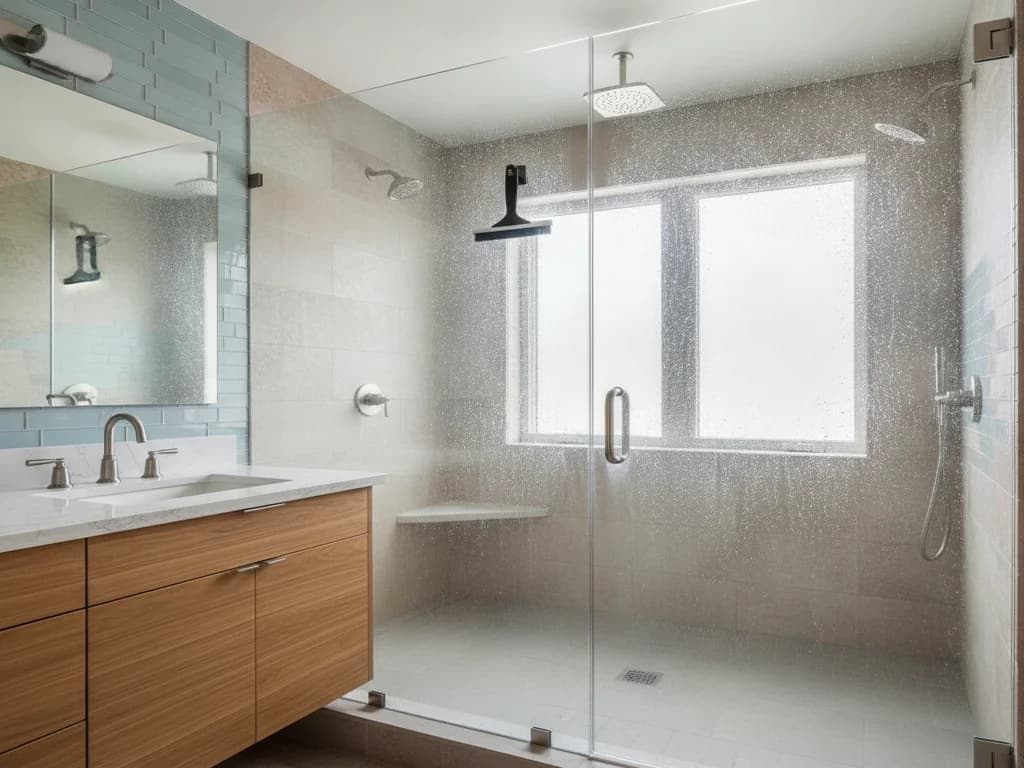
The mechanism is simple. Water sprays onto the glass and clings there as droplets. The water evaporates; the minerals it was carrying do not. Each droplet leaves a small deposit exactly where it sat, which is why spotting appears as a pattern of rings rather than an even film.
That is the whole process, repeated twice a day. Nothing is going wrong — it is what hard water does on any surface where droplets are allowed to dry.
Why waiting changes the problem
The critical thing to understand is that hard-water spotting is two different problems depending on how long it has been there.
In the early stage, deposits are surface residue. They sit on top of the glass and respond to ordinary descaling — a mildly acidic cleaner dissolves the mineral and it wipes away. Frustrating, but entirely reversible.
Left in place through repeated wet-and-dry cycles, the deposits bond more tenaciously and begin to interact with the glass surface itself. Glass is not chemically inert, and prolonged mineral contact can etch it — creating microscopic pitting that scatters light and reads as permanent cloudiness.
At that point the glass is physically altered rather than dirty. No cleaner will restore it, because there is nothing left to remove: the surface itself is damaged. Professional polishing can sometimes improve etched glass, and sometimes the honest answer is replacement.
This is why the advice to keep on top of it is not fussiness. There is a window in which the problem is trivial and a point past which it is expensive.
The fifteen-second habit
A squeegee kept in the shower, used across the glass after each use, prevents essentially all of this. There is no mineral deposit if there is no droplet left to evaporate. It is the highest-return maintenance habit in a bathroom.
Removing deposits that are already there
For deposits that have not yet etched, mild acidity is what works — mineral scale dissolves in acid, which is why descaling products and household white vinegar both have a reputation here.
Two cautions matter more than the choice of product. First, check what else the cleaner will touch. Acidic cleaners can damage natural stone, etch marble, and degrade some metal finishes and seals, so what protects the glass may harm the surround. Manufacturer guidance for your specific fixtures and surfaces is worth following.
Second, resist abrasives. Scouring pads, powdered cleansers, and aggressive scrubbing can scratch glass, and scratches are permanent in a way that mineral deposits at least initially are not. Trading a cleanable deposit for a permanent scratch is a bad exchange, and it happens routinely when someone loses patience.
If deposits do not respond to appropriate cleaning, that itself is diagnostic: it likely means etching rather than residue, and further scrubbing will not help.
Protective coatings and what they do
Most shower glass manufacturers offer a protective treatment, typically applied at the factory, that makes the glass surface more hydrophobic and less receptive to mineral bonding. Water sheets off more readily and deposits are easier to remove.
These coatings are genuinely useful and worth specifying in a hard-water area — the difference in how easily the glass cleans is noticeable. Factory application is generally more durable than aftermarket treatment, so it is a decision best made when ordering the enclosure rather than later.
What they are not is permanent or self-cleaning. Coatings wear with use and cleaning, and they reduce rather than eliminate spotting. A coated enclosure that never gets wiped will still spot; it will simply take longer and clean up more easily when someone finally does.
The honest framing is that a coating buys margin for imperfect habits. It is a good purchase alongside a squeegee, not instead of one.
Addressing it at the source
Where hard water is causing problems across a whole house — spotting on glass, scale in shower heads and aerators, deposits in fixtures, shortened water heater life — treating the water itself is the systemic answer, and a water treatment specialist rather than a remodeler is the right person to advise on that.
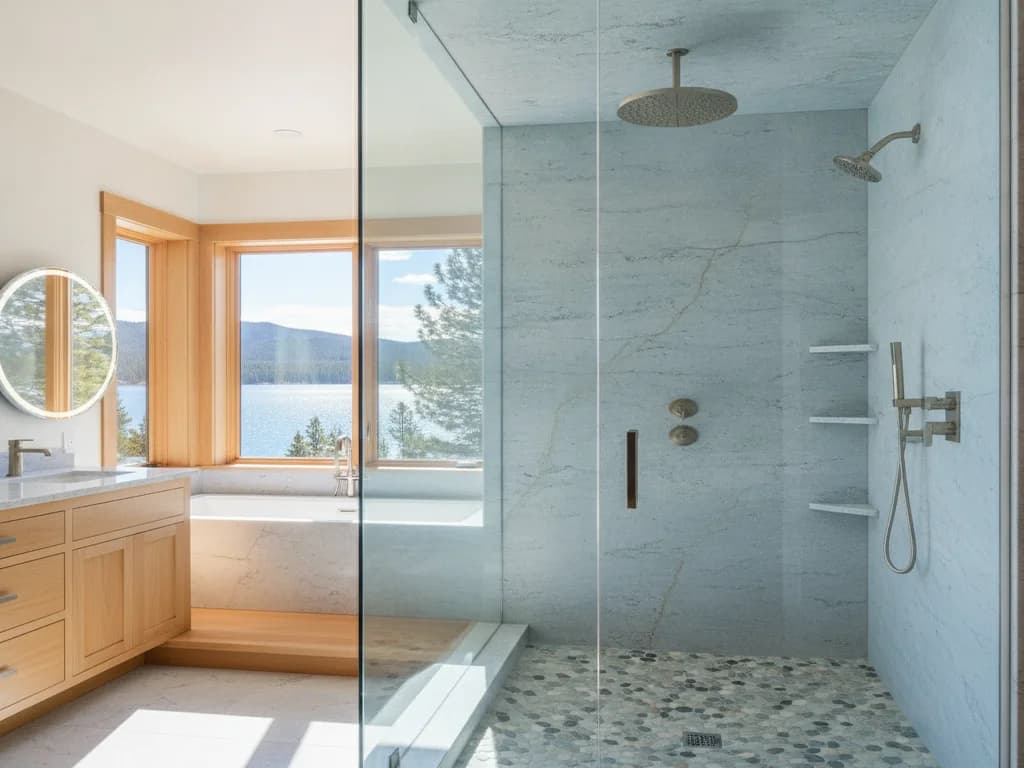
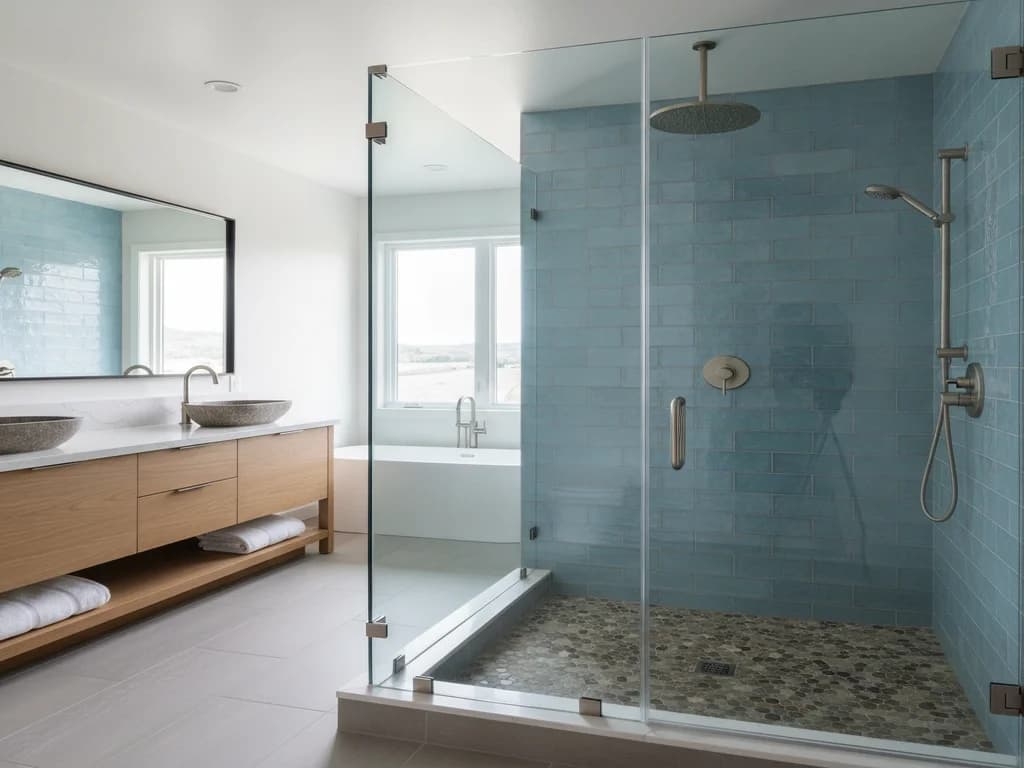
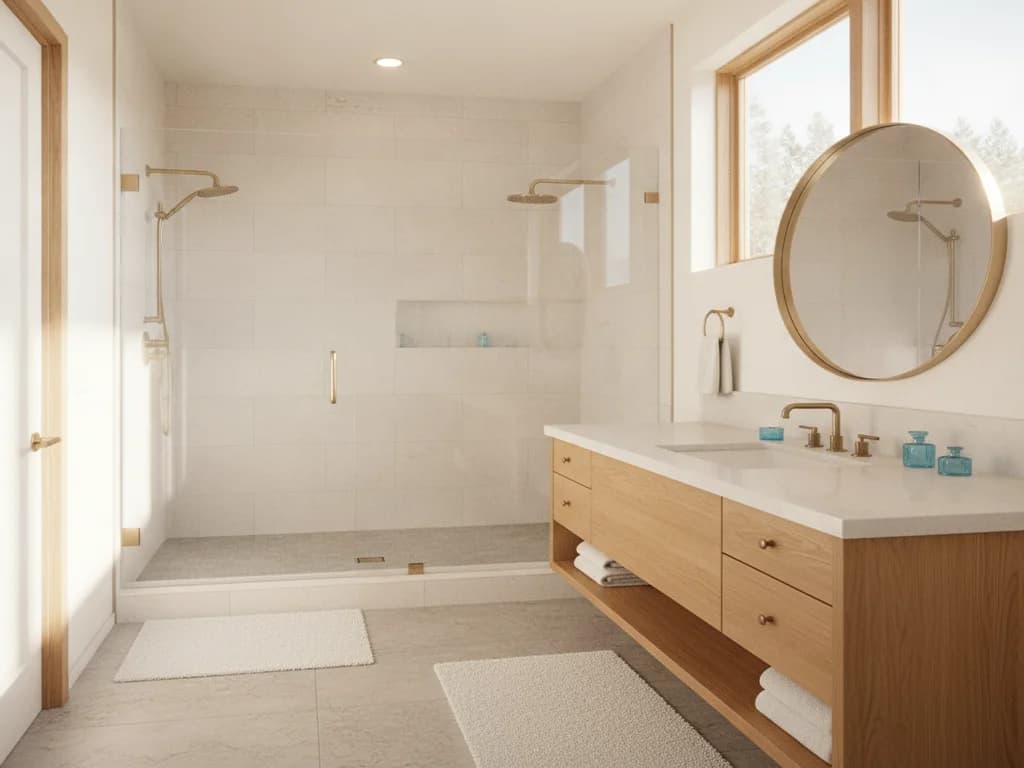
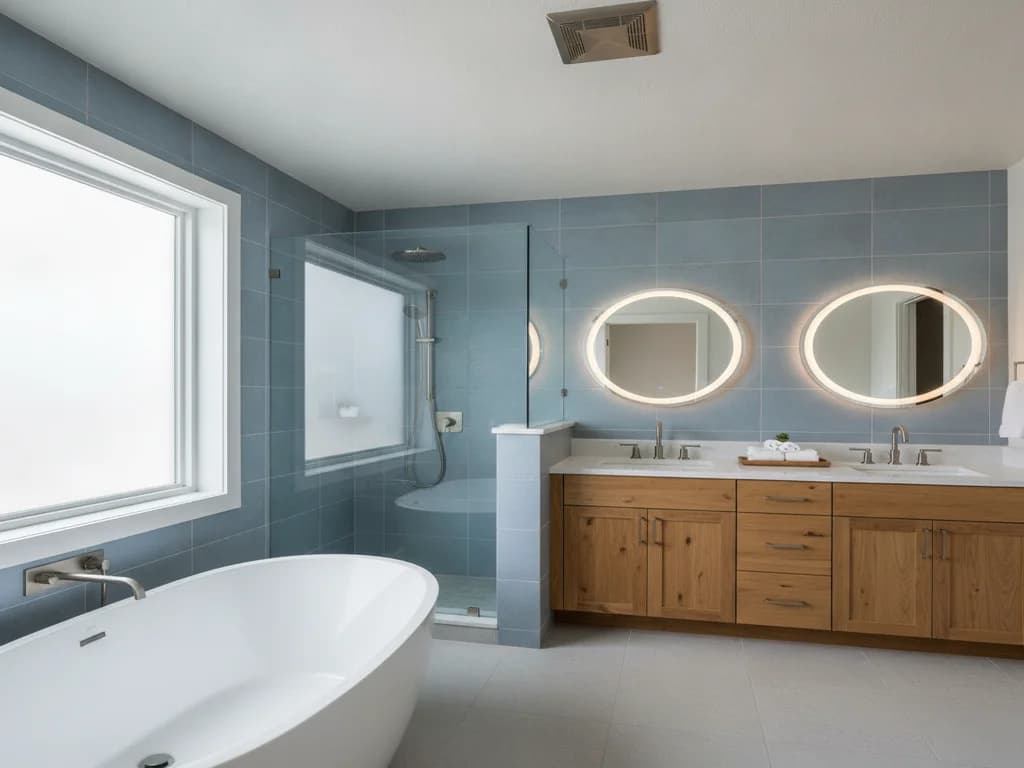
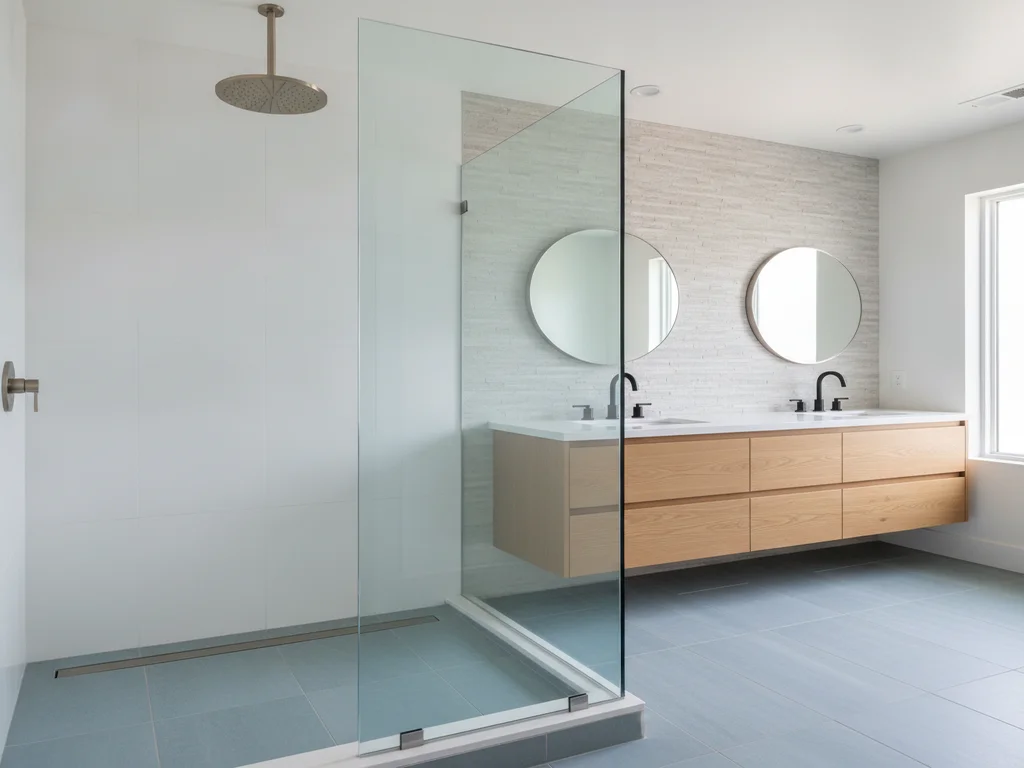
Within the bathroom, one design decision is worth knowing about: the amount of glass. Frameless enclosures are beautiful and are also a large uninterrupted surface for spotting. Some households in hard-water areas deliberately choose a smaller glass panel, a partial screen, or a walk-in configuration with no door at all — less glass to maintain, and in a walk-in layout, often a better room anyway.
That is a preference rather than a recommendation. But it is worth weighing at design time by anyone who knows they will not use a squeegee, because the enclosure decision is far easier to make once than to change later.
Ready to plan your Boise bathroom?
Licensed & insured · 3-year workmanship warranty
Frequently asked questions
- Why does my shower glass look cloudy even after cleaning?
- Most likely the glass is etched rather than dirty. Prolonged mineral contact can pit the glass surface microscopically, scattering light and reading as permanent cloudiness. Because the surface itself is altered, there is nothing left for a cleaner to remove — professional polishing sometimes helps, and sometimes replacement is the honest answer.
- What removes hard water spots from shower glass?
- Mild acidity, since mineral scale dissolves in acid — which is why descaling products and white vinegar are commonly recommended. Check that the cleaner will not harm adjacent surfaces, as acidic cleaners can etch marble and degrade some metal finishes and seals. Avoid abrasive pads, which scratch glass permanently.
- Does a squeegee really prevent water spots?
- Yes, almost entirely, and it is the highest-return habit in a bathroom. Spots form when droplets evaporate and leave their mineral content behind — remove the droplets and there is nothing to deposit. It takes roughly fifteen seconds after a shower and prevents a problem that becomes permanent if ignored.
- Are protective coatings on shower glass worth it?
- In a hard-water area, yes. A factory-applied treatment makes the surface more hydrophobic so water sheets off and deposits release more easily. But coatings wear with use and cleaning, and they reduce rather than eliminate spotting — they buy margin for imperfect habits rather than replacing the squeegee.
- Is there a shower design that avoids the problem?
- Less glass means less to maintain. Some households in hard-water areas choose a partial screen or a walk-in configuration with no door, which reduces the spotting surface considerably — and in many bathrooms a walk-in layout is a better room regardless. It is worth weighing at design time, since the enclosure is hard to change later.
Sources
- USGS Water Science School — Hardness of Water
- Consumer Reports
- This Old House — Bathrooms
- Kohler
- Tile Council of North America (TCNA)
Claims and figures are drawn from the sources above and provided for general guidance; your project may vary. Photography is illustrative of design concepts. For a fixed price on your specific bathroom, request a free estimate.