
Updated August 28, 2026 · 8 min read
By Boise Bath — bathroom & shower remodeling in Boise & the Treasure Valley
The short answer
Once a year, check the caulk at every wet joint, inspect grout for cracks or missing sections, confirm the exhaust fan actually moves air, look under the vanity and around the toilet base for signs of moisture, and test that the shower drains promptly. Each takes minutes and each catches a failure while it is still cheap.
Key takeaways
- Caulk at the wall-to-floor and wall-to-tub joints is the most common early failure point and the cheapest to fix.
- Cracked or missing grout is a signal, not just a cosmetic problem — it can indicate movement or a substrate issue underneath.
- An exhaust fan that runs but does not move air is functionally absent; humidity is what drives most bathroom deterioration.
- The EPA notes controlling moisture is the key to limiting indoor mold growth, which makes ventilation the highest-leverage maintenance item.
- The cabinet floor under a vanity is the best early-warning surface in the room — supply and drain leaks show there first.
- A toilet that rocks even slightly is a wax seal problem in progress, and a failing seal leaks into the subfloor before it leaks onto the floor.
- Slow drainage usually means a partial blockage, which is easier to clear before it becomes a complete one.
- None of this requires tools or expertise — it requires looking, once a year, on purpose.
Why an annual pass is worth the hour
Bathrooms fail slowly and then suddenly. Water finds a gap, moves through it for months without visible evidence, and the first obvious symptom — a soft floor, a stained ceiling below, a smell that will not go away — arrives long after the repair stopped being simple.
Almost every one of those failures begins as something a homeowner could see. Caulk pulling away from a joint. A hairline crack in grout. A fan that stopped moving air. A slight movement in the toilet. Each is visible, each takes minutes to address, and each becomes a substantial repair if left for years.
The point of an annual walkthrough is not to do maintenance. It is to look deliberately at the handful of places where problems announce themselves early.
The wet joints
Start with caulk, because it fails first by design. Caulk seals joints where two different planes or materials meet — wall to tub, wall to floor, the perimeter of a shower pan — and those joints move slightly as a house settles and materials expand. Caulk is the flexible element that accommodates that movement, and flexible materials wear out.
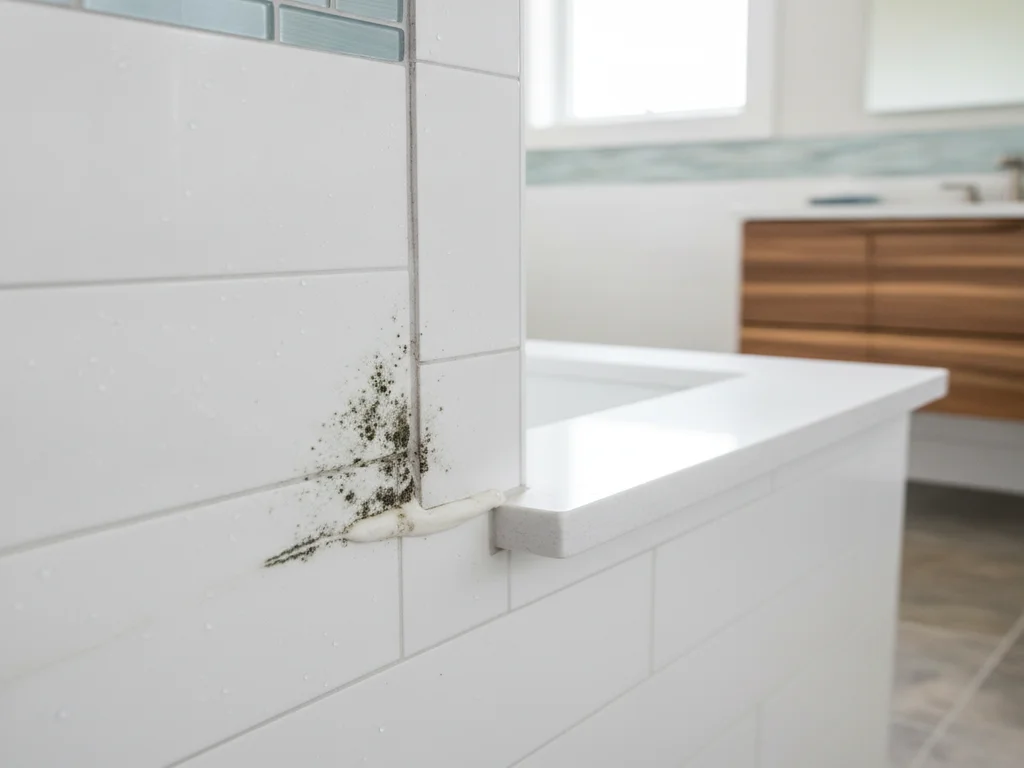
Look for anything pulling away from a surface, splitting along its length, gone soft or crumbly, or visibly discoloured with mildew growing within rather than on top of it. Any of those means it is no longer sealing.
Then check grout, which is a different material doing a different job. Grout should not be flexible and should not be at those movement joints at all — grout at a wall-to-floor corner is a common installation shortcut that cracks predictably. Look for cracked sections, missing chunks, and areas that sound hollow when tapped.
Cracked grout is worth taking seriously rather than simply patching. It sometimes means nothing more than a hard knock, but it can indicate substrate movement or deflection beneath the tile — and cosmetic repair over a structural cause fails again quickly.
Caulk is consumable
Re-caulking a tub or shower perimeter every few years is normal maintenance, not evidence that something was done badly. It is one of the cheapest things you will ever do to protect a bathroom.
The fan nobody tests
Humidity is the underlying cause of a large share of bathroom deterioration — peeling paint, mildew in caulk, corroding hardware, and mold in wall cavities. The EPA is direct that controlling moisture is the key to limiting indoor mold growth, which makes the exhaust fan the highest-leverage item in the room.
A fan making noise is not evidence it is working. Fans lose performance as dust accumulates on the blade and housing, ducts sag or become disconnected, and dampers stick shut. A fan can run at full volume while moving almost no air.
Test it rather than assuming. Hold a single square of toilet paper against the grille with the fan running — it should hold there without help. If it falls, the fan is not doing its job, and the cause is usually cleanable: pull the cover, vacuum the blade and housing, and check that the duct is still connected and not crushed.
While there, confirm the duct terminates outside the building. Bathroom fans venting into an attic or a soffit cavity are common and are actively harmful, relocating moisture into the structure rather than removing it.
Where leaks show up first
Open the vanity cabinet and look at the cabinet floor with a light. That surface is the best early-warning system in the bathroom: supply line weeps, trap drips, and shut-off valve seepage all land there before appearing anywhere else. Look for staining, swelling in the particleboard, white mineral crusting on fittings, or any dampness at all.
Then check the toilet. Put a hand on the bowl and try to rock it gently. Any movement is a problem — a toilet that moves works its wax seal, and a compromised wax seal leaks into the subfloor at the flange rather than onto the floor where you would see it. That is why a rocking toilet is worth acting on immediately even though nothing looks wrong.
Look at the floor around the toilet base and along the tub or shower for discolouration, lifting flooring edges, or a soft feel underfoot. In a room below the bathroom, check the ceiling for stains — a stain there is a leak that has been running for some time.
Drainage and water
Run the shower and watch how the water leaves. It should drain promptly, without pooling around the drain or standing after the water stops. Slow drainage means a partial blockage, and partial blockages become complete ones — usually at an inconvenient moment.
The same applies to sinks. Slow drainage is easier to clear early, and chemical drain cleaners are worth avoiding as a routine measure since they are hard on pipes and seals.
In hard-water areas — which includes much of the Treasure Valley — add a look at the shower head and faucet aerators. Mineral scale reduces flow and distorts spray patterns, and both are usually restored by removal and a soak in a descaling solution. Scale that has been left for years can become permanent.
What to actually do with the results
Most of what an annual check turns up is small and can be handled directly: re-caulk a joint, clean a fan, soak an aerator, tighten a supply connection.
A few findings deserve a professional look rather than a patch. Persistent moisture under a vanity with no obvious source. A toilet that rocks after the closet bolts have been snugged. Grout cracking that returns after repair. A soft spot in the floor. Any stain on the ceiling below a bathroom.
Each of those suggests something happening inside the assembly rather than on its surface — and those are the ones that get expensive if the response is another year of watching.
What the process looks like
- 1
Inspect every wet joint
Check caulk at wall-to-tub, wall-to-floor, and shower pan perimeters for pulling away, splitting, softness, or mildew growing within the material.
- 2
Check grout for cracks and hollow spots
Look across tile fields, not just corners. Cracking away from corners can indicate substrate movement rather than a cosmetic problem.
- 3
Test the exhaust fan with a tissue
Hold one square against the grille with the fan running. If it does not hold, clean the blade and housing and confirm the duct terminates outside.
- 4
Look under the vanity and at the toilet base
Use a light on the cabinet floor for staining, swelling, or mineral crusting. Then try to rock the toilet — any movement means the wax seal is working loose.
- 5
Watch the water leave
Run the shower and sinks and confirm prompt drainage with no pooling. Descale shower heads and aerators if flow or spray pattern has degraded.
Ready to plan your Boise bathroom?
Licensed & insured · 3-year workmanship warranty
Frequently asked questions
- How often should bathroom caulk be replaced?
- Every few years is normal, and needing to do it is not a sign of poor workmanship. Caulk seals joints that move as the house settles and materials expand, and flexible materials wear out. Replace it whenever it pulls away, splits, goes soft, or grows mildew within the material rather than on the surface.
- How do I know if my bathroom exhaust fan is working?
- Hold a single square of toilet paper against the grille with the fan running — it should hold there unassisted. Noise proves nothing; fans lose performance as dust builds on the blade and housing, ducts sag or disconnect, and dampers stick. Also confirm the duct actually terminates outside rather than in an attic.
- Why does a rocking toilet matter?
- Because movement works the wax seal at the flange, and a compromised seal leaks into the subfloor rather than onto the visible floor. That means damage accumulates out of sight. Any perceptible rocking is worth addressing immediately, even when nothing else looks wrong.
- Is cracked grout serious?
- It can be. Sometimes it is just a knock, but cracking can indicate substrate movement or floor deflection beneath the tile — and cosmetic repair over a structural cause fails again quickly. Cracks that return after repair are the clearest signal that something underneath needs attention.
- What should I check under the vanity?
- The cabinet floor, with a light. It is the best early-warning surface in the bathroom — supply weeps, trap drips, and valve seepage all show there first. Look for staining, swollen particleboard, white mineral crusting on fittings, or any dampness. Persistent moisture with no obvious source deserves a professional look.
Sources
- EPA — Mold
- Home Ventilating Institute (HVI)
- ENERGY STAR — Ventilating Fans
- This Old House — Bathrooms
- USGS Water Science School — Hardness of Water
Claims and figures are drawn from the sources above and provided for general guidance; your project may vary. Photography is illustrative of design concepts. For a fixed price on your specific bathroom, request a free estimate.