Updated July 16, 2026 · 7 min read
By Boise Bath — bathroom & shower remodeling in Boise & the Treasure Valley
The short answer
Bathroom condensation happens when shower steam meets a surface colder than the air’s dew point — winter windows and exterior walls. The fix is removing moisture faster than it condenses: an exhaust fan sized per HVI guidance (about 1 CFM per square foot, 50 CFM minimum), run during and 20–30 minutes after showers. Persistent damp means cold surfaces or a weak fan.
Key takeaways
- Condensation is dew-point physics: warm, steam-loaded air dumping its moisture on any surface cold enough — the coldest surface in the room always gets it first.
- Idaho winters make it worse indoors, not better: the colder the glass and exterior walls get, the more aggressively steam condenses on them.
- HVI guidance sizes bathroom exhaust fans at roughly 1 CFM per square foot with a 50 CFM minimum — and the fan needs to run 20–30 minutes after the shower, not just during it.
- A fan that spins but barely holds a square of toilet paper against the grille is moving too little air — duct problems and dust kill more fans than motors do.
- Occasional mirror fog is normal; water pooling on windowsills, sweating walls, and peeling paint are damage in progress.
- Chronic condensation feeds the whole moisture-failure family: mold, peeling paint, swollen trim, and rotted window sills.
The symptoms: how condensation shows itself
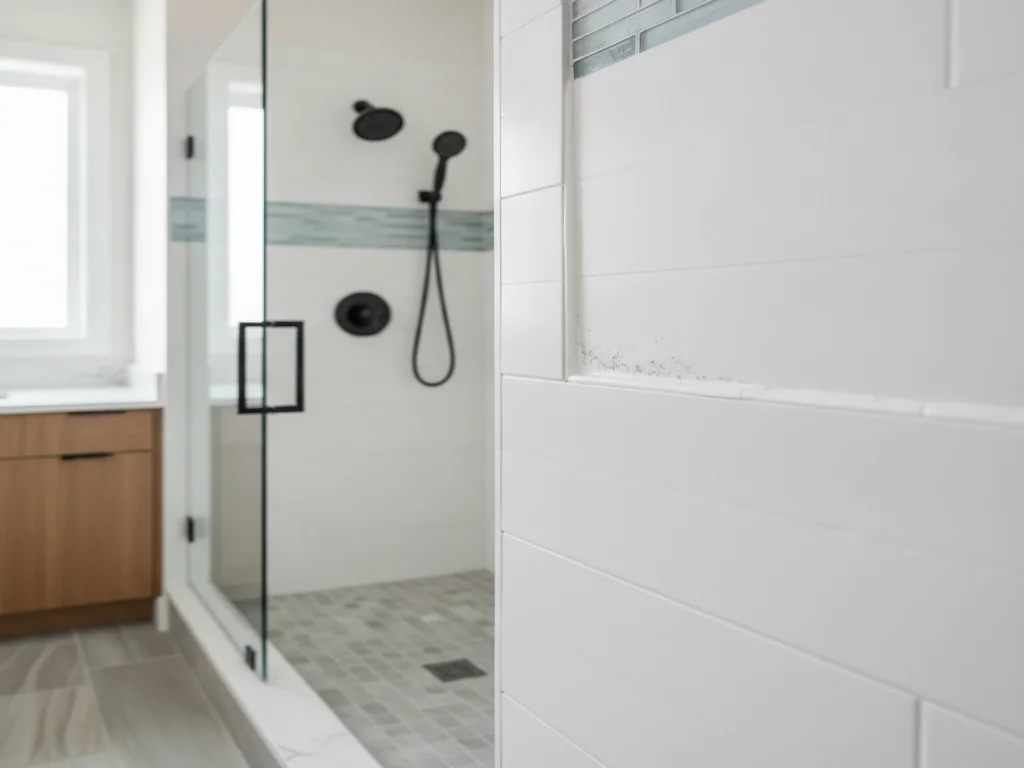
Some of it is obvious: a mirror that fogs and takes half an hour to clear, windows that stream with water every winter morning, droplets beading on the toilet tank. Some of it is quieter: paint that feels tacky in the corners, a windowsill that is always slightly damp, dark spotting starting at the ceiling above the shower, towels that never quite dry between uses.
The pattern to notice is where and when. Condensation loves cold surfaces and cold months. If your bathroom is fine in July and soaked every January, you do not have a leak — you have a humidity-versus-cold-surface problem, and it has a predictable fix.
The distinction matters because chronic condensation and slow leaks produce similar-looking damage. Water appearing only during and after showers, on the coldest surfaces in the room, in winter, is condensation. Water in one spot regardless of weather or shower schedule points at plumbing — start with signs of bathroom water damage if that is your pattern.
Why Idaho winters make it worse
The counterintuitive part: Boise’s outdoor winter air is dry, yet winter is exactly when bathroom condensation peaks. The reason is surface temperature, not outdoor humidity. A hot shower loads the room’s air with moisture, and that air will dump its water on any surface below its dew point. In January, window glass, aluminum frames, and poorly insulated exterior walls run cold enough that steam condenses on them instantly and heavily.
That same dry outdoor air is also the good news. Every cubic foot of steamy air your exhaust fan pushes out gets replaced by cold, very dry air that soaks up moisture as it warms. Ventilation is unusually effective in a Treasure Valley winter — when the fan actually runs long enough.
Housing stock plays a role too. Older Boise homes with single-pane or early aluminum-frame windows and thin exterior-wall insulation have the coldest surfaces and the worst condensation. The broader cold-weather picture — freezing pipes, cold floors, drafts — is covered in our Idaho winter bathroom comfort guide.
The causes, ranked
Nearly every chronic condensation problem traces to one or more of these, in descending order of likelihood.
- The fan does not run long enough. Most people kill the fan when they leave the room, but the moisture load lingers — HVI recommends running it 20–30 minutes after the shower. This one habit change fixes a surprising share of "condensation problems."
- The fan is undersized or underperforming. HVI sizing guidance is roughly 1 CFM per square foot for bathrooms up to 100 square feet, minimum 50 CFM. And rated CFM assumes a clean grille and a short, smooth duct — a dusty fan pushing through a long, kinked flex duct can deliver a fraction of its label.
- There is no fan at all, or it vents into the attic. Some older bathrooms rely on a window nobody opens in January; some fans dump steam into the attic, which trades a bathroom problem for a roof-sheathing problem.
- Cold surfaces: single-pane windows, uninsulated exterior walls, metal window frames. These condense moisture even with decent ventilation, because they sit below dew point the entire winter.
- Habit load: long, hot showers back-to-back, a household of daily bathers, door kept closed with no makeup-air path under it. More steam in, less air exchange.
Severity triage: normal fog vs. damage in progress
Normal: a fogged mirror that clears within 10–15 minutes with the fan running, brief misting on the window during a shower. Every bathroom does this.
Fix-it-soon: windows that stream and pool water on the sill daily, walls that feel damp an hour after the shower, a mirror that stays fogged past half an hour. Nothing is broken yet, but surfaces that stay wet this long are on the clock — the EPA notes mold can establish on damp material within 24–48 hours, and daily re-wetting keeps that clock running.
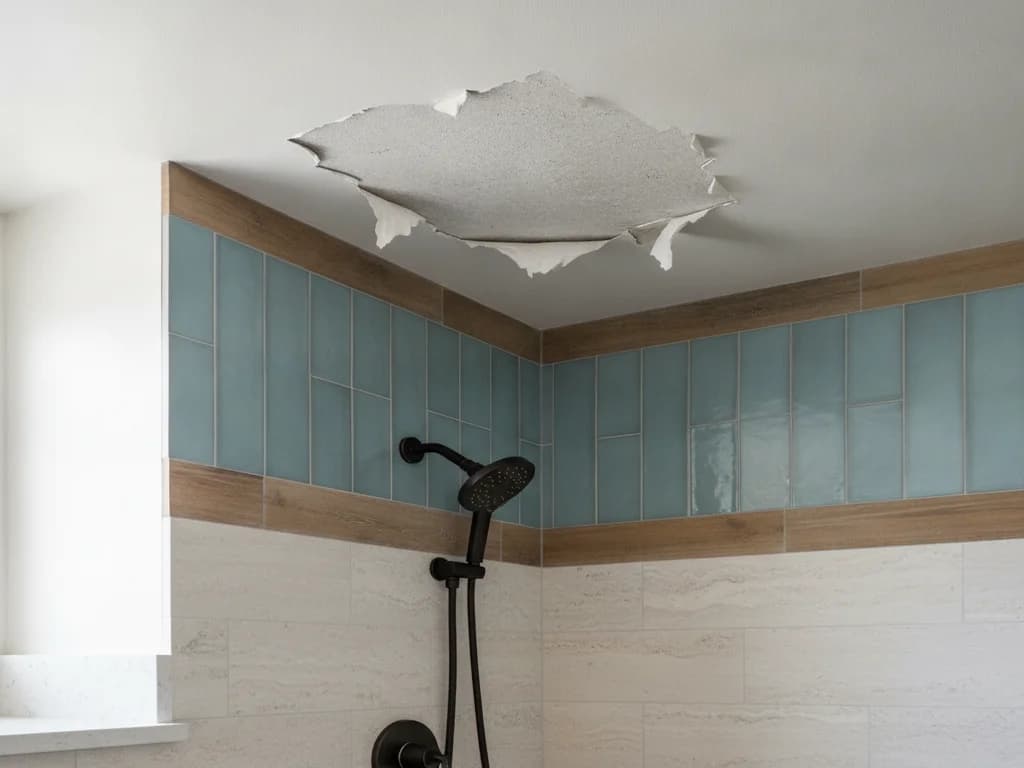
Damage in progress: peeling or bubbling paint at the ceiling and upper walls, black spotting on the ceiling or window trim, a windowsill going soft or dark, swollen door casing, a persistent musty smell. At this point condensation has graduated into the moisture-failure family — see when bathroom mold is worth worrying about and why bathroom paint peels for the two most common downstream problems.
The toilet-paper fan test
Hold a single square of toilet paper against the running fan’s grille. If the fan cannot hold it in place, it is moving too little air to matter — from dust, a failing motor, or a crushed duct. A fan that passes the test but the room still stays steamy is undersized or under-run, not broken.
What actually stops it
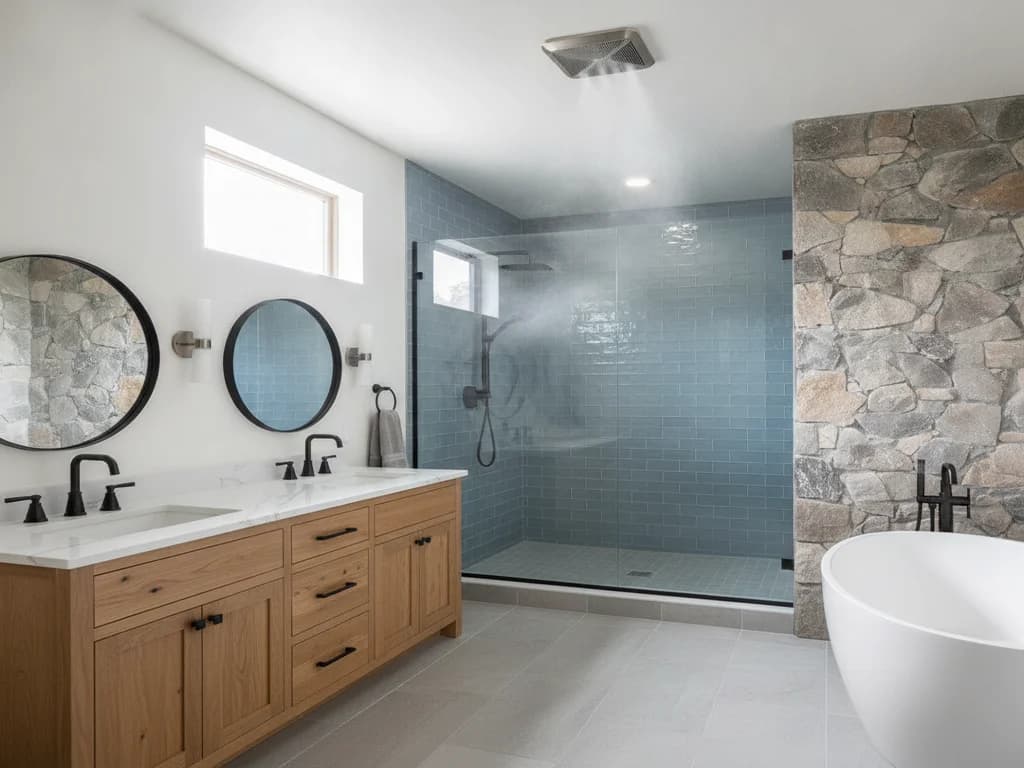
Ventilation does the heavy lifting, and it is the cheapest lever. Run the fan during every shower and 20–30 minutes after — a timer switch or humidity-sensing switch automates the habit for a modest cost. Clean the grille twice a year. If the fan fails the paper test or predates the house’s last owner, replace it with a properly sized, quiet unit; our exhaust fan picks cover what to buy and replacing a bathroom exhaust fan covers what the swap involves. The full habit-and-hardware playbook lives in the bathroom ventilation guide.
Cold surfaces need a different fix, because no fan makes January glass warm. Insulated cellular shades help at the margin; the real cures are double-pane windows, insulated exterior walls, and warm-edge window frames — remodel-scale work, which is why chronic condensation is worth solving during a bathroom remodel rather than around one.
Dehumidifiers are the niche tool: useful in a bathroom with no duct path for a fan, or a basement bath that runs damp all day, but a workaround rather than a fix everywhere else.
What chronic damp costs you if you ignore it
Condensation never stays cosmetic forever. The progression is predictable: mildew spotting on the ceiling and grout, then paint failure as moisture works behind the film, then swollen MDF trim and casing, then rot at the windowsill — the one horizontal surface that pools water every single morning. Window sills and aprons on the weather wall of a steamy bathroom are among the most commonly replaced trim pieces in bathroom remodels.
The wall assembly is the bigger stake. Moisture that migrates into a wall cavity through gaps and fastener holes condenses inside the wall in winter, feeding mold on the back of the drywall and, over years, damaging framing. That failure mode is invisible until it smells — which is why a bathroom that drips every winter deserves a fix this year, not eventually.
If damp has already stained or softened your drywall, replacing bathroom drywall covers what that repair involves and where mold-resistant board makes sense.
Ready to plan your Boise bathroom?
Licensed & insured · 3-year workmanship warranty
Frequently asked questions
- Why does my bathroom get so much condensation in winter?
- Because condensation depends on surface temperature, and winter makes your windows and exterior walls cold. Shower steam condenses on any surface below the air’s dew point, and January glass sits well below it all day. Idaho’s dry winter air actually helps once the fan runs — the incoming replacement air absorbs moisture readily — but cold surfaces will condense steam until the room is ventilated.
- How long should the bathroom fan run after a shower?
- Around 20–30 minutes after you finish, per Home Ventilating Institute guidance — the moisture load in the air and on surfaces long outlasts the shower itself. A timer switch or a humidity-sensing switch handles this automatically and is one of the highest-value small upgrades in a bathroom. Shutting the fan off as you leave is the single most common ventilation mistake.
- What size exhaust fan do I need to stop condensation?
- HVI guidance for bathrooms up to 100 square feet is roughly 1 CFM per square foot, with a 50 CFM minimum — so an 8-by-10 bathroom needs about 80 CFM. Larger rooms and bathrooms with separate tub and shower zones need more. Rated CFM assumes a short, smooth duct run; a long or kinked flex duct can cut real-world airflow substantially, so the install matters as much as the label.
- Is condensation on bathroom walls bad for the house?
- Occasional misting that dries within the hour is harmless. Walls that stay damp daily are a problem: the EPA notes mold can establish on damp material within 24–48 hours, and chronic surface moisture leads to peeling paint, mildew, swollen trim, and — over years — moisture migrating into the wall cavity itself. Persistent sweating walls are a ventilation or insulation problem worth fixing promptly.
- Will opening a window stop bathroom condensation?
- In an Idaho winter, briefly — cold, dry incoming air absorbs moisture well — but it is an uncomfortable, inconsistent fix that most people abandon by December, and it does nothing on the days you skip it. A properly sized exhaust fan on a timer does the same air exchange automatically, every shower, without the 20-degree draft. Treat the window as a backup, not the system.
- Why is my toilet tank sweating?
- Tank condensation is the same physics in miniature: the tank refills with cold supply water, chilling the porcelain below the room’s dew point right when the shower has loaded the air with steam. Better ventilation reduces it. For a tank that drips onto the floor persistently, fixes include an insulated tank liner or a mixing valve that tempers the fill water — worth addressing, since chronic drips around a toilet base invite subfloor damage.
Sources
Claims and figures are drawn from the sources above and provided for general guidance; your project may vary. Photography is illustrative of design concepts. For a fixed price on your specific bathroom, request a free estimate.