Updated July 16, 2026 · 7 min read
By Boise Bath — bathroom & shower remodeling in Boise & the Treasure Valley
The short answer
Bathroom paint peels for three reasons: steam repeatedly soaking the film under weak ventilation, paint applied over glossy, dirty, or already-failing surfaces it never bonded to, or flat builder-grade paint never meant for a wet room. Peeling concentrated in one low spot — rather than the steam zone — usually means a leak, not a paint problem.
Key takeaways
- Where the paint peels tells you why: ceiling and upper walls point to steam and ventilation; one isolated patch points to a leak behind the surface.
- Paint fails from the bond down — most peeling was guaranteed on application day by skipped cleaning, sanding, or priming.
- Glossy old paint, soap film, and dust are bond-killers; new paint grips them instead of the wall, then lets go in sheets.
- Flat and builder-grade paints absorb moisture and break down under repeated steam; bathrooms need a moisture-resistant formula.
- Repainting over peeling paint without fixing the moisture source restarts the same failure on a fresh coat.
- Bubbling paint with brown staining is water damage, not a finish problem — find the water before touching the paint.
Read the peeling before you blame the paint
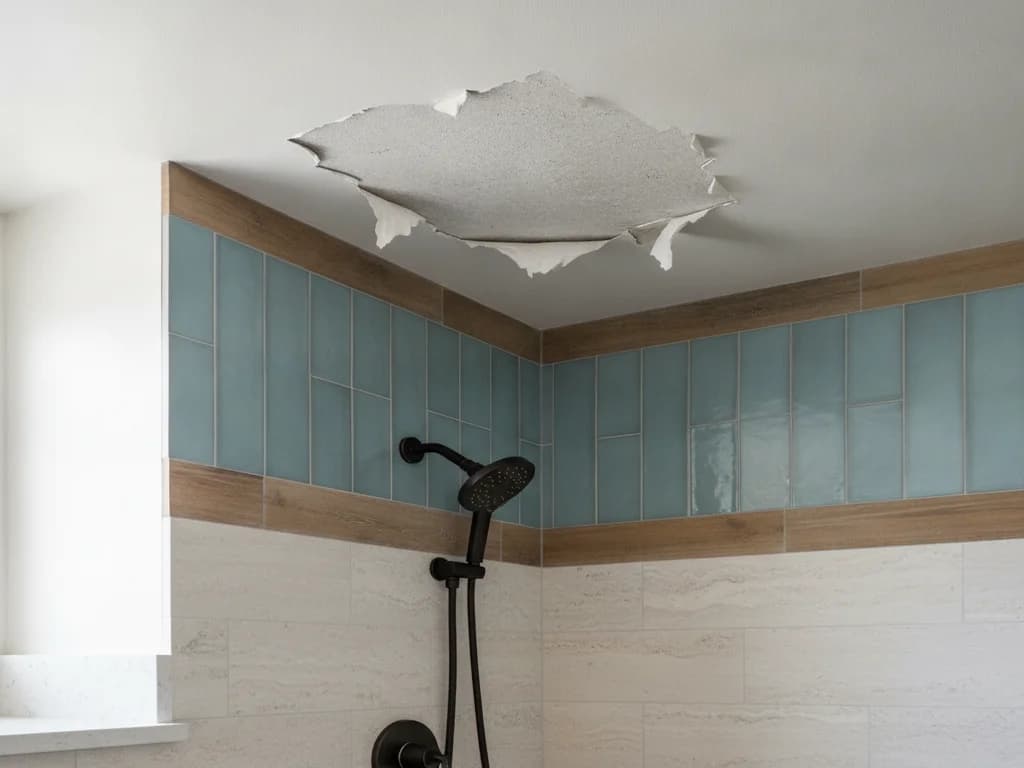
Peeling paint is a symptom with a location, and the location is the diagnosis. Paint flaking at the ceiling and upper walls — especially directly above the shower — is the steam signature: moisture condensing on the same surfaces daily and working under the paint film until it loses its grip.
Paint peeling in sheets from a wide area, sometimes pulling a papery layer of old paint with it, is a bond failure: the new coat never attached to what was under it. This kind often starts within months of a repaint and spreads from an edge or a corner.
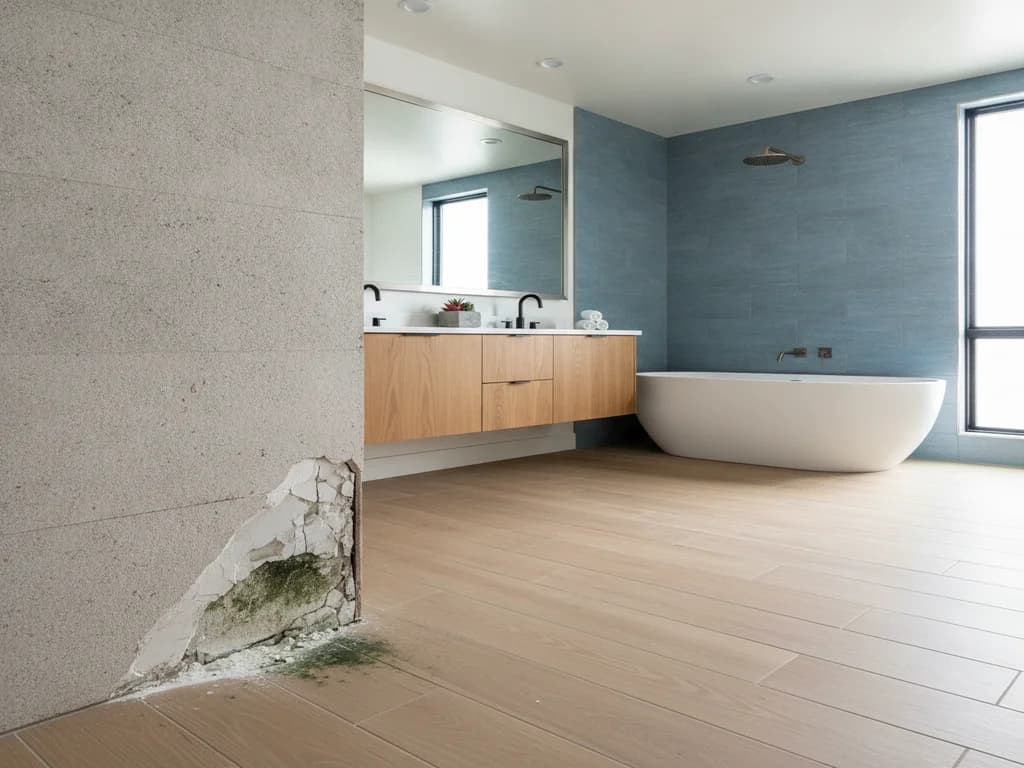
And paint bubbling or blistering in one contained patch — often low on a wall, behind a toilet, or on the ceiling below an upstairs bathroom, often with tan or brown staining — is not a paint problem at all. That is water arriving from behind, and the paint is just the first thing to let go. Check that pattern against signs of bathroom water damage before you buy a brush.
Cause 1: steam and weak ventilation
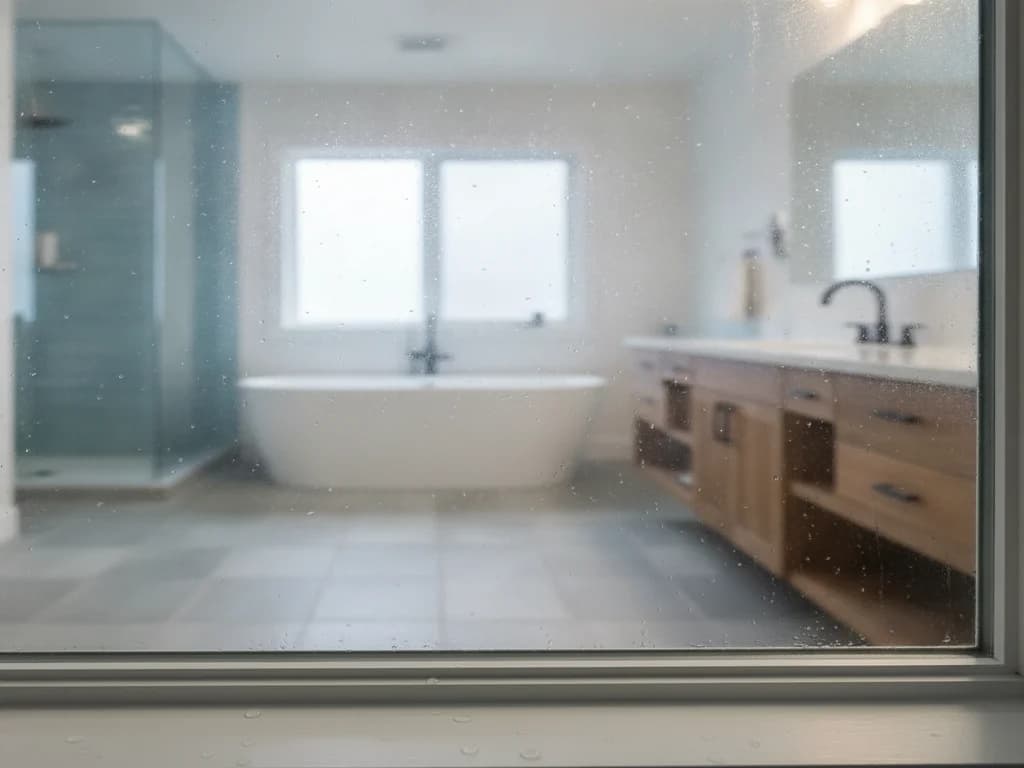
The most common cause, and the one behind the classic peeling-ceiling-above-the-shower. Every shower loads the room with moisture; without an exhaust fan that runs long enough to clear it, that moisture condenses on the ceiling and upper walls day after day. Water is patient — it finds pinholes and edges in the paint film, swells the surface behind it, and pushes the film off a flake at a time.
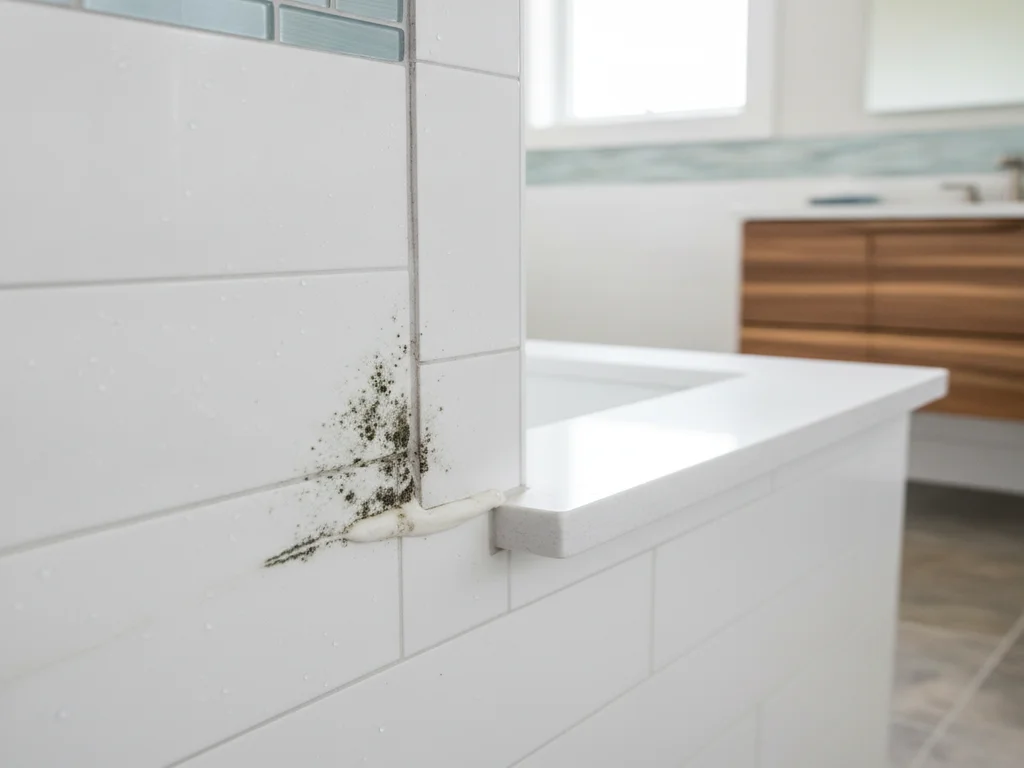
The tell is distribution: damage spread across the steam zone rather than concentrated in one blotch, worse near the shower, often paired with mildew spotting and a mirror that takes forever to clear. If that describes your bathroom, the paint failure is downstream of a ventilation failure — the fan-sizing and habit fixes are in our bathroom ventilation guide, and the winter version of the problem is covered in bathroom condensation and humidity problems.
Repaint without fixing the ventilation and you are buying the same failure again on a schedule.
Cause 2: the surface was never ready for paint
Paint is only as good as its bond, and bathrooms are full of bond-killers. Old semi-gloss that never got scuff-sanded gives new paint nothing to bite. Soap film, hairspray residue, and years of body-oil haze act as a release layer. Dust from a quick patch job does the same. And painting over paint that was already failing just means the new coat rides the old coat down.
This is the failure mode when peeling starts soon after a repaint, comes off in sheets or ribbons, or the back of the flakes shows the old color — the new paint bonded to the old paint, and the old paint let go of the wall.
One more prep sin specific to bathrooms: painting a surface that was still damp. Drywall patches, fresh joint compound, and walls washed an hour before painting all hold moisture that gets sealed under the film — then pushes back out as blisters the first time the room heats up.
Cause 3: the wrong paint for a wet room
Builder-grade flat paint is porous — it absorbs moisture, softens under repeated steam, and holds mildew where it cannot be wiped off. It is the standard finish in new-construction bathrooms because it is cheap and hides drywall flaws, and it is a large part of why so many bathrooms need repainting within a few years.
Bathrooms want a paint formulated to shed moisture: a quality washable formula in satin or semi-gloss, or one of the purpose-made bath-and-spa lines with mildew-resistant additives. The sheen-versus-formula tradeoffs, specific product picks, and where matte can still work are their own topic — see the best paint for bathrooms for the full breakdown.
Worth saying plainly: the right paint does not excuse the other two causes. A premium bathroom paint over glossy, unsanded old paint in an unventilated room still fails — just slightly slower.
Severity triage: cosmetic, chronic, or a leak
Cosmetic: a small area of flaking in the steam zone, dry drywall underneath, no staining. Scrape, sand, prime, repaint with the right product, and fix the fan habit — done.
Chronic: peeling that has recurred through more than one repaint, spread across the ceiling and upper walls, usually with mildew. The paint is not the problem; the room’s moisture load is. Solve ventilation first — otherwise the next repaint is a subscription.
A leak: bubbling or peeling concentrated in one patch, brown or tan staining, drywall that feels soft or crumbly under the failed paint, or damage on a ceiling below an upstairs bathroom. Stop — this is water damage, not a finish problem, and painting over it hides the one warning light you have.
Press before you paint
Before repainting any peeled area, press the exposed drywall with a fingertip. Solid and dry means a prep-and-paint fix. Soft, crumbly, or damp means moisture is reaching it from behind — find and fix the source first, because paint over wet drywall fails fast and mold behind it grows quietly. Soft drywall that has already gone is a replacement job; see what that involves in replacing bathroom drywall.
How a professional makes the next coat last
The pro sequence is mostly prep, which is exactly the part that gets skipped. First, moisture check: confirm the substrate is dry and the source — steam or leak — is fixed. Painting is the last step of a moisture repair, never the first.
Then bond surgery: scrape every loose edge until the paint stops lifting, feather-sand the transitions so old edges do not telegraph, wash off soap film and residue, and skim-coat any damaged paper facing. Stained areas get a stain-blocking primer so old water marks do not bleed through; glossy old surfaces get scuffed or bonding-primed so the new coat grips wall, not sheen.
Finally, the right product applied to a dry room, with the fan running during and after the work. Done this way, a bathroom paint job is a once-a-decade event instead of a biennial chore. And if the peeling was part of a larger tired-bathroom picture — failing caulk, spotting grout, a fan from the nineties — it often makes more sense folded into a broader refresh than fixed as a one-off.
Keeping it from coming back
Prevention is three habits and one purchase. Run the exhaust fan during every shower and 20–30 minutes after — a timer switch makes it automatic. Wipe standing condensation off sills and tank tops in winter rather than letting it sit. Keep caulk lines maintained so splash stays out of the walls — chronically mildewed caulk has its own causes, covered in why shower caulk keeps mildewing.
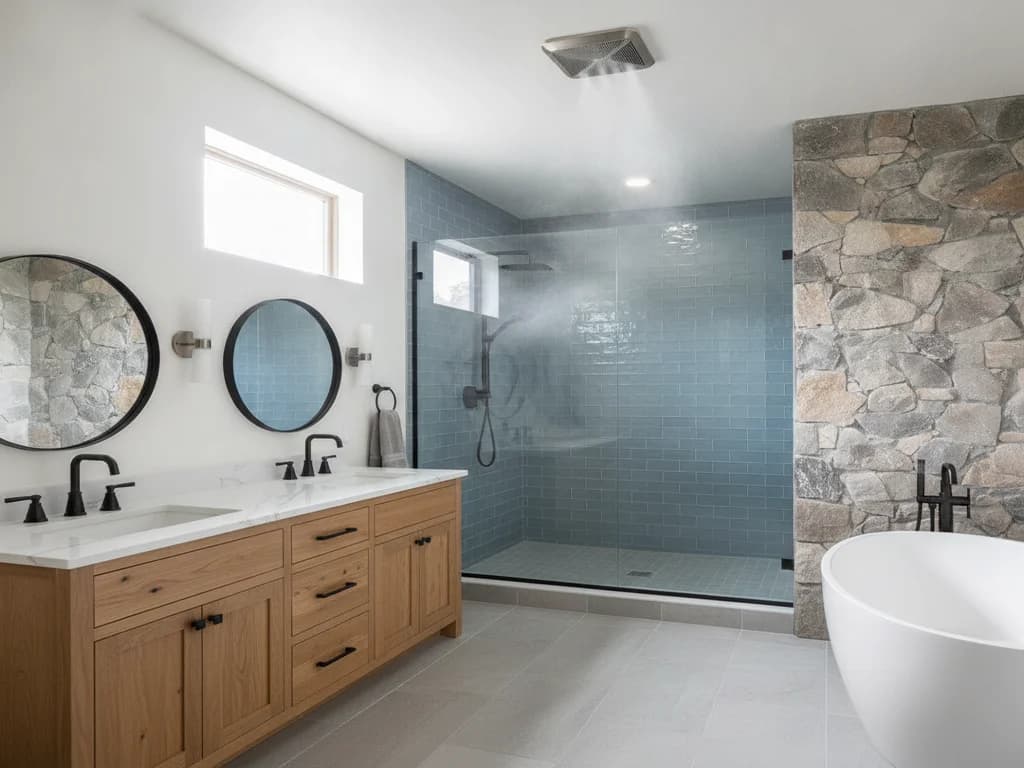
The purchase: a fan that actually moves enough air for the room, sized per HVI guidance. A struggling thirty-year-old fan undermines every coat of paint above it — the best bathroom exhaust fans covers what to replace it with.
Ready to plan your Boise bathroom?
Licensed & insured · 3-year workmanship warranty
Frequently asked questions
- Why does the paint on my bathroom ceiling keep peeling?
- Ceiling peeling above a shower is almost always condensation: steam hits the ceiling daily, works under the paint film, and pushes it off. The paint takes the blame, but the cause is ventilation — a fan that is undersized, underused, or switched off too soon. Fix the moisture first; a repaint alone, even with premium paint, repeats the failure on a schedule.
- Can I just paint over peeling bathroom paint?
- No — new paint bonds to whatever it touches, and if what it touches is failing paint, the new coat rides it off the wall. Loose paint has to be scraped until edges stop lifting, sanded smooth, cleaned, and primed. And if the drywall under the peeling is soft or stained, painting over it hides active water damage rather than fixing anything.
- What does bubbling bathroom paint mean?
- Fresh bubbles right after painting usually mean the surface was damp or dirty when painted. Bubbles appearing on an established paint job — especially one contained patch with tan or brown staining — mean water is arriving from behind the surface: a plumbing leak, a shower waterproofing failure, or an upstairs bathroom. Treat that as water damage first and a paint job second.
- Does bathroom paint peel because of the wrong paint?
- Sometimes. Flat builder-grade paint absorbs moisture and breaks down under daily steam, so it fails faster than a washable satin, semi-gloss, or dedicated bath formula. But product choice is the third cause, behind ventilation and prep — a premium bathroom paint applied over unsanded gloss in a steamy, unventilated room still peels. Fix all three or the cycle continues.
- How do I tell if peeling paint is from humidity or a leak?
- By distribution. Humidity damage spreads across the steam zone — ceiling and upper walls, worst near the shower, often with mildew — and worsens in winter. Leak damage concentrates in one patch, often low on a wall, behind a toilet, or on a ceiling below an upstairs bath, usually with brown staining or soft drywall. One spot getting steadily worse regardless of season is a leak until proven otherwise.
Sources
Claims and figures are drawn from the sources above and provided for general guidance; your project may vary. Photography is illustrative of design concepts. For a fixed price on your specific bathroom, request a free estimate.