Updated July 17, 2026 · 8 min read
By Boise Bath — bathroom & shower remodeling in Boise & the Treasure Valley
The short answer
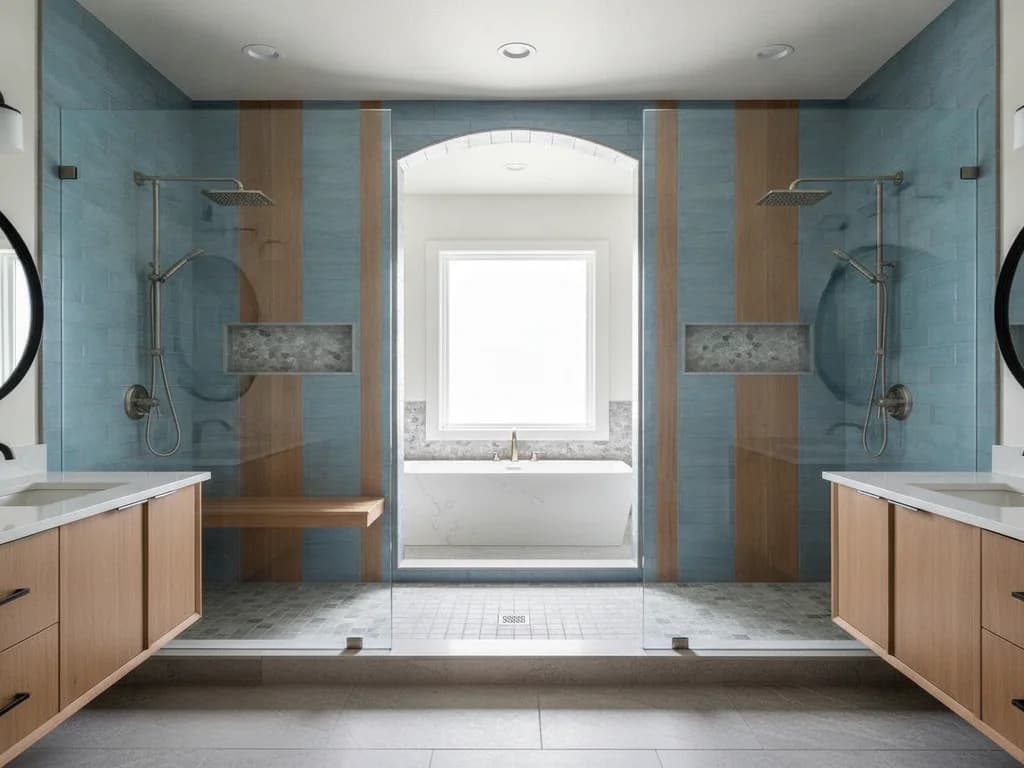
A his and hers shower is a two-person shower with two showerheads on separate controls so each person sets their own temperature and spray. To work, it needs real size — roughly 4 by 5 feet (about 48 by 60 inches) as a practical minimum, and 5 by 6 or larger to feel generous. The best designs pair dual controls with a bench, twin niches, and often a second entry or a wide doorless opening.
Key takeaways
- A true his and hers shower gives each person a separate showerhead and, critically, a separate control valve so temperatures do not fight.
- Size is the whole game: about 48 by 60 inches is a workable minimum for two, while 60 by 72 inches feels genuinely shared rather than shared reluctantly.
- Placing the two heads on opposite or perpendicular walls — not side by side — keeps spray zones from overlapping and colliding.
- A center bench, twin niches, and dual controls turn a big shower into a real his-and-hers, not just a large single.
- Doorless or dual-entry layouts suit two-person showers because they need width the swing of a hinged door would fight.
- Two heads roughly double the hot-water demand at once — the water heater and supply lines have to be sized for simultaneous use.
What "his and hers" actually means in a shower
A his and hers shower is not just a big shower — it is a shower engineered for two people to use at once without negotiating. The defining feature is two showerheads on two separate control valves, so one person can run a hot rainfall while the other sets a warm handheld, and neither change disturbs the other. A single valve splitting to two heads is a double shower, not a his-and-hers; the moment one person adjusts the temperature, both feel it.
That distinction drives every other decision. Two independent spray zones need room to coexist, dual plumbing needs to be roughed in, and the water heater has to feed both at the same time. Done right, it is one of the genuine luxuries a master bath can offer; done as an afterthought, it is an expensive shower two people still take turns in.
His-and-hers showers belong to the larger conversation about primary-suite design — if you are planning the whole room, the broader palette of ideas lives in master bathroom ideas, and this article zooms in on the shower itself.
How much space a two-person shower really needs
The most common his-and-hers mistake is under-sizing. A standard single shower is often 36 by 36 or 36 by 48 inches — nowhere near enough for two adults and two spray zones. The International Residential Code sets an absolute floor of 30 by 30 inches of interior space for any shower, but that minimum is for one person; two need dramatically more.
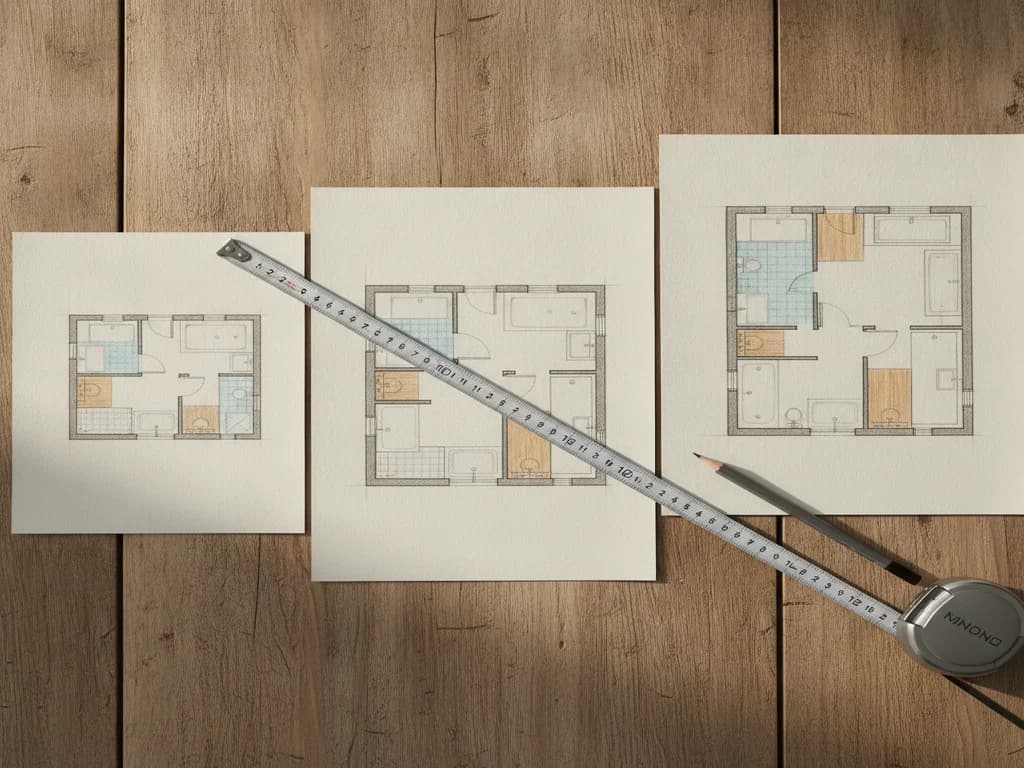
As a practical rule, about 48 by 60 inches (4 by 5 feet) is the smallest footprint that lets two people shower without constant contact, and 60 by 72 inches (5 by 6 feet) is where it starts to feel like the amenity it is meant to be. The table below sets expectations honestly by size.
| Interior size | Two-person verdict | Best fit |
|---|---|---|
| 36 x 48" | Not a real dual shower | One person; second head is symbolic |
| 48 x 48" | Tight for two | Occasional shared use, heads perpendicular |
| 48 x 60" | Workable minimum | Everyday shared use with a bench at one end |
| 60 x 60" | Comfortable | Two zones, bench, twin niches |
| 60 x 72"+ | Generous | Doorless walk-in, opposing heads, seating for two |
30 x 30" is the IRC minimum interior for any single shower; two-person comfort figures reflect common design practice, not code.
Put the heads where the spray will not collide
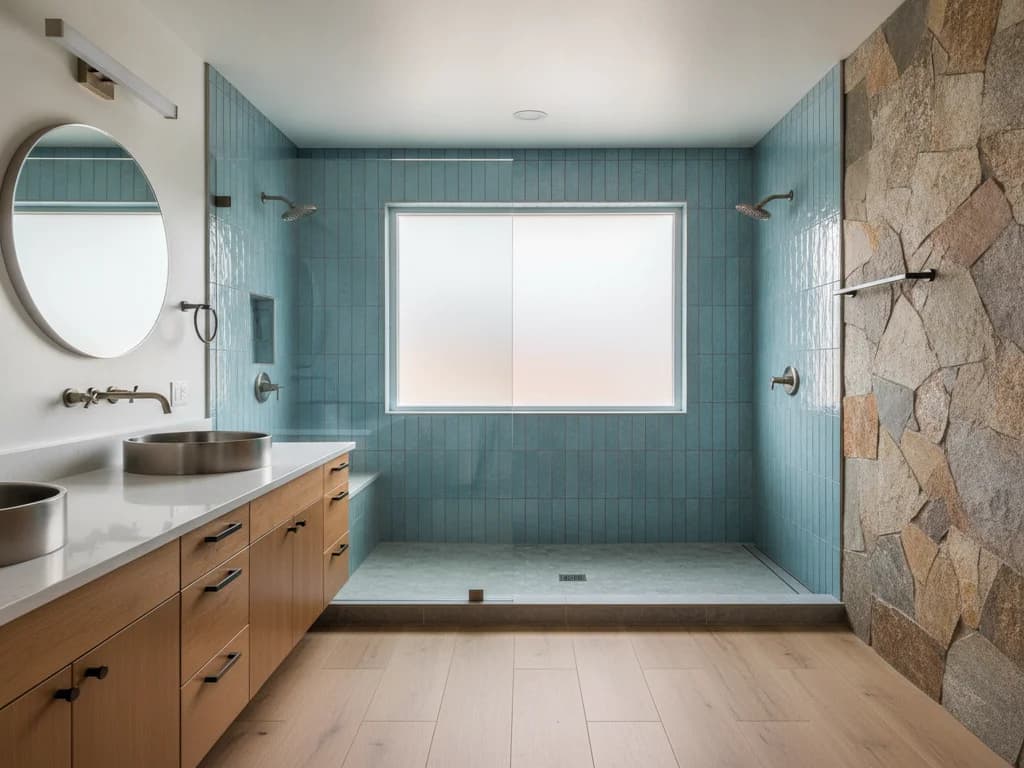
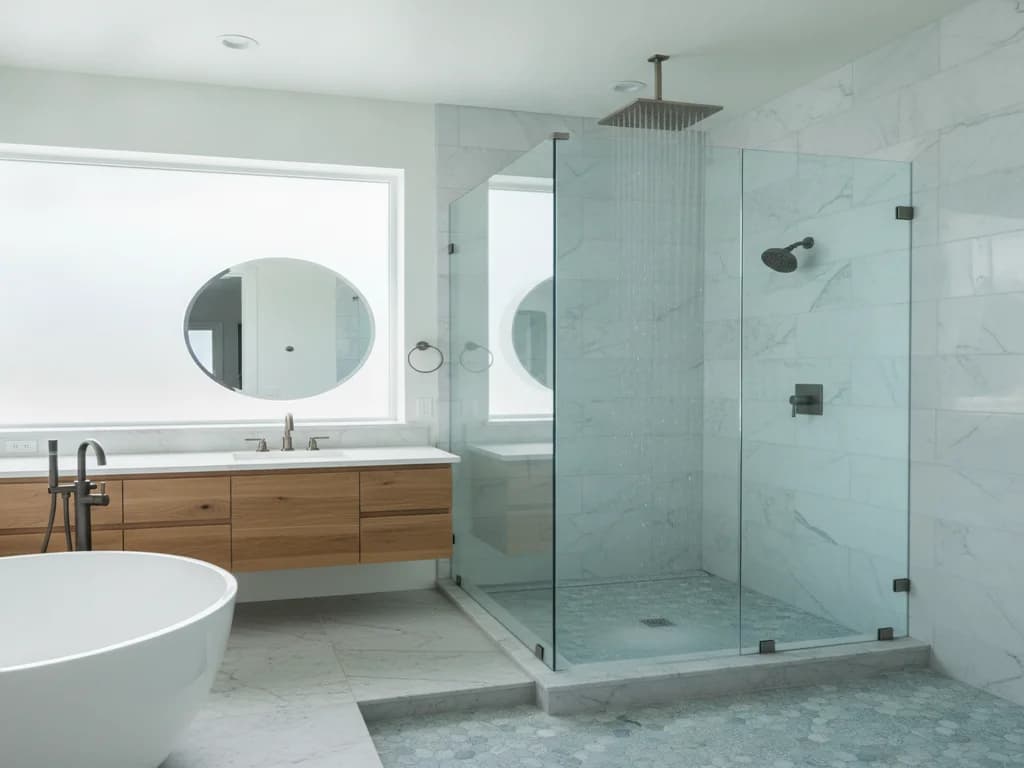
Mounting two showerheads side by side on the same wall recreates a single shower with extra hardware — the zones overlap and both people stand in the same place. Position the heads on opposite or perpendicular walls so each person gets their own corner, and keep the door or opening out of both spray paths.
Dual controls: the feature that makes it real
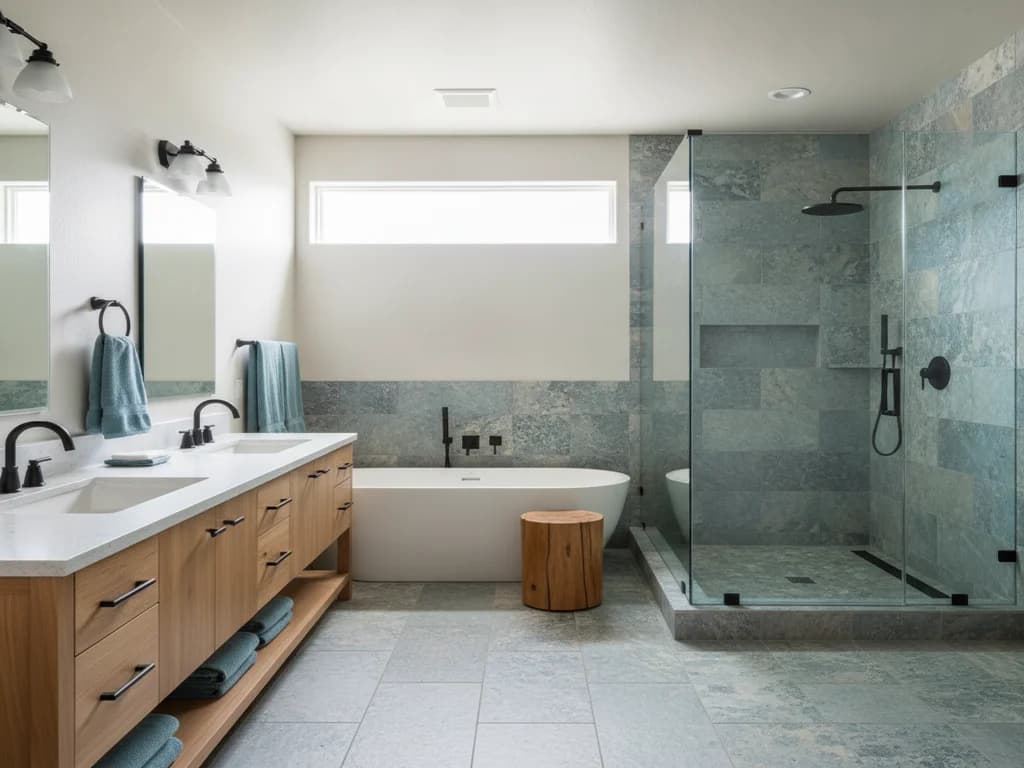
The plumbing heart of a his-and-hers shower is two independent thermostatic or pressure-balancing valves — one per head. Each person sets and holds their own temperature, and a thermostatic valve keeps that setting steady even when the other valve or a nearby fixture draws water. It is the difference between two people sharing a shower and two people fighting over one.
Fixture makers like Kohler and Moen build valve and trim systems specifically for multi-outlet showers, and matching the two trims gives the wall a deliberate, symmetrical look. If you want a shared rainfall in the center plus two personal handhelds or wall heads, that is three outlets and its own valving plan — worth deciding early, because it changes the rough-in.
The one non-negotiable behind the wall is capacity. Two heads running at once can call for 4 to 5 gallons per minute combined, so both the water heater and the supply lines have to be sized for simultaneous demand. A tankless unit or a larger tank is often part of the his-and-hers conversation, not an afterthought to it.
Layouts that suit a shared shower
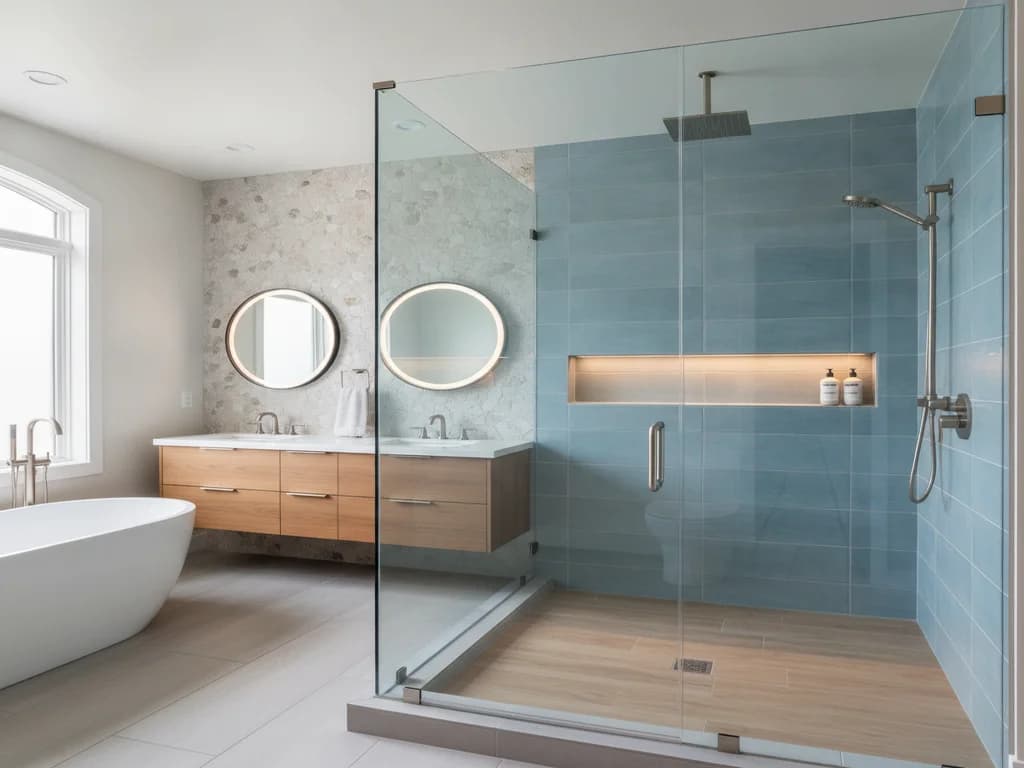
Because a two-person shower is wide, it pairs naturally with open, low-door layouts. A doorless walk-in — a wide tiled opening with a fixed glass panel or two — fits the footprint without a hinged door fighting the width, and it keeps sight lines open so the big shower reads as part of the room. The general case for these enclosures is in walk-in shower ideas.
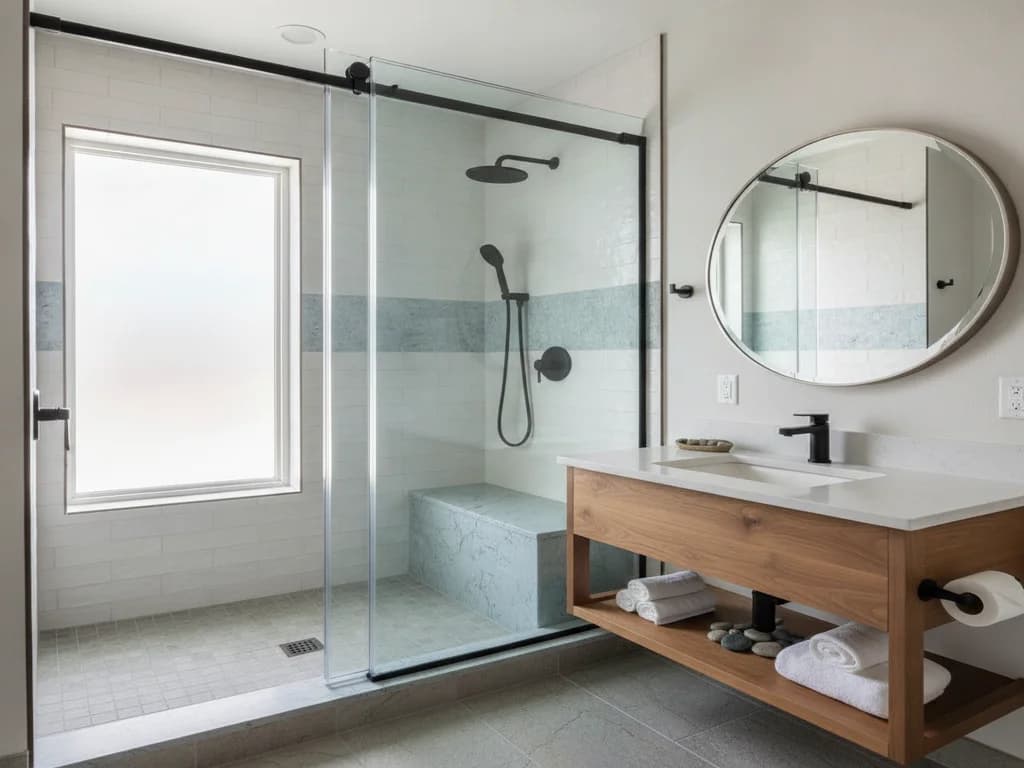
A dual-entry design puts an opening at each end, which suits a long shared shower and lets two people come and go without crossing. A center or full-width bench gives both people a place to sit, shave, or set things down, and it visually anchors the space between the two zones. Twin niches — one on each person’s wall — keep everyone’s bottles within reach and avoid the shared-shelf shuffle.
Curbless or low-threshold detailing is easier to execute in a large new shower than to retrofit later, and it reinforces the open, spa-like feel a his-and-hers is going for. The one caution: more glass and more width mean more surface to keep clear of hard-water spotting, which in the Treasure Valley is worth planning around with quality glass coatings and a squeegee habit.
Spa touches worth building in
Once the room is this size, small upgrades pay off. A shared central rainfall head above the bench gives both people a luxury moment while their personal heads handle everyday washing. A handheld on a slide bar at each station covers rinsing, cleaning, and different heights without buying more fixed heads.
Layered lighting — a damp-rated recessed light per zone plus a warm accent over the bench — turns the shower into the room’s focal point rather than a bright box. Body sprays and steam are the top of the range: both are real amenities, both add plumbing and, for steam, a sealed enclosure and generator, so they belong in the plan from the start.
None of these features rescue an undersized shower — they reward a properly sized one. The order of operations for a his-and-hers is always size first, dual controls second, then the spa layer. Where a shared shower is part of a full primary-suite reset, the ideas connect back to master bathroom ideas.
Ready to plan your Boise bathroom?
Licensed & insured · 3-year workmanship warranty
Frequently asked questions
- What is a his and hers shower?
- It is a shower designed for two people to use at once, with two showerheads on two separate control valves so each person sets their own temperature and spray independently. Most also add features that support shared use — a bench, twin niches, and often a second entry or a wide doorless opening — inside a footprint large enough for two adults.
- How big does a his and hers shower need to be?
- About 48 by 60 inches (4 by 5 feet) is a practical minimum for two people to shower without constant contact, and 60 by 72 inches feels genuinely generous. The IRC minimum interior for any shower is just 30 by 30 inches, but that is sized for one person — a real two-person shower needs roughly double the floor area of a standard single.
- Do you need two separate valves for a his and hers shower?
- For a true his-and-hers, yes. Two independent valves let each person set and hold their own temperature; a single valve feeding two heads means any adjustment changes the water for both. Thermostatic valves are ideal because they keep each setting steady even when the other outlet or a nearby fixture draws water.
- Can two showerheads run at the same time?
- Yes, but the water heater and supply lines have to be sized for it. Two heads running together can demand 4 to 5 gallons per minute combined, roughly double a single shower. If your current water heater struggles with simultaneous fixtures, a larger tank or a tankless unit is usually part of planning a two-person shower.
- Where should the showerheads go in a two-person shower?
- Place them on opposite or perpendicular walls, not side by side, so each person gets a separate spray zone that does not overlap the other. Keep both heads clear of the door or opening so no one steps into spray on the way in or out. A shared rainfall head over a center bench can supplement the two personal heads.
Sources
Claims and figures are drawn from the sources above and provided for general guidance; your project may vary. Photography is illustrative of design concepts. For a fixed price on your specific bathroom, request a free estimate.