Updated July 6, 2026 · 8 min read
By Boise Bath — bathroom & shower remodeling in Boise & the Treasure Valley
The short answer
An alcove shower uses a standard three-wall recess (often an existing tub's footprint), reuses plumbing easily, and Fixr prices it near $8,000 installed. A corner shower fits two walls with a neo-angle or curved pan, frees more floor space, and runs closer to $4,000 for a prefab unit — though custom-cut glass can cost more than a standard alcove panel.
Key takeaways
- Fixr prices a typical alcove shower installation at about $8,000 and a prefab corner shower at about $4,000 — but that corner figure assumes a ready-made neo-angle unit, not a fully custom tile build.
- This Old House describes the alcove as "typically the most straightforward and cost-effective" layout because it reuses existing framing and plumbing — usually the old tub's footprint.
- A corner shower has two open sides needing glass instead of one, and This Old House notes corner layouts "may require custom glass panels and more precise framing," which is exactly the kind of custom cut This Old House's glass-cost data prices at $1,300–$2,500+ over a standard size.
- Corner and neo-angle layouts reclaim more center-of-room floor space, which is why they show up repeatedly as the small-bathroom pick, while an alcove is the natural choice when you are converting an existing tub in place.
- Neither layout is more "correct" — the existing footprint in your bathroom, and whether you are reusing a tub alcove or carving a shower out of an open corner, should drive the choice more than either one's reputation.
The core trade-off, up front
Alcove and corner showers both solve the same problem — a walk-in shower that does not need a full glass box on every side — but they use your bathroom's walls differently. An alcove tucks into three walls, the same footprint a standard tub already occupies, which is exactly why it is the default swap in a tub-to-shower conversion. A corner shower uses only two walls and closes off the other two sides with an angled (neo-angle) or curved glass front, which frees up more of the room's center floor.
That one structural difference — three walls versus two — is what drives almost everything else in this comparison: cost, how much glass you need, and which bathroom shape each one actually fits.
Quick take
Converting an existing tub in place? An alcove shower is almost always the simpler, more affordable path. Working with an open corner and no tub to reuse, or trying to free up center floor space in a tight bathroom? A corner or neo-angle layout is usually the better fit.
Quick comparison
The factors that actually decide this for most Boise bathrooms.
| Factor | Alcove | Corner |
|---|---|---|
| Walls used | Three | Two, with an angled or curved front |
| Typical installed cost | ~$8,000 (Fixr) | ~$4,000 for a prefab unit (Fixr) |
| Open sides needing glass | One | Two |
| Plumbing | Usually reuses an existing tub's drain and supply lines | Often needs new drain placement in the corner |
| Best reuse case | Converting an existing tub alcove | Building into an unused room corner |
| Space it frees up | Modest — same footprint as the old tub | More — opens the center of a small bathroom |
Footprint: what each layout actually asks of your bathroom
An alcove shower is built into a standard three-walled recess — This Old House describes this as the classic bathtub footprint, "installed against the framing before the wall finish gets placed around" it. That is exactly why alcove is the default when converting an existing tub: the walls, drain, and supply lines are usually already in the right place, and the conversion can reuse all three.
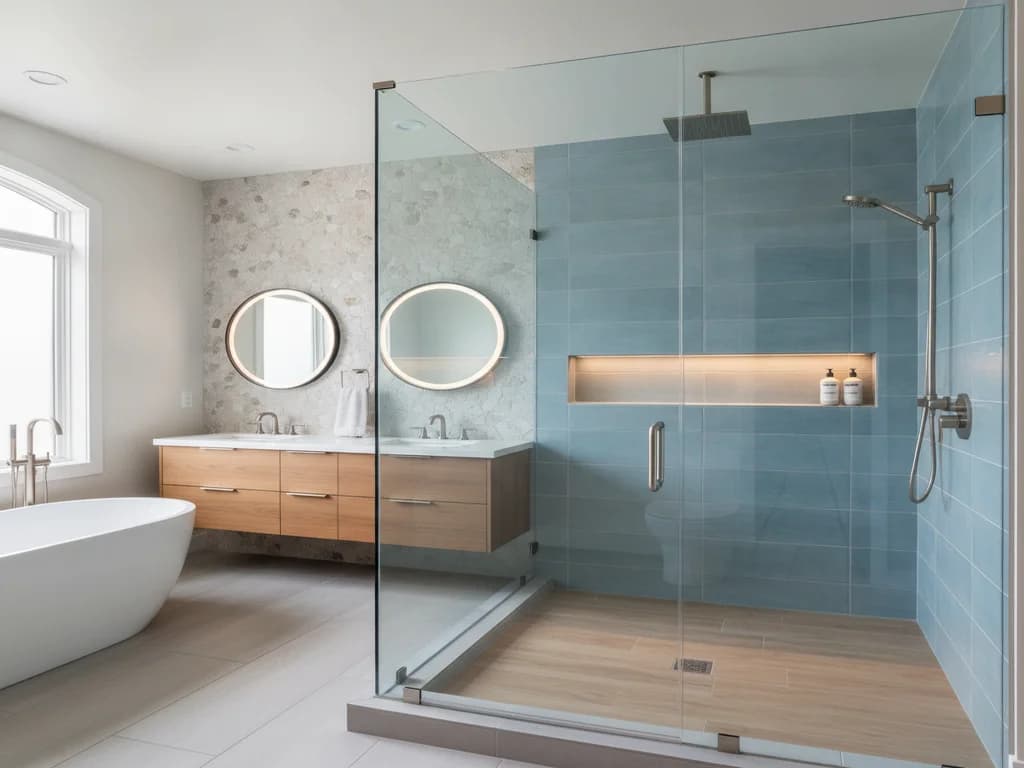
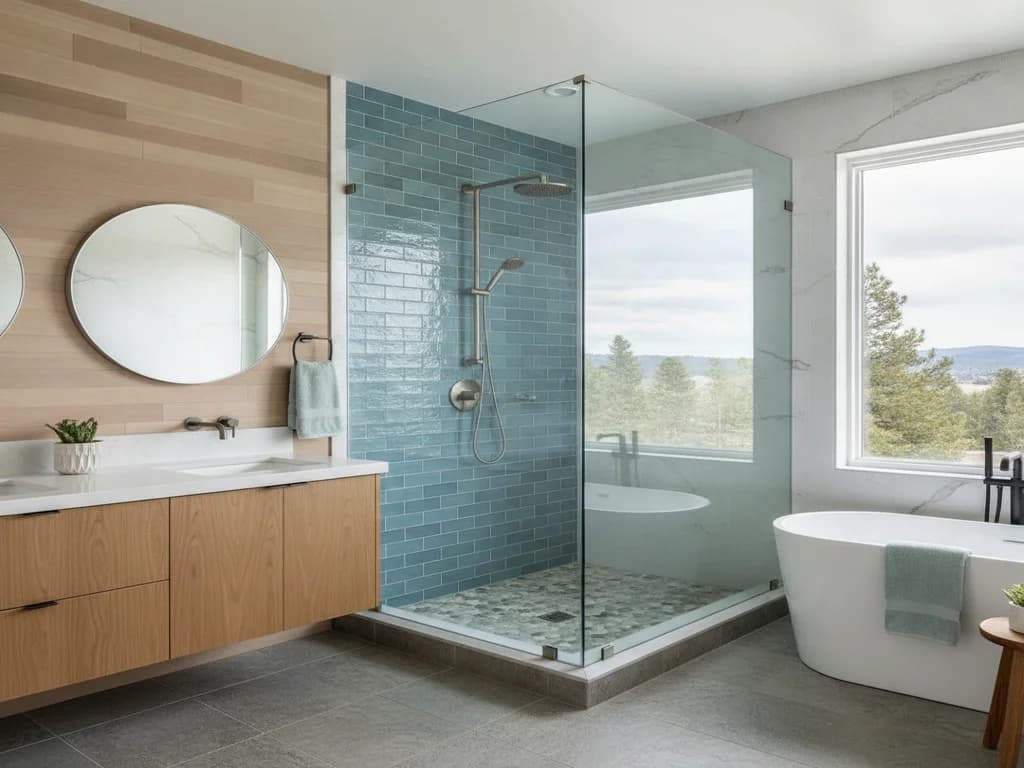
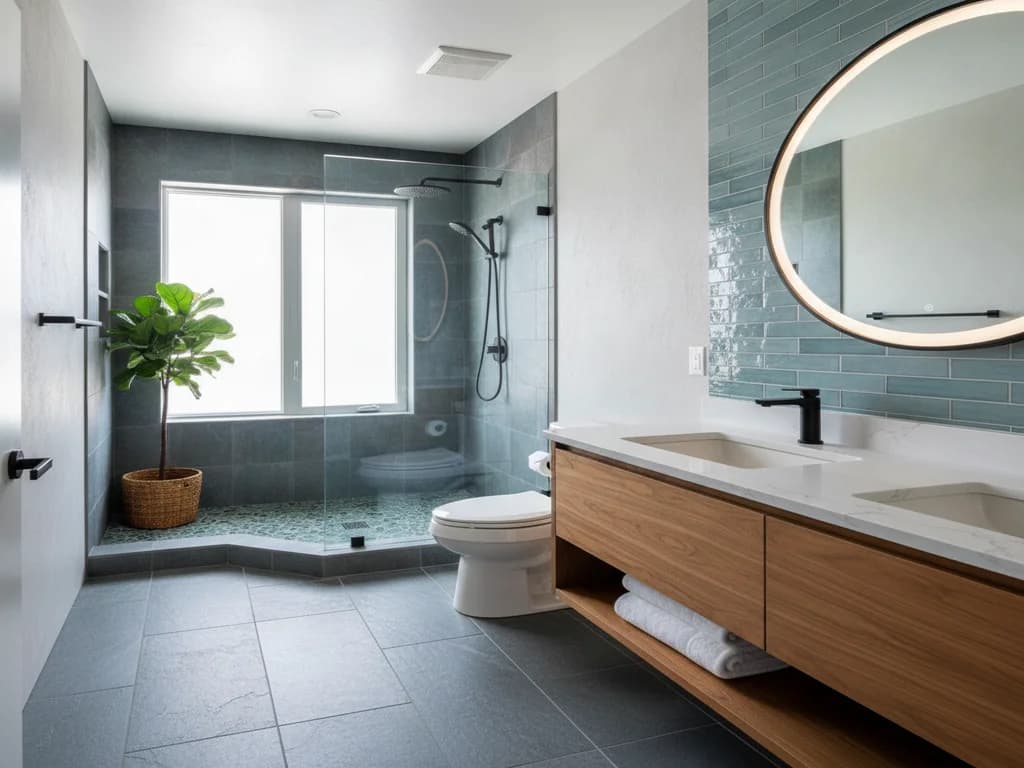
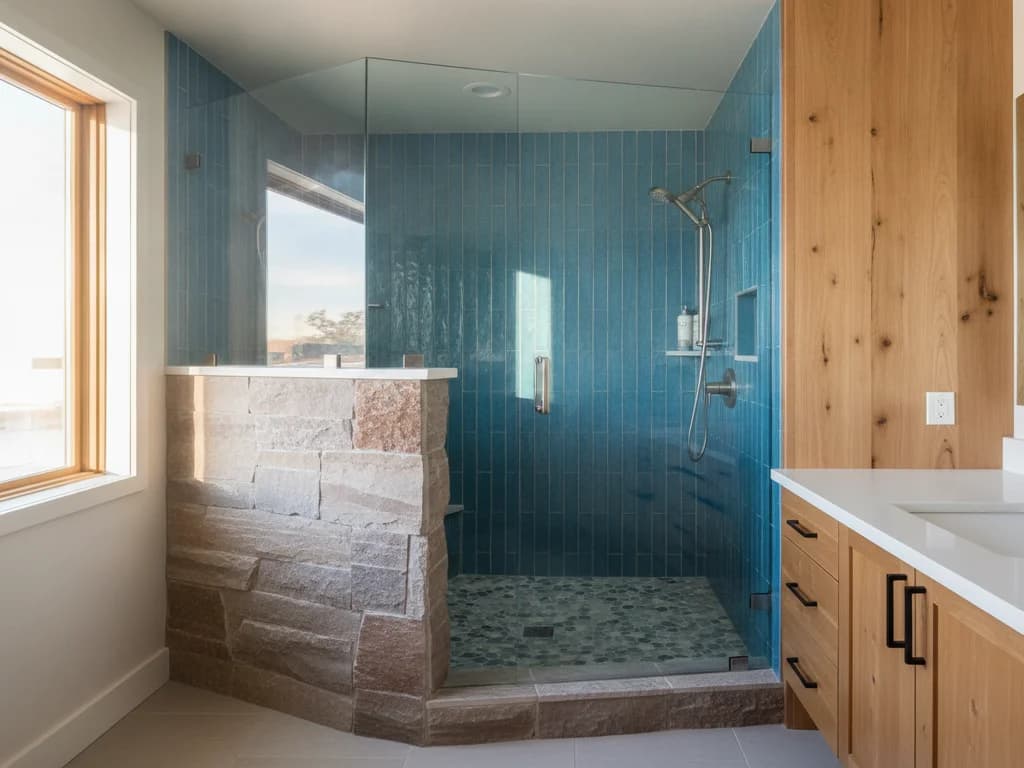
A corner shower gives up one of those three walls in exchange for reclaiming the room's center. This Old House notes a corner layout "fits into a bathroom corner with two glass sides," using a neo-angle pan that cuts across at 45 degrees, or a curved pan, to close off the two open sides. That shape is what makes corner showers a favorite in small or awkwardly laid-out bathrooms — see our walk-in shower ideas for how designers use that reclaimed space.
Cost: why the numbers aren't close
Fixr prices a typical alcove shower installation at about $8,000, and a prefabricated corner shower — a ready-made neo-angle or curved unit with a door — at about $4,000. That gap partly reflects size (corner units are often smaller) and partly reflects that a prefab corner kit skips much of the custom glass and tile work an alcove conversion, done properly, usually includes.
That $4,000 corner figure is specifically for a prefabricated unit. A fully custom, tiled corner shower with frameless glass is a different project entirely, and prices out much closer to — or above — an alcove conversion once you add the glass and tile factors below.
Glass: the cost driver that separates the two
This is the factor that most often surprises homeowners comparing quotes. An alcove shower needs glass on only one open side — a single fixed panel and door. A corner shower needs glass on two open sides, plus the angled or curved cut where those two panels meet, which This Old House's shower-glass cost data prices as a custom design at $1,300–$2,500+ in materials alone, well above a standard-size opening.
Our frameless shower glass cost factors guide goes deep on why custom cuts move the number — in short, any glass shape that is not a standard rectangle has to be field-measured and cut to fit precisely, which is exactly what a neo-angle or curved corner front requires and a standard alcove panel does not.
Ask this before you compare quotes
If two bids for a "corner shower" come back far apart, ask whether one assumes a standard-size prefab neo-angle unit and the other a custom-cut frameless enclosure. That distinction, more than the layout itself, is usually what is driving the gap.
Which bathroom actually fits which layout?
Choose alcove if you are converting an existing tub and want to reuse its plumbing and footprint with the least disruption — This Old House calls this the "most straightforward and cost-effective" of the two for exactly that reason. It is also the more forgiving choice in a standard-shaped bathroom where a tub already anchors one wall.
Choose corner if your bathroom does not have a tub alcove to reuse, or if freeing up center floor space is the priority — a corner or neo-angle shower is a repeat pick in tight bathrooms precisely because it uses the least-useful part of the room (a corner) rather than a full wall. It is also worth planning for the custom glass cost above rather than assuming a prefab number applies to a tiled, frameless version.
The bottom line
Start from what your bathroom already has: an existing tub alcove points toward an alcove conversion, and an open corner with no tub to reuse points toward a corner layout. From there, the real cost question is not "alcove or corner" so much as "prefab or custom" — and the glass is where that distinction shows up most in the final number.
A custom walk-in shower build is where we help you weigh your bathroom's actual footprint against both layouts, rather than picking one before seeing the room.
Ready to plan your Boise bathroom?
Licensed & insured · 3-year workmanship warranty
Frequently asked questions
- What is the difference between an alcove shower and a corner shower?
- An alcove shower is built into a standard three-walled recess — usually an existing tub's footprint — with glass needed on only one open side. A corner shower uses two walls and an angled (neo-angle) or curved glass front to close off the other two sides, which frees up more center floor space but needs glass on two sides instead of one.
- Is an alcove shower or a corner shower cheaper?
- Fixr prices a typical alcove shower installation at about $8,000 versus about $4,000 for a prefabricated corner unit. But that corner figure assumes a ready-made neo-angle kit — a fully custom, tiled corner shower with frameless glass costs meaningfully more once the custom-cut glass is factored in.
- Which shower layout is better for a small bathroom?
- Corner and neo-angle layouts are usually the better fit for small bathrooms because they use two walls instead of three, freeing up the center of the room. An alcove shower makes more sense when you are converting an existing tub and want to reuse its footprint and plumbing with the least disruption.
Sources
- Fixr — How Much Does It Cost to Install a Walk-In Shower?
- This Old House — How Much Does a Walk-In Shower Cost? (2026)
- This Old House — Shower Glass Door Installation Cost (2026)
- This Old House — Bathtub Buying Guide: Types & Materials
Claims and figures are drawn from the sources above and provided for general guidance; your project may vary. Photography is illustrative of design concepts. For a fixed price on your specific bathroom, request a free estimate.