Updated July 6, 2026 · 8 min read
By Boise Bath — bathroom & shower remodeling in Boise & the Treasure Valley
The short answer
The best bathroom mirror choice starts with scale and light, not style: keep the mirror a few inches narrower than your vanity, choose backlit or frontlit LED if your fixture lighting is weak, and pick round or oval to soften a room full of hard angles — or rectangular for the biggest usable viewing area.
Key takeaways
- Size first: Bob Vila's sizing guidance puts a bathroom mirror's width "a few inches less than the width of your sink" — for a 36-inch vanity, that lands around a 32- to 34-inch mirror.
- Framed mirrors suit traditional or farmhouse bathrooms, and a deep, shadow-box-style frame can double as a small display shelf; frameless mirrors mount flush against the wall for a cleaner, more contemporary look.
- Backlit or frontlit-and-backlit LED mirrors solve uneven vanity lighting directly, and most offer adjustable warm-white, neutral-white, and daylight settings for tasks like makeup application.
- Round and oval mirrors suit small bathrooms and soften a room full of hard angles, while rectangular mirrors — or multiple mirrors side by side — give the largest usable viewing area over a double vanity.
- A medicine cabinet folds storage behind the mirror itself, which Bob Vila calls "an excellent option for making compact bathrooms more space efficient."
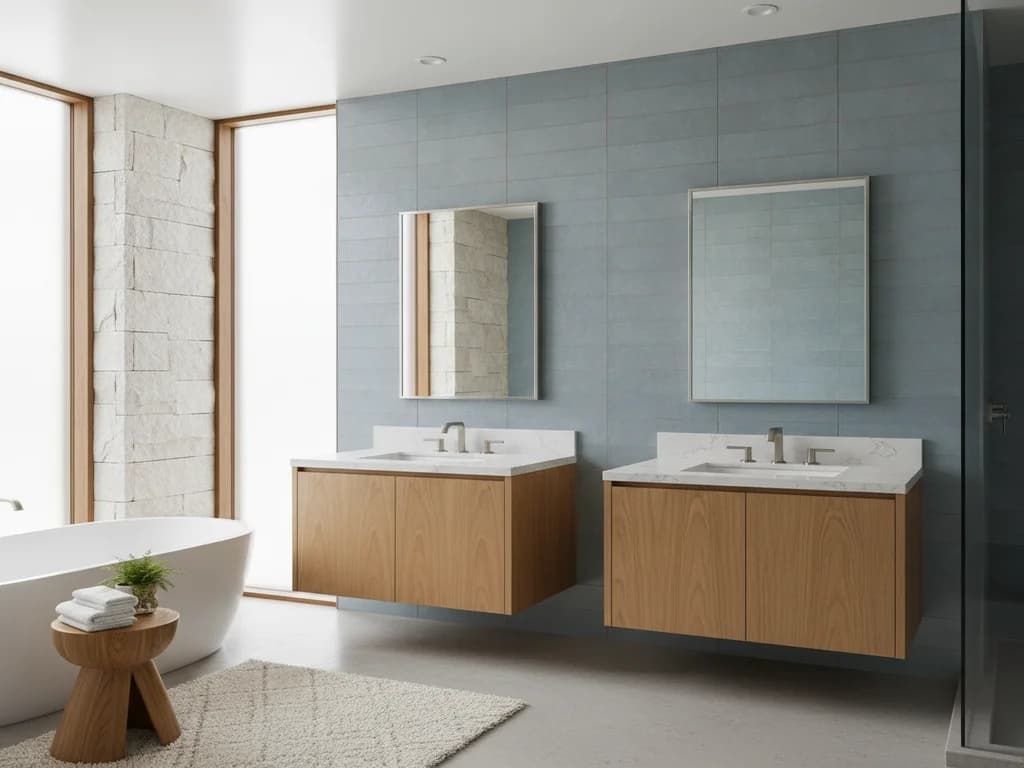
What actually decides whether a bathroom mirror looks right?
A bathroom mirror is one of the few fixtures in the room you look directly at every day, and it's also one of the easiest to get wrong on scale alone. Style — framed or frameless, round or rectangular — matters, but Bob Vila's guidance is clear that the size relative to the vanity below it is what most decides whether a mirror reads as intentional or like an afterthought pulled off a shelf. A mirror that's too wide crowds the sconces on either side; one that's too narrow leaves an awkward gap of bare tile or paint above the counter.
The ideas below are grouped the way the decision actually unfolds: how big it should be, framed vs. frameless, whether it should light up, which shape fits your room, and whether a medicine cabinet solves a storage problem the mirror alone can't. None of these decisions happen in isolation — a backlit mirror, for example, still has to be sized and shaped the same way an unlit one does, which is why sizing comes first below rather than last.
How to use this list
Get the size right before anything else — a mirror that's the wrong width for its vanity will look off no matter how good the frame or the lighting is. Shape and lighting are the decisions worth spending real time on after that.
Quick comparison
This table summarizes where each mirror type lands across the factors homeowners weigh most.
| Type | Best for | Trade-off |
|---|---|---|
| Framed | Traditional or farmhouse bathrooms; a deep frame can double as a shelf | Adds visual weight and usually costs more than a comparable frameless mirror |
| Frameless | Modern, minimalist rooms; simple adhesive-mount installs | No built-in storage and exposed glass edges |
| Backlit / lighted | Vanities with weak or single-source overhead lighting | Costs more and needs nearby wiring or an outlet |
| Round / oval | Small bathrooms; softening a room full of hard angles | Smaller usable viewing area for its footprint |
| Rectangular | Double vanities; the largest usable viewing area | Reads more traditional unless mounted frameless |
| Medicine cabinet | Compact bathrooms that need the storage more than the style | Recessed installs need wall depth and a plumbing/stud check |
How big should your bathroom mirror actually be?
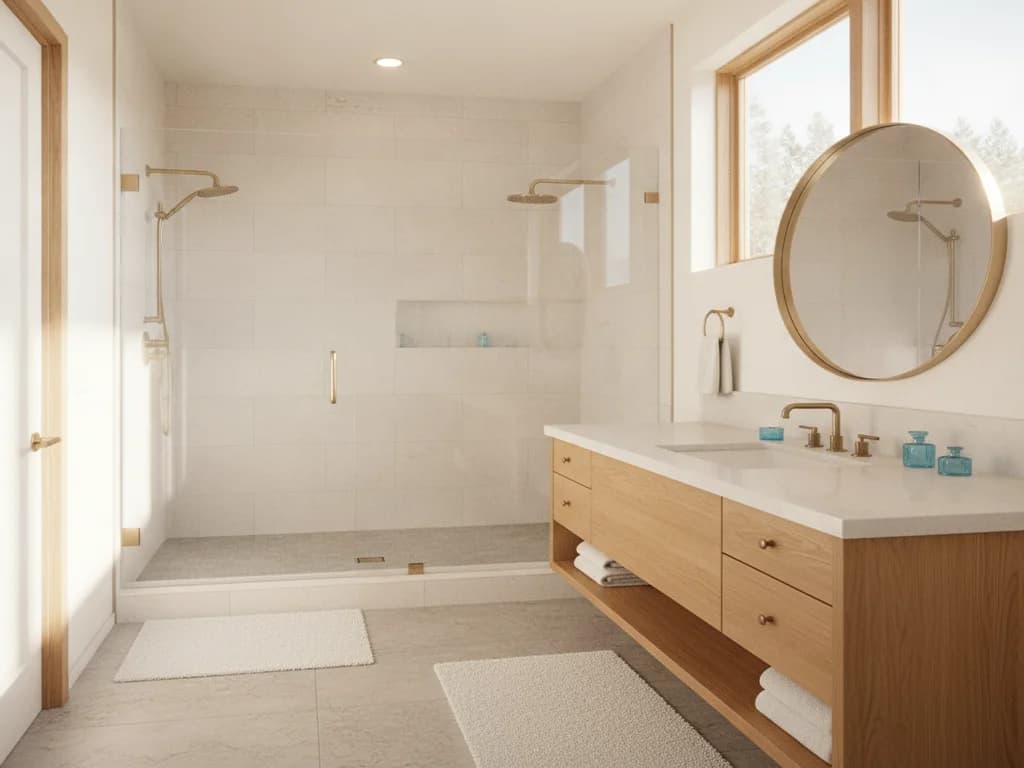
1. Size the mirror to the vanity, not the wall. Bob Vila's sizing guidance is specific: "the width of your mirror should be a few inches less than the width of your sink. For example, the mirror for a 36-inch vanity should be between 32 and 34 inches." A separate Bob Vila roundup lands on a similar rule — 4 to 6 inches narrower than the vanity — which is the range worth designing around regardless of which mirror style you pick.
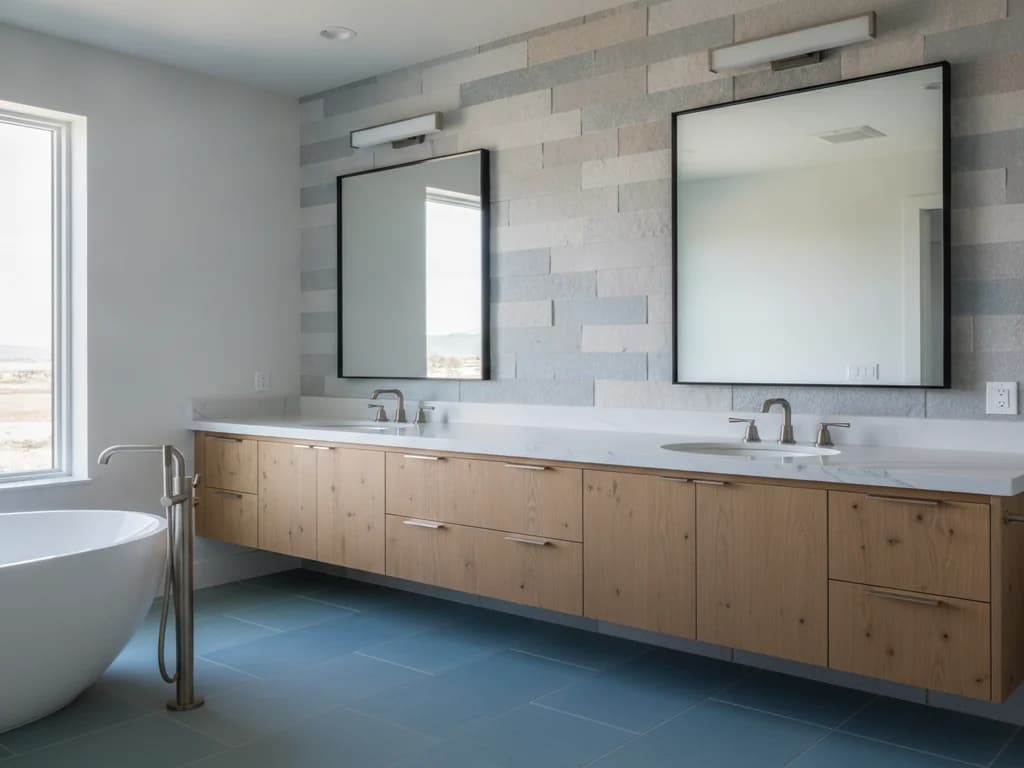
2. Let the mirror change how tall or wide the room feels. Bob Vila notes that "multiple vertically oriented mirrors will emphasize the height of your bathroom and possibly make it look taller, whereas a larger, single mirror will make the bathroom appear to be generally larger and brighter" — a useful lever in a bathroom with a low ceiling or a narrow footprint. 3. Over a double vanity, split the difference rather than guessing. Two mirrors sized to their own sink, with a few inches of wall visible between them, generally reads better than one oversized mirror stretched across both sinks — it keeps each person's reflection centered over their own faucet instead of off to one side.
Best for: every mirror choice below — nail the width-to-vanity ratio first, then layer in style, lighting, and shape.
Framed or frameless — which fits your room?
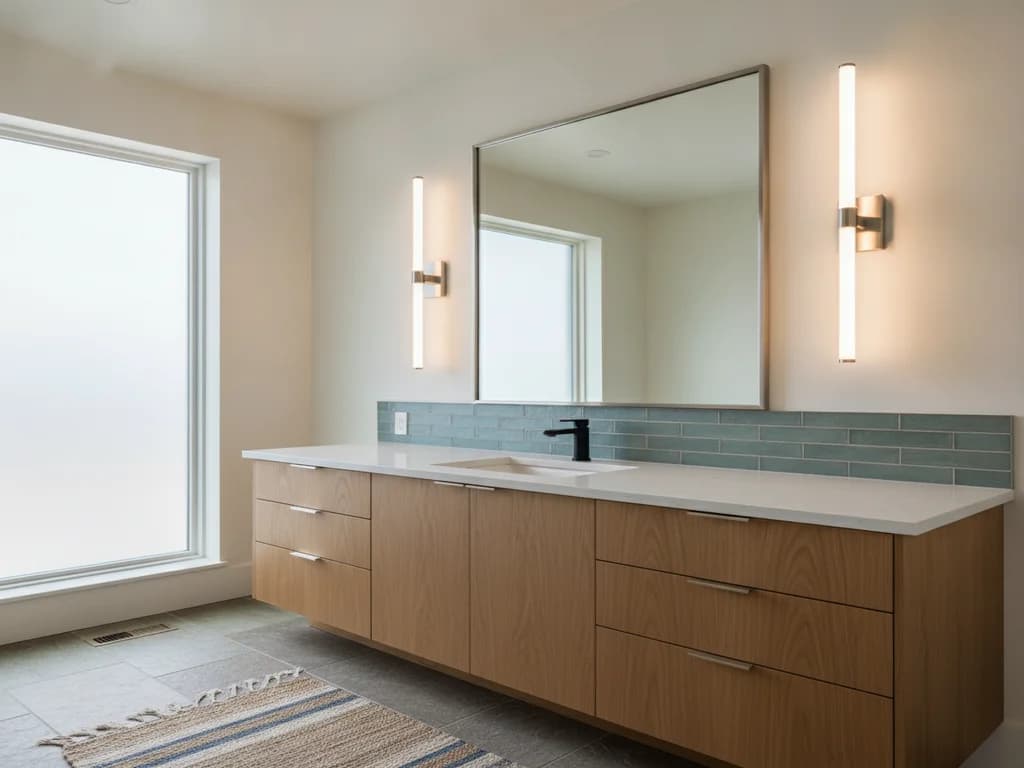
4. A frameless mirror mounts flush against the wall for the cleanest, most contemporary look. Bob Vila's guidance describes this approach plainly: "use frameless mirrors, large or small, like tiles, and stick them to the wall with mounting adhesive" — a detail that also makes multi-mirror layouts over a double vanity straightforward to install evenly. 5. A framed mirror suits a more traditional, eclectic, or farmhouse-leaning bathroom, and a deep enough frame does double duty: Bob Vila describes a "shadow box-inspired frame" whose depth becomes "a little bonus shelf" for small items near the sink.
Best for: frameless in a modern or minimalist bathroom where you want the mirror to disappear into the wall; framed where the bathroom already leans traditional and the frame can add both style and a usable ledge.
Should your mirror light up?
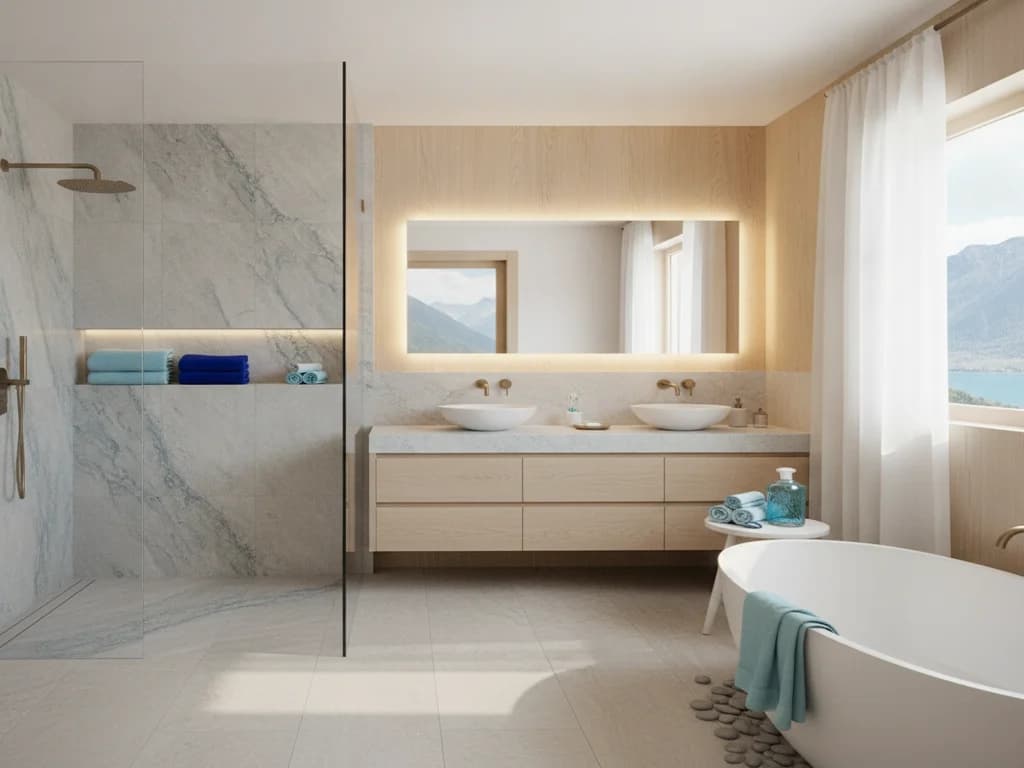
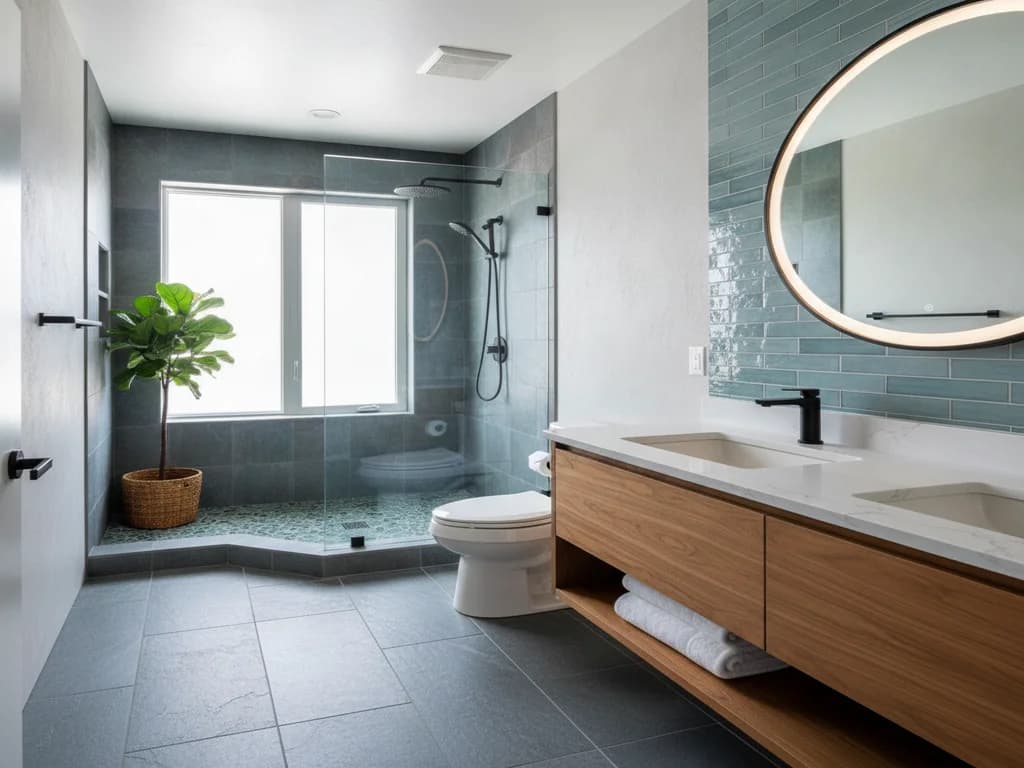
6. A backlit or frontlit-and-backlit LED mirror solves a problem that no amount of styling can fix on its own: uneven light from a single overhead fixture. Bob Vila makes the case directly — these mirrors "illuminate your entire face with clear, even light — no more shadows" — and most current models let you dial the color temperature between warm white, neutral white, and daylight settings depending on the task, with dimming down to roughly 20 percent of full brightness. 7. A standard, unlit mirror still works well anywhere the room already has good, evenly placed sconce or vanity-bar lighting on either side.
Best for: a backlit mirror wherever the vanity relies on a single overhead light or a fan-light combo; a standard mirror wherever properly placed sconces already do that job.
Round, oval, or rectangular — how does shape change the room?
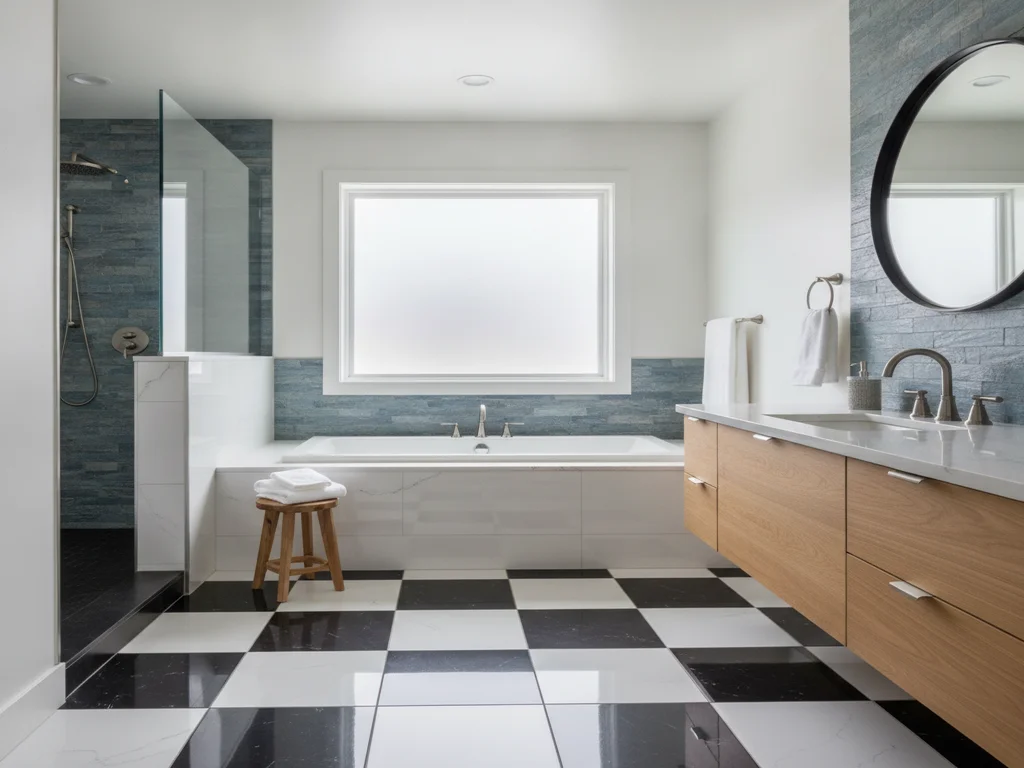
8. A round or oval mirror tends to suit a smaller bathroom with limited wall space, and Bob Vila notes that round and oval shapes "complement the soft edges of your existing bathroom fixtures or offer a dynamic contrast to a bathroom with hard angles" — useful whether your vanity and tile are all straight lines or already curved. The trade-off is viewing area: a round mirror generally offers less usable reflective surface than a rectangular one of a similar width. 9. A rectangular or long, narrow mirror gives the largest usable viewing area for its footprint, and a narrow vertical version does double duty in a small bathroom — Bob Vila notes it "creates a long, vertical line, making the ceilings appear higher." 10. Two round or oval mirrors side by side is the shape of choice over most double vanities, giving each person their own reflection without one oversized mirror dominating the wall.
Best for: round or oval in a small or angular bathroom, or as a pair over a double vanity; rectangular where maximum viewing area matters most, such as a single mirror spanning a long vanity counter.
Should you skip the mirror altogether and go with a medicine cabinet?
11. A recessed medicine cabinet solves two problems in the same footprint. Bob Vila's take: "cabinet mirrors combine two functions in one: personal viewing and bathroom storage. This is an excellent option for making compact bathrooms more space efficient." A recessed install needs enough wall depth and a stud/plumbing check before cutting in, so it's worth confirming with your contractor early rather than after tile and drywall are finished. 12. A surface-mounted medicine cabinet skips the wall-cutting question entirely and can still pair with backlighting, at the cost of a few inches of visual depth in front of the wall.
Best for: a recessed medicine cabinet in any compact bathroom that's short on storage; a surface-mounted version wherever cutting into the wall isn't practical, such as a shared plumbing wall. Either version can still follow the same width-to-vanity sizing rule above — a medicine cabinet is a mirror with storage behind it, not an exception to the scale guidance.
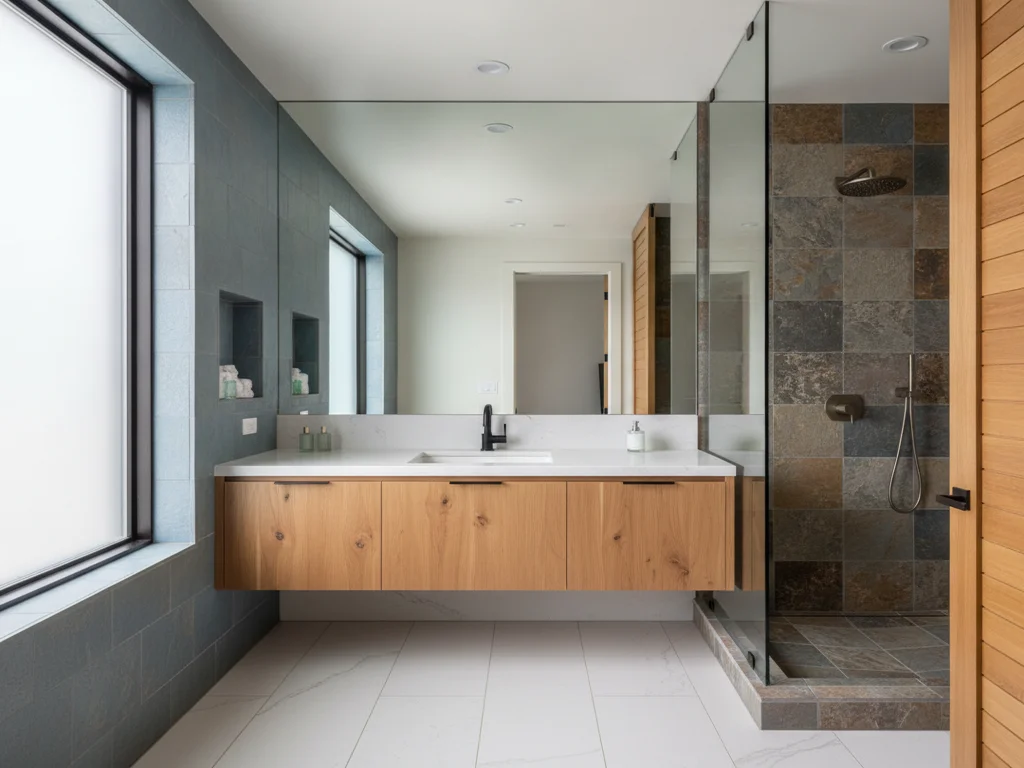
How does your mirror fit into the rest of the vanity wall?
A mirror is rarely the first decision in a bathroom remodel — it's usually the last piece placed against a vanity and a lighting plan that are already mostly settled. If you haven't nailed down the vanity itself yet, see our bathroom vanity ideas for cabinet styles and counter materials that a mirror needs to sit comfortably above. And since a mirror and its lighting are really one decision, our bathroom lighting ideas roundup covers sconce placement, vanity bars, and how much light a vanity actually needs before you decide whether backlighting is worth the extra cost.
How do these ideas come together?
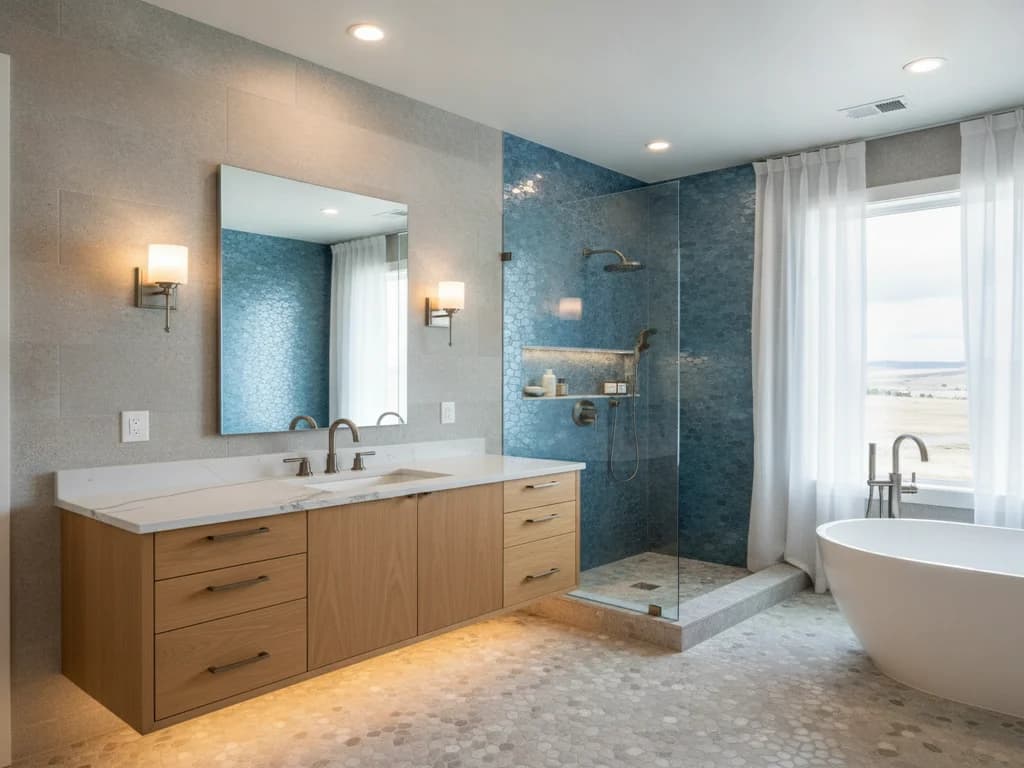
Clean and contemporary: a single large frameless mirror sized 4 to 6 inches narrower than the vanity, paired with sconces on either side.
Traditional and functional: a framed mirror with a shelf-depth frame, sized to the vanity, in a room with warmer finishes.
Solving a lighting problem: a backlit LED mirror over a vanity that only ever had one overhead fixture.
Small and space-tight: a recessed medicine cabinet doing double duty as both mirror and storage.
A full bathroom remodel is where the vanity, lighting, and mirror get planned together instead of the mirror being an afterthought bought after everything else is installed.
Ready to plan your Boise bathroom?
Licensed & insured · 3-year workmanship warranty
Frequently asked questions
- What size mirror should I get for my bathroom vanity?
- Keep it a few inches narrower than the vanity itself. Bob Vila's rule of thumb puts a bathroom mirror's width "a few inches less than the width of your sink" — for a 36-inch vanity, that's roughly a 32- to 34-inch mirror — so it doesn't visually overwhelm the counter below it.
- Is a frameless or framed mirror better for a bathroom?
- Neither is objectively better — they suit different looks. A frameless mirror mounts flush against the wall for a clean, minimalist, contemporary feel, while a framed mirror, especially with a deep, shadow-box-style frame, suits a more traditional or farmhouse bathroom and can double as a small display shelf.
- Are backlit mirrors worth it in a bathroom?
- For vanities with weak or single-source overhead lighting, yes. A backlit or frontlit-and-backlit LED mirror lights your face evenly from multiple angles instead of casting shadows from above, and most let you adjust between warm, neutral, and daylight color temperatures for tasks like makeup application.
Sources
Claims and figures are drawn from the sources above and provided for general guidance; your project may vary. Photography is illustrative of design concepts. For a fixed price on your specific bathroom, request a free estimate.