Updated August 28, 2026 · 8 min read
By Boise Bath — bathroom & shower remodeling in Boise & the Treasure Valley
The short answer
Funding for accessible bathroom modifications generally comes from four places: U.S. Department of Veterans Affairs housing grants for eligible veterans, Medicaid home and community based services programs administered by the state, Area Agencies on Aging reachable through the Eldercare Locator, and nonprofit or local programs. Eligibility rules are specific and determined by each agency, not by a contractor.
Key takeaways
- The VA offers disability housing grants that can fund adapting a home for a service-connected disability — eligibility and amounts are determined by the VA.
- Medicaid home and community based services programs can cover environmental adaptations in some circumstances, but these are administered state by state with their own rules and waiting lists.
- In Idaho, Medicaid and related long-term care programs run through the Idaho Department of Health and Welfare.
- Area Agencies on Aging serve every part of the country and are the single best first phone call — they know local programs no national list captures.
- The Eldercare Locator, run by the federal Administration for Community Living, connects you to your local Area Agency on Aging.
- The Idaho Commission on Aging is the state-level agency coordinating those services in Idaho.
- Nonprofits such as Rebuilding Together operate home-repair and accessibility programs in some communities, typically income-qualified.
- A contractor cannot determine eligibility for any of these — verify with the agency directly before making financial plans around an expected benefit.
Start with the honest caveat
This page is a map of where to look, not a determination of what you qualify for. Every program below sets its own eligibility rules, and those rules change. No contractor — including us — can tell you whether you will be approved for a benefit, and you should be cautious of anyone who implies otherwise.
The practical approach is to identify which programs might apply, contact those agencies directly, and get an answer in writing before committing to a project scope that depends on funding you do not yet have.
Verify before you plan around it
Approval timelines for these programs are frequently measured in months, and some have waiting lists. If a modification is urgent, plan on the assumption that funding may arrive after the work is needed rather than before.
Veterans: VA housing grants
The U.S. Department of Veterans Affairs administers disability housing grants that help veterans and service members with certain service-connected disabilities buy or change a home to meet their needs. Bathroom modifications — roll-in showers, widened doorways, accessible fixtures — are squarely the kind of adaptation these grants exist for.
The VA runs more than one grant program, with different eligibility criteria and different amounts, and the qualifying conditions are specific to the nature of the service-connected disability. That determination is the VA’s to make.
Start at the VA’s housing assistance pages, and if a veteran is already working with a VA care team or a benefits representative, that is the fastest route to a straight answer. Amounts and rules are periodically updated, so current figures should come from the VA rather than from a third party.
Medicaid home and community based services
Medicaid programs in many states can cover what is often called environmental accessibility adaptation — physical changes to a home that let someone remain living there rather than moving into a facility. Bathroom modifications are a common category, because bathing and toileting are frequently the first activities that become unsafe.
Two things make this harder to describe than it should be. First, these programs are administered state by state, so coverage, eligibility, and the application process differ meaningfully depending on where you live. Second, many operate under waiver programs with enrollment caps and waiting lists, which means eligibility and availability are separate questions.
In Idaho, Medicaid and long-term care services are administered through the Idaho Department of Health and Welfare, which is the correct starting point for questions about what is covered and who qualifies. If someone is already receiving Medicaid long-term care services, their case manager is usually the fastest path to an answer.
The phone call most people skip
If you do only one thing from this page, contact your Area Agency on Aging. These are regional organizations covering every part of the country, and they exist specifically to connect older adults and caregivers with local services.
The reason this matters more than a national list is that a great deal of assistance is local and unadvertised — county programs, municipal grants, community foundations, service clubs, faith-based groups, and short-lived funding tied to a particular grant cycle. No national directory captures them. The Area Agency on Aging staff know what exists in their region right now.
The federal Eldercare Locator, operated by the Administration for Community Living, is the tool that connects you to the right agency for your address. At the state level in Idaho, the Idaho Commission on Aging coordinates these services.
These conversations are free, and the people answering do this work daily. Homeowners routinely discover programs they had no way of knowing about.
Nonprofit and community programs
Several nonprofits operate home repair and accessibility programs, typically income-qualified and often focused on older adults, veterans, or people with disabilities. Rebuilding Together is among the better-known national organizations with local affiliates doing this work.
Availability is entirely dependent on whether an active affiliate or program serves your area, and capacity is usually limited relative to demand. That said, the application costs nothing but time, and for households where cost is the barrier to a safe bathroom, it is worth the call.
Local independent living centers are another underused resource. They frequently maintain current knowledge of regional funding and sometimes operate equipment loan programs — which can address an immediate need while a larger modification is being arranged.
What to do while you wait
Funding decisions take time, and safety needs often do not. It is worth separating the modifications that require a construction project from the ones that do not.
A properly anchored grab bar, improved lighting, a night light on the path to the bathroom, a handheld shower on a slide bar, and removing a sliding bath mat are all low-cost changes that address real risk immediately. None require waiting for an approval.
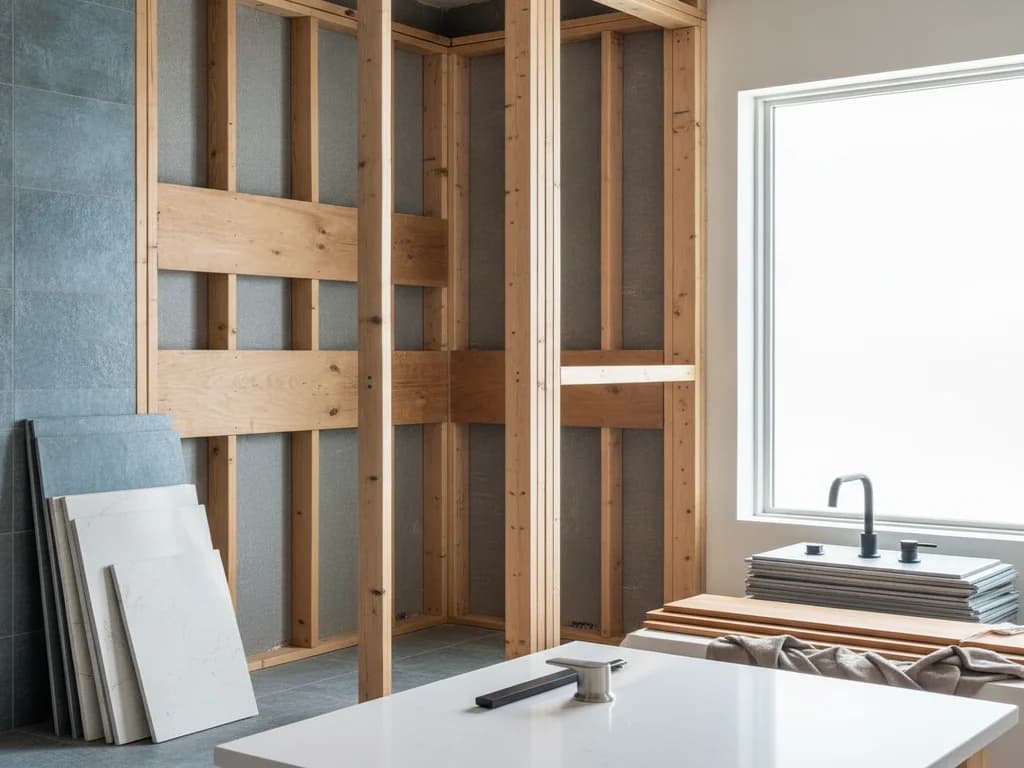
If a full remodel is planned regardless, one decision is worth making now: ask for blocking in the walls for future grab bars. It costs very little while walls are open and preserves the option to add support later — including support a funding program might eventually pay for.
What the process looks like
- 1
Call the Area Agency on Aging first
Use the Eldercare Locator to find yours. They know local programs no national directory captures, and the call is free.
- 2
Check the program-specific routes
For veterans, start with VA housing assistance. For Medicaid, contact the Idaho Department of Health and Welfare, or the case manager if long-term care services are already in place.
- 3
Get a written scope and estimate
Most programs require one as part of an application. A contractor can supply that — they cannot determine your eligibility.
- 4
Do the no-wait items now
Lighting, a night light, a properly anchored grab bar, and a handheld shower address real risk immediately and do not depend on an approval that may take months.
Ready to plan your Boise bathroom?
Licensed & insured · 3-year workmanship warranty
Frequently asked questions
- Does the VA pay for bathroom modifications?
- The VA administers disability housing grants that can help veterans and service members with certain service-connected disabilities adapt a home, and bathroom modifications are a typical use. There is more than one program with different criteria and amounts, and eligibility is determined by the VA. Start with the VA’s housing assistance pages or a benefits representative.
- Will Medicaid cover an accessible bathroom remodel?
- Sometimes, through home and community based services programs that cover environmental accessibility adaptations so someone can remain at home. These are administered state by state with different rules, and many operate under waivers with enrollment caps and waiting lists. In Idaho, start with the Idaho Department of Health and Welfare.
- What is an Area Agency on Aging and why call one?
- They are regional organizations covering the whole country that connect older adults and caregivers with local services. They are worth calling because much assistance is local and unadvertised — county programs, community foundations, service clubs — that no national list captures. Find yours through the Eldercare Locator.
- Can my contractor tell me if I qualify for assistance?
- No, and be cautious of any contractor who implies they can. Eligibility is determined by the administering agency, not by whoever does the work. A contractor can provide a scope and a written estimate, which agencies often require as part of an application — but the approval decision is never theirs.
- What can I do while waiting for a funding decision?
- Address the risks that do not require construction: a properly anchored grab bar, brighter lighting, a night light on the path to the bathroom, a handheld shower on a slide bar, and removing sliding bath mats. If a remodel is happening anyway, ask for wall blocking now so grab bars can be added later inexpensively.
Sources
- U.S. Department of Veterans Affairs — Disability Housing Grants
- Eldercare Locator — Administration for Community Living
- Administration for Community Living (ACL)
- Idaho Commission on Aging
- Idaho Department of Health and Welfare
- AARP — Livable Communities / HomeFit
Claims and figures are drawn from the sources above and provided for general guidance; your project may vary. Photography is illustrative of design concepts. For a fixed price on your specific bathroom, request a free estimate.