Updated August 28, 2026 · 8 min read
By Boise Bath — bathroom & shower remodeling in Boise & the Treasure Valley
The short answer
The changes that most reduce bathroom fall risk address transitions and support: eliminating the step over a tub wall, providing something structurally anchored to hold, improving traction underfoot, and raising light levels. The CDC identifies falls as the leading cause of injury among adults 65 and older, and bathrooms concentrate several contributing factors in one room.
Key takeaways
- The CDC reports that falls are the leading cause of injury and injury death among adults aged 65 and older.
- Bathrooms concentrate risk: wet smooth surfaces, hard fixtures, tight spaces to fall into, and tasks that require balancing on one foot.
- Stepping over a tub wall is the highest-risk routine action in most bathrooms — it demands single-leg balance on a wet surface while gripping something.
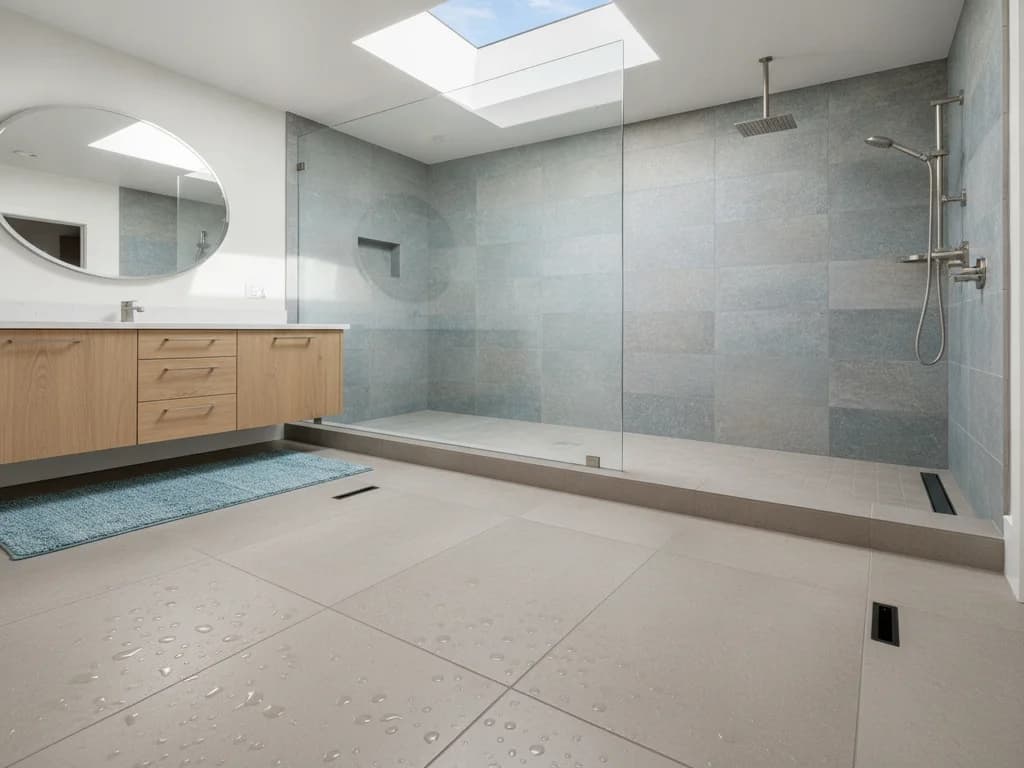
- Removing that step, via a curbless or low-threshold shower, addresses the risk directly rather than adding something to grab after balance is already lost.
- Grab bars work only when anchored to structure; the ADA standards require bars and fasteners to withstand a 250-pound force.
- Floor traction is a material property, not a coating — tile slip resistance is specified before purchase, and a small tile with more grout lines gives more texture underfoot.
- Lighting is the most underrated factor: aging eyes need substantially more light, and night-time trips to the bathroom are a common fall scenario.
- Bath mats with curling edges and towel bars used as handholds are two common features that increase risk rather than reduce it.
Why the bathroom specifically
The CDC identifies falls as the leading cause of injury and injury-related death among adults aged 65 and older. Bathrooms are not the only place falls happen, but they concentrate an unusual number of contributing factors into a very small room.
The surfaces are hard and often wet. The fixtures are unyielding — porcelain, tile, and the edge of a tub are among the least forgiving things in a house to strike. The room is small enough that there is rarely a clear path to fall into, so a stumble tends to end against something. And several routine tasks require standing on one leg, reaching, or turning while wet.
That combination is why bathroom modifications carry disproportionate value relative to their cost. The work is small, but it targets a concentrated risk.
The single highest-risk action in most bathrooms
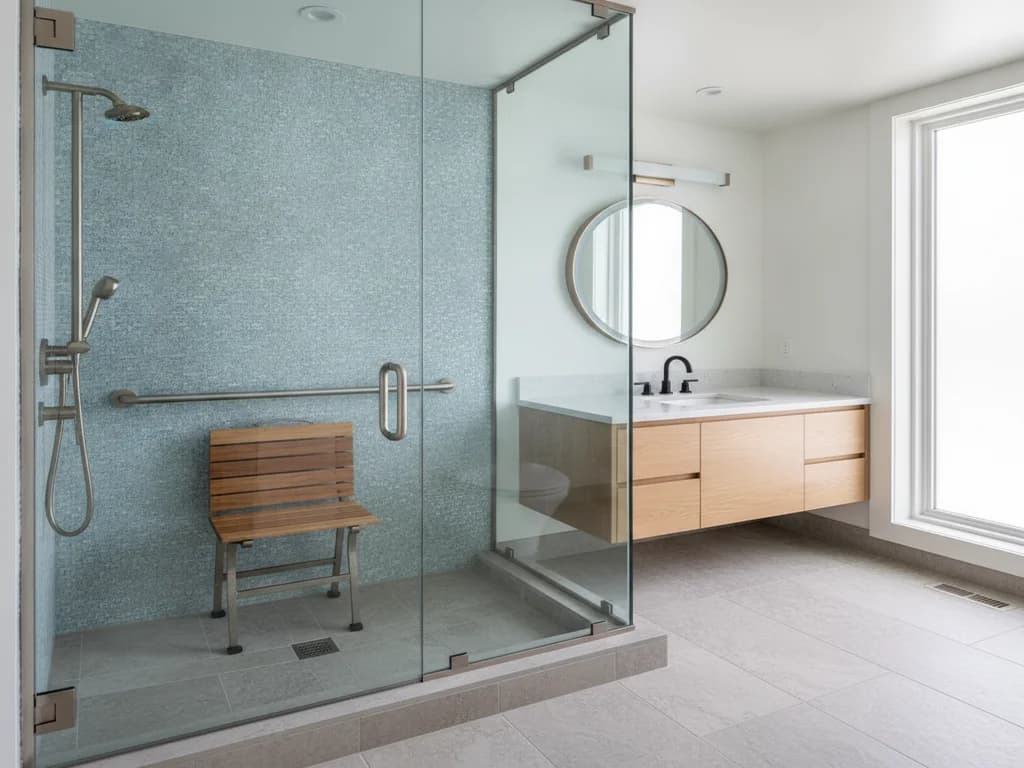
Stepping over a tub wall to shower is, for most households, the riskiest thing that happens in the room on a routine basis. It requires lifting one leg to a substantial height, balancing on the other on a wet surface, passing over a hard edge, and landing on a surface that is also wet — often while holding onto something not designed to be held.
Every element of that sequence is a risk factor, and they occur together, daily. This is why converting a tub to a curbless or low-threshold shower is usually the highest-value safety change available: it does not mitigate the hazard, it removes it. There is no longer a step to take.
It is also why a walk-in tub, while genuinely useful for some people, is not automatically the safer choice. It solves the step-over but introduces its own considerations — sitting in place while the tub fills and drains, and a door seal that has to keep working over time. The right answer depends on whether the person prefers bathing or showering, and how they actually move.
Address the hazard, not the recovery
Grab bars help someone recover balance that is already going. Removing a step-over means balance is less likely to be lost in the first place. Both are worth doing, but they are not equivalent — one is prevention and the other is a backstop.
Support has to be anchored to something
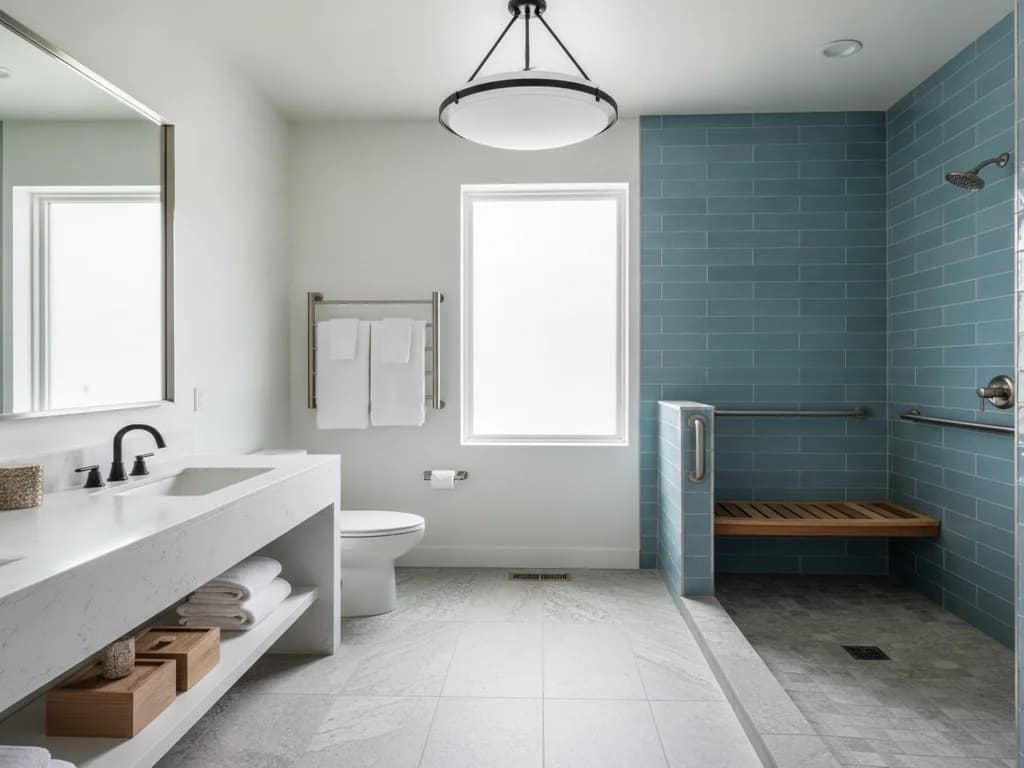
A grab bar is only as good as what it is fastened to. The ADA Accessibility Standards require grab bars, their fasteners, and the supporting structure to withstand a 250-pound force — a figure derived from someone catching themselves mid-fall rather than steadying themselves gently.
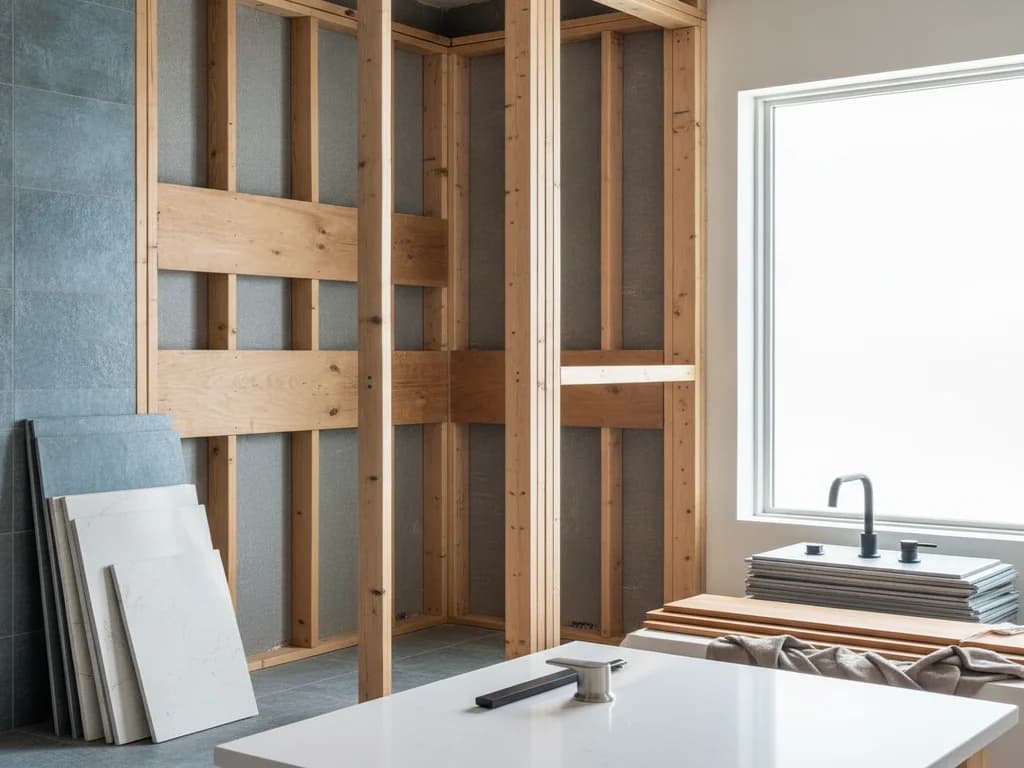
Drywall and tile backer cannot carry that. This is why blocking installed during a remodel matters so much: it puts solid structure behind the wall so a bar can be anchored properly wherever it is actually needed.
The corollary is the most common dangerous substitution in bathrooms: using a towel bar as a handhold. Towel bars are designed to hold towels, are typically fastened into drywall, and will come off the wall under load — usually at the worst possible moment. If something in a bathroom is being grabbed for support, it should be a grab bar.
Traction is chosen, not applied
Floor slip resistance is a property of the material, decided at selection rather than corrected afterward. Tile has a measurable coefficient of friction, and manufacturers publish it — which means the question "is this floor safe when wet" has an answer available before purchase rather than a guess after installation.
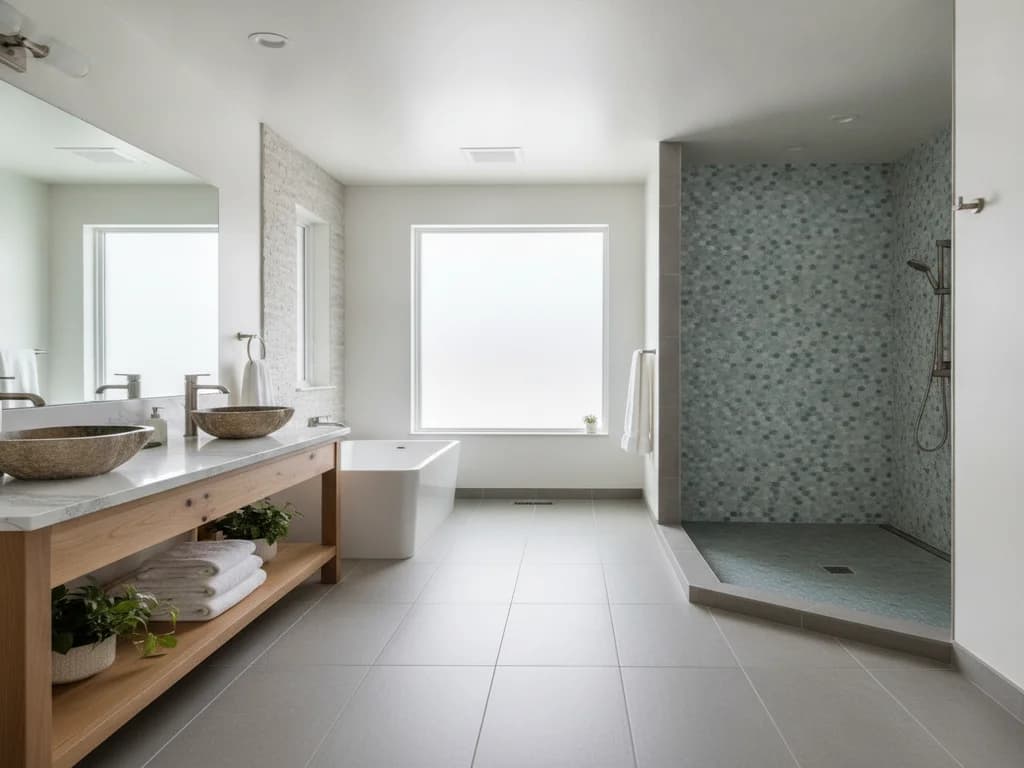
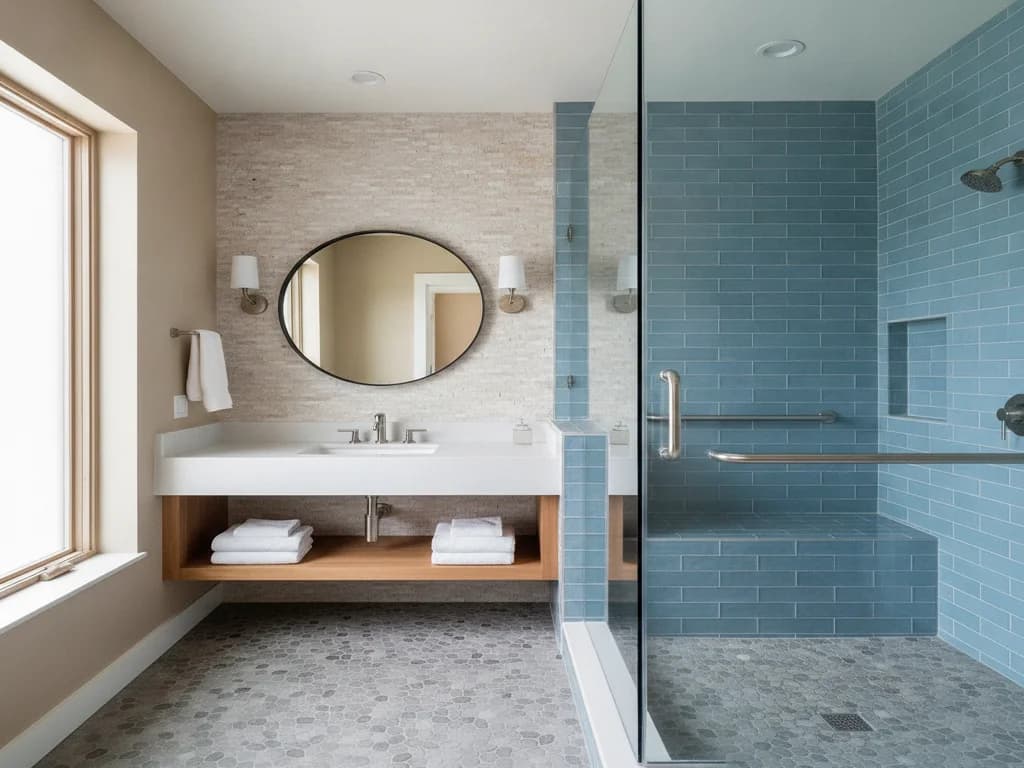
Two practical points follow. First, a polished tile that looks superb dry can be genuinely hazardous wet, and no topical treatment reliably fixes that long-term. Second, smaller tiles mean more grout lines per square foot, and grout is textured and slightly recessed — so a mosaic floor provides more traction than a large-format tile of the same material, which is why small tile is common on shower floors.
Bath mats deserve a specific mention, because they are frequently the intervention people reach for and they can make things worse. A mat that slides, or one whose edge curls upward, is a trip hazard placed exactly where someone steps out wet. If mats are used, they need a proper non-slip backing and edges that lie flat.
The factor almost nobody budgets for
Lighting is the most underrated element of bathroom safety. Vision changes with age in ways that matter here: less light reaches the retina, contrast sensitivity declines, and adaptation between dark and bright takes longer.
The practical consequence is that a light level which feels adequate to a fifty-year-old may be genuinely insufficient for someone twenty-five years older. Raising overall levels, adding light at the shower and the vanity rather than relying on a single ceiling fixture, and eliminating deep shadows all reduce the chance of misjudging a step or an edge.
Night-time is its own scenario and a common one — someone getting up in the dark, half awake, moving to a bathroom. A low-level night light or a motion-activated fixture on the path removes the choice between navigating in darkness and being blinded by a bright overhead light. It is among the cheapest safety improvements available.
A sensible order of operations
If a bathroom is being remodeled anyway, the ordering is straightforward: eliminate the step-over, block the walls for grab bars whether or not bars go in now, specify flooring with real slip resistance, and light the room generously. Those four decisions cost little extra during construction and address the main risk factors.
If no remodel is planned, the same priorities apply at smaller scale — a properly anchored grab bar, a night light, a mat with genuine non-slip backing or none at all, and brighter bulbs. None of these require construction, and they address more risk than most people expect.
Ready to plan your Boise bathroom?
Licensed & insured · 3-year workmanship warranty
Frequently asked questions
- What is the most effective bathroom change to prevent falls?
- Removing the step over a tub wall, usually by converting to a curbless or low-threshold shower. Stepping over a tub requires single-leg balance on a wet surface over a hard edge — the highest-risk routine action in most bathrooms. Removing it eliminates the hazard rather than providing a way to recover from it.
- How common are falls among older adults?
- The CDC identifies falls as the leading cause of injury and injury-related death among adults aged 65 and older. Bathrooms concentrate several contributing factors — wet hard surfaces, unyielding fixtures, tight space, and tasks requiring balance — which is why modifications there return more safety per dollar than most rooms.
- Can I use a towel bar to steady myself?
- No. Towel bars are designed to hold towels and are typically fastened into drywall; they will pull off the wall under a person's weight. The ADA standards require a grab bar and its supporting structure to withstand 250 pounds of force. Anything used for support in a bathroom should be a properly anchored grab bar.
- Do non-slip mats make a bathroom safer?
- Only if they are the right kind. A mat that slides, or one whose edges curl, is a trip hazard placed exactly where someone steps out wet — it can increase risk rather than reduce it. Mats need genuine non-slip backing and edges that lie flat. Choosing flooring with real slip resistance is the more durable fix.
- How much does lighting matter for bathroom safety?
- More than most people budget for. Aging eyes receive less light, lose contrast sensitivity, and adapt more slowly between dark and bright. Raising overall light levels, adding light at the shower and vanity, and installing a night light or motion-activated fixture for night-time trips are among the cheapest meaningful safety improvements.
Sources
- CDC — Older Adult Fall Prevention
- U.S. Access Board — ADA Accessibility Standards
- ADA.gov — U.S. Department of Justice
- AARP — Livable Communities / HomeFit
- Tile Council of North America (TCNA)
Claims and figures are drawn from the sources above and provided for general guidance; your project may vary. Photography is illustrative of design concepts. For a fixed price on your specific bathroom, request a free estimate.