Updated July 6, 2026 · 8 min read
By Boise Bath — bathroom & shower remodeling in Boise & the Treasure Valley
The short answer
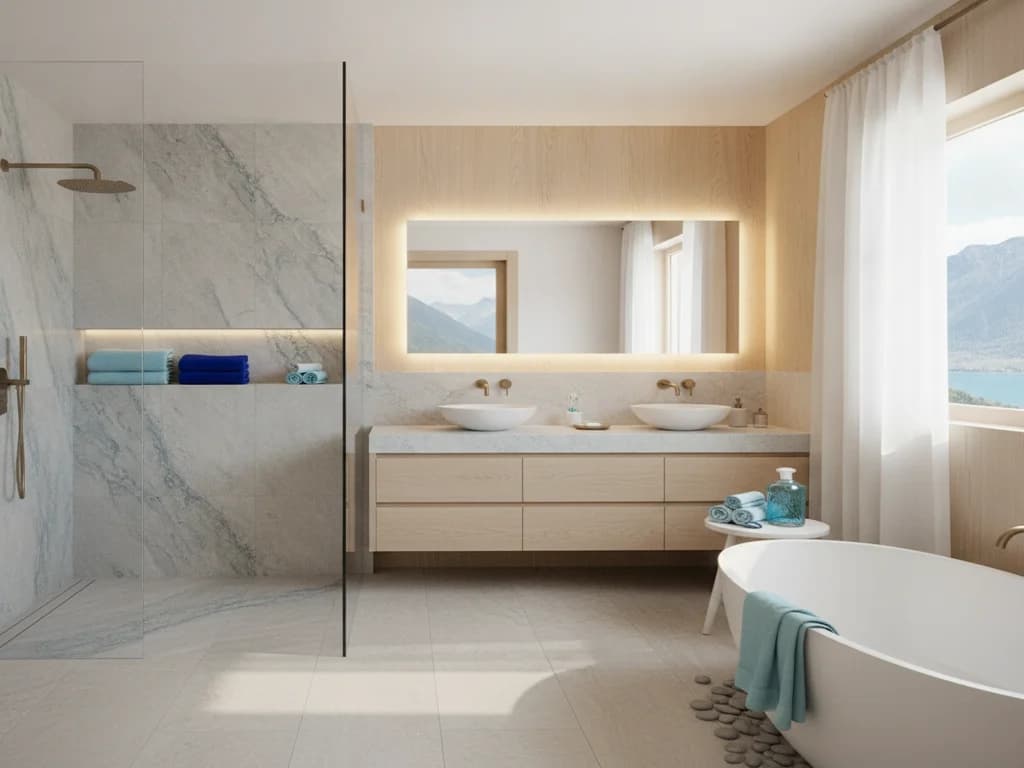
The best bathroom window privacy comes from placement first — a transom or high window bounces light off the ceiling while staying above sightlines — then glazing: frosted or reeded glass, or glass block. Window film and top-down shades add flexible privacy to an existing window, but fabric and wood treatments belong away from direct moisture, not on it.
Key takeaways
- Placement solves privacy before any treatment does — a transom or clerestory window set above eye level "provides privacy while it maximizes the effect of light by bouncing it off the ceiling," per This Old House.
- Frosted glass has "an appealing pitted effect on one side that increases privacy by blurring any images viewed through the window," per Bob Vila — and it works whether it's etched, sprayed, or filmed.
- A top-down, bottom-up shade "solves that problem by allowing you to lower the shade from the top, blocking outside views while still letting light in," per This Old House.
- Glass block isn't just a dated look — it's "thick, solid or hollow pieces that blur whatever's behind them" and doubles as insulation, per Bob Vila's reporting on shower windows.
- Fabric and wood treatments don't belong in direct moisture — This Old House warns that "steam in your shower can warp them" — so a window right over a tub or inside a shower needs a different answer than one across the room.
What should decide a bathroom window's privacy plan first?
A bathroom window has one job that's harder than any other window in the house: let in real daylight without giving anyone outside a clear view in, at any hour, in a room where the blinds can't just stay open when it's inconvenient. Before choosing a glazing type or a treatment, it's worth separating two different problems — a window that's otherwise well placed but needs a privacy layer, and a window whose placement is the actual problem. The ideas below are organized in that order: placement first, then glazing, then add-on treatments, then the moisture question that decides which of those add-ons is safe near a tub or shower.
How to use this list
Fix placement and glazing first if you're remodeling from scratch — they solve privacy permanently. Treatments and film are the right call for an existing window whose location can't change.
How should a bathroom window be placed?
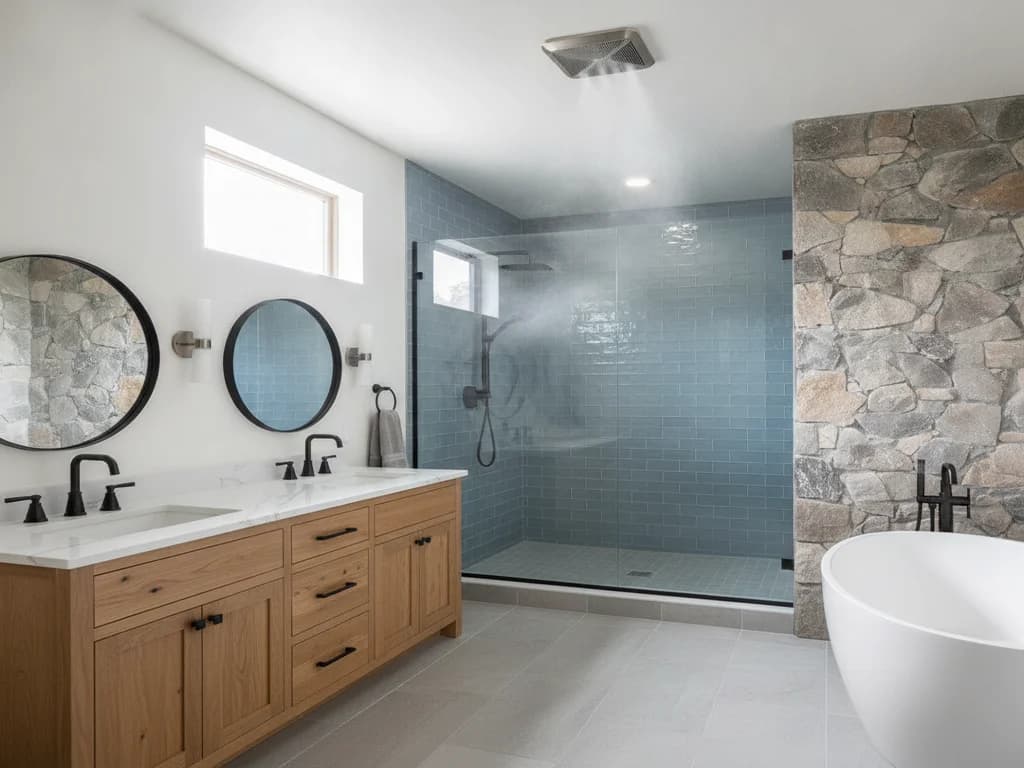
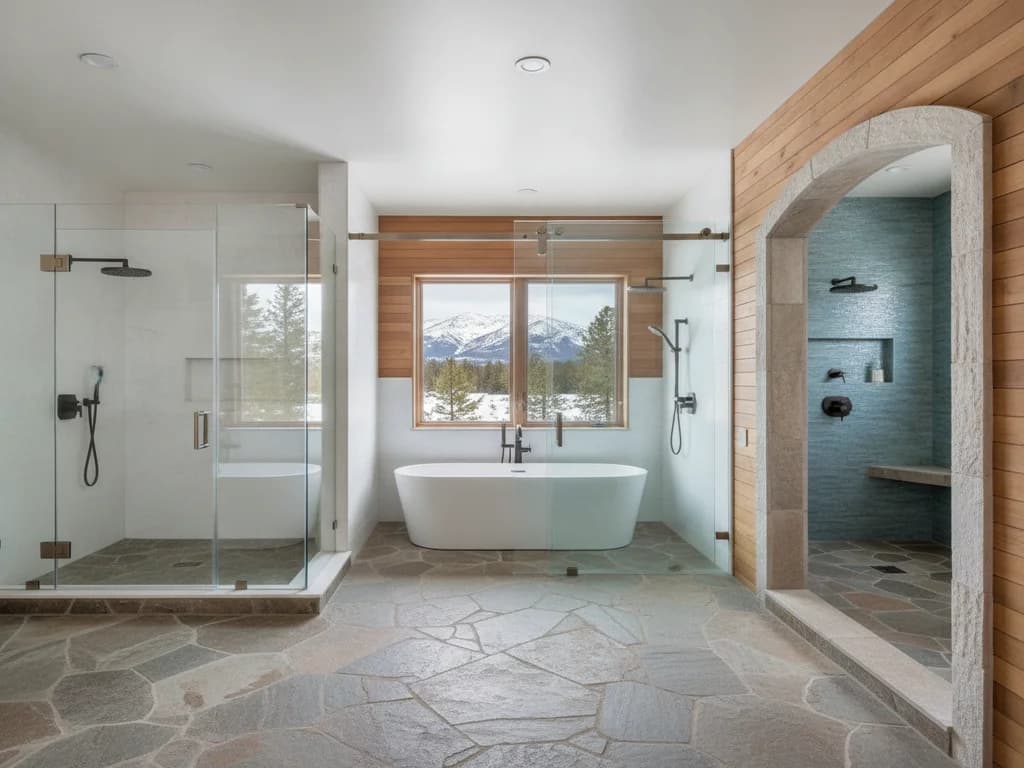
1. Set the window above eye level wherever the wall allows it. This Old House's guidance on window placement is direct about why: "the best light for a bath comes from above — skylights or transom/clerestory windows. Above-eye-level openings have a couple of advantages. They provide privacy while they maximize the effect of light by bouncing it off the ceiling." 2. A transom window above a door or a high wall does the same job at a smaller scale — Bob Vila's overview of transom windows notes the style dates back centuries specifically because "an opening over an entry would be high enough to foil prying eyes while allowing a glimpse of sky and a bit of fresh air." 3. If the window has to sit lower, raise the effective sill line instead. This Old House's placement guidance suggests "setting the sill more than 4 feet off the floor so the low sun angle casts screens in shadow" — a detail usually discussed for glare control, but it does double duty for privacy on a lower window.
Best for: new construction or a full remodel where the window's height and position are still on the table. On an existing window that can't move, skip to the glazing and treatment options below.
Which glass types solve privacy at the pane itself?
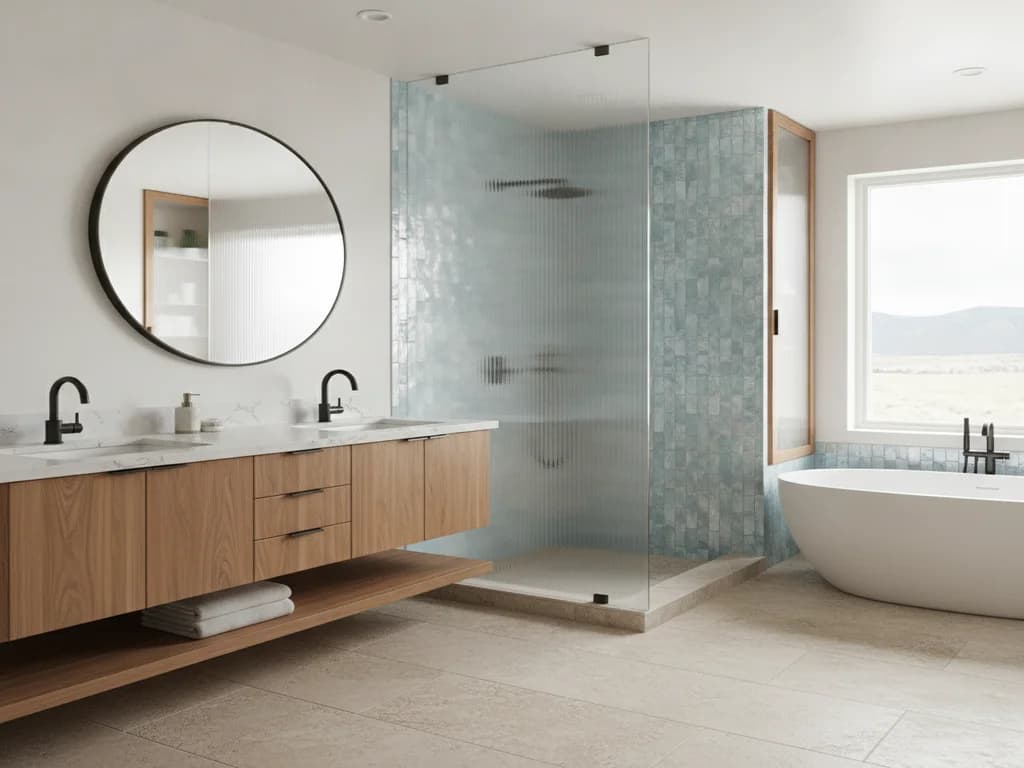
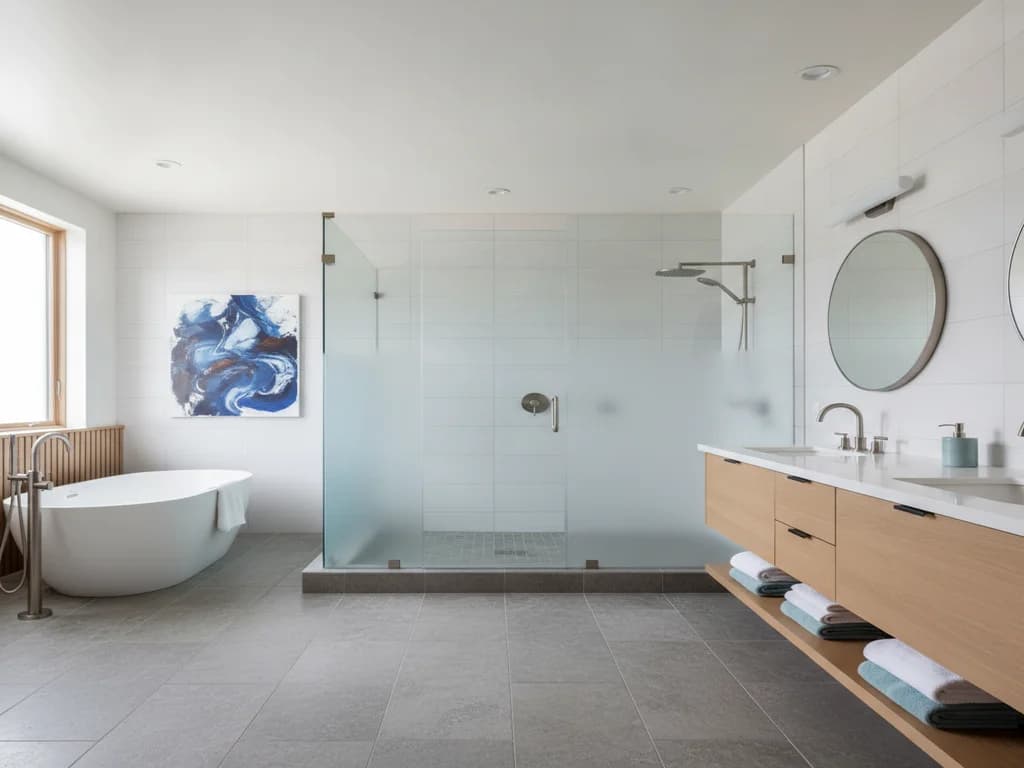
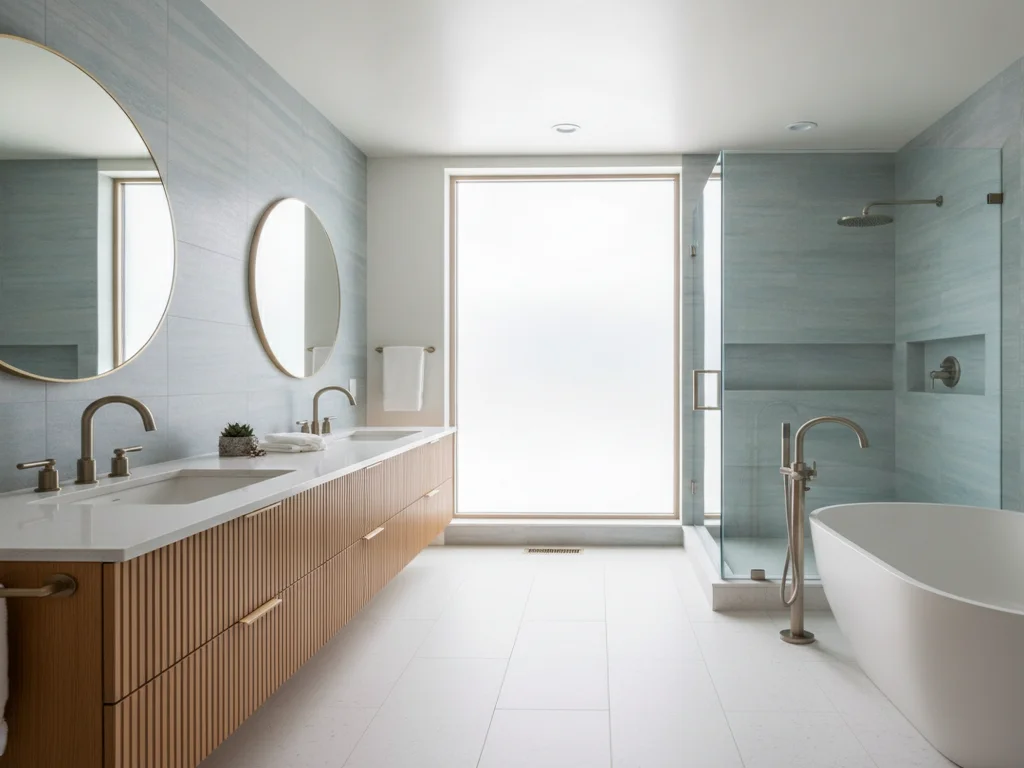
4. Frosted glass is the most direct fix. Bob Vila describes the effect precisely: frosted glass has "an appealing pitted effect on one side that increases privacy by blurring any images viewed through the window." It can be achieved three ways — a glass etching cream applied by a professional or a careful DIYer, a specialty frosting spray, or pre-frosted replacement glass — and all three block a clear view while still passing daylight through. 5. Reeded or fluted glass is the more textured, more current-feeling version of the same idea — vertical ribbing that scatters a view into abstract lines rather than a flat blur. Fixr's coverage of current bathroom design trends names "ribbed glass" alongside fluted tile as one of the textures defining bathrooms right now, a detail that applies as naturally to a window pane as it does to a shower door. 6. Semi-opaque glass is a middle option — Bob Vila's window-privacy roundup describes it as letting "plenty of natural light" through while softening the view without full frosting.
Best for: any window being replaced or installed new — glass-level privacy never needs to be opened, closed, or maintained the way a film or a shade does.
Does glass block still make sense in a modern bathroom?
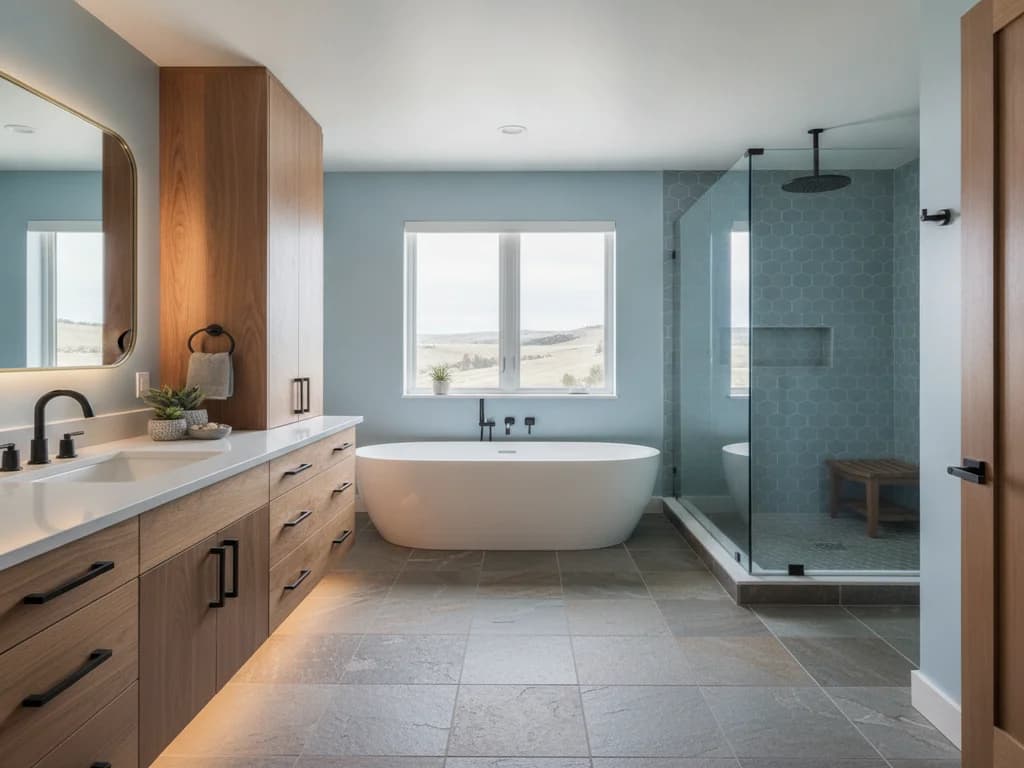
7. Glass block is a legitimate modern option, not just a dated one. Bob Vila's reporting on shower window privacy describes it plainly: glass blocks are "thick, solid or hollow pieces that blur whatever's behind them," and adds a genuine practical benefit — "glass blocks also double the insulation of the window." Used as a full window replacement or a partial accent panel, glass block reads current when it's detailed with a clean, minimal frame rather than the small grid pattern associated with older installs. 8. It's a strong choice specifically for a window inside or right beside a shower, where Bob Vila's bathroom-window-privacy list also flags "frosted glass blocks" as a pricier but effective alternative to a standard window replacement.
Best for: a shower window or any spot where a permanent, maintenance-free privacy solution matters more than the ability to open the window for ventilation.
What can be added to an existing window without replacing it?
9. Frosted or etched-look window film is the fastest fix for a window that's otherwise fine but too exposed. Bob Vila's window-privacy list highlights it directly, and This Old House's coverage of window film adds the practical case for it: "etched glass window film is an affordable alternative to expensive acid-etched glass," and it's "significantly less expensive than real etched glass" while being reversible and easy to install — a real advantage over etching cream or spray frost, which can't be undone. 10. Top-down, bottom-up shades solve the daylight-versus-privacy trade-off better than a standard shade. This Old House explains the mechanism: they "solve that problem by allowing you to lower the shade from the top, blocking outside views while still letting light in" — leave the bottom raised and the top lowered, and the window still passes daylight through its upper half while the lower half, at eye level from outside, stays covered.
Best for: an existing window in a full remodel budget that doesn't include replacing the glass or the window unit itself.
| Option | Best for | Note |
|---|---|---|
| Transom / high placement | New construction, full remodels | Solves privacy permanently; can't retrofit into an existing low window |
| Frosted or reeded glass | Any window being replaced | No maintenance once installed; view is blurred, not fully blocked |
| Glass block | Shower windows, permanent privacy | Doubles as insulation; the window won't open for ventilation |
| Window film | Existing windows on a budget | Reversible and inexpensive, but less effective at night with lights on |
| Top-down, bottom-up shades | Existing windows needing flexible privacy | Manual operation; needs a moisture-resistant fabric near a tub or shower |
Which treatments belong near water, and which don't?
11. Match the treatment to how close the window sits to direct moisture. This Old House's guide to windows in showers is specific about what to avoid right at the water source: "avoid bamboo, wood, or fabric-based options, as steam in your shower can warp them," and separately, "we don't recommend using wood in high-moisture environments." Where a fabric treatment is wanted anyway — a sheer curtain across a window well away from the shower spray, for instance — the same guide recommends choosing "waterproof Roman shades or shades that are made of mildew-resistant fabric" rather than an untreated fabric. For the frame material itself, "vinyl and fiberglass frames work better in high-moisture environments because they resist mold, warping, and rot" than wood or standard aluminum.
This is really a humidity-control question as much as a materials one — even the right moisture-resistant treatment will fail faster in a bathroom without adequate airflow. Our bathroom ventilation tips roundup covers fan sizing and duct routing, which does more to protect a window treatment, frame, and surrounding wall than the treatment choice alone.
How do these ideas come together?
New construction or full remodel: transom or high-placed window, frosted or reeded glass, vinyl or fiberglass frame — privacy and moisture resistance solved permanently at the window itself.
Existing window, can't be moved or replaced: window film for an immediate, reversible fix, or top-down bottom-up shades for flexible daylight control — paired with real exhaust ventilation regardless of which treatment is chosen.
A full bathroom remodel is where window placement, glazing, and ventilation get planned together, rather than the window being treated as an afterthought once the layout is already set.
Ready to plan your Boise bathroom?
Licensed & insured · 3-year workmanship warranty
Frequently asked questions
- What's the best way to get privacy for a bathroom window without blocking light?
- Frosted or reeded glass is the most direct fix — it diffuses light while blurring any view through the pane. Placement helps even more: a transom or high-set window, per This Old House, "provides privacy while it maximizes the effect of light by bouncing it off the ceiling," which is why it's worth prioritizing in any full remodel.
- Can you use curtains on a bathroom window?
- Only away from direct moisture. This Old House's guide to windows in showers warns to "avoid bamboo, wood, or fabric-based options, as steam in your shower can warp them" right at the water source. A sheer curtain across a window well away from the tub or shower spray is fine; a curtain right over a shower window is not.
- Is glass block still a good bathroom window option?
- Yes — Bob Vila describes glass block as "thick, solid or hollow pieces that blur whatever's behind them," and notes it "also doubles the insulation of the window." Detailed with a clean, minimal frame rather than a small grid pattern, it reads as a current choice, not a dated one, and suits a shower window especially well since it needs no ongoing maintenance.
Sources
- Bob Vila — 10 Bathroom Window Privacy Ideas That Won't Sacrifice Style
- Bob Vila — Have a Window in the Shower? Here's How to Get Some Privacy
- This Old House — Guide to Windows in Showers
- This Old House — Planning Window Placement
- This Old House — Install Top-Down Bottom-Up Shades
- Bob Vila — Everything You Need to Know About Transom Windows
- This Old House — Design Uses for Window Film and Appliques
- Fixr — 25 Bathroom Remodel Ideas for 2025
Claims and figures are drawn from the sources above and provided for general guidance; your project may vary. Photography is illustrative of design concepts. For a fixed price on your specific bathroom, request a free estimate.