Updated July 16, 2026 · 6 min read
By Boise Bath — bathroom & shower remodeling in Boise & the Treasure Valley
The short answer
A doorless shower eliminates the most-cleaned surface in the bathroom and makes the room feel dramatically larger — but it trades away warmth and splash containment, and only works honestly with roughly five feet of depth between spray and opening. Great for larger masters and aging-in-place plans; wrong for small bathrooms and anyone who hates a cold draft.
Key takeaways
- The best argument for doorless is subtraction: no glass door to squeegee, no hinges to loosen, no track to scrub, nothing to shatter.
- The honest entry fee is space — plan on roughly five feet or more between the spray and the opening, or a partial panel to shorten it.
- Doorless showers are cooler than enclosed ones, full stop; layout, a warm floor, or a heat lamp are the fixes, not wishful thinking.
- Splash control comes from geometry — showerhead aim, opening placement, and walls — instead of a door.
- Doorless pairs naturally with curbless entries and aging-in-place plans, where removing barriers is the whole point.
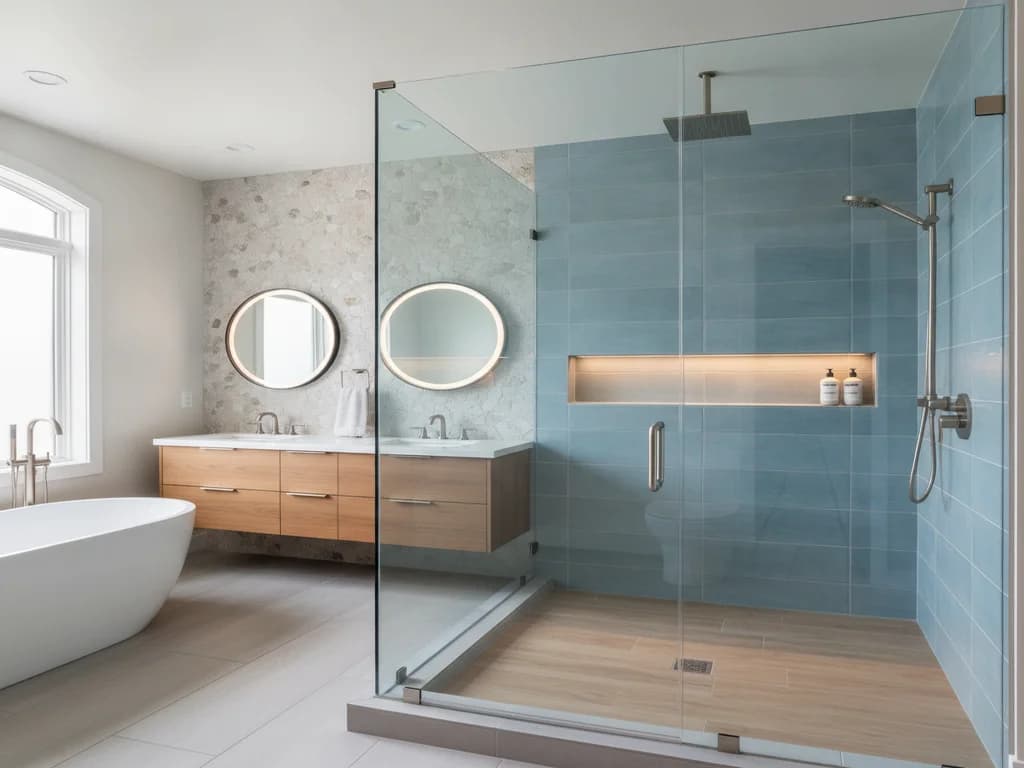
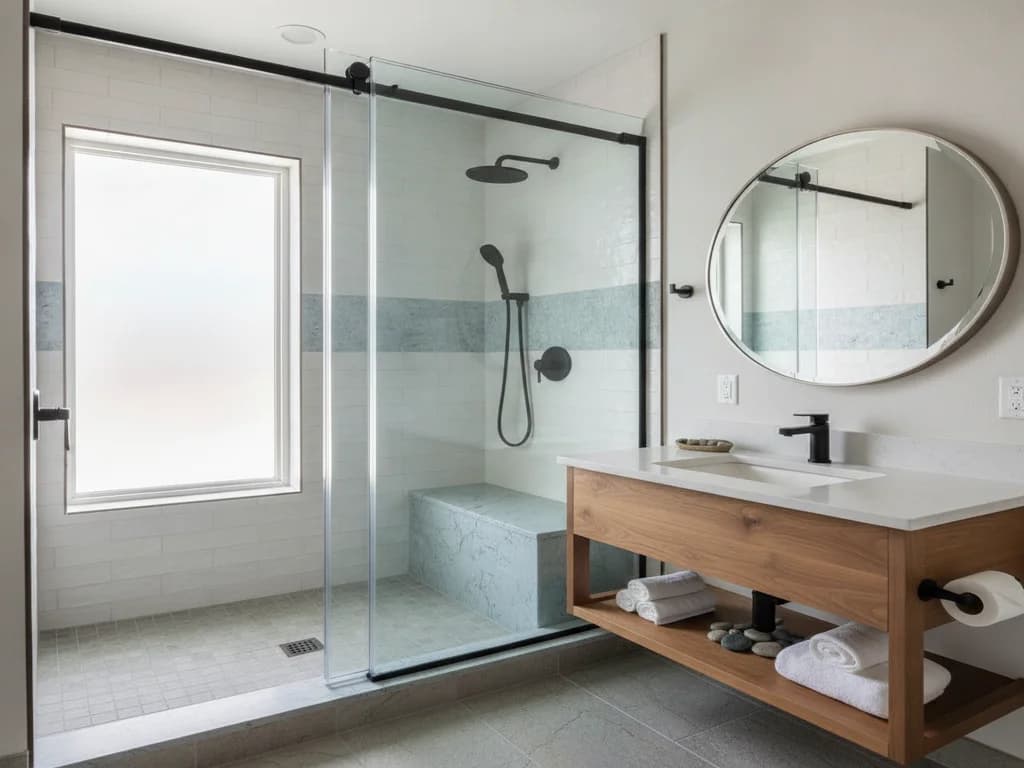
- In small bathrooms, a frameless glass door delivers most of the open look while keeping the heat and the water in.
The honest verdict on going doorless
Ask anyone who scrubs a glass shower door weekly what the best part of a doorless shower is, and the answer is immediate: the part that does not exist. No hard-water film building on glass, no door sweep collecting gunk, no hinges loosening, no track to detail with a toothbrush. Subtracting the door removes the highest-maintenance surface in the entire bathroom.
The trade is physics. A door holds in heat and water; without one, warmth escapes with every convection current and every stray spray pattern needs to land somewhere inside the wet zone. Both problems are completely solvable — with square footage, layout, and sometimes a panel of fixed glass — and completely unsolvable with optimism in a 32-inch-deep shower.
So the doorless decision is really a floor-plan decision. This article gives you both sides, the size math, and the honest middle ground of partial glass — which we compare in depth in pony wall vs. full glass.
The pros: what subtracting the door buys you
The case for doorless, stated plainly:
- Cleaning drops dramatically. Glass shower doors are the single most-maintained surface in a bathroom — hard-water spotting in the Treasure Valley makes that doubly true. Doorless removes the chore at the source rather than managing it.
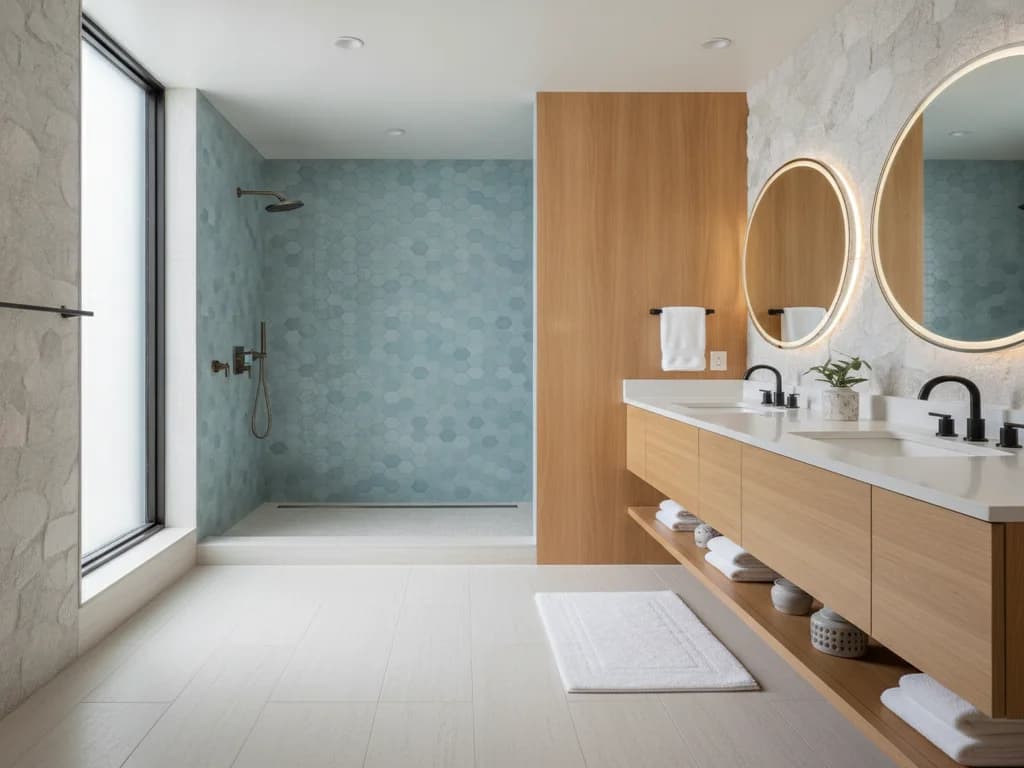
- The room feels twice as open. Sightlines run from the doorway to the back tile wall uninterrupted. Even a modest bathroom reads as more generous without a glass-and-hardware box in the corner.
- Nothing to break, sag, or fail. Door hardware is the moving part of a shower — sweeps wear, rollers derail, hinges loosen, and gaskets yellow. A doorless entry has no moving parts, which is why it ages so gracefully.
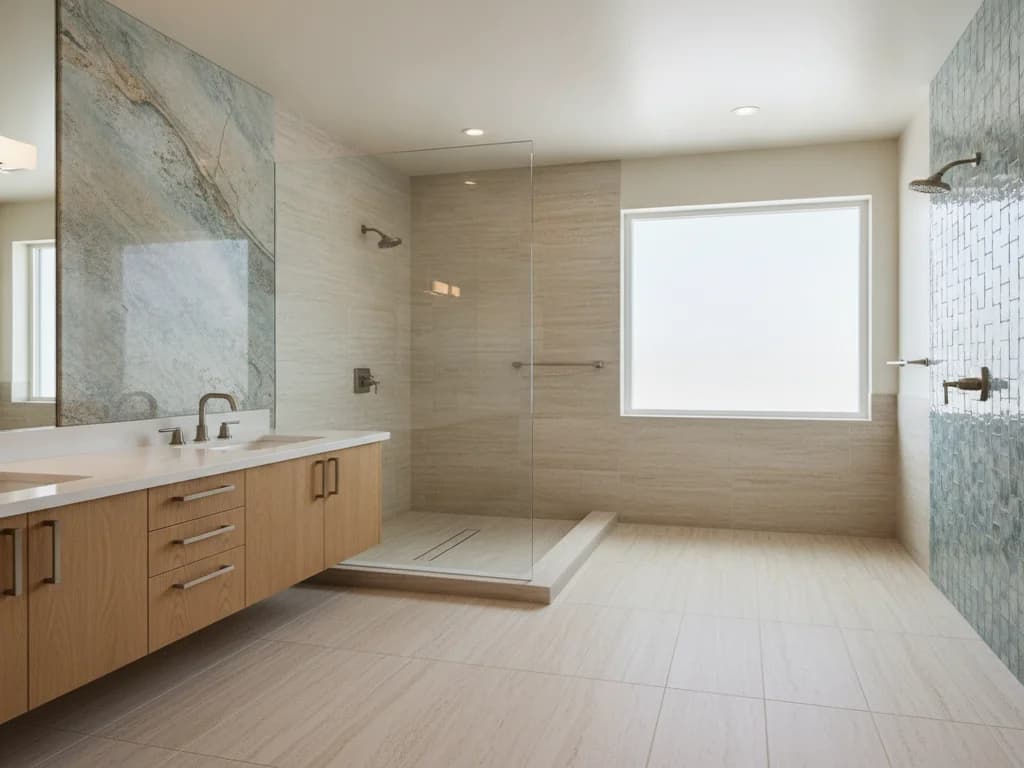
- Barrier-free entry, especially paired with curbless. A wide, doorless, zero-threshold opening is the gold standard for aging-in-place — nothing to grip, step over, or maneuver around. It is the natural companion to the curbless entries covered in our curbless shower ideas.
- Timeless rather than trendy. Framed doors date a bathroom to their decade; an open tiled entry does not. Doorless showers from twenty years ago still read current.
- Better ventilation inside the shower itself. Open showers dry out faster after use, which works against the mildew that colonizes enclosed corners and door gaskets.
The cons: splash, heat, and the size minimum
Now the honest list — the three physics problems and their supporting cast:
- Splash escapes if the geometry is wrong. Without a door, containment comes entirely from depth, wall placement, and showerhead aim. A shower that is too shallow or aims spray at the opening puts water on the bathroom floor daily — the most common doorless regret, and it is baked in at the design stage.
- It is colder. Enclosed showers trap a pocket of warm, humid air; open ones bleed it continuously. In a well-heated bathroom the difference is mild; in a chilly one, the draft across wet skin is the thing owners complain about every winter morning.
- The size minimum is real. NKBA planning guidance and practical experience converge on the same answer: you want roughly five or more feet of depth between spray and opening — or an L-shaped entry or fixed panel to shorten it. Small bathrooms fail this test far more often than showrooms suggest.
- Privacy disappears. An open shower is open — in a shared master or a kids’ bath, that is a genuine daily-life consideration, and the usual fix (a walled entry or frosted fixed panel) starts reintroducing structure you were trying to remove.
- Humidity spreads to the whole room. The door was also a vapor barrier of sorts; without it, mirrors fog faster and the exhaust fan works harder. Good ventilation sizing, per HVI guidance, stops being optional.
- The floor plan pays the bill. The splash-zone footage and any entry wall come out of the rest of the bathroom — sometimes out of the vanity or storage you would rather keep.
The five-foot rule of thumb
Before falling in love with a doorless design, measure: can you put roughly five feet — or a wall or fixed panel — between the showerhead spray and the opening? If yes, doorless will behave. If no, the honest choices are a partial glass panel, an L-shaped walled entry, or keeping a frameless door. There is no tile pattern that repeals splash physics.
Doorless vs. glass door at a glance
The decision compressed into one table:
| Factor | Doorless / open entry | Frameless glass door |
|---|---|---|
| Cleaning | No glass door to maintain — the headline benefit | Regular squeegee + hard-water film management |
| Warmth | Cooler; loses heat continuously | Traps a warm air pocket while you shower |
| Splash control | Layout and depth do the work | The door does the work — forgiving of tight layouts |
| Space required | Roughly 5+ ft of depth or a partial wall/panel | Works in standard 32–36" showers |
| Accessibility | Excellent — nothing to operate or maneuver around | Door swing and handle to manage |
| Privacy | None | Clear, frosted, or textured glass options |
| Long-term upkeep | No hardware to wear out | Hinges, sweeps, and seals age and need replacing |
Size guidance reflects NKBA bathroom planning guidelines; every layout should be verified against your actual floor plan.
The middle ground: partial glass and walled entries
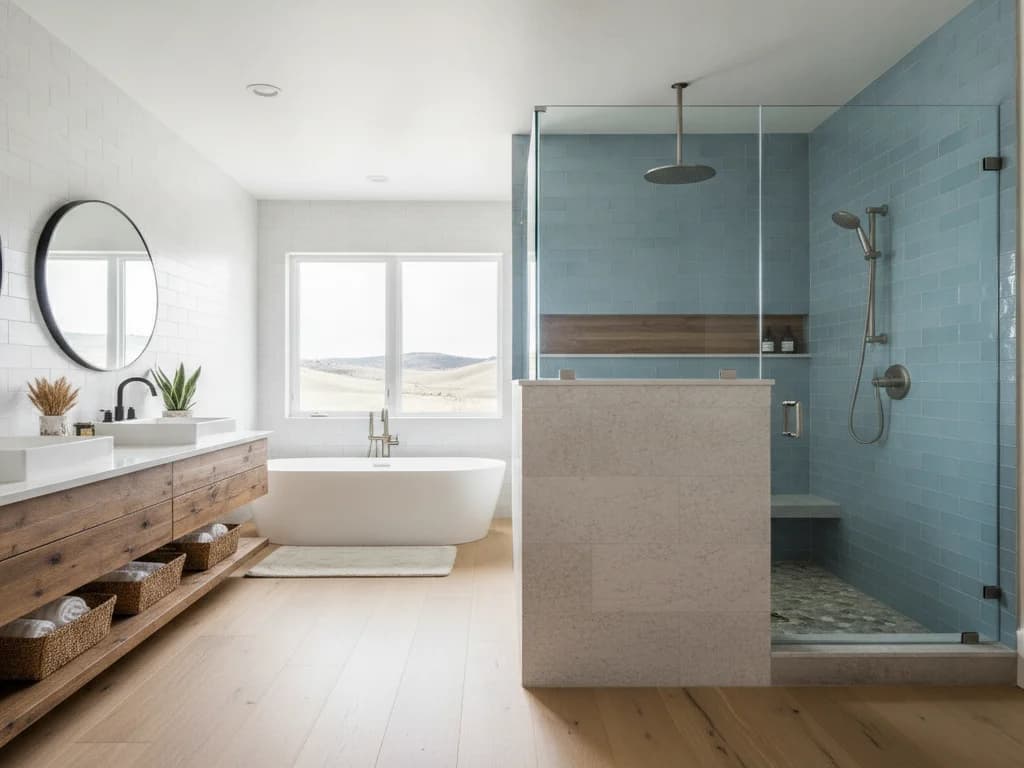
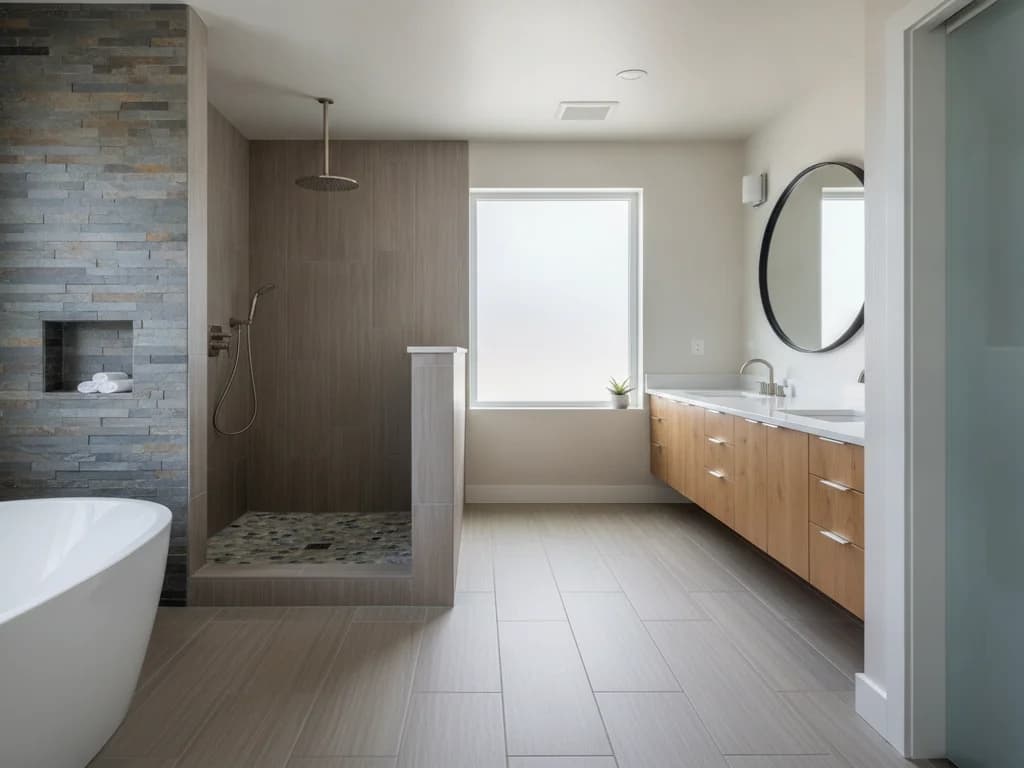
Most real-world "doorless" showers are not fully open — they use one piece of fixed structure to get the open feeling with less of the physics penalty. A single frameless glass panel beside the opening blocks direct spray while keeping sightlines; a pony wall does the same with a tiled, no-maintenance surface; an L-shaped walk-around entry blocks both splash and sightline with no glass at all.
Each option shifts the trade-offs a little differently. Glass keeps the room visually open but reintroduces a (smaller) cleaning surface; a pony wall kills the squeegee chore entirely but adds visual weight and a ledge that collects bottles. We compare these head-to-head in pony wall vs. full glass, and the frosted vs. clear glass guide covers the privacy dimension.
The practical takeaway: if your bathroom is borderline on the size math, a fixed panel or short wall is what makes doorless work honestly — and it costs far less than the extra square footage it substitutes for.
Who a doorless shower is right for
Go doorless with confidence if this is you:
- Your bathroom has the footprint — a genuine five-plus feet of shower depth, or room for an entry wall or panel to shorten the requirement.
- You are done cleaning glass. If the weekly squeegee ritual is the thing you most want out of your life, doorless attacks the problem at the root.
- You are designing for aging in place. Paired with a curbless entry and a bench, a doorless opening is the most usable shower format there is — nothing to step over, grip, or operate.
- The bathroom is warm — good heat, a heat lamp, or a heated floor takes the one daily-comfort penalty off the table.
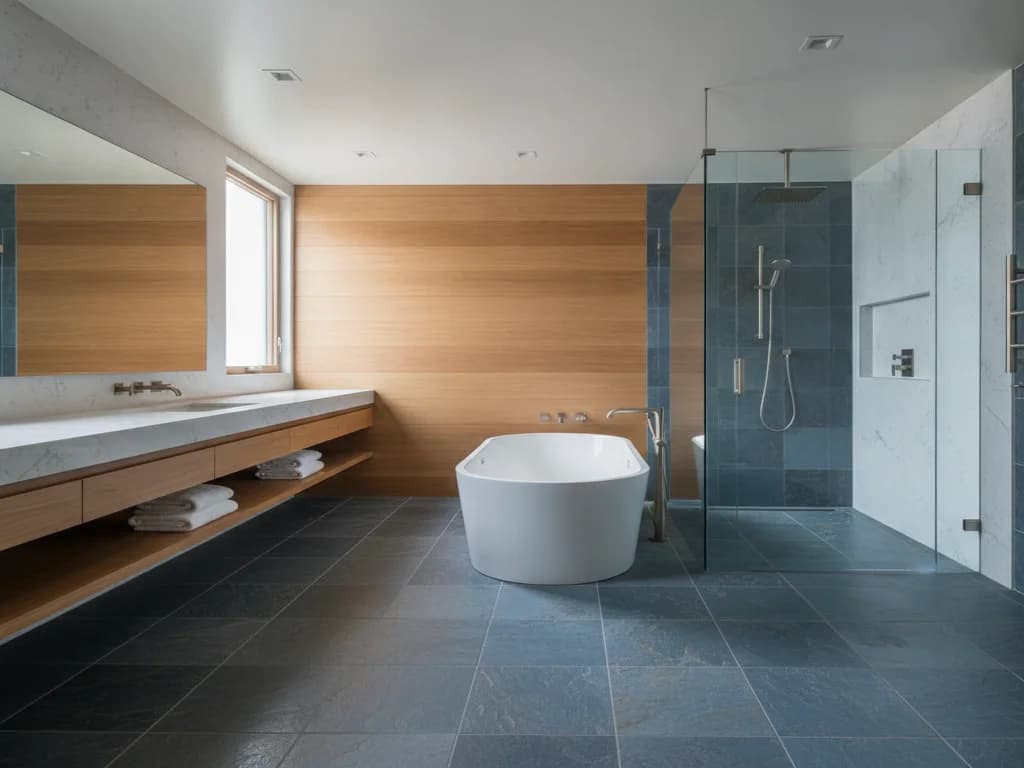
- You want the shower to be the room’s design statement. Open showers show off tile work like nothing else; see our walk-in shower ideas for what that looks like.
Who should skip it
And keep a door — with zero shame — if any of these apply:
- The bathroom is small. A 32–36 inch shower with a frameless door is a better daily experience than a cramped doorless design that wets the floor. The door is doing honest work in a tight plan.
- You run cold. If you already crank the shower to maximum and dread stepping out, an open shower will annoy you 365 mornings a year. Physics does not care how good the tile looks.
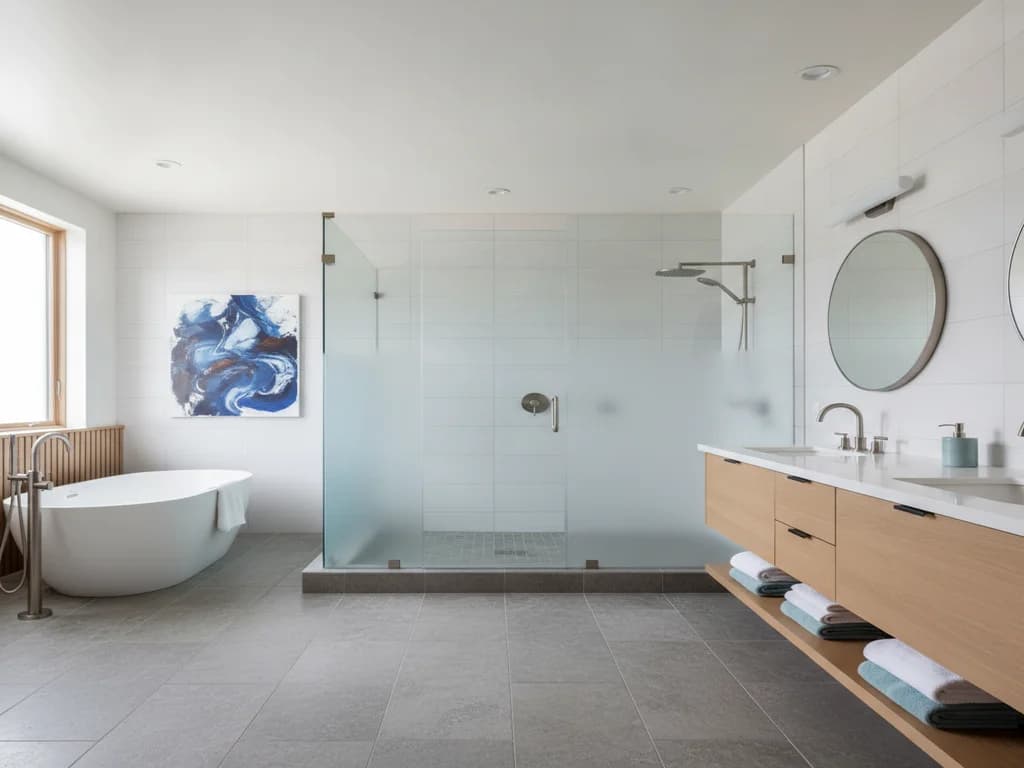
- Privacy matters in your household. Shared master schedules and open showers mix poorly; frosted glass with a door solves what an open entry cannot.
- The bathroom already fights humidity. If mirrors fog and the fan struggles now, removing the shower’s enclosure adds moisture load — fix ventilation first, or keep the enclosure.
- You are optimizing a small bathroom for resale. Buyers of compact bathrooms value a clean glass enclosure over an ambitious open design that reads as impractical at that scale.
Ready to plan your Boise bathroom?
Licensed & insured · 3-year workmanship warranty
Frequently asked questions
- Do doorless showers get cold?
- Cooler than enclosed showers, yes — a door traps a pocket of warm, humid air, and an open entry bleeds it continuously. Whether that is a mild difference or a daily annoyance depends on the bathroom: good room heat, a heated floor, or a heat lamp over the drying zone largely neutralizes it. In a chilly bathroom, expect a real draft.
- How big does a doorless shower need to be?
- The practical rule of thumb, consistent with NKBA planning guidance: roughly five or more feet of depth between the showerhead spray and the open entry, so water dies before it escapes. Tighter spaces can still go doorless with an L-shaped walled entry or a fixed glass splash panel that shortens the required run. Below that, a door is the honest answer.
- Do doorless showers splash water everywhere?
- Badly designed ones do; well designed ones do not. Containment comes from geometry — enough depth, the showerhead aimed away from the opening, and walls or a fixed panel where the layout needs them. A doorless shower that wets the bathroom floor was designed too shallow or aimed wrong, and both are decided at the design stage, not fixable with a bath mat.
- Are doorless showers hard to keep clean?
- They are the easiest shower format to keep clean — that is their headline advantage. There is no glass door accumulating hard-water film, no track, no sweep, no hinges. You clean the tile you would clean anyway. The one addition: because the entry is open, the floor just outside the shower sees more moisture, so a quality bath mat and good ventilation matter.
- Is a doorless shower good for resale?
- In a spacious master where the proportions work, yes — it photographs beautifully and reads as a custom, current remodel. In a small bathroom, it can hurt: buyers register a cramped open shower as impractical. The honest rule is that doorless adds value exactly where it functions well and subtracts it where it was forced into too little space.
- Does a doorless shower need to be curbless too?
- No — the two decisions are independent, though they pair naturally. A doorless shower can sit behind a standard curb, and many do. Combining doorless with a curbless entry creates the fully barrier-free format that aging-in-place design aims for, but it also stacks both features’ splash-control demands, so the combination wants the most generous footprint of all.
Sources
- National Kitchen & Bath Association (NKBA)
- Home Ventilating Institute (HVI)
- This Old House — Bathrooms
- HomeAdvisor — True Cost Guide
Claims and figures are drawn from the sources above and provided for general guidance; your project may vary. Photography is illustrative of design concepts. For a fixed price on your specific bathroom, request a free estimate.