Updated July 16, 2026 · 6 min read
By Boise Bath — bathroom & shower remodeling in Boise & the Treasure Valley
The short answer
Undermount is the better bathroom sink where the countertop allows it — the rimless cutout wipes clean in one pass and reads modern. But undermounts require a solid top like quartz or granite; laminate and tile tops must use drop-ins. Choose undermount with any stone counter; choose drop-in for laminate tops, budget swaps, or reusing an existing cutout.
Key takeaways
- The countertop decides first: undermount sinks need a waterproof solid-surface top (quartz, granite, solid surface) — laminate and tile tops can only take drop-ins.
- Undermount's everyday win is the wipe: no rim means water and mess sweep straight into the bowl with nothing to catch on.
- The drop-in's rim is its weakness — a caulked perimeter that collects grime and must be maintained — and also its strength, since it forgives rough cutouts and installs on anything.
- Drop-ins are cheaper to buy and simpler to install; undermounts add mounting hardware, a polished cutout, and usually ride along with a new stone top.
- Swapping a drop-in for an undermount is not a sink project — it is a countertop project, because the cutout must be recut and polished.
- Vessel sinks are a third option entirely — a bowl on top of the counter — covered separately in the vessel vs. undermount comparison.
The verdict: undermount if your countertop allows it, drop-in if it does not
Most sink-mount comparisons pretend this is a style debate. It mostly is not — it is a countertop compatibility question with a style debate riding on top. An undermount sink clamps beneath the counter, which permanently exposes the cutout edge to water; only a top that is waterproof through its body — quartz, granite, solid surface — can live with that. Laminate and tile tops cannot, so on those counters the drop-in is not the budget choice, it is the only choice.
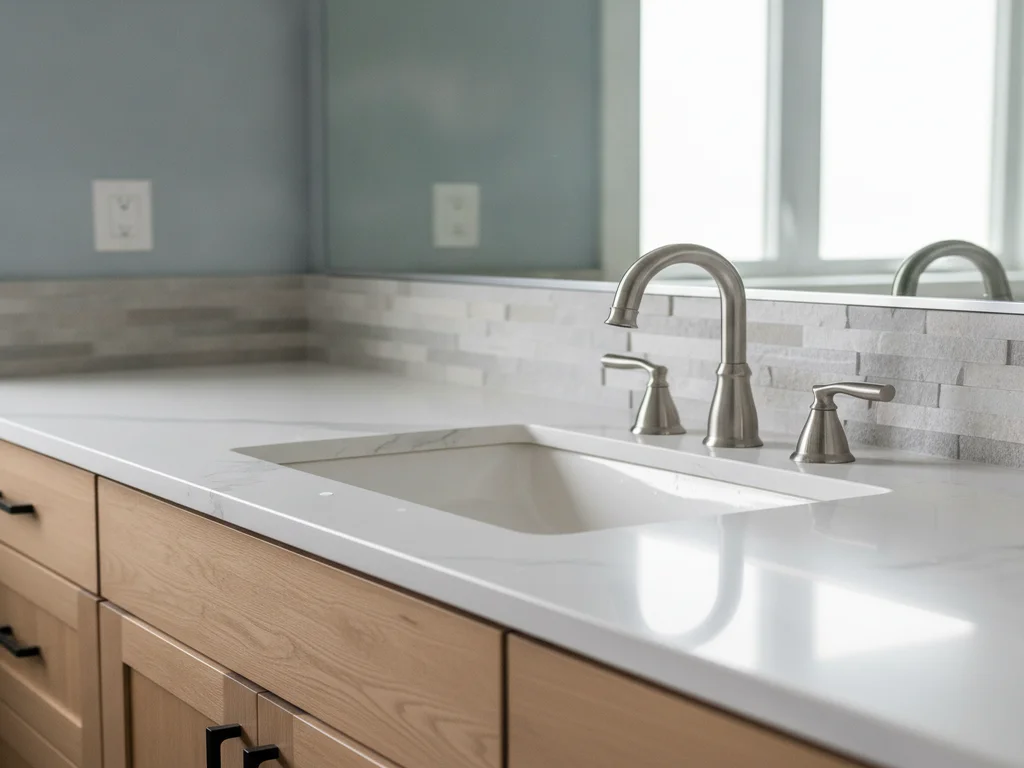
When the countertop does allow both, undermount usually earns the nod. The rimless transition from counter to bowl is the difference you feel every day: water, toothpaste, and counter mess wipe straight into the sink with nothing to catch on, and the vanity reads a decade newer for it.
That said, the drop-in deserves a fairer hearing than it usually gets — it is cheaper, forgiving, and the right answer in several honest scenarios below. And if the look you are actually chasing is a bowl sitting on the counter, that is a vessel sink, a different comparison entirely: vessel vs. undermount sink covers it.
What separates the two mounts
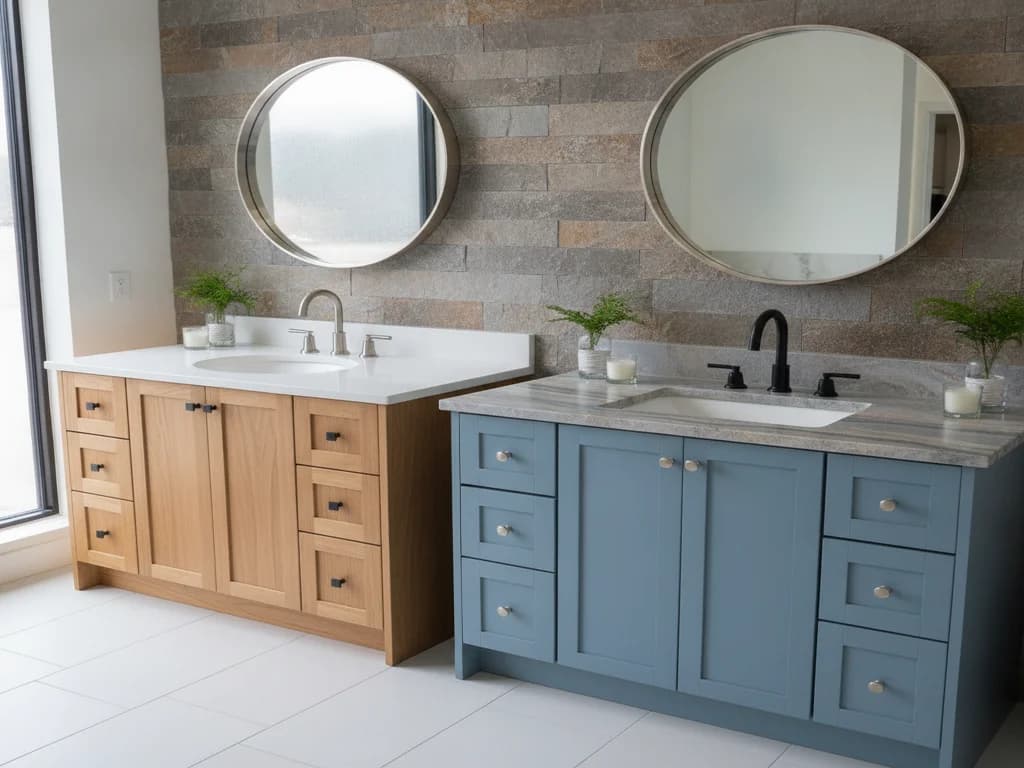
A drop-in (also called self-rimming or top-mount) sink drops into the countertop cutout from above, and its rolled rim rests on the counter surface, carrying the sink's weight and hiding the cutout entirely. Installation is close to self-explanatory: cut the hole, set the sink in caulk, connect the drain. The rim forgives a rough cutout, which is exactly why it works on laminate — the vulnerable core edge stays covered and caulked beneath it.
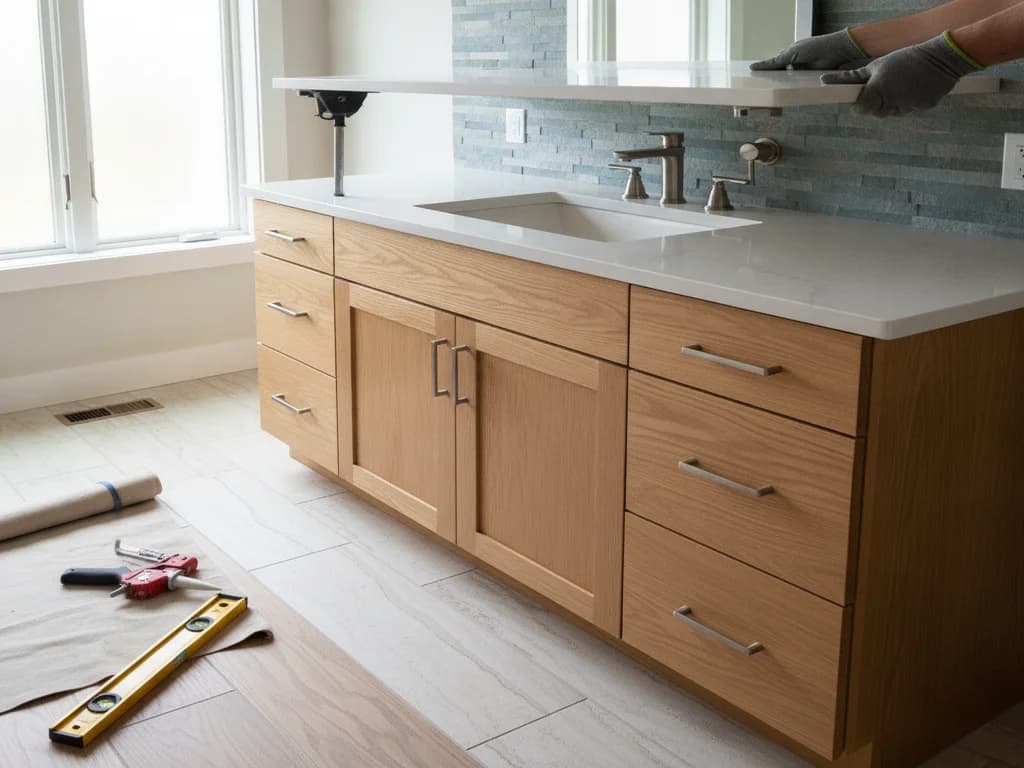
An undermount sink attaches from below with clips or brackets epoxied to the underside of the counter, leaving the polished cutout edge exposed as the finished transition into the bowl. That puts real demands on the countertop: the cutout must be precisely cut and polished (stone fabricators do this at templating), and the material must tolerate permanent water exposure at that raw edge — the fabrication standard the Natural Stone Institute's guidance treats as routine for stone and off-limits for particleboard-core tops.
The structural difference explains the cost difference. A drop-in is a sink purchase; an undermount is a sink purchase plus fabrication and mounting labor, which is why undermounts almost always arrive as part of a new countertop rather than a standalone swap.
Drop-in vs. undermount: the side-by-side
Here is the whole decision in one table. Watch the countertop row — for many bathrooms it ends the comparison before the style rows begin.
| Factor | Drop-in (self-rimming) | Undermount |
|---|---|---|
| Countertop compatibility | Any counter — laminate, tile, stone, solid surface | Solid waterproof tops only: quartz, granite, solid surface |
| Cleaning | Rim interrupts the wipe; caulk line collects grime | Counter wipes straight into the bowl — nothing to catch on |
| Looks | Visible rim reads traditional to dated, depending on the sink | Seamless, current, shows off the counter's edge work |
| Install | Simple — set in caulk from above; forgives rough cutouts | Clips/epoxy from below; needs a polished, precise cutout |
| Cost direction | Cheaper sink, cheaper install — sink installs run roughly $220–$650 per HomeAdvisor | Costlier install; usually bundled into new stone top fabrication |
| Maintenance | Re-caulk the rim as it ages; watch for rim leaks on laminate | Keep the under-counter seal healthy; little visible upkeep |
| Failure mode | Aged rim caulk lets water track under — critical on laminate cores | Failed mounting or seal lets the bowl drop or leak below |
| Swap-friendliness | Easy like-for-like replacement into the existing cutout | Replacement must match the cutout closely; recuts are fabrication work |
Sink installation range is a national bathroom figure from HomeAdvisor's True Cost Guide; undermount fabrication is typically priced within the countertop job rather than as a separate sink line.
The cleaning difference you feel every day
The undermount case is thirty seconds of daily reality: wipe the counter, and everything on it — water, hair, toothpaste, makeup — sweeps over the polished edge straight into the bowl. There is no rim to lift over, no caulk line to scrub around, no perimeter where grime builds a shadow ring. In a bathroom used by kids, that single motion is the feature.
The drop-in's rim is where its maintenance lives. The caulk bead around the perimeter collects soap film and grime, discolors over years, and must be cut out and renewed periodically to keep water from tracking underneath. On a stone counter, a neglected rim is cosmetic. On a laminate counter it is structural: water past the rim reaches the particleboard core, and swollen core around a sink is the classic laminate death — the full story is in laminate vs. stone vanity tops.
Hard water — standard issue across the Treasure Valley — mildly favors the undermount too. Mineral film builds anywhere water sits, and a drop-in rim gives it a dedicated ledge; a rimless perimeter leaves one less place for scale to take hold.
Switching from drop-in to undermount is a countertop project
A drop-in's cutout is rough and oversized because the rim hides it; an undermount's cutout is the finished edge. Converting means recutting and polishing the opening — stone fabrication work, done with the top off the cabinet — and on laminate it cannot be done at all. If you want an undermount, plan it with a countertop replacement, not as a sink swap.
Cost, and when each one is the smart spend
Taken alone, the drop-in wins the invoice: the sinks themselves are inexpensive, and installation is on the simple end of bathroom plumbing — sink installs broadly run roughly $220–$650 per HomeAdvisor, with like-for-like drop-in swaps at the low end. When a sink cracks or a faucet upgrade prompts the change, dropping a new self-rimming sink into the existing cutout is the efficient move; replacing a bathroom sink walks through that project.
The undermount's cost is mostly invisible because it hides inside the countertop job. When a fabricator templates a new quartz or granite top, the polished cutout and mounting are line items in the fabrication, and prefab stone vanity tops often come with the undermount bowl already bonded in place. Bought that way — as part of the top — the undermount premium over a drop-in shrinks to nearly nothing, which is why almost every new stone vanity top ships undermount.
That bundling is the practical takeaway: the undermount decision is really a countertop-timing decision. If a new top is in the plan — or the whole room is, via a full bathroom remodel — undermount costs little extra and is the right default. If the existing top is staying, the drop-in is the honest answer regardless of style points.
Which should you choose?
Let the countertop and the timing decide:
- New quartz or granite top going in: undermount — the fabrication is bundled, the cleaning win is daily, and it is what the counter deserves.
- Laminate or tile countertop staying put: drop-in — it is the only mount the top supports, and a fresh one with crisp caulk looks perfectly respectable.
- Cracked or dated sink, counter staying: like-for-like drop-in swap into the existing cutout — cheapest path to a fixed sink.
- Rental or flip: drop-in on laminate tiers, prefab stone with bonded undermount on mid tiers — match the property, not the trend.
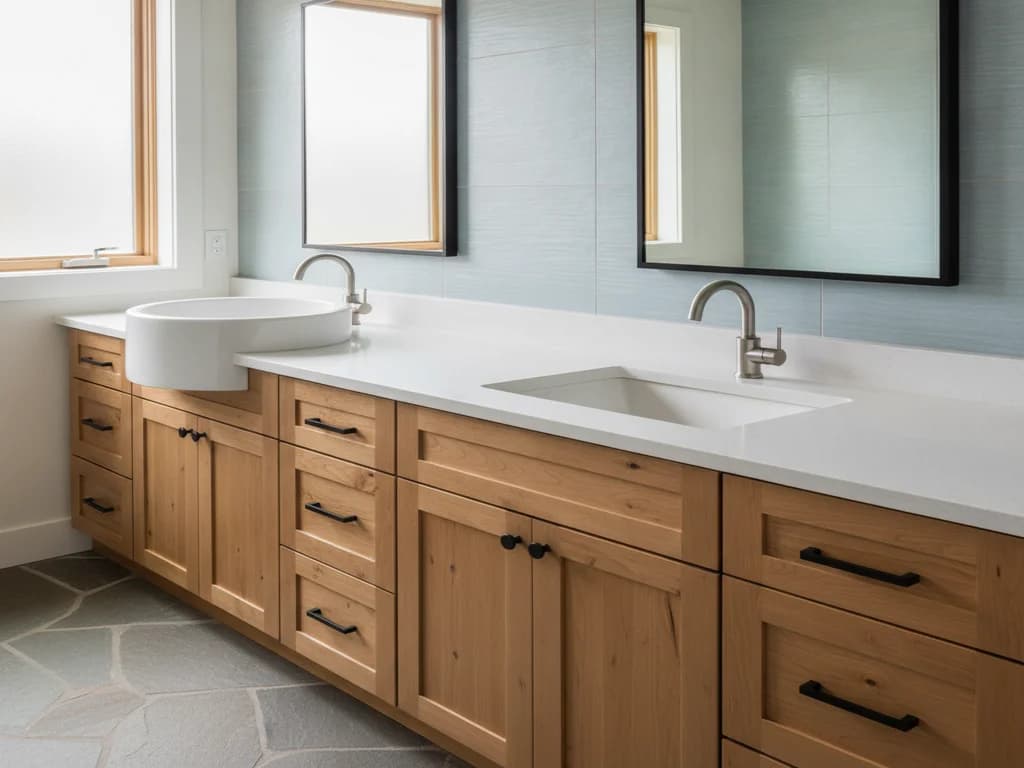
- Statement powder room where the sink is the jewelry: consider a vessel instead — that comparison lives in vessel vs. undermount sink.
- Whole vanity being rethought anyway: decide cabinet, top, and sink as one assembly — the bathroom vanity buying guide sequences those choices properly.
Ready to plan your Boise bathroom?
Licensed & insured · 3-year workmanship warranty
Frequently asked questions
- Can you put an undermount sink on a laminate countertop?
- No — not durably. Undermount installation leaves the countertop's cutout edge permanently exposed to sink water, and laminate's particleboard core swells and delaminates under that exposure. Laminate tops take drop-in sinks or one-piece integrated bowls only. If an undermount is a requirement, the countertop must be quartz, granite, or solid surface, which usually makes it a countertop-replacement project.
- Are undermount sinks worth it in a bathroom?
- When they arrive with a new stone top, clearly yes — fabricators bundle the polished cutout and mounting into the countertop job, so the premium over a drop-in nearly disappears, and the rimless counter wipes clean in one pass every day after. As a standalone conversion on an existing counter, rarely — the recut-and-polish fabrication cost outweighs the benefit. Time it with the countertop.
- Do undermount sinks fall off or leak?
- Properly installed, no — the bowl is held by clips or brackets epoxied to the counter's underside, and the perimeter is sealed against the stone. Failures trace to bad installation: inadequate adhesive, missing mechanical clips, or a heavy sink hung on caulk alone. Signs of trouble are a visible gap at the reveal or moisture in the cabinet below; either one is a call-a-pro symptom, not a re-caulk job.
- How much does it cost to replace a bathroom sink?
- Bathroom sink installation broadly runs roughly $220–$650 per HomeAdvisor, with like-for-like drop-in swaps into an existing cutout at the low end and jobs involving new cutouts, plumbing adjustments, or wall-mounted styles climbing higher. Undermount sinks are usually priced inside a countertop fabrication rather than as a standalone install. The sink itself is often the cheapest part of the line item.
- What is the difference between self-rimming and drop-in sinks?
- Nothing — they are the same sink by different names, along with "top-mount." The rolled rim rests on the countertop, carries the sink's weight, and hides the cutout, which is why the style installs on any counter material including laminate. "Undermount" is the contrasting term: rimless, clamped beneath the counter, with the polished cutout edge exposed as the finished transition into the bowl.
- Which sink style is best for resale?
- Undermount reads "remodeled" to buyers and is the expectation wherever stone counters are standard, so in mid-tier and up homes it is the safer presentation. But mount style is a supporting detail, not a headline — a clean drop-in on a fresh laminate top presents fine in entry-level homes, while a grimy caulk rim or a swollen counter hurts at any price point. Condition beats configuration.
Sources
Claims and figures are drawn from the sources above and provided for general guidance; your project may vary. Photography is illustrative of design concepts. For a fixed price on your specific bathroom, request a free estimate.