Updated July 6, 2026 · 8 min read
By Boise Bath — bathroom & shower remodeling in Boise & the Treasure Valley
The short answer
This Old House notes undermount sinks are "easy to clean, as debris can be wiped directly into the sink" and maximize counter space, while vessel sinks "may be more difficult to clean around the base" since they sit on top. Vessel sinks cost $200–$1,500 installed and undermount $250–$1,600 (Fixr), with undermount requiring more labor to secure beneath the countertop.
Key takeaways
- This Old House states undermount sinks are "easy to clean, as debris can be wiped directly into the sink," while vessel sinks "may be more difficult to clean around the base" where the bowl meets the counter.
- Undermount sinks "maximize counter space" per This Old House, since nothing sits above the surface; a vessel bowl takes up usable counter real estate by design.
- Fixr prices vessel sinks at $200–$1,500 and undermount sinks at $250–$1,600 installed, but undermount requires "more work to secure the sink to the underside of the countertop" while vessel and drop-in sinks need "little beyond setting the sink in place."
- Fixr notes vessel sinks require a "grid drain" to pass code in many states and typically pair with a tall "vessel filler" faucet — both added costs beyond the sink itself.
- This Old House frames vessel sinks around a "timeless style you'll love until your next bathroom renovation" — a design-forward choice — while separately publishing a guide on replacing a vessel sink with a self-rimming sink specifically because vessels "can be less practical for everyday use."
The core trade-off, up front
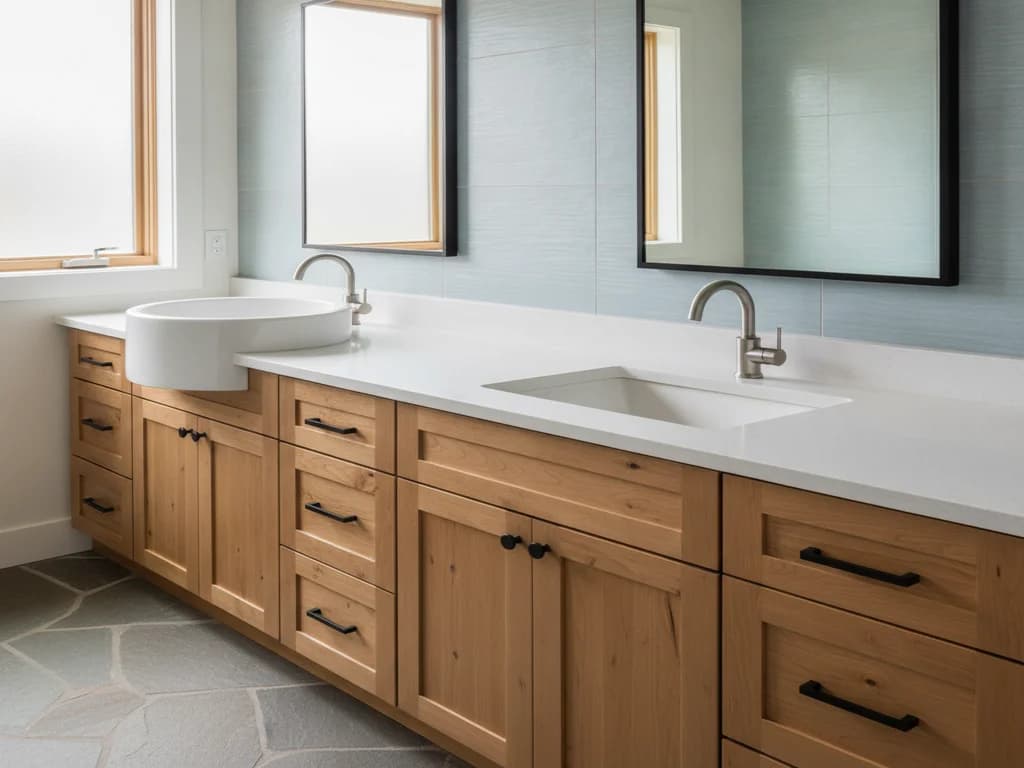
Vessel and undermount sinks are opposites by design. A vessel sink sits entirely on top of the counter, like a bowl set on a table — it is the visual centerpiece of the vanity. An undermount sink is mounted from below, so the counter material runs continuously to the edge of the basin with no rim in the way. That single construction difference is what drives everything else in this comparison: how each one cleans, how much usable counter it leaves you, and how it holds up to daily use.
This is a practicality-versus-statement decision more than a right-or-wrong one — both are legitimate choices, just for different priorities.
Quick take
If everyday practicality and easy cleanup matter most, undermount wins clearly. If you want the vanity to read as a design statement and are willing to wipe around the base a little more carefully, a vessel sink delivers a look undermount can't match.
Quick comparison
The cleaning, space, and cost facts side by side.
| Factor | Vessel sink | Undermount sink |
|---|---|---|
| Cleaning | Harder to clean around the base (This Old House) | "Easy to clean" — wipe debris straight into the sink (This Old House) |
| Counter space | Takes up counter surface by sitting on top | "Maximizes counter space" (This Old House) |
| Installed cost | $200–$1,500 (Fixr) | $250–$1,600 (Fixr) |
| Install labor | Minimal — "little beyond setting the sink in place" (Fixr) | More labor — secured to underside of countertop (Fixr) |
| Faucet/drain needs | Tall "vessel filler" faucet; grid drain required in many states (Fixr) | Standard faucet and drain configuration |
| Everyday practicality | Vessels "can be less practical for everyday use" (This Old House) | Popular for family bathrooms — easier daily cleanup (Bob Vila) |
Cleaning: where the real daily difference is
This Old House's bathroom sink guide is direct on this point: undermount sinks are "easy to clean, as debris can be wiped directly into the sink," because there is no raised rim to catch water, toothpaste, or soap residue along the way. A quick swipe of a rag moves everything straight from the counter into the drain.
A vessel sink works differently by nature. The same guide notes vessel sinks "may be more difficult to clean around the base" — the seam where the bowl meets the counter is a ledge, not a smooth transition, and it can collect water, grime, and (per Bob Vila's broader coverage of vessel sinks) even mold or mineral buildup if it isn't wiped down regularly. It isn't an unmanageable difference, but it is a real one: an undermount sink forgives an inconsistent cleaning routine better than a vessel sink does.
Counter space: the trade-off that's easy to underestimate
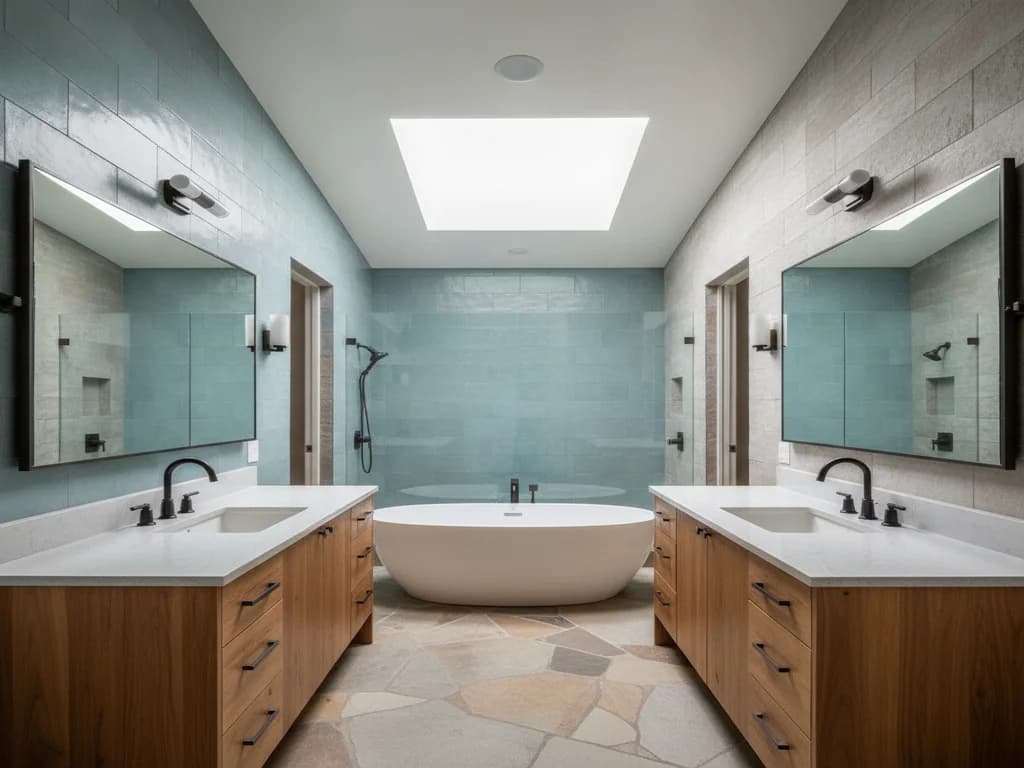
Because an undermount sink sits below the counter's surface, This Old House notes it provides "a modern, streamlined appearance while maximizing counter space" — the entire counter around the basin stays usable and level, since nothing rises above it except the rim of the sink itself, which sits flush or nearly flush with the surface.
A vessel sink takes up real counter footprint by design — the bowl itself occupies vanity surface that would otherwise hold toiletries, a soap dish, or simply elbow room. In a compact powder room or a hall bath with limited counter length, that difference is worth measuring before you commit, since a vessel bowl can leave noticeably less usable space on either side than an equivalent undermount install.
Cost and installation: where the labor actually goes
Fixr's bathroom sink cost data prices vessel sinks at $200–$1,500 installed and undermount sinks slightly higher at $250–$1,600 — close enough that sink style alone rarely decides a budget. The bigger difference is labor: Fixr notes vessel (and drop-in) sinks "require little beyond setting the sink in place and attaching the drain and P-trap," while "undermount sinks require more work to secure the sink to the underside of the countertop" so it does not fall.
Vessel sinks carry hidden add-ons, though. Fixr notes that in many states, "you must install a grid drain with a vessel sink to pass code," and most vessel installs need a "vessel filler" — a tall, usually single-hole faucet designed to reach over the raised bowl. Those line items can close the cost gap with undermount's extra labor, or exceed it.
Height and everyday ergonomics
A vessel bowl sits several inches above the counter by definition — that height is the entire visual point of the style. In practice, that raised rim changes how the sink feels to use day to day: it can be more comfortable to lean over for some users and awkward for shorter household members or children, which is part of why This Old House's companion guide on replacing a vessel sink with a self-rimming sink exists in the first place. It notes vessels "can be less practical for everyday use than self-rimming (drop-in) sinks, where the rim rests on the countertop surface and the bigger basin resists splashing" — splashing being the direct consequence of a shallower, higher-set bowl.
An undermount sink's rim sits at or just below counter height, matching the ergonomics homeowners are already used to from a standard sink — no adjustment period, no extra care around splash zones, and no height mismatch for shorter users to work around.
Style longevity: which one ages better in a bathroom?
Bob Vila calls vessel sinks a way to "choose a timeless style that you'll love until your next bathroom renovation" — a strong design statement, but framed as tied to a renovation cycle rather than a decades-long fixture choice. Undermount sinks read as more neutral: Bob Vila notes they're "a popular option for family bathrooms because they're easier to clean," a practicality-first pitch that ages well precisely because it was never chasing a trend.
Neither is "wrong" — a vessel sink in a primary or guest bath meant to make a statement is doing its job. It's a family bathroom, used daily with less patience for wiping a base seam, where undermount's practical edge tends to matter more over time.
Which one should you choose?
Choose an undermount sink for a primary daily-use bathroom, a family or kids' bath, or anywhere counter space is tight — you get easier cleanup, more usable counter, and familiar ergonomics, for a cost that's close to a vessel sink once you factor in the vessel's grid-drain and tall-faucet requirements. See our bathroom vanity buying guide for the cabinet-and-clearance decisions that pair with this choice.
Choose a vessel sink for a powder room or a design-forward primary bath where the sink itself is meant to be a visual feature, and you're willing to wipe the base seam regularly to keep it looking sharp. Either way, a full bathroom remodel is the right time to weigh sink style against your vanity's countertop and clearances together — see our bathroom vanity cost factors guide for how sink choice fits into the overall vanity budget.
Ready to plan your Boise bathroom?
Licensed & insured · 3-year workmanship warranty
Frequently asked questions
- Is a vessel sink harder to clean than an undermount sink?
- Yes, generally. This Old House notes undermount sinks are "easy to clean, as debris can be wiped directly into the sink," while vessel sinks "may be more difficult to clean around the base," where the bowl meets the counter and can collect water and grime if not wiped down regularly.
- Does a vessel sink cost more than an undermount sink?
- The sinks themselves are close in price — Fixr prices vessel sinks at $200–$1,500 and undermount at $250–$1,600 installed. Undermount needs more installation labor to secure it beneath the countertop, but vessel sinks often add cost elsewhere: a code-required grid drain and a specialized tall "vessel filler" faucet, per Fixr.
- Do vessel sinks take up more counter space than undermount sinks?
- Yes. This Old House notes undermount sinks "maximize counter space" since the basin sits below the surface with nothing protruding above it. A vessel sink sits entirely on top of the counter, so the bowl itself occupies usable vanity surface that an undermount install would leave open.
Sources
- This Old House — How To Choose a Bathroom Sink
- This Old House — How To Replace a Vessel Sink with a Self-Rimming Sink
- Bob Vila — The Best Bathroom Sinks
- Fixr — Bathroom Sink Installation Cost (2026)
- ICC — 2021 International Plumbing Code
Claims and figures are drawn from the sources above and provided for general guidance; your project may vary. Photography is illustrative of design concepts. For a fixed price on your specific bathroom, request a free estimate.