Updated July 6, 2026 · 8 min read
By Boise Bath — bathroom & shower remodeling in Boise & the Treasure Valley
The short answer
Freestanding tub cost is driven mainly by material (acrylic starts around $300–$1,000 installed; cast iron and stone resin run into the thousands) and by floor-mounted filler plumbing, which This Old House prices with freestanding installation at $2,500–$10,000 overall. Heavier materials can also require floor reinforcement, since a large filled stone or cast-iron tub can weigh close to two tons.
Key takeaways
- This Old House (2026) prices freestanding tub installation at $2,500–$10,000 overall, compared with $200–$800 for a standard built-in alcove tub — the tub itself is only part of that gap.
- Material tier moves the number by thousands: This Old House prices acrylic at $300–$1,000, cast iron at $900–$5,000, and stone (granite) tubs at $10,000–$20,000, installed.
- A floor-mounted filler is one of the biggest freestanding-specific costs — Fixr notes the plumbing has to come up through the floor with exposed supply pipes that need a finished surround, and a basic floor-mounted faucet set runs $300–$2,000+ for the fixture alone.
- Weight matters: Fixr notes a large, filled stone freestanding tub can require a floor able to hold up to two tons, which sometimes means floor reinforcement — a cost an acrylic freestanding tub does not add.
- Choosing a lighter material (acrylic) with a standard footprint keeps both the tub cost and the plumbing/floor considerations at the low end of this range; stone, cast iron, and custom filler placement all add cost independently.
Why does a freestanding tub cost so much more to install than a built-in?
This Old House (2026) prices freestanding tub installation at $2,500–$10,000 overall, compared with $200–$800 for a standard built-in alcove tub. That is a much bigger gap than the tub itself accounts for — a freestanding tub is priced across three separate decisions: the tub's material, the filler plumbing that has to reach it, and (sometimes) whether the floor underneath can support it.
Below are the 6 factors that actually move that number, from the material tier you choose down to the floor it sits on.
The pattern behind freestanding tub cost
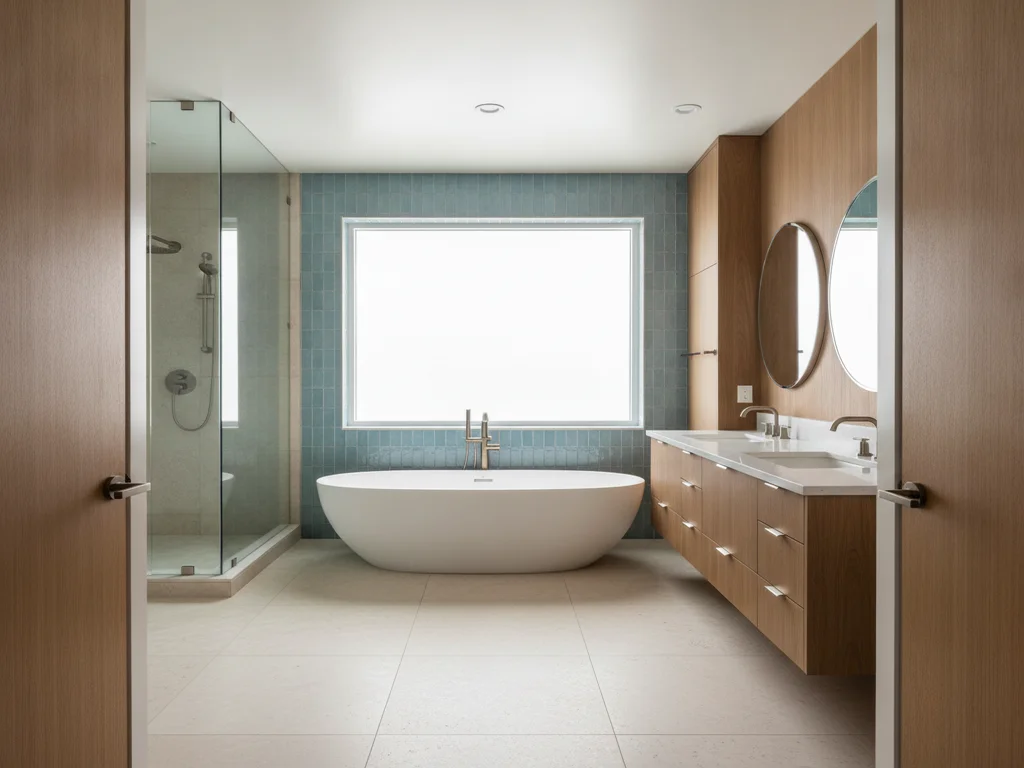
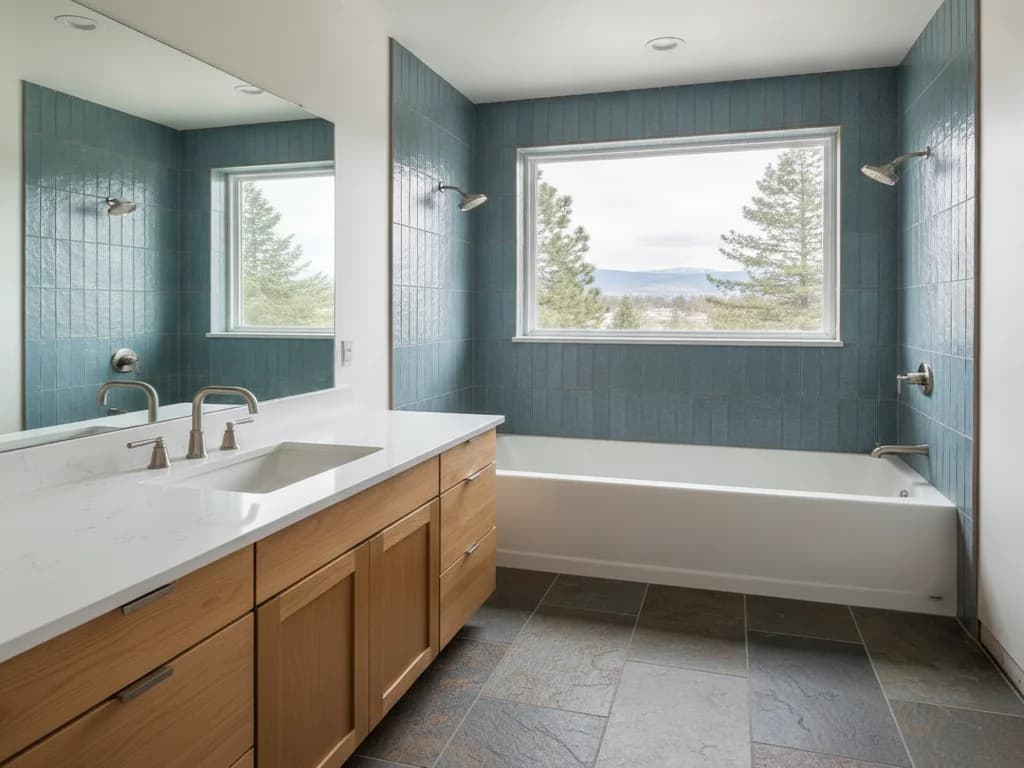
A built-in tub sits against three walls that already have plumbing access built in. A freestanding tub sits in open space, which means the plumbing has to come to it — usually up through the floor — and the tub itself is standing entirely on its own weight rather than braced by a surrounding frame. Both of those facts drive most of what is on this list.
1. Material tier: the biggest swing on the list
This Old House prices installed bathtubs by material at: fiberglass $200–$800, enameled steel $200–$1,200, acrylic $300–$1,000, cast iron $900–$5,000, cultured marble $2,000–$5,000, copper $3,000–$6,000, solid surface $1,600–$8,700, and granite/natural stone $10,000–$20,000. Acrylic is the default freestanding material for a reason — it is light, relatively affordable, and available in the same sculptural shapes as premium materials.
Cast iron and stone resin cost more for related but different reasons: cast iron is priced for its enamel-coated durability and weight, while stone (granite, marble, engineered stone resin) is priced for material rarity and the specialized fabrication a solid or composite-stone tub requires. Either one moves a freestanding tub from a four-figure decision to a five-figure one.
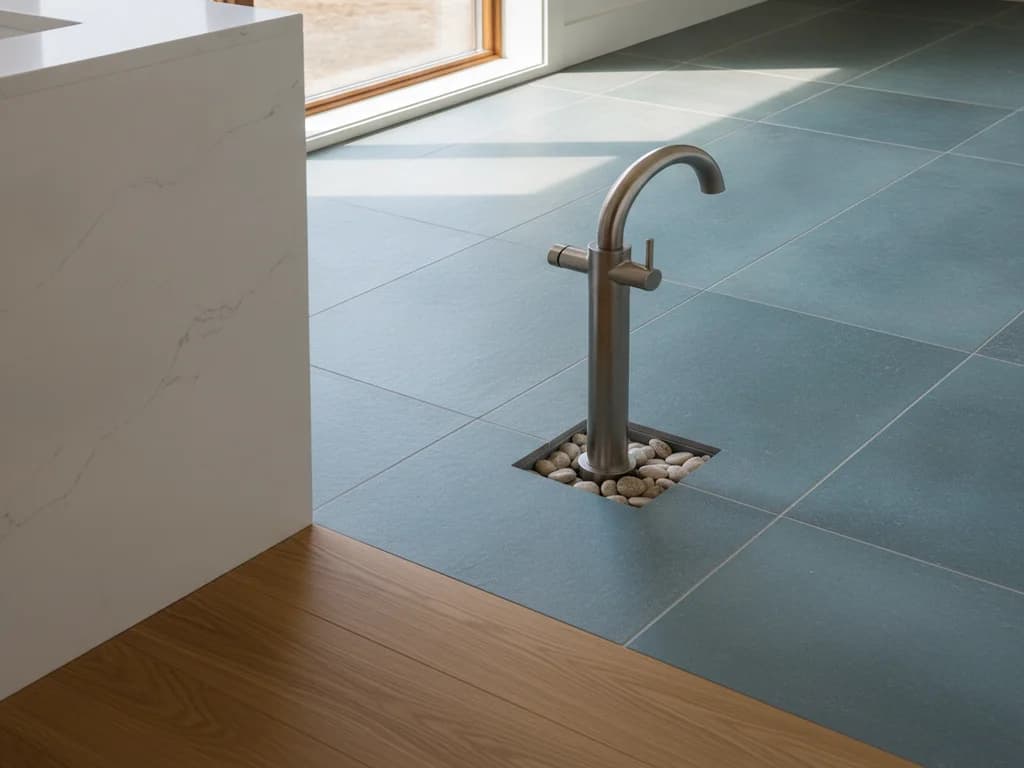
2. Floor-mounted filler plumbing
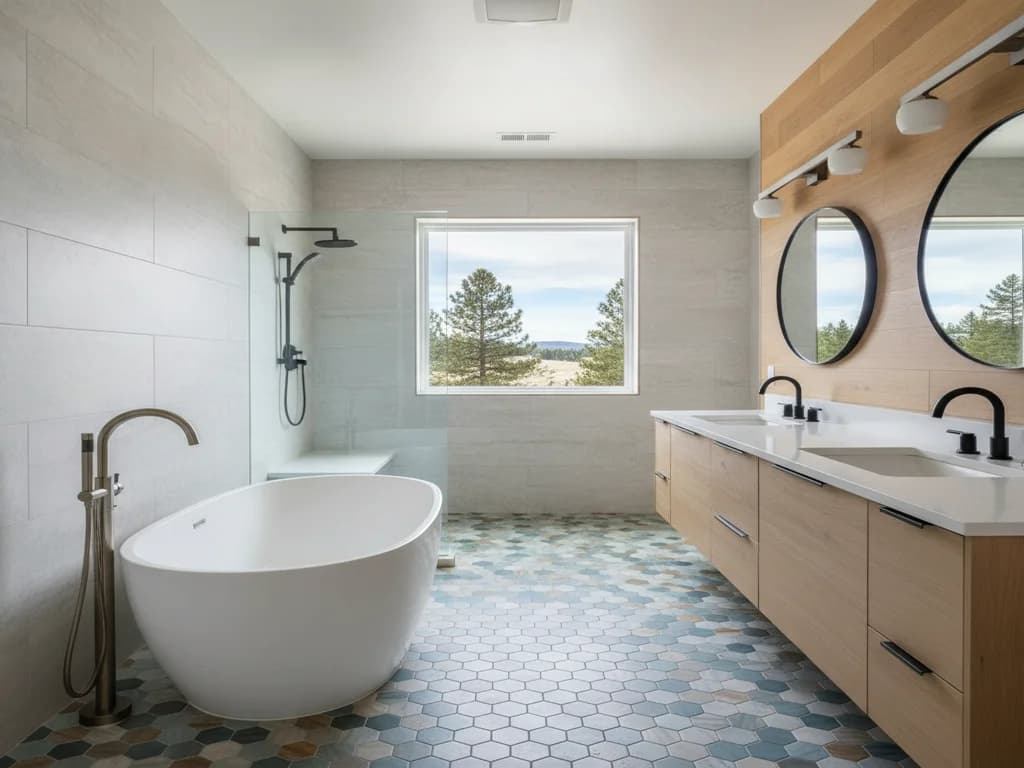
A built-in tub's faucet mounts on the wall or deck, where supply lines already run. A freestanding tub usually uses a floor-mounted filler, and Fixr notes that faucet set has to be bolted to the floor for stability — the standard tripod-style mount uses three bolts, and "hot and cold water supplies must be connected, with the pipes hidden by a decorative cover or base."
This Old House confirms the freestanding-specific cost driver directly: installation "requires the plumbing to come up through the floor with exposed pipes which need finished surfaces" — meaning the floor around the filler has to be opened, plumbed, and then finished back to match the room. Fixr prices the floor-mounted faucet fixture itself at $300–$2,000+, separate from that plumbing labor.
Wood floors vs. concrete slabs
Fixr notes wood floorboards may not be thick enough to anchor a tripod-style floor-mounted filler securely, sometimes requiring a beam to be located or added underneath before the fixture can be bolted down — one more reason floor-mounted filler installation on an upper-floor bathroom can cost more than the same fixture on a slab-on-grade bathroom.
3. Drain location and floor plumbing
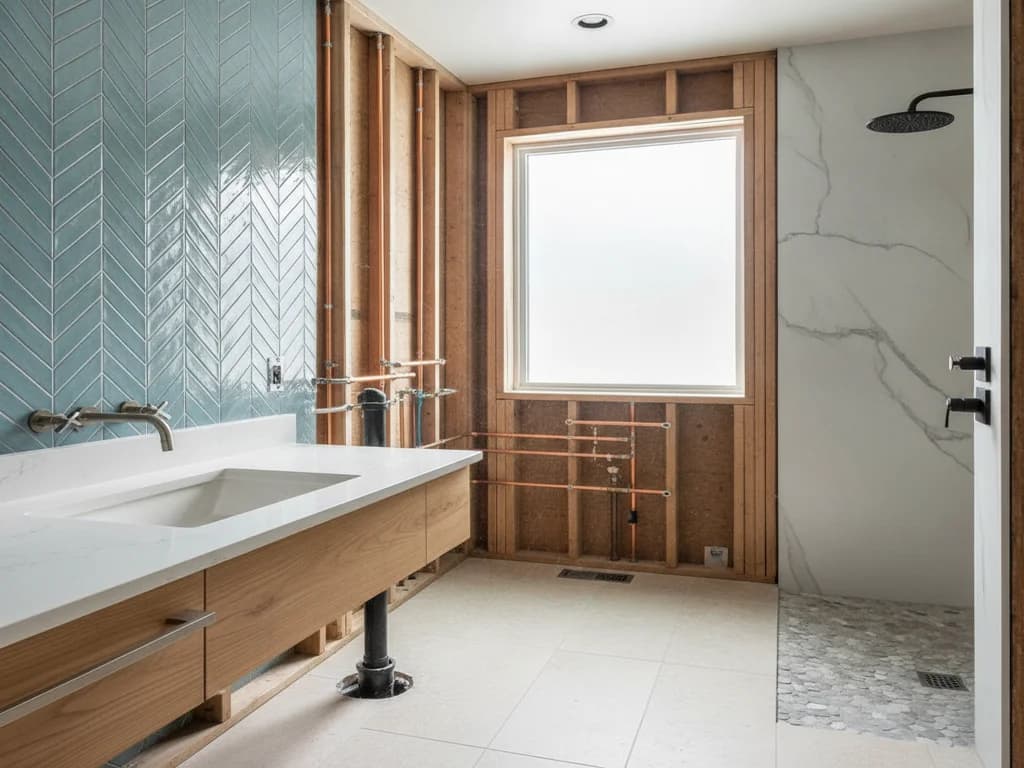
A freestanding tub typically has a center or floor-centered drain, which is rarely positioned where a previous built-in tub's drain was. Moving or extending a drain line to reach that new center point means opening the floor, rerouting the line, and patching the finish back — plumbing work that is specific to converting from a built-in layout to a freestanding one, on top of the filler plumbing itself.
This is one of the reasons a freestanding tub replacing an existing built-in alcove tub tends to cost more than installing the same freestanding tub during new construction or a full gut remodel where the floor is already open for other reasons.
4. Floor and structural considerations
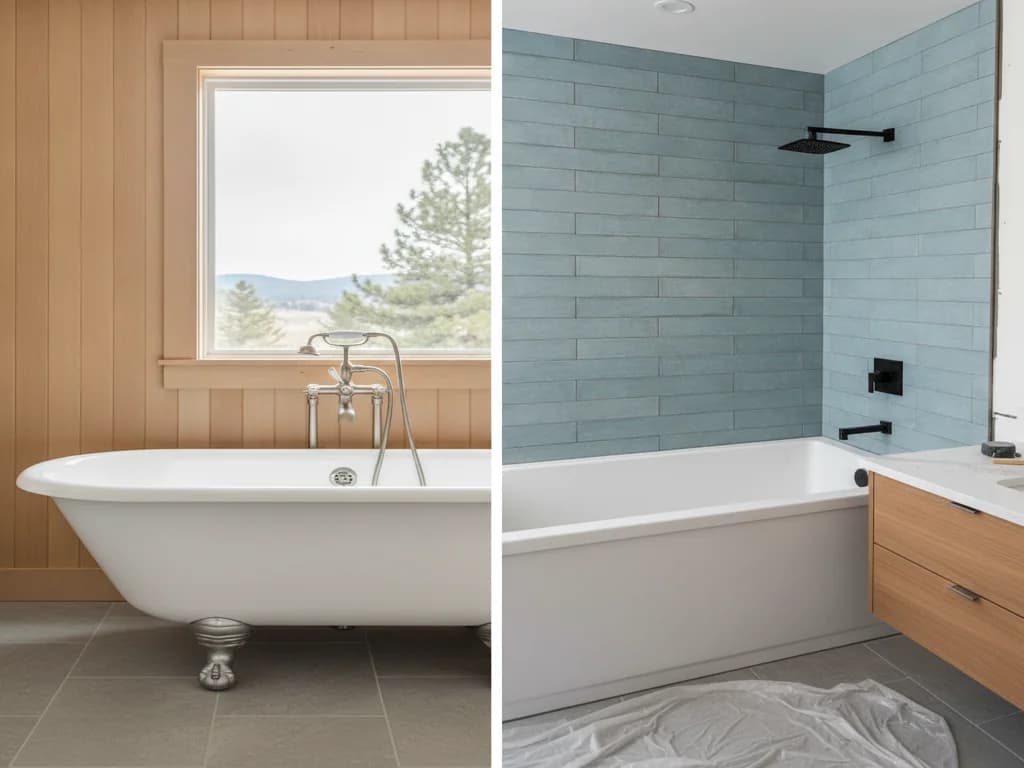
Weight is a real consideration for the heavier material tiers on this list. Fixr notes that "very large stone, freestanding tubs require a floor that can hold up to two tons when the tub is filled" — water alone adds roughly 8.3 pounds per gallon on top of the tub's own weight, and a large soaking tub can hold well over 80 gallons. By contrast, Fixr notes an acrylic freestanding tub "will not require any new flooring" in most cases, since it is dramatically lighter both empty and filled.
When floor reinforcement is needed — adding blocking or a support beam under an existing floor — that is additional structural carpentry beyond the plumbing and tub cost, and it is worth flagging with your contractor at the design stage if you are considering cast iron, stone resin, or natural stone, especially on an upper floor.
5. Tub shape and size
Freestanding tubs are sold in a range of footprints — oval, rectangular, slipper, and Japanese soaking styles among them — and larger or more sculptural shapes generally cost more within any given material tier, both because they use more material and because a non-standard shape can complicate the surrounding floor and filler layout. A compact oval soaking tub in acrylic sits at the low end of the acrylic range; an oversized sculptural shape in the same material moves toward the top of it.
Capacity is part of this too. A larger tub holds more water, which is part of why a big soaking tub is one of the scenarios Fixr flags for the floor-weight consideration above — even in acrylic, a tub sized for two people or a deep soak adds real weight once filled, and it is worth confirming that number with your installer if you are considering an oversized freestanding shape on an upper floor.
6. Installation labor and access
This Old House's $2,500–$10,000 freestanding installation range reflects not just the plumbing and structural factors above, but also basic access: getting a large, heavy tub into a bathroom (through doorways, up stairs, around tight corners) can require extra labor or, in rare cases, temporary removal of a window or door frame. This is a straightforward line item to ask your installer about directly once a tub's dimensions and weight are known.
The 6 factors at a glance
If two freestanding tub quotes come back far apart, this is the fastest way to see where the gap is coming from — it is rarely the tub's sticker price alone.
| Factor | Typical cost | Source |
|---|---|---|
| Freestanding installation (overall) | $2,500–$10,000 | This Old House |
| Built-in alcove installation (overall) | $200–$800 | This Old House |
| Acrylic tub, installed | $300–$1,000 | This Old House |
| Cast iron tub, installed | $900–$5,000 | This Old House |
| Stone/granite tub, installed | $10,000–$20,000 | This Old House |
| Floor-mounted filler fixture | $300–$2,000+ | Fixr |
Ranges reflect 2026 national data from This Old House and Fixr. Floor reinforcement and drain-relocation plumbing are separate line items that apply only when needed.
How to keep freestanding tub costs predictable
The single biggest lever on this list is material — choosing acrylic over cast iron or stone keeps both the tub cost and the floor/structural question off the table entirely, since it is light enough that Fixr notes it typically needs no new flooring. From there, a straightforward floor-mounted filler in a location the plumber can reach without major floor work is the next biggest lever.
For inspiration once your material and budget range are set, see our freestanding tub ideas guide, and for the full material trade-off comparison, see bathtub materials compared. When you are ready to plan a freestanding tub for your own primary suite, a master bathroom retreat project prices these factors against your actual floor plan and plumbing rather than a category average.
Ready to plan your Boise bathroom?
Licensed & insured · 3-year workmanship warranty
Frequently asked questions
- Why is a freestanding tub more expensive to install than a built-in tub?
- This Old House (2026) prices freestanding installation at $2,500–$10,000 versus $200–$800 for a built-in alcove tub. The gap comes from floor-mounted filler plumbing that has to be routed up through the floor with a finished surround, potential drain relocation, and — for heavier materials — possible floor reinforcement, none of which a built-in tub against three plumbed walls requires.
- How much does a floor-mounted tub filler cost?
- Fixr (2026) prices the floor-mounted faucet fixture itself at $300–$2,000+, separate from the plumbing labor to bring supply lines up through the floor to reach it. Wood-framed floors sometimes need a support beam located or added before the fixture can be bolted down securely, which can add further cost.
- Does a freestanding tub need floor reinforcement?
- It depends on material. Fixr notes a large, filled stone freestanding tub can require a floor able to support up to two tons, which sometimes means adding blocking or a support beam. An acrylic freestanding tub is light enough that Fixr notes it typically needs no new flooring at all.
Sources
- This Old House — Bathtub Installation Cost (2026)
- Fixr — Freestanding vs. Built-In Tub (2026)
- Fixr — Cost to Install or Replace a Bathtub (2026)
Claims and figures are drawn from the sources above and provided for general guidance; your project may vary. Photography is illustrative of design concepts. For a fixed price on your specific bathroom, request a free estimate.