Updated July 6, 2026 · 8 min read
By Boise Bath — bathroom & shower remodeling in Boise & the Treasure Valley
The short answer
A recessed medicine cabinet sits flush by cutting into the wall between studs, while a surface-mount cabinet skips that cutting and simply attaches to the wall face, projecting outward instead. Recessing needs roughly 3.5 inches of clear stud-bay depth and no plumbing, vents, or load-bearing framing in the way — surface-mount works anywhere and is fully reversible later.
Key takeaways
- Recessing a medicine cabinet means cutting drywall and, per Bob Vila's installation guidance, mounting it "inside the wall to a rectangle of framing" — typically 2×4 blocking cut about 2 inches longer than the cabinet's height.
- This Old House's recessed-cabinet guidance gives the width that avoids cutting a stud: "if the cabinet is less than 14½ inches wide, it will fit between the studs without any stud cutting required," since studs are usually set 16 inches apart on center.
- Recessing on an exterior wall has a real cost beyond labor — This Old House notes "a recessed cabinet on an exterior wall will displace insulation," and a cabinet in a load-bearing wall "will need a header to transfer the load if a stud has to be cut."
- Surface-mount is the fallback whenever the wall behind the vanity isn't cooperating: Bob Vila's guidance recommends buying a surface-mounted cabinet instead if you find "a large vent pipe or any load-bearing framing" in the way.
- Both styles mount to roughly the same height — a good basic rule, per Bob Vila, is to center the mirror "roughly 64 inches from the ground" — so the visible difference at eye level is mostly how far the cabinet projects off the wall, not where it sits vertically.
The real difference is what's behind the wall
From across a bathroom, a recessed medicine cabinet and a surface-mounted one can look nearly identical — both show a mirrored door at roughly the same height. The difference that actually matters is invisible from the front: a recessed cabinet is built into the wall cavity, while a surface-mounted one is built onto the wall face. That distinction decides how much the cabinet projects into the room, what has to be true about the wall behind it, and how much it costs to install.
Bob Vila's installation guidance draws the line cleanly: "surface-mounting a medicine cabinet to the wall doesn't require cutting into the drywall, while a recessed medicine cabinet sits almost flush with your bathroom wall." Everything else in this comparison follows from that one difference.
Check this before you fall in love with recessed
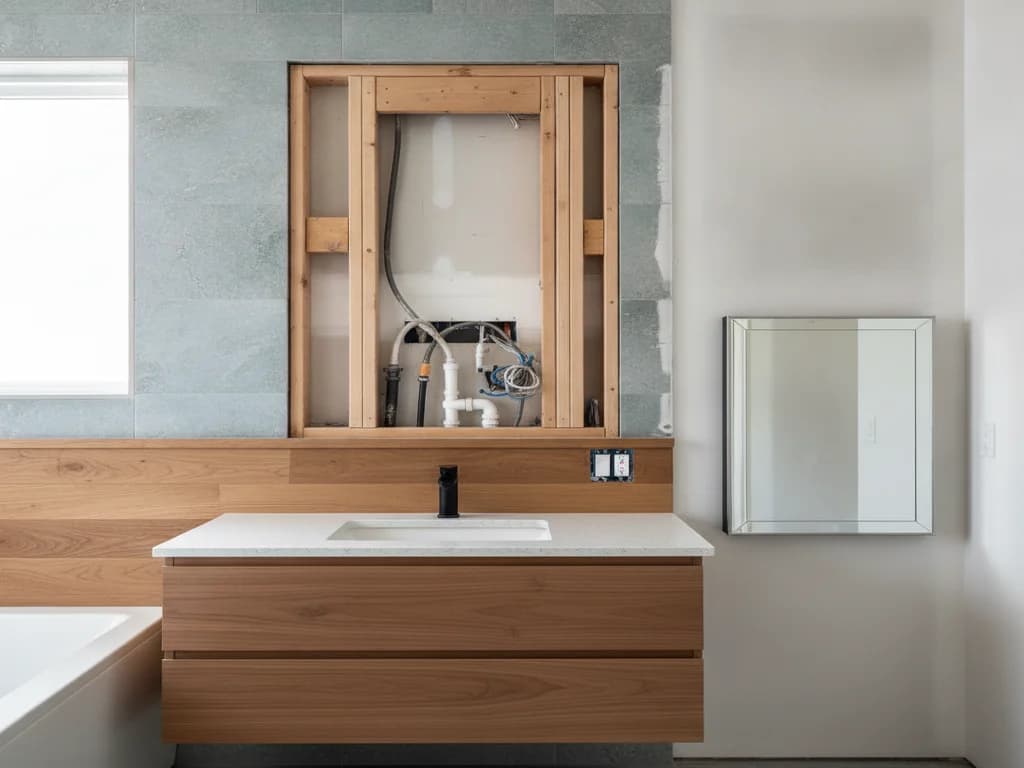
A recessed cabinet is only possible where the wall cavity is clear — no vent pipe, no load-bearing framing, and no plumbing running through the exact spot you want it.
What recessing actually requires
A recessed cabinet has to be anchored to something solid inside the wall, not just held up by drywall. Per Bob Vila's guidance, "a recessed medicine cabinet needs to be anchored inside the wall to a rectangle of framing" — in practice, that means cutting two pieces of 2×4 lumber "approximately 2 inches longer than the overall height of the cabinet" and installing them as blocking on either side of the opening.
Width is the number that decides whether a stud has to move. Studs are typically set "16 inches apart, measured from their centers," and This Old House's recessed-cabinet guidance gives the resulting rule of thumb directly: "if the cabinet is less than 14½ inches wide, it will fit between the studs without any stud cutting required." A wider cabinet means cutting a stud — straightforward on a non-load-bearing wall, where "it's safe to cut them out," but a bigger job on a load-bearing wall, which "will need a header to transfer the load if a stud has to be cut."
Where recessing runs into a wall it shouldn't
Before committing to a recessed cabinet, the wall itself needs to be checked, not just measured. Bob Vila's guidance is specific about what to look for: "plumbing supply lines, vents, drains, and electrical wiring may all run from floor to floor directly behind the sink." Wiring and some plumbing lines can often be rerouted, but a large vent pipe or load-bearing framing is a different story — Bob Vila's recommendation at that point is direct: "if you encounter either of the latter, it's recommended to skip the project and instead buy a surface-mounted cabinet."
Exterior walls carry a separate caveat that has nothing to do with plumbing: This Old House notes plainly that "a recessed cabinet on an exterior wall will displace insulation." That's a real energy and moisture-management trade-off in a Boise winter, not just a framing inconvenience, and it's worth weighing even when the stud bay is otherwise clear.
The case for skipping recessed entirely
Surface-mount isn't just the fallback for a wall that won't cooperate — it's a legitimate first choice. It sidesteps the framing, insulation, and load-bearing questions above entirely, since Bob Vila's guidance notes it "doesn't require that you cut into the drywall," making it the simpler option "for walls with limited depth." It's also the more reversible choice: This Old House notes that "a surface-mount cabinet can be converted into a recessed one, as long as its sides can slip into the wall cavity without obstruction" — a path that only runs one direction, since a recessed opening can't be un-cut.
The trade-off is that a surface-mount cabinet always projects into the room by its full depth, where a recessed cabinet sits close to flush. In a tight bathroom where every inch of clearance matters, that projection is worth factoring in alongside the installation questions above.
Recessed vs. surface-mount, at a glance
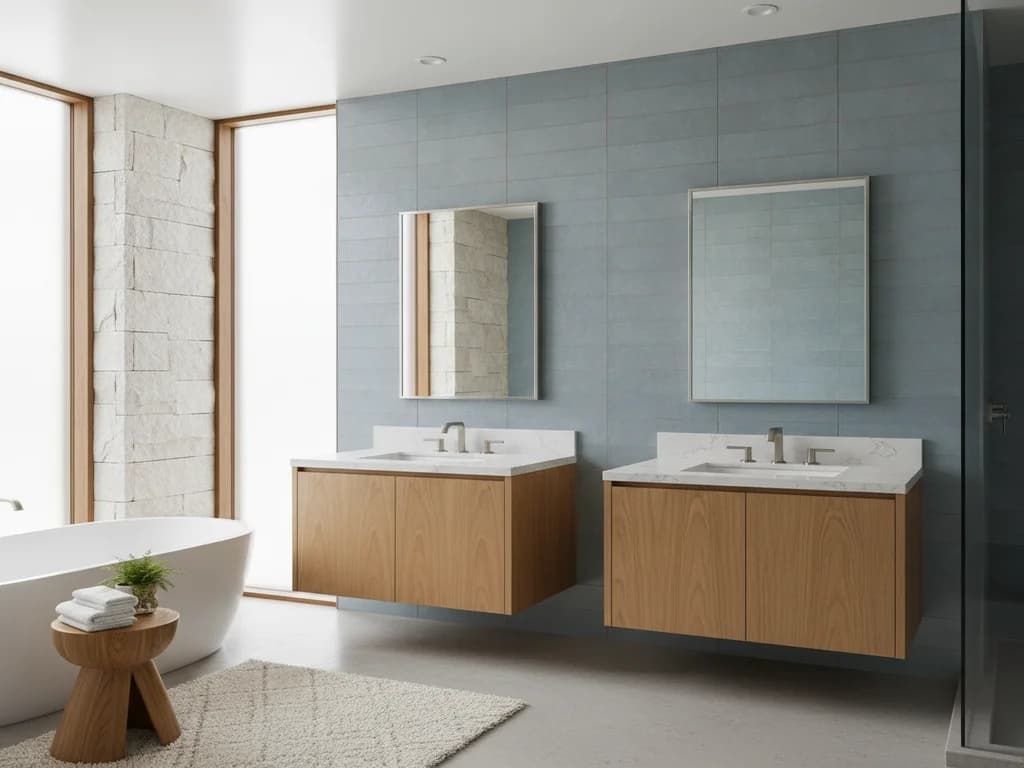
Both styles hold roughly the same mirror; the decision really comes down to what the wall behind them can support.
| Factor | Recessed | Surface-mount |
|---|---|---|
| Wall cutting required | Yes — drywall cut, 2×4 blocking installed | No |
| Wall-cavity depth needed | Roughly 3.5 inches, clear of pipes/wiring/vents | None |
| Width limit to avoid cutting a stud | Under about 14½ inches | Not applicable |
| Exterior-wall caveat | Displaces insulation | None |
| How far it projects into the room | Nearly flush | Full cabinet depth |
| Reversibility | Cut opening is permanent | Can later be converted to recessed if the cavity allows |
When a mirror-only alternative makes more sense
Not every vanity wall needs a cabinet at all. A plain mirror — framed or frameless, mounted flush against the wall — gives up the storage a medicine cabinet provides but skips every question in this article: no stud bay to check, no width limit, no insulation trade-off, no projection into the room. It's the right call when the storage a medicine cabinet would add isn't worth the installation complexity, or when the wall behind the vanity has already ruled out recessing and a surface-mount cabinet's projection would feel too bulky in a tight space.
The storage math is worth being honest about either way: a medicine cabinet, recessed or surface-mount, typically holds a shelf or two of daily medications and small toiletries — not a household's full supply. If bigger storage is the actual goal, that's usually better solved with vanity drawers or a recessed niche elsewhere in the room than by sizing up the medicine cabinet itself.
Height and placement, regardless of style
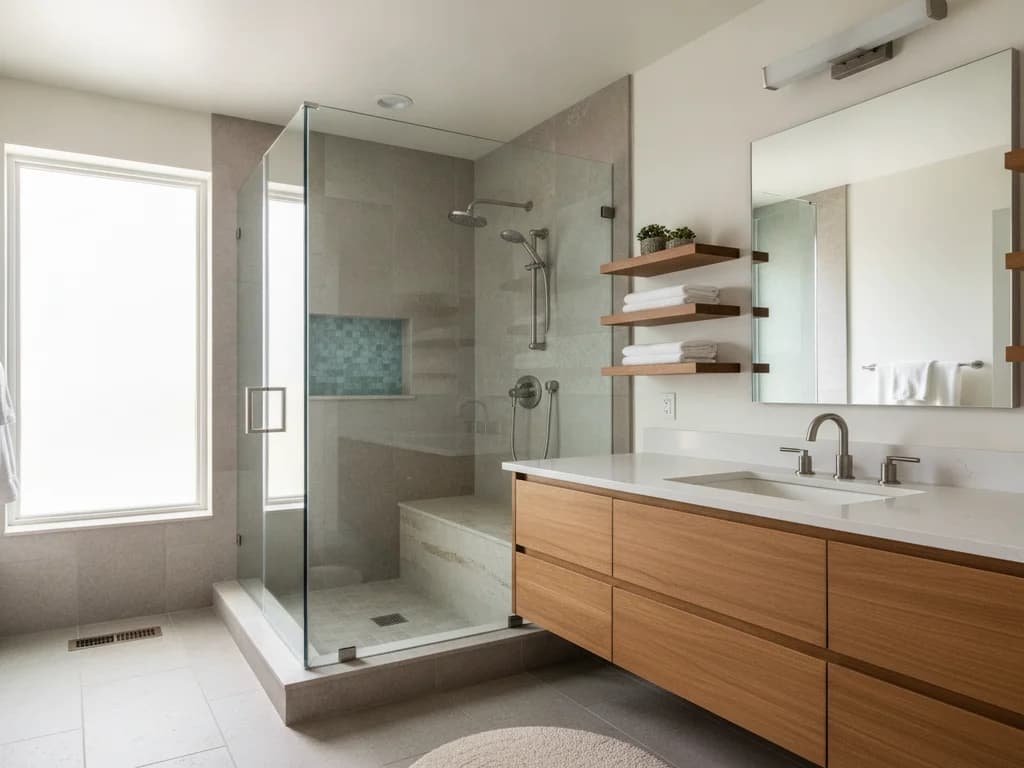
Both cabinet styles mount to roughly the same height, since eye level doesn't change based on how the cabinet is framed. Bob Vila's guidance puts it plainly: "a good basic rule is to mount the cabinet so the center of the mirror is roughly 64 inches from the ground." That number is the shared starting point for both styles — from there, the decision genuinely comes down to what the wall behind the vanity can support, and how much projection into the room you're willing to accept.
If mirror choice and sizing is the piece you're still working through, our bathroom mirror ideas guide covers framed, frameless, backlit, and shape options in more depth than the storage question covered here.
Making the call for your bathroom
Start with the wall, not the style: check the stud spacing, look for plumbing, vents, or load-bearing framing, and note whether the wall is exterior. If the cavity is clear and the cabinet is under about 14½ inches wide, recessed is usually worth the extra labor for the flush look and reclaimed floor-space feel it gives a small bathroom. If the wall says no — a vent pipe, a load-bearing stud, or an exterior wall you don't want to lose insulation in — a surface-mount cabinet, or a plain mirror if storage isn't the priority, is the honest answer, not a compromise.
A full bathroom remodel is where this gets checked against your actual wall before anything is cut — worth confirming early, since a recessed opening can't be undone once it's made.
Ready to plan your Boise bathroom?
Licensed & insured · 3-year workmanship warranty
Frequently asked questions
- How much wall depth does a recessed medicine cabinet need?
- Roughly the depth of a standard 2×4 stud bay — about 3.5 inches — with that space clear of plumbing supply lines, vents, drains, and electrical wiring. Bob Vila's guidance notes that if a large vent pipe or load-bearing framing is in the way, the recommended move is to buy a surface-mounted cabinet instead.
- Can a medicine cabinet fit between wall studs without cutting one?
- Yes, if it's narrow enough. This Old House's guidance gives the figure directly: "if the cabinet is less than 14½ inches wide, it will fit between the studs without any stud cutting required," since studs are typically set 16 inches apart on center.
- Is a surface-mount medicine cabinet a downgrade from recessed?
- Not necessarily — it's the simpler, more reversible option. Bob Vila notes it "doesn't require that you cut into the drywall," and This Old House points out that a surface-mount cabinet "can be converted into a recessed one" later if the wall allows, while a cut recessed opening can't be undone.
Sources
- Bob Vila — How to Install a Medicine Cabinet (Inset or Surface Mount)
- This Old House — How to Install a Recessed Cabinet
Claims and figures are drawn from the sources above and provided for general guidance; your project may vary. Photography is illustrative of design concepts. For a fixed price on your specific bathroom, request a free estimate.