Updated July 16, 2026 · 7 min read
By Boise Bath — bathroom & shower remodeling in Boise & the Treasure Valley
The short answer
Replacing bathroom baseboards means pulling the old trim, checking the wall and subfloor behind it for moisture damage, then installing a water-resistant material — PVC, polystyrene, solid wood, or a tile base — caulked and sealed at the floor. Installed baseboard runs roughly $6–$9 per linear foot, per HomeAdvisor, with tile base costing more.
Key takeaways
- MDF baseboard wicks standing water like a sponge — once it swells, it cannot be sanded or repaired, only replaced.
- PVC, cellular-composite, and tile base are the most water-tolerant baseboard options for bathrooms; painted solid wood is a middle ground.
- Installed baseboard typically runs about $6–$9 per linear foot, per HomeAdvisor cost guides, with tile base at a premium.
- Swelling trim near a tub, shower, or toilet is often the first visible symptom of a leak or subfloor problem — inspect before you re-trim.
- The right sequence is floor first, then baseboard: replacing trim before a planned flooring change means doing the job twice.
Why do bathroom baseboards fail faster than trim anywhere else?
Most Treasure Valley homes built from the 1990s on came with MDF (medium-density fiberboard) baseboard throughout — including the bathrooms. MDF is smooth, cheap, and takes paint beautifully. It is also compressed wood fiber, which means it absorbs water through any unsealed edge and swells permanently.
Bathrooms attack trim from three directions: splash-out at the tub and shower, mop water and drips at the floor line, and humidity that condenses on cold exterior walls in winter. The bottom edge of the baseboard — the one edge that almost never gets painted or sealed — sits right in the splash zone.
Once MDF swells, the damage is done. The fibers expand, the paint film cracks, and the profile turns lumpy. Unlike solid wood, it cannot be dried out and sanded back to shape. Replacement is the only fix.
When does swollen trim signal a bigger floor problem?
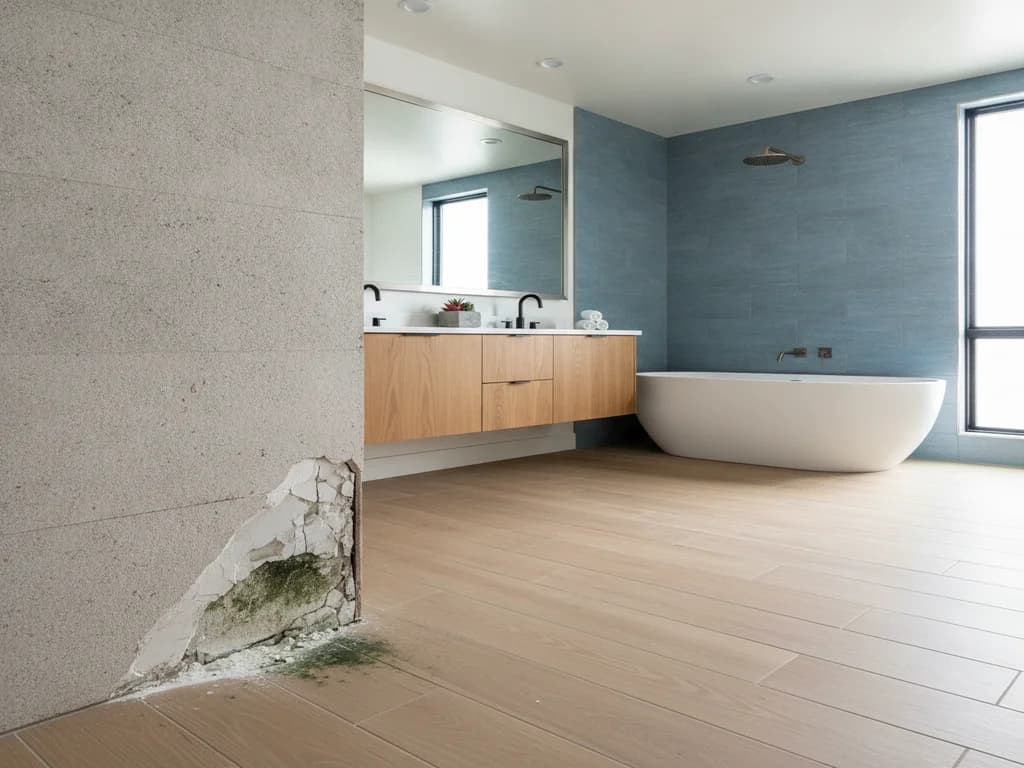
Puffy baseboard is sometimes just splash damage — and sometimes it is the first visible symptom of water getting under the floor. Trim swelling concentrated near the toilet, along the tub apron, or at the shower curb deserves a closer look before you install anything new.
Warning signs that point past the trim: swelling on the back of the board (not just the face), discoloration or softness in the drywall behind it, a musty smell when the trim comes off, or flooring that flexes near the same spot. Any of those suggests moisture is traveling under the finish floor, and the fix may involve replacing the bathroom subfloor rather than just the trim.
A full rundown of what to look for is in our guide to the signs of bathroom water damage. The short version: new baseboard over a wet subfloor buys you a year at most.
Check before you cover
Never install new baseboard over a wall or floor edge that has not been checked for moisture. Trim is the cheapest part of the assembly — it should be the last thing installed over a known-dry substrate, not a cosmetic bandage over an active leak.
Which baseboard materials hold up in a bathroom?
Every trim material trades off water resistance, paintability, and cost. Here is how the common options compare in a wet room specifically:
| Material | Water resistance | Look & finish | Best for |
|---|---|---|---|
| MDF | Poor — swells permanently | Smoothest paint finish | Dry rooms only; avoid in bathrooms |
| Solid wood (primed pine, poplar) | Fair — survives if fully sealed | Classic profiles, paintable | Traditional looks with good ventilation |
| PVC / vinyl | Excellent — waterproof | Fewer profiles, paintable | High-splash family bathrooms |
| Polystyrene / cellular composite | Excellent — waterproof | Crisp modern profiles | Contemporary remodels |
| Tile base (bullnose or cove) | Excellent — waterproof | Continuous with tile floor | Tile bathrooms, curbless and wet-room layouts |
Is a tile baseboard worth it?
A tile base — bullnose trim pieces or a cut band of the floor tile run 4–6 inches up the wall — is the most durable baseboard a bathroom can have. It is waterproof, it never needs repainting, and grout ties it visually to the floor so the room reads as one continuous surface.
The trade-offs are cost and timing. Tile base is a tile-setter task, not a finish-carpentry one, so it costs more per foot and really only makes sense while the floor tile is being installed — matching tile years later is rarely clean. If you are already planning to replace the bathroom flooring with tile, adding the base is a modest upcharge for a permanent upgrade.
Cove base — tile with a curved transition at the floor — goes a step further by eliminating the caulk joint entirely. It is standard in commercial restrooms for a reason and increasingly shows up in high-end wet rooms.
What does replacing bathroom baseboards cost?
For standard materials, baseboard installation runs roughly $6–$9 per linear foot installed, per HomeAdvisor cost guides — a typical 5×8 bathroom has around 20–24 linear feet after openings, so the trim itself is usually a few hundred dollars. PVC and composite sit at the upper end of that range; paint-grade wood in the middle.
Tile base costs more because it is priced as tile work: material plus setting and grouting, and per Angi cost guides tile labor is billed by the square foot or by the piece for bullnose. Budget it as part of the tile floor rather than as trim.
The number that actually moves the budget is what is behind the trim. If removal reveals a wet subfloor edge or damaged drywall, you are into repair scope — see our guide to hidden remodel costs for how that discovery process typically plays out.
Should baseboards be replaced before or after new flooring?
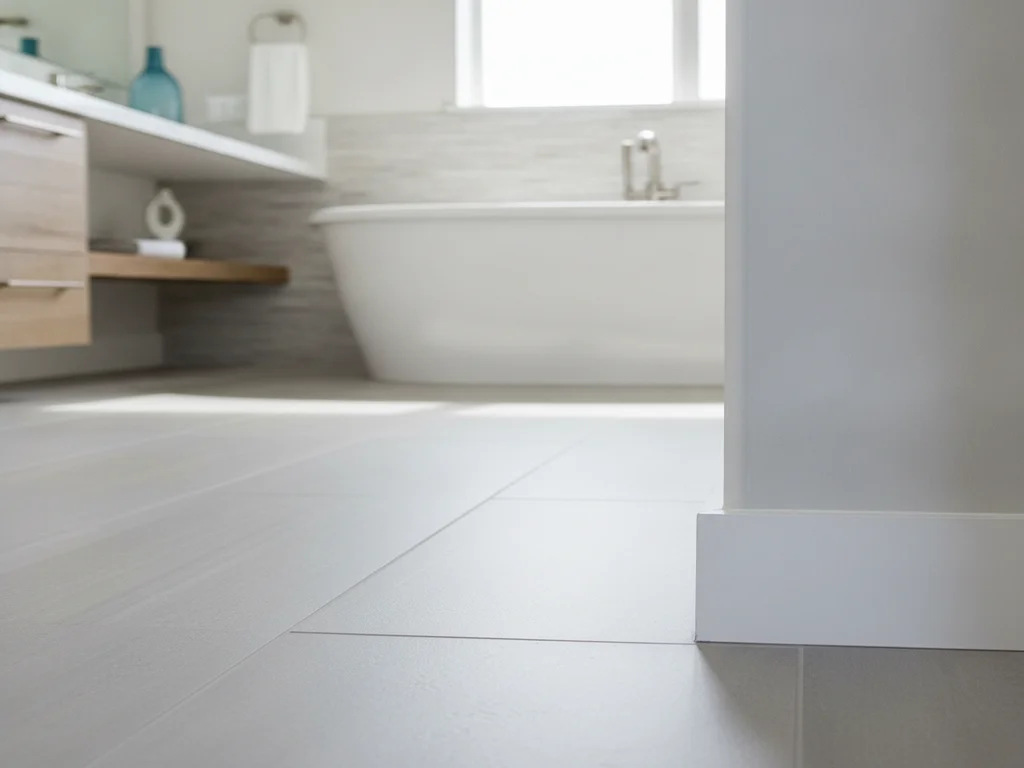
Floor first, trim second — always. Baseboard is meant to cover the expansion gap at the edge of the finish floor, so it has to be installed (or at least final-set) after the flooring is down. Replacing trim first means either pulling it again or stacking quarter-round on top, which reads as a shortcut.
This is why trim replacement is usually folded into a flooring project or a full bathroom remodel rather than done standalone. If your trim is failing, it is worth asking what the floor under it looks like and whether one combined project makes more sense than two sequential ones.
What separates a clean trim job from a sloppy one?
The details are small and visible forever. Outside corners should be mitered tight, inside corners coped rather than mitered so seasonal movement does not open gaps, and nail holes filled and sanded before paint. In a bathroom, two details matter even more than in other rooms.
First, the bottom edge: it should be sealed — primed and painted, or inherently waterproof material — before installation, because that edge is unreachable afterward. Second, the caulk joint at the floor: a continuous bead of quality silicone or siliconized acrylic where trim meets tile is the actual moisture defense, and it is the line your eye follows around the whole room.
What the process looks like
- 1
Score and pull the old trim
The installer cuts the caulk and paint lines with a utility knife so removal does not tear drywall paper, then pries the old baseboard off in full lengths and pulls remaining nails from the wall.
- 2
Inspect the wall base and floor edge
With trim off, the crew checks the exposed drywall and subfloor edge for moisture, softness, staining, or mold. Anything suspect gets moisture-metered and traced to a source before new material goes on.
- 3
Repair the substrate
Damaged drywall is cut back to sound material and patched; a wet or soft subfloor edge escalates the project to a repair scope before trim work resumes.
- 4
Cut and fit the new baseboard
New material is cut with mitered outside corners and coped inside corners, dry-fit around the room, and scribed to any humps in the tile floor so the bottom edge sits tight.
- 5
Fasten and fill
Boards are nailed into studs and bottom plate — construction adhesive supplements fasteners on masonry or PVC — then nail holes and corner seams are filled and sanded.
- 6
Caulk and finish
The floor joint gets a continuous bead of mold-resistant sealant, the top edge is caulked to the wall, and painted profiles get a final coat of moisture-tolerant enamel.
Ready to plan your Boise bathroom?
Licensed & insured · 3-year workmanship warranty
Frequently asked questions
- Can swollen MDF baseboard be repaired instead of replaced?
- No. Once MDF absorbs water, the wood fibers expand permanently — sanding exposes more raw fiber that swells again with the next splash. Filler and paint can hide minor face damage briefly, but a swollen board will keep telegraphing through. Replacement with a water-tolerant material is the only durable fix.
- What is the best baseboard material for a bathroom?
- PVC and cellular-composite trim are the most practical choices: fully waterproof, paintable, and installed like wood. Tile base is the most durable option in a tiled bathroom but costs more and is best done during flooring work. Painted solid wood is acceptable in well-ventilated bathrooms if every edge — especially the bottom — is sealed.
- How much does it cost to replace baseboards in a bathroom?
- Standard baseboard installation runs roughly $6–$9 per linear foot installed, per HomeAdvisor cost guides, so a typical small bathroom with 20–24 linear feet lands in the low hundreds for trim alone. Tile base runs higher because it is priced as tile-setting work. Substrate repairs discovered during removal are the main budget variable.
- Why is my bathroom baseboard swelling if nothing looks wet?
- Trim can wick moisture you never see: slow toilet-seal leaks, shower splash tracked along the floor joint, or condensation on a cold exterior wall. Swelling concentrated near a fixture — rather than spread evenly around the room — usually points to a hidden leak, and the floor behind it should be checked before new trim goes on.
- Should I caulk the gap between baseboard and tile floor?
- Yes — in a bathroom that joint should always be sealed with a quality silicone or siliconized-acrylic caulk. It is the primary barrier keeping mop water and splash-out from reaching the raw bottom edge of the trim and the subfloor beneath it. Leave it open and even waterproof trim material ends up channeling water to the wall base.
Sources
- HomeAdvisor — True Cost Guide
- Angi — Cost Guides
- This Old House — Bathrooms
- Fine Homebuilding
- EPA — Mold
Claims and figures are drawn from the sources above and provided for general guidance; your project may vary. Photography is illustrative of design concepts. For a fixed price on your specific bathroom, request a free estimate.