
Updated September 12, 2026 · 7 min read
By Boise Bath — bathroom & shower remodeling in Boise & the Treasure Valley
The short answer
Replacing a jetted tub adds an electrical stage to a normal tub swap: the pump’s dedicated GFCI-protected circuit is de-energized and disconnected by a licensed electrician before demolition, then the tub, pump, and plumbing come out together. Most owners replace it with a plain soaking tub or a walk-in shower, and the project typically runs three days to a week plus permits.
Key takeaways
- A jetted tub is a tub plus an appliance: a pump, dedicated wiring, and a required access panel all have to be dealt with, not just a drain and overflow.
- Electrical disconnection comes first and belongs to a licensed electrician — whirlpool circuits are GFCI-protected under the National Electrical Code for a reason.
- The old circuit is either removed or legally repurposed; abandoning live wiring inside a closed wall is not an option.
- Most replacements are a plain soaking tub or a walk-in shower — few owners replace jets with jets.
- A plain tub needs no access panel, so the old panel opening can finally be closed up or turned into usable storage.
Why jetted tubs come out
Jetted and whirlpool tubs had their run in the 90s and 2000s, and many Treasure Valley primary baths still have one — often sitting in the same oversized platform as the era’s garden tubs. The usual story: the jets have not been switched on in years, or when they are, the first blast pushes gray buildup out of lines that cannot be fully drained or scrubbed.
Add a pump that sounds like a shop vac through the wall, aging gaskets at every jet body, and parts availability that fades as brands consolidate, and the fixture becomes a liability wearing a luxury badge. Whether a working jetted tub is worth keeping is its own decision — our guide on whether jetted tubs are worth it covers that — but this article assumes the tub is coming out and covers what that involves.
If your question is really "jets or no jets" for the next tub, the comparison lives in soaking tub vs. jetted tub.
What makes a jetted tub harder to remove than a regular tub?
Three things: wiring, a pump, and the plumbing loop that connects every jet. A standard tub is connected to the house at exactly two points — the drain assembly and the valve. A jetted tub adds a dedicated electrical circuit feeding a pump motor, sometimes a second circuit for an inline heater, and a network of rigid PVC jet lines glued around the tub shell.
The jet loop itself is not the problem — it leaves with the tub. The circuit is. Whirlpool tubs are wired on GFCI-protected circuits under the National Electrical Code, and that wiring must be de-energized, disconnected, and then either removed back to the panel or properly terminated and repurposed. That is licensed-electrician work, and it happens before any demolition tool comes out.
Never demo around live wiring
The single most important sequencing rule in a jetted tub removal: the circuit is confirmed dead at the breaker and disconnected at the pump before the deck or surround is opened up. A reciprocating saw finding a live whirlpool feed inside a wet platform is the exact scenario GFCI rules exist to prevent. This is why jetted tub removal is not a DIY Saturday project.
The access panel: why it exists and what happens to it
Every properly installed jetted tub has a removable access panel — in the skirt, the deck, or the wall of an adjacent room — because building codes published by the International Code Council require access to the pump for service. That panel is your contractor’s scouting window: through it they can see the pump location, the circuit, the drain configuration, and any evidence of past leaks before writing the bid.
Here is the quiet win of the project: a plain tub has no pump, so it needs no panel. Once the jetted tub is gone, that awkward louvered rectangle in the tile or the backside of the linen closet can be closed up permanently — or framed into real storage if it opens to a usable cavity.
What replaces a jetted tub?
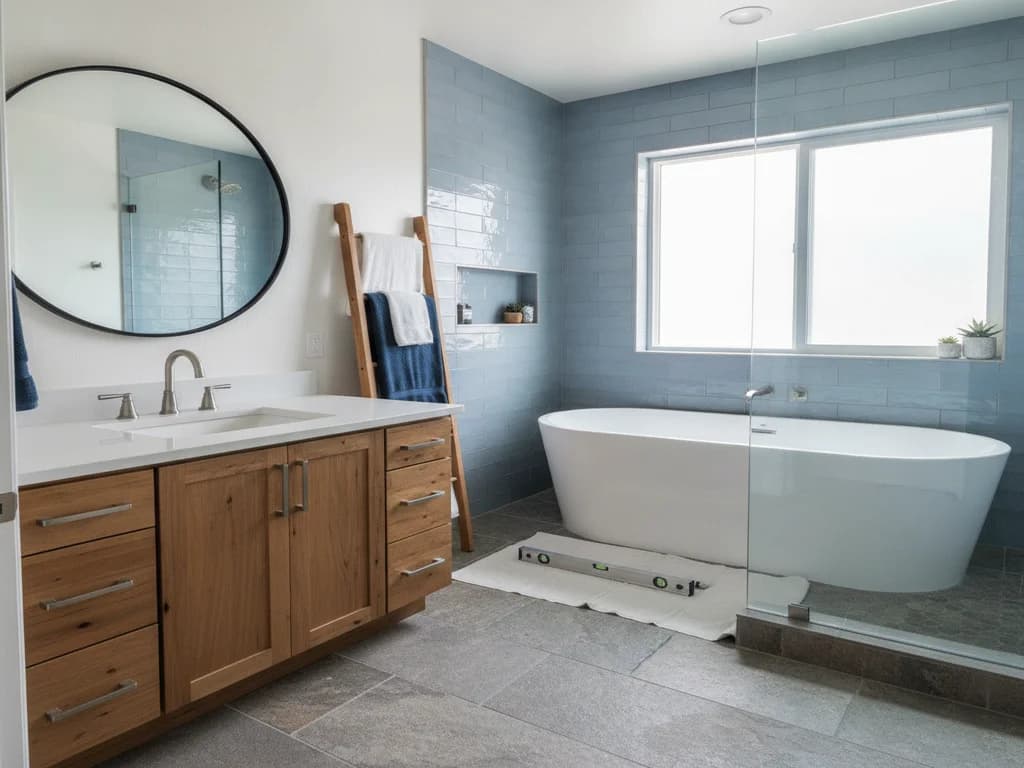
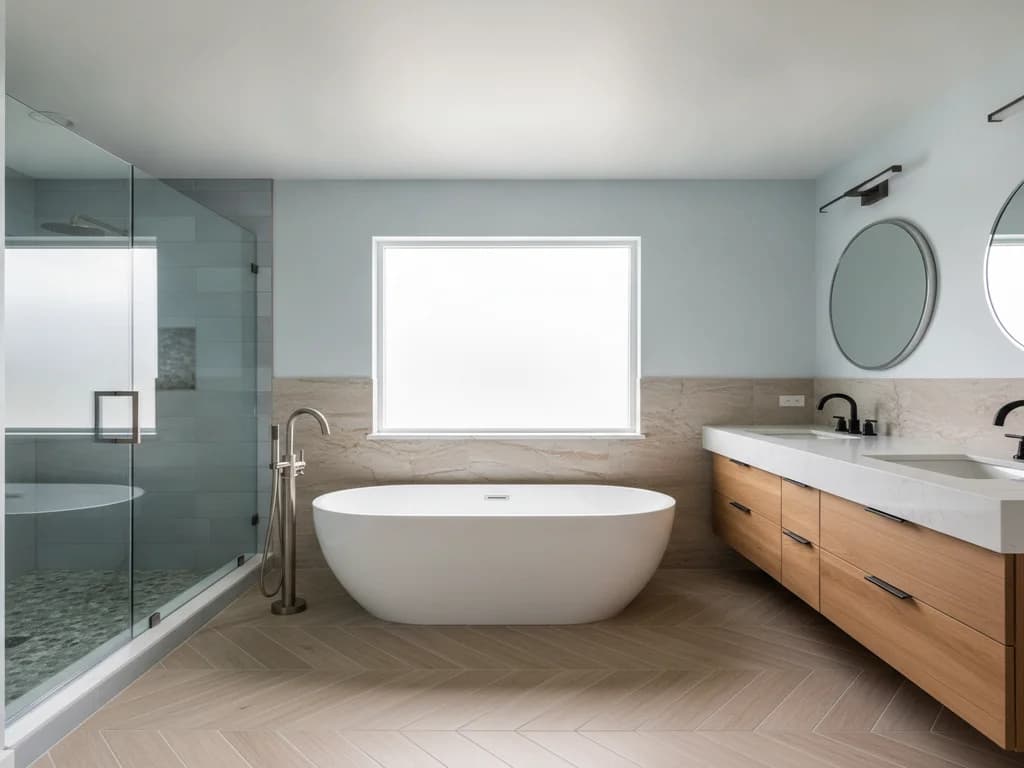
Very few owners replace jets with jets. The two paths that dominate real projects are a plain soaking tub — same bathing function, zero maintenance, silent — and a walk-in shower where the tub simply was not being used at all.
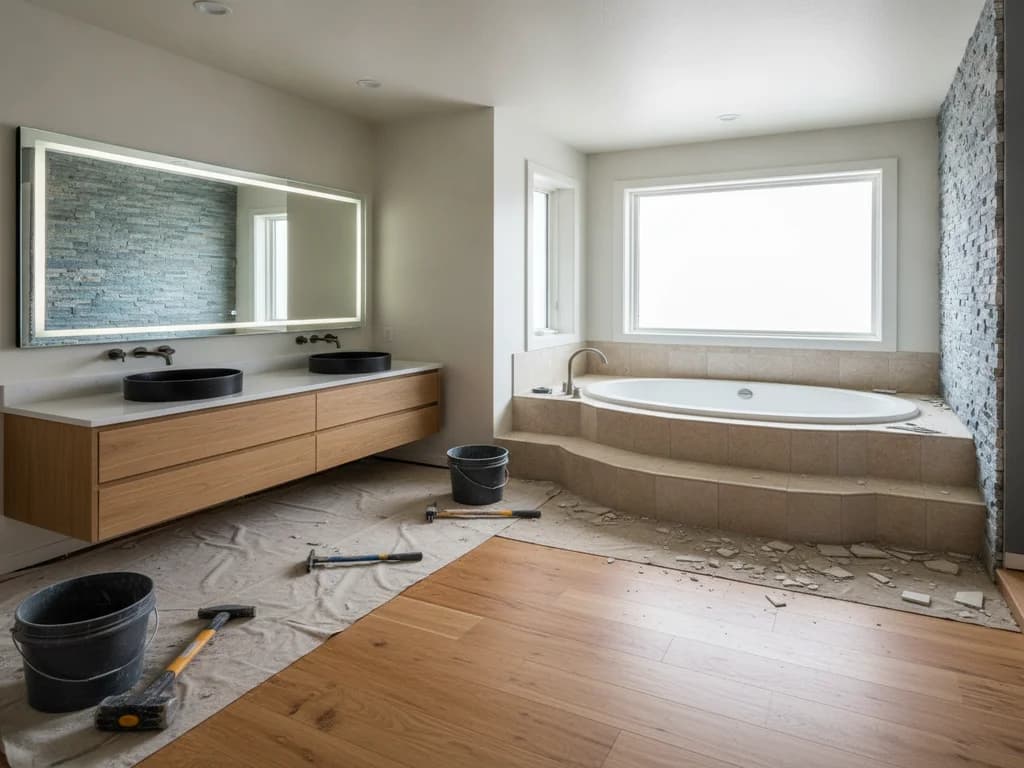
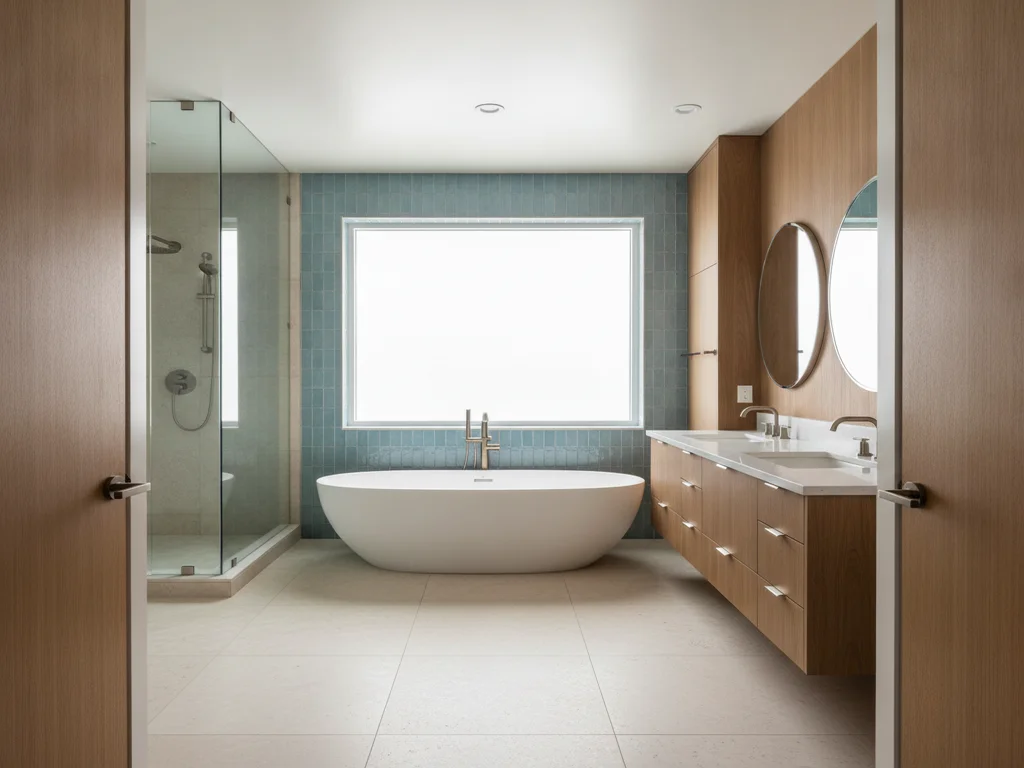
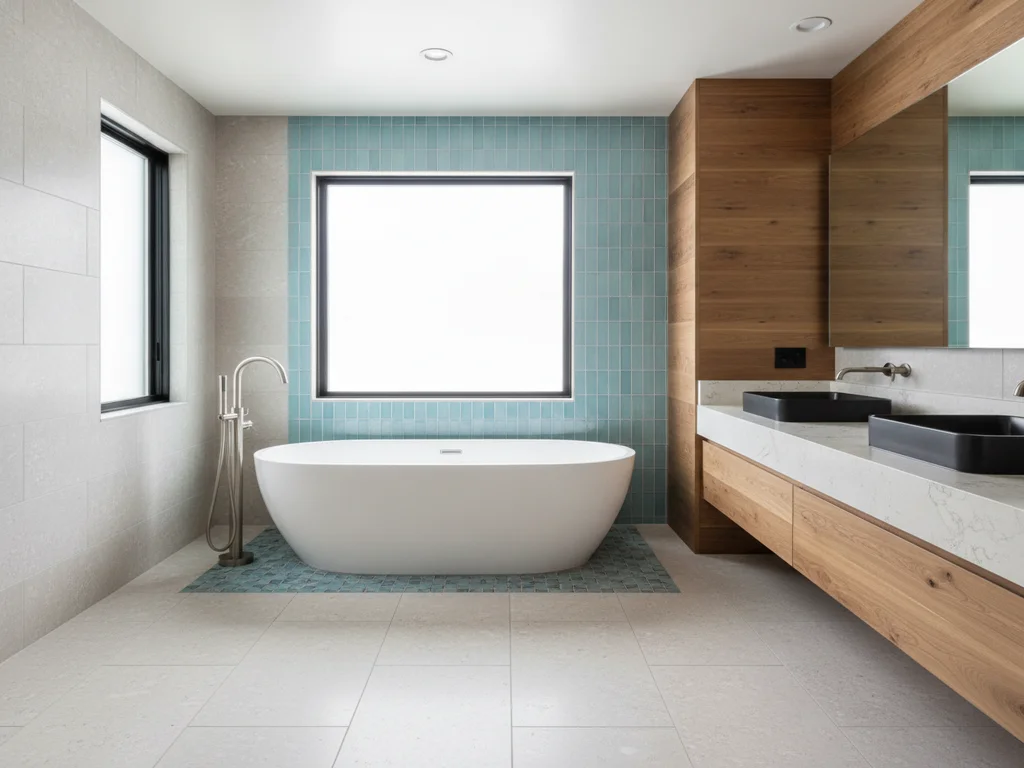
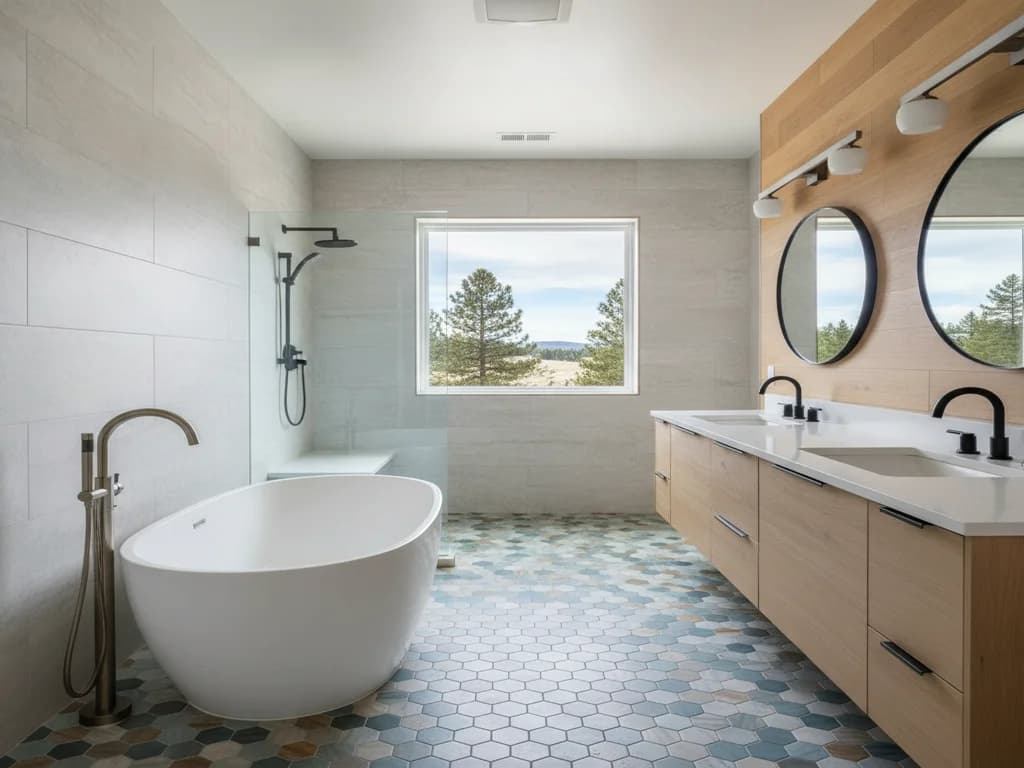
A deck-mounted jetted tub in a platform behaves like a garden tub for demolition purposes; if yours sits in one of those wide 90s decks, read replacing a garden tub alongside this guide, because the platform demo and footprint decisions are the same. A freestanding soaker is the most popular successor — the case for going that route is in replacing a bathtub with a freestanding tub — and the shower path is covered in replacing a bathtub with a walk-in shower.
| Replacement | Electrical outcome | Best when |
|---|---|---|
| Plain soaking tub (drop-in or alcove) | Circuit removed or terminated at panel; access opening closed | You bathe, but never used the jets |
| Freestanding soaker | Circuit removed; deck and panel disappear entirely | You want the bath experience without the 90s platform |
| Walk-in shower | Circuit removed or repurposed (e.g., for heated floor) per code | The tub sat unused; daily shower matters more |
| New air-jet or whirlpool tub | Circuit inspected, GFCI verified, reused if compliant | You genuinely use jets and accept the upkeep |
Any reuse or repurposing of the circuit is an electrician’s call under current code — never an assumption.
What happens to the plumbing and the footprint?
Once the pump and wiring are handled, the rest follows the standard replacement playbook: the drain and overflow are disconnected, the tub is freed from its alcove or deck, and the waste-and-overflow assembly is renewed rather than reused. Jetted tubs skew large — many are 42 inches wide or more — so a like-for-like footprint match is not guaranteed, and the deck or surround usually gets rebuilt to fit what is actually available now.
Because the drain, trap, and valve are altered, the project needs a plumbing permit through City of Boise Planning & Development Services or your city’s equivalent, and the electrical disconnection is inspected under the same umbrella. The umbrella process — demo, inspection window, rough-in, set, rebuild — is laid out in bathtub replacement: how the full process works.
Timeline and cost drivers
A jetted-to-soaker swap in the same alcove or deck runs about three days to a week — roughly a normal tub replacement plus the electrical stage. A platform demolition with a freestanding tub or shower conversion runs longer, one to two weeks, because flooring and waterproofing enter the scope.
On budget, national guides such as HomeAdvisor and Angi put standard tub replacement in the low thousands, with the electrician’s disconnection and circuit work adding a modest but real line on top, and platform or conversion projects climbing from there. The swing factors: whether the deck comes out, how far the drain moves, and what condition the subfloor is in under a tub that has held 80 gallons of moving water for twenty years.
What the process looks like
- 1
Scope through the access panel
The contractor opens the existing panel to identify the pump, circuit, heater if present, drain configuration, and any leak history — the whole bid gets more accurate before a single tile moves.
- 2
De-energize and disconnect the electrical
A licensed electrician kills the circuit at the breaker, verifies it dead, disconnects the pump and any inline heater, and determines whether the wiring is removed to the panel or terminated for compliant reuse.
- 3
Disconnect the plumbing
Water is shut off and the drain and overflow are disconnected through the access opening; the jet loop stays with the tub and needs no separate disconnection.
- 4
Demolish the surround or deck and pull the tub
The surround courses or platform framing holding the tub captive come out, and the tub — with pump and jet lines attached — is removed whole where the doorway allows, or cut into sections where it does not.
- 5
Inspect and rough in for the replacement
The exposed subfloor, trap, and valve are evaluated and renewed, the drain is relocated if the new fixture needs it, and the plumbing rough-in inspection happens before anything closes.
- 6
Set the new fixture and rebuild
The soaking tub is set level and fill-tested, or the shower pan and waterproofing go in; the surround or deck is rebuilt, and the old access opening is closed up or converted to storage.
- 7
Trim, seal, and close permits
Fixtures and trim go on, joints are sealed, and the final plumbing and electrical inspections close out the job.
Ready to plan your Boise bathroom?
Licensed & insured · 3-year workmanship warranty
Frequently asked questions
- Can I just leave the jetted tub wiring in the wall?
- Not live, and not unaddressed. The circuit must be disconnected and either pulled back to the panel or properly terminated in an accessible, code-compliant way — decisions a licensed electrician makes under the National Electrical Code. Burying an abandoned-but-live whirlpool circuit inside a closed platform is a safety and inspection failure, not a shortcut.
- How much does it cost to remove a jetted tub?
- Removal itself is a few hundred to around a thousand dollars in national guides like HomeAdvisor once the electrical disconnection is included — but removal is never the whole project. The replacement tub or shower, surround rebuild, and any platform demolition set the real number, which commonly lands in the low-to-mid four figures and up. Bid it as one conversion, not demo plus surprises.
- Can a jetted tub be replaced with a regular tub in the same spot?
- Usually, with adjustment. The drain and overflow rarely align exactly, so the waste assembly is renewed and sometimes relocated, and jetted tubs skew wider than standard tubs, so the deck or alcove typically gets rebuilt to fit the new footprint. The payoff: no pump, no wiring, no access panel, and a tub that is quiet and maintenance-free.
- Are jetted tubs outdated?
- As a resale feature, largely yes — buyers increasingly read a 90s whirlpool as a maintenance item rather than a luxury, and design surveys from kitchen-and-bath industry groups show soaking tubs and larger showers taking their place. As a fixture you personally love and use, that is a different calculation, and it deserves its own worth-it analysis before you commit to demolition.
- Should I replace my jetted tub with a soaker or a shower?
- Answer one question honestly: when did someone last fill it? If baths actually happen in your house, a plain soaking tub keeps the ritual and drops all the maintenance — see our soaking vs. jetted comparison. If the tub has been a towel shelf for years, a walk-in shower returns daily value from the same footprint and demo budget.
Sources
- National Fire Protection Association (NEC)
- International Code Council (IRC/IBC)
- HomeAdvisor — True Cost Guide
- Angi — Cost Guides
- City of Boise — Planning & Development Services
Claims and figures are drawn from the sources above and provided for general guidance; your project may vary. Photography is illustrative of design concepts. For a fixed price on your specific bathroom, request a free estimate.