Updated July 16, 2026 · 7 min read
By Boise Bath — bathroom & shower remodeling in Boise & the Treasure Valley
The short answer
Replace bathroom flooring when any of three signals appears: moisture getting under the floor (soft spots, lifting edges, staining), a material that has failed or was never right for a wet room, or a dated floor dragging down a bathroom you plan to sell or remodel. Cosmetic dislike alone can wait — water under the floor cannot.
Key takeaways
- The urgent signal is water under the floor: soft or spongy spots, curling vinyl edges, cupped planks, or dark staining at the toilet and tub mean the subfloor is taking on moisture.
- A floor can be intact and still wrong — carpet, solid hardwood, and low-end laminate in a bathroom are moisture failures waiting on a schedule.
- Dated-but-sound flooring is a timing decision, not an emergency: replace when you remodel, when you list the house, or when the material bothers you enough to act.
- Flooring is the worst thing in a bathroom to replace twice — sequence it with any vanity, tub, or toilet work so the floor goes in once, correctly.
- Soft spots around the toilet are the classic Treasure Valley find: a slow wax-ring or supply leak that has been feeding the subfloor for years.
- Midrange bathroom updates recoup a meaningful share of their cost at resale, per Zonda’s Cost vs. Value data — and flooring is the surface buyers judge first from the doorway.
The three signals, ranked by urgency
Bathroom flooring questions sort into three buckets: the floor is letting water through, the floor is the wrong material for a wet room, or the floor is simply dated. The first is urgent, the second is a scheduled failure, and the third is a timing decision you control.
That ranking matters because the cost of waiting is wildly different across the three. A dated floor costs you nothing but aesthetics while you wait. A wrong material costs you a subfloor eventually. Water already under the floor costs you more every month it continues — subfloor, joists, and in a second-story bathroom, the ceiling below.
The honest version of "should I replace my bathroom flooring" is therefore "which bucket am I in" — and the next three sections give you the diagnostics for each.
Signal one: water is getting under the floor
Floors fail from below. By the time the surface shows it, moisture has usually been working on the subfloor for a while — which is why the symptoms to check are about movement and softness, not stains alone. Press around the toilet base, along the tub or shower edge, and in front of the vanity. Sponginess, flex, or a floor that feels different in those zones than in the middle of the room is the finding.
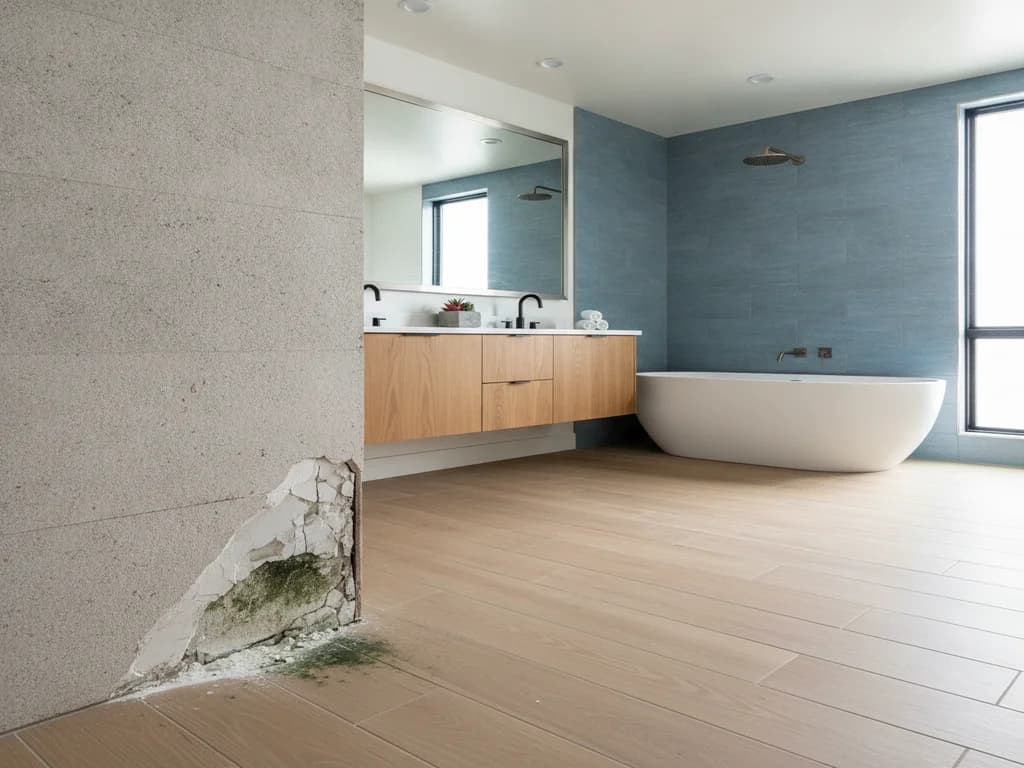
Surface evidence backs it up: vinyl edges curling or bubbling, laminate planks swelling at their seams, grout lines in tile floors darkening in a ring around the toilet, or a toilet that has started to rock. The EPA notes that persistent moisture in building materials is what turns a leak into a mold problem, and a wet subfloor is exactly that kind of persistence.
These symptoms overlap heavily with the broader signs of bathroom water damage, and the response is the same: find and fix the water source first, then open the floor. Replacing flooring over a wet subfloor seals the problem in — any credible replacement scope includes inspecting and repairing what is underneath.
Signal two: the material was never right for a bathroom
Some floors are intact today and still deserve replacement, because the material cannot survive the room. Carpet in a bathroom holds moisture against the pad and subfloor. Solid hardwood cups and gaps through humidity swings. Cheap laminate with an unsealed fiberboard core swells the first time water sits at a seam — a one-time event, not a maintenance issue.
Treasure Valley housing stock has predictable versions of this: 90s builds with sheet vinyl now brittle at the seams, and 2000s builder-grade laminate that was marketed as water-resistant when it was not. If that is your floor, the question is not whether it fails but whether you replace it on your schedule or after the failure picks the date.
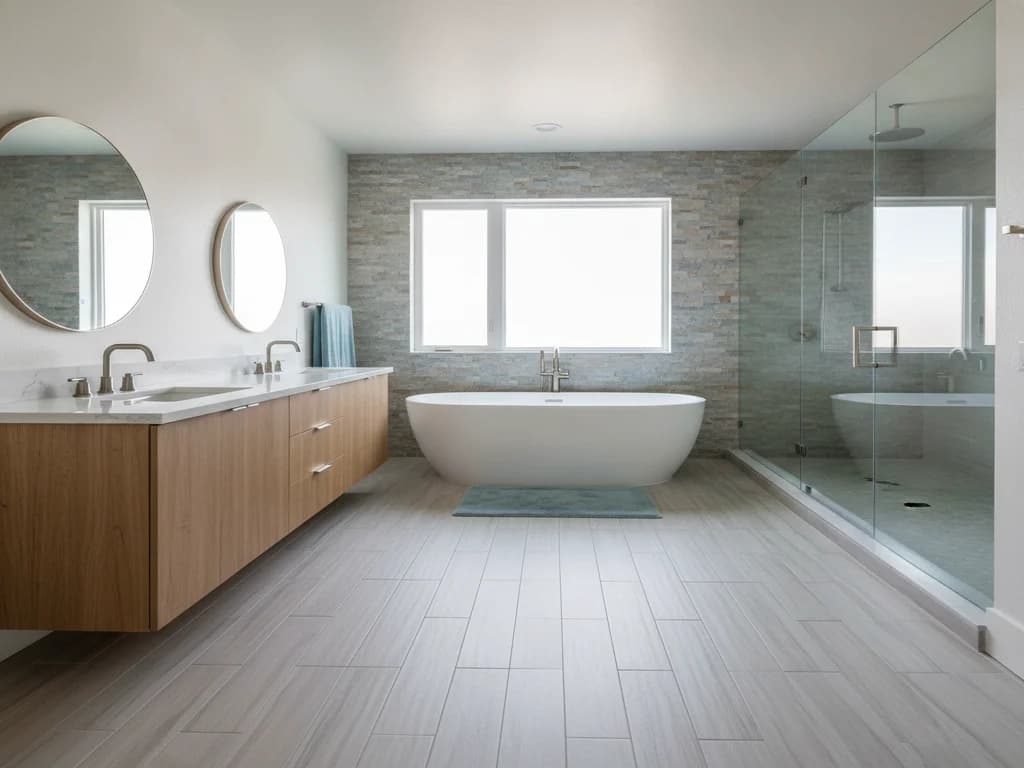
What replaces it matters as much as when. Porcelain tile and quality luxury vinyl handle wet rooms properly, and the comparisons — tile vs. sheet vinyl and tile vs. laminate — walk through the trade-offs by material. If the existing floor is tile that has failed, replacing a bathroom tile floor covers that specific project.
Signal three: the floor is dating the whole bathroom
A sound floor in a dated finish is the lowest-urgency case — and still often worth acting on, because flooring sets the age of the room. Buyers and appraisers read a bathroom from the doorway, and the floor is most of what they see from there. Pink-beige ceramic, patterned sheet vinyl, and oak-look laminate each date a bathroom to its decade at a glance.
The resale math supports acting when a sale is on the horizon. Zonda’s Cost vs. Value Report consistently shows midrange bathroom updates recouping a meaningful share of their cost at resale, and NAR’s Remodeling Impact research finds bathroom projects among the interior work that most improves buyer appeal. Flooring is usually the highest-visibility slice of that update for the least scope.
Whether to replace flooring alone or fold it into a larger update is the real decision here — should I remodel my bathroom before selling tackles that timing question head-on.
The decision table: replace now, schedule it, or wait
Here is the whole article in one table. Find your floor’s condition in the left column and the timing answer follows.
| Condition | Verdict | Why |
|---|---|---|
| Soft spots, rocking toilet, curling or swelling at edges | Replace now | The subfloor is wet — every month adds damage below the surface |
| Water stains on the ceiling below the bathroom | Replace now (and find the leak) | Moisture has already traveled past the subfloor |
| Carpet, solid hardwood, or unsealed laminate — still intact | Schedule it | Wrong material for a wet room; failure is a when, not an if |
| Brittle or seam-split 90s sheet vinyl | Schedule it | Failing seams are an open water path to the subfloor |
| Sound tile with worn grout | Neither — regrout | The tile is fine; renewing grout restores the floor for far less |
| Dated but sound floor, sale planned within 2 years | Time it with pre-sale prep | High-visibility update with documented resale return |
| Dated but sound floor, no sale planned, no other work | Wait if you want | Purely cosmetic — replace when it bothers you or when other work opens the room |
Resale framing per Zonda Cost vs. Value and NAR Remodeling Impact research — returns are partial cost recovery, not profit.
Sequence it right: floors hate being done twice
The most expensive flooring mistake is not the material — it is doing the floor before other work that disturbs it. A new floor installed this year, cut up next year for a tub-to-shower conversion or a vanity relocation, was money burned. Flooring goes in after layout decisions and rough plumbing, not before.
So before committing, ask what else the bathroom needs in the next few years. If a vanity swap is coming, replacing both together avoids the flooring patch where the old cabinet footprint was. If a full remodel is plausible within a couple of years, a failing floor might get a minimal safe patch now and the real floor at remodel time.
This is also where fold-it-into-a-remodel is honest advice rather than upsell: demolition, subfloor repair, and toilet reset are shared costs between a flooring job and a larger project. Paying them once instead of twice is real savings, not salesmanship.
Check the toilet before you check flooring samples
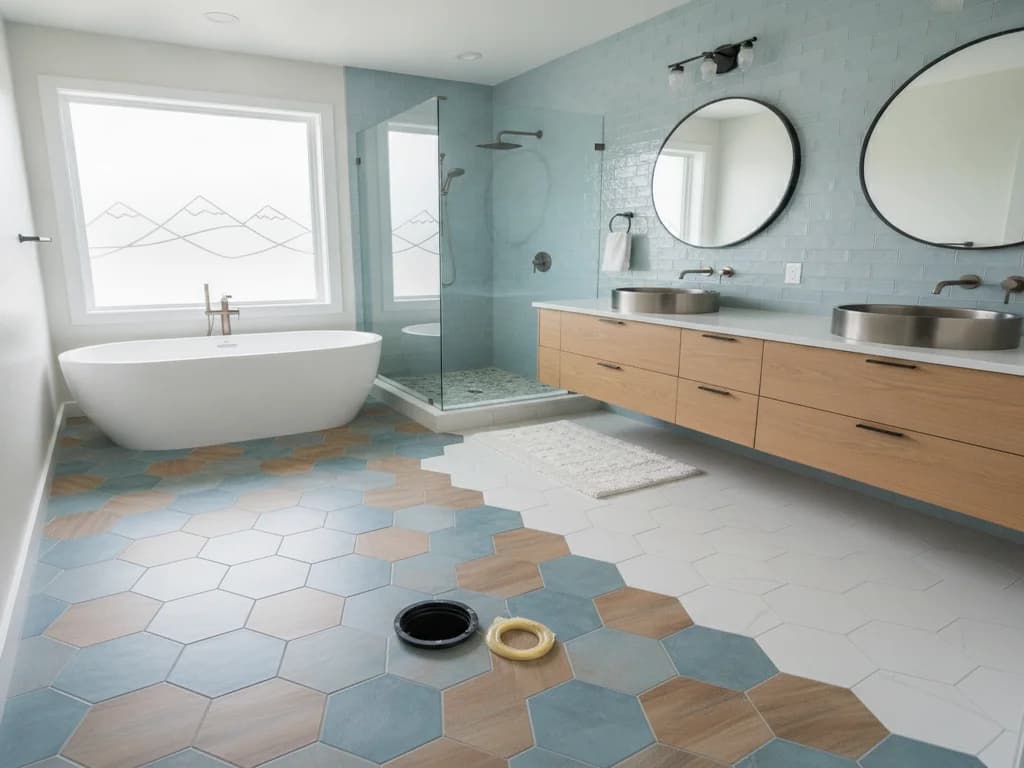
A rocking toilet or softness in the floor around its base is the single most common bathroom flooring failure — a slow wax-ring seal leak that feeds the subfloor invisibly for years. If you find it, the project is a leak repair and subfloor inspection first, flooring second. New flooring installed around a leaking toilet flange fails from below on the same schedule the old floor did.
What replacement actually involves
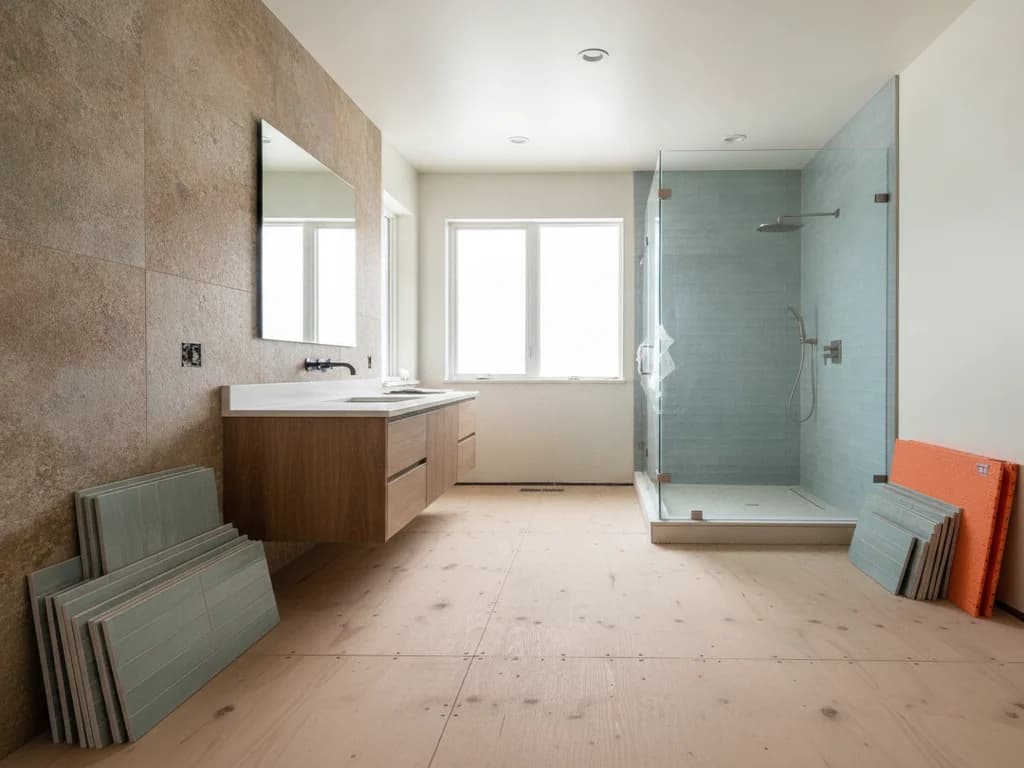
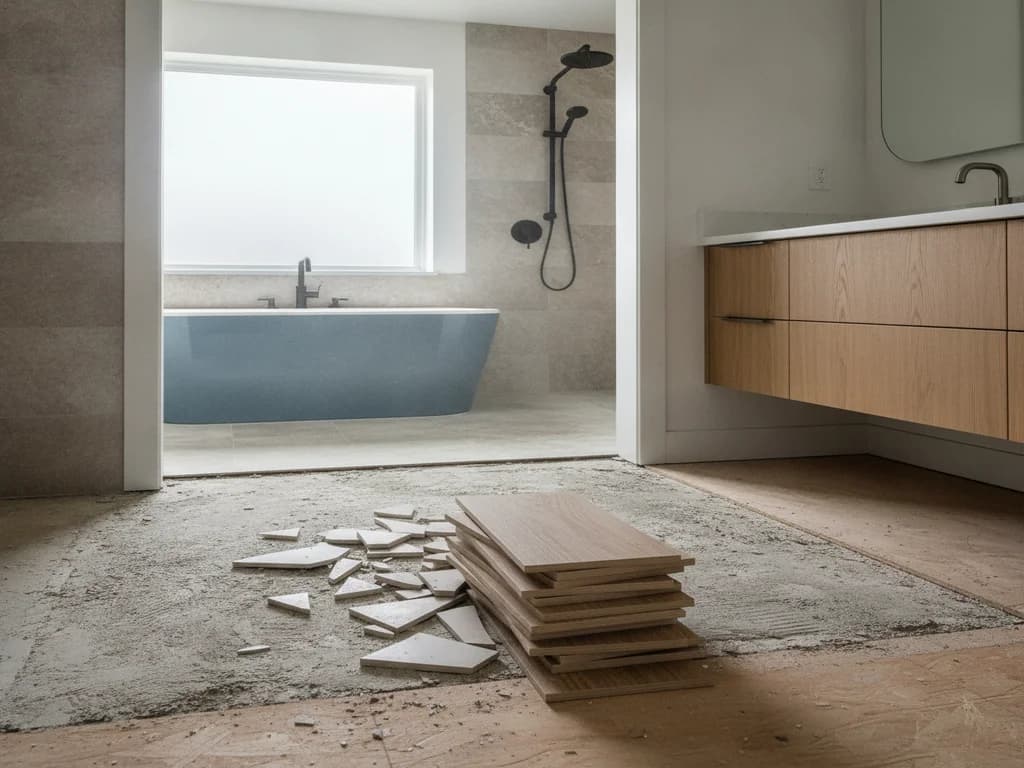
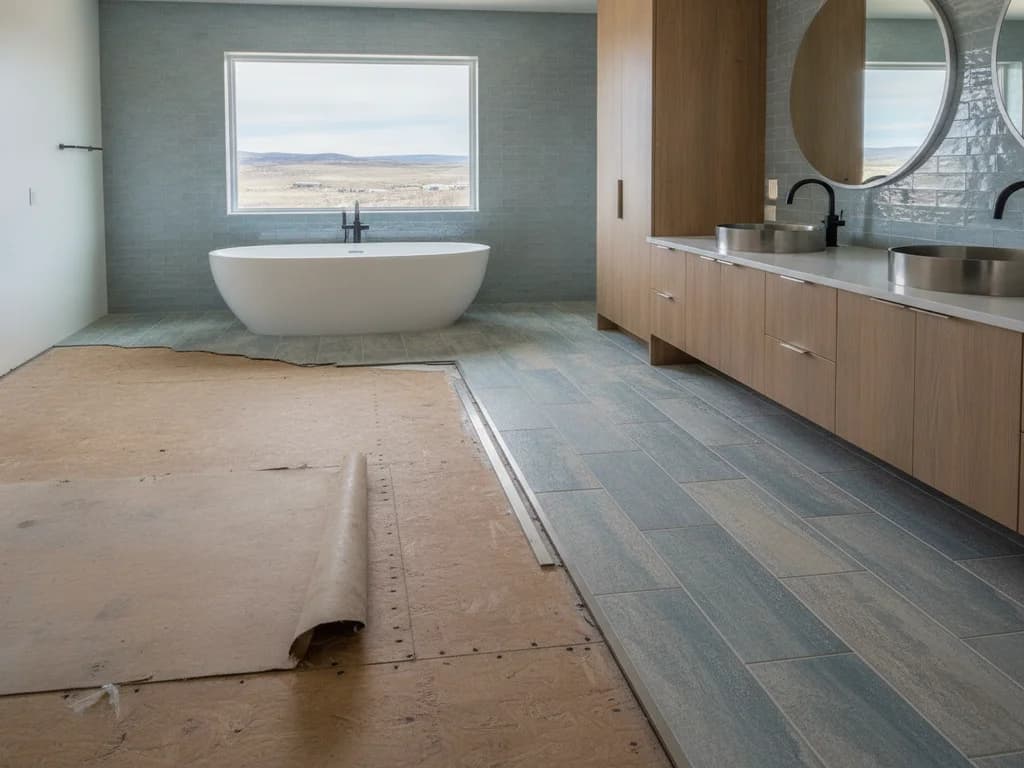
A proper bathroom flooring replacement is more than peel-and-lay: the toilet comes out, the old floor and underlayment come up, the subfloor gets inspected and repaired where moisture reached it, and the new floor system goes down with the right underlayment and transitions before the toilet is reset on a new seal. Replacing bathroom flooring walks through that process step by step, including how long it takes and what can surprise you mid-project.
Material choice drives most of the cost spread — per HomeAdvisor’s cost guides, bathroom flooring projects range widely with material and subfloor condition, with sheet goods and luxury vinyl at the lower end and porcelain tile above them. Get the subfloor contingency priced explicitly; it is the honest variable in every bid.
If your signals point to replacement, a free estimate on the specific room settles the material question, the subfloor risk, and the timing in one visit.
Ready to plan your Boise bathroom?
Licensed & insured · 3-year workmanship warranty
Frequently asked questions
- How do I know if my bathroom subfloor is damaged?
- Feel for it: press the floor around the toilet, along the tub, and in front of the vanity. Sponginess, flex, or soft spots mean the subfloor has absorbed moisture. Supporting evidence includes a rocking toilet, curling vinyl edges, swollen laminate seams, and darkened grout rings. Confirmation happens during demolition — which is why replacement bids should include a subfloor inspection and a priced repair contingency.
- How long does bathroom flooring last?
- It depends almost entirely on material and installation. Porcelain tile over a sound substrate can outlast the house; quality luxury vinyl is typically a couple of decades; sheet vinyl ages out as seams and edges fail; and laminate lasts until water finds a seam. In practice, most bathroom floors are replaced for water damage or dated appearance before the material itself wears through in the middle of the room.
- Should I replace bathroom flooring before selling my house?
- If the floor is damaged, failing, or clearly dated — usually yes, because buyers read the floor first and price in a full remodel when they see problems. Zonda’s Cost vs. Value data shows midrange bath updates recouping a meaningful share of cost at resale, and flooring is the highest-visibility piece of that. If the floor is sound and neutral, spend the pre-sale budget elsewhere.
- Can I put new flooring over my existing bathroom floor?
- Sometimes — some floating floors and luxury vinyl can go over a flat, sound, dry existing floor, and it saves demolition. But it raises the floor height at doors and the toilet flange, and it is only as good as what is underneath: covering a floor with any moisture symptom seals the problem in. If there is any sign of water, softness, or movement, the old floor comes up so the subfloor can be seen.
- Is it worth replacing bathroom flooring by itself, without remodeling?
- Yes, when the floor is the problem and the rest of the bathroom has years of life left — a standalone flooring replacement is a contained project that transforms the room. The exception is when other work is realistically coming within a couple of years. Flooring installed before a layout change gets cut up and patched, so if a bigger remodel is plausible, sequence the floor into it.
Sources
Claims and figures are drawn from the sources above and provided for general guidance; your project may vary. Photography is illustrative of design concepts. For a fixed price on your specific bathroom, request a free estimate.