Updated July 16, 2026 · 7 min read
By Boise Bath — bathroom & shower remodeling in Boise & the Treasure Valley
The short answer
Tile wins on durability, longevity, and resale; sheet vinyl wins on price, speed, and warmth underfoot. For a full remodel you plan to live with for decades, choose porcelain tile. For a rental, a budget refresh, or a basement bath, modern sheet vinyl is a legitimately good floor — seamless and fully waterproof.
Key takeaways
- Sheet vinyl is the only common bathroom floor with essentially no seams — in a small bathroom it can install as one continuous waterproof surface.
- Porcelain tile is the longevity pick: properly installed tile floors last for decades, while sheet vinyl typically serves 10 to 20 years.
- Sheet vinyl is not LVP — it is a continuous roll, installs differently, and solves a different problem than plank-format luxury vinyl.
- On cost direction, sheet vinyl installs for a fraction of tile — roughly $2–$5 per square foot installed versus roughly $10–$25 for tile, per Angi’s cost guides.
- Tile reads as permanent to buyers and appraisers; sheet vinyl reads as economical — that perception gap matters most in primary bathrooms.
- Vinyl flooring from before the mid-1980s can contain asbestos in the backing — old sheet floors get tested before demolition, per EPA guidance.
First, what sheet vinyl actually is (and is not)
Sheet vinyl comes off a roll, 12 feet wide, and installs as one continuous piece — glued down or loose-laid over a flat subfloor. That is a fundamentally different product from luxury vinyl plank, which clicks together board by board. If you are weighing tile against plank-format vinyl, tile vs LVP is the comparison you want; this one is about the roll.
Modern sheet vinyl also deserves an honest update, because the product has moved a long way from the curling, yellowing kitchen floors of the 1980s. Today’s fiberglass-backed sheets lie flat without full-spread glue, carry thicker wear layers, and print stone and tile patterns with texture that is convincing at a glance. Consumer Reports’ flooring testing has repeatedly ranked well-made vinyl among the most moisture- and stain-resistant floors sold.
It is still vinyl — a resilient, softer material with a shorter life than masonry. But dismissing it as the cheap floor misses what it does better than anything else in this room, which is the next section.
Water resistance: the seamless advantage vs the grout question
Here is the part most comparisons get backwards: in a small bathroom, sheet vinyl is arguably the most water-forgiving floor you can buy. A single 12-foot-wide sheet covers most hall baths with zero seams — no joints, no grout, nowhere for a toilet overflow or a shower splash to find its way to the subfloor. The material itself is impervious; the only vulnerable lines are the perimeter and fixture cutouts, which get sealed at installation.
Porcelain tile is equally waterproof as a material — porcelain absorbs almost no water, per the Tile Council of North America’s standards — but a tile floor is a field of hundreds of grouted joints. Modern grouts are far better than their reputation, and a properly installed tile floor over the right underlayment handles bathroom water for decades. It simply asks for something sheet vinyl never does: occasional grout maintenance and resealing where applicable.
The honest framing: both floors, correctly installed, keep water out of your subfloor. Sheet vinyl does it with geometry — no seams — while tile does it with material and installation quality. Failures in either usually trace to the installation, not the product.
Durability and lifespan: decades vs a good long run
Porcelain tile is the durability benchmark for bathroom floors. It does not scratch under grit, does not dent under dropped bottles, does not fade in window light, and a properly installed floor routinely outlasts the rest of the bathroom’s finishes. When a tile floor does fail early, the cause is almost always beneath it — subfloor movement or a skipped underlayment — not the tile.
Sheet vinyl serves honorably but not forever. Expect roughly 10 to 20 years depending on quality and traffic, per Angi’s flooring guides. Its failure modes are mechanical: gouges from dragged furniture, tears at high-stress cutouts, seam lift in large rooms that needed a joint, and eventually a wear layer that dulls. Unlike plank floors, a damaged sheet cannot be patched invisibly — a bad gouge generally means replacing the floor.
One durability point in vinyl’s favor: it is forgiving of minor subfloor imperfection and slight movement that would eventually telegraph through tile as a cracked joint. In older Boise houses with springy floors, that flexibility is worth something — though the better fix for a bouncy floor is stiffening it before any finish goes down.
Tile vs sheet vinyl at a glance
The comparison in one table — with cost figures as directional ranges from published guides, not quotes.
| Factor | Porcelain tile | Sheet vinyl |
|---|---|---|
| Water resistance | Waterproof material; grouted joints need occasional upkeep | Waterproof and seamless in most bathrooms — no joints at all |
| Expected lifespan | Decades when properly installed | Roughly 10–20 years, per Angi |
| Installed cost direction | Roughly $10–$25/sq ft, per Angi and HomeAdvisor | Roughly $2–$5/sq ft, per Angi and HomeAdvisor |
| Comfort underfoot | Hard and cool; pairs well with heated floors | Softer, warmer, quieter |
| Repairability | Individual tiles can be replaced | Gouges and tears usually mean a new floor |
| Resale perception | Reads as permanent, premium | Reads as economical, rental-grade to some buyers |
| Installation | Multi-day trade work: prep, underlayment, setting, grout | Often a single day over a flat, clean subfloor |
Cost ranges are national installed figures from Angi and HomeAdvisor cost guides; bathroom size, subfloor prep, and tile choice move real numbers.
Cost: where the gap comes from
The price gap is mostly labor. Sheet vinyl material runs roughly $1–$3 per square foot and installs quickly; porcelain tile material starts near vinyl’s price but its installation is skilled, multi-day trade work — underlayment, mortar, layout, cutting, grouting — which is why installed tile runs roughly $10–$25 per square foot against vinyl’s $2–$5, per Angi and HomeAdvisor cost guides.
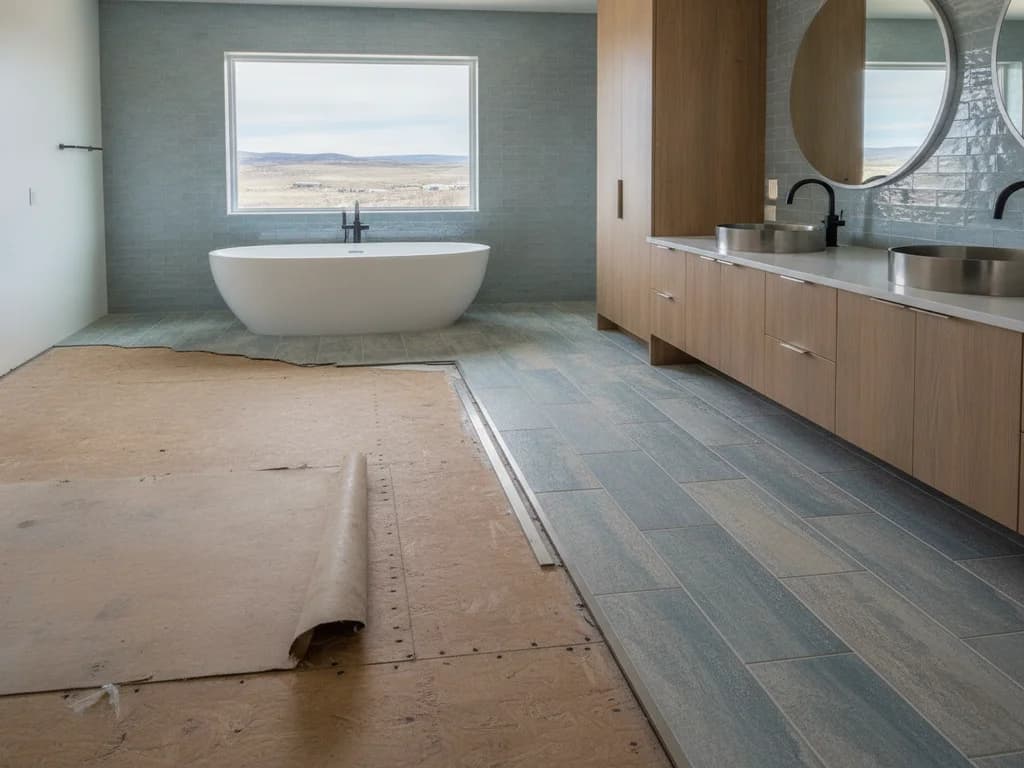
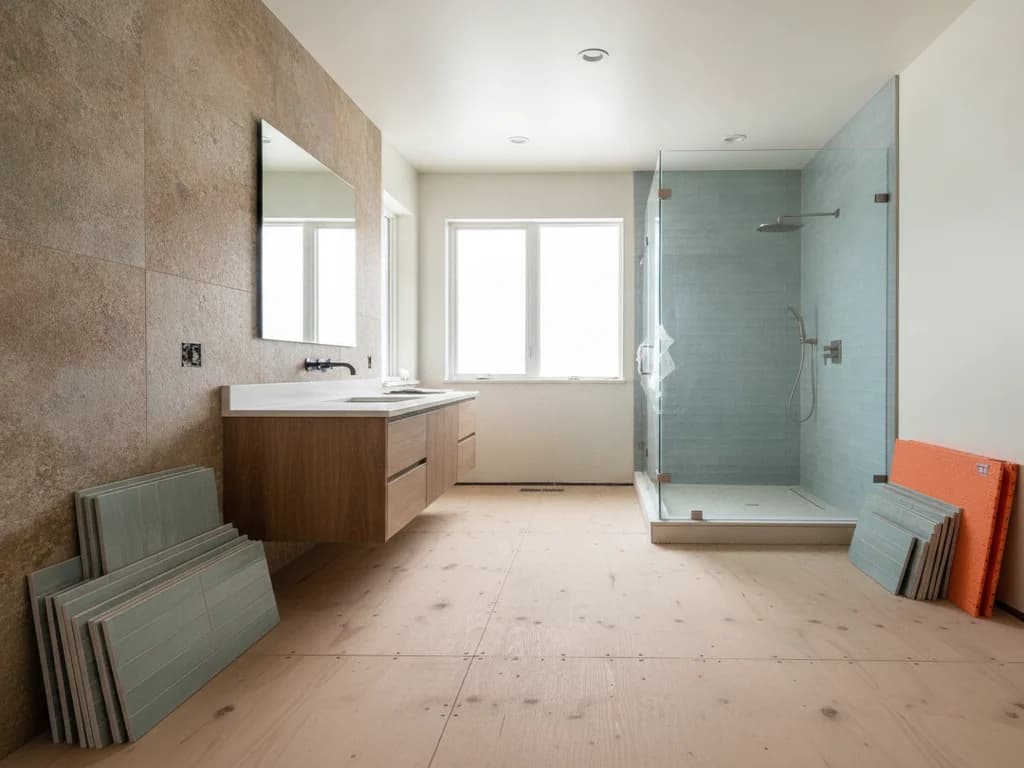
Two caveats keep that gap honest. First, both floors need a flat, sound subfloor, and sheet vinyl is less forgiving of prep shortcuts than people assume — every ridge and nail head telegraphs through a thin sheet. Second, in a small bathroom the absolute difference shrinks: at 40 square feet, even the high end of tile is a contained number, which is why tile dominates full remodels where the floor is a fraction of the budget anyway.
If your current floor is worn vinyl and you are deciding between re-covering and upgrading, replacing vinyl bathroom flooring walks through that specific project, including what installers check underneath the old sheet.
Old sheet vinyl and asbestos
Sheet vinyl and its felt backing from roughly the early 1980s and before can contain asbestos, which is hazardous when demolition turns it to dust. Per EPA guidance, suspect flooring gets tested before removal, and abatement — or encapsulating it under the new floor — is handled by qualified pros. If your bathroom floor predates the mid-1980s, test first, demo second.
Looks and comfort: closer than you think, until you look down
Print technology has made good sheet vinyl genuinely attractive from standing height — convincing stone patterns, realistic grout-line graphics, embossed texture. Where the illusion thins is up close and over time: the pattern repeats, the "grout lines" are flat, and a decade of traffic dulls the photo layer in the walk path.
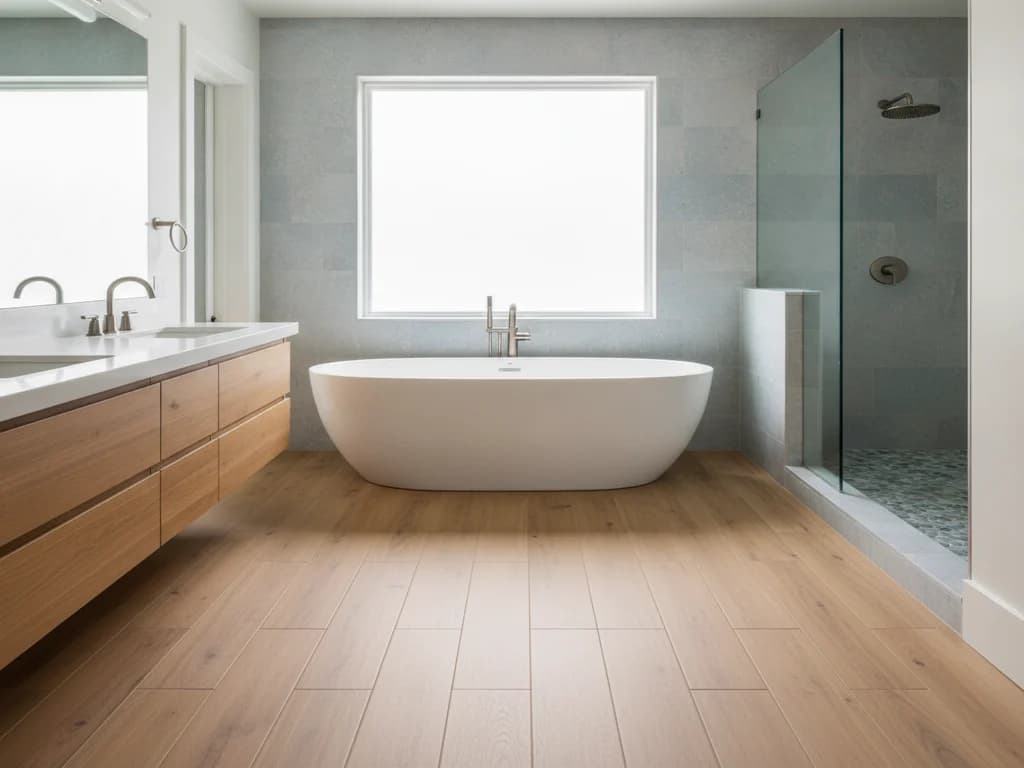
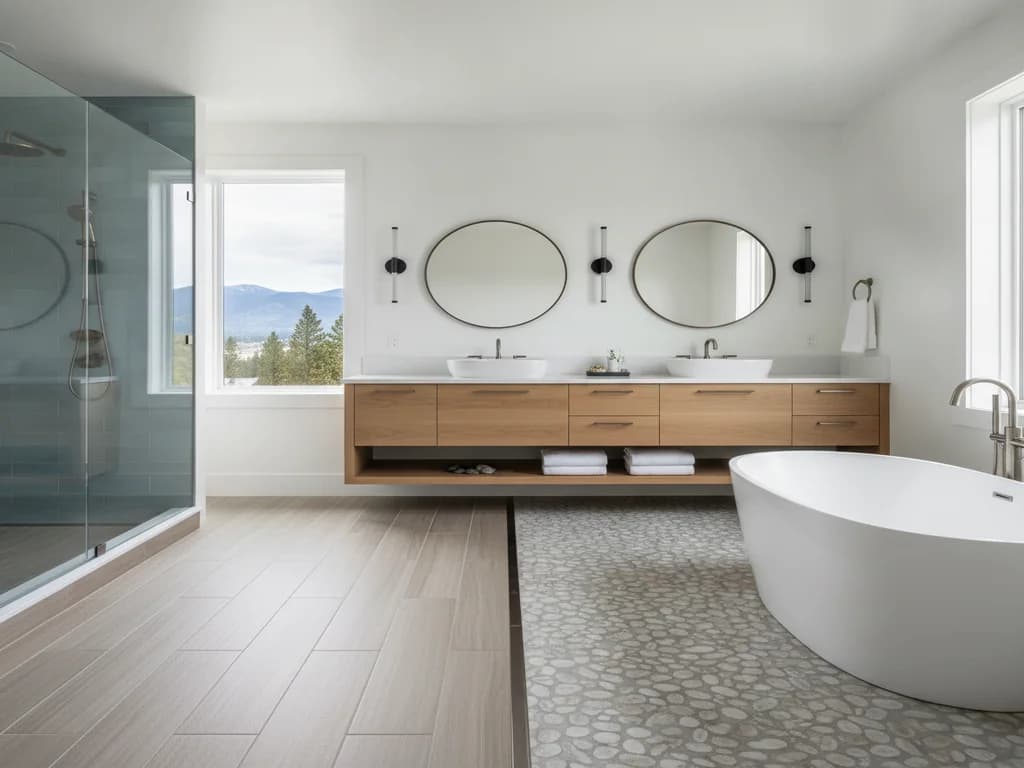
Tile offers what vinyl cannot: real material variation, large formats, natural stone looks, mosaics, and the design range covered in best bathroom flooring. It is also the only one of the two that pairs with electric radiant heat — a meaningful comfort upgrade in Boise winters, and a reason many homeowners who start out comparing budgets end up in the tile column.
Comfort flips the other way. Vinyl is warmer to bare feet on a January morning, softer if a child falls, quieter underfoot, and gentler on dropped glassware. In basement bathrooms over concrete — where tile amplifies the cold slab — that warmth is a genuine argument, not a consolation prize.
Which should you choose?
Choose porcelain tile when the bathroom is part of a remodel you plan to live with for ten-plus years, when resale presentation matters — primary baths and main hall baths carry the most weight — or when you want heated floors, natural-stone looks, or large formats. Tile is the buy-once floor: the premium is real, and so is the lifespan.
Choose sheet vinyl when budget is the binding constraint and the floor needs to be done right anyway: rentals, basement bathrooms over concrete, kids’ baths that will be remodeled again in a decade, or a quick refresh before listing a modest home. A cleanly installed, stone-look sheet with sealed edges is an honest, waterproof floor — better than aging tile with failing grout, and far better than laminate anywhere near water.
And if you are torn because you like plank formats, that is the sign to read tile vs LVP — LVP occupies the middle ground on price and repairability. Whichever way you lean, a free estimate can price both options on your actual bathroom, where subfloor condition usually decides more than the material does.
Ready to plan your Boise bathroom?
Licensed & insured · 3-year workmanship warranty
Frequently asked questions
- Is sheet vinyl waterproof enough for a bathroom?
- Yes. The material itself is impervious to water, and in most bathrooms a single sheet installs with no seams at all — the only lines to protect are the perimeter and fixture cutouts, which get sealed at installation. That seamless geometry is sheet vinyl’s standout trait; standing water that would eventually work into grout joints or plank seams sits harmlessly on a sheet floor.
- How long does sheet vinyl last in a bathroom?
- Roughly 10 to 20 years, per Angi’s flooring guides, depending on the product’s wear layer and the room’s traffic. Failure usually looks like gouges, tears at cutouts, or a dulled wear path rather than water damage. Porcelain tile, by comparison, routinely lasts for decades — the trade is upfront cost against longevity.
- Does tile add more resale value than sheet vinyl?
- In perception, yes. Tile reads as permanent and premium to buyers and appraisers, while sheet vinyl reads as economical — a distinction that matters most in primary bathrooms and least in basements, laundry areas, and rentals. No flooring choice transforms a sale price by itself, but dated or damaged flooring of any kind reliably drags on buyer impressions.
- Can you install tile over an old sheet vinyl floor?
- Sometimes, but it is rarely the right call. Tile needs a rigid, bonded substrate, and vinyl flexes — most installers remove the sheet and install proper underlayment instead. The exception worth knowing: if old vinyl is suspected to contain asbestos, encapsulating it under a new underlayment layer can be safer and cheaper than abatement. Testing decides that, per EPA guidance.
- What is the difference between sheet vinyl and LVP in a bathroom?
- Format and failure mode. Sheet vinyl is a continuous roll — seamless in most bathrooms, glued or loose-laid, and replaced whole when damaged. LVP is rigid planks that click together — hundreds of seams, but individual planks can be swapped, and it feels more like a hard floor underfoot. LVP typically costs more than sheet and less than tile; tile vs LVP is its own comparison.
- Is sheet vinyl cheaper than tile to install?
- Substantially. Installed sheet vinyl runs roughly $2–$5 per square foot against roughly $10–$25 for porcelain tile, per Angi and HomeAdvisor cost guides — the gap is mostly skilled labor, since tile involves underlayment, mortar work, and grouting over multiple days. In a small bathroom the absolute dollar difference shrinks, which is why full remodels usually land on tile anyway.
Sources
- Tile Council of North America (TCNA)
- Angi — Cost Guides
- HomeAdvisor — True Cost Guide
- Consumer Reports
- EPA — Asbestos
Claims and figures are drawn from the sources above and provided for general guidance; your project may vary. Photography is illustrative of design concepts. For a fixed price on your specific bathroom, request a free estimate.