Updated July 16, 2026 · 7 min read
By Boise Bath — bathroom & shower remodeling in Boise & the Treasure Valley
The short answer
Choose tile. Laminate’s fiberboard core swells when water reaches it — and in a bathroom, water always does, at seams, the tub edge, and the toilet base. Even water-resistant laminate carries wet-room limits in its warranty. Porcelain tile is fully waterproof, lasts decades, and is the floor bathrooms are built around.
Key takeaways
- Laminate is a photo layer over a high-density fiberboard core — compressed wood fiber that swells permanently when it absorbs water.
- Bathroom water reaches the core through joints, the tub and shower edge, the toilet base, and everyday splash — swollen edges are the classic failure, and they do not recover when the floor dries.
- Most "water-resistant" laminate warranties cover topical spills wiped up within a time window; many exclude full-wet-room use — the fine print is the honest spec.
- Porcelain tile absorbs almost no water, per TCNA standards, and a properly installed tile floor outlasts every other finish in the room.
- Laminate’s real advantages — low cost, easy floating installation, warm underfoot — all survive intact in bedrooms and hallways, just not over a bathroom subfloor.
- If failing laminate is why you are reading this, the fix is a one-time upgrade: tear-out, subfloor check, and tile.
The short answer: water decides this comparison
Most flooring matchups are trade-off stories — price against lifespan, comfort against durability. This one is not. Laminate flooring is built on a core of high-density fiberboard: wood fiber and resin pressed into a board. Wood fiber absorbs water, and when it does, it swells, and swollen fiberboard does not shrink back when it dries. That single material fact drives everything else in this article.
Porcelain tile is the opposite material story. Fired dense at high temperature, porcelain absorbs almost no water — the standard that defines porcelain caps absorption at a fraction of a percent, per the Tile Council of North America. Water on a tile floor is a puddle to wipe, not an event.
A bathroom is the one room where flooring is guaranteed to meet water repeatedly: shower splash, dripping kids, condensation runoff, an overflowing toilet, a slow supply-line weep behind the vanity. In a bedroom, laminate’s core never gets tested. In a bathroom, the test arrives weekly.
How laminate actually fails in bathrooms
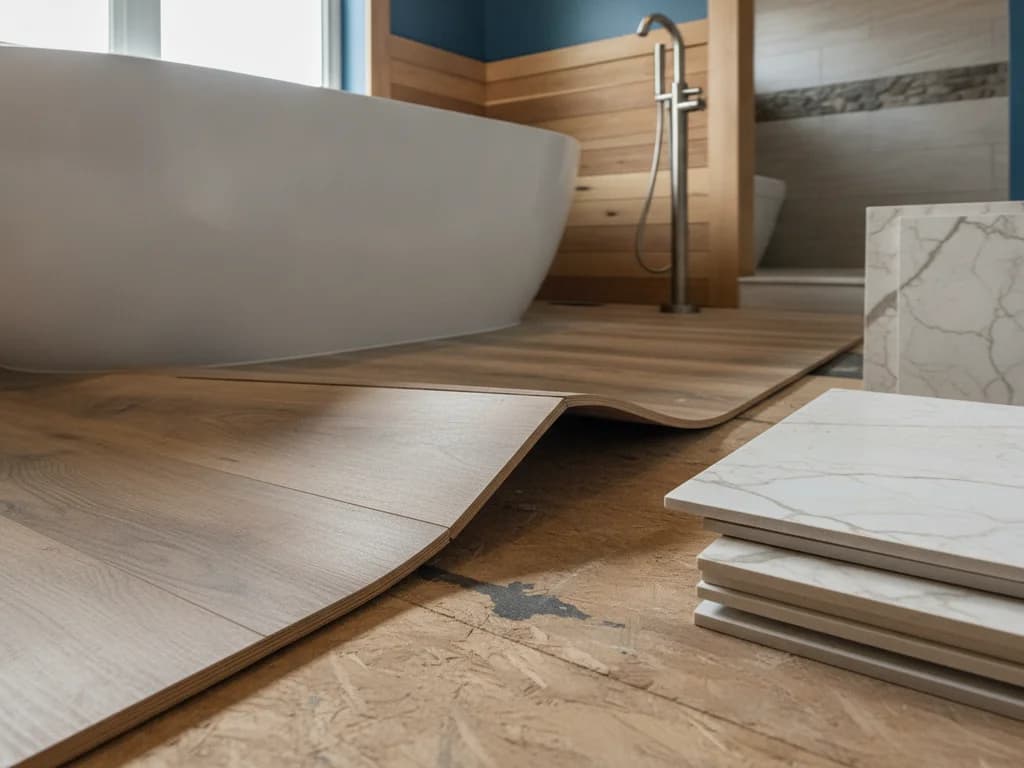
The failure is predictable enough to describe in advance. Laminate installs as a floating floor with hundreds of feet of click-lock joints, and every joint is a path to the core. Water that sits on the surface finds the seams; water that gets under the floor — from a tub edge, a toilet wax-ring weep, or mopping — wicks into the boards from below, where there is no wear layer at all.
The first visible symptom is edge swell: joints that rise into little peaks you can feel barefoot. Then boards cup, the photo layer at the seams whitens or delaminates, and the floor creaks and shifts where the locking profiles have blown out. By the time swelling is visible, the fiberboard has already deformed permanently — drying the room does not flatten it.
The bathroom-specific accelerants are exactly where you would guess: the strip alongside the tub or shower, the cut boards around the toilet flange, and the vanity kick where splash lands daily. Those are also the hardest places to keep perfectly caulked for a decade, which is why even careful households eventually see the edges rise.
What "water-resistant laminate" really promises
Manufacturers have genuinely improved the product: tighter joints, water-repellent edge coatings, denser cores. Those upgrades buy time against a surface spill — and that is generally exactly what the warranty says. The typical water-resistance clause covers topical household spills wiped up within a stated window, on a floor installed with the brand’s full sealing requirements.
Read further and the limits appear: many warranties reduce or exclude coverage in full baths, and standing water, flooding, and moisture from below the floor are commonly excluded across the category. Consumer Reports’ flooring testing tells the same story from the lab — some laminates now survive prolonged surface exposure impressively, but the category’s vulnerability is water reaching the core, and no coating changes what fiberboard does when it soaks.
The honest reading: water-resistant laminate is a real improvement for kitchens and entryways, where spills are occasional and topical. A bathroom floor’s water exposure is repetitive, edge-seeking, and sometimes from underneath — the exact scenarios the fine print carves out.
The toilet is the leak nobody sees
The most damaging bathroom leaks are slow ones — a wax ring weeping under the toilet, a supply line sweating behind the vanity. On tile, a slow leak stains grout and gets noticed. Under laminate, it wicks silently through the fiberboard and the subfloor for months before the floor visibly fails. If a bathroom will ever have laminate over it, that hidden-leak behavior is the strongest argument against.
Tile’s case, briefly
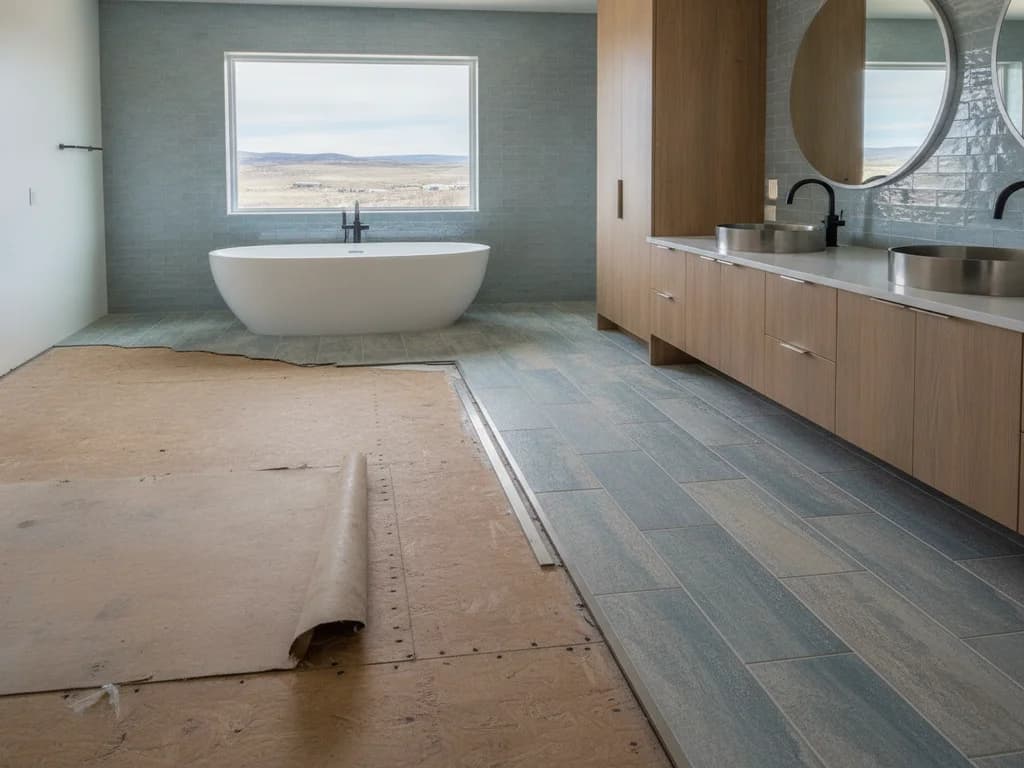
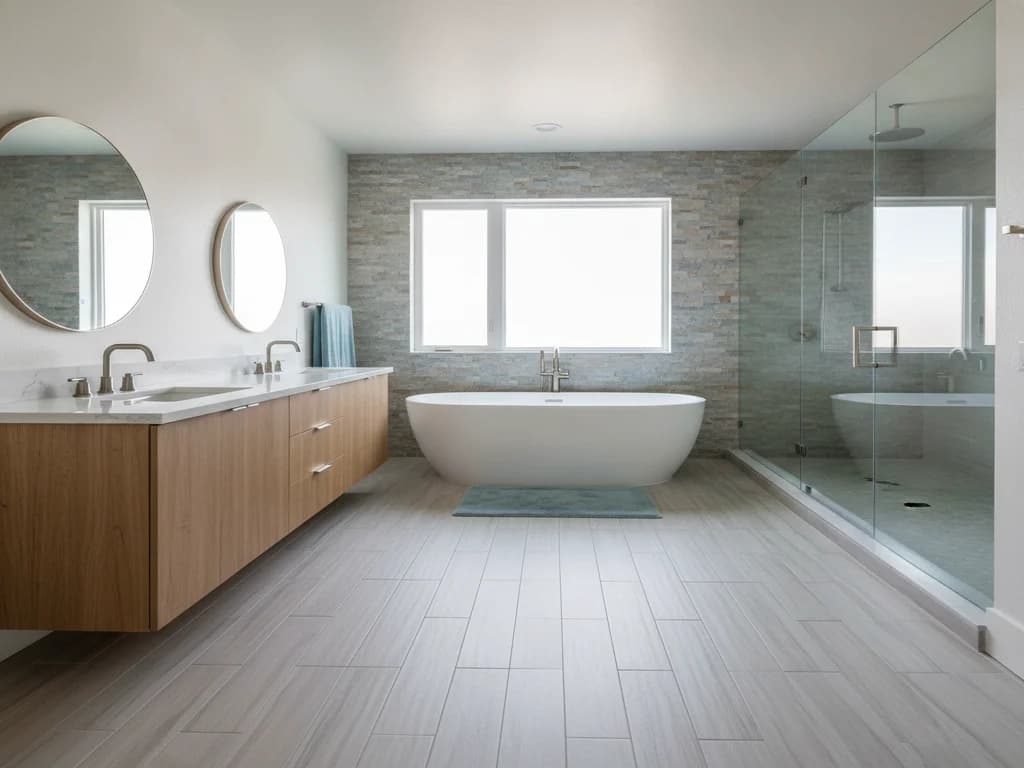
Porcelain tile is the default bathroom floor for reasons that read like a rebuttal to laminate’s weaknesses. The material is waterproof. The installation — over proper underlayment, with grouted joints — creates a surface that handles daily wetting for decades. Damage is repairable tile by tile. And it is the only floor in this comparison that pairs with electric radiant heat, which answers the "tile is cold" objection directly in a Boise winter.
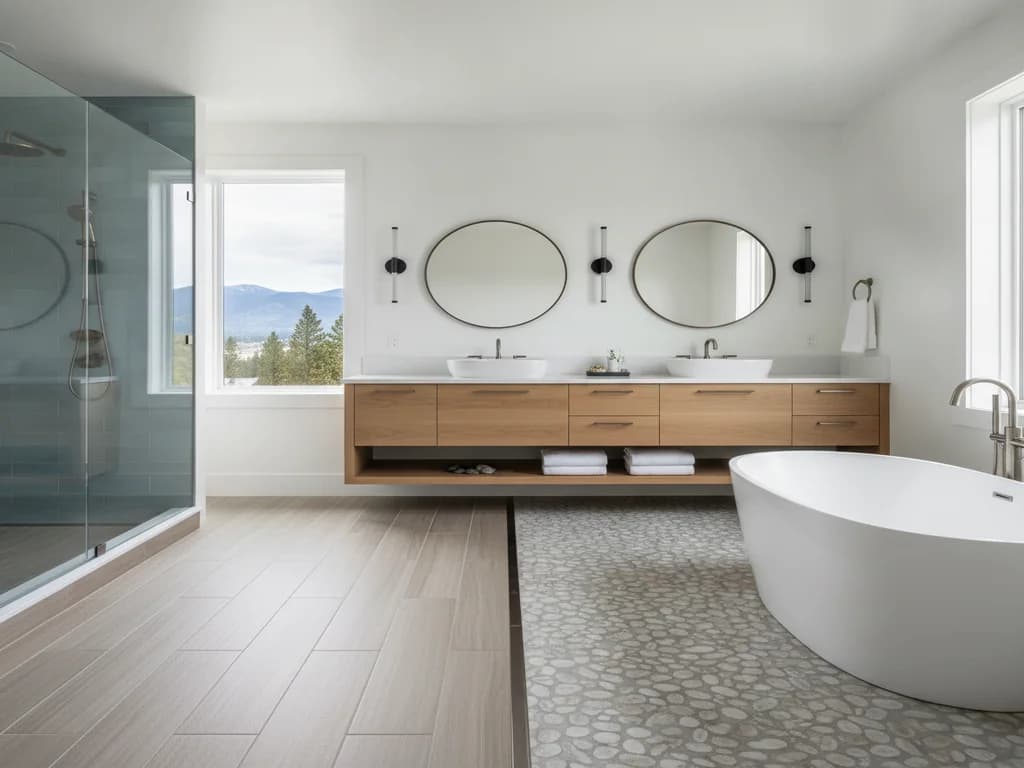
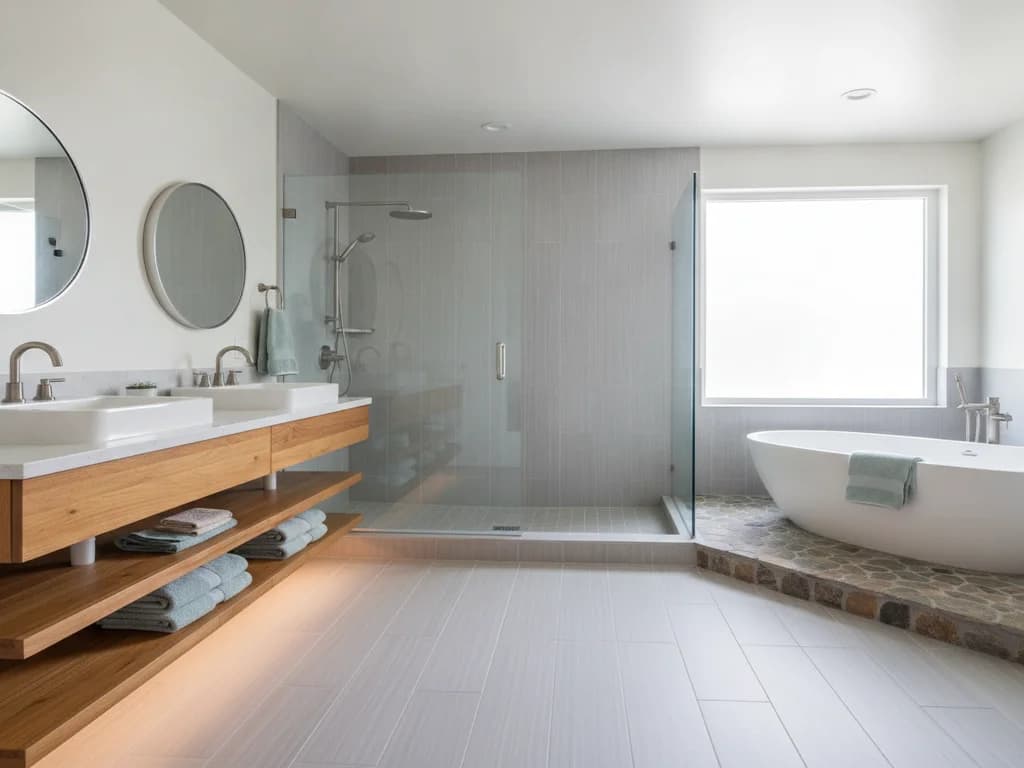
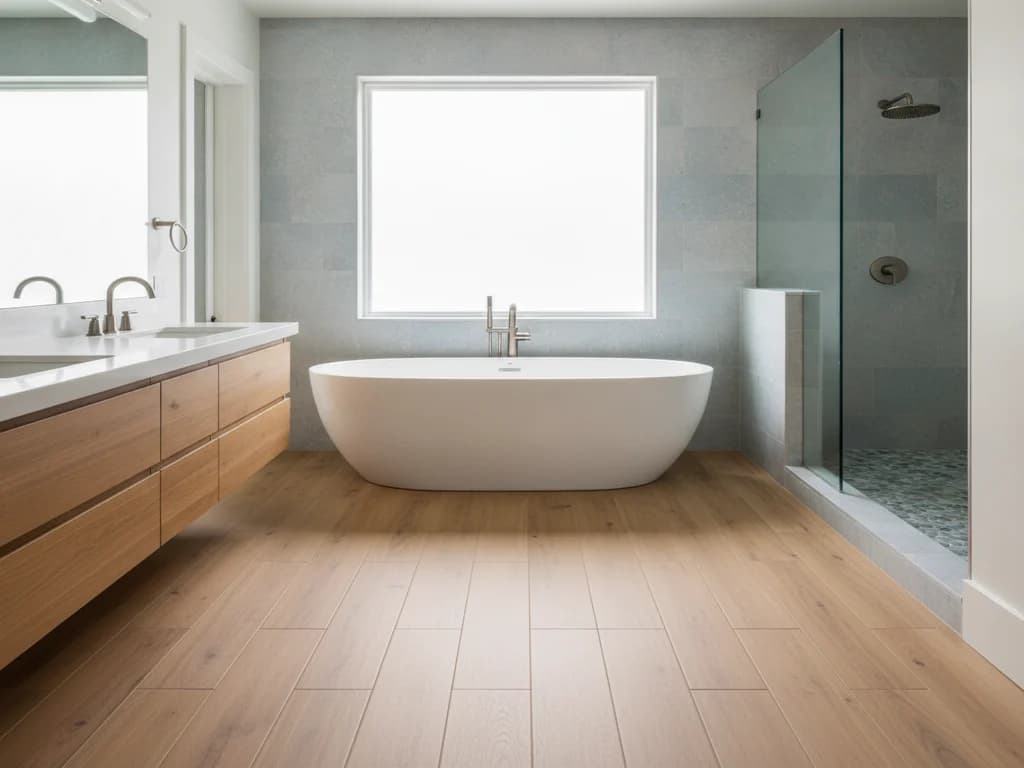
It even competes on laminate’s home turf of looks: wood-look porcelain planks deliver the exact aesthetic most bathroom laminate was chosen for, in a material that belongs in the room. The broader field of options — formats, stones, mosaics — is covered in best bathroom flooring.
Tile’s honest costs are upfront: it is more expensive to install, it is hard and cool without radiant heat, and it demands a skilled installation over a properly prepared subfloor. Those are real considerations — and every one of them is a one-time cost, where laminate’s water vulnerability is a permanent condition.
Tile vs laminate at a glance
The full comparison in one table, with cost figures as directional published ranges rather than quotes.
| Factor | Porcelain tile | Laminate |
|---|---|---|
| Water behavior | Waterproof material; unaffected by standing water | Fiberboard core swells permanently when water reaches it |
| Warranty in bathrooms | No wet-room restrictions | Often limited or excluded in full baths; topical spills only |
| Expected lifespan in a bath | Decades when properly installed | Often cut short by moisture — edge swell ends the floor early |
| Installed cost direction | Roughly $10–$25/sq ft, per Angi and HomeAdvisor | Roughly $3–$8/sq ft, per Angi and HomeAdvisor |
| Comfort underfoot | Hard, cool; supports radiant heat | Warmer and softer than tile |
| Repairability | Replace individual tiles | Swollen boards mean section or full-floor replacement |
| Resale perception | Premium, permanent | Budget material; a liability in bathrooms specifically |
Cost ranges are national installed figures from Angi and HomeAdvisor cost guides; room size, subfloor prep, and product choice move real numbers.
Cost: the gap is real, and so is the asterisk
Laminate wins the invoice. Installed laminate runs roughly $3–$8 per square foot against roughly $10–$25 for porcelain tile, per Angi and HomeAdvisor cost guides — laminate floats over the subfloor quickly, while tile is multi-day trade work with underlayment, mortar, and grout.
The asterisk is lifespan math in this specific room. A tile floor installed once can outlast two or three laminate floors that each end early in edge swell — and that comparison ignores the collateral costs of a soaked subfloor, which no flooring invoice captures. Cheap-per-year is not the same as cheap-per-install, and bathrooms are where the difference shows.
In a small bathroom, the absolute gap also shrinks: at 40 to 50 square feet, even generous tile pricing is a contained line item inside a remodel. This is why the flooring decision usually tips toward tile the moment the project is a renovation rather than a floor swap.
Which should you choose?
Choose porcelain tile for any full bathroom — anywhere with a tub or shower. The water exposure is constant, the hidden-leak risk is real, and tile is the only choice in this pair that treats those as normal operating conditions rather than warranty exclusions. Wood-look porcelain gets you laminate’s aesthetic without its core.
The defensible laminate case is narrow: a powder room with no bathing fixture, where water exposure is occasional splash, in a house already floored in matching laminate — and even there, sheet vinyl or LVP does the same job without the fiberboard risk. Tile vs sheet vinyl and tile vs LVP cover those better-suited budget alternatives.
And if you are here because your bathroom laminate is already swelling at the seams, the path is well worn: tear-out, a subfloor inspection while it is open, and tile that ends the cycle. Replacing laminate with tile walks through exactly that project, and a free estimate puts numbers on your room.
Ready to plan your Boise bathroom?
Licensed & insured · 3-year workmanship warranty
Frequently asked questions
- Can laminate flooring be used in a bathroom at all?
- It can be installed there, and some manufacturers permit it with strict sealing requirements — but most warranties limit or exclude full baths, and the fiberboard core’s response to water does not change. The defensible case is a powder room with no tub or shower. In a full bathroom, the question is when the edges swell, not whether.
- What happens when laminate flooring gets wet?
- Brief surface spills wiped up quickly are usually fine, especially on water-resistant products. The damage happens when water reaches the fiberboard core — through seams, edges, or from below. The core absorbs it, swells, and stays swollen: raised joints, cupped boards, and delaminating seams that no amount of drying reverses. Replacement is the only real fix for swollen boards.
- Is water-resistant laminate OK for a full bathroom?
- Read the warranty before deciding — that document is the manufacturer’s honest opinion. Most cover topical spills removed within a time window and many reduce or exclude coverage in full baths, with standing water and moisture from below commonly excluded. Water-resistant laminate is a genuine improvement for kitchens; a full bathroom’s repetitive, edge-seeking water exposure is what the exclusions describe.
- How long does laminate last in a bathroom compared to tile?
- Laminate is rated for one to two decades in dry rooms, but bathroom moisture routinely ends it early — edge swell at the tub line or toilet can appear within a few years. Properly installed porcelain tile lasts for decades in the same room. Per-year-of-service, tile is usually the cheaper bathroom floor despite costing two to three times more to install.
- Is tile much more expensive than laminate?
- Upfront, yes: roughly $10–$25 per square foot installed for porcelain tile versus roughly $3–$8 for laminate, per Angi and HomeAdvisor cost guides. The gap is mostly skilled labor. In a typical 40-to-50-square-foot bathroom the absolute difference is contained, and tile’s longevity in wet rooms usually wins the per-year math.
- What should I replace failed bathroom laminate with?
- Porcelain tile if this is a bathroom you are investing in — wood-look planks preserve the aesthetic the laminate was chosen for. Sheet vinyl or LVP if budget rules — both are waterproof materials without a fiberboard core. Whatever the choice, the tear-out is the moment to inspect the subfloor for moisture damage the laminate was hiding, and to fix it before anything new goes down.
Sources
Claims and figures are drawn from the sources above and provided for general guidance; your project may vary. Photography is illustrative of design concepts. For a fixed price on your specific bathroom, request a free estimate.