
Updated July 16, 2026 · 7 min read
By Boise Bath — bathroom & shower remodeling in Boise & the Treasure Valley
The short answer
Replace bathroom tile when the installation itself has failed — hollow-sounding tiles, cracks that run across multiple pieces, or water damage behind the wall. If the tile is sound and only the grout looks bad, regrout. If the tile is sound but dated, refinishing buys a few years of cosmetic life, though it is a temporary coating, not a repair.
Key takeaways
- The deciding question is whether the tile assembly has failed or just aged — failed installations get replaced, aged ones can often be regrouted or refinished.
- Hollow-sounding tiles, cracks crossing multiple tiles in a line, and loose or moving pieces are installation failures that no surface fix can rescue.
- Regrouting restores a sound installation whose grout has stained, cracked, or crumbled — the tile stays, only the joints are renewed.
- Refinishing (reglazing) is a paint-like coating over existing tile — purely cosmetic, shortest-lived in wet areas, and it hides problems rather than fixing them.
- Shower tile and floor tile fail differently: shower failures usually mean water is getting behind the tile, which makes replacement more urgent, not less.
- A tap test with a screwdriver handle across the field tells most of the story — a sound installation rings solid, a failed bond sounds hollow.
The real question: has the tile failed, or has it just aged?
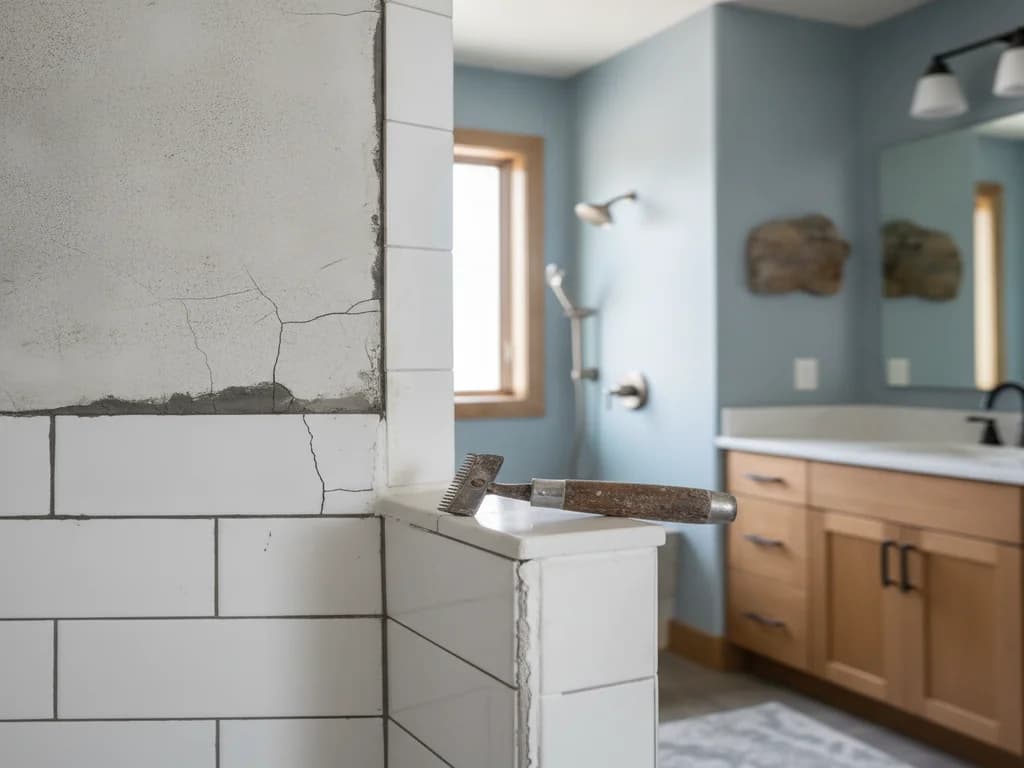
Homeowners usually ask "should I replace my tile" when what they mean is "my tile looks bad." Those are different problems with different price tags. Tile that has aged — stained grout, a dated color, dull glaze — is often rescuable. Tile that has failed — lost its bond to the substrate, cracked from movement, or let water behind the wall — is not.
That distinction is the whole decision tree. The Tile Council of North America treats tile as a system: the tile, the setting material, the substrate, and the waterproofing behind it all have to work together. When the visible surface is the only thing wrong, you have options. When the system underneath has failed, every surface fix is money spent delaying the same demolition.
So before pricing anything, diagnose. The three paths — regrout, refinish, replace — each match a specific condition, and the sections below walk through which symptoms point where.
The decision table: replace vs. regrout vs. refinish
Run your bathroom against this table. Most tile jobs sort cleanly into one column once you look past the cosmetics and check the condition of the installation itself.
| What you see | What it means | Right fix |
|---|---|---|
| Stained, dark, or crumbling grout; tile itself sound | The grout has worn out, not the tile | Regrout |
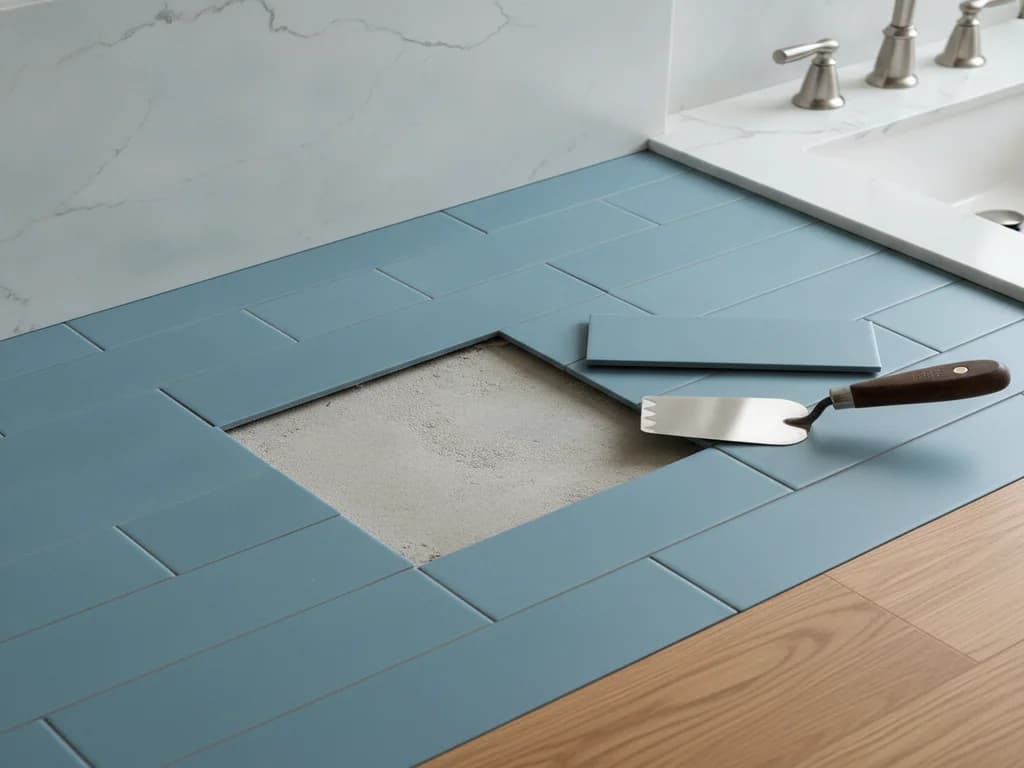
| A few isolated cracked or chipped tiles, rest solid | Impact damage or a point failure | Spot repair — replace the damaged tiles |
| Sound tile, dated color or pattern, dry walls | Cosmetic aging only | Refinish (short-term) or replace (permanent) |
| Tiles sound hollow when tapped | The bond to the substrate has failed | Replace |
| Cracks running in a line across multiple tiles | The substrate is cracked or moving | Replace — and fix the substrate |
| Loose tiles, flexing floor, soft spots | Structural or moisture failure underneath | Replace |
| Mold or dampness behind shower tile, musty smell | Waterproofing failure behind the wall | Replace — the wall system, not just the tile |
A failed installation cannot be fixed at the surface — per TCNA guidance, tile performs as a system, and the system is what gets rebuilt.
When regrouting is the right call
Grout wears out faster than tile. It is the sacrificial part of the assembly — porous, exposed, scrubbed for decades — and in Treasure Valley homes the hard water accelerates the staining. If your tiles are solidly bonded and undamaged but the joints have gone dark, cracked hairline-thin, or started crumbling, the tile does not need to go anywhere.
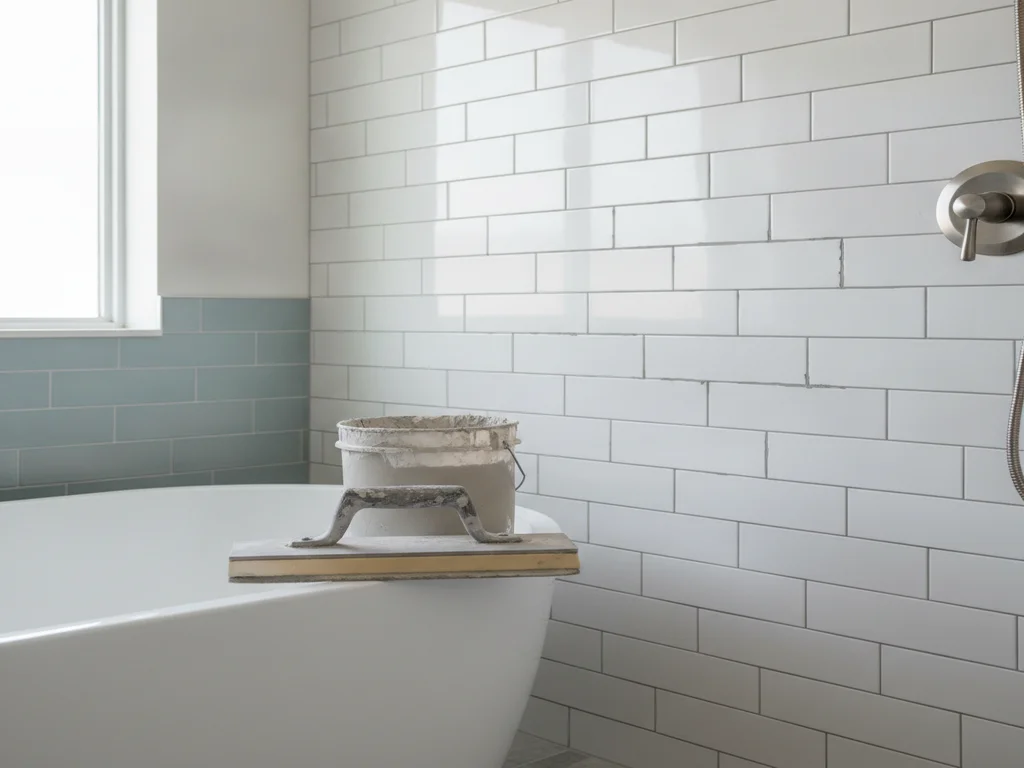
Regrouting removes the old grout to a proper depth and packs new grout into clean joints — can you replace grout without retiling covers exactly when that works and when it does not. Done right, it makes a twenty-year-old tile job look startlingly close to new for a fraction of replacement cost.
The catch: regrouting only rescues sound installations. New grout over hollow tile or a cracked substrate fails on the same schedule the old grout did, because grout was never the real problem. That is the threshold test explored in depth in should I regrout or retile.
When refinishing makes sense — and its honest limits
Tile refinishing (also sold as reglazing or resurfacing) sprays a coating over existing tile to change its color and sheen. It exists for one scenario: structurally sound tile in a dated color, in a bathroom you need to look presentable for a few years — a rental turn, a pre-sale refresh, a bathroom scheduled for a full remodel later.
Its limits are real. The coating is essentially a specialized paint: it can chip, it wears fastest on floors and in showers where water and cleaning are constant, and publications like This Old House consistently frame it as a short-term cosmetic measure rather than a repair. It also entombs the grout lines under the coating, so you lose the ability to regrout later without stripping the finish.
And it hides nothing that matters. Refinishing over hollow tile, cracked joints, or a damp wall coats the symptoms while the failure continues underneath. If any row of the decision table above pointed to "replace," refinishing is money toward the same demolition, just later.
When replacement is the honest answer
Three findings end the debate. First, hollow-sounding tile: tap across the field with a screwdriver handle, and where the sound goes from solid ring to hollow knock, the bond between tile and substrate has released. Those tiles are held in place by grout and habit, and the failure spreads.
Second, pattern cracking. A single cracked tile is an impact story; a crack that travels across several tiles in a line is the substrate telling you it has cracked or is moving. Per tile industry guidance from TCNA and the NTCA, tile is only as stable as what it is bonded to — new tile over a moving substrate cracks on the same line.
Third, moisture behind the assembly: dark staining at the bottom rows of a shower, a musty smell, soft drywall adjacent to the tile, or any of the broader signs of bathroom water damage. At that point the tile is the least of it — the waterproofing behind the tile has failed, and the fix is rebuilding the wet-area system correctly, not resurfacing what covers it.
The tap test is ten minutes that saves thousands
Before spending anything on regrouting or refinishing, tap every wall and floor tile with a screwdriver handle. Solid tiles ring; debonded tiles knock hollow. A few hollow tiles at an edge can be spot-repaired. Hollow zones spreading across the field mean the installation has failed, and any surface treatment is a deposit on a demolition you will still do.
Shower tile vs. floor tile: the failure math is different
Floor tile mostly fails mechanically — substrate flex, cracks, grinding wear in traffic lanes. Those failures are visible and progress slowly, which buys you time to plan. Replacing a bathroom tile floor covers what that project involves when the time comes.
Shower tile fails hydraulically, and that changes the urgency. Grout and tile were never the waterproofing — the membrane behind them was — so by the time shower tile shows failure at the surface, water has usually been reaching the wall cavity for a while. Delay costs more here than anywhere else in the bathroom; replacing shower tile explains why that project is really a wall-system rebuild.
This is why the same symptom earns different responses by location. Cracked grout on a floor is a maintenance item. Cracked grout ringing a shower niche or along the bottom row of a shower wall is a leak path, and the inspection it triggers should happen sooner, not later.
What a tile contractor checks before recommending anything
A credible assessment starts with the tap test across the whole field, then the details: grout condition at the wet zones, movement joints (or their absence — a classic issue flagged in bathroom tile mistakes), cracks and where they travel, and moisture readings on adjacent walls where a leak would show first.
The recommendation should map to findings, not to the biggest ticket. Sound tile with bad grout gets a regrout quote. A failed installation gets a replacement scope with the substrate fix named explicitly — because replacing tile without fixing why it failed is how the next owner ends up reading this article.
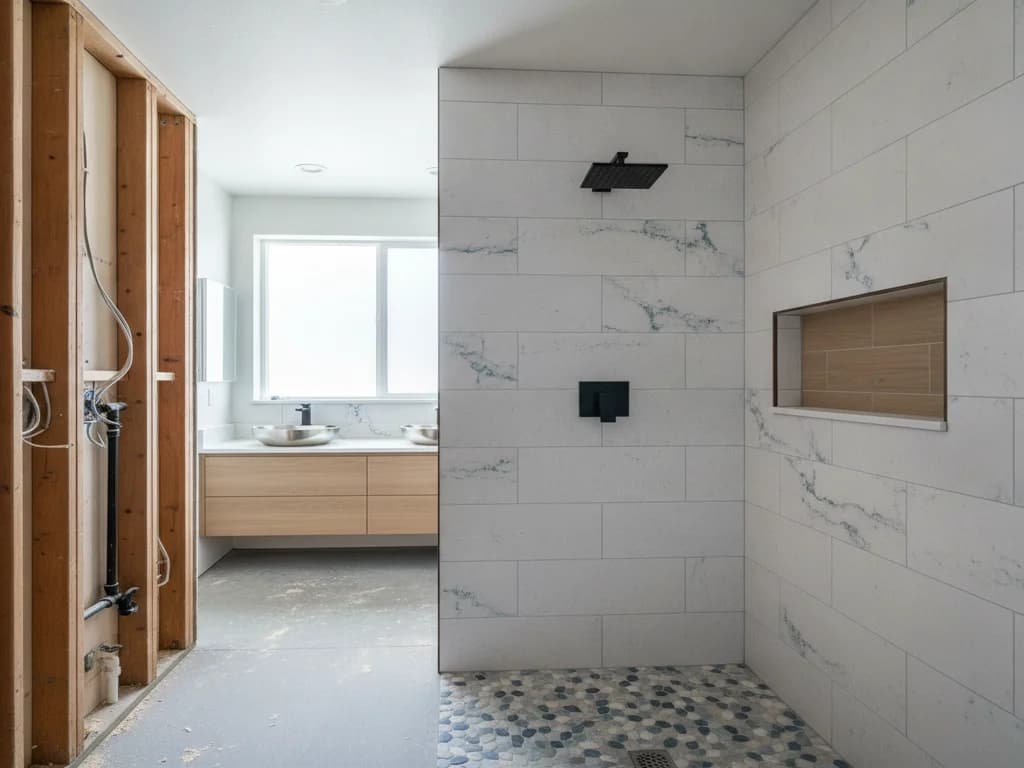
If the assessment lands on replacement, that is also the moment to decide whether you are matching what existed or upgrading the design while the walls are open. Either way, a free estimate on the specific bathroom turns this decision tree into a real number.
Ready to plan your Boise bathroom?
Licensed & insured · 3-year workmanship warranty
Frequently asked questions
- How do I know if my bathroom tile needs to be replaced?
- Check for the three installation failures: tiles that sound hollow when tapped, cracks that run across multiple tiles in a line, and any sign of moisture behind the assembly — staining, musty smell, or soft adjacent drywall. Any of those means the system under the tile has failed and replacement is the fix. If the tile is solid and only grout or color is the complaint, regrouting or refinishing may be enough.
- Is it cheaper to regrout or replace bathroom tile?
- Regrouting costs a fraction of replacement because the tile, substrate, and waterproofing all stay — only the joints are renewed. Replacement carries demolition, substrate repair, waterproofing, new tile, and setting labor. But the comparison only applies when regrouting is actually viable: spending on new grout over a failed installation means paying twice, because the replacement still comes.
- How long does tile refinishing last in a bathroom?
- Refinishing is a coating, and its life depends on exposure. On low-traffic surfaces it can look good for several years; on shower walls and floors, where water and cleaning chemicals work on it daily, it wears noticeably faster and can chip or peel. Sources like This Old House frame reglazing as a short-term cosmetic bridge — useful before a sale or a planned remodel, not a substitute for sound tile.
- Can I replace just a few cracked tiles instead of the whole floor?
- Yes, if the cracks are isolated impact damage and the surrounding field is solidly bonded. A pro cuts out the damaged tiles, preps the setting bed, and sets matched replacements — the hard part is usually sourcing matching tile for an older installation. If cracks line up across several tiles, that pattern points to substrate movement, and spot repairs will crack again on the same line.
- What does it mean when bathroom tiles sound hollow?
- A hollow sound means the tile has lost its bond to the setting material or the setting material has released from the substrate. The tile is effectively floating, held by grout at its edges. It may sit that way for a while, but the debonding tends to spread, grout at the edges of hollow tiles cracks, and in wet areas that opens a water path. Widespread hollow tile is a replacement finding, not a repair one.
- Should I replace bathroom tile before selling my house?
- Only when the tile is failed or badly dated enough to cost you the sale price it would take to fix it. Sound tile with tired grout usually just needs regrouting — one of the highest-return cosmetic fixes in a bathroom. Genuinely failed tile is worth addressing because inspectors flag hollow tile and moisture readings, and buyers price in a full bathroom remodel when they see it.
Sources
- Tile Council of North America (TCNA)
- National Tile Contractors Association
- This Old House — Bathrooms
- HomeAdvisor — True Cost Guide
Claims and figures are drawn from the sources above and provided for general guidance; your project may vary. Photography is illustrative of design concepts. For a fixed price on your specific bathroom, request a free estimate.