Updated August 28, 2026 · 7 min read
By Boise Bath — bathroom & shower remodeling in Boise & the Treasure Valley
The short answer
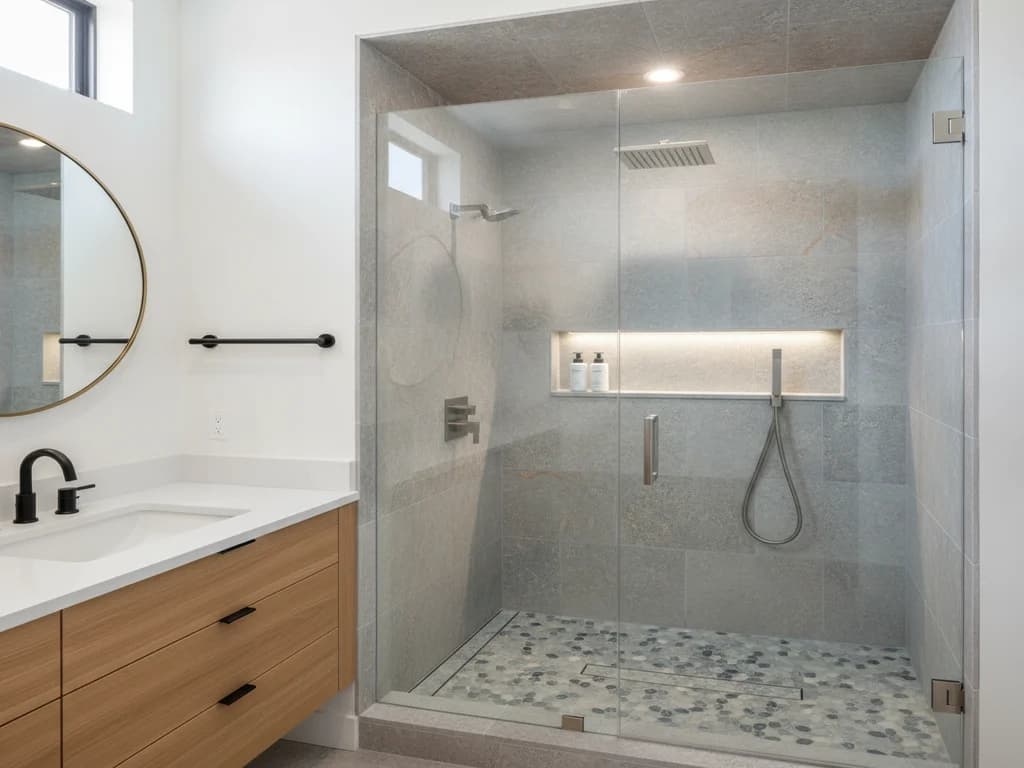
A handheld shower on a vertical slide bar lets water be directed from a seated position and adjusted for standing users on the same fixture. The ADA Accessibility Standards call for a hose at least 59 inches long that functions both as a fixed head and a handheld sprayer, and a thermostatic or pressure-balancing valve protects against scalding.
Key takeaways
- A handheld shower is the single most useful accessible bathing fixture relative to its cost and visual impact.
- The ADA Accessibility Standards specify a shower spray unit with a hose at least 59 inches long, usable as both a fixed shower head and a handheld sprayer.
- A vertical slide bar lets the same fixture serve a seated user and a standing user without any change of hardware.
- Mounting the bar so the cradle is reachable from a shower seat is the detail most often missed — reachable while standing is not the same thing.
- A pause or trickle control on the handset lets water be stopped at the head, which matters when soaping while seated.
- Anti-scald protection is essential for seated bathing: the CPSC notes 150°F water can cause a third-degree burn in about two seconds.
- A slide bar is not a grab bar and must never be used as one unless it is specifically rated and anchored for that purpose.
Why this fixture earns its place
Accessible bathroom conversations tend to gravitate toward the large interventions — curbless showers, walk-in tubs, wider doorways. Those matter. But the handheld shower is the item that delivers the most day-to-day benefit for the least money and the least visual change to the room.
The reason is simple: a fixed shower head sprays where it is aimed, which assumes a standing person of roughly the height the installer assumed. Someone bathing seated is below that spray, and someone assisting from outside the shower cannot direct it at all. A handheld unit moves the water to the person rather than requiring the person to move to the water.
It also serves everyone else. Rinsing the shower down, washing a dog, helping a child — the handheld is used constantly by households who installed it for reasons that had nothing to do with accessibility.
What the standards specify
The ADA Accessibility Standards call for a shower spray unit with a hose at least 59 inches long that can be used both as a fixed shower head and as a handheld sprayer. Fifty-nine inches is a deliberate number: it is enough to reach a seated user comfortably at the far end of a shower, and enough for an assistant standing outside.
Shorter hoses are common on retail handheld units, and a hose that is too short is the most frequent disappointment with this fixture — it reaches the shoulder but not the feet, which defeats much of the purpose. Hose length is worth confirming at specification rather than discovering at installation.
As always, these standards govern public and commercial facilities rather than private homes. They remain the best-researched dimensions available, and the 59-inch figure in particular translates directly to residential use.
The slide bar detail that gets missed
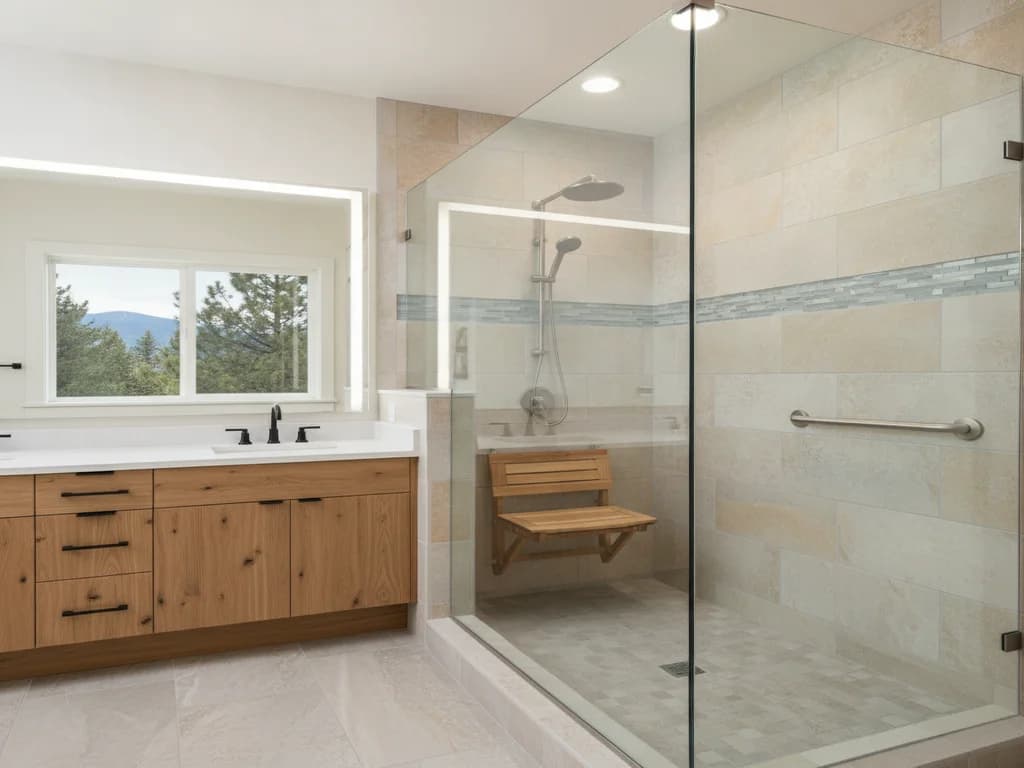
A vertical slide bar holds the handset in an adjustable cradle so it can act as a fixed head at whatever height suits the person using it. That is what allows one fixture to serve a standing adult and a seated user without swapping hardware.
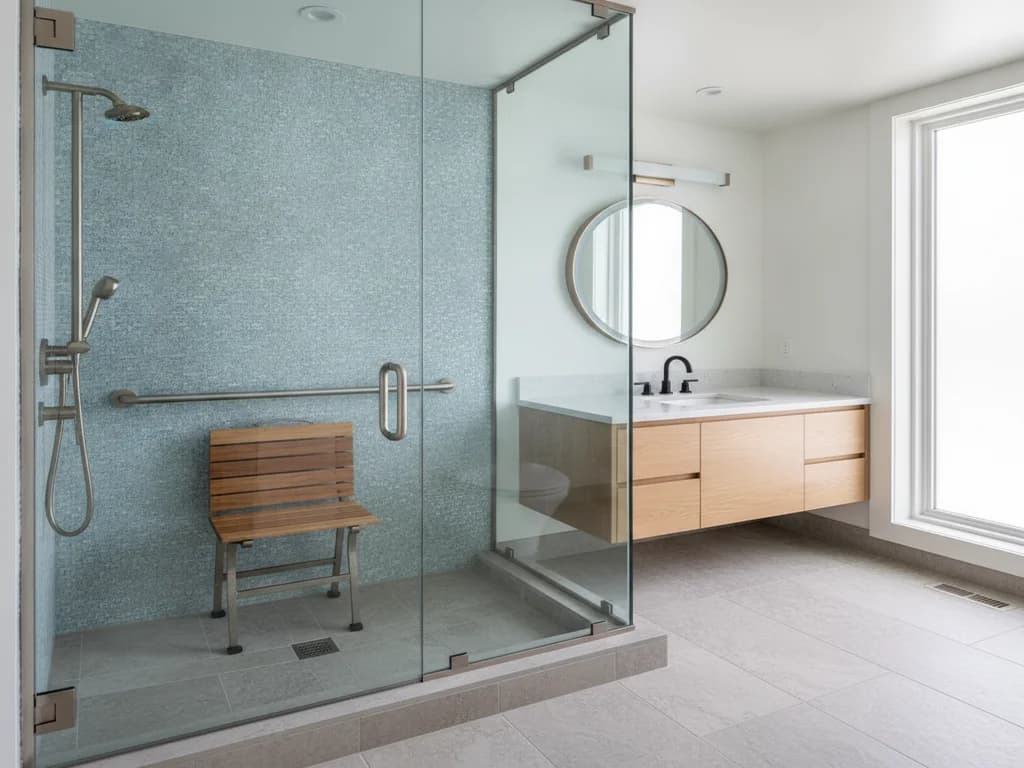
The detail routinely missed is the reachable range. Bars are frequently mounted at a height convenient for a standing installer, which puts the cradle out of reach for someone seated on a shower bench. If the handset cannot be returned to and retrieved from the cradle while seated, the slide bar is not doing its job.
The fix is to establish the seat position first, then mount the bar so its lower range is comfortably reachable from that seat. Where a bench is fixed, this is straightforward. Where a portable chair is used, allow for where it will actually sit.
One safety point deserves emphasis: a slide bar is not a grab bar. It is not built or anchored to take a person’s weight, and it will fail if used that way. Some manufacturers offer combination units rated as grab bars — those are fine when specified and installed as such. An ordinary slide bar is not, and if support is needed at that location, a proper grab bar belongs there too.
Specify the seat before the bar
Decide where the shower seat goes, then mount the slide bar so the cradle is reachable from it. Reversing that order is the most common way a well-chosen handheld ends up frustrating to use.
The valve behind the wall
Seated bathing usually takes longer than standing, and a seated person cannot step out of the spray quickly. That makes water temperature control a safety matter rather than a comfort one.
The CPSC notes that water at 150°F can cause a third-degree burn in about two seconds, and recommends setting water heaters no higher than 120°F. A pressure-balancing or thermostatic mixing valve holds the temperature steady when another fixture in the house draws water, which is the scenario behind most sudden hot spikes.
Thermostatic valves respond to actual water temperature and are the stronger choice where someone bathes seated, has reduced sensation, or is assisted. Since the valve is behind the wall, this is a decision made during the remodel — not one that can be added later without opening tile.
Small features that matter more than they sound
A pause or trickle control on the handset — a button that reduces flow to almost nothing at the head — is genuinely useful for seated bathing, because soaping while water runs is wasteful and while water is off means resetting the temperature afterward. It is a minor feature that gets used every single time.
Spray pattern matters too. A wide gentle spray is more comfortable on sensitive or thin skin than a concentrated massage jet, and simple pattern controls are easier to operate with limited grip than fiddly rotating collars.
Finally, consider the weight and grip of the handset. A heavy metal unit feels premium in a showroom and is tiring to hold for someone with reduced hand strength. Lighter handsets with a defined grip are the better choice where that applies.
What the process looks like
- 1
Fix the seat position first
Decide where the bench or chair will sit before anything is mounted. Every other dimension follows from it.
- 2
Specify hose length
Confirm at least 59 inches. Short retail hoses are the most common disappointment with this fixture and cannot be corrected after installation.
- 3
Mount the slide bar to the seat, not the installer
Set the bar so its lower cradle range is comfortably reachable from the seated position, not from standing height.
- 4
Specify the valve while the wall is open
Choose a pressure-balancing or thermostatic mixing valve. Thermostatic is the stronger choice for seated or assisted bathing, and it cannot be added later without opening tile.
Ready to plan your Boise bathroom?
Licensed & insured · 3-year workmanship warranty
Frequently asked questions
- How long should a handheld shower hose be?
- The ADA Accessibility Standards specify at least 59 inches, usable as both a fixed head and a handheld sprayer. That length reaches a seated user comfortably and allows an assistant to help from outside the shower. Shorter retail hoses are the most common disappointment with this fixture — confirm length at specification.
- How high should a shower slide bar be mounted?
- Low enough that the cradle is reachable from the shower seat, which is the detail most often missed. Bars are frequently mounted at a height convenient for a standing installer, leaving the handset unreachable when seated. Establish the seat position first, then mount the bar so its lower range is comfortably within reach.
- Can I use a slide bar as a grab bar?
- No. An ordinary slide bar is not built or anchored to take a person’s weight and will fail under load. Some manufacturers make combination units specifically rated and installed as grab bars, which are fine. If support is needed at that location, install a properly anchored grab bar as well.
- What kind of shower valve should an accessible shower have?
- A pressure-balancing or thermostatic mixing valve, with thermostatic being the stronger choice for seated or assisted bathing. The CPSC notes 150°F water can cause a third-degree burn in about two seconds and recommends water heaters set no higher than 120°F. The valve is behind the wall, so it is a remodel-time decision.
- Is a handheld shower useful if nobody in the house needs accessibility features?
- Very. Households install them for rinsing down the shower, washing pets, and bathing children, and use them constantly. It is one of the few accessibility-oriented fixtures that most people would choose anyway, which makes it an easy addition during any remodel.
Sources
- U.S. Access Board — ADA Accessibility Standards
- ADA.gov — U.S. Department of Justice
- U.S. Consumer Product Safety Commission
- AARP — Livable Communities / HomeFit
- Moen
Claims and figures are drawn from the sources above and provided for general guidance; your project may vary. Photography is illustrative of design concepts. For a fixed price on your specific bathroom, request a free estimate.