Updated July 16, 2026 · 7 min read
By Boise Bath — bathroom & shower remodeling in Boise & the Treasure Valley
The short answer
Carpet has no place in a bathroom: it traps moisture, feeds mold, and hides subfloor damage, which is why the EPA advises keeping carpet out of damp rooms. Replacing it with tile or luxury vinyl plank is a straightforward one-to-three-day project — often revealing staples, old vinyl, and water stains that need attention first.
Key takeaways
- The EPA recommends against carpet in areas with persistent moisture — bathrooms are the textbook case.
- Carpet pad absorbs splash, condensation, and toilet-seal weeps for years, and none of it dries out underneath.
- Tear-out usually reveals tack strips, hundreds of staples, and often an older vinyl floor — plus the true condition of the subfloor.
- Porcelain tile and waterproof luxury vinyl plank are the two replacement floors worth considering in a full bathroom.
- Dark staining or soft wood around the toilet means the project extends to the subfloor — better found now than after the new floor is down.
- If warmth underfoot is why the carpet survived this long, electric floor heat under tile solves that honestly.
Why carpet doesn’t belong in a bathroom
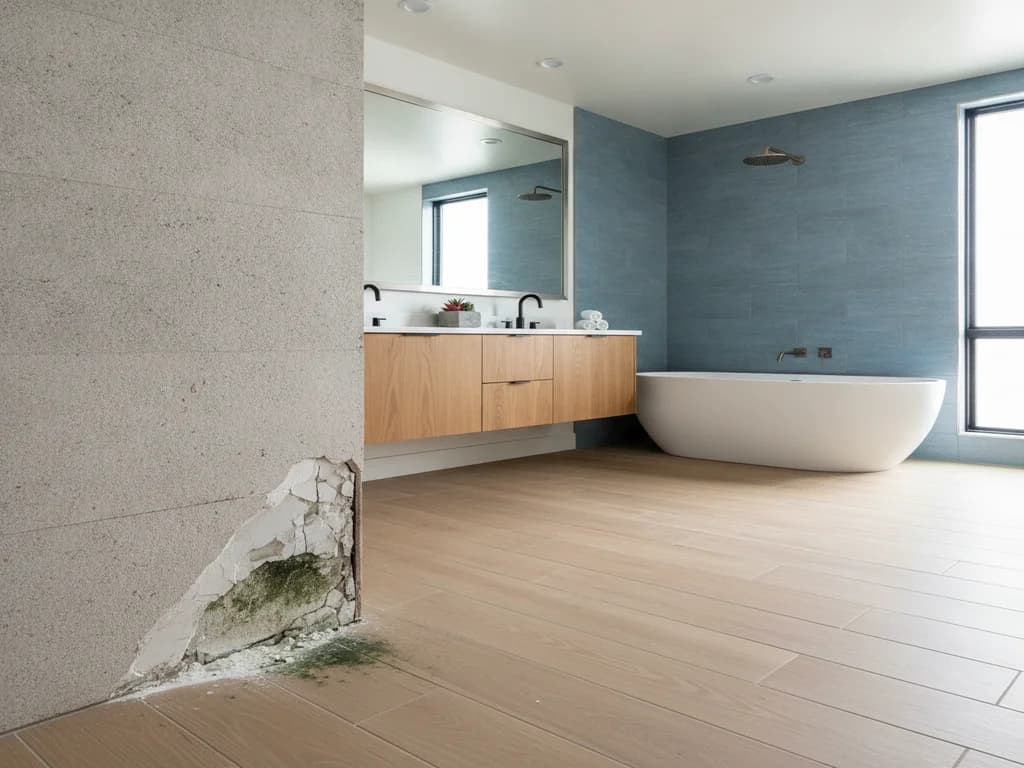
Carpet in a bathroom fails on physics before it fails on style. Every shower fills the room with humidity that condenses into the fibers, every splash and drip soaks through to the pad, and the pad holds that moisture against the subfloor where it cannot dry. The EPA specifically advises against carpet in areas with a lot of moisture for exactly this reason — damp carpet and pad are a standing invitation for mold.
Then there is the hygiene problem no one enjoys discussing: carpet within reach of a toilet absorbs what hard flooring would simply be wiped clean of. Decades of it. Even a bathroom carpet that looks acceptable on top is usually a different story at the pad.
The smell test is real
A musty odor that returns after every shower, or carpet that feels cool and damp hours later, means moisture is living in the pad. That is the signal to stop shampooing and start planning the replacement.
Which homes still have carpeted bathrooms?
Carpeted bathrooms were a comfort upgrade in their day — warm underfoot, quiet, and cheap to run wall-to-wall when the rest of the house was being carpeted anyway. You will find them mostly in 1970s–1990s homes, usually in the master bath and often just in the vanity and toilet area, with vinyl surviving near the tub.
In the Treasure Valley that means a lot of 70s and 80s ranches and split-levels around Boise’s Bench and West Boise, and plenty of early Meridian and Nampa subdivisions. If your bathroom still has original carpet, the room around it is likely original too — worth keeping in mind when you scope the project, as our guide to remodeling older Boise homes lays out.
What’s usually under bathroom carpet?
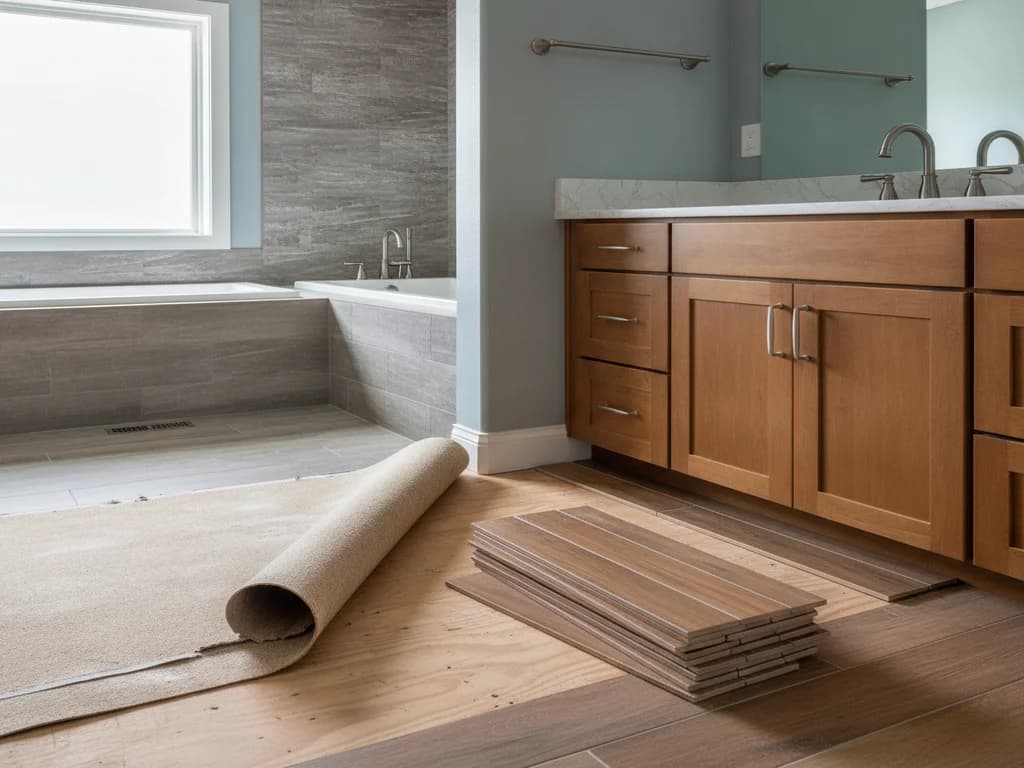
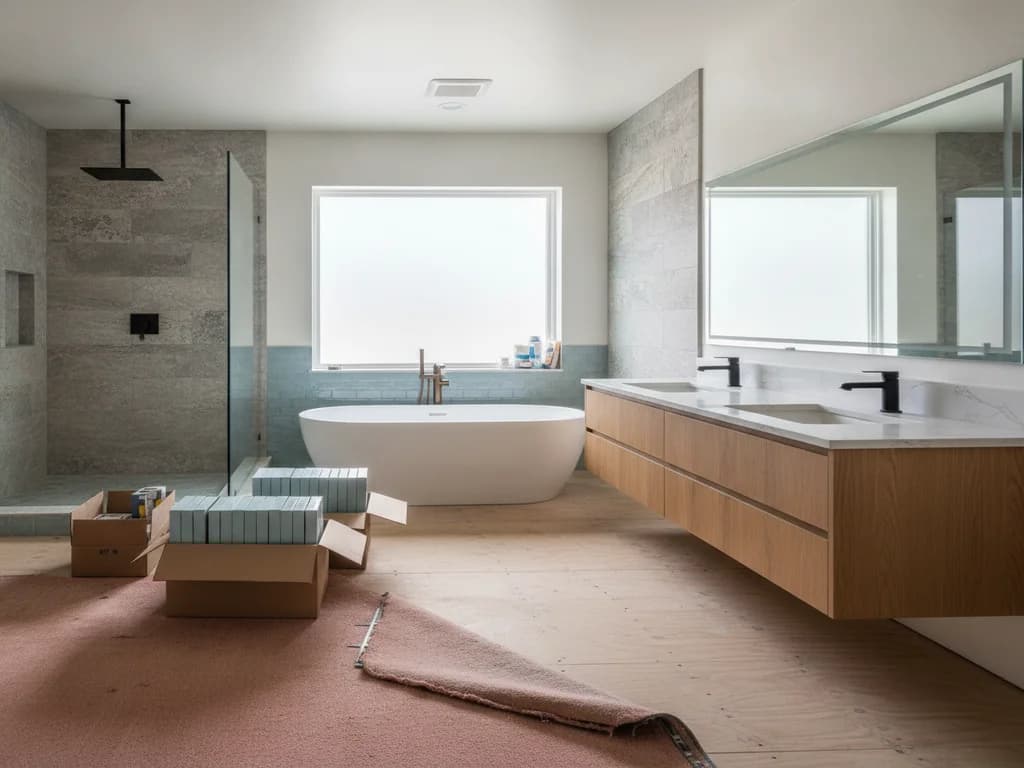
Working down: the carpet, a foam or rebond pad, tack strips nailed around the perimeter, and hundreds of staples holding the pad. Under that, most bathrooms have a plywood subfloor — and a surprising number have an older floor the carpet was simply laid over, usually sheet vinyl and occasionally hardwood.
The two places to look hard are the toilet and the tub edge. A ring of dark staining around the flange, or plywood that flakes when probed, means water has been getting through for years under cover of the carpet. That discovery changes the scope — see the signs of bathroom water damage for what distinguishes cosmetic staining from structural trouble.
What should you replace it with?
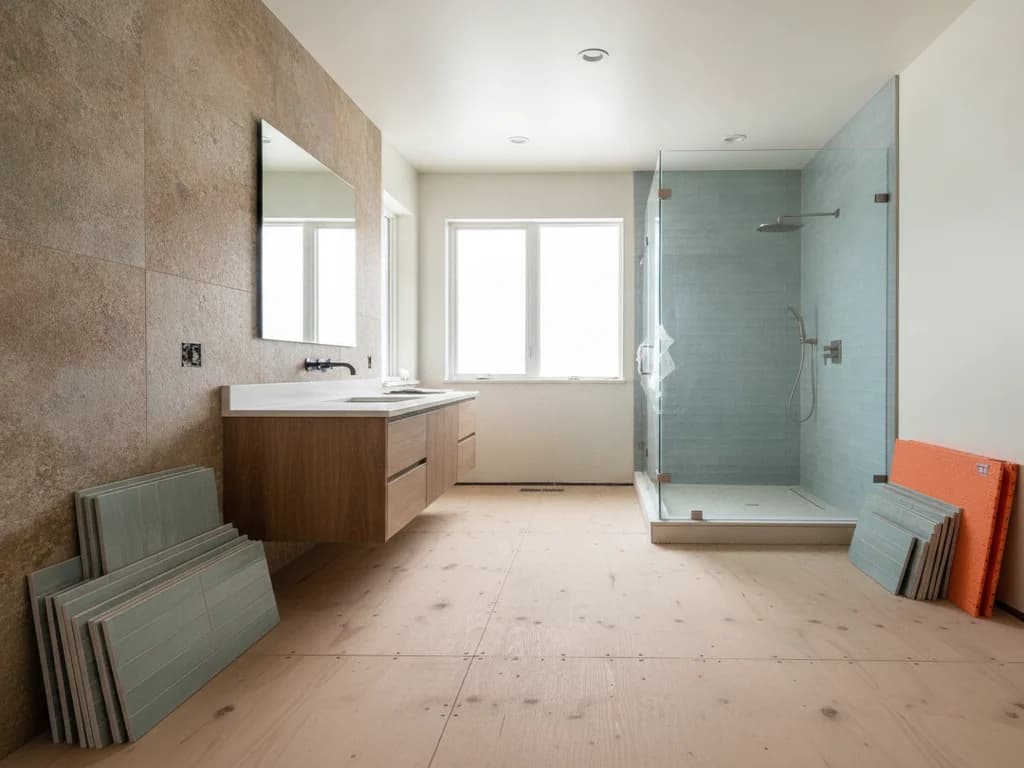
The two floors that make sense are the same two that dominate every bathroom flooring decision: porcelain tile for durability, water immunity, and resale presence, or waterproof luxury vinyl plank for budget, warmth, and speed. Both are compared honestly in our best bathroom flooring guide.
If the carpet survived this long because tile feels cold in January, that objection has a real answer now: electric radiant heat under tile turns the coldest floor in the house into the warmest. It is its own topic — our heated bathroom floor guide covers systems and costs — but it deserves mention because it removes the last honest argument for bathroom carpet.
What if the subfloor is damaged?
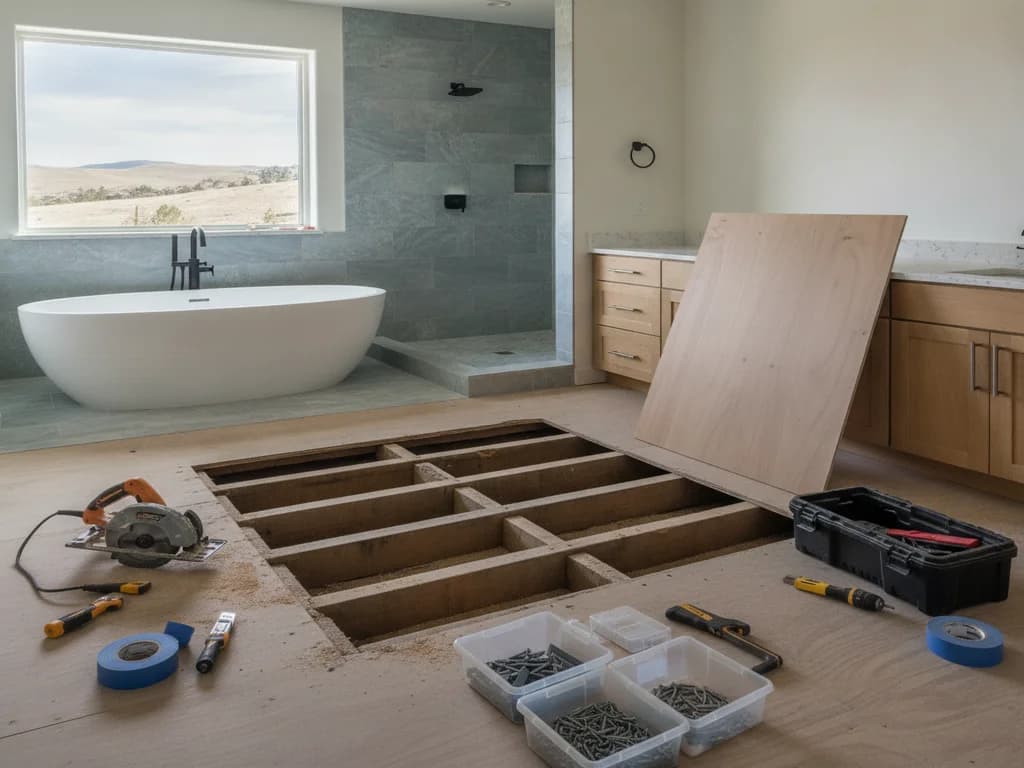
Plan for the possibility rather than being surprised by it. Localized damage — a soft ring at the toilet, staining at the tub — is usually a cut-and-patch repair: the compromised section comes out and new plywood goes in, sistered to the joists where needed. Widespread sponginess is a bigger conversation, covered in replacing a bathroom subfloor.
This is also why the tear-out belongs at the start of a project, not the week before you want the room finished. The floor tells you the real scope only after the carpet is gone.
What does it cost, and is it worth doing on its own?
Carpet removal itself is the cheap part of the project. The real budget is the new floor: for a typical bathroom, professionally installed flooring generally runs roughly $800–$3,000 depending on material and room size, per HomeAdvisor’s cost guides, with LVP toward the bottom of that range and porcelain tile toward the top. Subfloor repairs, a new toilet seal, and baseboard work add modestly to that.
Is it worth doing alone, without a full remodel? Usually yes — this is one of the few bathroom projects with an immediate hygiene payoff and near-universal buyer approval. But if the tub surround and vanity are the same vintage as the carpet, price a full bathroom remodel alongside it before deciding; opening the floor once is cheaper than opening it twice.
What the process looks like
- 1
Pull the toilet and baseboards
The toilet comes out so the new floor can run beneath it, and baseboards come off cleanly so flooring edges tuck under trim instead of being caulked against it.
- 2
Cut and remove the carpet and pad
Carpet is cut into manageable strips, rolled, and hauled out with the pad. In a bathroom this takes an hour, not a day — the fast, satisfying part of the job.
- 3
Remove tack strips, staples, and any old flooring
Perimeter tack strips are pried up and every pad staple pulled or driven flush. If an older vinyl layer sits underneath, the crew evaluates whether it stays as a substrate or comes out — with age-appropriate caution for pre-1980 vinyl.
- 4
Inspect and repair the subfloor
The exposed subfloor is probed at the toilet flange, tub edge, and any stained areas. Compromised plywood is cut back to sound wood and replaced, and the whole surface is checked for flatness and squeaks.
- 5
Install the new floor system
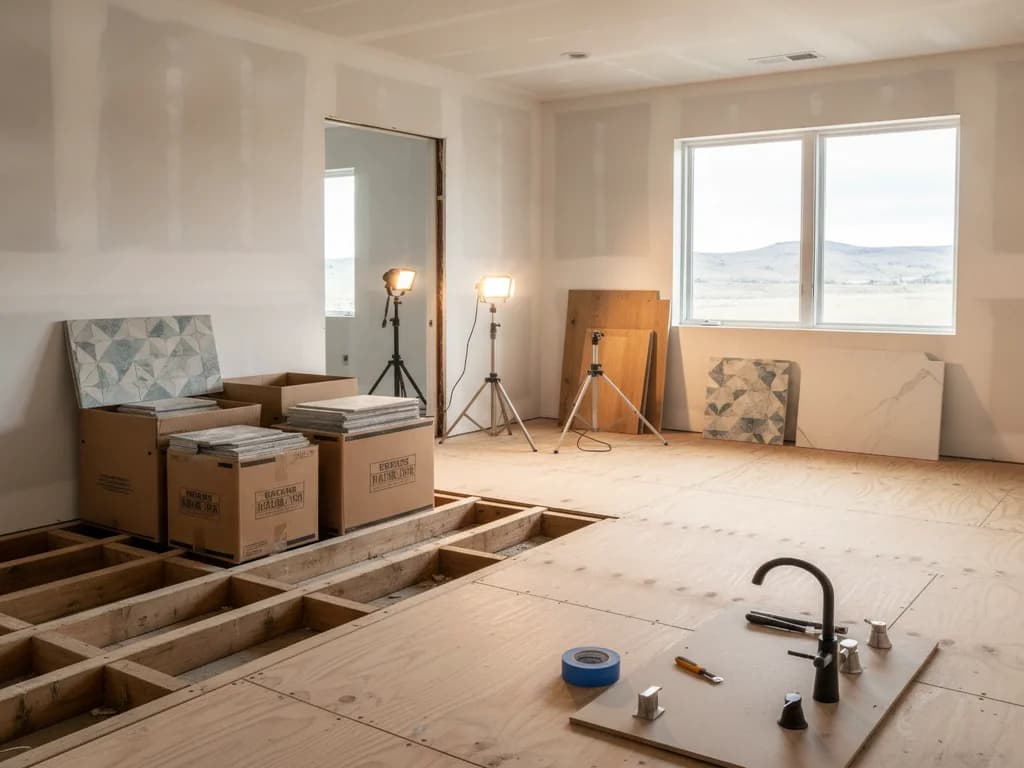
Tile gets cement backer board or an uncoupling membrane, then thinset, tile, and grout. LVP goes over a clean, flat substrate. Either way, layout is planned around the vanity and doorway sightlines first.
- 6
Reset the toilet and finish the room
The toilet is reset with a fresh wax ring — plus a flange extender if floor height changed — baseboards go back on, and the doorway gets a proper transition to the hall flooring.
Ready to plan your Boise bathroom?
Licensed & insured · 3-year workmanship warranty
Frequently asked questions
- Why did builders put carpet in bathrooms in the first place?
- Comfort and cost. In the 1970s–90s, wall-to-wall carpet was warm, quiet, and cheap to extend into the bathroom while the installers were already in the house. Moisture science and mold awareness have moved on since — the EPA now advises against carpet in damp rooms — which is why the practice disappeared from new construction.
- Is carpet in a bathroom actually unsanitary?
- Around a toilet and a tub, yes, in a way hard flooring is not. Carpet fibers and pad absorb splash, humidity, and toilet-seal weeps and cannot be wiped clean or fully dried. The EPA recommends keeping carpet out of consistently damp areas because wet carpet and pad support mold growth that cleaning cannot reliably remove.
- How long does replacing bathroom carpet with tile take?
- Plan on two to four days for a standard bathroom: a day for removal, subfloor work, and backer board, then tile setting, grout, and cure time before the room returns to service. Swapping to luxury vinyl plank instead is usually a one-to-two-day project, since there is no thinset or grout to cure.
- What flooring feels warm underfoot like carpet did?
- Luxury vinyl plank is noticeably warmer and softer than tile on its own. If you want genuinely warm, electric radiant heat under porcelain tile beats carpet ever did — a heated tile floor in January is the upgrade most homeowners say they would never give back. A washable rug covers the rest.
- Does bathroom carpet hurt resale value?
- It reads as deferred maintenance to most buyers, fairly or not — the assumption is that unknown moisture history hides underneath. Replacing it with tile or quality LVP is one of the smaller-ticket changes that shifts how the whole bathroom is perceived, especially in an otherwise dated room.
Sources
Claims and figures are drawn from the sources above and provided for general guidance; your project may vary. Photography is illustrative of design concepts. For a fixed price on your specific bathroom, request a free estimate.