Updated July 16, 2026 · 7 min read
By Boise Bath — bathroom & shower remodeling in Boise & the Treasure Valley
The short answer
Vintage hex and penny mosaic floors in older Boise homes are usually mud-set in a thick mortar bed, so replacement means jackhammering out the old bed, correcting the subfloor, and installing new tile. If the mosaic is sound and you love it, restoration is often worth pursuing; porcelain hex and penny reproductions make faithful replacements when it is not.
Key takeaways
- Pre-war mosaic floors were typically set in a 1–2 inch mortar bed — demolition is heavy, loud work, not a scrape-and-go job.
- A sound original mosaic with isolated damage is often worth preserving; widespread cracking, hollow areas, or a spongy floor mean the bed has failed.
- Modern porcelain hex and penny reproductions recreate the vintage look with better water resistance and consistent sizing.
- The mortar bed hides the subfloor — budget conversations should acknowledge that its condition is unknown until demo day.
- Era-appropriate replacement keeps an older home’s character intact and tends to read as original to future buyers.
What kind of mosaic floor do you have?
Boise’s older neighborhoods — the North End, the East End, parts of the Bench — hold a surprising number of original mosaic bathroom floors. Pre-war homes tend to have white unglazed porcelain hex or penny-round tile, often with a black border or a small basket-weave pattern. Mid-century homes shifted to one- and two-inch square mosaics in period colors, a look we cover in our mid-century bathroom modernization guide.
The construction matters more than the pattern. Floors from these eras were almost always mud-set: the tile was pressed into a thick, reinforced mortar bed floated over the subfloor. That bed is why so many of these floors have survived eighty-plus years — and why replacing one is a different animal from replacing a modern thinset floor.
For the broader context of what these houses hide and reward, see our guide to remodeling older Boise homes.
Should you preserve or replace a vintage mosaic floor?
This is the real decision, and it deserves honesty in both directions. An original mosaic in sound condition is a genuine asset — the character is difficult to fake completely, and buyers of older homes respond to it. If the field is intact, the floor is flat and solid, and the damage amounts to a few chipped tiles or tired grout, preservation is usually the better call: regrout, spot-repair, deep-clean.
Replacement earns its disruption when the problems are systemic. Cracking that spreads across the field, areas that sound hollow underfoot, tiles that have gone loose in patches, persistent staining that cleaning cannot touch, or any sponginess in the floor — these mean the mortar bed or the structure beneath it has failed, and no amount of surface repair reverses that.
There is also a middle path worth naming: keep the original where it survives (many old bathrooms have sound tile in the field but failure near the toilet or tub) only if the transition can be handled invisibly. Usually it cannot, which is why most projects resolve to a clean preserve-or-replace decision.
A spongy floor overrules sentiment
If the floor flexes or feels soft near the toilet or tub, water has likely been working on the structure below the mortar bed for years. That is a subfloor and possibly joist repair — the tile decision is secondary until the structure is sound.
Why is old mosaic tile so hard to remove?
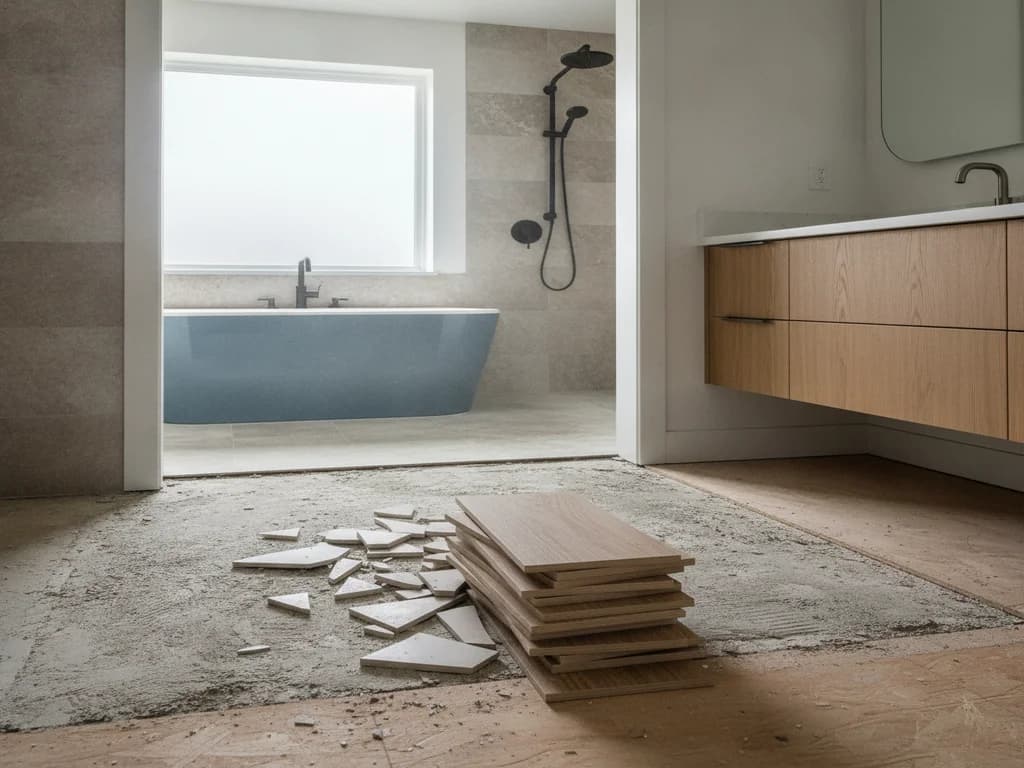
A mud-set floor is effectively a concrete slab bonded to thousands of small tiles, frequently reinforced with wire mesh. Removing it means breaking it out with demolition hammers, section by heavy section. Expect real noise, real dust containment, and debris measured in hundreds of pounds even for a small bathroom.
The bed also adds height — often 1 to 2 inches above the subfloor. Removing it changes the finished floor elevation, which cascades into threshold heights, toilet flange height, and door clearances. A professional plans those consequences before the first hammer swing; a surprised installer discovers them after.
The one silver lining: once the bed is out, you are looking at the bare structure with nothing hidden. Whatever the last eighty years did to the subfloor is now visible and fixable.
What are your replacement options?
If the goal is keeping the home’s era intact, modern porcelain hex and penny reproductions are excellent — faithful in scale and color, sold in mesh-backed sheets, and denser and more water-resistant than the originals. Matte and unglazed finishes read most authentically vintage; a black border or flower motif can be recreated tile-for-tile.
If you are ready to move the design forward instead, replacement is the natural moment: larger-format tile for fewer grout lines, or a heated floor beneath new tile, since the assembly is open anyway. Our guide on choosing bathroom tile walks through the trade-offs.
| Path | Character | Disruption | Best when |
|---|---|---|---|
| Preserve & restore | Original — irreplaceable | Low (cleaning, regrout, spot repair) | Field is sound, damage is isolated |
| Replicate with reproductions | Era-faithful, subtly crisper | Full demo and rebuild | Bed has failed but the home’s character matters |
| Modernize the design | New direction entirely | Full demo and rebuild | You want today’s look, comfort, and formats |
What does replacing a mosaic floor cost?
Two things push mosaic floor replacement above ordinary tile-swap pricing: the mortar-bed demolition and the labor intensity of setting small-format tile. Per HomeAdvisor’s cost guides, tile flooring installation commonly runs roughly $8–$25 per square foot installed depending on the tile and complexity, and mosaic sits toward the upper half of that range because every sheet demands careful alignment and full grout coverage.
Demo of a mud-set bed and any subfloor correction are priced on top, and the subfloor line is genuinely unknowable until the bed is out. A trustworthy quote for an older Boise bathroom says so explicitly, with an allowance rather than fictional certainty.
For where a floor fits in a whole-bathroom budget, our Boise bathroom remodel cost guide has the fuller picture.
Can you just repair the damaged patch instead?
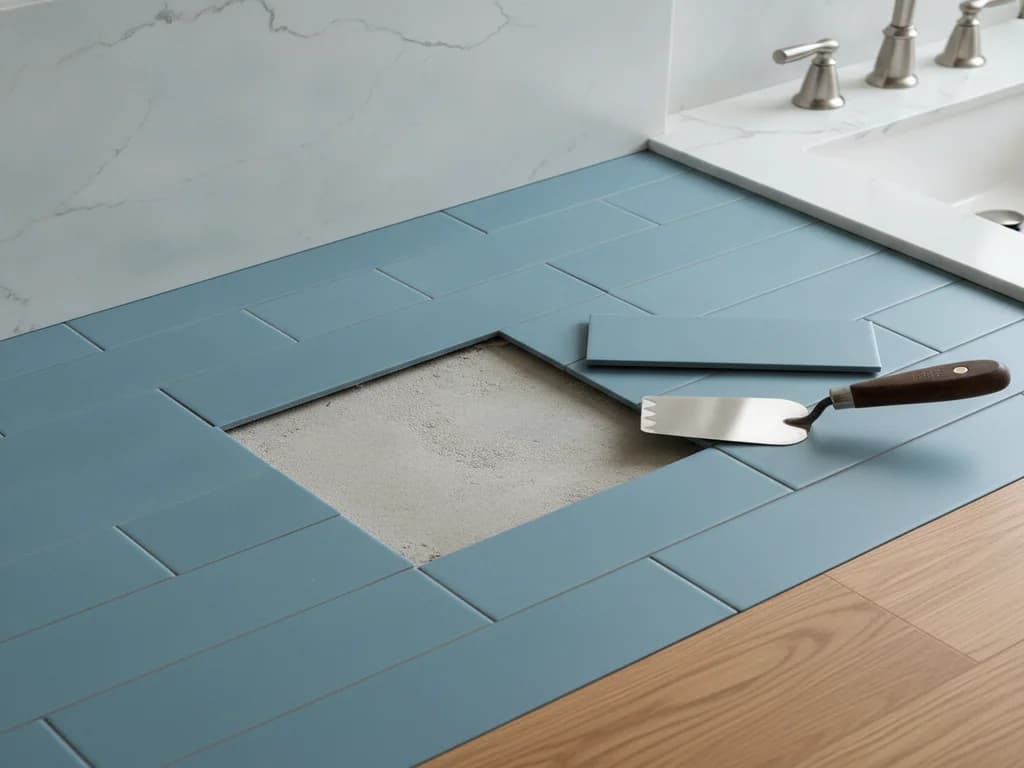
Sometimes — with expectations set correctly. Individual cracked or chipped tiles in a sound field can be cut out and replaced, and reproduction hex and penny tile makes the color match closer than it once was. But new-against-old is rarely invisible: eighty years of wear, patina, and grout aging do not replicate on demand.
Patch repairs make the most sense as a holding move — stabilizing a floor you intend to keep for a few more years — or where the repair hides under a vanity or mat. We cover the mechanics in our article on replacing cracked bathroom tile. If the damage traces to loose or failed grout rather than the tile, regrouting may be the whole fix.
Should the floor be part of a bigger project?
In older homes especially, yes — more often than not. The plumbing behind a 1920s bathroom wall is usually of the same vintage as the floor, and a floor-only project that pulls the toilet and opens the tub perimeter has already paid half the disruption cost of a fuller remodel. Doing the floor now and the rest in three years means demolishing twice and matching new work to old twice.
That does not mean every mosaic floor demands a gut job. It means the moment the mortar bed is coming out is the cheapest moment you will ever have to ask what else the room needs.
What the process looks like
- 1
Evaluate the floor and set the preserve-or-replace verdict
A pro checks the field for hollow spots, maps cracking patterns, probes for flex near the toilet and tub, and assesses whether damage is isolated or systemic. This is where an honest contractor may talk you out of replacement entirely.
- 2
Plan for the height change and protect the room
Removing a 1–2 inch mortar bed changes the finished floor height, so thresholds, the toilet flange, and door clearances are planned before demo. Fixtures come out, and dust containment goes up — mud-bed demolition is the dustiest phase of any bathroom project.
- 3
Break out the mosaic and mortar bed
Demolition hammers take the bed out in sections, wire mesh and all, down to the structural subfloor. Debris from even a small bathroom is substantial and gets hauled, not bagged into the household trash.
- 4
Inspect and repair the exposed structure
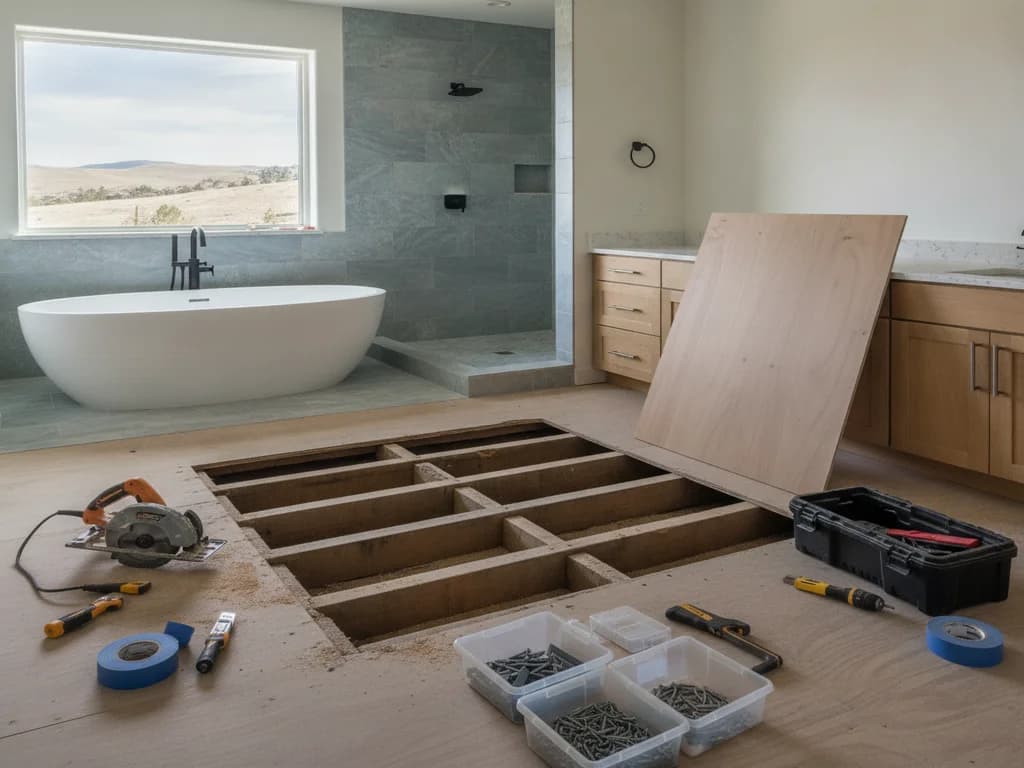
With the bed gone, the subfloor and joists get their first inspection in decades. Water-damaged decking is cut out and replaced, and the assembly is brought up to the stiffness modern tile standards require — TCNA methods assume a sound, flat substrate.
- 5
Install the new underlayment and set the tile
A modern backer or uncoupling membrane replaces the old mud bed at a controlled height. Mosaic sheets are laid out to keep patterns and borders symmetrical to the room, then set with careful attention to full mortar coverage under every small tile.
- 6
Grout, seal, and reset fixtures
Grout color makes or breaks the vintage look — a warm gray reads original where bright white reads brand-new. The toilet is reset at the corrected flange height, thresholds are fitted to the new elevation, and unglazed reproductions get a penetrating sealer.
Ready to plan your Boise bathroom?
Licensed & insured · 3-year workmanship warranty
Frequently asked questions
- How do I know if my hex tile floor is mud-set?
- Age is the strongest clue: floors from before roughly the 1960s are almost always mud-set. Physical signs include a finished floor that sits noticeably higher than adjoining rooms, a step-up at the threshold, and a solid, masonry-like feel underfoot. A pro can confirm by checking the assembly thickness at a floor register or removed threshold.
- Is it worth saving an original penny tile floor?
- If the field is sound — flat, solid, no spreading cracks or hollow areas — usually yes. Original mosaic is a character asset in an older home, and restoration (deep cleaning, regrouting, a handful of tile repairs) costs far less than replacement. Systemic failure of the mortar bed is the point where preservation stops being realistic.
- Can you match vintage hex tile with new tile?
- Closely, though rarely invisibly. Modern porcelain reproductions match vintage hex and penny formats in size and color, and matte or unglazed finishes read authentically. What is hard to fake is decades of patina, so matches look best in full-floor replacements or repairs hidden under fixtures rather than mid-field patches.
- Why is mosaic tile more expensive to install than large tile?
- Labor. Small-format tile means more sheets to align, more grout lines to fill, and more time ensuring full mortar contact under every piece — misaligned sheets telegraph instantly in a hex or penny pattern. Per HomeAdvisor cost data, tile installation spans roughly $8–$25 per square foot, and mosaics trend toward the upper half of that range.
- What is under an old mosaic bathroom floor?
- Typically a 1–2 inch reinforced mortar bed over a plank or plywood subfloor, sitting on the original joists. The bed’s condition is visible; the wood below it is not — which is why older-home floor projects carry an allowance for subfloor repair that stays unknown until demolition opens it up.
Sources
- Tile Council of North America (TCNA)
- National Tile Contractors Association
- This Old House — Bathrooms
- HomeAdvisor — True Cost Guide
Claims and figures are drawn from the sources above and provided for general guidance; your project may vary. Photography is illustrative of design concepts. For a fixed price on your specific bathroom, request a free estimate.