Updated July 16, 2026 · 6 min read
By Boise Bath — bathroom & shower remodeling in Boise & the Treasure Valley
The short answer
Replacing vanity lighting means shutting off the circuit, removing the old fixture, verifying the electrical box and wiring behind it, and mounting the new fixture — over the mirror or as sconces beside it. A like-for-like swap is a short electrician visit; moving the box location or adding a second fixture turns it into a small wiring project.
Key takeaways
- The Hollywood strip light — the bare-globe bar over the mirror in most 80s and 90s bathrooms — is the single most common fixture homeowners want gone.
- Sconces flanking the mirror at face height light a face more evenly than a single over-mirror bar, which throws shadows downward.
- A like-for-like swap reuses the existing electrical box; moving the light beside the mirror means new boxes, new wiring, and opening the wall.
- The old fixture often hides a wall scar larger than the new fixture’s base — plan for patch and paint, not just a swap.
- If the wall is opening anyway, it is the cheapest moment to fix an off-center box, add a second fixture, or update tired wiring.
Still living with a Hollywood strip light?
If your bathroom was built or last touched in the 80s or 90s — which covers a large share of Boise’s Bench, West Valley, and early Meridian housing stock — the vanity light is probably a chrome or brass bar with a row of bare round bulbs. Builders loved them because one fixture on one box lit the whole vanity cheaply.
The problem is how they light a face: a single source high above the mirror throws light straight down, shadowing the eyes and chin — the opposite of what you want for shaving or makeup. That, plus the dated look and the heat off a row of exposed bulbs, is why the strip light is the most-replaced fixture in bathroom updates.
Over the mirror or beside it: where should the new light go?
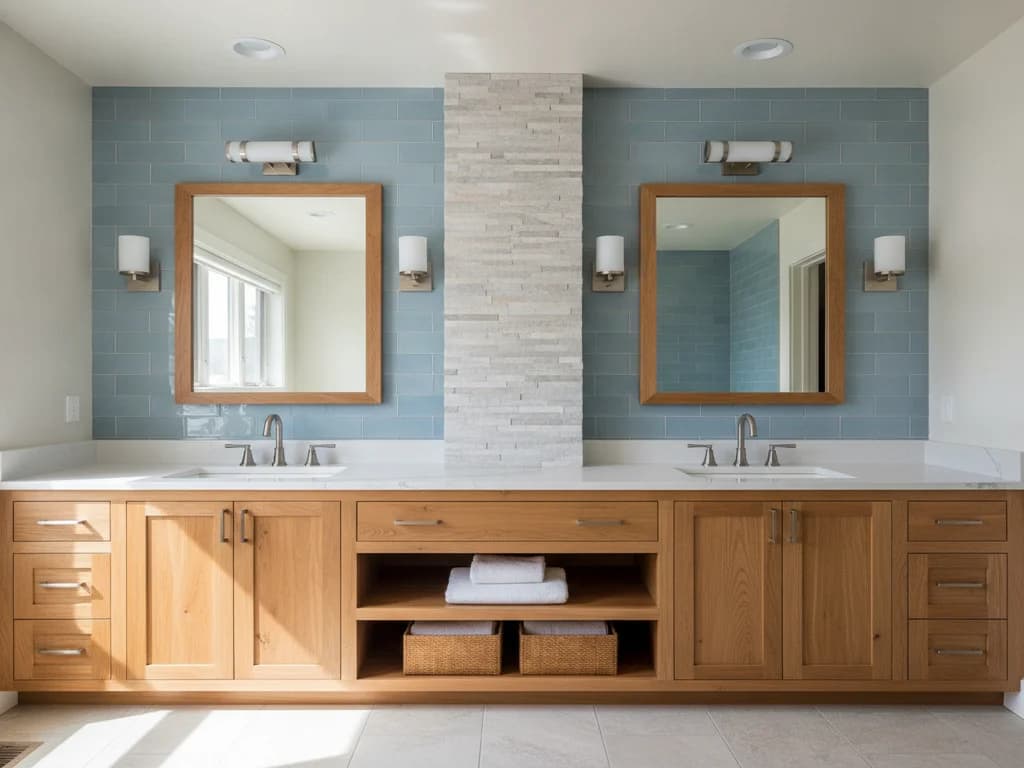
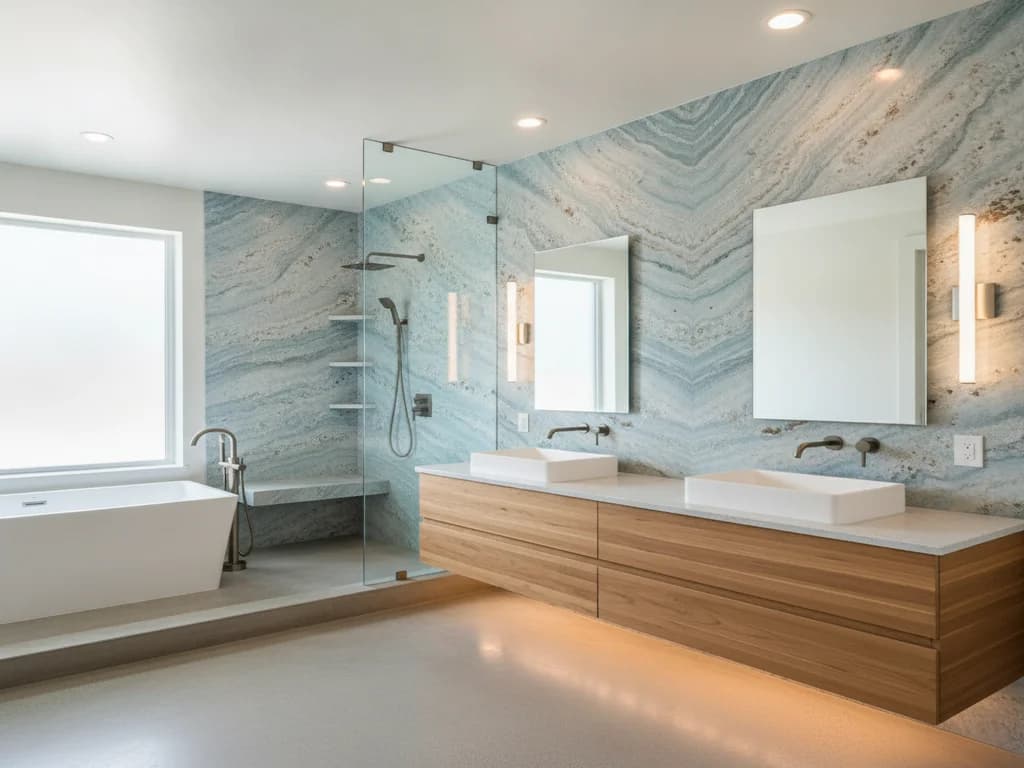
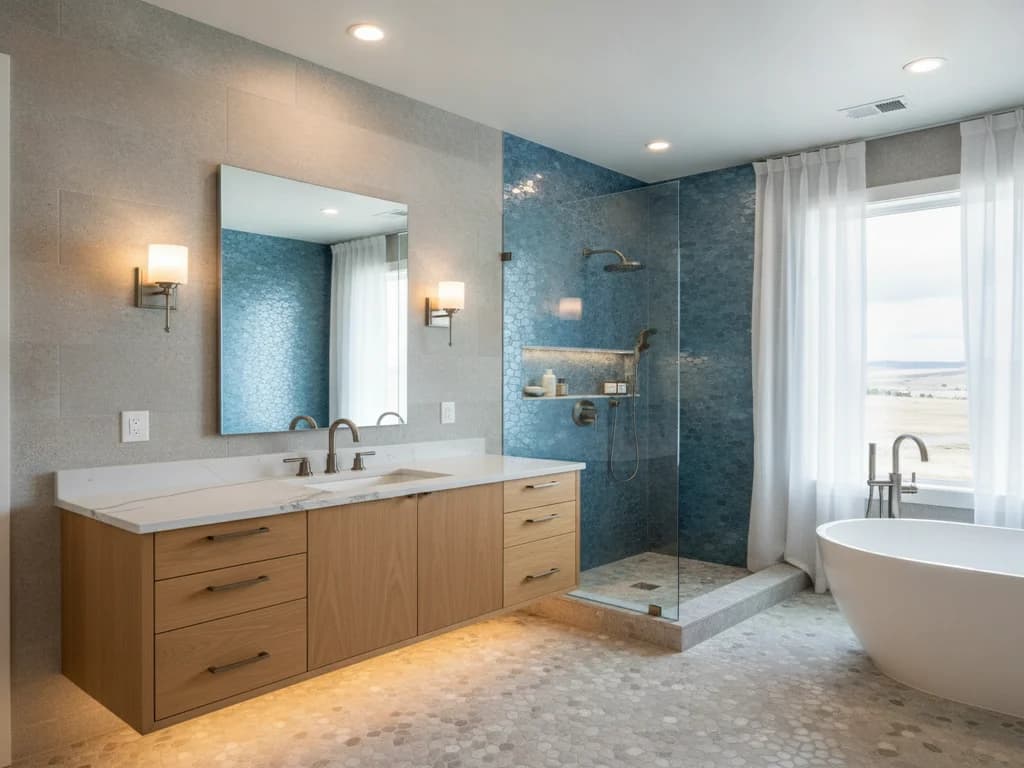
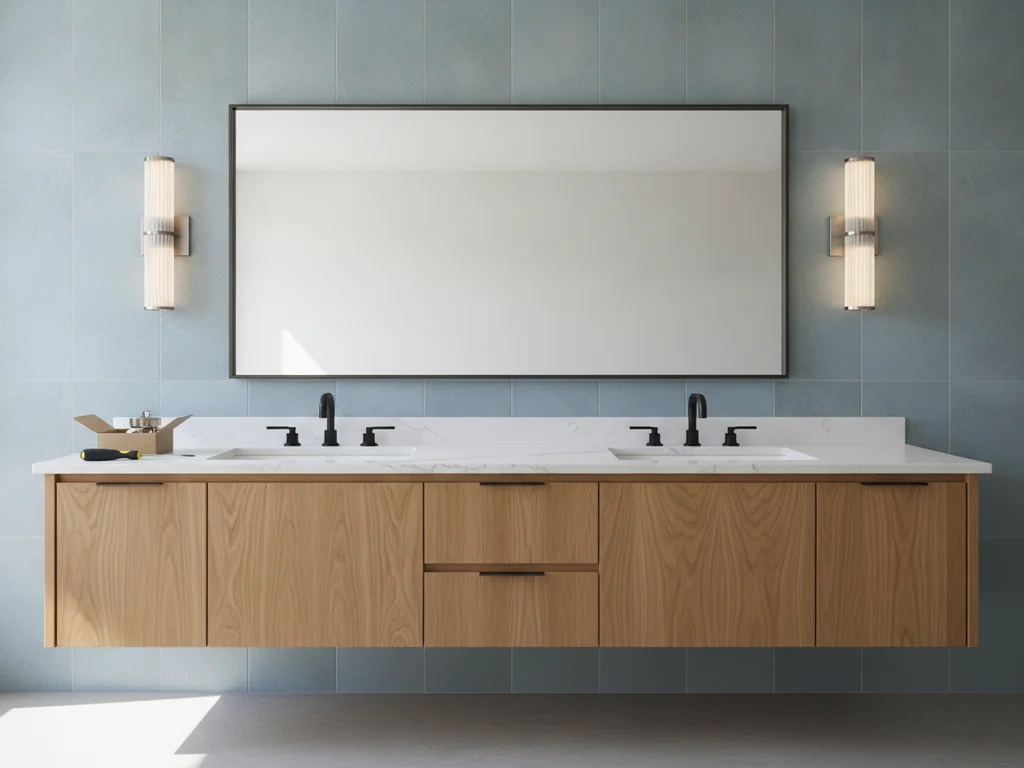
Side placement wins for the face. Two sconces flanking the mirror at roughly eye level cross-light your features evenly, which NKBA planning guidance and lighting designers have recommended for decades. An over-mirror bar is the budget-friendly fallback — far better than a strip light if it diffuses the bulbs — but it still lights from one direction.
The catch is wiring. Your existing box is almost certainly centered above the mirror, so an over-mirror fixture is a true swap, while sconces mean two new boxes, wire run through the wall, and drywall repair. That is also why so many bathrooms keep the over-mirror position: the placement decision is really a scope decision.
Vanity lighting is only one of three layers a bathroom needs — task, ambient, and accent. How the layers work together, and what to do when one fixture is doing all three jobs badly, is covered in our guide to bathroom lighting layers.
| Placement | How it lights a face | Wiring scope | Best fit |
|---|---|---|---|
| Over-mirror bar | Top-down; some eye/chin shadow | Reuses existing box — simplest | Quick updates, wide mirrors |
| Sconces beside mirror | Even cross-light at face height | Two new boxes + wall repair | Makeup/shaving-focused vanities |
| Lighted or backlit mirror | Diffuse, even halo | Existing box or new dedicated feed | Modern remodels, floating vanities |
Brightness and color temperature deserve their own decision — we cover picking the right output and warmth in a separate upcoming article.
What’s hiding behind the old fixture?
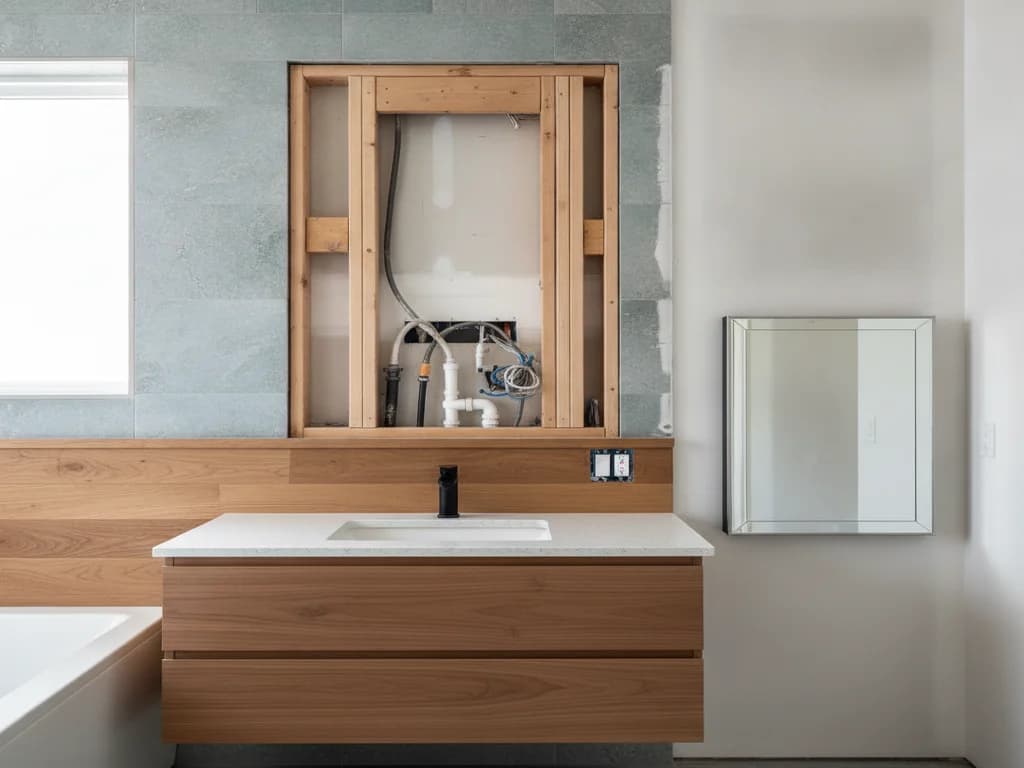
Strip lights have long, wide backplates. The new fixture almost never covers the same footprint, so expect unpainted wall, mounting holes, or even a rough-cut opening around the box once the old bar comes down. A clean result usually includes drywall patching and paint — small work, but it belongs in the plan.
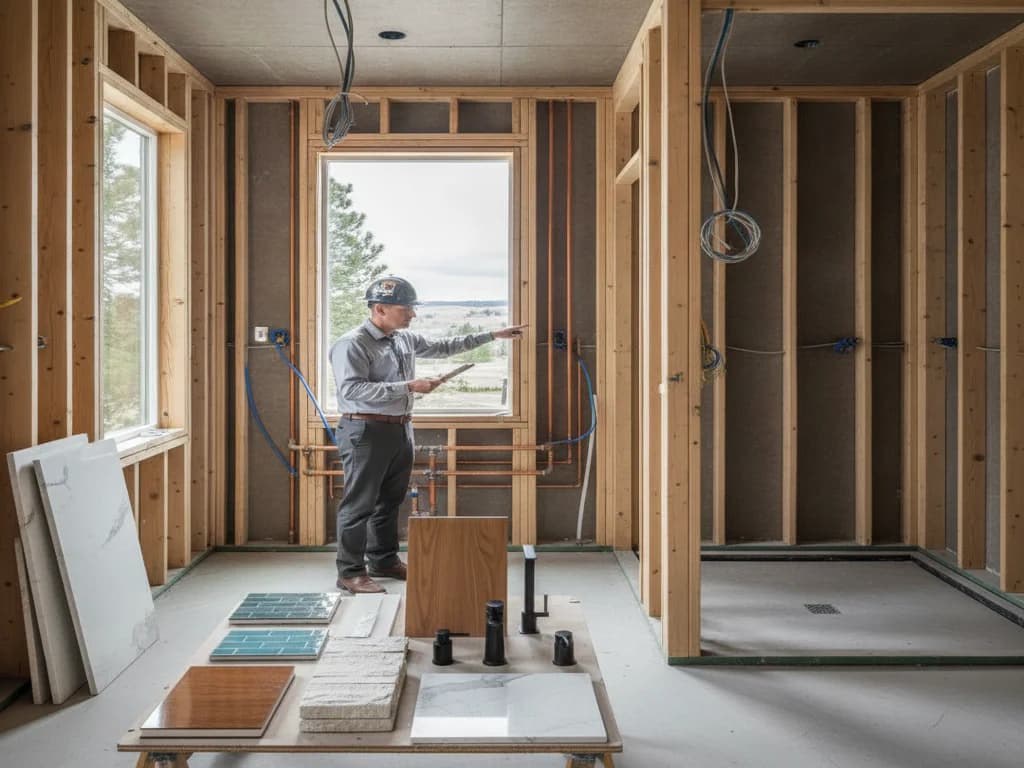
The box itself is the other unknown. An electrician checks that it is rated for the new fixture’s weight, actually anchored to framing, and fed by wiring in good condition. In older Treasure Valley homes it is not unusual to find an undersized box, cloth-insulated conductors, or no ground — all fixable, and all better found now than after the new light is up.
The mirror sets the light, not the other way around
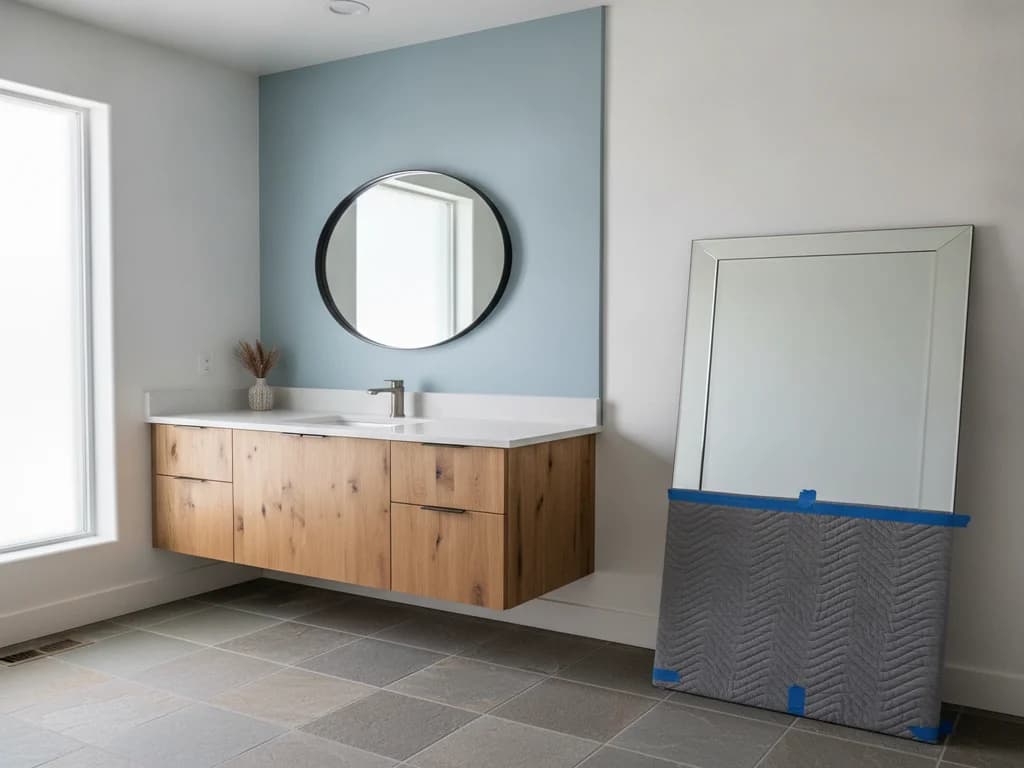
Fixture height and spacing depend on the mirror’s size and position. If you are also planning to swap the mirror or medicine cabinet, decide those first — otherwise the new light can end up mislocated for the mirror you actually want. See our guide to replacing a bathroom mirror.
Do you need an electrician — and a permit?
A true like-for-like swap on an existing box is one of the smaller jobs an electrician does, but it is still line-voltage work in a wet room, and the National Electrical Code published by the NFPA governs fixture ratings and clearances around tubs and showers. Fixtures within reach of water zones have specific damp- or wet-location requirements a pro checks by default.
Once the scope grows — new boxes for sconces, a new switch leg, or circuit changes — permit rules can apply. In Idaho, electrical permits generally run through the state’s Division of Occupational and Professional Licenses rather than city hall; a licensed contractor handles that determination and the paperwork so you do not have to guess.
What does replacing vanity lighting cost?
For a like-for-like swap, national cost guides from HomeAdvisor and Angi put professional light-fixture replacement roughly in the $150–$500 range per fixture including basic labor, with the fixture itself ranging from budget bars to designer sconces on top of that. It is one of the better value-per-dollar updates in a bathroom.
Relocating the light is a different budget. New boxes, in-wall wiring, drywall repair, and paint push the project into the high hundreds or beyond, per the same guides — and if the electrician finds aging wiring, no GFCI protection, or an overloaded circuit, you are into the territory covered in our guide to bathroom electrical upgrade costs.
When a light swap should become part of something bigger
A strip light rarely fails alone. The same era that installed it usually installed the oak-framed builder mirror, the cultured marble top, and the original fan — and if two or three of those are on your list, opening the vanity wall once for all of them beats opening it twice.
That is the honest case for folding lighting into a full bathroom remodel: sconce wiring, mirror placement, outlet updates, and paint all touch the same wall, and sequencing them together is cheaper than a series of standalone visits. If the light is genuinely the only thing wrong, swap it and enjoy it — for broader inspiration first, browse our bathroom lighting ideas.
What the process looks like
- 1
Plan the placement against the mirror
The contractor confirms the mirror size and height first, then decides whether the new fixture reuses the existing over-mirror box or moves to flanking sconce positions — the single decision that sets the whole scope.
- 2
Kill the circuit and remove the old fixture
Power is shut off at the breaker and verified dead at the fixture, then the old strip or bar comes down, exposing the box, the wiring, and whatever wall scar the backplate was hiding.
- 3
Inspect the box and wiring
The electrician checks that the box is anchored, sized, and rated for the new fixture, and that the conductors, ground, and switch leg are in sound condition — replacing or re-securing anything that is not.
- 4
Run new wiring if the light is moving
For sconce conversions, new boxes are cut in beside the mirror, cable is fished through the wall from the existing feed, and the abandoned box is blanked or removed with the drywall opened as needed.
- 5
Patch and paint the wall
Old mounting holes, backplate shadows, and any access openings are patched, sanded, and painted so the finished wall looks intentional rather than swapped.
- 6
Mount, connect, and test
The new fixture is mounted level, connected, and tested under load, with damp-location ratings and bulb specs verified against the manufacturer’s listing before the job wraps.
Ready to plan your Boise bathroom?
Licensed & insured · 3-year workmanship warranty
Frequently asked questions
- Can I just replace a vanity light fixture myself?
- A like-for-like swap is one of the more approachable electrical jobs, but it is still line-voltage work in a wet room — and older Boise-area homes often hide undersized boxes, missing grounds, or brittle insulation behind the old fixture. An electrician handles the swap quickly and, more importantly, catches those problems while the wall is open.
- How high should vanity lights be mounted?
- It depends on the mirror, which is why pros set the mirror plan first. Sconces generally land at face height beside the mirror so light crosses your features evenly, while an over-mirror bar sits just above the mirror’s top edge. NKBA planning guidance favors the flanking arrangement for even task light.
- Are sconces better than an over-mirror light bar?
- For lighting a face, yes — two sources at eye level eliminate the downward shadows a single overhead bar creates. The trade-off is scope: sconces usually mean two new electrical boxes, in-wall wiring, and drywall repair, while an over-mirror fixture reuses the box that is already there. Budget and how much you use the mirror decide it.
- Do I need a permit to replace a vanity light in Boise?
- Swapping a fixture on its existing box is generally treated as maintenance. Adding boxes, extending circuits, or altering wiring is where permit requirements come in — and in Idaho, electrical permitting typically runs through the state Division of Occupational and Professional Licenses. A licensed contractor makes that call and files what is needed.
- What does it cost to replace a bathroom vanity light?
- National guides from HomeAdvisor and Angi put a professional like-for-like fixture replacement roughly between $150 and $500 in labor and basics, plus whatever the fixture itself costs. Moving the light to new sconce positions — wiring, wall repair, paint — pushes the total meaningfully higher, which is why relocations are often folded into a larger vanity-wall update.
Sources
- National Fire Protection Association (NEC)
- National Kitchen & Bath Association (NKBA)
- HomeAdvisor — True Cost Guide
- Angi — Cost Guides
- Idaho Division of Occupational & Professional Licenses
Claims and figures are drawn from the sources above and provided for general guidance; your project may vary. Photography is illustrative of design concepts. For a fixed price on your specific bathroom, request a free estimate.