Updated July 16, 2026 · 7 min read
By Boise Bath — bathroom & shower remodeling in Boise & the Treasure Valley
The short answer
Add a second bathroom when one bathroom is creating daily friction — a one-bath house with three or more people, or guests walking through a bedroom to reach a toilet. It is one of the few projects that adds capability, not just finishes, and the space usually comes from a basement, closet, or underused corner of the floor plan.
Key takeaways
- The strongest case for a second bathroom is functional: one bathroom serving three or more people, or no toilet on a floor where people sleep or gather.
- Bathroom additions recoup roughly a third of their cost at resale, per Zonda’s Cost vs. Value Report — the payoff is daily function first, marketability second.
- The jump from one bathroom to two matters far more to buyers and appraisers than the jump from two to three.
- The space usually comes from a basement, an annexed closet or hallway, a large laundry room, or a corner of a bonus room — not from new construction.
- Feasibility is mostly a plumbing-distance question: how far the new bathroom sits from the existing drain stack and water lines decides the scope.
- Adding a bathroom is permitted, inspected work in Boise — new fixtures, new drain and vent lines, and usually new electrical circuits.
Start with friction, not resale
The honest way to frame this decision is around daily function. A second bathroom does not make your existing bathroom nicer — it removes a bottleneck. If there is no bottleneck, the project has a weak case no matter what any value study says.
The friction test is simple: count the mornings someone waits. A one-bathroom house with three or more people fails it almost daily. A two-bathroom house where both baths sit upstairs fails it every time someone is living, working, or hosting on the main floor. A house where guests walk through your bedroom to reach a toilet fails it every visit.
If your frustration is with the bathroom you have — dated finishes, a cramped layout, a garden tub nobody uses — that is a different project. Should I repair or remodel my bathroom sorts that decision; this article is about adding a bathroom that does not exist yet.
When a second bathroom clearly makes sense
Some situations tip the math decisively. If two or more of these describe your house, the project is usually worth pricing:
- One bathroom, three or more people — the classic case, common in Boise Bench and North End homes built when one bath was the standard.
- No bathroom on the main floor — anyone aging in place, recovering from surgery, or hosting older relatives feels this immediately.
- A finished or finishable basement with no bathroom — the space downstairs never gets fully used without one.
- Frequent guests and no powder room — every visitor uses the family’s private bathroom.
- You plan to stay five or more years — the functional payoff compounds while the cost amortizes.
- Your bedroom count outruns your bathroom count — a four-bedroom, one-bath house is out of balance for both living and resale.
The honest resale math
A second bathroom does add value — just not dollar for dollar. Zonda’s Cost vs. Value Report has consistently shown bathroom additions recouping roughly a third of their cost at resale, and the National Association of Realtors’ Remodeling Impact Report finds the appeal is strongest for family buyers comparing otherwise similar homes.
The structural truth underneath those numbers: the jump from one bathroom to two is the one that moves appraisals and buyer shortlists. Listings filter at "2+ baths," and a one-bath home gets screened out of searches before anyone sees the kitchen. Going from two baths to three is a comfort upgrade; going from one to two changes which buyers see the house at all.
So treat resale as the tiebreaker, not the reason. If the friction case is real and you will use the bathroom for years, the partial cost recovery at sale is a bonus on top of the function. If you are adding a bathroom purely to sell, should I remodel my bathroom before selling covers why lighter touches usually win that scenario.
Where the second bathroom fits
Almost no one builds an addition for this. The bathroom comes out of space the house already has, and four donors cover most projects.
The basement is the most common in Boise’s older neighborhoods, where full-height basements are standard. Plumbing below grade has its own rules — rough-ins, ejector pumps when the drain sits below the sewer line — and basement bathroom remodels covers that route end to end.
The second donor is annexed storage: a hall closet, a pantry back wall, or the dead end of a hallway can yield enough footprint for a powder room or, with more square footage, a three-quarter bath. If you already have a half bath, adding a shower to it is often the cheapest path to a second bathing bathroom, because half the plumbing already exists.
The remaining candidates are oversized laundry rooms, bonus rooms over garages, and under-used corners of primary suites. What they share is proximity to existing plumbing — which, as the next section explains, is what actually sets the budget.
What decides the cost: plumbing distance and structure
Two houses can add the same bathroom and pay very different amounts, and the difference is almost never the tile. It is how far the new fixtures sit from the existing drain stack, whether there is a crawlspace or a slab under the floor, and what the framing allows.
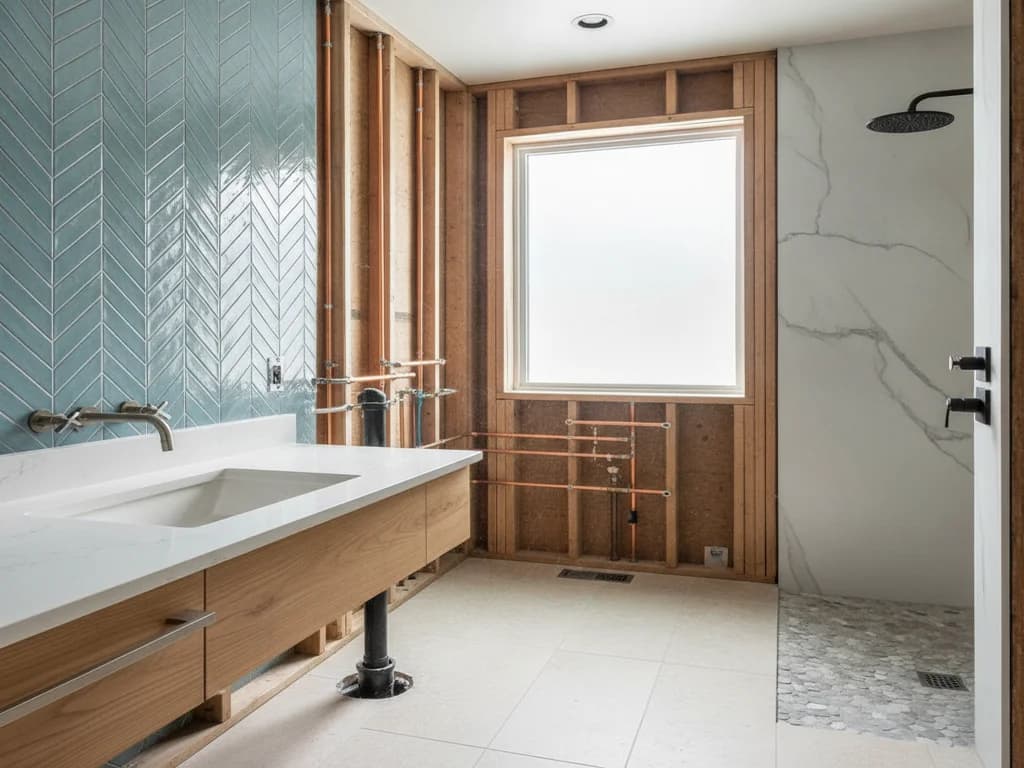
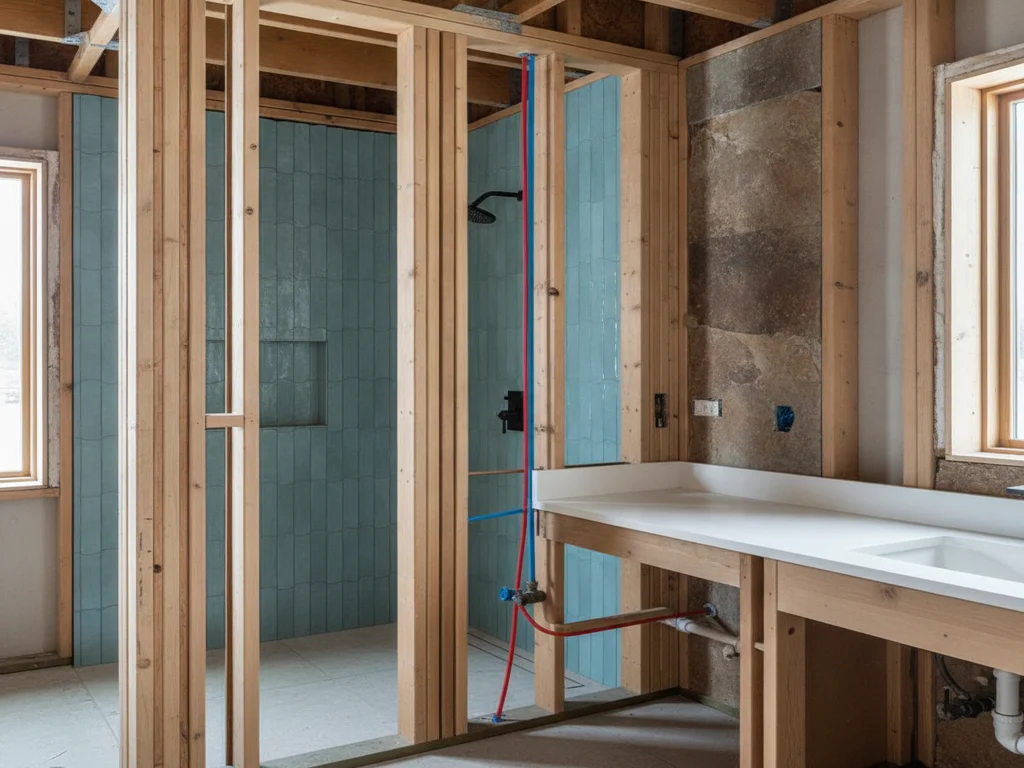
A new bathroom needs drain lines with continuous slope to the stack, vent connections within code distance, and hot and cold supply — all of it permitted and inspected under the International Residential Code as adopted in Idaho. Over a crawlspace, common in Treasure Valley homes, pipe runs are accessible and routine. On a slab, the concrete gets cut and patched along every drain route, which changes the scope meaningfully. Bathroom plumbing relocation costs breaks down how distance and floor construction drive the number.
We are publishing a full breakdown of what adding a bathroom costs in Boise; until then, be skeptical of any single-number answer. The honest range is wide precisely because plumbing distance, floor construction, and finish level each swing the total by thousands.
The stack is the first thing to find
Before falling for any location, find the existing drain stack and the water heater. A new bathroom that backs up to existing plumbing shares walls, shortens pipe runs, and simplifies venting. One placed across the house from every wet wall pays for that distance in demolition, pipe, and patching — sometimes enough to fund nicer finishes in a smarter location.
When to skip it
Skip the second bathroom when the friction is really a layout problem. A household that fights over one shower but has a rarely-used garden tub may get more from converting that tub area into a better bathroom than from building a new one — should I remove the only bathtub walks through that trade.
Skip it when the only available space wrecks something buyers value more. Sacrificing a bedroom closet is usually fine; sacrificing the whole third bedroom in a family neighborhood usually is not, because bedroom count filters searches the same way bathroom count does.
And skip it — for now — when the budget only covers a bare-minimum build in a bad location. A cramped, windowless bathroom placed far from the plumbing costs disproportionately more and satisfies nobody. Waiting a year and doing it right beats forcing it this year.
How to decide: the three-question test
First: is there recurring friction a second bathroom would remove — daily waits, no toilet on a lived-on floor, guests in your private space? If no, stop here.
Second: does the house have donor space within reasonable reach of existing plumbing — a basement, an annexable closet, an oversized laundry? A contractor can answer this in one walkthrough with a tape measure and a look at the crawlspace or slab.
Third: does the budget cover doing it properly — real waterproofing, mechanical ventilation, permitted plumbing and electrical? If all three answers are yes, this is one of the highest-function projects a house can get, and a free estimate puts real numbers on your specific floor plan.
Ready to plan your Boise bathroom?
Licensed & insured · 3-year workmanship warranty
Frequently asked questions
- Does adding a second bathroom add value to a home?
- Yes, but not dollar for dollar. Zonda’s Cost vs. Value Report has bathroom additions recouping roughly a third of their cost at resale. The bigger effect is marketability: moving from one bathroom to two puts the house into "2+ bath" search filters and appraiser comparisons it was excluded from before. Treat resale as a bonus on top of daily function, not the reason to build.
- Where is the cheapest place to add a second bathroom?
- Wherever existing plumbing already is. Back-to-back with the current bathroom, directly above or below it, or in a basement with existing rough-ins are the short-pipe-run locations. Converting an existing half bath by adding a shower is often cheapest of all, because the toilet, sink, drain, and vent are already in place — only the shower and its 2-inch drain get added.
- Is it worth adding a bathroom to a one-bathroom house?
- Usually, yes — this is the strongest version of the project. One-bath homes get filtered out of many buyer searches, and daily life with three or more people sharing one bathroom carries constant friction. The one-to-two jump is where both the functional and the resale payoff concentrate; adding a third bath to a two-bath house is a much softer case.
- Do I need a permit to add a bathroom in Boise?
- Yes. A new bathroom adds fixtures, extends the drain-waste-vent system, adds electrical circuits, and creates a new wet area — all permitted, inspected work. In Boise that runs through Planning & Development Services, with plumbing and electrical trade permits under the state system administered by Idaho DOPL. A licensed contractor handles the permit filings and inspection scheduling.
- Can I add a bathroom to a basement without existing rough-ins?
- Yes. Without rough-ins, the concrete floor is cut to run new drain lines, and if the bathroom sits below the level of the main sewer line, a sewage ejector pump lifts the waste up to it. Both are routine in basement work — they add cost and scope compared to a basement that was pre-plumbed, but they do not make the project unusual.
- Should the second bathroom be a full bath or a half bath?
- Match it to the friction. If the bottleneck is showering — everyone bathes through one tub — you need a bathing bathroom, so a three-quarter bath with a walk-in shower is the target. If the bottleneck is guests and toilet access on the main floor, a half bath solves it in a fraction of the space. Half baths need roughly 18 square feet; a shower roughly doubles the footprint.
Sources
- Zonda — Cost vs. Value Report
- NAR — Remodeling Impact Report
- International Code Council (IRC/IBC)
- City of Boise — Planning & Development Services
- Idaho Division of Occupational & Professional Licenses
Claims and figures are drawn from the sources above and provided for general guidance; your project may vary. Photography is illustrative of design concepts. For a fixed price on your specific bathroom, request a free estimate.