Updated July 16, 2026 · 7 min read
By Boise Bath — bathroom & shower remodeling in Boise & the Treasure Valley
The short answer
Replace your bathroom vanity when any of three signals appears: the cabinet base is water-swollen or delaminating, the vanity’s size or placement fights the room’s layout, or the storage genuinely fails your daily routine. If the cabinet is sound and only the surface is tired, replacing just the top and hardware often solves it for far less.
Key takeaways
- Three signals justify full replacement: a water-damaged cabinet, a layout problem the vanity causes, or storage that fails daily use — cosmetic tiredness alone has cheaper fixes.
- A swollen, delaminating cabinet floor is a terminal finding for builder-grade vanities — particleboard and MDF that have absorbed water do not recover.
- Water damage inside the vanity is evidence of a leak first and a cabinet problem second: find and fix the source before any new cabinet goes in.
- If the cabinet box is sound and the complaint is the countertop, a top-and-faucet swap delivers most of the visual change at a fraction of the cost.
- Vanity replacement is the natural moment to fix size and placement — a too-wide vanity crowding the toilet or door is a layout problem only replacement can solve.
- Bathroom updates recoup a meaningful share of cost at resale, per Zonda’s Cost vs. Value data, and the vanity is the visual anchor buyers judge first.
The three signals, and the one that is not
Vanities get replaced for three good reasons: the cabinet has taken water and is structurally done, the vanity is the wrong size or in the wrong place for the room, or its storage fails the way you actually live. Each of those is a problem only replacement solves.
The signal that is not on the list: looking tired. A dated top, a worn finish, dinged doors, or old hardware are surface complaints, and surface complaints have surface fixes — new hardware, a new faucet, or a new countertop over the same cabinet. Can you replace just the vanity top covers that cheaper path and when it works.
So the honest first step is sorting your complaint into one of those buckets. Open the doors, look at the cabinet floor under the plumbing, and be specific about what actually bothers you — the answer usually declares itself.
Signal one: the base has taken water
The place vanities die is the cabinet floor under the sink. Slow leaks — a weeping supply connection, a drain slip-joint that seeps, splash working through the top’s backsplash seam — land there and soak in. Builder-grade cabinets are mostly particleboard or MDF, and once those materials absorb water they swell, delaminate, and crumble. There is no drying them back to strength.
The findings are unmistakable once you look: a cabinet floor that is puffy or wavy, surfaces flaking apart in layers, dark staining, a musty smell, or shelf pins pulling out of soft sidewalls. Any of those in a particleboard cabinet is terminal. Solid plywood boxes tolerate a brief wetting better, but repeated exposure gets them too.
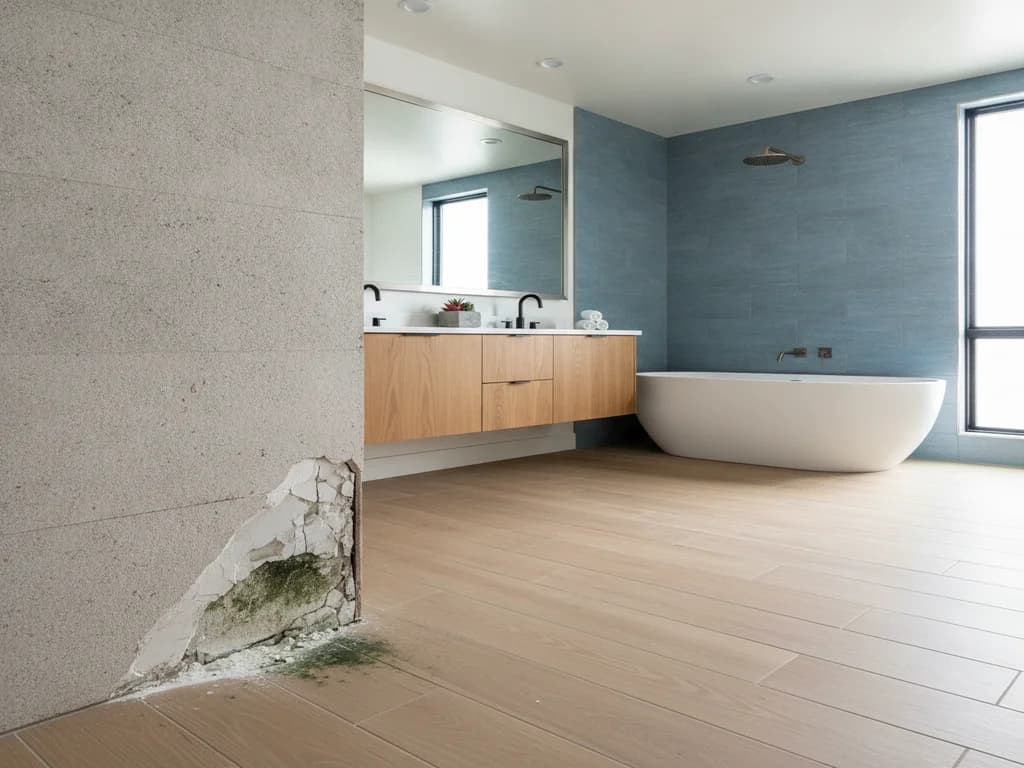
Two things matter more than the cabinet at that point. First, the leak: a new vanity installed under the same drip fails the same way, so the source gets found and fixed first. Second, what the water reached beyond the cabinet — the wall behind and floor below deserve a look, and the broader signs of bathroom water damage are worth checking while the area is open.
A swollen cabinet floor is a leak alarm, not just a cabinet problem
Water damage inside a vanity means water has been escaping somewhere for a while — and cabinets are rarely the only thing in the splash zone. Before ordering a new vanity, have the supply lines, shutoff valves, drain connections, and the wall and flooring behind the cabinet checked. Replacing the vanity without fixing the source guarantees a rerun, and skipping the wall check can leave a mold problem sealed behind a brand-new cabinet.
Signal two: the vanity fights the room
Some vanities are in perfect condition and still wrong. The classic Treasure Valley version is the builder-grade special: a cabinet sized to fill the wall rather than fit the room, crowding the toilet clearance, blocking half the door swing, or forcing sideways shuffles in a bathroom that should walk fine. NKBA planning guidelines exist precisely because fixture placement makes or breaks small rooms.
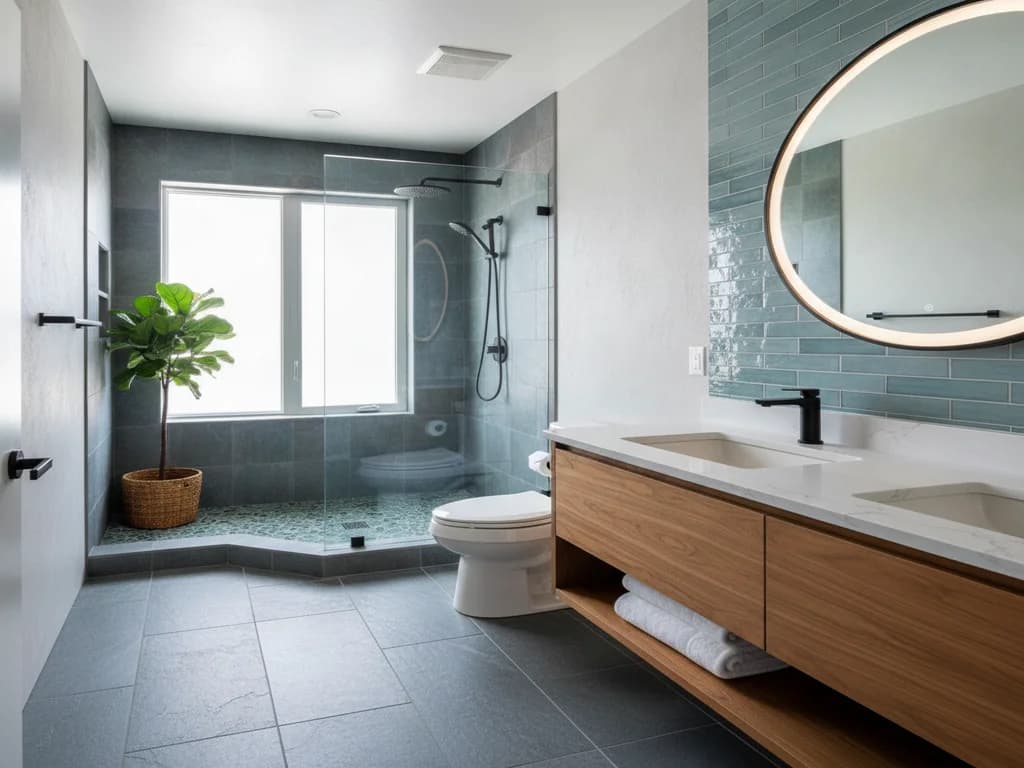
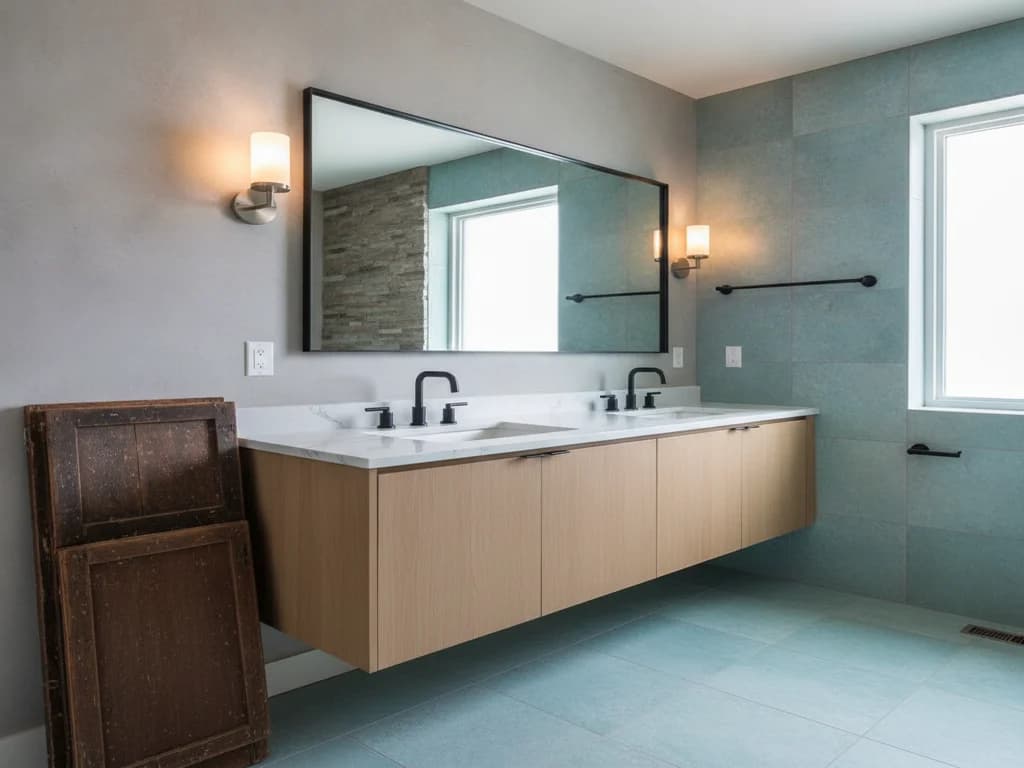
Layout problems only replacement can fix: a vanity too deep for the walkway (a shallower cabinet buys back real floor), a single-sink cabinet where a household needs two, a double where one sink plus counter space would serve better, or a corner situation a differently shaped vanity would solve. A floating vanity can also visually open a tight room — more in bathroom vanity ideas.
This signal often surfaces during other work. If a floor replacement or a larger update is on the horizon, that is the moment to correct vanity size and placement — moving plumbing a few inches is cheap while things are open and expensive as a standalone. Small bathroom remodel ideas shows what the right-sized vanity does for a tight footprint.
Signal three: the storage never worked
Storage failure is quieter but just as legitimate. The tell is what lives outside the vanity: baskets on the floor, a cart wedged beside the toilet, countertop clutter that never clears. If the room’s only storage cannot hold the room’s actual contents, the cabinet is failing at its main job.
Old vanity architecture is often the culprit — a cavernous under-sink void with one shelf, false drawer fronts where drawers should be, doors that surrender the whole interior to the plumbing. Modern vanities solve this with full-extension drawers built around the trap, and the usable-storage difference between a 1990s cabinet and a current one of identical width is dramatic.
Whether that difference justifies replacement depends on the gap. Mild clutter has cheaper fixes — organizers, a medicine cabinet, shelving. But if the vanity is also tired or the top is due anyway, storage is the tiebreaker that moves the answer to replace.
The decision table: replace, top-only, or leave it
Here is the sorting logic in one table. The left column is what you observe; the verdict follows.
| What you find | Verdict | Why |
|---|---|---|
| Swollen, delaminating, or crumbling cabinet floor | Replace (and fix the leak first) | Water-damaged particleboard/MDF is structurally done |
| Musty smell or staining inside the cabinet | Investigate, likely replace | Moisture has been present — check wall and floor too |
| Sound cabinet, dated or damaged countertop | Replace the top only | A top-and-faucet swap delivers the update for far less |
| Sound cabinet, worn doors and hardware | Refresh hardware / minor repair | Surface complaint — no need to touch the box |
| Vanity crowds the toilet, door, or walkway | Replace with a right-sized unit | Placement and size only change with replacement |
| Chronic clutter; storage fails daily use | Replace (drawer-based design) | Modern drawer cabinets multiply usable storage |
| Wrong sink count for the household | Replace (plumbing change) | Sink count is a cabinet-and-plumbing decision |
| Everything works; you want a new look before selling | Top, faucet, hardware — or replace if dated enough | Match the spend to what the sale actually needs |
When the cabinet box is sound, the top-only path in [can you replace just the vanity top](/guides/can-you-replace-just-the-vanity-top) is usually the value play.
The resale question
The vanity is the first thing a buyer reads in a bathroom — it anchors the room visually the way the kitchen island anchors a kitchen. A water-stained or clearly dated vanity invites buyers to mentally price a full remodel; a current one lets the rest of the room ride.
The data supports moderate spend here. Zonda’s Cost vs. Value Report consistently shows midrange bathroom remodels recouping a meaningful share of their cost at resale, and NAR’s Remodeling Impact research puts bathroom updates among the interior projects that most improve buyer appeal. A vanity swap is one of the smaller-scope ways to capture that effect.
Timing logic mirrors flooring: if a sale is one to two years out and the vanity trips any signal above, replace on your schedule rather than negotiating it off the inspection report. The bigger before-selling question — how much bathroom to update at all — is covered in should I remodel my bathroom before selling.
What replacement involves — and what it can trigger
A straight swap — new vanity, same size, same place — is one of the more contained bathroom projects: water off, plumbing disconnected, old unit out, new cabinet set level and anchored, top and faucet installed, drain and supplies reconnected. Replacing a bathroom vanity walks the full sequence and timeline.
The honest caveats are edges and evidence. A different-footprint vanity exposes flooring and wall paint the old one covered, so size changes often pull a flooring patch or paint into scope. And if the old cabinet was hiding water damage, the project pauses for the leak repair and any wall or subfloor work before the new unit goes in — the sequence that protects the new cabinet.
Per HomeAdvisor’s cost guides, vanity projects span a wide range driven mostly by the unit itself and whether plumbing moves. If your findings point to replacement — or you want a second opinion on whether a top swap gets you there — a free estimate settles it on your actual bathroom.
Ready to plan your Boise bathroom?
Licensed & insured · 3-year workmanship warranty
Frequently asked questions
- How do I know if my bathroom vanity is water damaged?
- Open the doors and inspect the cabinet floor under the plumbing. Swelling, waviness, flaking layers, dark stains, or a musty smell mean water has been getting in and the material has absorbed it. Press on it — softness confirms it. In particleboard or MDF cabinets that damage is permanent, and it doubles as evidence of a leak that needs finding before any new cabinet is installed.
- Is it worth replacing a bathroom vanity before selling?
- If the vanity is water-damaged or clearly dated, usually yes — it is the visual anchor of the room, and buyers price in a whole remodel when it reads as failed. Zonda’s Cost vs. Value data shows midrange bath updates recouping a meaningful share of cost at resale. If the cabinet is sound and merely plain, a new top, faucet, and hardware capture most of the effect for less.
- Can I replace just the vanity top instead of the whole vanity?
- Yes, when the cabinet box is sound — no swelling, no delamination, doors and drawers working. A new top with a new faucet transforms the look for a fraction of full replacement. It does not fix a water-damaged base, a wrong-sized cabinet, or failed storage, which are the three signals that justify replacing the whole unit.
- How long does a bathroom vanity last?
- It depends on material and luck with water. A solid-wood or plywood cabinet that stays dry can serve for decades; builder-grade particleboard often fails early not from wear but from the first sustained leak it meets. In practice most vanities are replaced for water damage, dated style, or layout reasons before the cabinet simply wears out.
- Should I replace the vanity or remodel the whole bathroom?
- Match the fix to the findings. If the vanity is the only failing element, a standalone swap is a contained project with real impact. If the floor, tub, or tile are also near end-of-life, bundling makes sense — demolition, plumbing visits, and finish work are shared costs, and vanity size or placement changes are cheapest while the room is already open. A walkthrough estimate can price both paths.
- What causes a vanity cabinet to swell at the bottom?
- Persistent moisture — most often a slow drip from a supply connection or shutoff valve, a weeping drain joint, or splash water migrating through the seam where the top meets the wall. Particleboard wicks that moisture and swells permanently. The swelling is the visible symptom; the leak is the actual problem, and it gets diagnosed and fixed before a replacement cabinet goes in.
Sources
- National Kitchen & Bath Association (NKBA)
- HomeAdvisor — True Cost Guide
- Zonda — Cost vs. Value Report
- NAR — Remodeling Impact Report
Claims and figures are drawn from the sources above and provided for general guidance; your project may vary. Photography is illustrative of design concepts. For a fixed price on your specific bathroom, request a free estimate.